Analysis on the Simulation of a Baja All-Terrain Vehicle (ATV) under different conditions
Aim:
To prepare a technical report on the Simulation of a Baja All-Terrain Vehicle (ATV) under different conditions.
Objective:
To study the system-level simulation of Baja All-Terrain vehicles for different cases such as:
- Study the Simulink model for Baja ATV with CVT (Continuously Variable Transmission).
- Study the Simulink Model for Baja ATV with CVT using Dashboard.
- Study the Simulink Model for Baja ATV with CVT using the lookup table without Dashboard.
- Study the Simulink Model for Baja ATV with CVT using the lookup table with Dashboard.
Theory:
All-Terrain Vehicle (ATV):
An All-Terrain Vehicle (ATV) is a four-wheeled vehicle designed to travel on various types of terrain, including off-road and rough terrain. ATVs are commonly used for recreational purposes such as hunting, fishing, trail riding, and racing, as well as for work-related activities such as farming, forestry, and search and rescue operations.
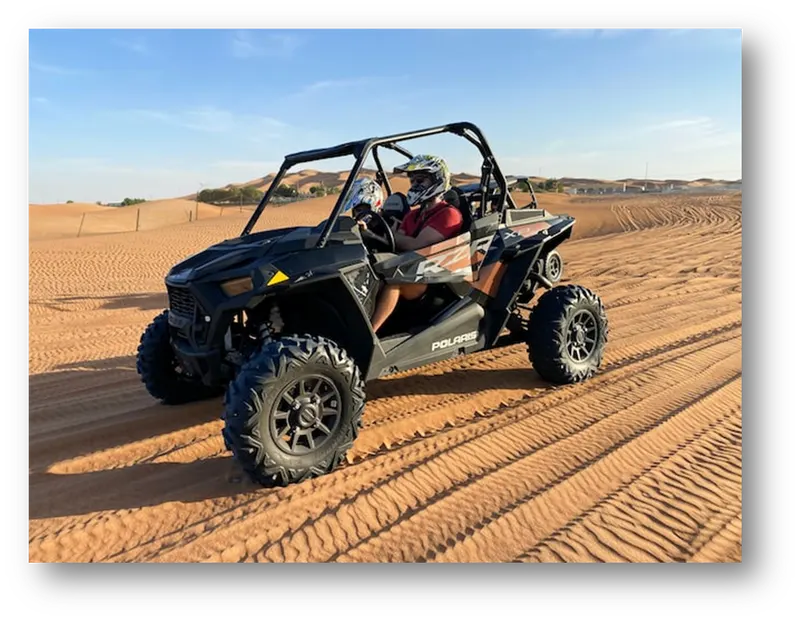
Figure-01
Here are some key features and aspects of ATVs:
- Design:
ATVs typically have four wheels, handlebars for steering, and a seat for the rider. They may have a single-cylinder engine or a more powerful multi-cylinder engine, and they are typically designed with a low center of gravity to provide stability on uneven terrain.
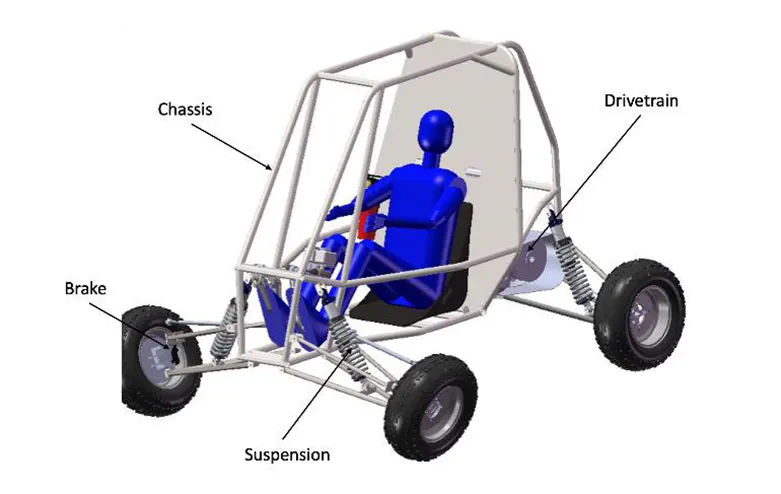
Figure-02
- Tires:
The tires on an ATV are a crucial component and are designed to provide traction and stability on various types of terrain. Many ATVs have deep tread patterns to grip the ground, and some models have oversized tires to help the vehicle navigate over rocks, mud, and other obstacles.
- Suspension:
ATVs have suspension systems that absorb shock and provide a smooth ride over rough terrain. The suspension may be independent or have a solid rear axle, and it often includes shocks, springs, and other components.
- Safety:
ATVs can be dangerous if not operated properly, and safety should always be a top priority. Riders should wear helmets, goggles, and other protective gear, and they should always follow safe riding practices.
- Types:
ATVs come in various types, including sport models designed for racing and high-speed riding, utility models designed for work-related activities, and recreational models designed for trail riding and exploring.
- Maintenance:
Like any vehicle, ATVs require regular maintenance to keep them running smoothly. Maintenance tasks may include changing the oil, replacing air filters, and checking and adjusting the tire pressure.
Baja ATV:
Baja ATV refers to an All-Terrain Vehicle (ATV) that is designed and built for off-road use in rugged terrain. The Baja ATV is typically a four-wheeled vehicle that is known for its ruggedness and durability, making it well-suited for exploring and navigating rough terrain.
Baja ATVs are often used for recreational purposes such as racing and exploring, and they are known for their high-performance capabilities, including speed, agility, and durability. They are often equipped with powerful engines, large tires with deep treads, and advanced suspension systems, allowing them to tackle a wide range of challenging terrain, including steep hills, rocky outcrops, and muddy swamps.
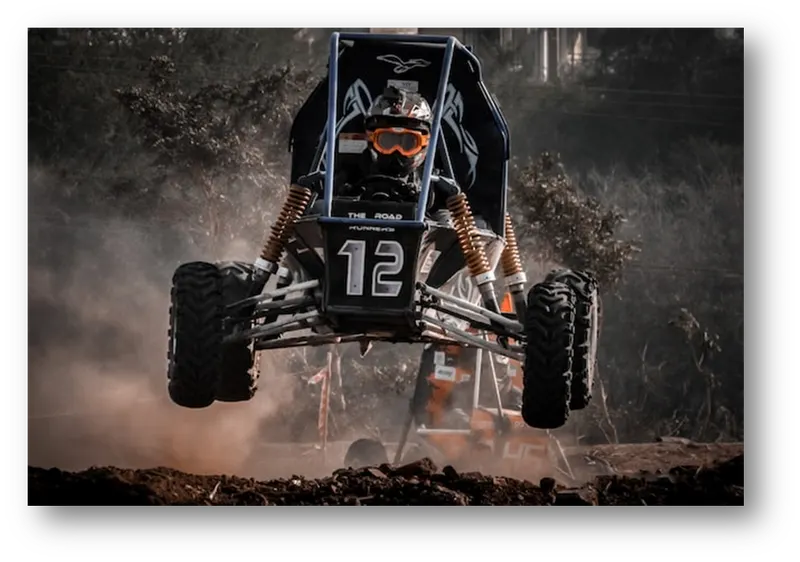
Figure-03
Baja ATVs are available in a range of sizes and configurations, from small, lightweight models designed for children and beginners to larger, more powerful models designed for experienced riders and professional racers. They are popular among off-road enthusiasts and can be used for a variety of activities, including trail riding, racing, and exploring remote areas.
Case- 01:
Simulink model for Baja ATV with CVT (Continuously Variable Transmission):
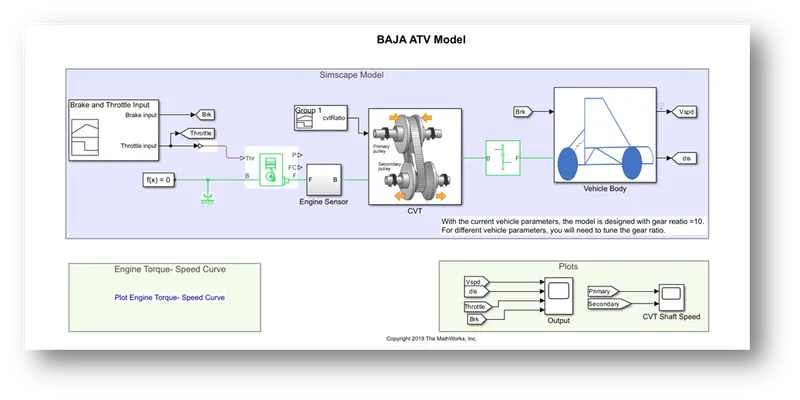
Figure-04
Major Blocks used in the model:
- Continuously Variable Transmission Block:
A Continuously Variable Transmission (CVT) is a type of automatic transmission that can change seamlessly through an infinite number of gear ratios. CVT technology is becoming increasingly popular in off-road vehicles such as ATVs, including those used for Baja racing. Here are some of the benefits and drawbacks of using a CVT in a Baja ATV:
Benefits:
- Smooth power delivery: A CVT provides a smooth and consistent transfer of power to the wheels, which can help in maintaining control over the vehicle, especially while traversing rough terrain.
- Better acceleration: CVTs can provide faster acceleration, which can be an advantage in racing situations, particularly in starting and overtaking maneuvers.
- Improved efficiency: A CVT can provide better fuel efficiency and can offer a longer range in a single fuel tank.
Drawbacks:
- Durability: A CVT requires precise calibration and regular maintenance, as it uses a system of belts, pulleys, and electronic controls, which can wear and break down over time.
- High Cost: CVTs are more expensive to manufacture than conventional transmissions and can be more costly to repair and maintain.
- Overheating: CVTs can heat up quickly under heavy use, which can cause the transmission to malfunction or even fail.
Overall, the use of a CVT in a Baja ATV can offer a range of benefits, particularly in terms of power delivery and fuel efficiency. However, it is essential to balance the benefits against the potential drawbacks, particularly in terms of durability and cost.
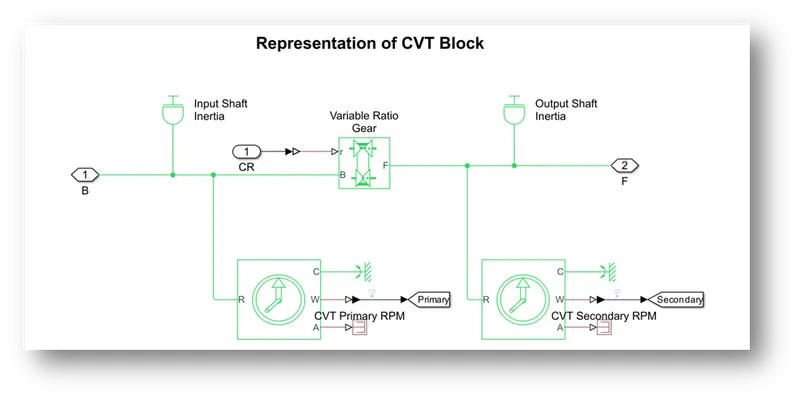
Figure-05
As with any off-road vehicle, it is important to consider the specific needs and requirements of the driver and the terrain when selecting the best transmission for a Baja ATV.
- Variable Ratio Transmission Block:
In Simulink, a variable ratio transmission block can be used to simulate the behavior of a continuously variable transmission (CVT). The variable ratio transmission block is typically used in a Simulink model of a vehicle's drivetrain to represent the transmission between the engine and the wheels.
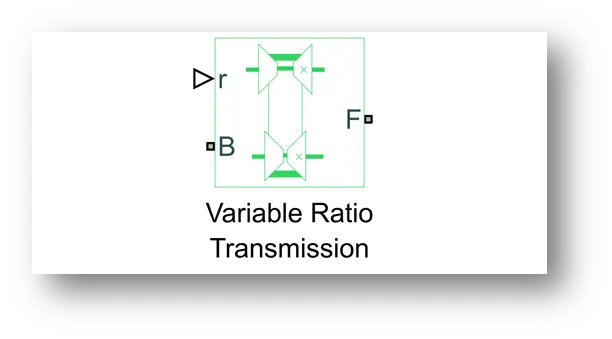
Figure-06
The variable-ratio transmission block in Simulink allows the user to specify the minimum and maximum gear ratios, as well as the control signal that determines the current gear ratio. The block then calculates the output torque and speed based on the input torque and speed and the current gear ratio.
The variable-ratio transmission block in Simulink can be used to model the behavior of a CVT in various applications, including ATVs, cars, and other vehicles. By adjusting the parameters of the block, users can simulate different types of CVTs with varying degrees of complexity.
- Generic Engine Block:
In Simscape, a generic engine block can be used to model the behavior of an internal combustion engine in a simulation. The engine block is typically used in a Simscape model of a vehicle's powertrain to represent the engine between the fuel input and the transmission.
The generic engine block in Simscape allows the user to specify a variety of parameters that determine the engine's behavior, including the engine displacement, the number of cylinders, the bore and stroke, and the compression ratio. The block also includes inputs for the fuel and air mass flow rates, as well as the throttle position and engine speed.
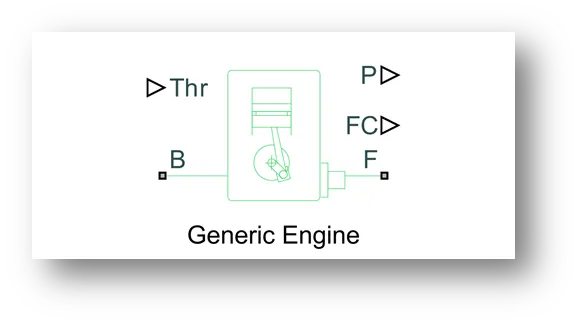
Figure-07
The engine block in Simscape calculates the engine torque and speed based on the input fuel and air mass flow rates, and the current throttle position and engine speed. The block also accounts for losses due to friction and other inefficiencies in the engine.
- Vehicle Body Subsystem Block:
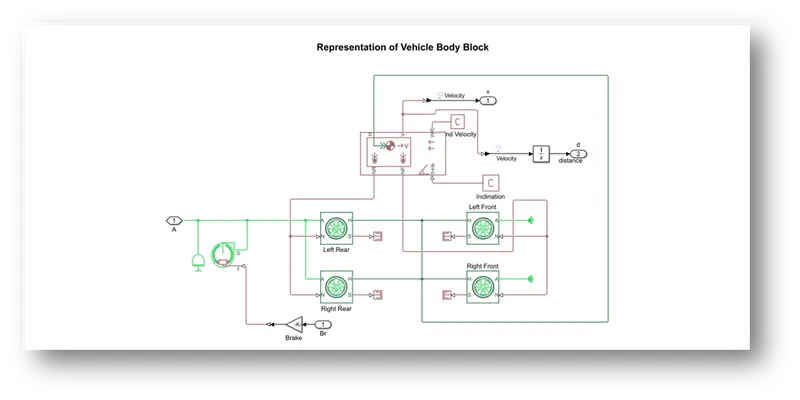
Figure-08
Input Signal for Case- 01:
- Signal Builder:
The Signal Builder block in Simulink is a tool used for creating and editing signals that can be used in a simulation model. It allows you to easily create and modify signals using a graphical interface, which can be useful for generating test signals or specifying the input to a system.
In the Signal Builder editor, you can add signals, modify their properties, and specify the values of the signals at specific time points using a table or a graph. You can also save the signals to a file, load signals from a file, or copy and paste signals from other sources.
In this Simulink Model, we use brake and Throttle as input signals to the Engine, with the use of a Simulink- PS converter. Brake Input and Throttle Input are user build signals in the Signal editor.
Brake, throttle, and gear ratio inputs are all derived from the signal builder. The brake input is kept at 0 for the duration of the simulation. The throttle input starts at 0.3 for 20 seconds and rises to 1 for the duration of the entire simulation. The throttle valve's primary function is to regulate the amount of fuel that enters the engine; as the throttle value rises, more fuel enters the IC engine, increasing its power.
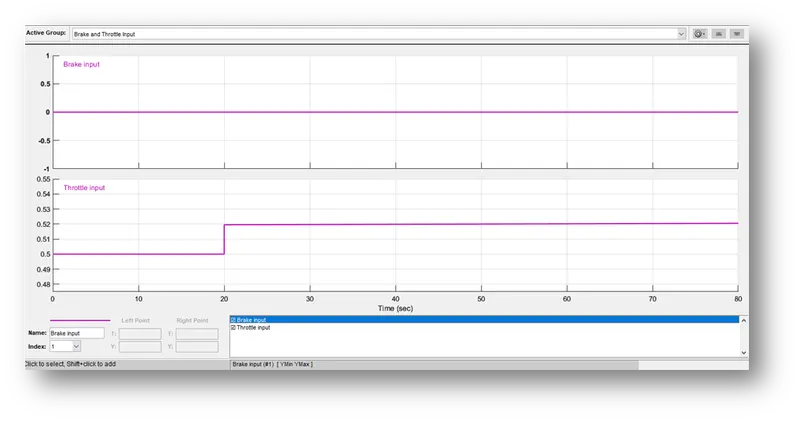
Figure-09
The Signal Builder block is commonly used for creating test signals for system simulations, where the input signals to the system are known and can be varied. It can also be used to create signals for control applications, such as specifying setpoints or reference signals.
- Engine Torque-Speed Curve Input:
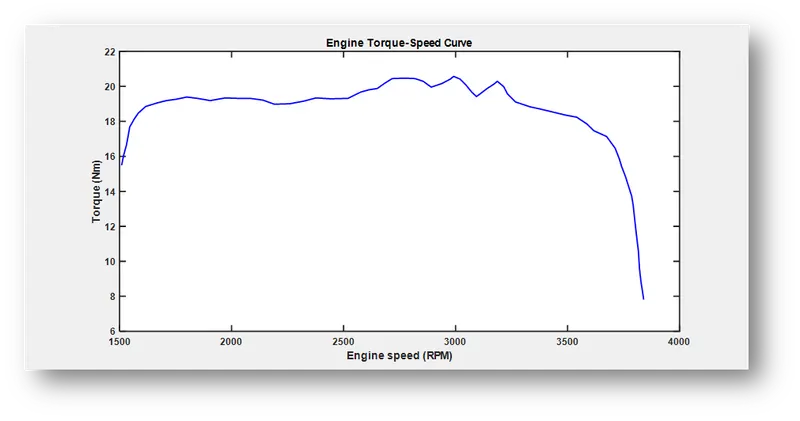
Figure-10
- CVT Gear Ratio Input:
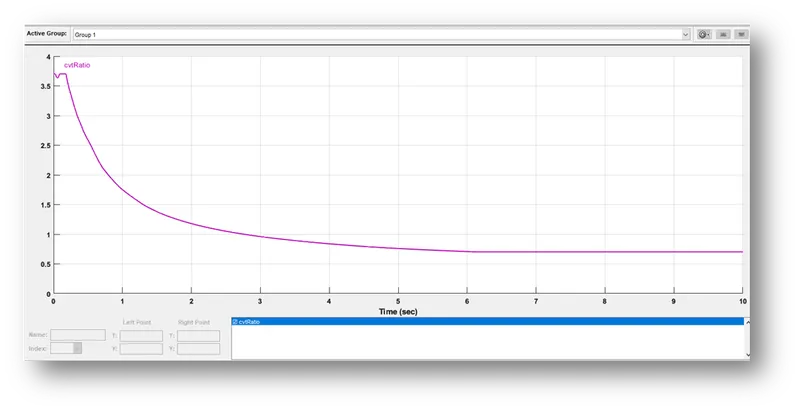
Figure-11
The gear ratio is held at 3.7 for some seconds and decreases non-linearly, the simulation, as illustrated in the above figure.
Output from Case- 01:
- Vehicle Speed:
From Data Inspector,
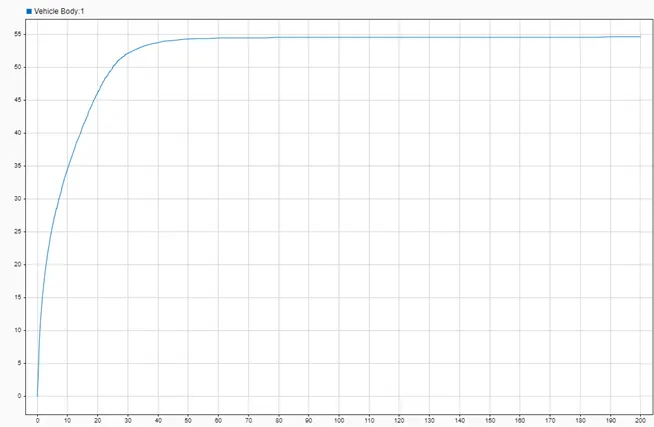
Figure-12
From the Scope window,
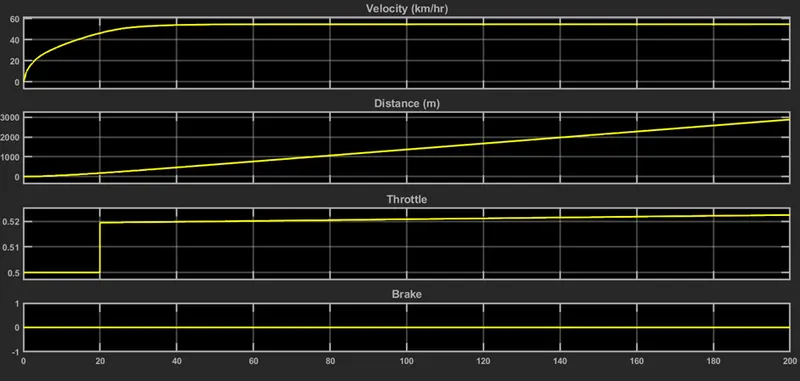
Figure-13
The graph clearly shows that the car reaches its top speed (V = 55 km/h) at full throttle (Value = 1) after 30 seconds, and then stays at that speed. As the brake input value is 0, velocity is unaffected.
- CVT Shaft RPM:
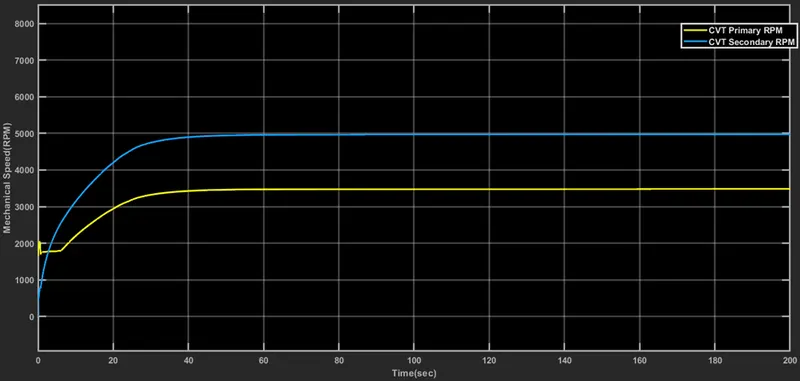
Figure-14
These graphs demonstrate how the variable gear transmission system's input and output shafts' angular velocities vary. Based on the gear ratio, these numbers vary.
Case- 02:
Simulink Model for Baja ATV with CVT using Dashboard:
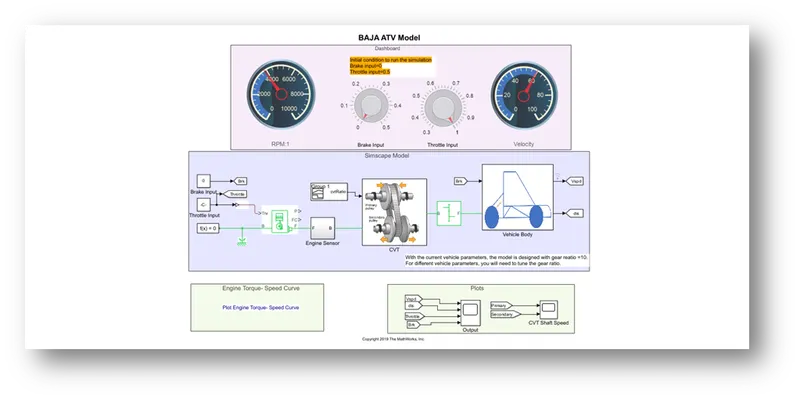
Figure-15
The model of the "Baja ATV with dashboard" depicted in the above graphic has a throttle meter and brake inputs rather than giving input through a signal builder. The remaining blocks and subsystems of the aforementioned Baja ATV model without a dashboard are standard, as indicated in Case-01. The basic idea behind employing a dashboard is to observe the results of altering the brake and throttle inputs, which demonstrate the engine's velocity and speed. For a brief while, the gear ratio is held at 3.7 before decreasing nonlinearly and remaining constant throughout the experiment. The speed and velocity decrease when the brake input fluctuates between 0 and 0.5. The engine and shaft's velocity and speed increase as the throttle is opened wider.
Output from Case- 02:
- Vehicle Speed:
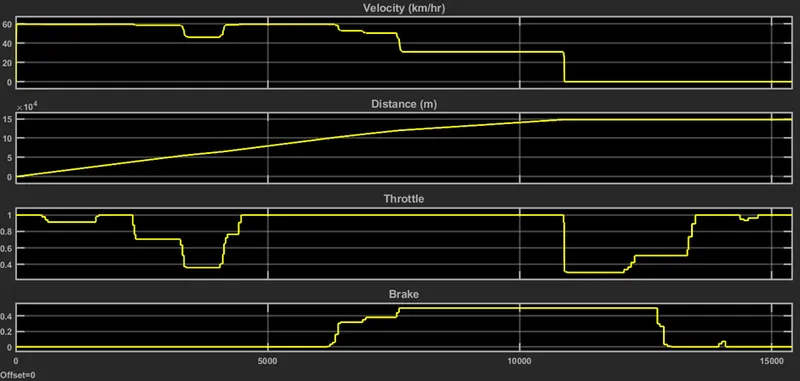
Figure-16
The graph shows that when the throttle is set to 1 and the brake input is 0, the vehicle's speed rises dramatically from 0 to 50 kilometers per hour. The vehicle's speed falls to 0 with a constant throttle value after the braking value increases from 0.1 to 0.5. This explains the direct correlation between throttle and brake inputs and vehicle velocity.
- CVT Shaft RPM:
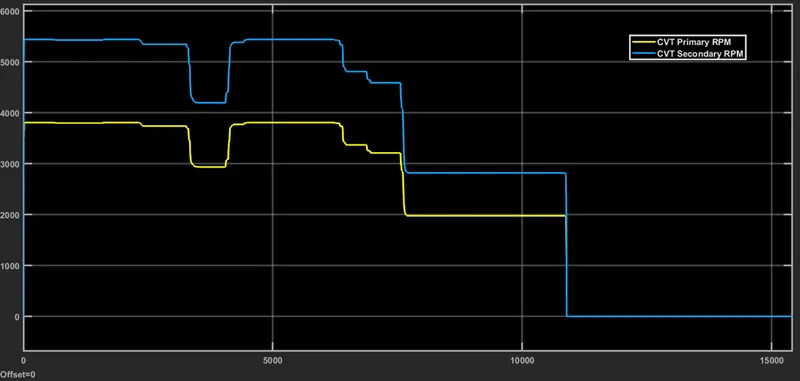
Figure-17
Case- 03:
Simulink Model for Baja ATV with CVT using lookup table without Dashboard:
As illustrated in figure-18, the Simulink model of the CVT includes blocks for the solver configuration, step time, generic engine, motion sensors, vehicle transmission, vehicle body, and tyres. Figure-19 illustrates the components of the CVT subsystem, which also comprise a look-up table, a transmission block, motion sensors, and input and output shaft inertia. The vehicle body subsystem, as depicted in figure-21, consists of the vehicle body block, the double drum brake, and the tyres.
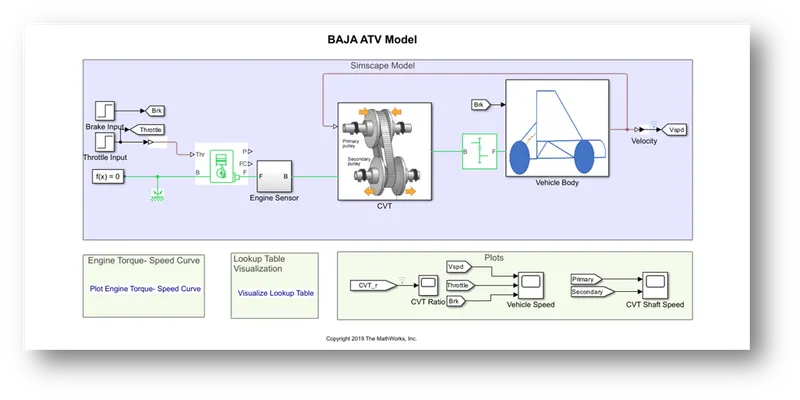
Figure-18
- Continuously Variable Transmission Block:
For the CVT ratio we use a lookup table, which will act as input to the Variable Ratio Gear.
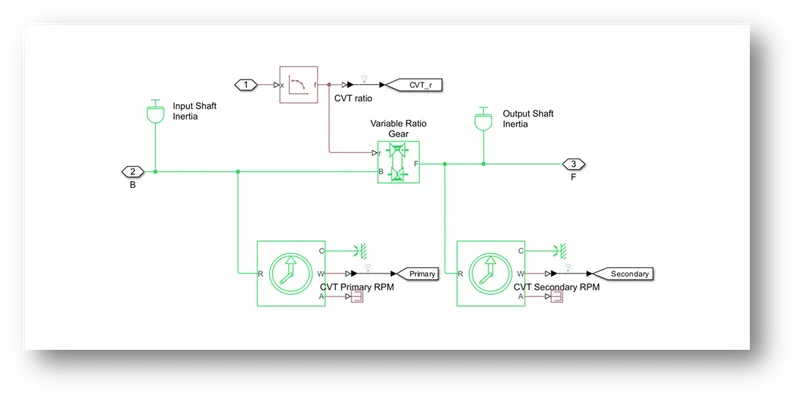
Figure-19
Lookup Table: An array of data known as a lookup table approximates a mathematical function by mapping input values to output values. A lookup operation obtains the relevant output values from the table given a set of input values. Using interpolation, extrapolation, or rounding, Simulink can approximate an output value if the lookup table does not explicitly define the input values.
- The process of estimating values that lie between known data points is known as interpolation.
- A method for guessing values outside the range of known data points is called extrapolation.
- By changing a value's digits in accordance with a known rule, rounding is the process of approximating a value.
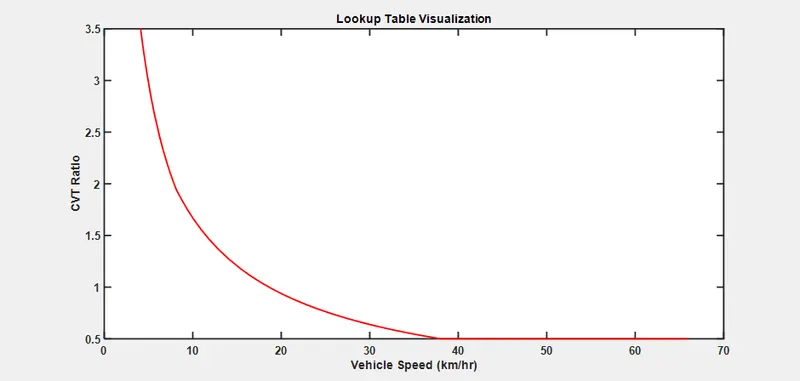
Figure-20
- Vehicle Body Subsystem Block:
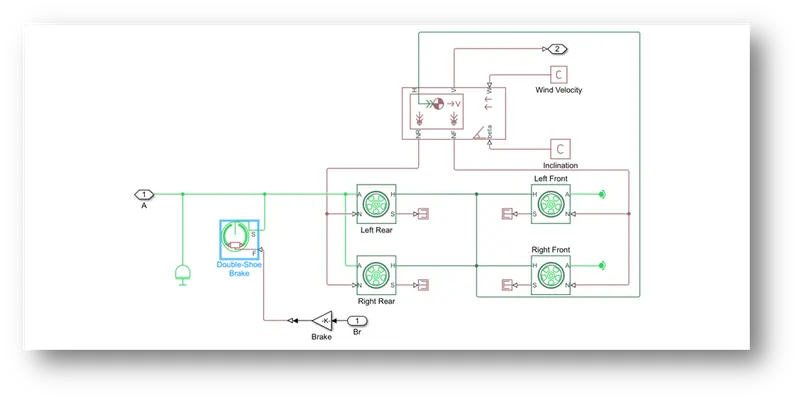
Figure-21
- CVT Ratio Input:
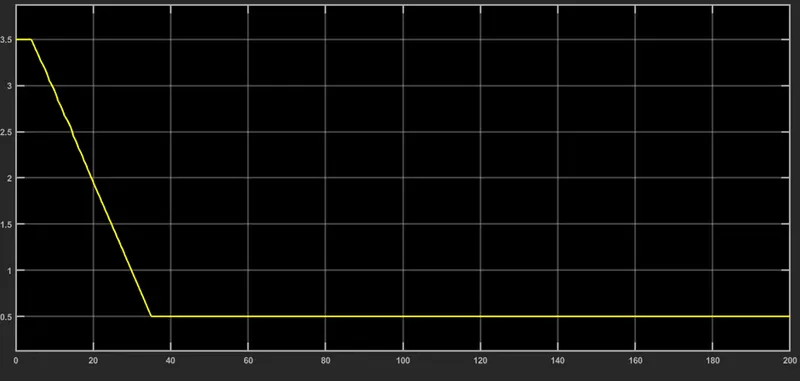
Figure-22
Output from Case- 03:
The brake is kept at a steady setting while the throttle is increased to illustrate an increase in velocity. As the throttle is turned up from 0.3 to 1, the fuel flow increases and the engine's power rises as a result. The gear ratio is entered into a lookup table and provided to the simulator, which examines each input value and produces a result based on it.
- Vehicle Speed:
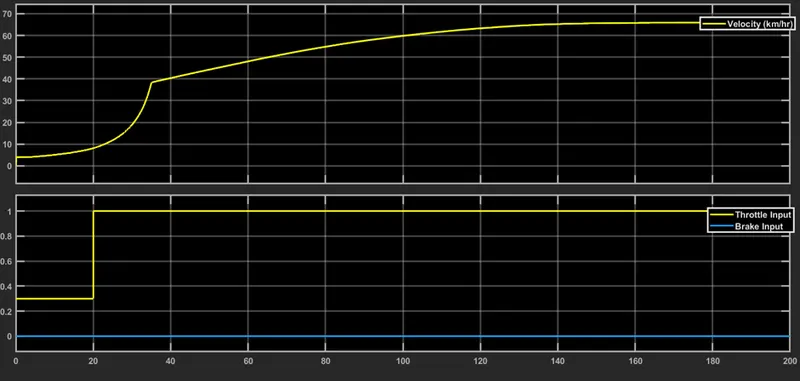
Figure-23
- CVT Shaft Speed:
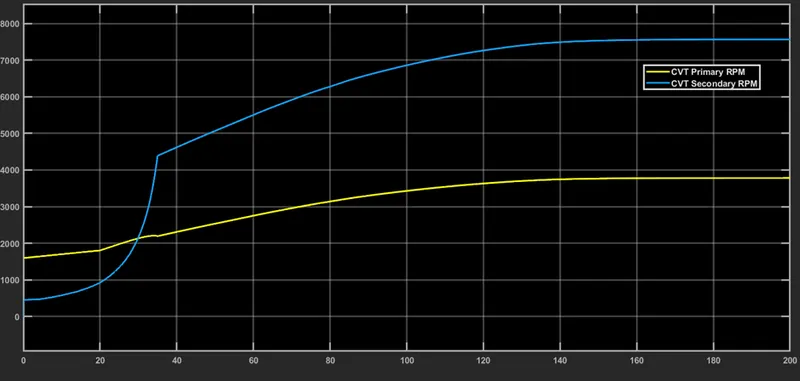
Figure-24
Case- 04:
Simulink Model for Baja ATV with CVT using Lookup Table with Dashboard:
The above graphic displays a lookup table-based model of a "Baja ATV with dashboard" that includes a throttle meter and brake input on the dashboard and is denoted as a constant block. The remaining blocks and subsystems of the previous Baja ATV type without a dashboard are similar, as seen in figures 21 and 19. The primary goal of employing a dashboard is to analyze the results of changing the brake and throttle inputs, which reveal changes in the engine's velocity and speed. Simulink obtains the input value from the lookup table and derives the result in accordance with the lookup table, which provides the gear ratio.
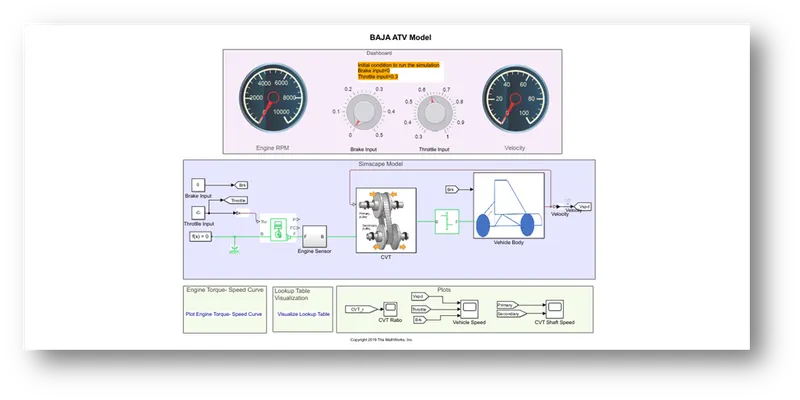
Figure-25
Output for Case- 04:
The velocity and speed decrease in direct proportion to the brake input, which ranges from 0 to 0.5, and the gear ratio does as well. The engine and shaft's velocity and speed increase as the throttle is opened wider. The transmission has a primary pulley and a secondary pulley, and the primary pulley's radius increases by compacting while the secondary pulley's radius shrinks. The torque fluctuates along with the gear ratio. The torque is exactly proportional to the gear ratio, and the gear ratio rises as the torque does. The speed and velocity decrease as the torque increases.
- Vehicle Speed:
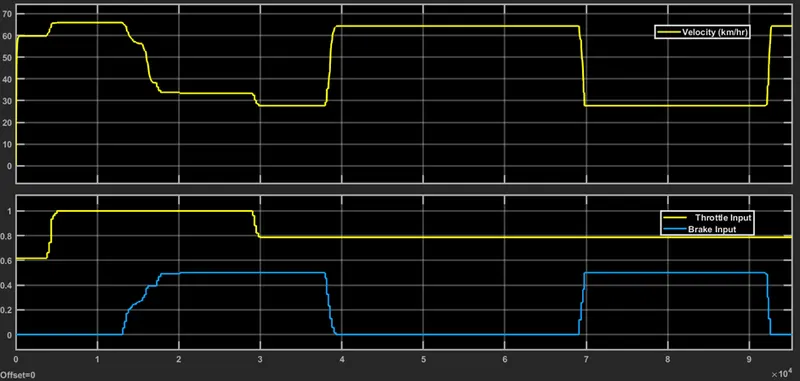
Figure-26
- CVT Shaft Speed:
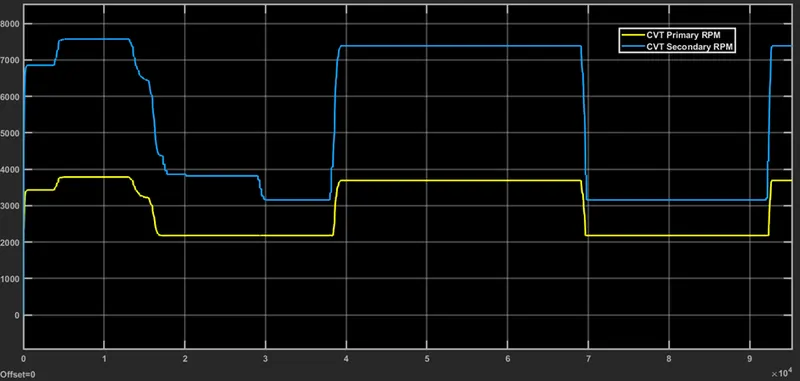
Figure-27
Conclusion:
As a result, we were able to analyze 4 distinct cases of Simulink models for BAJA ATV with CVT and record the expected plot of vehicle speed & CVT shaft speed, in relation to changes in input brake and throttle.
Reference:
- Figure-01 - https://unsplash.com/photos/ohRl7jr2nW4
- Figure-02 - https://engineering.usu.edu/images/senior-design/mae/fall2018-spring2019/baja-frame-pictures/baja-frame-poster-entire-frame.jpg
- Figure-03 - https://unsplash.com/photos/spN0WvYcQvM
- Matlab Model File - https://www.mathworks.com/matlabcentral/fileexchange/70576-baja-all-terrain-vehicle-atv-model