DESIGN OF BRACKET USING NX-CAD
DESIGN OF BRACKET USING NX-CAD
-
- Objective:
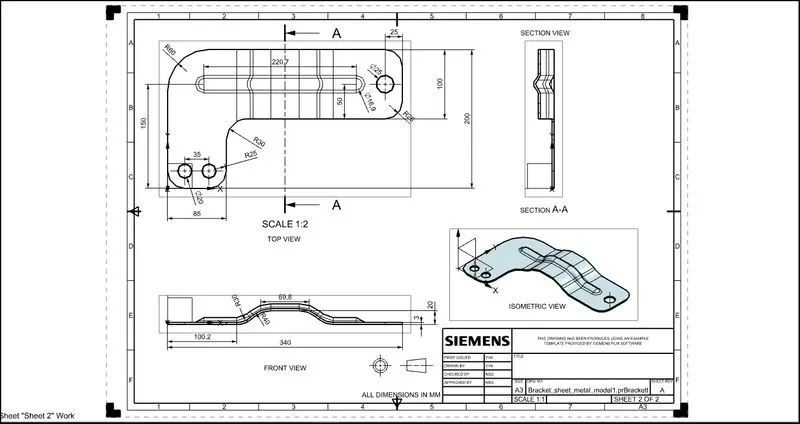
- The wholesome purpose of this project is to design a complex-shaped bracket by reading the 2D drawing of the same and preparing the 3D-based geometry of the bracket.
- To get knowledge of how to read the 2D drawing which dimensions to be considered use different views to get an idea about the final product, also the application of sheet metal features available in NX-CAD.
- Introduction:
In this project, I designed a bracket that is a sheet metal part using NX-CAD PLM Software version 10.0. I have explained all the tools and features which are used in this sheet metal part modeling such as tab, flanges, bead, bend, break corner, hole, etc.
NX-CAD software can be used for both solid modeling and sheet metal modeling, but the features it provides for sheet metal are very handy and feasible to use for the design of complex sheet metal parts.
NX-CAD is a software developer by Siemens, it is a very powerful tool with parametric modeling features for ease and accuracy to model your parts, Siemens NX software is a flexible and powerful integrated solution that helps you deliver better products faster and more efficiently. NX delivers the next generation of design, simulation, and manufacturing solutions that enable companies to realize the value of the digital twin.
- Design Methodology of Bracket:
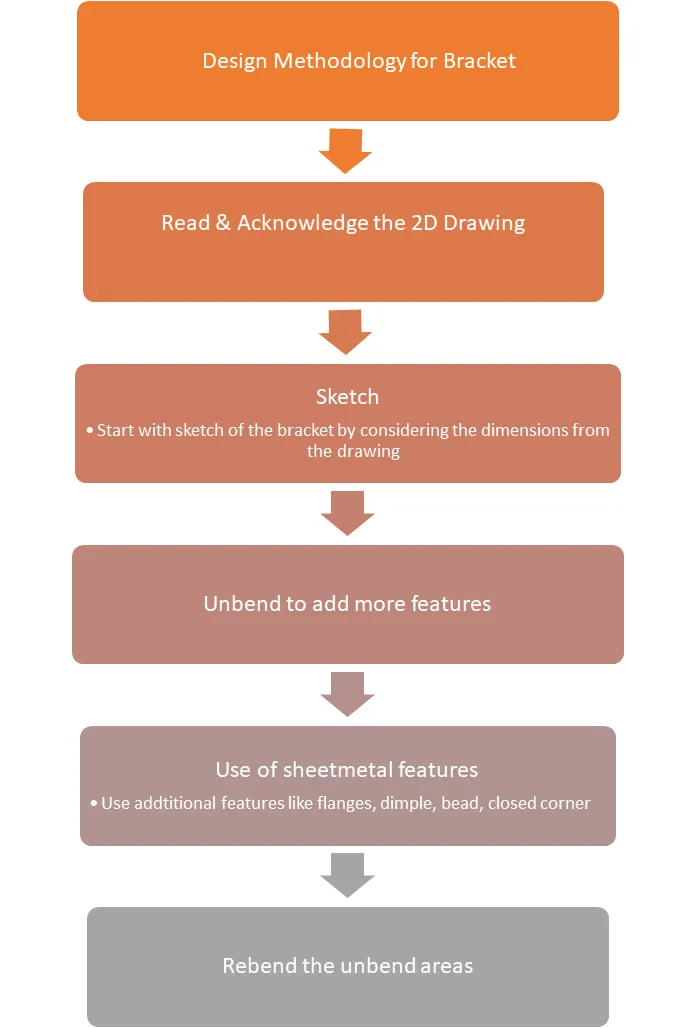
To start with our sheet metal part design first open the NX-CAD software and select the sheet metal as our working environment.
Features used in the design of the Bracket:
- Sketch This the basic or common feature use in any type of modeling but it plays a vital role as it is the foundation of our part model. NX-CAD provides several sketch entities and tools for creating sketches such as line, arc, rectangle, spline, circle, ellipse, polygon, etc. In the case of our bracket, I have used sketch entities like rectangle, line, arc.
- Contour Flange: This is used to create a base feature by extruding the sketch along a vector or it adds material along the edge or chain of edges of the sketch by using this feature many complex shapes can be easily created by just creating the sketch of the edge and extruding it.
- Normal Cut-Out: This feature cuts or removes material from an existing solid body by projecting the sketch along with the model and then cuts perpendicular to the faces which intersect the projecting sketch.
- Break Corner: It rounds or breaks the sharp corner of the tab created thereby providing a smooth round profile to the corners, it is been provided to give aesthetic look to our part but furthermore its main function is to provide safe and easy handling.
- Unbend: It is used to create a flat sheet of our sheet metal model, it does by unbending the bend and material adjacent to the bend.
- Bead: It lifts material along a contour of the sketch thereby acting like a stamping tool.
- Rebend: It again restores the bends given to the model previously and any other features added to the model after unbending.
- Hole: It is used to create single or multiple holes by just providing the position of points at which the holes are to be generated of the required size. We can also create special holes such as counterbore or countersunk.
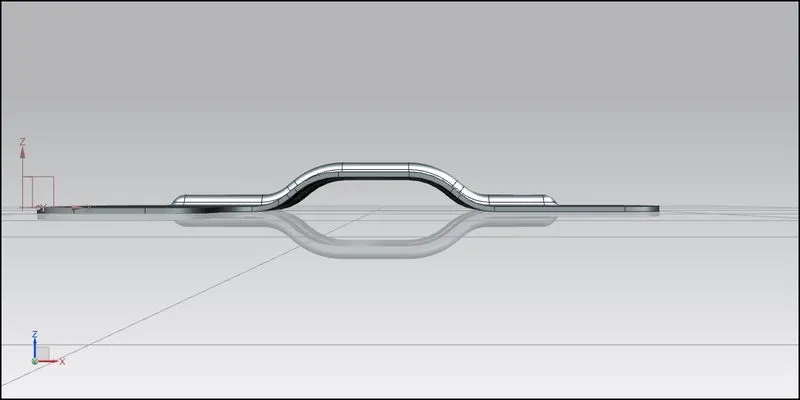
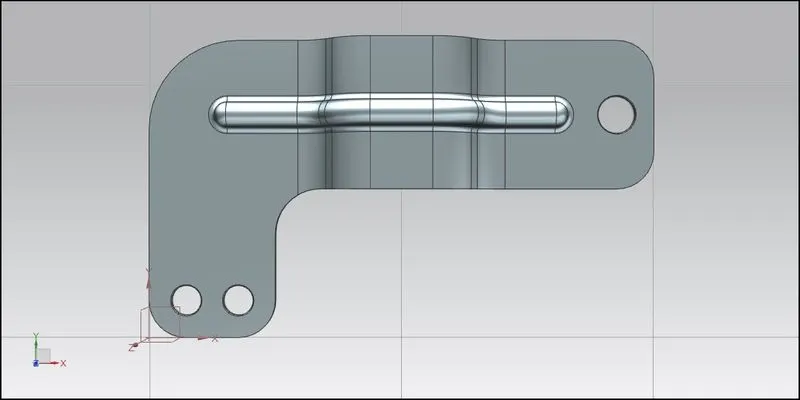
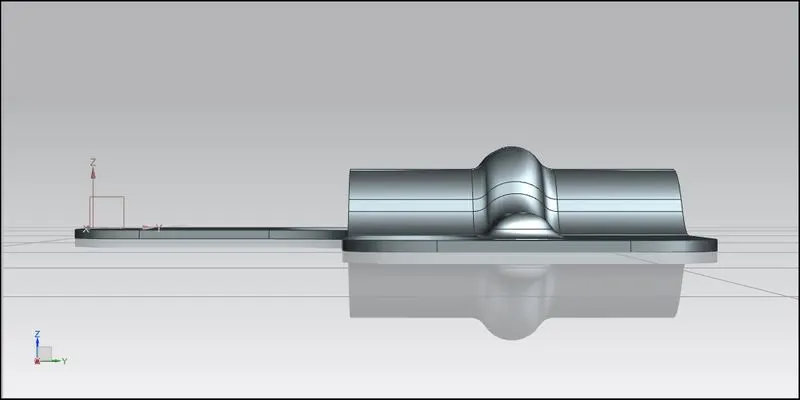
Different views of Bracket
- Front view
- Top view
- Side view
- Bottom view
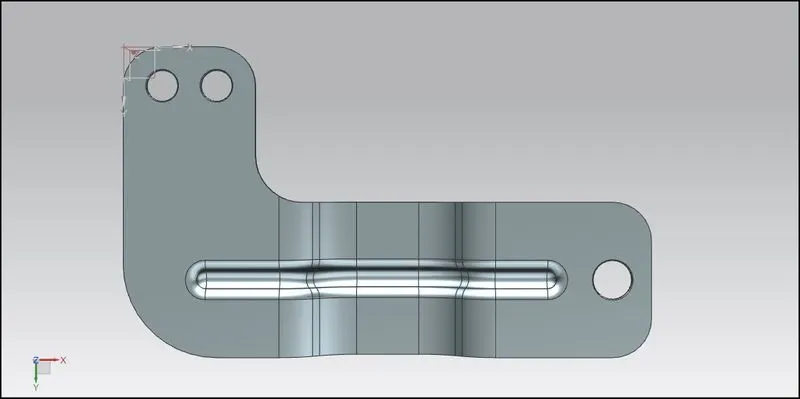
- Isometric view
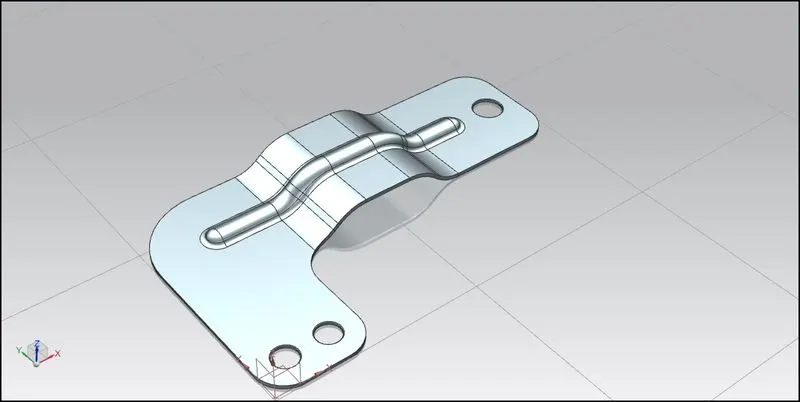
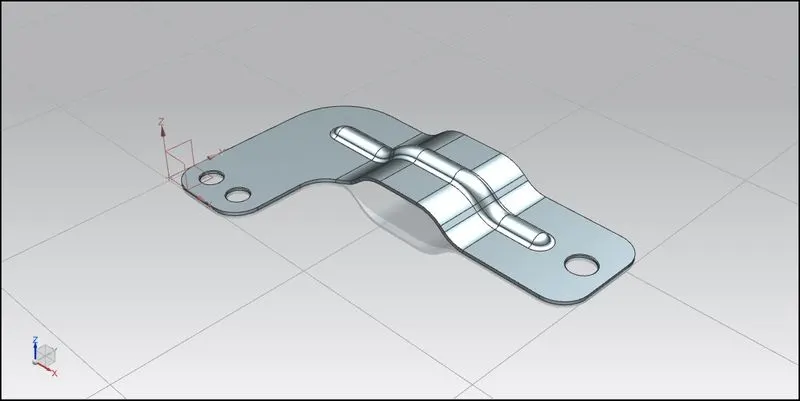
- Drawing Sheet of Bracket
- Conclusion: Hence, I have completed the design of the bracket from the 2D drawing provided and gain knowledge of how to use and apply the different features of sheet metal in NX-CAD software.