Advanced Sheet Metal Design Using NX Cad Challenge_5_Odd Shaped Enclosure
ODD SHAPED ENCLOSURE IN SHEET METAL USING SIEMENS NX CAD
Objective
To create a solid body and convert to sheet metal component by developing enclosure and adding features by following the industrial design methodologies for manufacturing a sheet metal component.
Introduction
Sheet metal is any metal that has a thickness in between 0.4 to 6 mm and it can be obtained by any metal rolling process method (cold rolled and hot rolled). Sheet metal widely used in industries like automobile, aerospace, electronic appliance, medical, construction, furniture, etc. To utilize sheet metal to its full extent we must understand standard measurements, materials, differences in manufacturing, possible forming methods and the material properties.
Sheet metal fabrication is the process of forming metal sheets to the desired shape using different manufacturing methods.
ODD SHAPED ENCLOSURE
Metal enclosures are solid metal cases or covers that are carefully engineered and manufactured to suit a particular application. The components are most often used to surround and protect critical components. They’re often used such as shielding expensive equipment from the elements or anywhere where moisture or contaminants are a concern. Alternatively, some metal enclosures perform the opposite function, containing the internal components of a system so that they don’t leak into the environment or into adjacent compartments.
Depending on the application, the shape the enclosure is engineered to become is critical for its end performance. Odd shaped enclosures are those which is having some complex feature shape used to improve the strength and performance of the sheet metal component.
Design methodologies
- To designing a sheet metal enclosure, it is always important to understand the aesthetic and functional requirements of the product in every design process.
- The next step is to choose best fit metal by considering, product requirements, application of your sheet metal enclosure. The best metals are those that offer premium quality while providing wear and corrosion resistance.
- Choosing the right shape of the enclosure is another one of the crucial sheet metal enclosure design tips and can avoid the common pitfalls of enclosure design.
- The thickness of the metal for enclosure design is vital. The thickness often determines the strength, weight, flange length, and punch size of the enclosure.
- It is mandatory to keep the bend radius consistent. Bend radii within sheet metal enclosure design should always add up to the thickness of the content and always ensure that the bend radius corresponds with the product width.
Steps followed
- Create the fully constraint sketch for the solid body and extrude it by following all the dimensions from the input data.
- Wrap the solid body by using the tool sheet metal from solid by selecting appropriate edges and create the base structure.
- Adding flanges to the required edges with appropriate dimensions.
- Adding jogs by using the fully constraint sketch drawn in the defined location.
- Unbending the developed sheet metal component for adding additional features.
- Bead is added to the required position by using the curve defined sketch.
- Locate the position of holes and applied holes to the appropriate location.
- Rebend the entire sheet metal part to validate and to get the desired shape.
- Apply flat pattern to validate and analysis the sheet metal component.
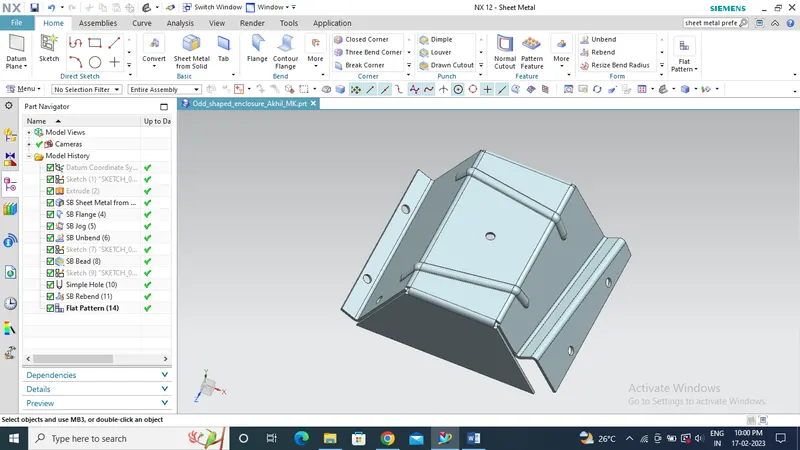
ISOMETRIC VIEW OF ODD SHAPED ENCLOSURE
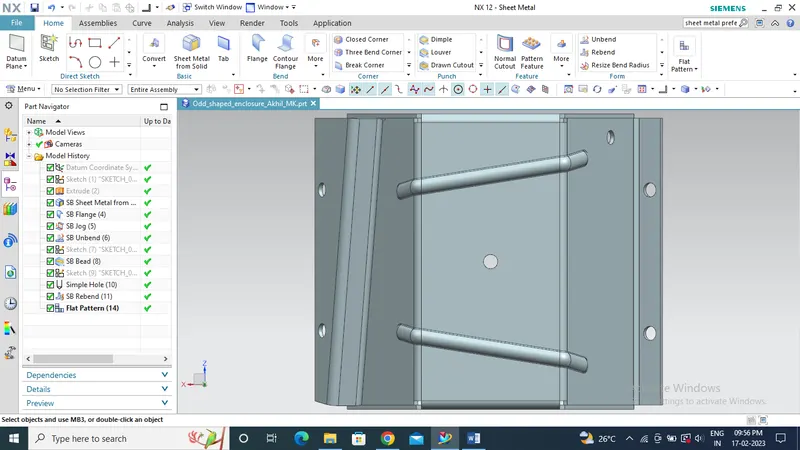
TOP VIEW OF ODD SHAPED ENCLOSURE
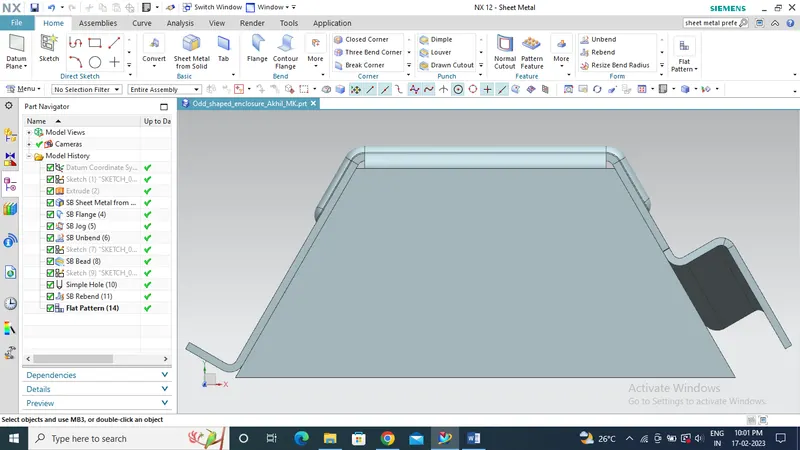
RIGHT SIDE VIEW OF ODD SHAPED ENCLOSURE
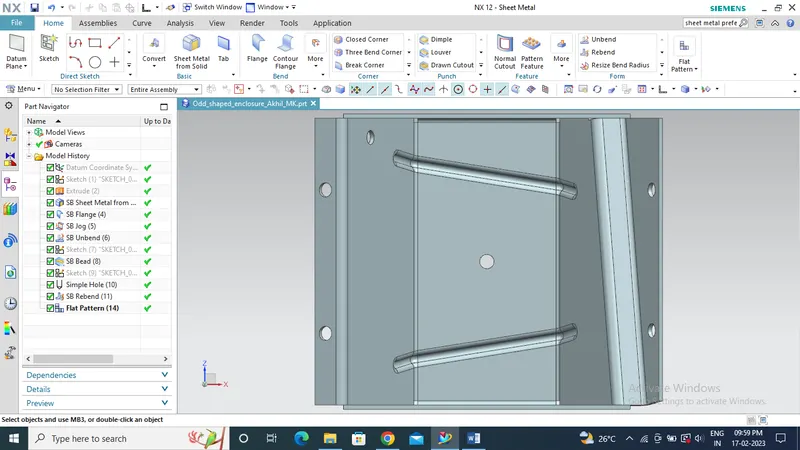
BACK SIDE VIEW OF ODD SHAPED ENCLOSURE
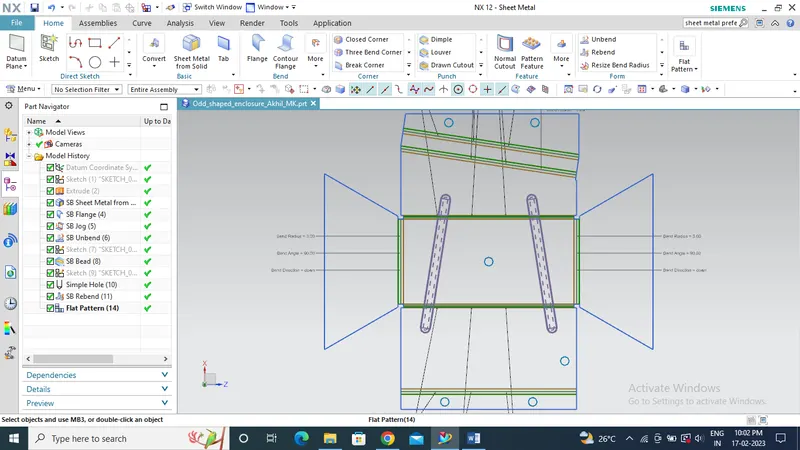
FLAT PATTERN VIEW OF ODD SHAPED ENCLOSURE
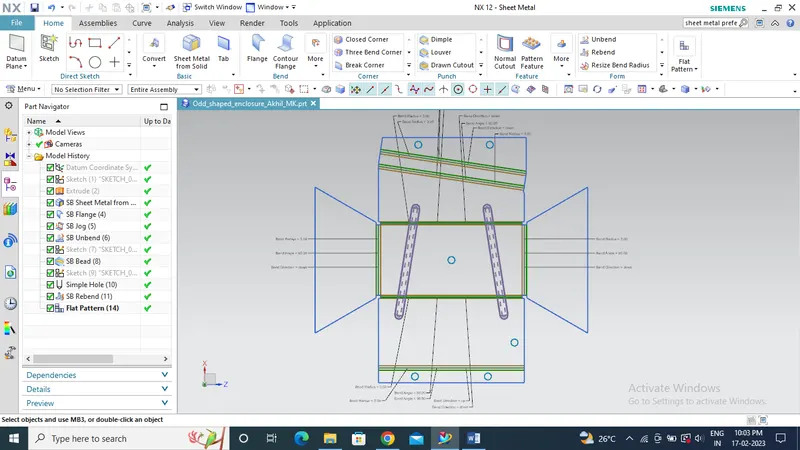
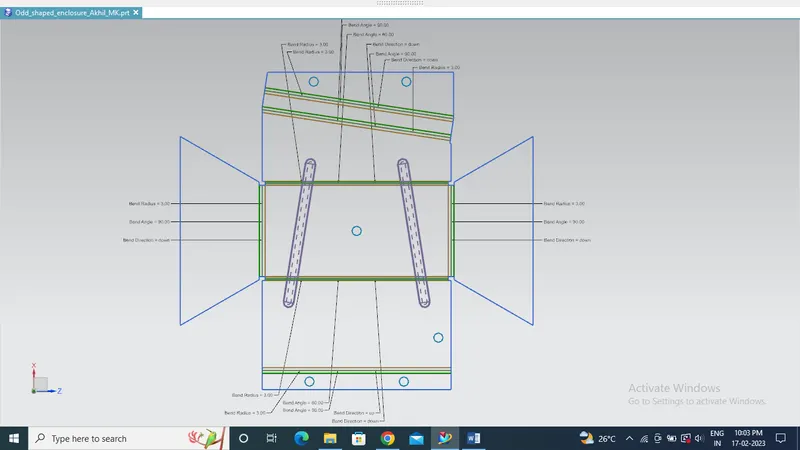
FLAT PATTERN VIEW OF ODD SHAPED ENCLOSURE
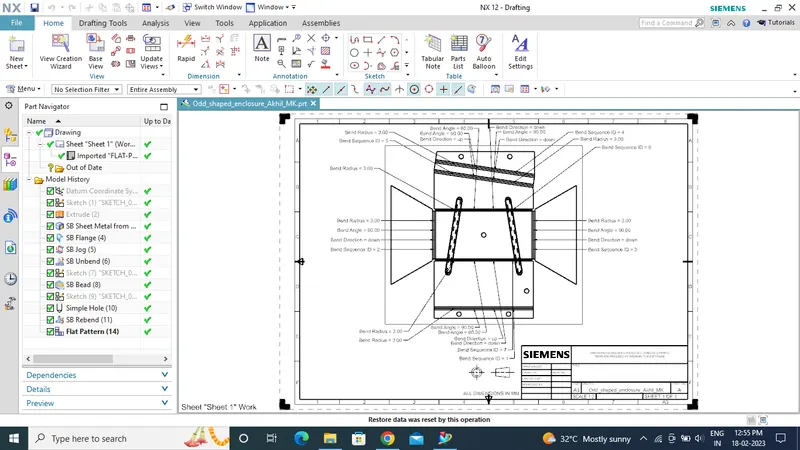
DRAFTING DRAWING OF ODD SHAPED ENCLOSURE
Conclusion
Sheet metal component enclosure was developed and added the flanges, features required for the component by using the solid body and following sheet metal product manufacturing methodologies.