ADAMS - Project - Hardpoint tuning to achieve pitch gradient targets using suspension “anti” characteristics
Project Deliverables:
1. Perform hardpoint tuning to achieve the target acceleration and braking pitch gradient for double wishbone suspension at the front and Multilink suspension at rear.
2. Adams plots showing effect of tuning.
3. Completed Excel sheet.
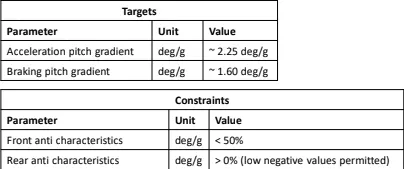
Project targets and constraints:
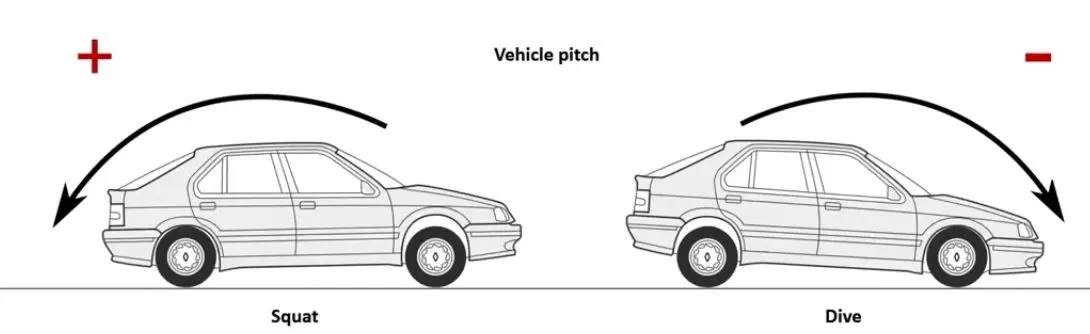
Introduction: Pitching is the phenomenon that occurs in response to acceleration and braking force. Pitch is the front and rear motion of the vehicle axis that passes through the centre of gravity known as transverse axis. Pitch angle is the angle made by the vehicle in side view. When the nose moves up due to acceleration this situation is called as positive pitch and if the nose dips down due to braking is called negative pitch.
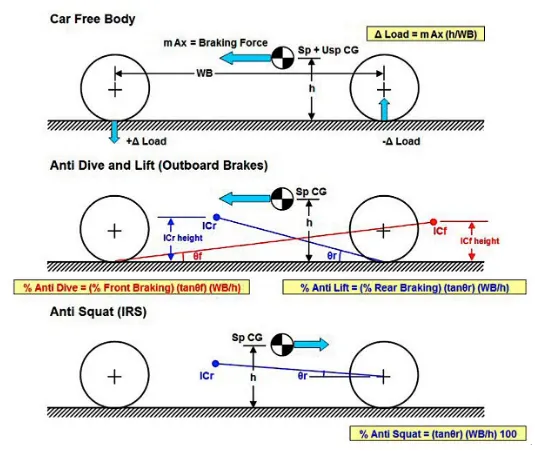
The pitch motion occurs due to load transfer from front to rear and vice versa leading to extension and compression of spring. Anti characteristic is a term that describe the longitudnal to vertical force coupling between sprung and unsprung masses. It is the geometric setup that uses the longitudinal force to eliminate the spring deflection caused due to vertical load change.
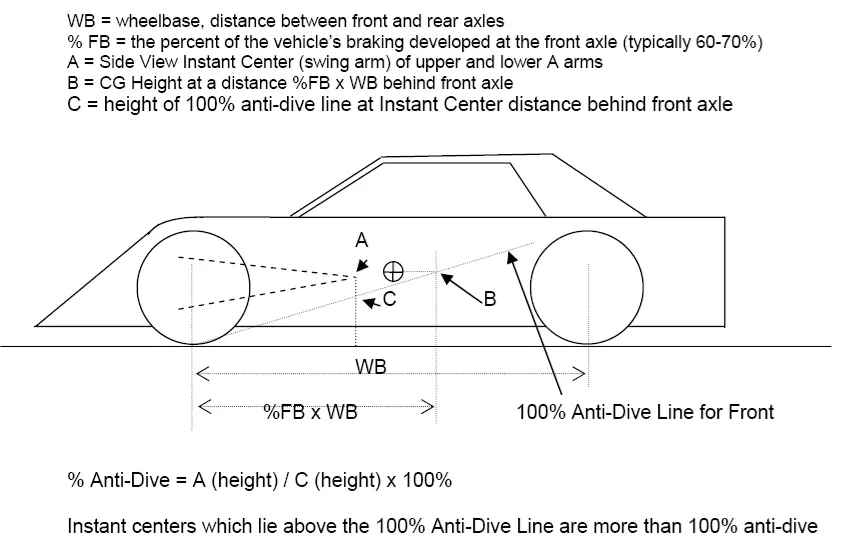
Anti-dive: Anti Dive describes the amount the front of the vehicle Dives under breaking. As the brakes are applied, weight is transferred to the front and that forces the front to dive. Anti Dive is dependant on the vehicles center of gravity, the percentage of braking force developed at the front tires vs the rear, and the design of the front suspension.
Anti-squat: Anti Squat is a term for suspension engineers to determine how much the suspension mechanism itself is resisting suspension compression. Anti-squat is suspension’s mechanical resistance to compression due to forces from the engine.
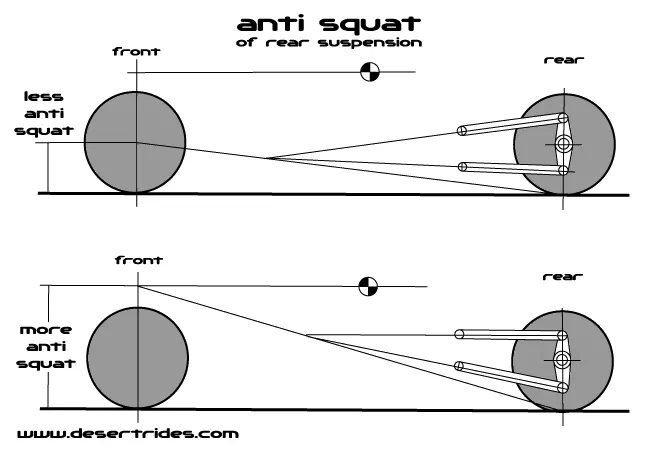
Anti-lift:Anti-lift geometry is used mainly on front wheel drive cars and four wheel drive cars. It works when an acceleration force is acting through the centre of gravity causing the front wheels to raise as the rear tries to squat due to the acceleration force acting on the centre of gravity causing the car to pivot. The effect of lifting the front wheels under acceleration in a front wheel drive or four wheel drive car is that traction will be lost at the front wheels which could cause the front wheels to spin instead of applying full traction to the surface.
Steps:
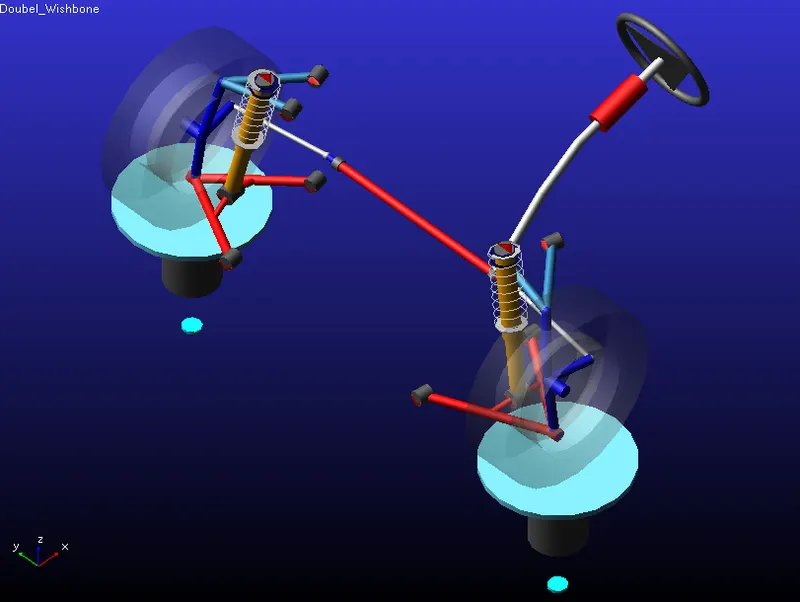
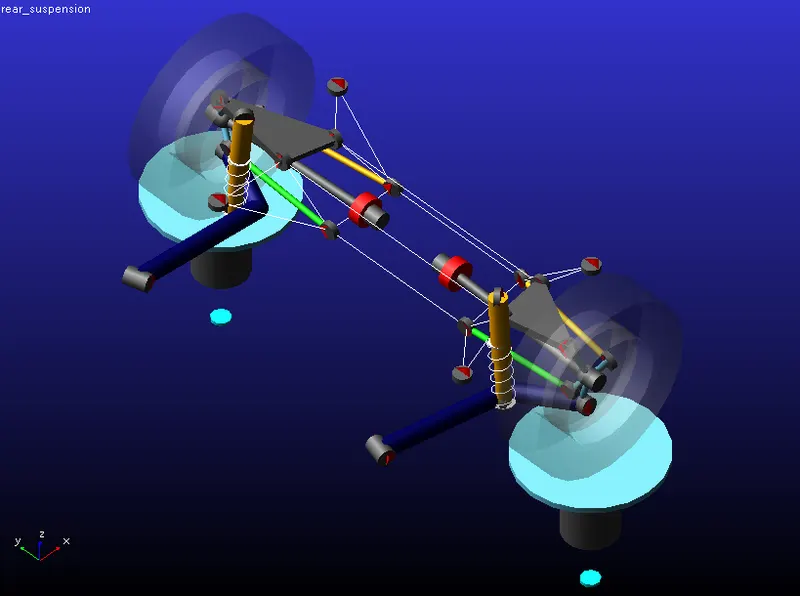
Open both the model in adams i.e. Double wishbone front suspension and rear multilink suspension shown below,
Double wishbone front suspension:
Multilink rear suspension:
Here we have two models i.e. the front suspension and the rear suspension. For each model we have two run i.e. with default values and with tuned values.
lets first simulate both the model for default values and then modify the hard points for next runs.
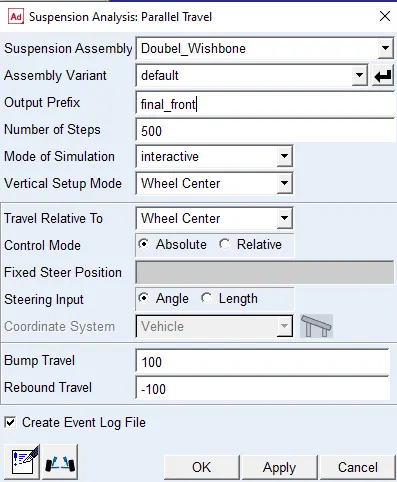
Simulate the the front suspension for parallel wheel travel for 500 steps and 100mm in jounce and rebounce. Click on apply the simulation will start.
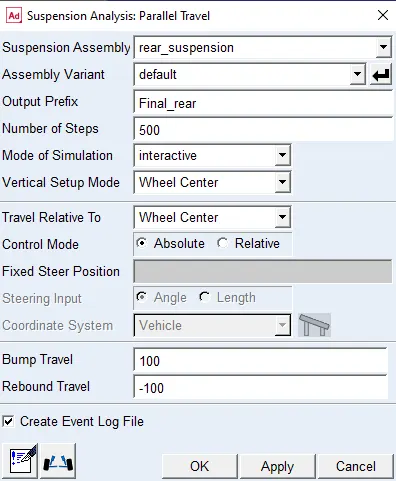
Now for the rear suspension also the simulation is runed for parallel wheel travel 500 steps and 100 mm in jounce and rebounce.
Now we tune the model according to the given problem statement. Below shows the problem conditions,
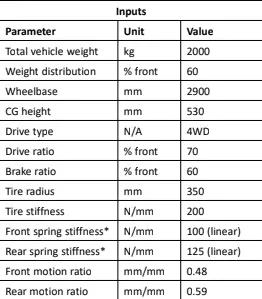
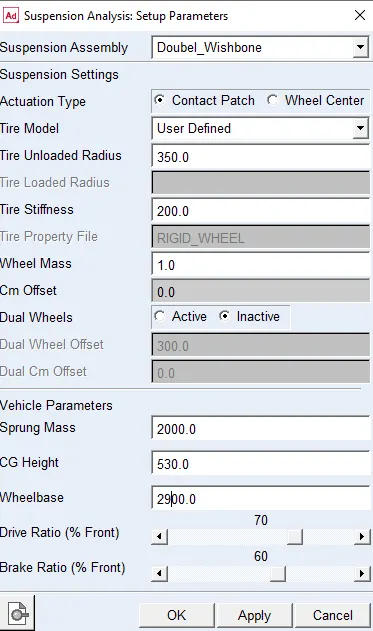
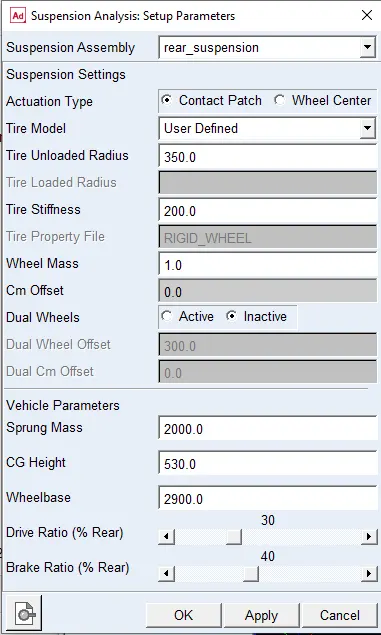
We first modify the weight of the suspension to 2000kg and set the drive ratio, brake ratio, wheelbase, cg height, tire radius and tire stiffness.
click on simulate then suspension analysis and then set parameters as shown below,
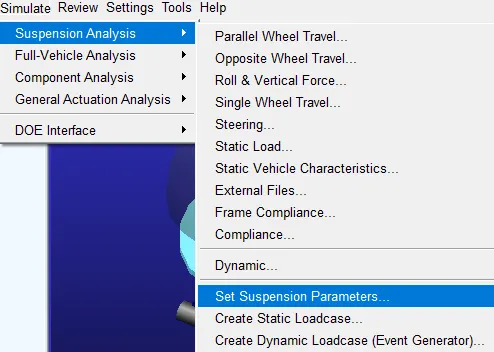
Then we update the given values and then save the update made, make the modification on both the suspensions.
Front suspension,
Rear suspension,
Modifing the spring stiffness,
Front suspension file is modified,
Modified values Original values
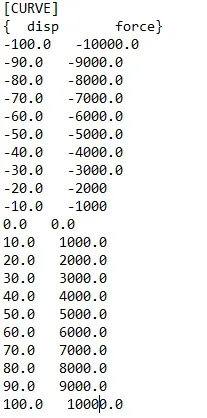
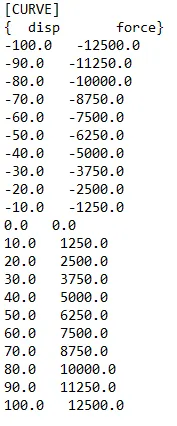
Rear suspension file is modified,
Modified values original values
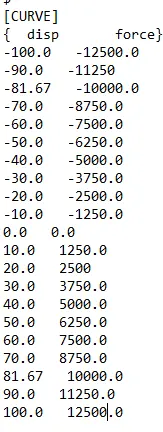
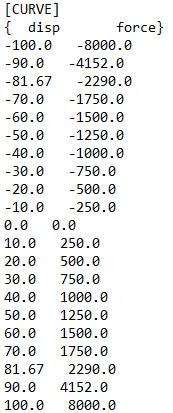
This spring file is now updated in the model and saved.
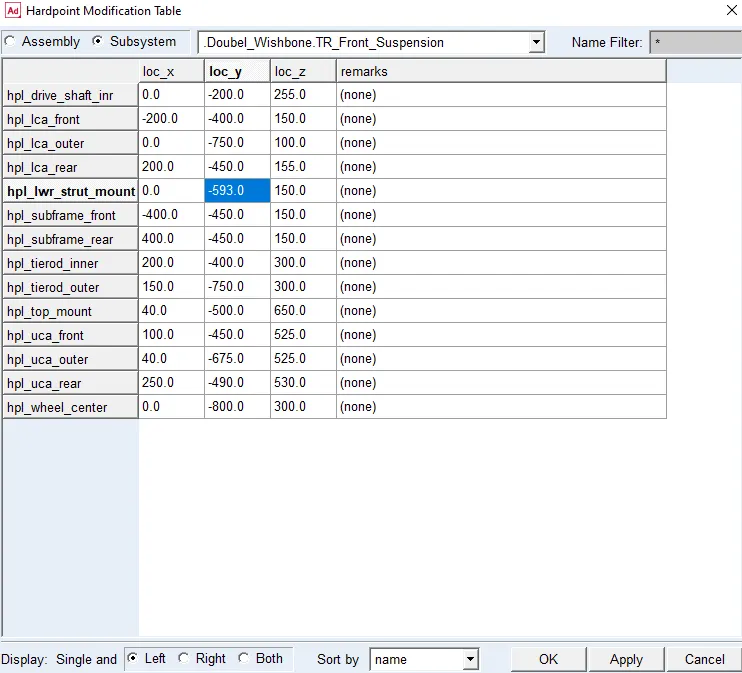
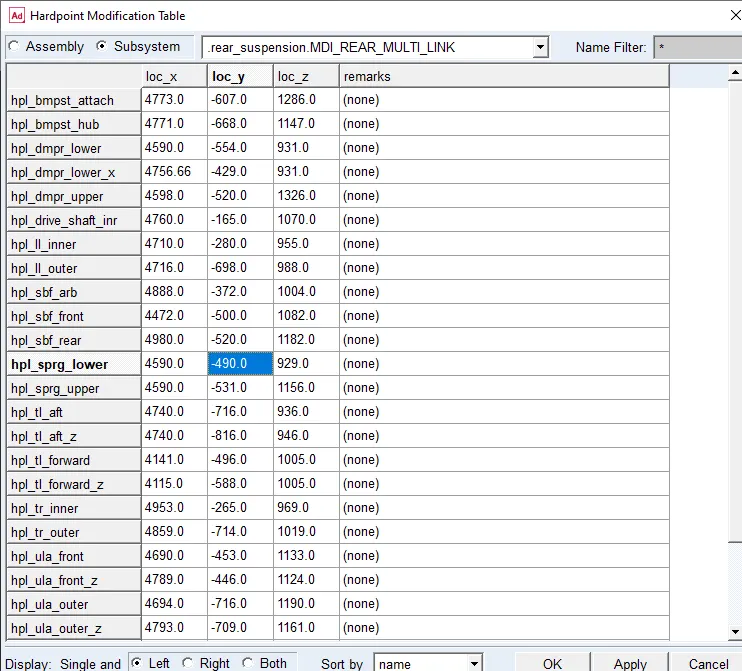
Now tuning the hardpoints to get the target motion ratio,
Front suspension modified values,
Rear suspension modified values,
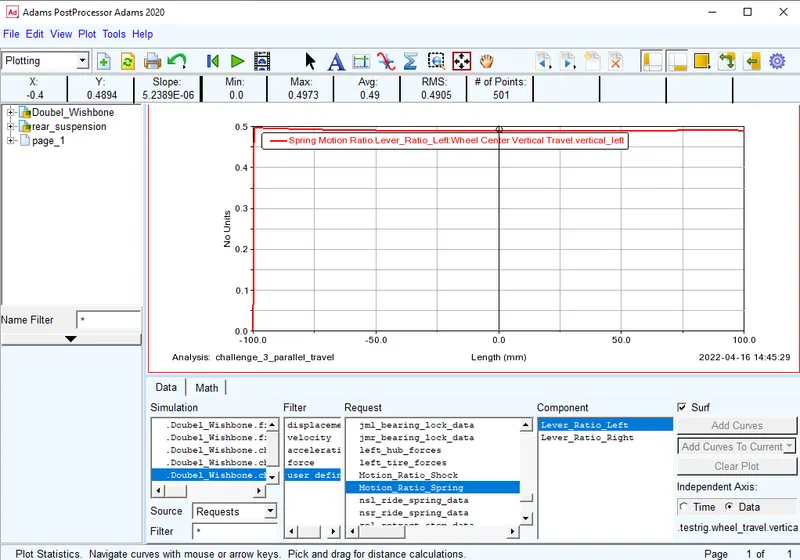
The target motion ratio for front suspension is achieved = 0.48
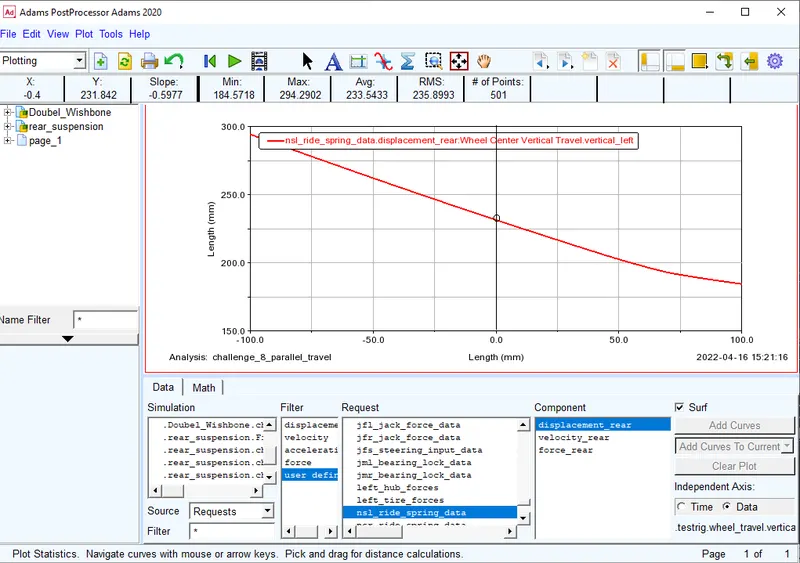
The target motion ratio for rear suspension is achieved = 0.59
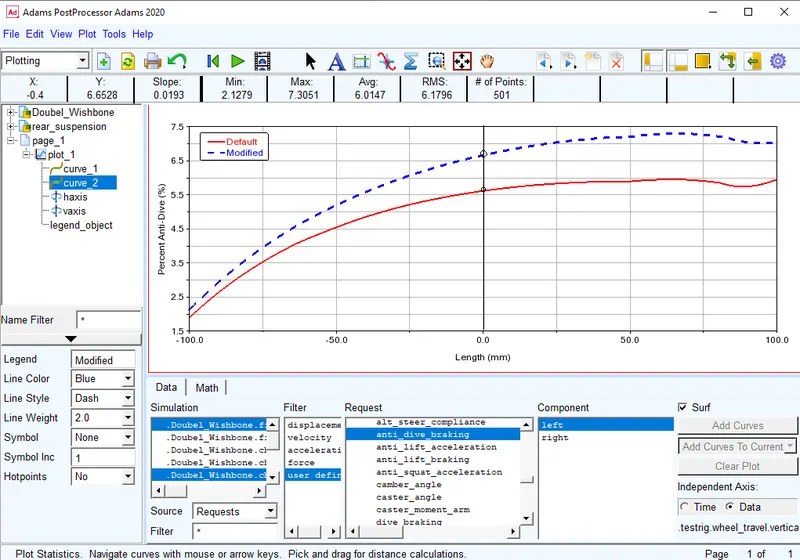
Front anti dive braking,
Default = 5.5 , modified = 6.6 which is satisfying the given constraints in the problem.
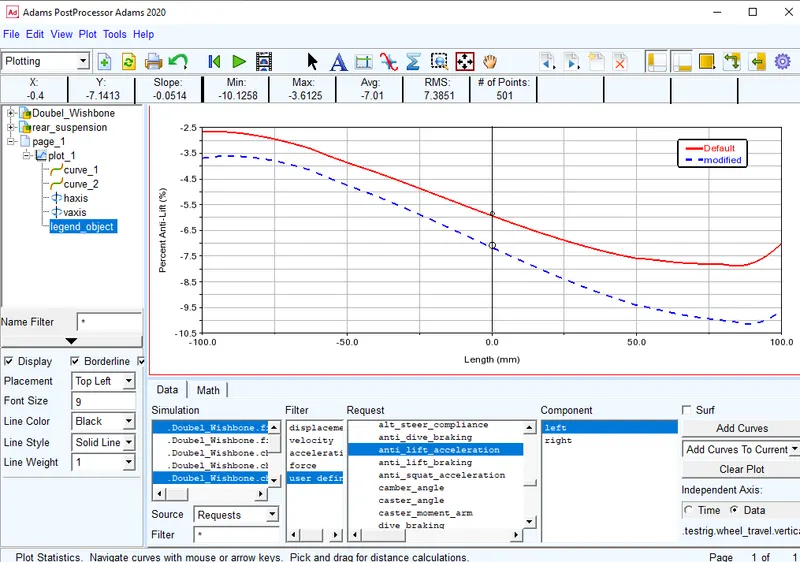
Front Anti lift acceleration:
Front Anti lift braking:
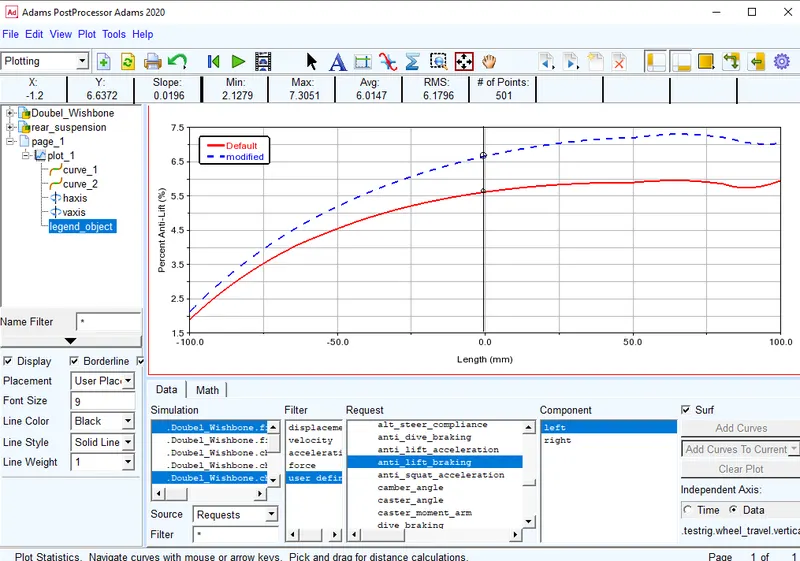
Front Anti Squat acceleration:
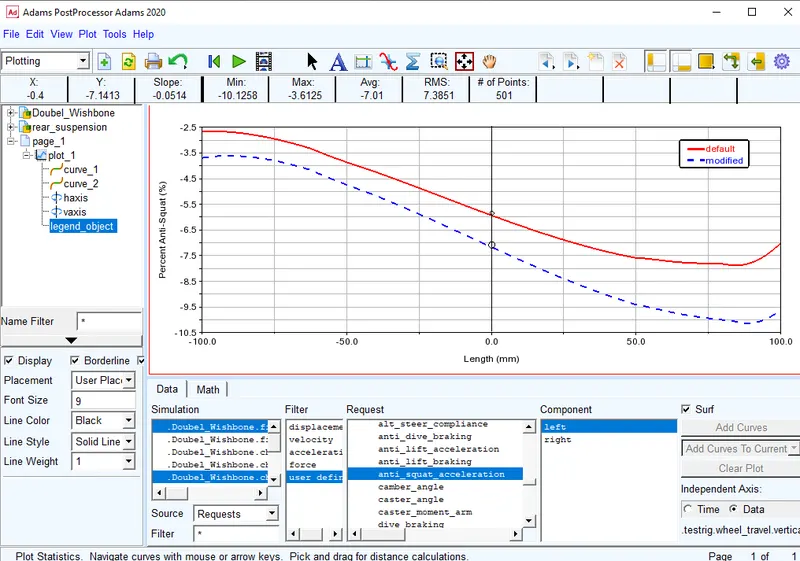
front Swing arm length:
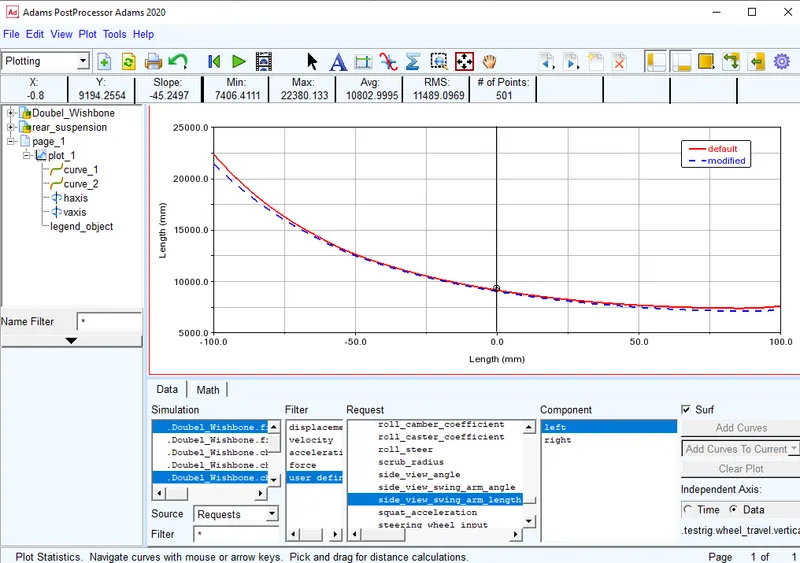
Front Swing arm angle:
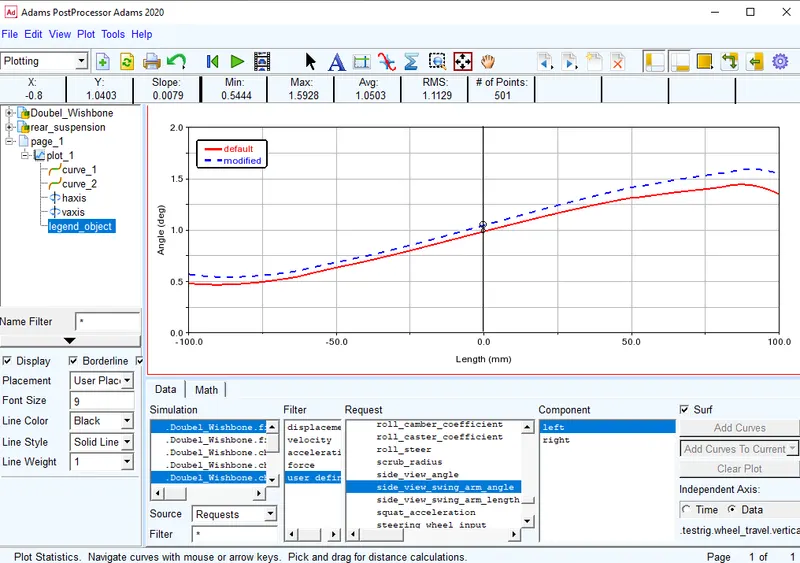
Front wheel rate:
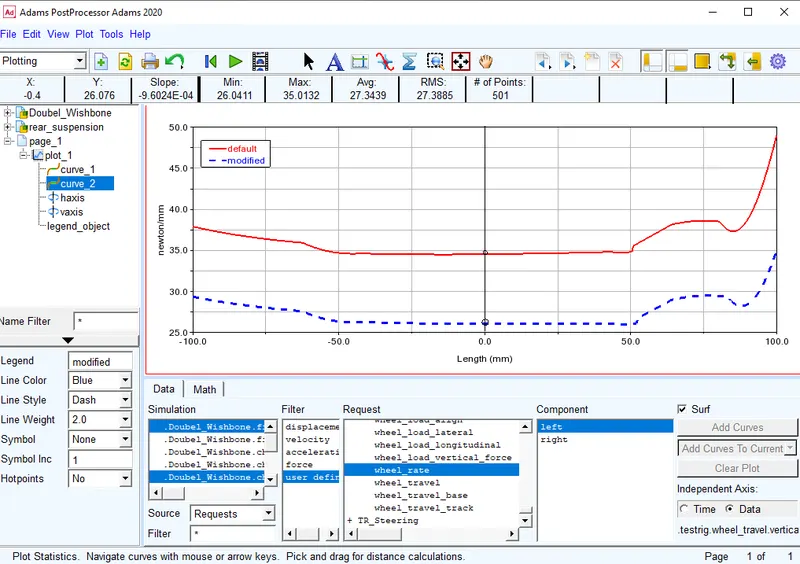
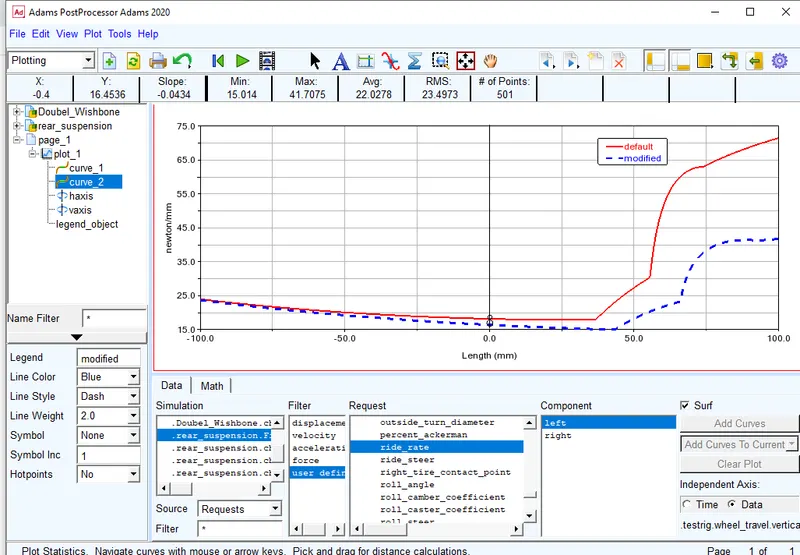
Front ride rate:
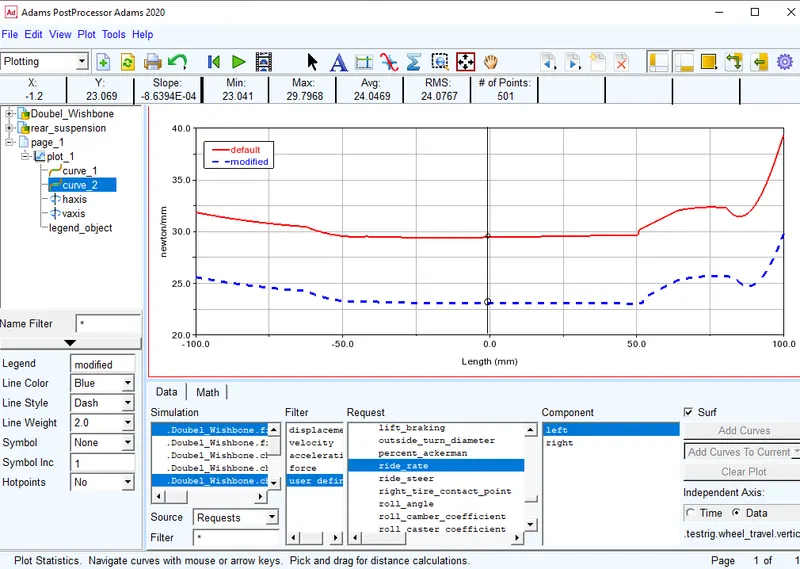
Rear anti dive braking:
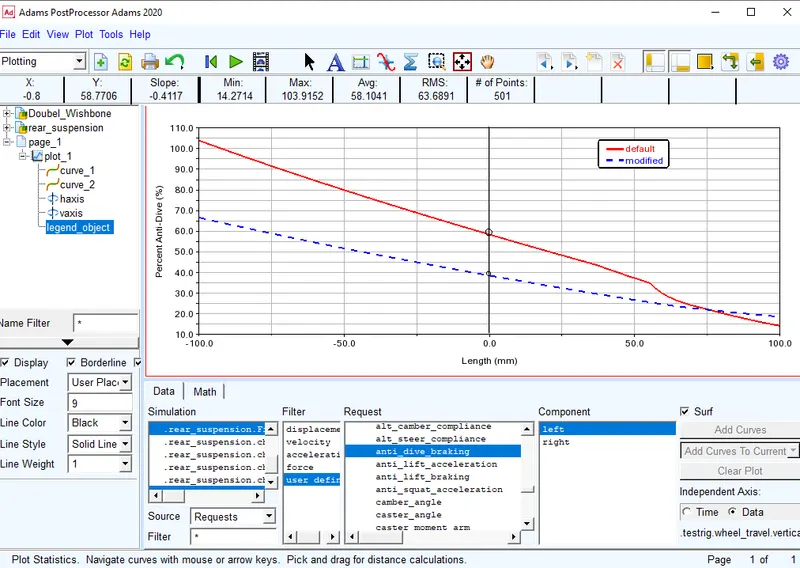
Rear anti lift acceleration:
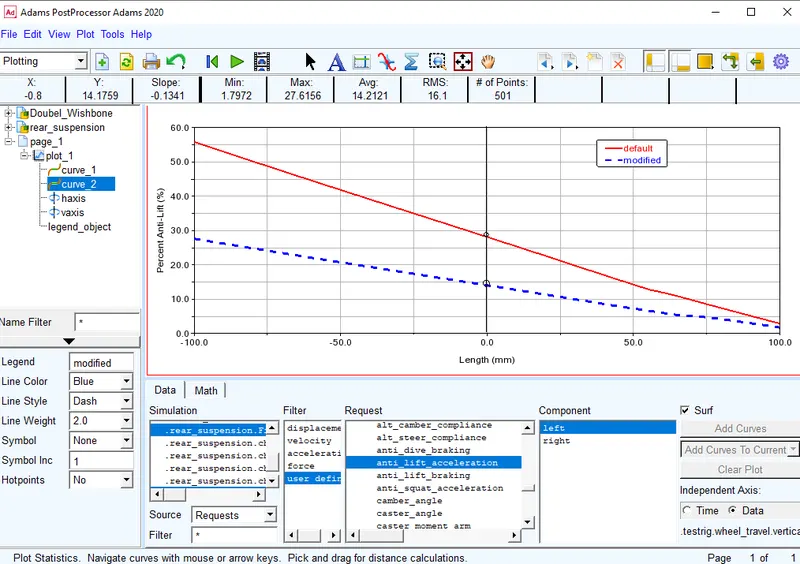
Rear anti lift braking:
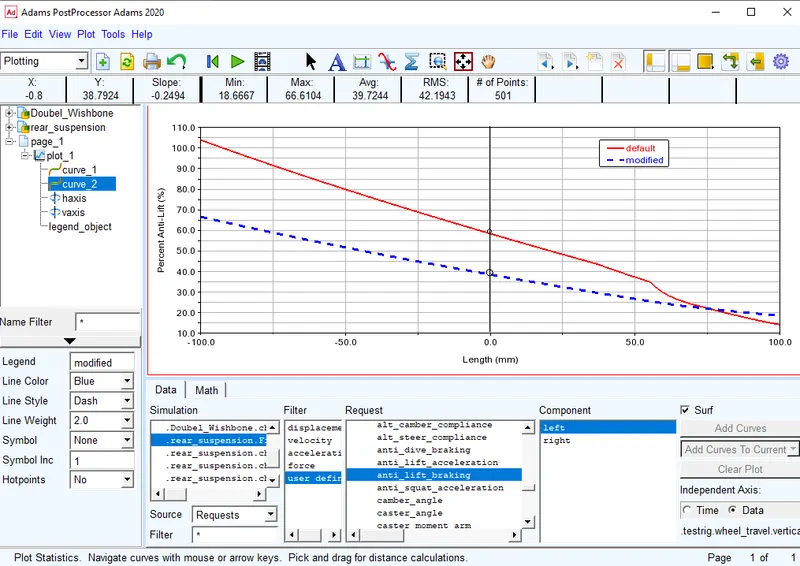
Rear anti squat acceleration:
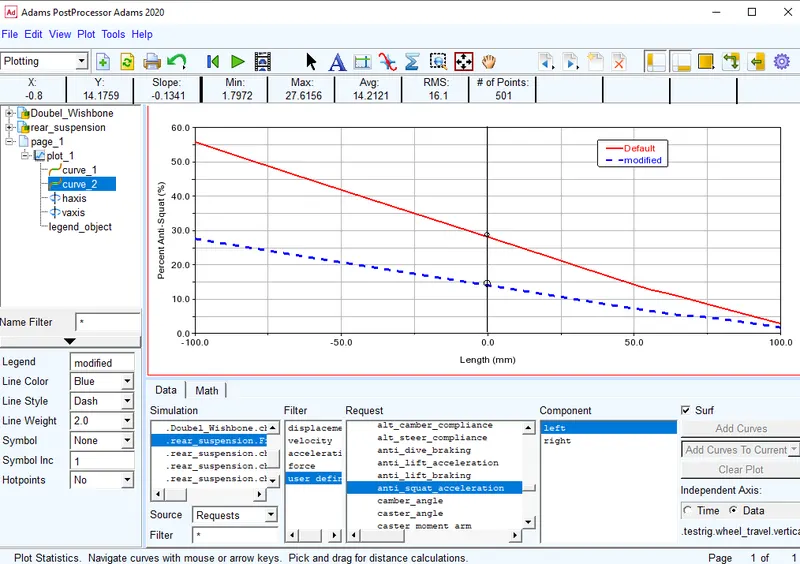
Rear swing arm length:
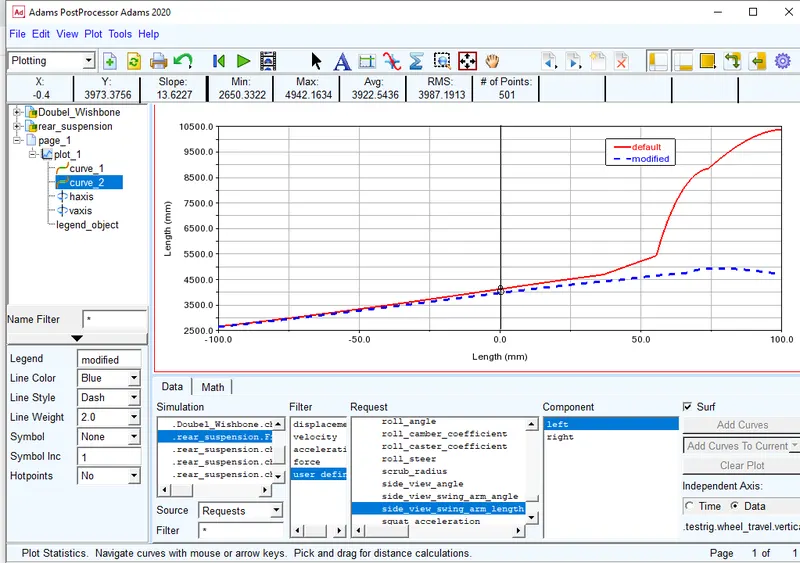
Rear swing arm angle:
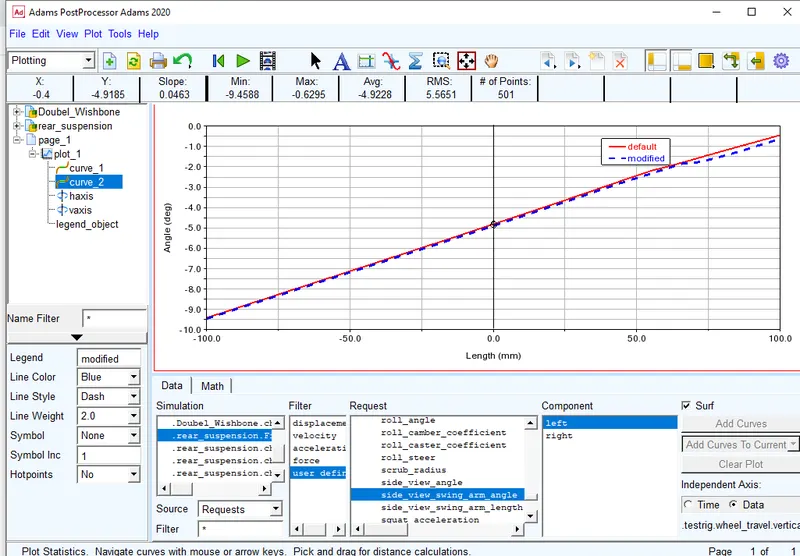
Rear wheel rate:
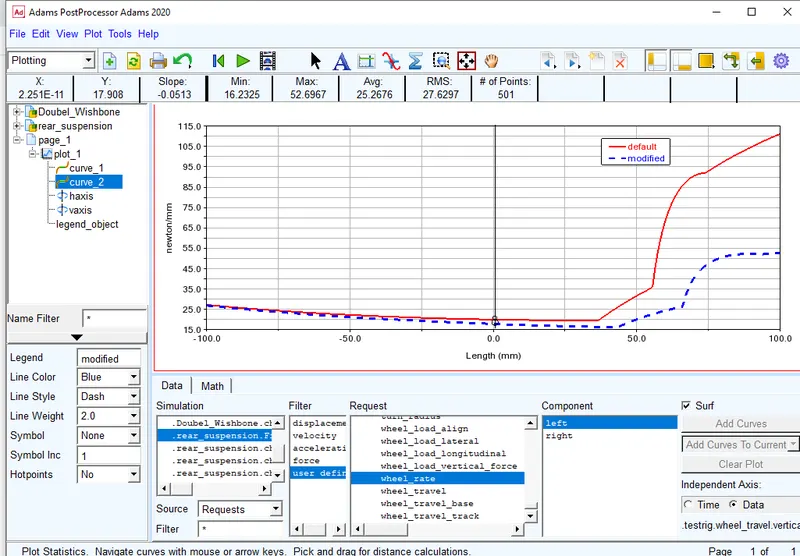
Rear ride rate: