Adams Assignments – Problem 4 – Steering geometry 2
Steps:
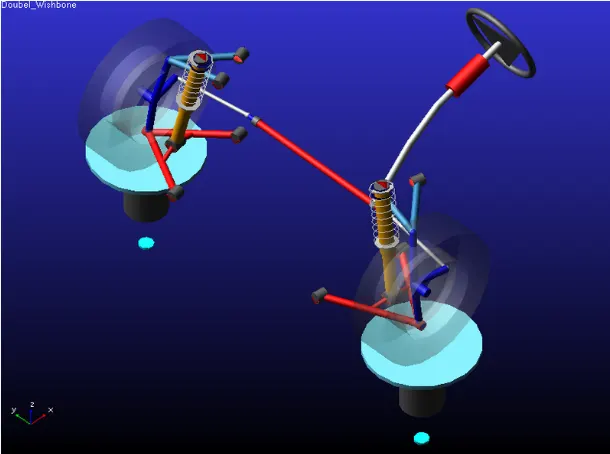
The double wishbone suspension system is loaded. As shown below,
The initial hard points are as shown below,
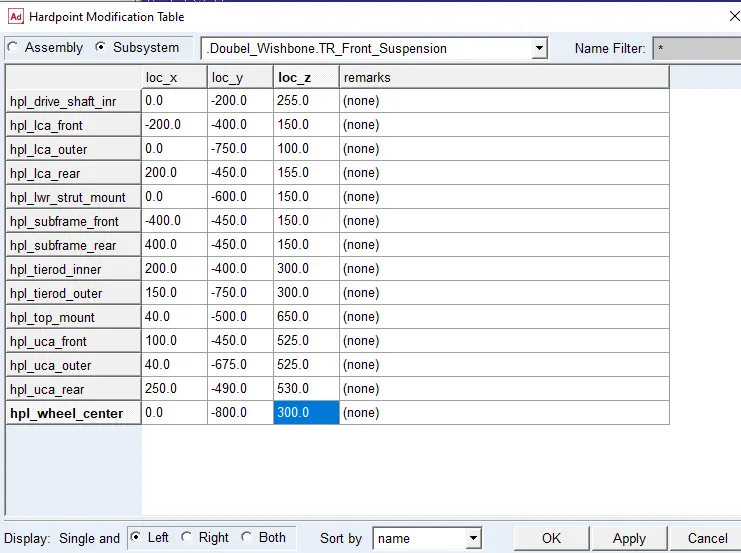
With this set of hard points we run parallel wheel travel simulation and name it as 'Default_hardpoints' with 500 steps and 100 mm in jounce and rebounce.
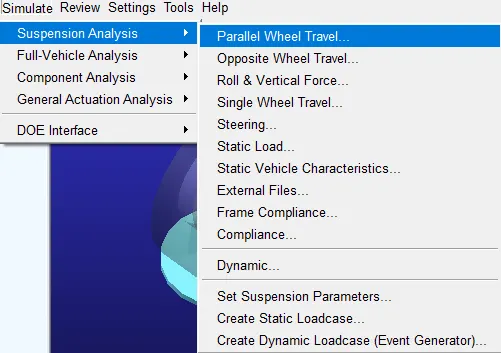
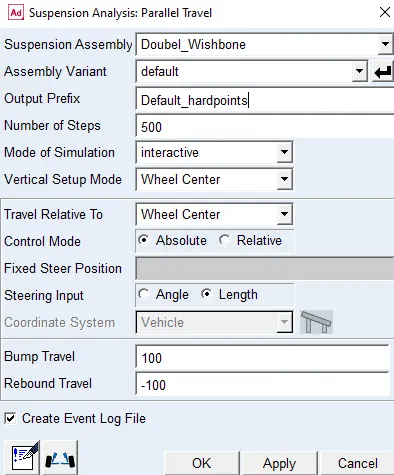
Click on apply and ok. The simulation will start and a message will be given that the simulation is completed.
Now modify the hard points to achieve the target given in the problem statement. The modified set of hardpoints are shown below,
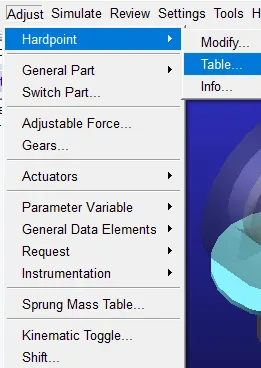
Click on table then we get the next tab where we modify the hardpoints,
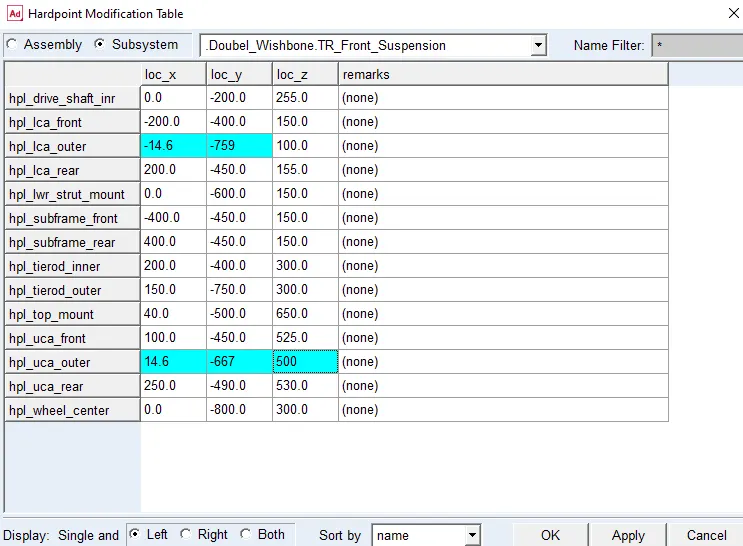
Click on apply and ok and run the simulation i.e. parallel wheel travel and name it as Modified_hardpoints and click on apply. The simulation will start.
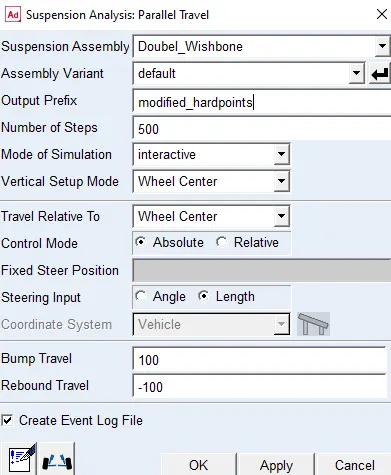
Now lets analyse the results one by one:
1. Caster Angle: The caster angle or castor angle is the angular displacement of the steering axis from the vertical axis of a steered wheel in a car.
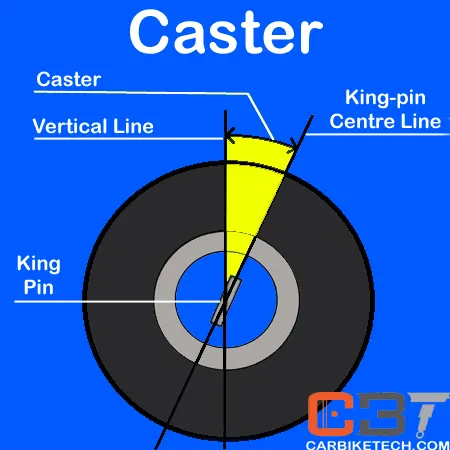
a. Initial caster angle = 5.36 Deg
Set the independent axis data and then wheel travel and click on ok. And select the dependent axis as caster angle.
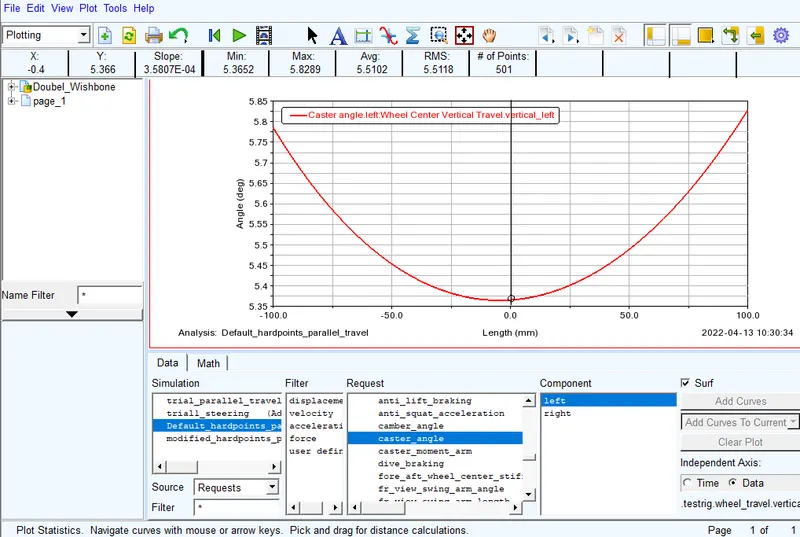
b. After modifing the hardpoints, Final caster angle = 4.1 Deg
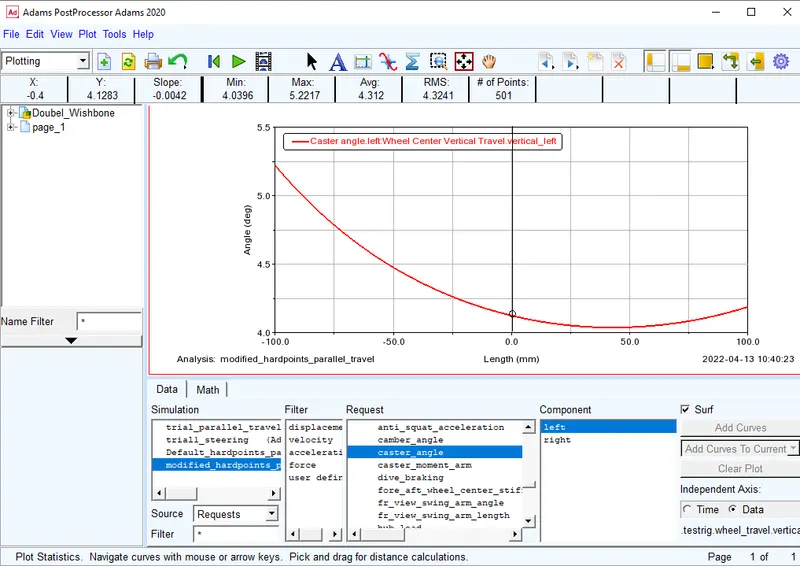
c. Effect: If the caster angle is reduced this will reduce steering effort, But it is also reducing the straight line stability and high speed stability.
2. Caster moment arm:
a. Initial caster moment arm = 7.99 mm
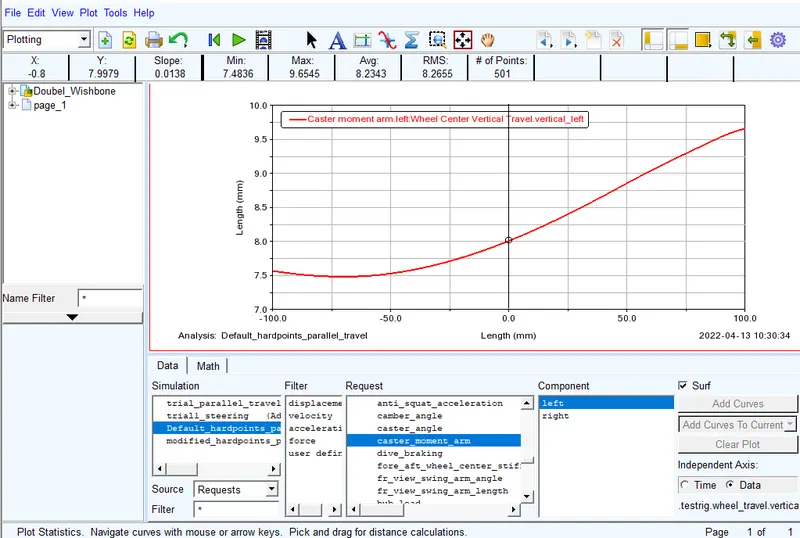
b. After modifing the hardpoints, Final caster moment arm = 20.6 mm
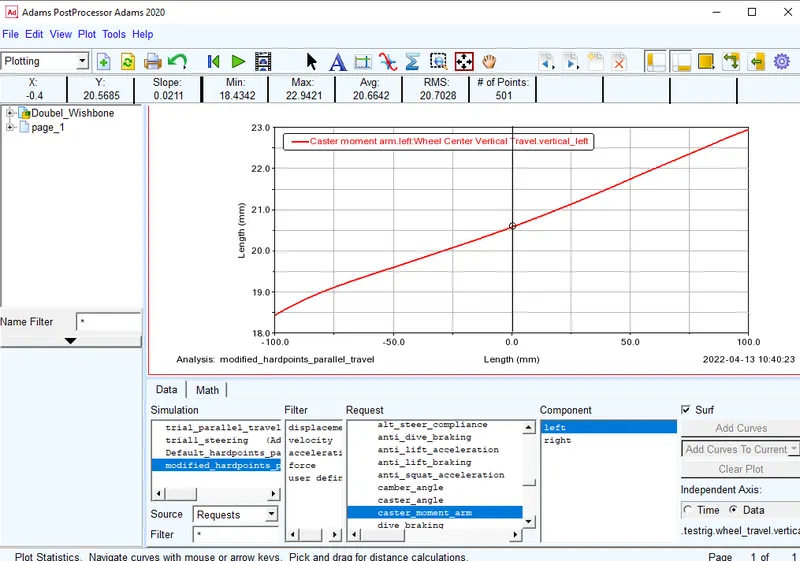
c. Effect: Increasing the caster moment arm value will increase the self centering torque in steering system.
3. Kingpin inclination angle: Kingpin angle is a measure of the angle of the suspension steer axis relative to vertical in front view.
a. Initial King pin inclination angle = 10.06 deg
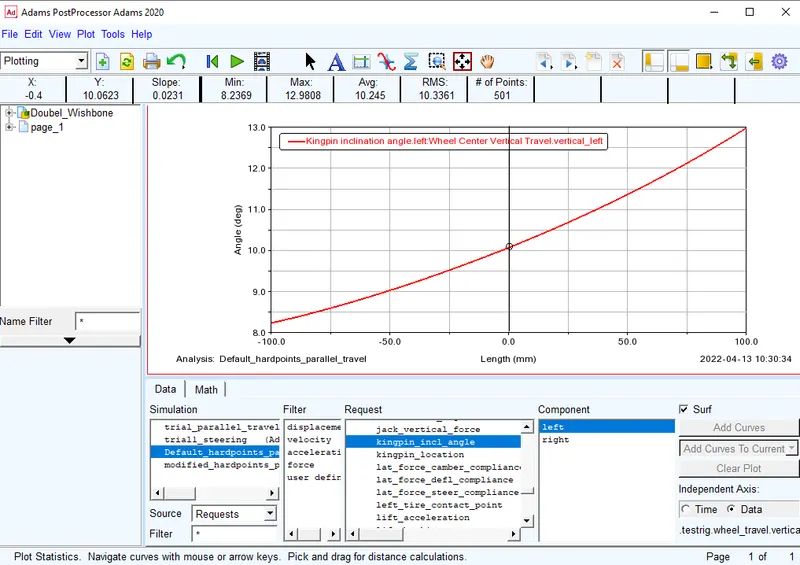
b. After modifing the hardpoints, Final King pin inclination angle = 13.03 deg
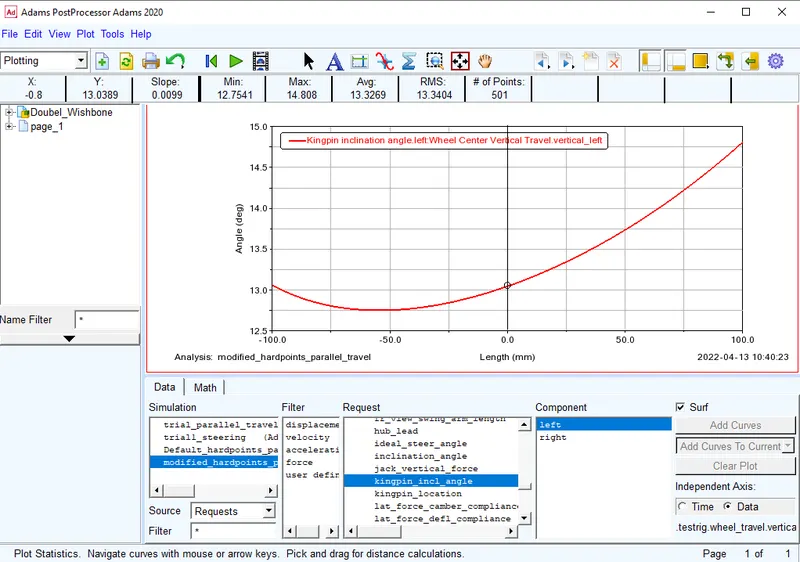
c. Effect: Increasing the King pin inclination angle will increase the self centering torque.
4. Steer axis offset (Resultant):
a. Initial Steer axis offset (Resultant) = 85.75mm
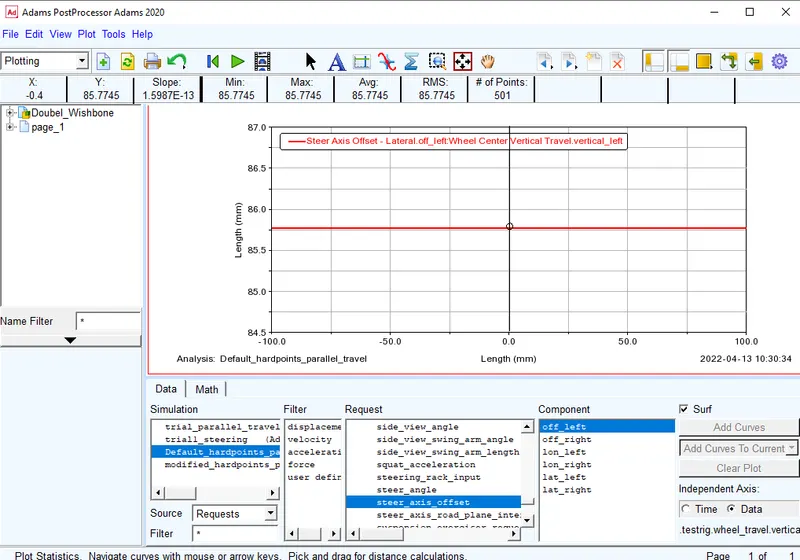
b. After modifing the hardpoints, Final Steer axis offset (Resultant) = 84.7976 mm
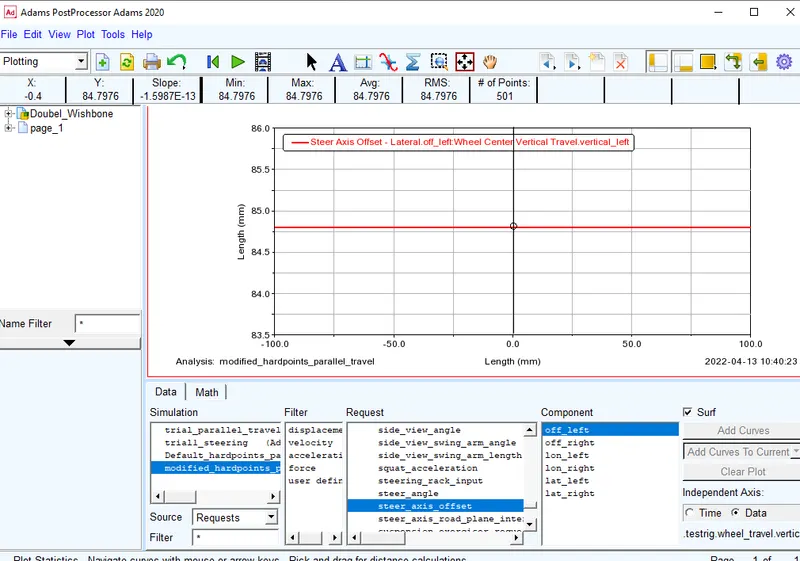
c. Effect: Steer Axis offset resultant usually has an effect on torque steer. But, In this case it is negligible.
5. Steer axis longitudinal offset:
a. Initial steer axis longitudinal offset = -18.67mm
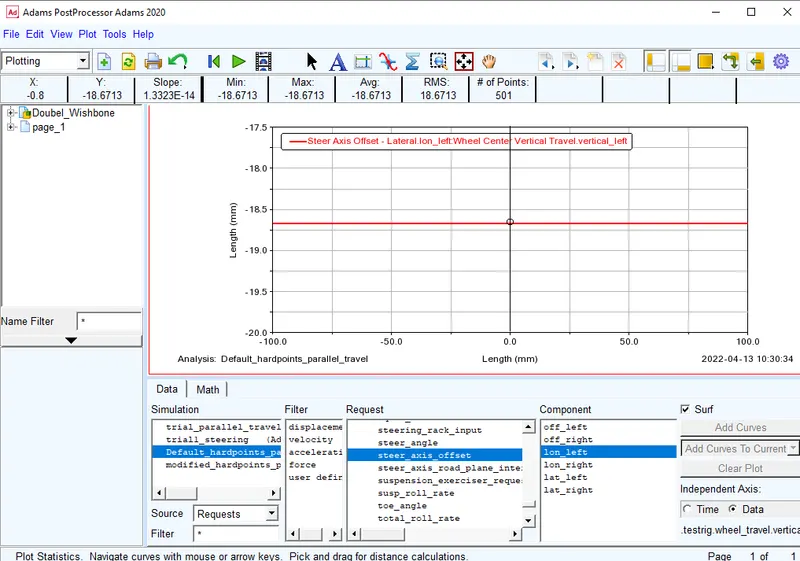
b. After modifing the hardpoints, Final steer axis longitudinal offset = 0 mm
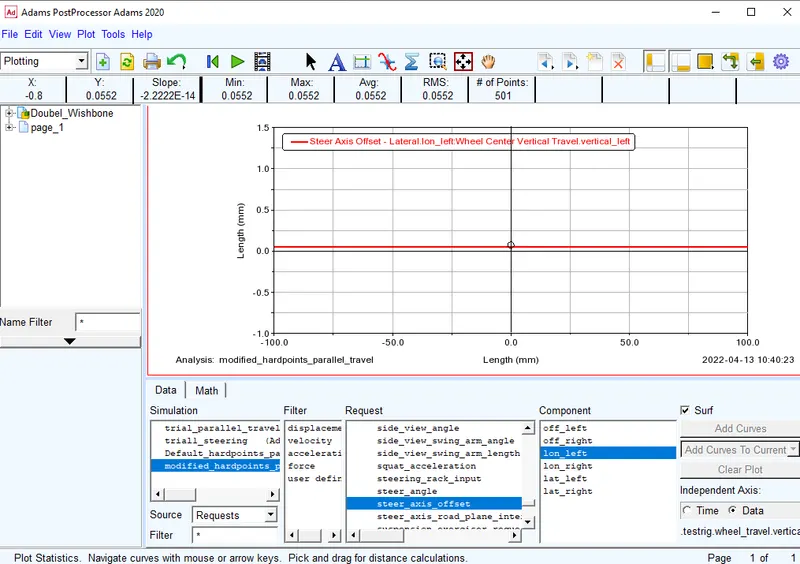
c. Effect: If the steering axis offset longitudnal is reduced to zero the vehicle stability is increased.
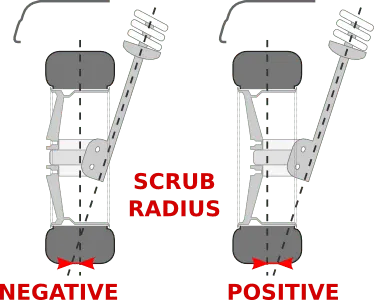
6. Scrub radius: The scrub radius is the distance at the road surface between the tire center line and the SAI line extended downward through the steering axis.
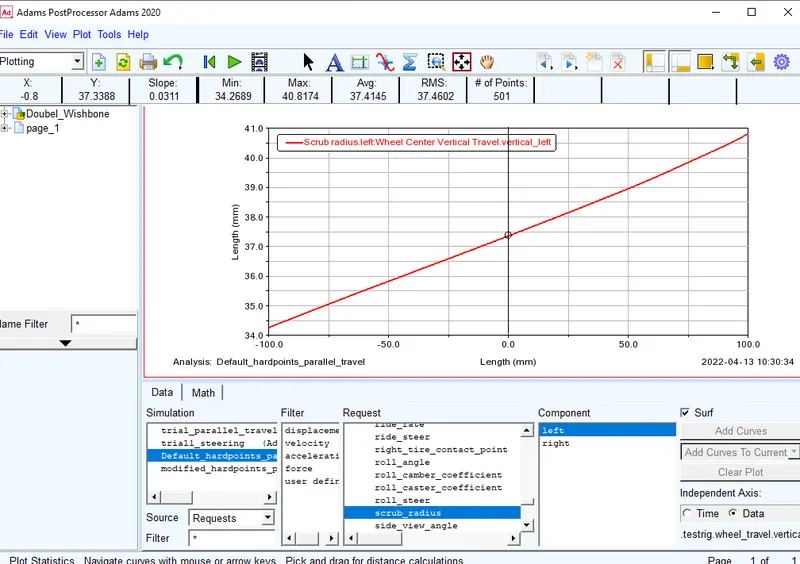
a. Initial scrub radius = 37.3 mm
b. After modifing the hardpoints, Final scrub radius = 23.69 mm
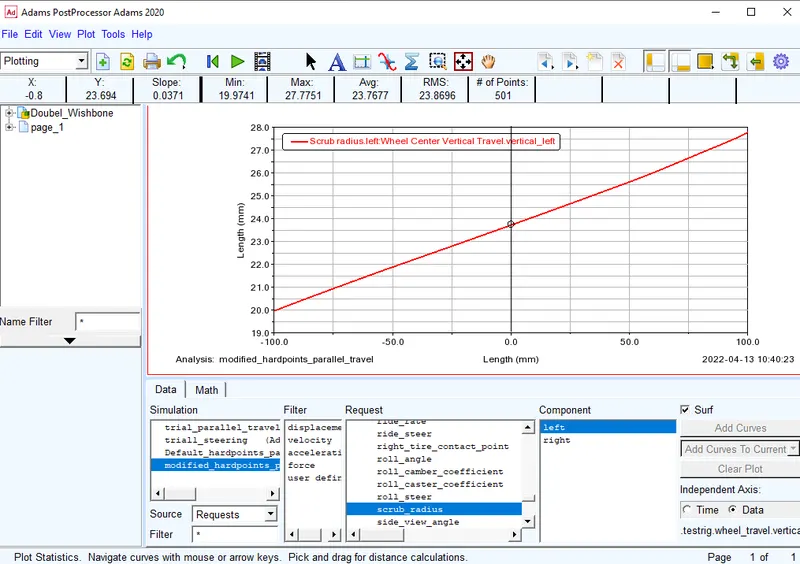
c. Effect: Reducing the scrub radius value will reduce the tire wear, increases the braking stability and will make the steering less responsive.
These parameters cannot be controlled independently because each parameters are interdependent to others. Such as caster angle, Caster moment arm and steer axis longitudnal offset value this all depends on x coordinate of control arm outer ball joint. similarlly the other three i.e. kingpin inclination angle, scrub radius and steer axis lateral offset this all depends on y coordinate of the control arm outer ball joint and if any one is tuned all the 3 will be disturbed.
So, All the above parameters all interdependent to each other hence independent control is not possible.