 Free · 3 lessons · no payment
Design of RCC and PSC Superstructures using LUSAS: 3 free lessons
Three free lessons from Skill-Lync's Design of RCC and PSC Superstructures using LUSAS course. They cover concrete and steel as materials, then a spreadsheet example of a rectangular beam's cracking moment and ultimate capacity. The last lesson compares bridge forms, from solid slabs to cable-stayed bridges, by span, site and construction method. No LUSAS modelling appears in these three.
Last updated 16 Nov 2026 · 3 free lessons (1 h 27 min) · full course: 48 lessons (22 h 51 min), paid · ₹40,000
 Free lesson 1 · 28 minConcrete and Steel Basics for Bridge Design
What will you learn in the free Design of RCC and PSC Superstructures using LUSAS lessons?
- Concrete and steel properties, strength classes, design curves
- Cracking moment and ultimate moment capacity of a beam
- Over-reinforced versus under-reinforced section check
- Choosing a bridge form by span, site and construction
Free lessons you can watch now
- Lesson 1 · 28 minConcrete and Steel Basics for Bridge DesignThe instructor covers what concrete is made of, the hydration reaction, cement types and admixtures, and why 28-day strength is used for design. The lesson then compares cube and cylinder tests, concrete and steel design curves, and uncracked versus cracked beam behaviour.
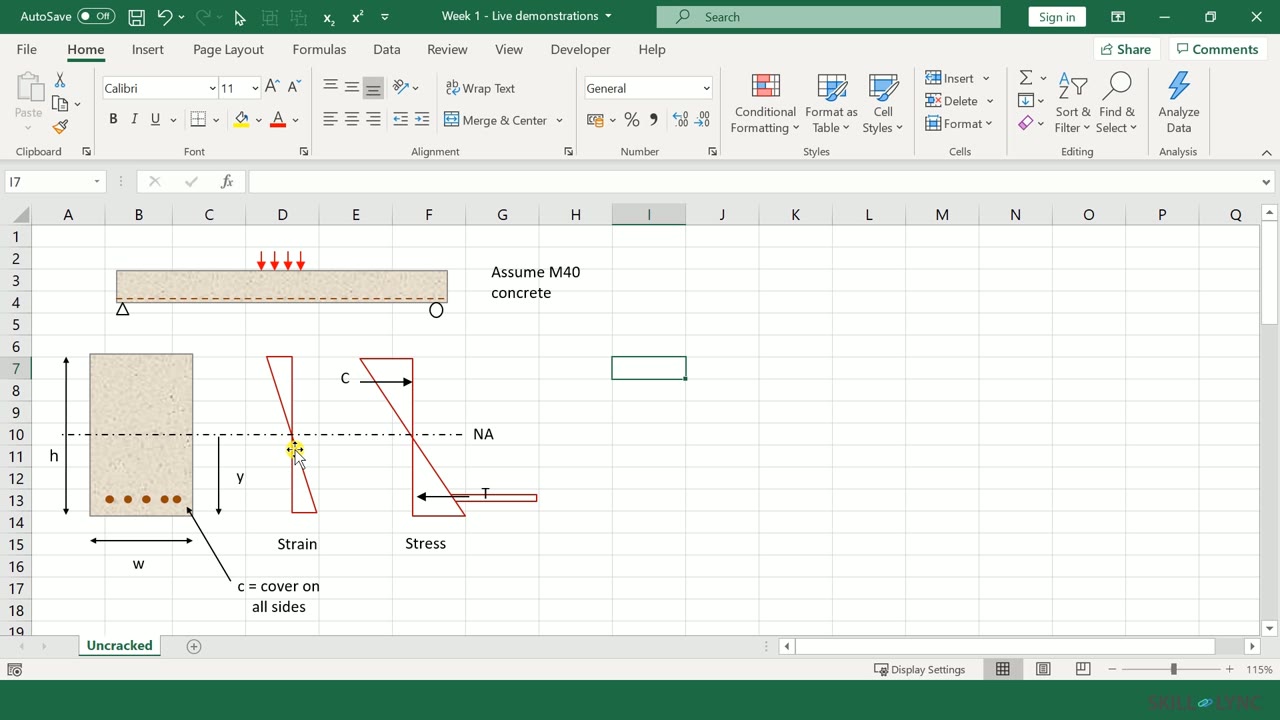 Lesson 2 · 25 minCracking Moment and Ultimate Capacity of a Concrete Beam in ExcelThe instructor works an Excel example for a 500 mm by 300 mm beam in 40 MPa concrete with five 20 mm bars. The lesson finds a cracking moment of 26.3 kNm, an ultimate capacity of 264 kNm, checks it against a 213 kNm design moment, and tests for over-reinforcement.
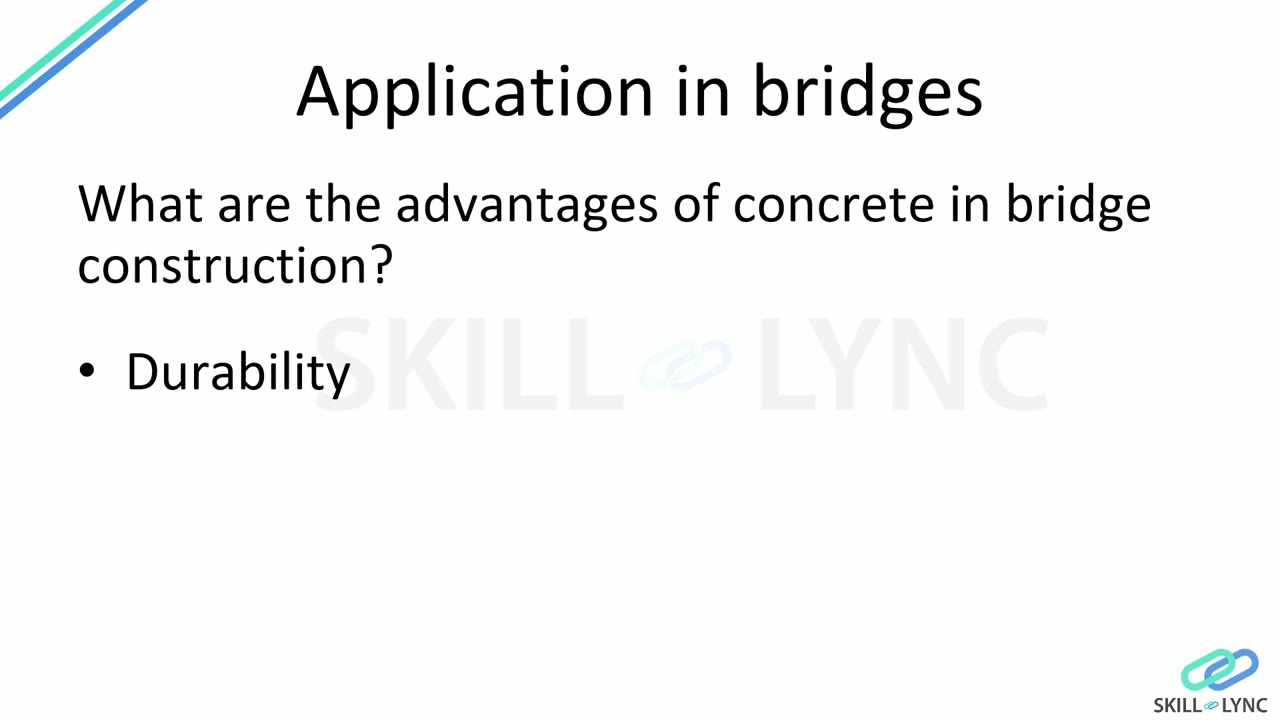 Lesson 3 · 34 minChoosing a Concrete Bridge Form by Span, Site and ConstructionThe instructor explains why concrete suits bridges, then how usage, site, labour, construction method, sustainability and looks drive form selection. The lesson compares solid and voided slabs, ribbed slabs, precast beams, box girders, portal frames, composite girders, arches, extradosed and cable-stayed bridges against typical span ranges.
Which lessons of Design of RCC and PSC Superstructures using LUSAS are free?
The first 3 lessons are free on Grow by Skill-Lync: 1 h 27 min of video from Skill-Lync's Design of RCC and PSC Superstructures using LUSAS course that you can watch here at no cost: leave your name and phone number once and they play (as of 16 Nov 2026). The full course is paid (₹40,000); its other 45 lessons are listed in the outline below so you can see what each one covers.
How long is the Design of RCC and PSC Superstructures using LUSAS course?
The full course has 48 lessons and 22 h 51 min of recorded video, plus the projects and assignments that come with enrolment. The free lessons alone take about 1 h 27 min, so you can finish them in an evening and decide whether to continue.
What comes after the free lessons?
Lesson 4 onwards is in the paid Design of RCC and PSC Superstructures using LUSAS course on Skill-Lync, with mentor support and a certificate. For a career in Civil & structural, the Post Graduate Program in Bridge Design and Analysis goes further with industry projects and placement support.