All About Steel Connections
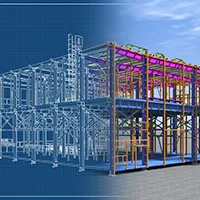
Steel connections are the integral parts of any steel structure that have a major role in its overall integrity. The standard parts are properly connected to create the steel structures. Because it is customary to prioritise the individual member over the connections when a structural member fails due to overloading, this type of practice impacts numerous structural members.
 Navin Baskar·4 Apr 2023·2 min read
All About Steel Connections
Steel connections are the integral parts of any steel structure that have a major role in its overall integrity. The standard parts are properly connected to create the steel structures. Because it is customary to prioritise the individual member over the connections when a structural member fails due to overloading, this type of practice impacts numerous structural members. Because connections make up a large amount of the cost of structural steel, connection design should be given top priority for both safety and structural economy.
Types of Steel Connections
Below are the types of steel connections:
- Fin plate connection
- End plate connection
- Gusset plate
- Splice connection
- Base plate connection
We design steel connections by using IS 800 clause 10 - connection.
Fin plate connection:
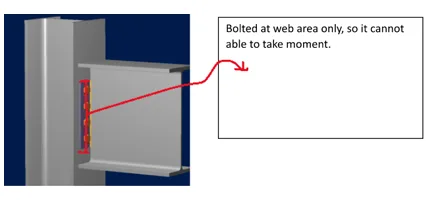
The purpose of fin plates is to transfer only shear and axial force from the supported to supporting members through WEB AREA-like beam-to-beam connection (secondary beam to primary beam) we use fin plate connection.
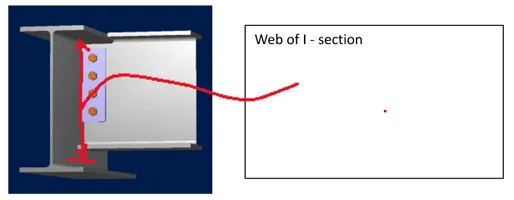
Force flows from beam to bolt, bolt to the plate, then plate to weld finally weld to beam girder.
Below are the designs checks for Fin Plate connections:
- Shear capacity of the bolt
- Tension capacity of the bolt
- Bearing capacity of the bolt
- Block shear capacity of the bolt
- Combined shear and tension capacity
- Weld check
End plate connection:
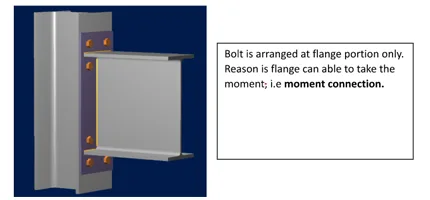
The purpose of the end plate connection is to transfer both moment and forces (Shear and axial).
This connection is mainly used for beam-to-column connection to transfer moment, that is end plate design.
Design check for connection:
- Shear capacity of the bolt
- Tension capacity of the bolt
- Bearing capacity of the bolt
- Block shear capacity of the bolt
- Combined shear and tension capacity
- Weld check
- Plate bending check
Force flow for end plate
Beam to endplate through the weld, then end plate to the column by the bolt.
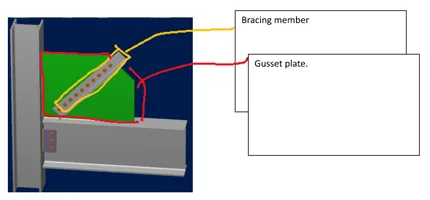
Gusset plate:
Gusset plate's purpose of transferring load (only axial, not a moment) from the bracing member to the beam and column.
Design check for connection:
- Shear capacity of the bolt
- Tension capacity of the bolt
- Bearing capacity of the bolt
- Block shear capacity of the bolt
- Combined shear and tension capacity
- Weld check
- Bending check for gusset plate
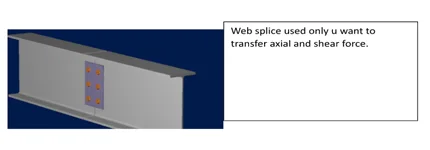
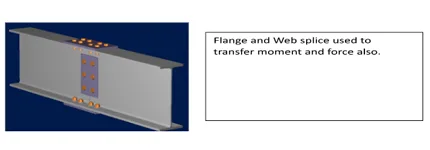
Splice connection.
The purpose of the splice connection is to facilitate erection in the site, reduce the length, and lap a member to member by using bolt and weld.
Design check for connection:
- Shear capacity of the bolt
- Tension capacity of the bolt
- Bearing capacity of the bolt
- Block shear capacity of the bolt
- Combined shear and tension capacity
- Weld check
- Bending check for web plate
- Bending check for Flange inner and outer plate
Base Plate connection:
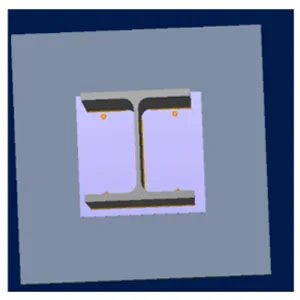
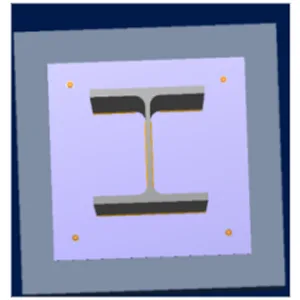
Pinned Base plate.
Bolt is placed in between the flange, the image is attached below.
Fixed base plate:
Bolt is placed at the outer flange, image attached below.(It can able to take moment)
Design check for connection:
- Shear capacity of the bolt
- Tension capacity of the bolt
- Bearing capacity of the bolt
- Block shear capacity of the bolt
- Combined shear and tension capacity
- Weld check
- concrete check.