Wiring harness routing & packaging Rules Week 3 Challenge
Report on Wiring harness routing & packaging Rules:-
In the automotive industry, proper wiring harness routing and packaging are vital for the reliable and efficient operation of electrical systems within vehicles. Adhering to the outlined rules and guidelines enhances overall system performance, reduces maintenance costs, and ensures the safety and satisfaction of vehicle owners.
The automotive industry relies heavily on complex electrical systems to power various components and functions within vehicles. Wiring harness routing and packaging play a crucial role in ensuring the safe and efficient operation of these electrical systems. This report outlines the key rules and guidelines for wiring harness routing and packaging in the automotive industry, aimed at enhancing reliability, performance, and safety.
-
Electrical and Electronic Component Placement: During vehicle design, engineers carefully plan the placement of electrical components to optimize wiring harness routing. Strategic component positioning minimizes harness length, reducing signal interference, voltage drop, and electromagnetic interference (EMI).
-
Follow OEM Design and Routing Guidelines: Adherence to automotive manufacturers' design and routing guidelines is crucial. Complying with OEM standards ensures compatibility, safety, and performance requirements are met.
-
Route Wiring Away from High-Temperature Areas: Automotive components generate high temperatures. Routing wiring harnesses away from heat sources protects wires and insulation. High-temperature-resistant materials and thermal protection enhance harness durability.
-
Avoid Chafing and Abrasion: To prevent harness damage from vehicle movement and vibration, routes should avoid sharp edges, rough surfaces, and moving parts. Protective loom covers, grommets, and secure fasteners reduce chafing and abrasion risks.
-
Secure Harnesses Properly: Proper fastening and securing prevent movement and rattling during vehicle operation. Automotive-grade clips, retainers, and fasteners maintain intended routing.
-
Minimize EMI and Crosstalk: To maintain electronic component performance, high-frequency wires should be isolated and routed separately to minimize electromagnetic interference (EMI) and crosstalk. Shielding and grounding techniques are used where necessary.
-
Consider Flexibility and Movement: Allow for component movement and flexing in suspension and engine systems by designing harnesses with sufficient slack and flexibility. This reduces stress on wires and connectors.
-
Environmental Protection: Harsh environmental conditions, like moisture, chemicals, and road debris, can affect wiring harnesses. Weather-resistant materials, connectors, and protective seals safeguard the wiring from premature deterioration.
-
Serviceability and Accessibility: Easy access to wiring harness connectors and components simplifies maintenance and repair procedures, reducing downtime and ensuring efficient servicing.
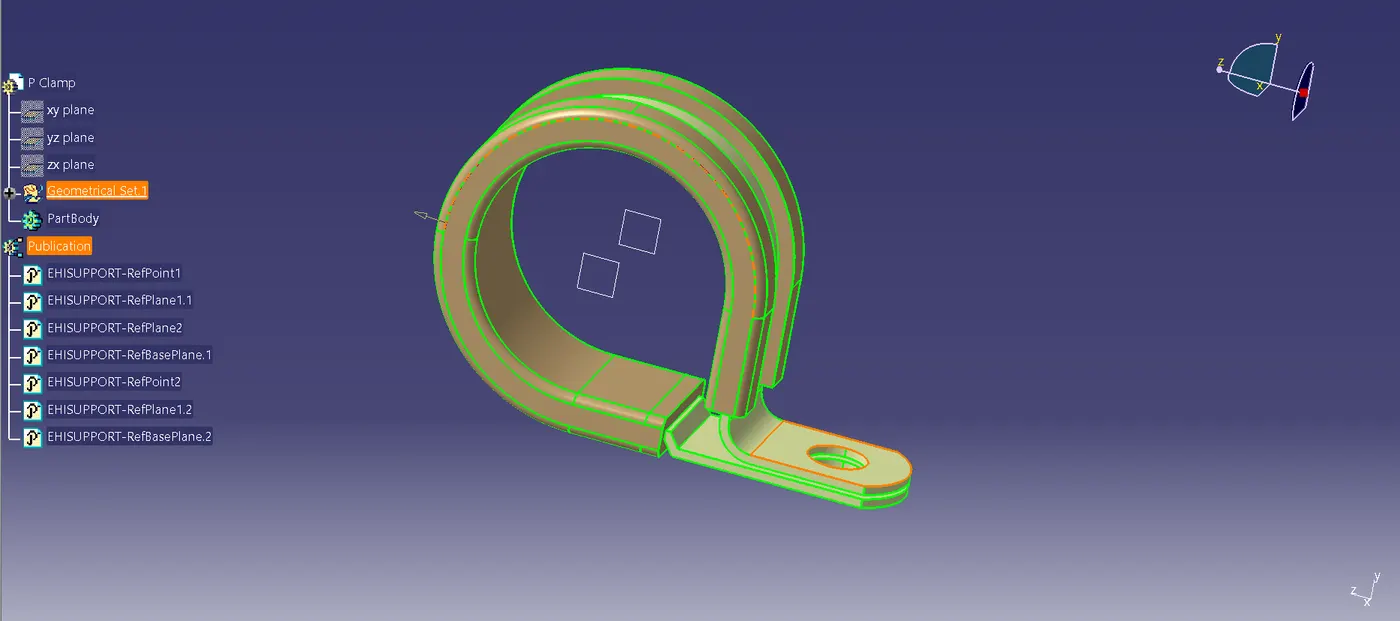
Q1:- P-clamps lock cables and hoses in place and help ensure that machinery, vehicles and equipment keep running. They bracket wires, cables or hoses together mechanically and are fastened securely to an anchor point – usually with a screw or a bolt.
process:
- Create two points one as entry and another as exit point.
- create planes at two points and another at base.
- Switch to Electric part desgn
- Click on support defination - select part - select entry point - select entry plane, exit and base plane.
- Again Click on support defination - select part - select exit point - select exit plane and base plane as secondary plane is automatically taken.
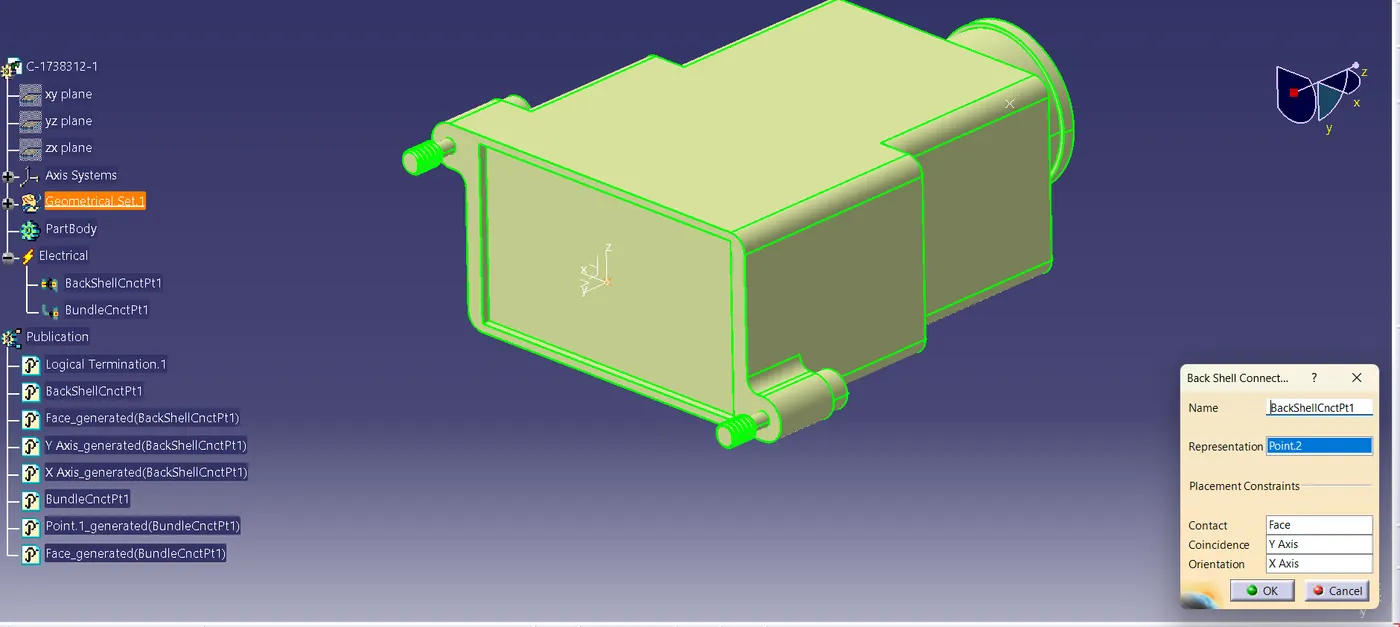
Q2:-Automotive backshells come in various shapes, sizes, and materials, depending on the specific application and requirements. They are commonly used in the automotive industry, where reliable electrical connections are crucial for the proper functioning of various vehicle systems, such as engine control, lighting, sensors, and communication systems.
- create Back shell entry point.
- create axis system for back shell entry.
- create bundle connection point.
- switch to Electrical part design.
- Define part electricaly as back shell.
- Then define Back shell connection point.
- Define bundle connection point.
Q3:- COT Tubes :-Corrugated tubes
The primary purpose of using corrugated tubes in electrical wire harnesses for automobiles is to provide protection, organization, and strain relief to the wires and cables within the harness. Here are some key functions of corrugated tubes in automotive wire harnesses:
Protection, Containment and Organization, Flexibility,
Strain Relief: By providing a flexible conduit around the wires, the tubes act as a strain relief mechanism, reducing stress on the connection points and preventing wires from being pulled or tugged out of their terminals.
Temperature and Chemical Resistance: Many corrugated tubes are made from materials that offer resistance to temperature variations and exposure to chemicals and automotive fluids, ensuring long-lasting protection in harsh conditions.
Easy Access and Modification: The split design of some corrugated tubes allows easy access to individual wires within the harness, facilitating modifications or repairs without having to disassemble the entire harness.
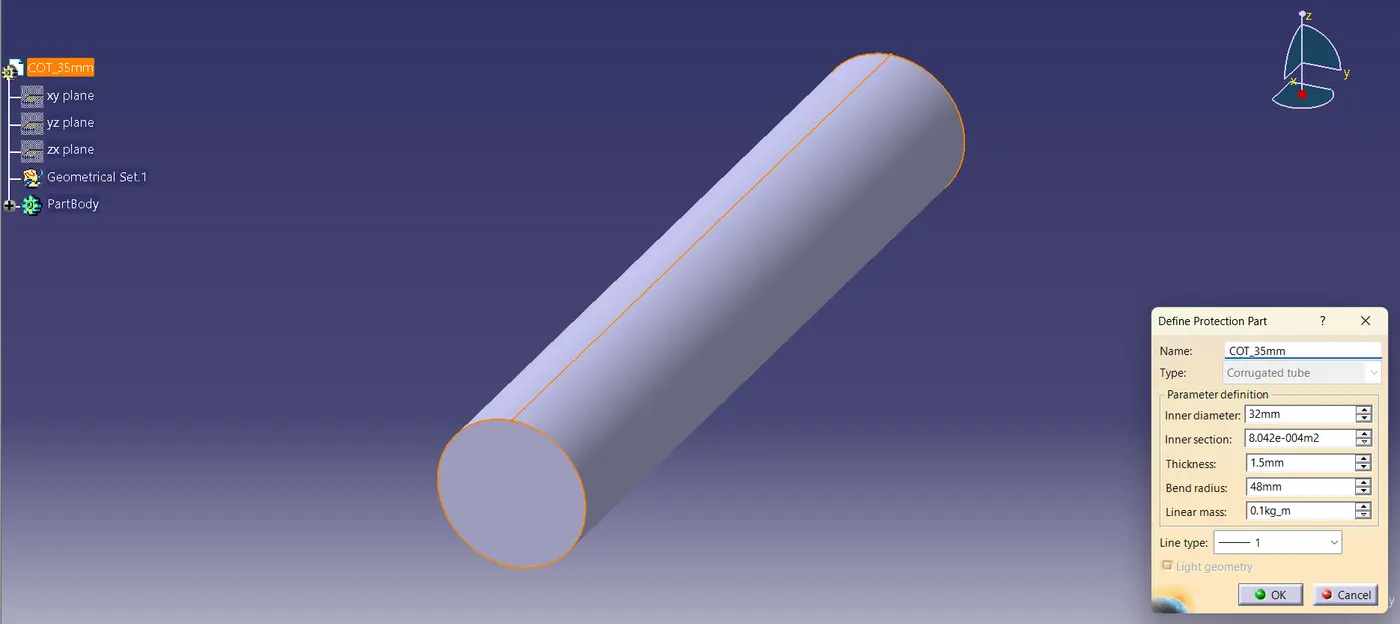
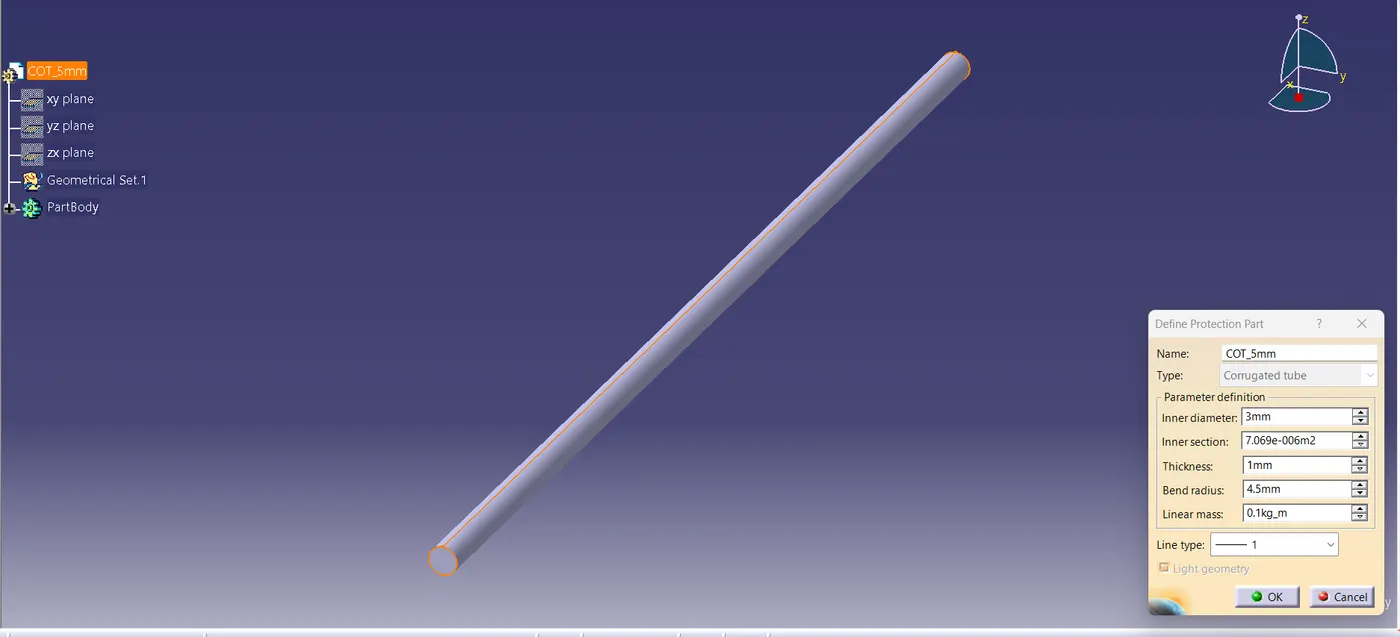
Process to create COT-Tubes
- Switch to Electrical part design
- Select Define protection Part
- Click on part (on file name in specification tree)
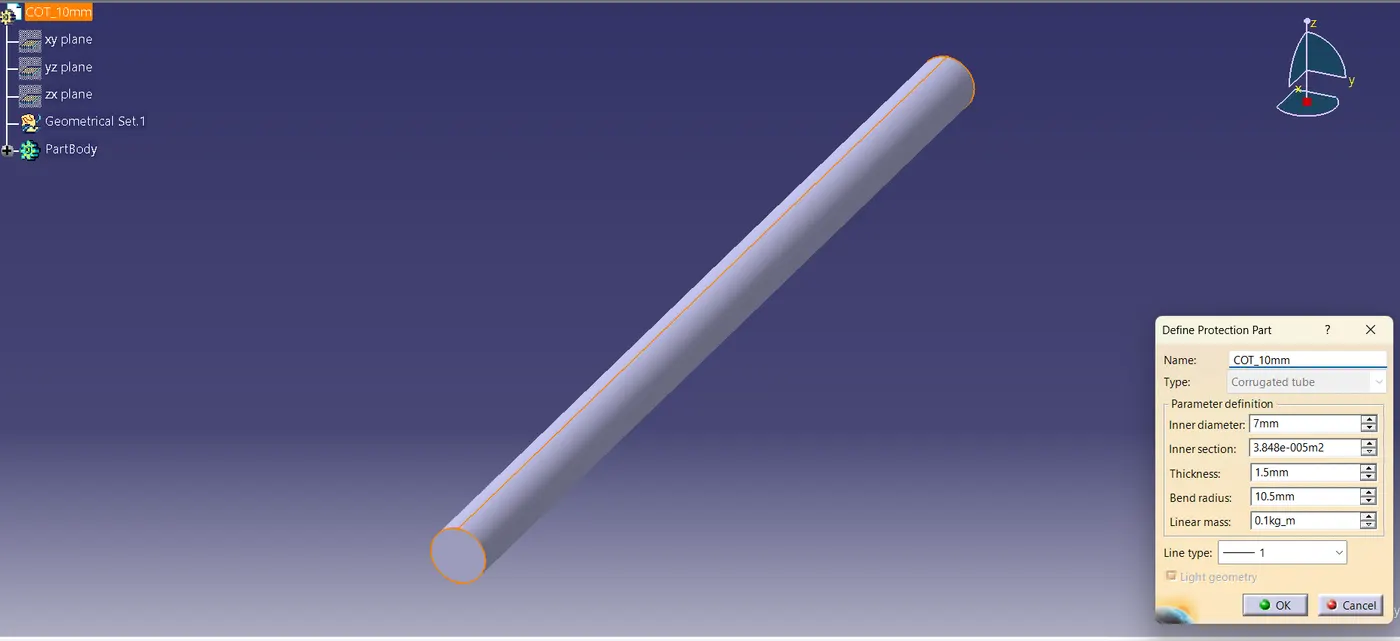
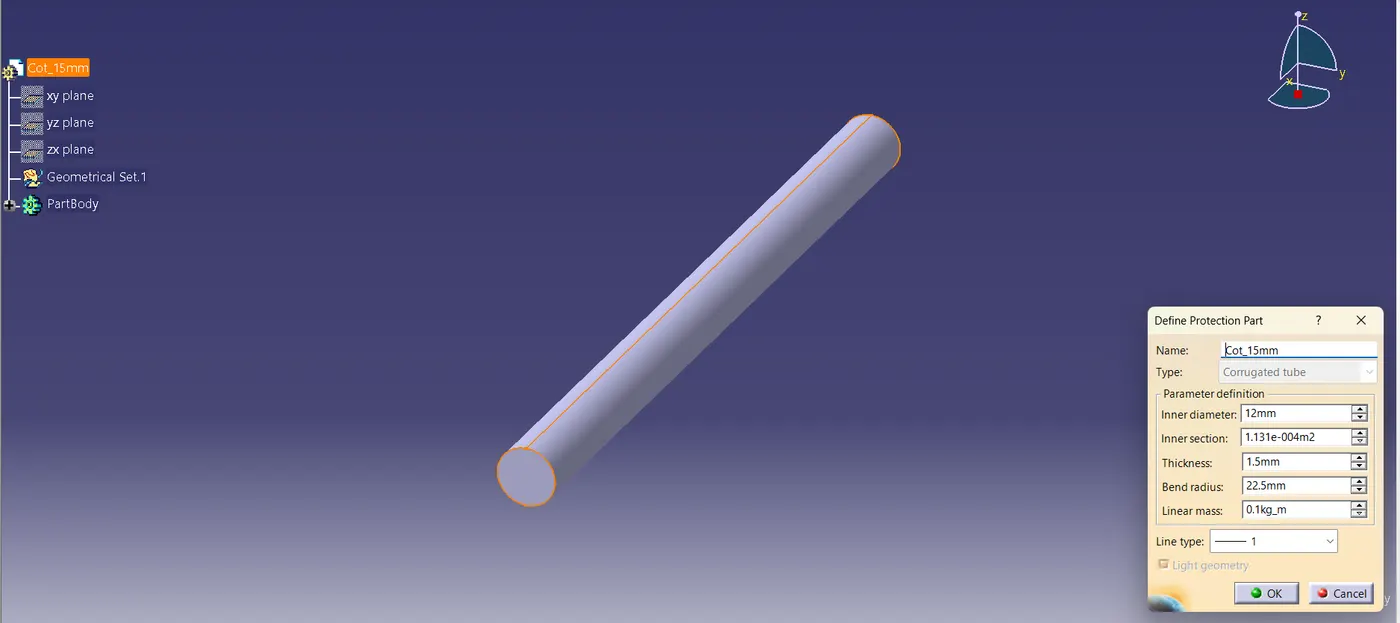
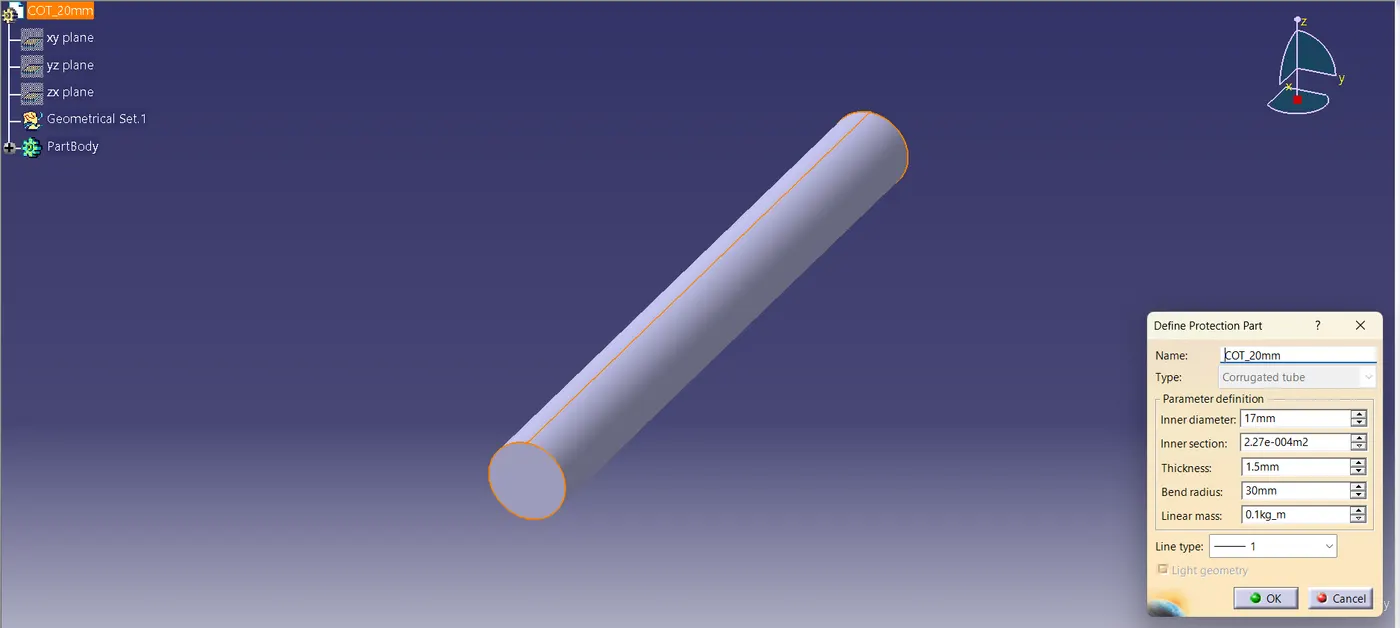
- Provide given parameters and bend radius as '1.5 x Outer Dia'.
Catalogue Cretation:
- new part -> catalogue document -> add family -> give name(Slit COT) -> in type select (Conduit) - save.
- Open part to add catalogue - store device command - select catalogue - family - Slit COT - ok
COT_5mm:-
COT_10mm:-
COT_15mm:-
COT_20mm:-
COT_35mm:-