Week 9 Tension and Torsion test challenge
Aim:
To perform the tensile and torsion test on the specimen using ANSYS Workbench. The following objectives are to be satisfied.
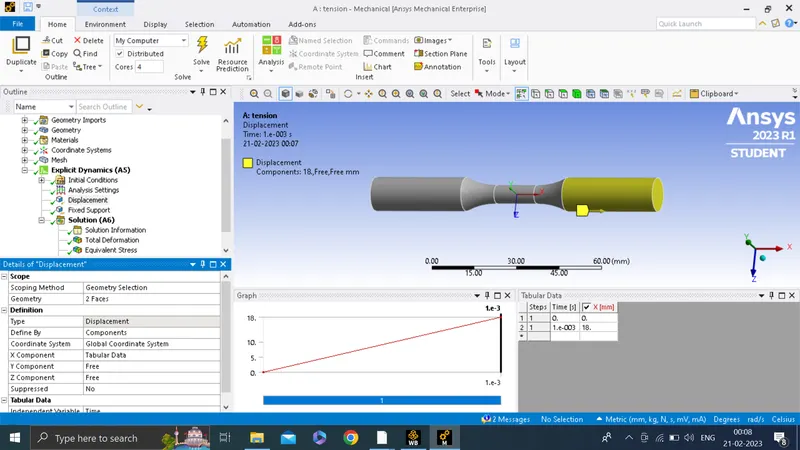
1. To displace one end of the specimen to 18 mm while keeping the other end fixed for tension test.
2. To displace one end of the specimen to an angle of 1200 degrees while keeping the other end fixed for the torsion test.
Procedure :
Open Explicit dynamic module in ANSYS workbench.
rename that as tension test
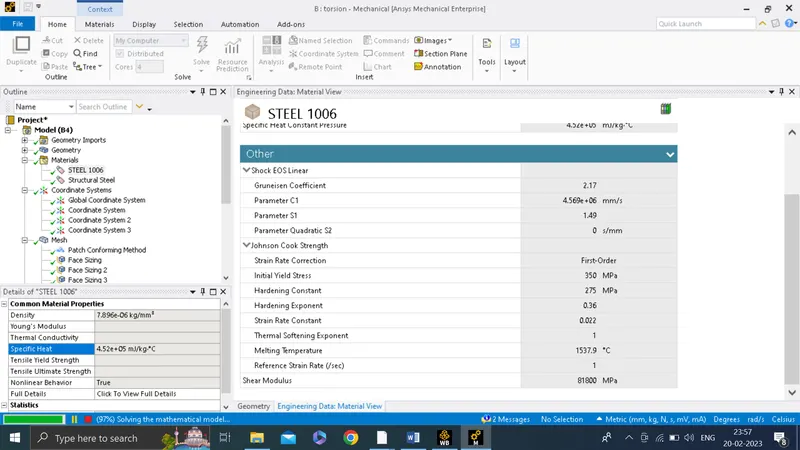
open engineering data and select steel 1006 material from explicit material for this test.
the mechanical property of steel 1006 is as given below
Density: 7.896e-06 kg/mm³
Specific Heat Constant Pressure: 4.52e+05 mJ/kg·°C
Gruneisen Coefficient: 2.17
Parameter C1: 4.569e+06 mm/s
Parameter S1: 1.49
Initial Yield Stress: 350 MPa
Hardening Constant: 275 MPa
Hardening Exponent: 0.36
Strain Rate Constant: 0.022
Thermal Softening Exponent: 1
Melting Temperature: 1537.9 °C
Shear Modulus: 81800 MPa
now close the engineering data tab and upload geometry in system and view same in spaceclaim using edit option.
as we found all good to go so we will close the spaceclaim and open mechanical module
expand geometry and assign steel 1006 material to the object.
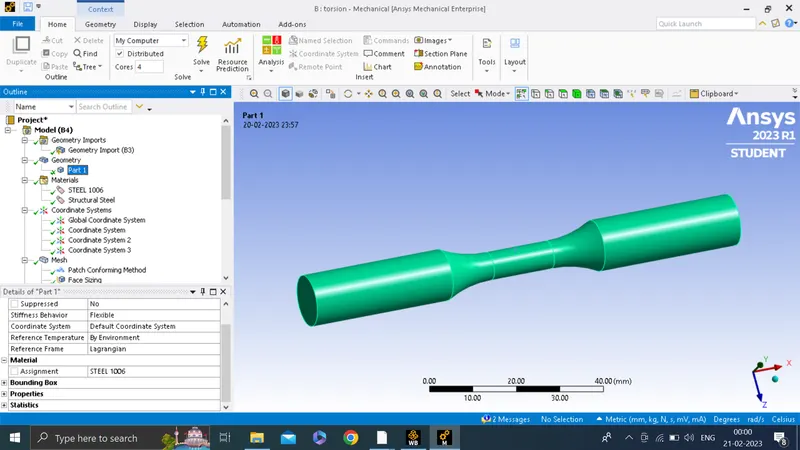
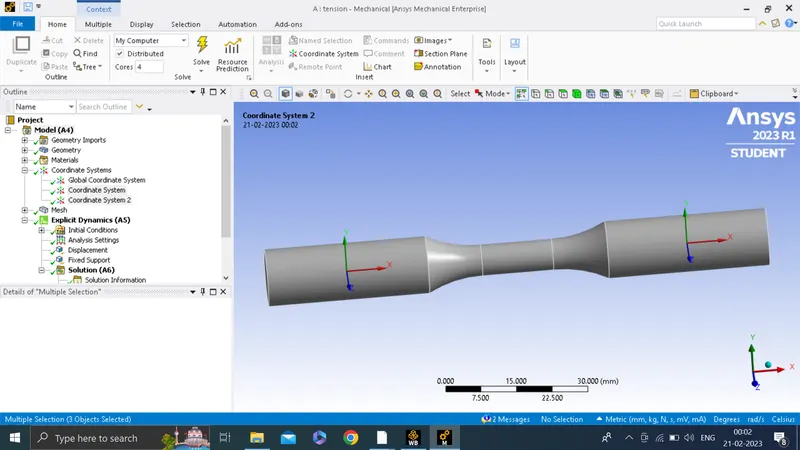
now we define 2 new co-ordinate to both end of the object as shown in below figure.
for mesh, we use tetrahedron element using patch conforming alogorithm,
select the face of both end and provide element size as 3 mm and generate mesh 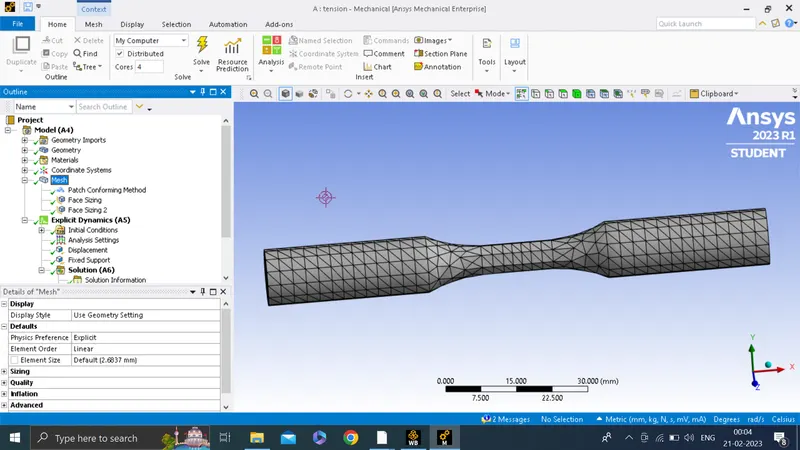
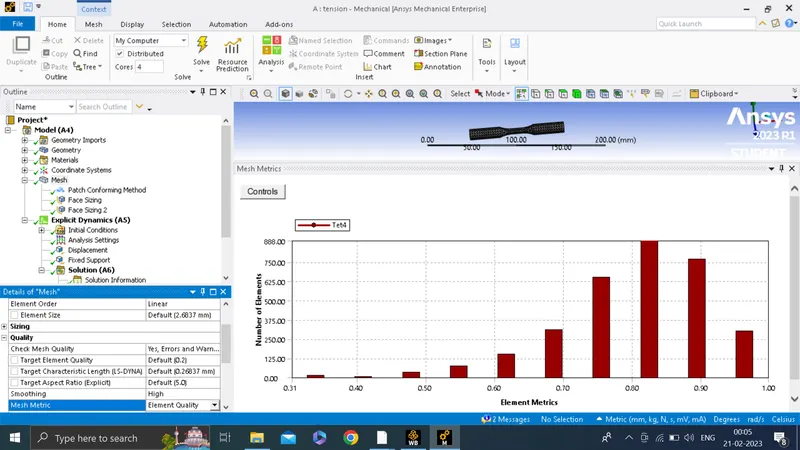
Statics of the mesh are given below
no of node : 835
no of element : 3182
the element quality of this mesh is good as most of the element are between 0.6 to 1, thus we proceed with this mesh
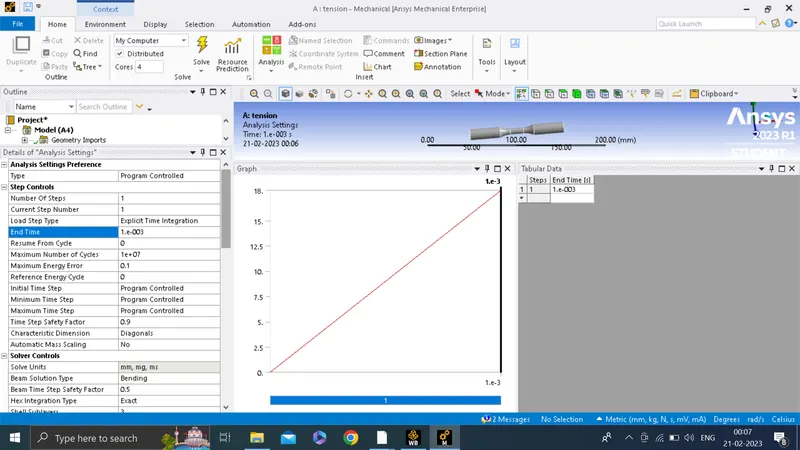
for analysis setting we define end time as 0.001 as rest setting will be as default.
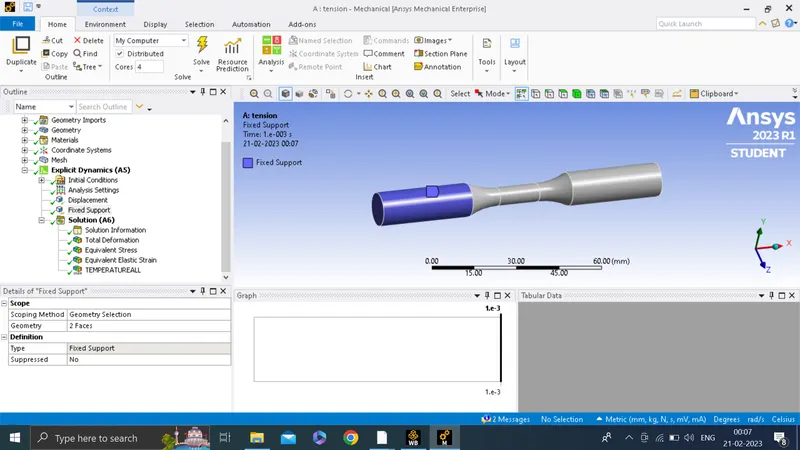
apply fixed support to one end as shown below
deployed displacement load in x direction of 18 mm , as shown in fig.
now list down the required output from simulation and run .
Picture :
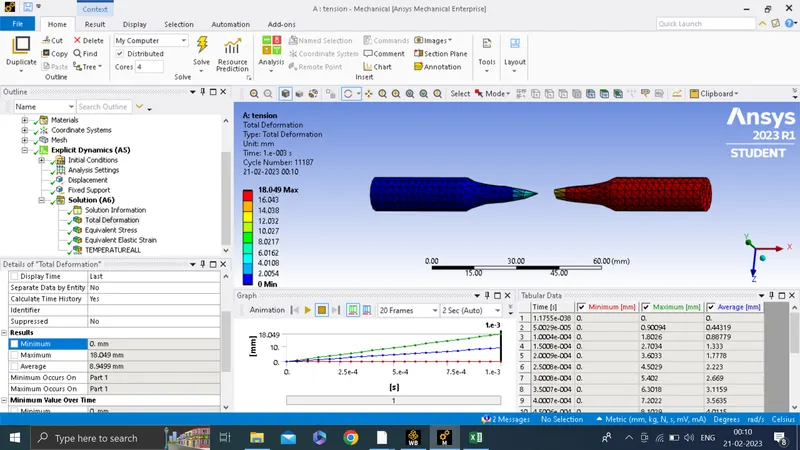
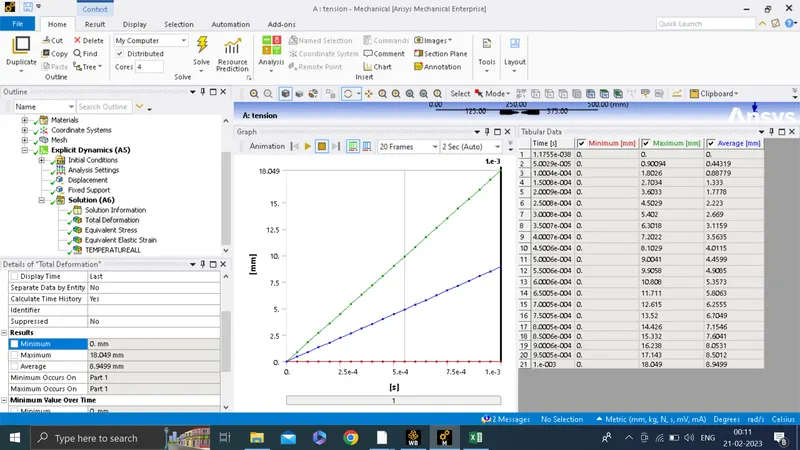
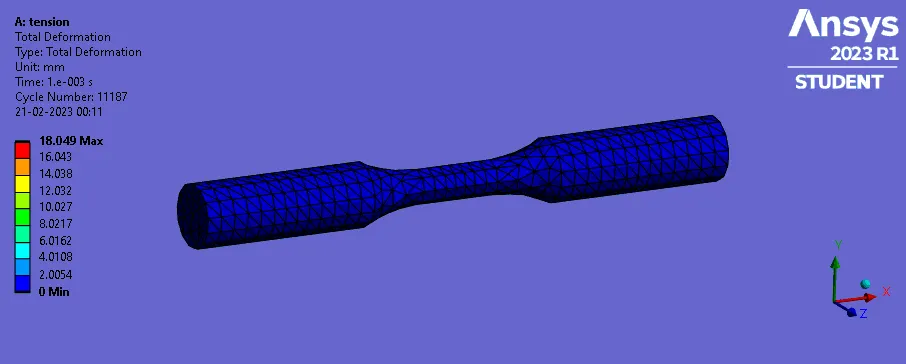
Total deformation
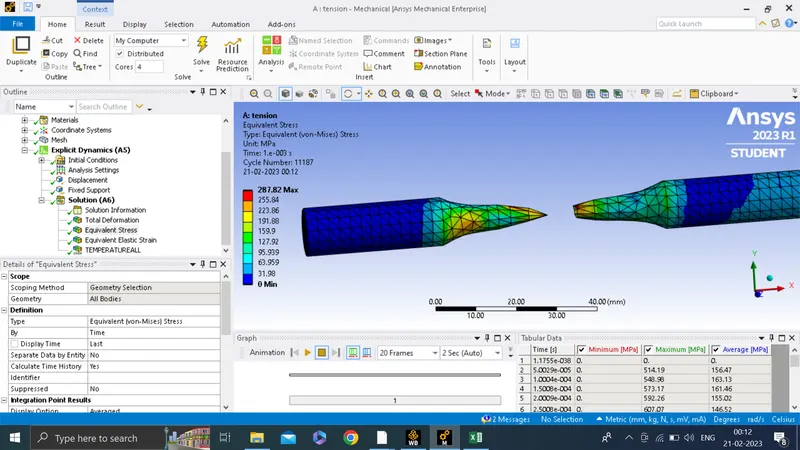
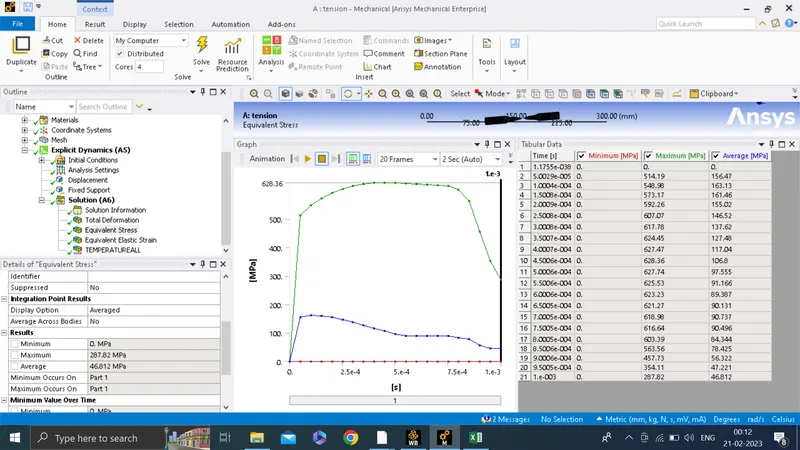
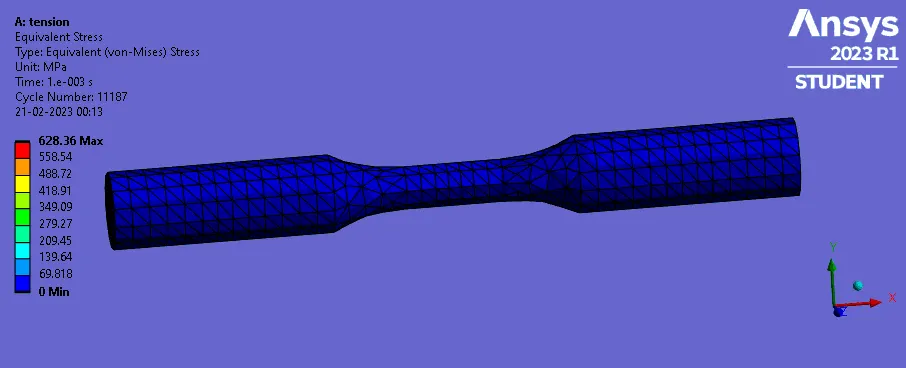
Equivalent stress :
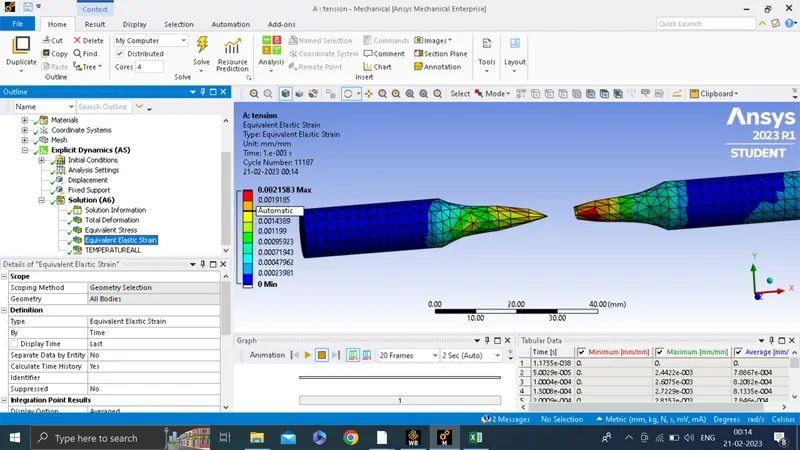
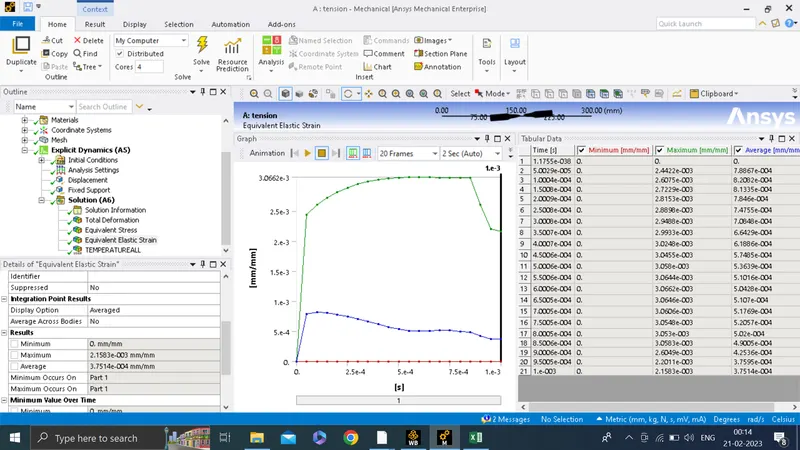
Equivalent elastic strain
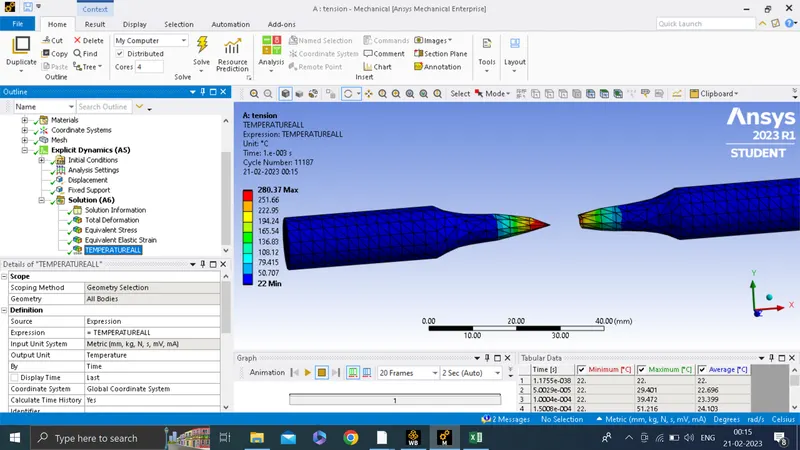
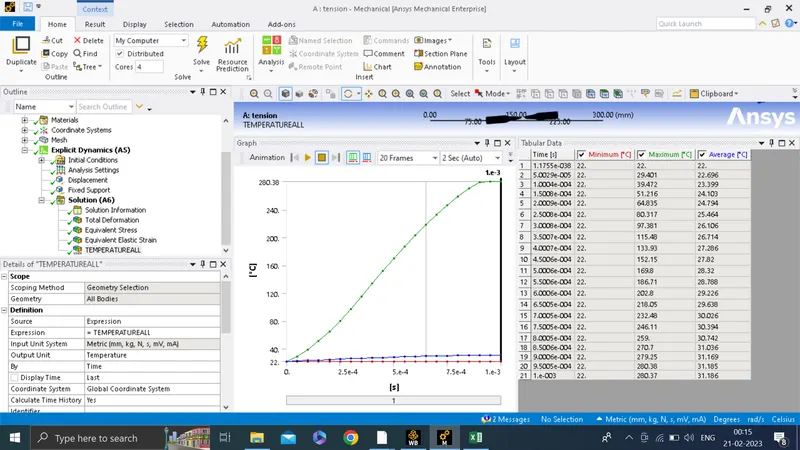
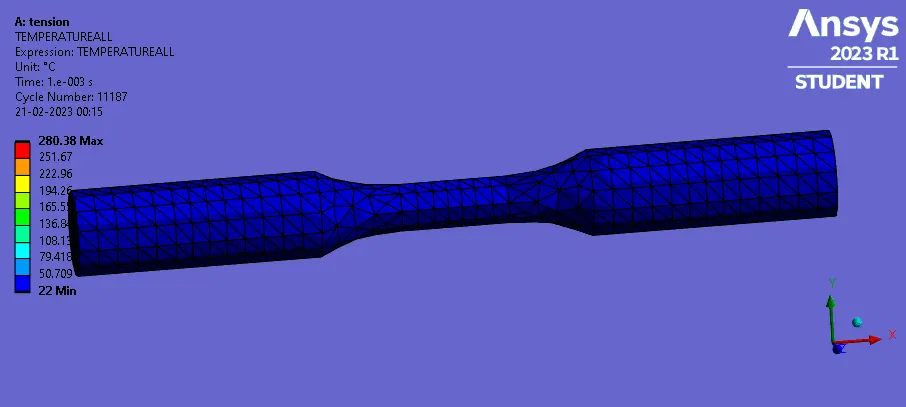
Temperature :
'
Result :
| total deformation | Maximum | 18.049 mm |
| Minimum | 0. mm | |
| Equivalent stress | Maximum | 287.82 MPa |
| Minimum | 0. MPa | |
| Equivalent elastic strain | Maximum | 2.16E-03 |
| Minimum | 0 | |
| Temperature | Maximum | 280.37 °C |
| Minimum | 22. °C |
Torsion test
we duplicate the tesnion test
and open mechanical module to change the setting
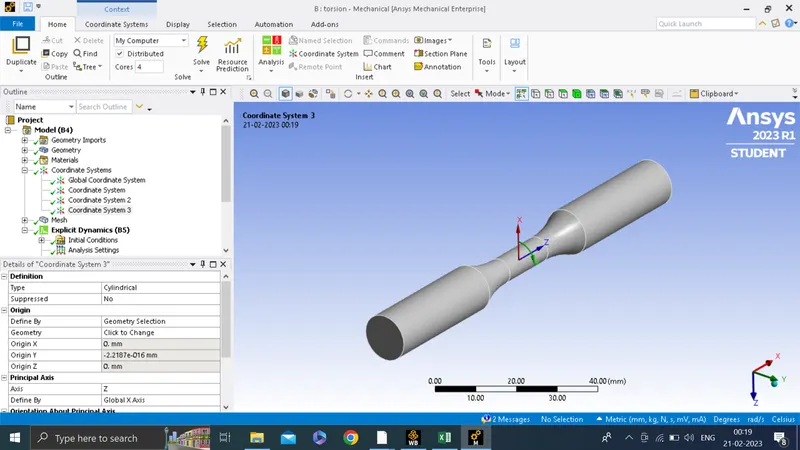
we create one new cylindrical co-ordinate at middle as shown below ,
we deploy mesh size of 1.5 to the below face
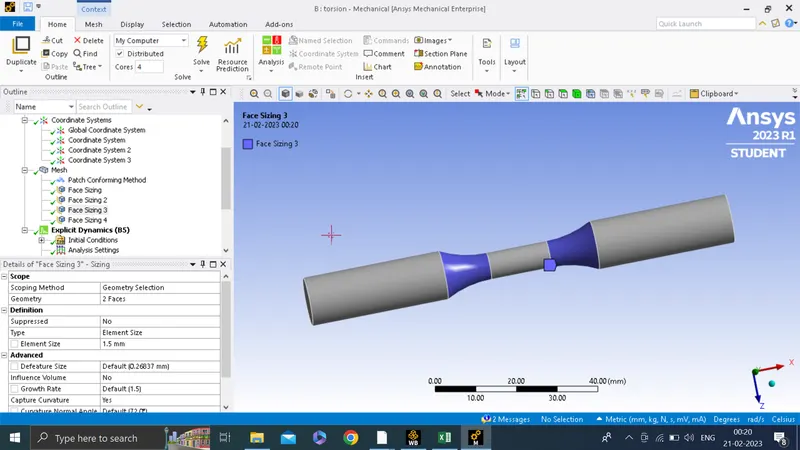
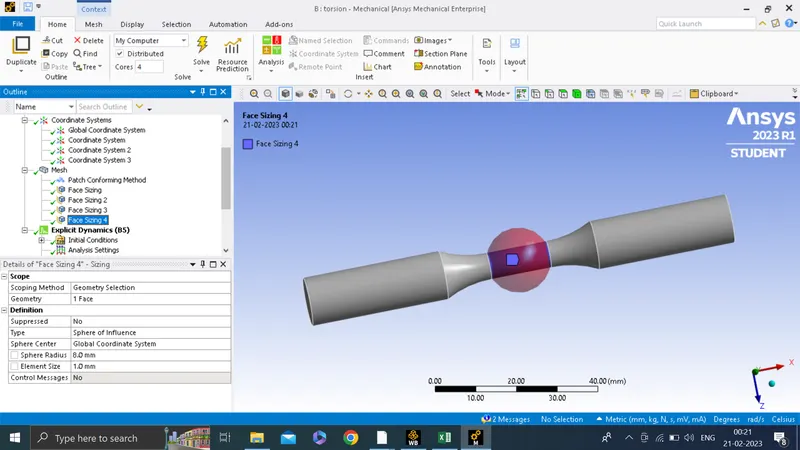
and at center we deploy mesh size of 1 mm , using sphere of influence and sphere radious as 8 mm
now generate mesh
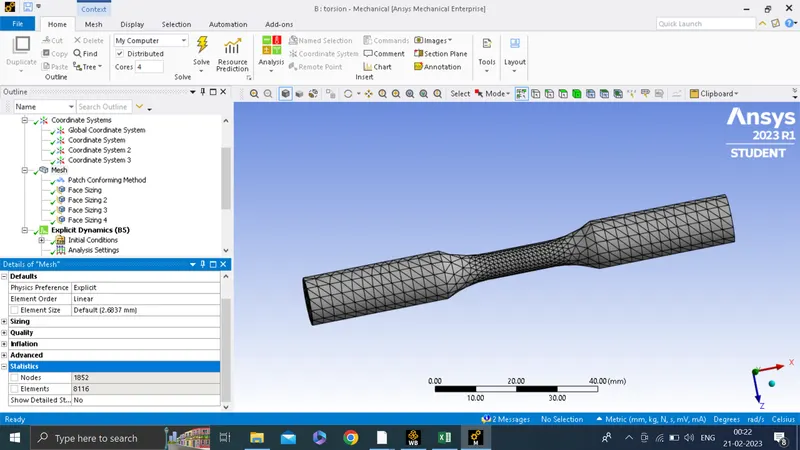
the statics of this mesh is given below
no of node: 1852
no of element : 8116
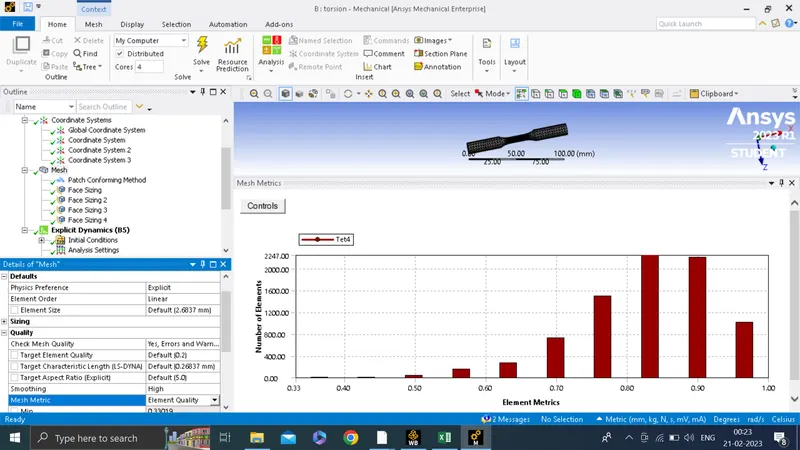
the element quality of above mesh is good as most f the element as in between 0.6 to 1 so we proceed with this mesh
now for displacement load , we will change the co ordinate system with newly generated cylindrical co -oridinate as provide displacement as 1200.
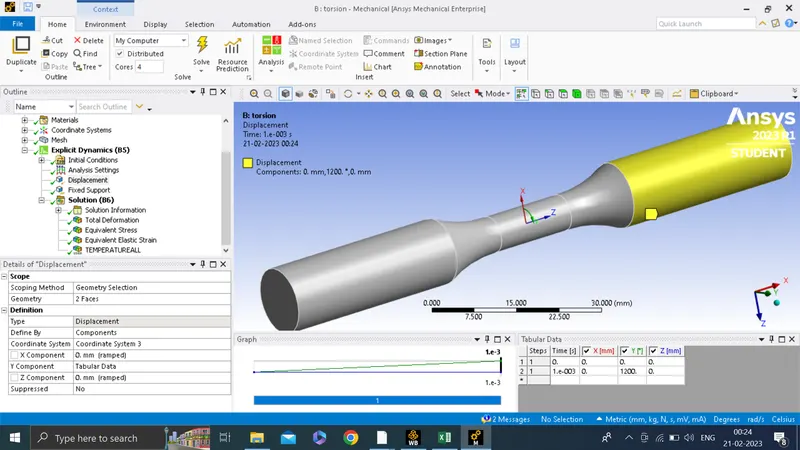
NOw run the simulation and result are given below
Picture :
Total deformation
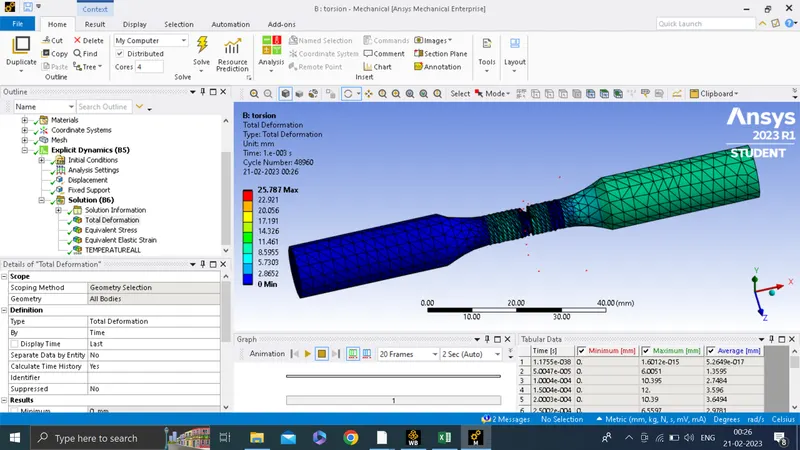
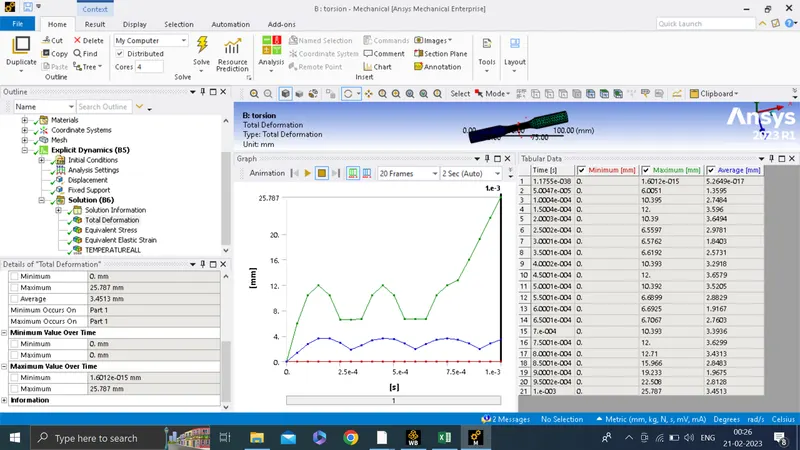
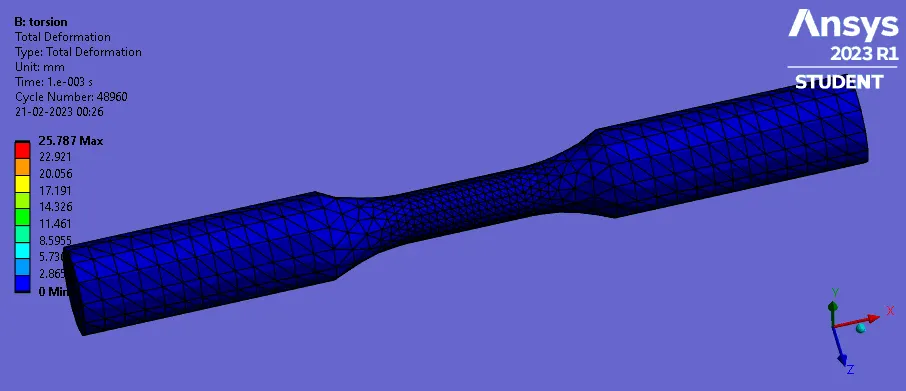
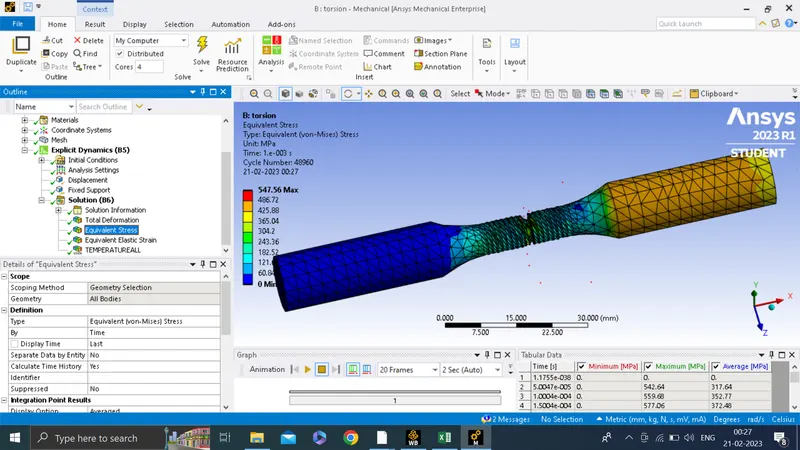
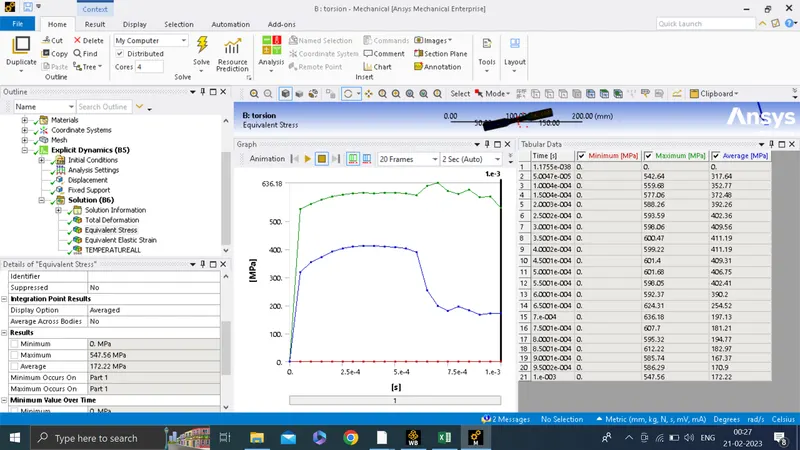
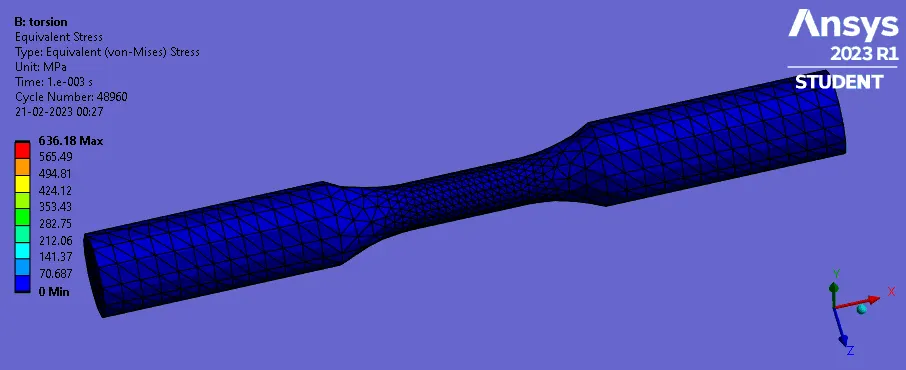
Equivalent stress
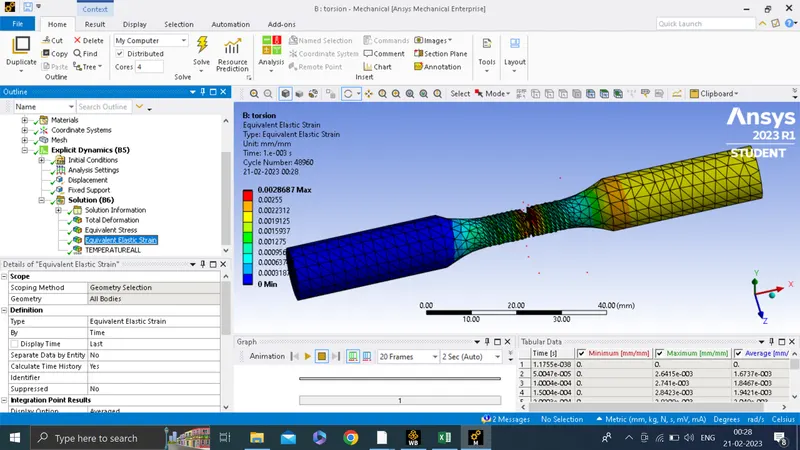
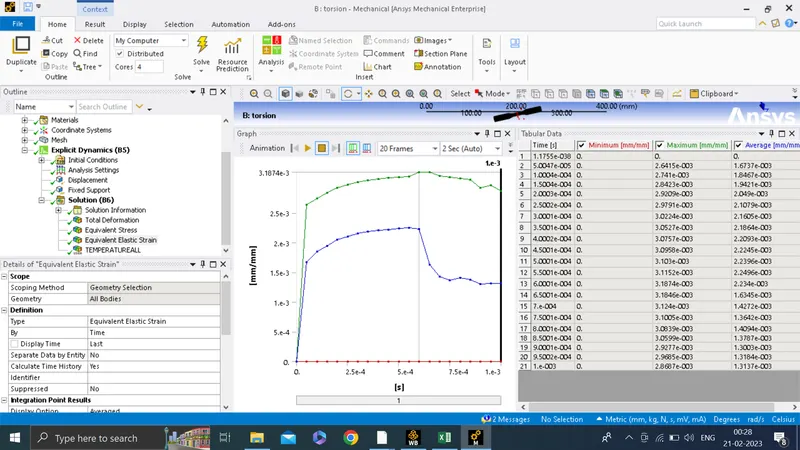
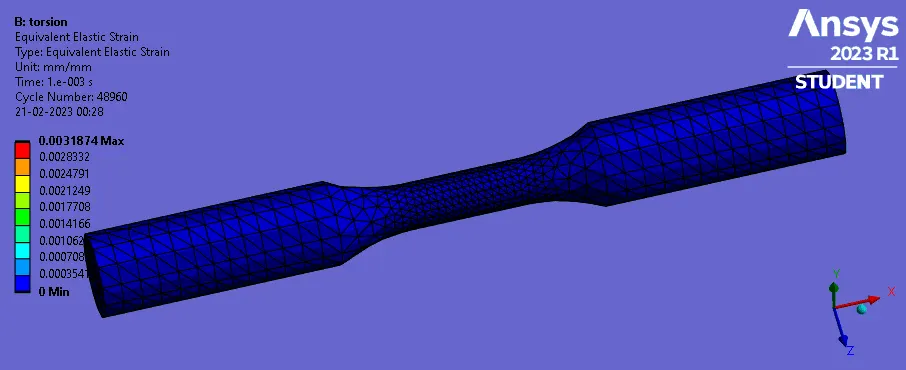
Equivalent elastic strain
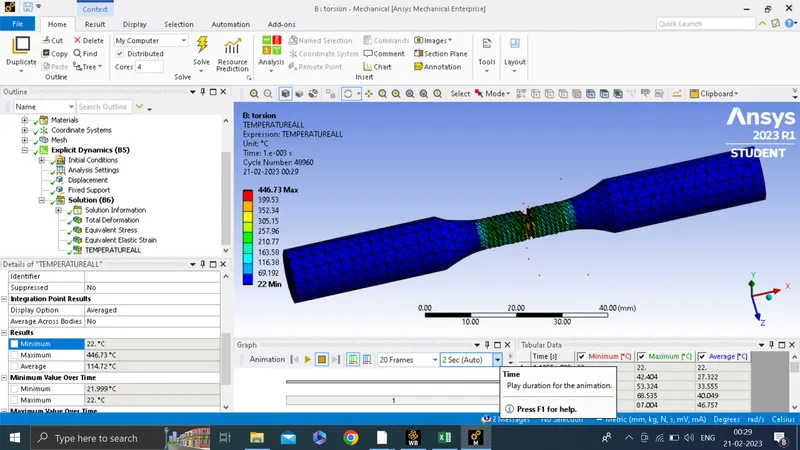
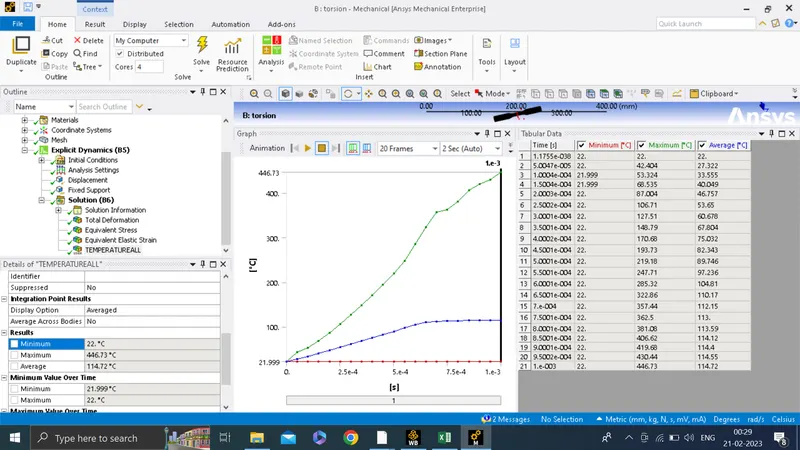
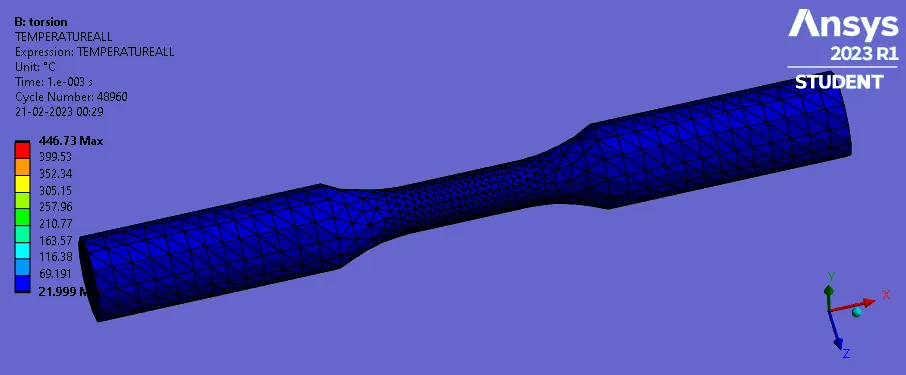
Temperature:
Result :
| total deformation | Maximum | 25.787 mm |
| Minimum | 0. mm | |
| Equivalent stress | Maximum | 547.56 MPa |
| Minimum | 0. MPa | |
| Equivalent elastic strain | Maximum | 2.8687e-003 mm/mm |
| Minimum | 0. mm/mm | |
| Temperature | Maximum | 446.73 °C |
| Minimum | 22. °C |
Conclusion :
From the above table, it can be seen that magnitude of total deformation is slightly higher for the torsion test with a value of 25.787 mm. The defined displacement is obtained for the tensile test with a value of 18.049 mm.
The equivalent stress observed in torsion test is higher with a value of 547.56 MPa. The value of equivalent stress observed for the tensile test is 287.82 MPa. It is to be noted that the equivalent stress observed in the buckle is higher when the buckle moves towards the clip.
The temperature results observed for torsion test is nearly double when compared to tensile test with a value of 446.73 °C . The temperature obtained in the tensile test is 280.37 °C.
it can be concluded that the total deformation for the two tests approximately remains the same. The equivalent stress observed is higher for the torsion test. The temperature obtained is higher in the case of torsion test.