Week 9 - Project 1 - Door Applique Design with Engineering Features
DOOR APPLIQUE DESIGN WITH ENGINEERING FEATURES
A car door applique is used in the door panel to provide an aesthetic look to the door panel. Here we will be creating a door applique with the given class A surface and moreover we will be creating features on the applique like locators and heat stakes so that it firmly grips to the door surface.
Class A surface
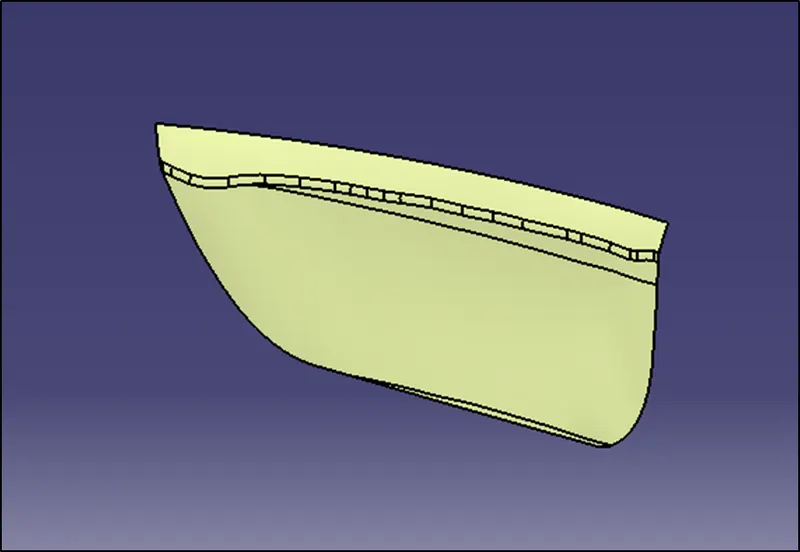
Fig 1 Class A Surface
First we have to check whether there is any discontinuity in the given surface. If there is any discontinuity we have to tell the styling team so that it can be modified.
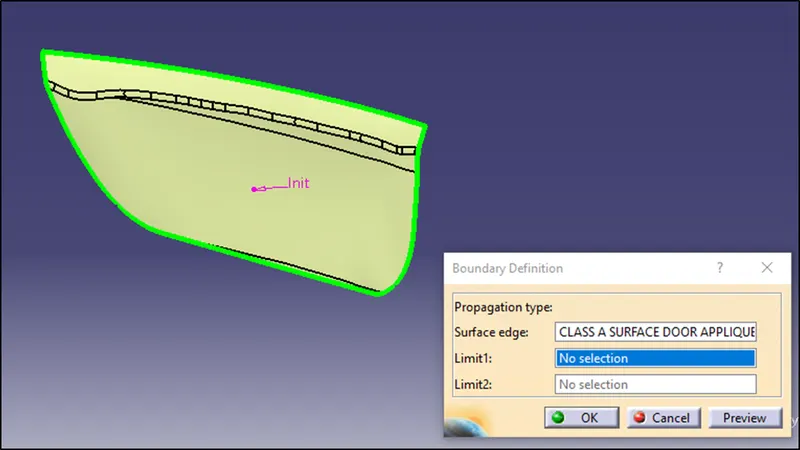
Fig 2 Using Boundary function to check discontinuity
Then we have to decide the tooling axis. Tooling axis is the direction along which the core and the cavity opens and the product is manufactured. Analyse the component and decide which will be the best tooling axis for the component so that it can be easily manufactured.
The tooling axis for the applique is taken along xz plane. So we draw a line through the centre of the door applique in the xz direction. This will be the tooling axis for the component.
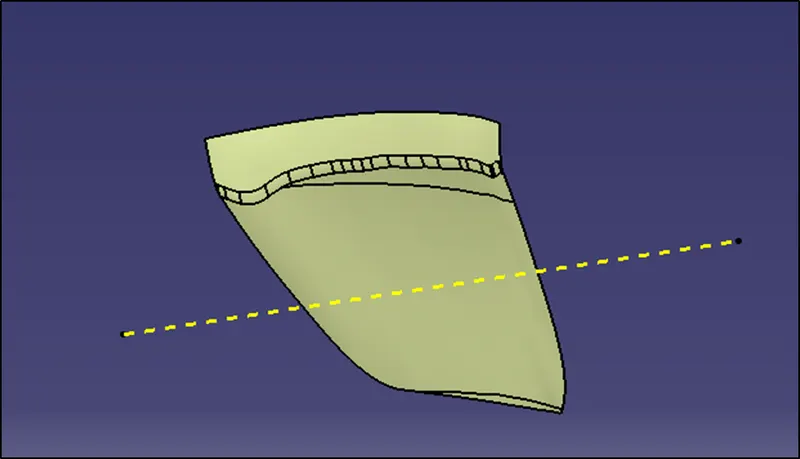
Fig 3. Tooling axis.
Then the draft analysis for the component is done.
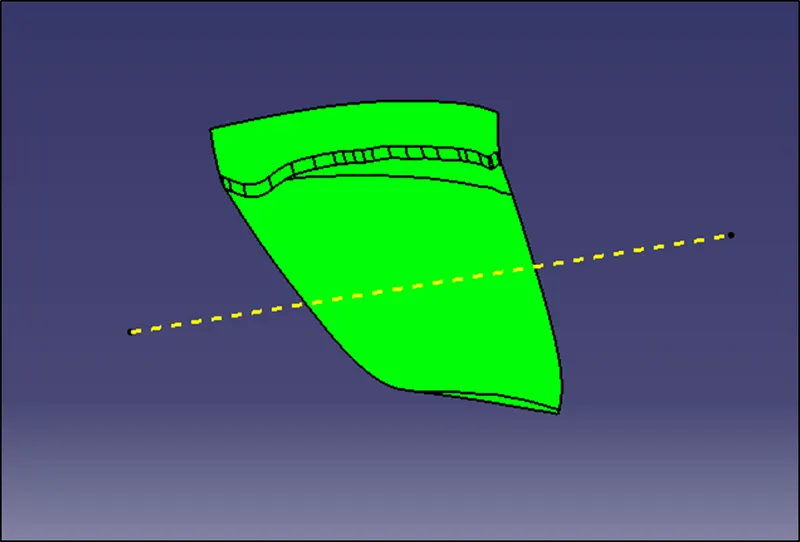
Fig 4. Draft analysis.
Then comes the creation of the Class B Surface. The surface A is offset to 2.5mm which is the thickness of the component. After that for the creation of the class C surface the boundary of the class A surface is swept along the direction of tooling axis.
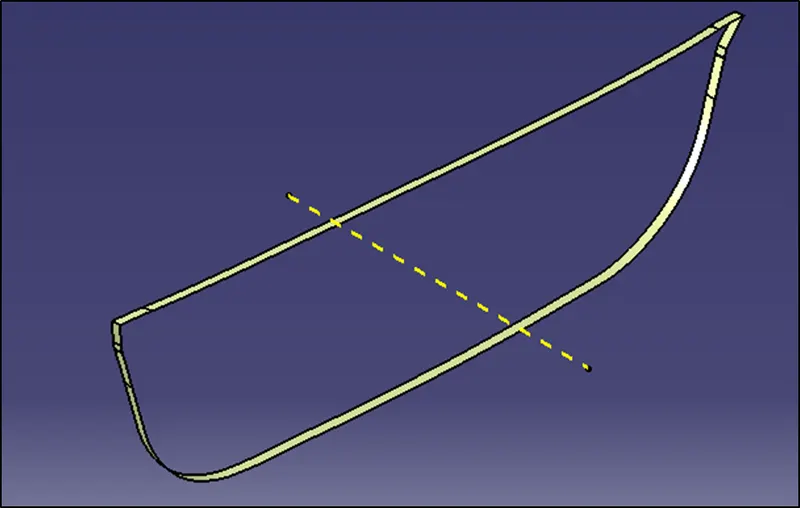
Fig 5. Class C Surface
After that trim the Class A + C surface with the class B Surface to obtain the required surface of the component. Then using the close surface command in the part design workbench convert it into a solid model.
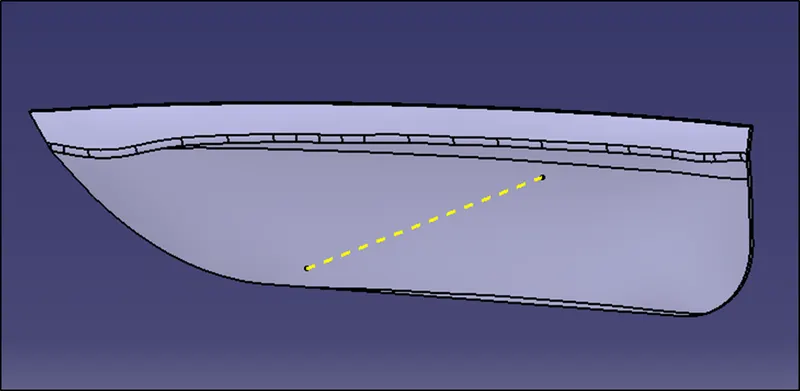
Fig 6. Solid Model
Now we will see how the plastic part is fixed onto the other plastic part. The door applique is fixed on to the door surface with the help of locators and heat stakes. Every component in space has 12 degrees of freedom. So these locators and heat stakes restrict all these degrees of freedom.
Locators are 4 way locators and 2 way locators. The locators will follow the rib design guidelines and will be given a minimum draft of 0.5 degrees and a minimum fillet of 0.2mm and an entry chamfer of 3mm. This entry chamfer is given so that the locators can mate with the other part easily.
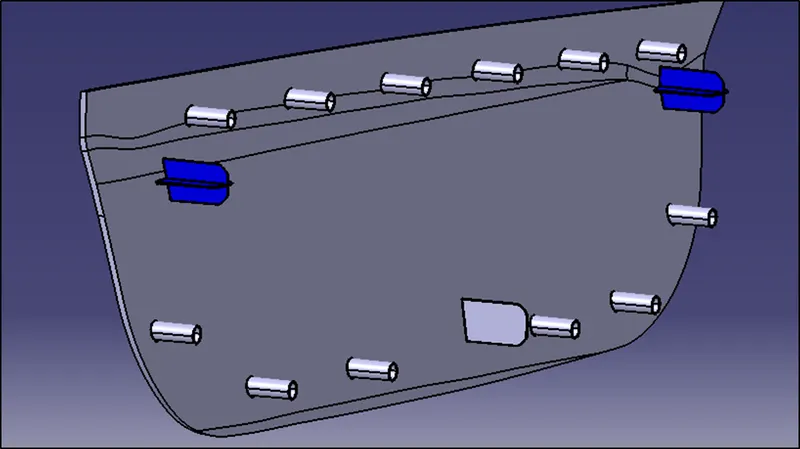
Fig 7. Parts shown in blue colour are the 4 way locators
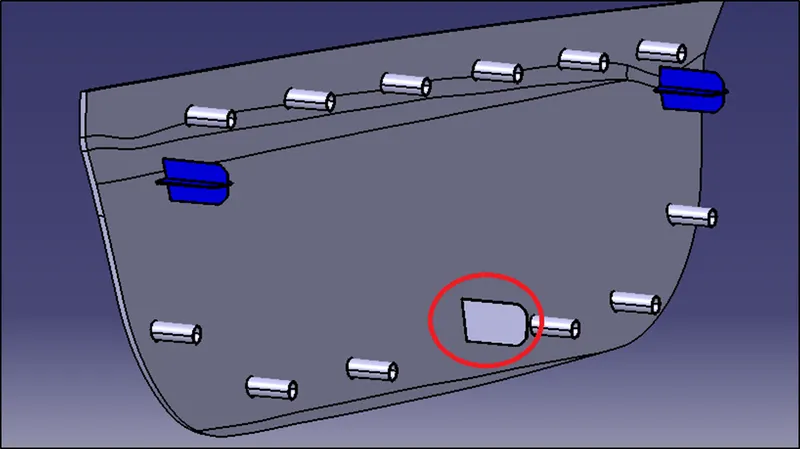
Fig 8. The red circle is the 2 way locator
The locators restrict all the other degrees of freedom except the translation along the direction of tooling axis i.e along y axis. For restricting that degree of freedom we will be using the heat stakes.
In heat staking we use local heating and cooling to raise the temperature of plastic components and allow plastic reforming to be carried out.
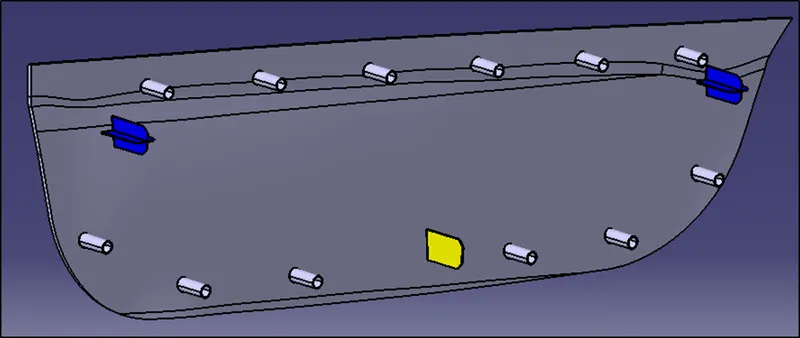
Fig 9. The grey coloured cylinders are the heat stakes.
These heat stakes will enter the mating component and using heat staking machine these heat stakes are melted and cooled. When cooled this will get hardened and the two components will stick together. Thus all degrees of freedom are arrested.
Since these locators and heat stakes need to enter the mating component, the mating component is given a cut out. The mating component here is the door surface, for the locators give a circular cut out and maintain 0.1mm clearance per side.
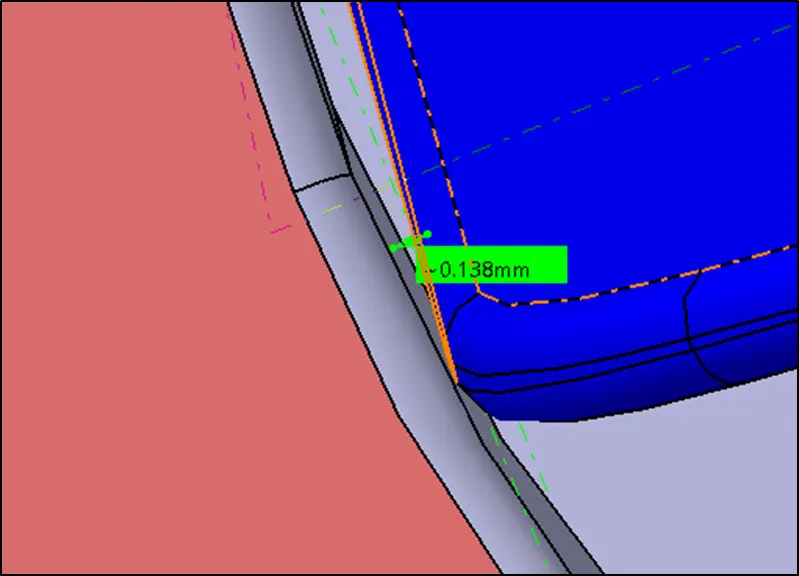
Fig 10. Maintain a clearance of 0.1mm between the locator and the circular cut out.
For the heat stakes maintain a clearance of 0.5 mm per side since after heating the material will ooze out so to cater to that the clearance should be given.
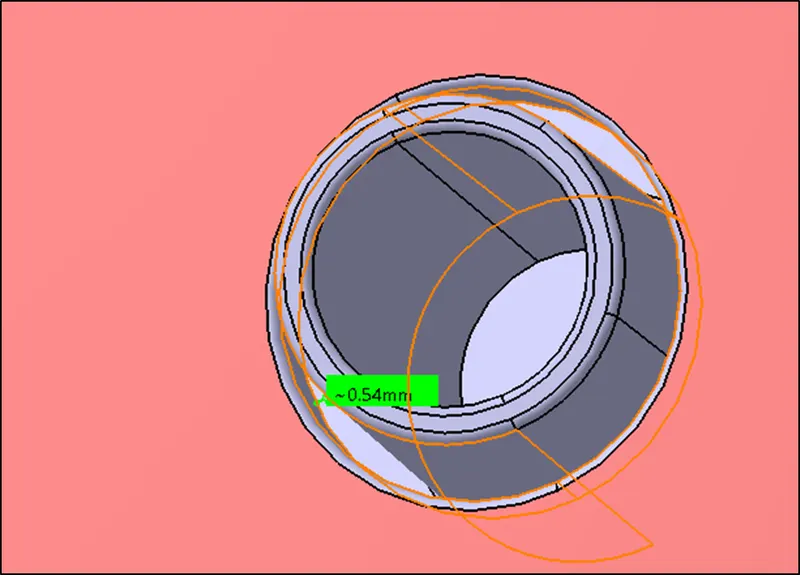
Fig 11. Maintain a clearance of 0.5mm between the heat stake and the cut out.
After creation of all the features the draft analysis is done to see whether the product can be manufactured or not.
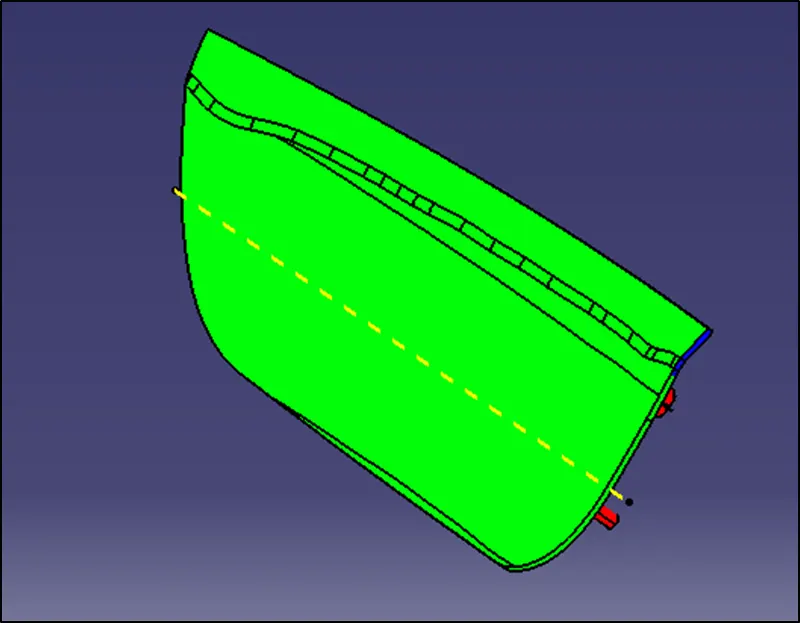
Fig 12. Draft analysis of the final component.
Views of the final component
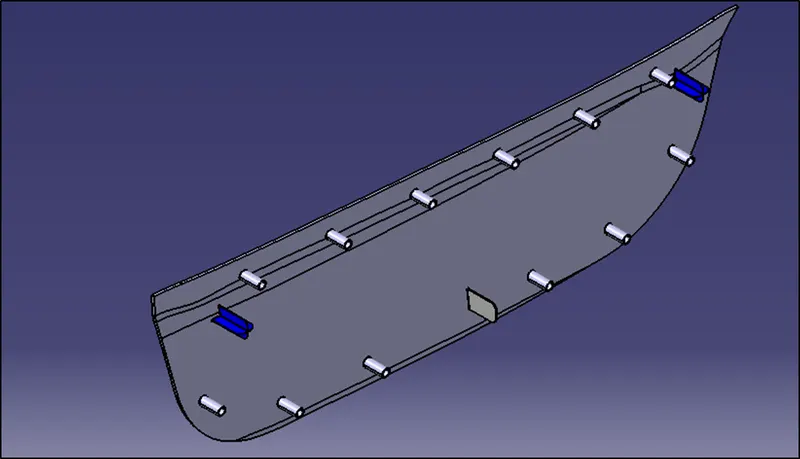
Fig 13. View 1
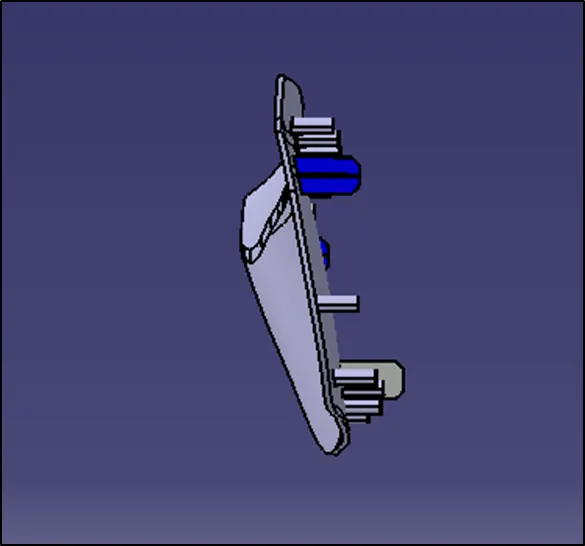
Fig 14. View 2
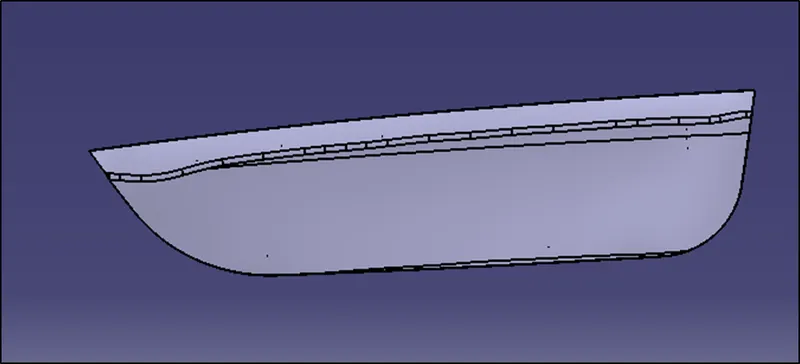
Fig 15. View 3
Views of the complete assembly
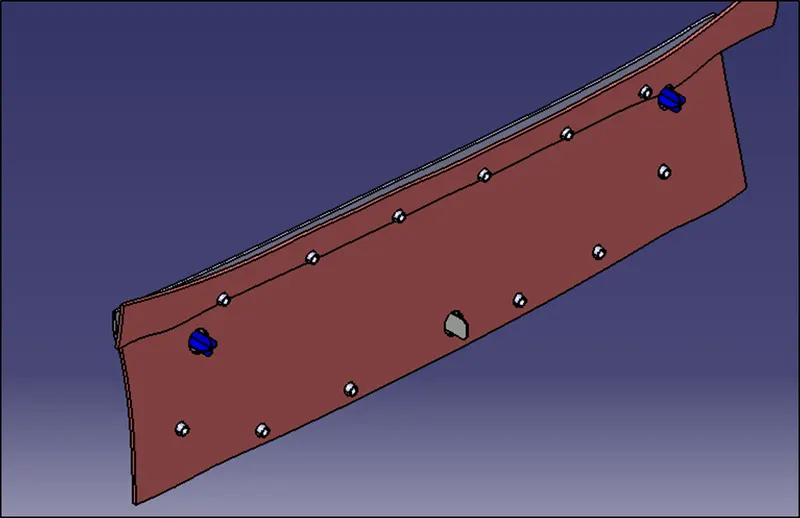
Fig 16. View 1 of complete assembly
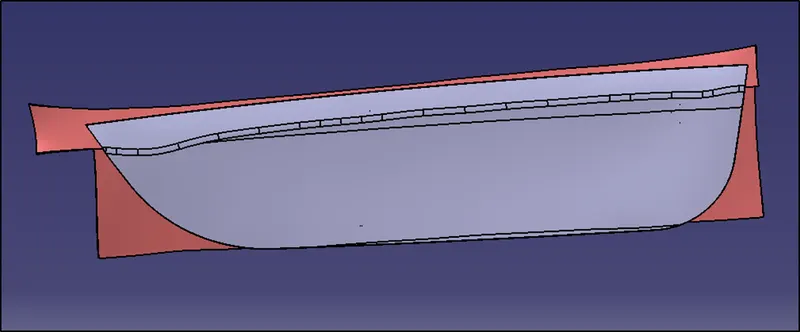
Fig 17. View 2 of complete assembly
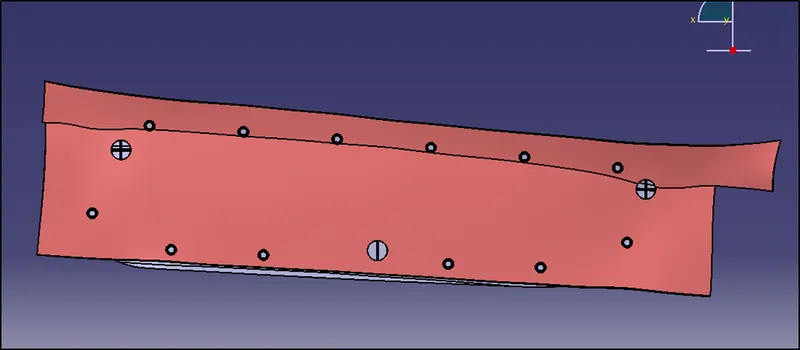
Fig 18. View 3 of complete assembly
*************