Week - 9 Material Modeling from Raw Data
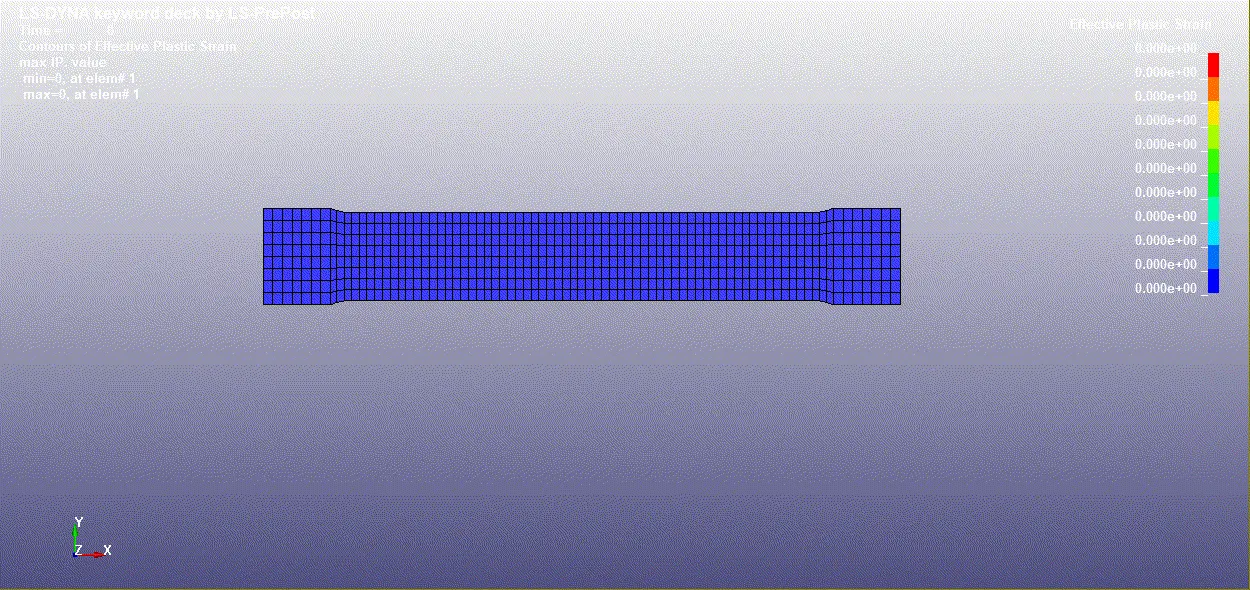
Aim: Use the diagram of the true stress-strain curve of graphite iron casting and validate it using dogbone specimen.
Given Curves:
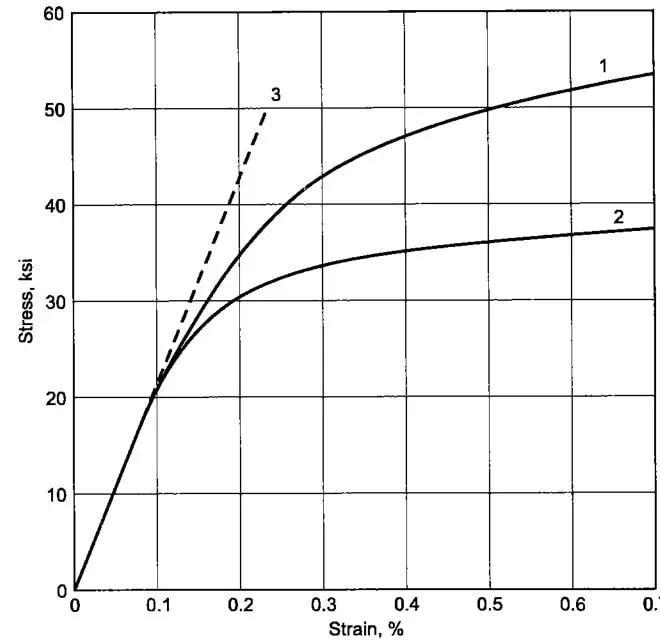
Curve 2 is used for material modeling.
Material Modeling steps:
1. First raw data points are extrated from the curve using data digitiser. Anything between 100 to 200 points are sufficient to curve representation.
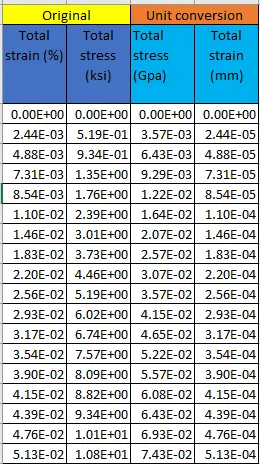
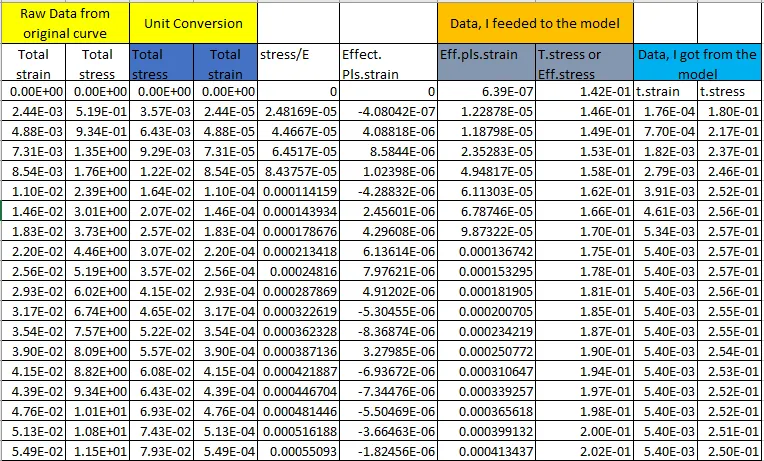
2. Data obtained is in engineering stress strain and units conversion need to be done. Original strain data is in %, is converted to mm and stress data is in kpi converted to GPa ( 1kpi = 6.895E-06GPa). Total 120 data points are generated.
3. Next Plastic strain is extracted from the total strain.
within elastic range
Elastic strain = stress/E;
Plastic strain = Total Strain - Elastic Strain.
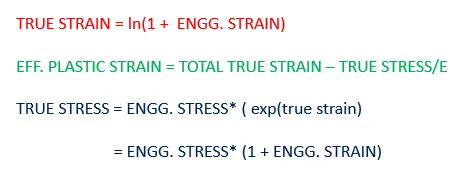
Next it is converted to effective plastic strain using following conversions :
4. Next from the obtained data, a fitted curve is generated because raw data has noise which can leads to incorrect result or unstable model.
Third order polynomial is used to obtained the fitted data.
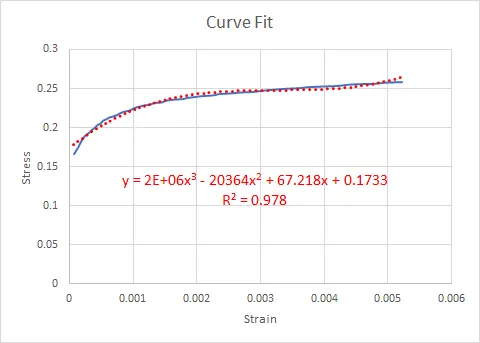
5. Now this fitted curve Fit data is feeded into the model as input curve.
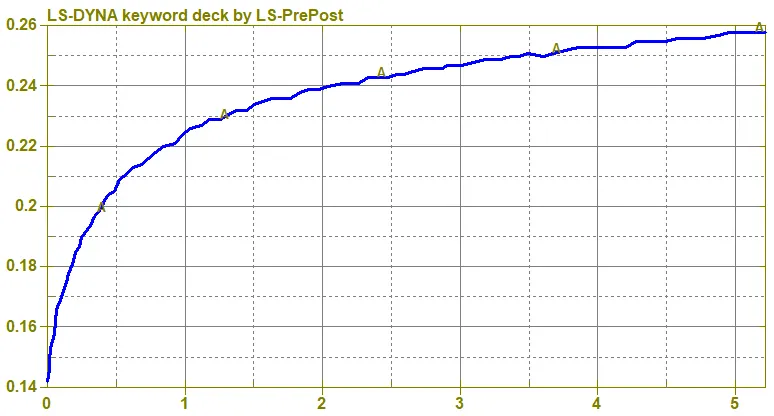
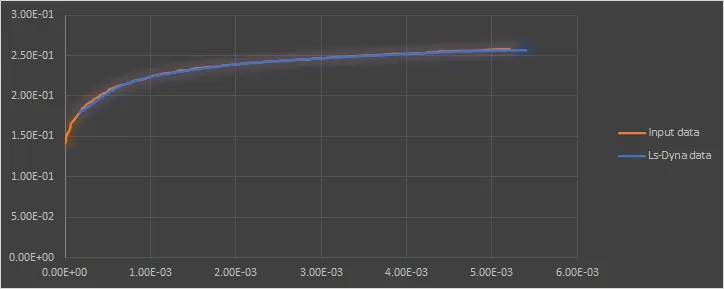
6. Now all the boundary constraints are given and final stress-strain data is extracted from the simulated model to validate the results.
Aswe can see model is validated as result curve are matched.
Animation: