Week 9 Machining with Planer Challenge
Objective : To analyse the stress generated in a workpiece while maching at two different speeds.
Model:
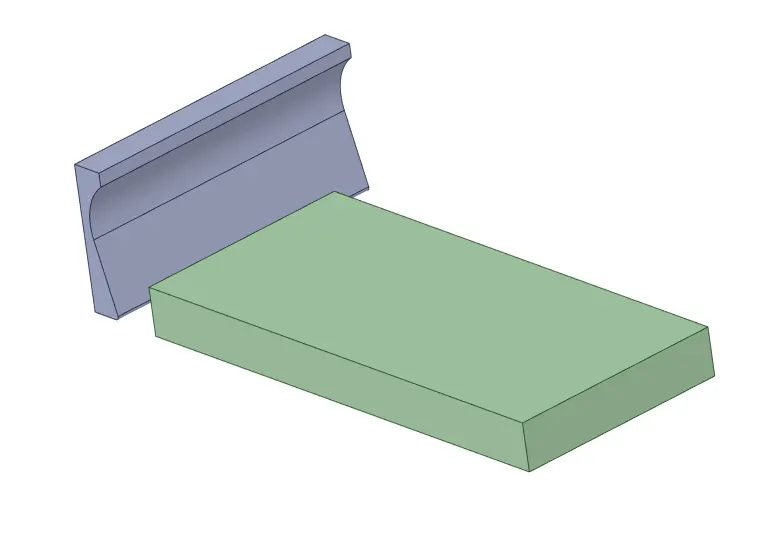
Contacts :
Body to Body interaction: frictionless
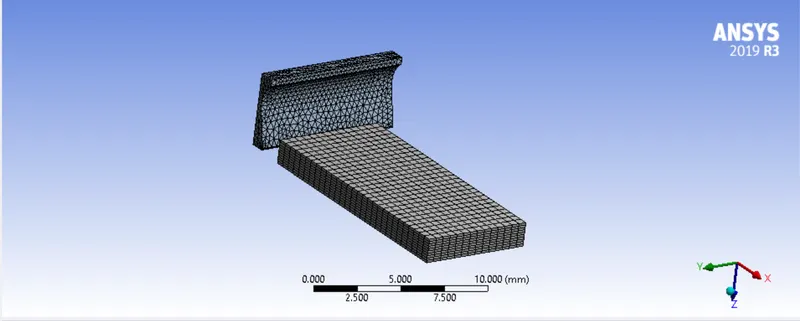
Mesh :
- Sizing of work peice with tetrahedron elements
- Edge sizing of the workpiece with 10 divisions.
Meshed Model:
Simulation results:
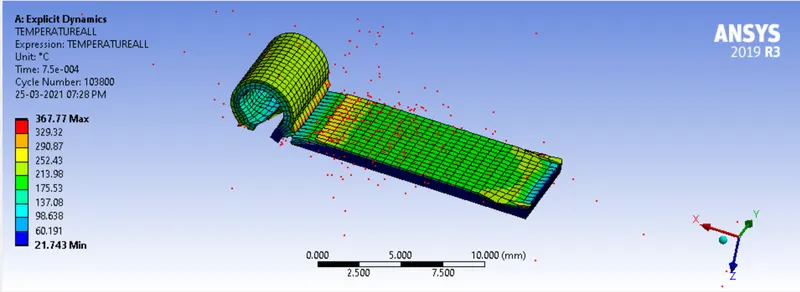
Case 1 (velocity : 20000mm/sec)-
https://drive.google.com/file/d/1qSna84hRv51aGHg8x9mIPrc_ry70SRQN/view?usp=sharing
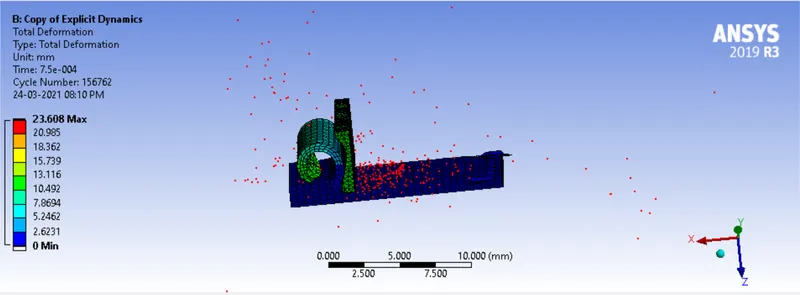
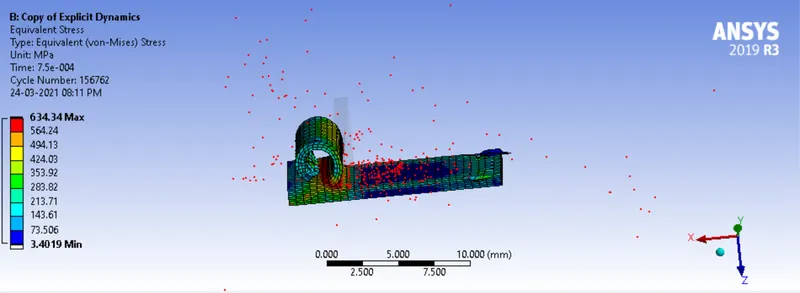
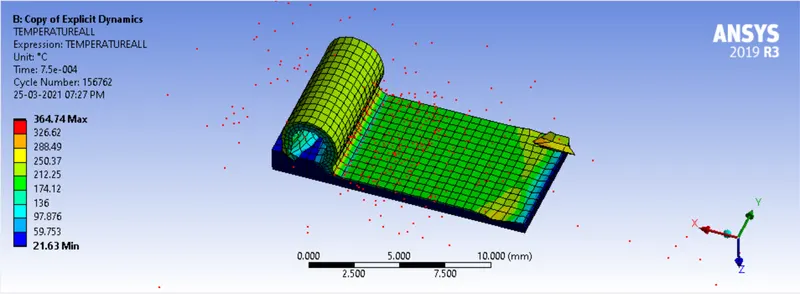
Case 2 (velocity : 15000mm/sec)-
https://drive.google.com/file/d/1FDn7JDPH4Gvg-pv6CtWklv3ep2ubuOGt/view?usp=sharing
Simulation snapshots:
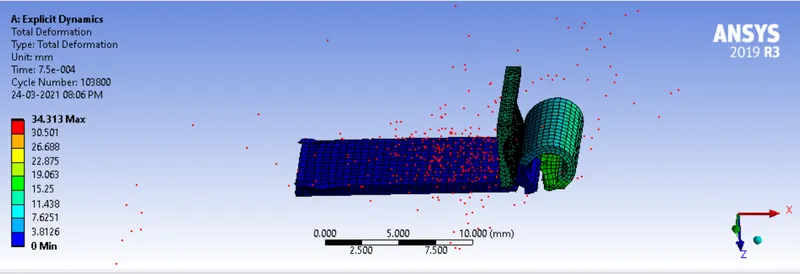
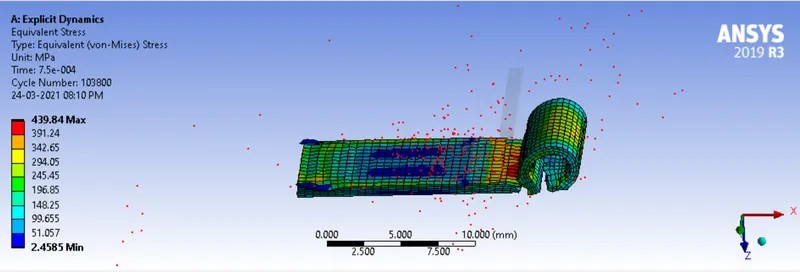
Case 1 (velocity : 20000mm/sec)-
Total Deformation:
Equivalent Stress:
Temperature:
Case 2 (velocity : 15000mm/sec)-
Total Deformation:
Equivalent Stress:
Temperature:
Tabulated Data:
| Case 1 (V = 20000mm/sec) | Case 2 (V = 15000mm/sec) | |
| Total deformation(mm) | 34.3 | 23.6 |
| Equivalent Stress(MPa) | 439.8 | 634.34 |
| Temperature(degree C) | 367.77 | 364.74 |
Inference :From the above results we can conclude that as the speed was decreased the stress was reduced. Higher stress indicates increased resistance from the material. In the process of maching the workpiece material is sheared by the tool. So at high speed the force the shearing force is higher. This results in uneven finish. But lower speed may make it difficult to machine the workpiece. So choosing the optimum speed is necessary.