Week 9 Challenge
Aim – Aim is to assess feasibility of proposed bridge in a river with known water velocity, discharge, HFL (Highest flood level), FRL (Finished road level) and linear waterway. Aim is to fix economic suitable span arrangement. Aim is to choose type of foundation and design with known pile capacity (1.2m dia 250tonne vertical and 35tonne horizontal) and different well capacity (8m dia 70t / m2, 6m dia 50t/m2 and 7m dia 60t/m2).
Study and calculation for scour is must. Study for effect of soil liquefaction and its remedy is also necessary. Calculation of forces from superstructure and substructure on foundation should be carried out for to design foundation.
Span arrangement depends on type of navigation in river. Man power, technology and material available for construction also matters for suitable span arrangement.
Selecting type of foundation depends on soil and topography of the area. Hard starta of soil permits, shallow foundation. For soft to medium soil with scouring tendency, deep foundation required. Pile foundation is prefered as it is easy to construct, cost effective and time saving. If the free standing length is greater well foundations are provided.
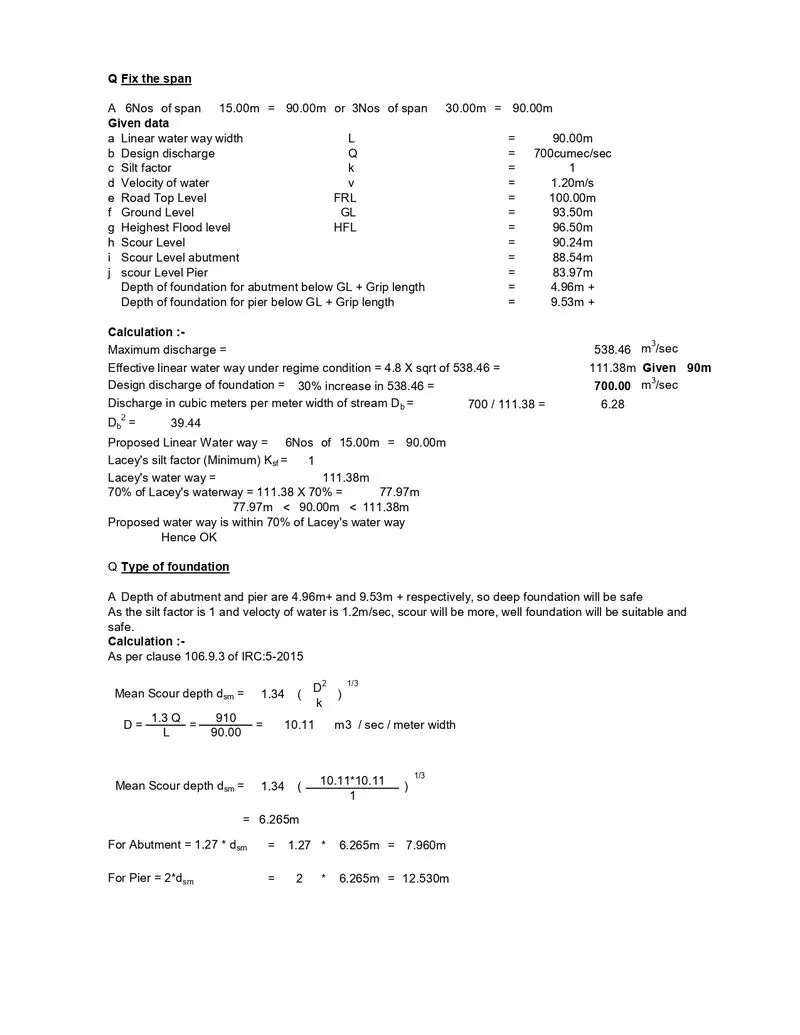
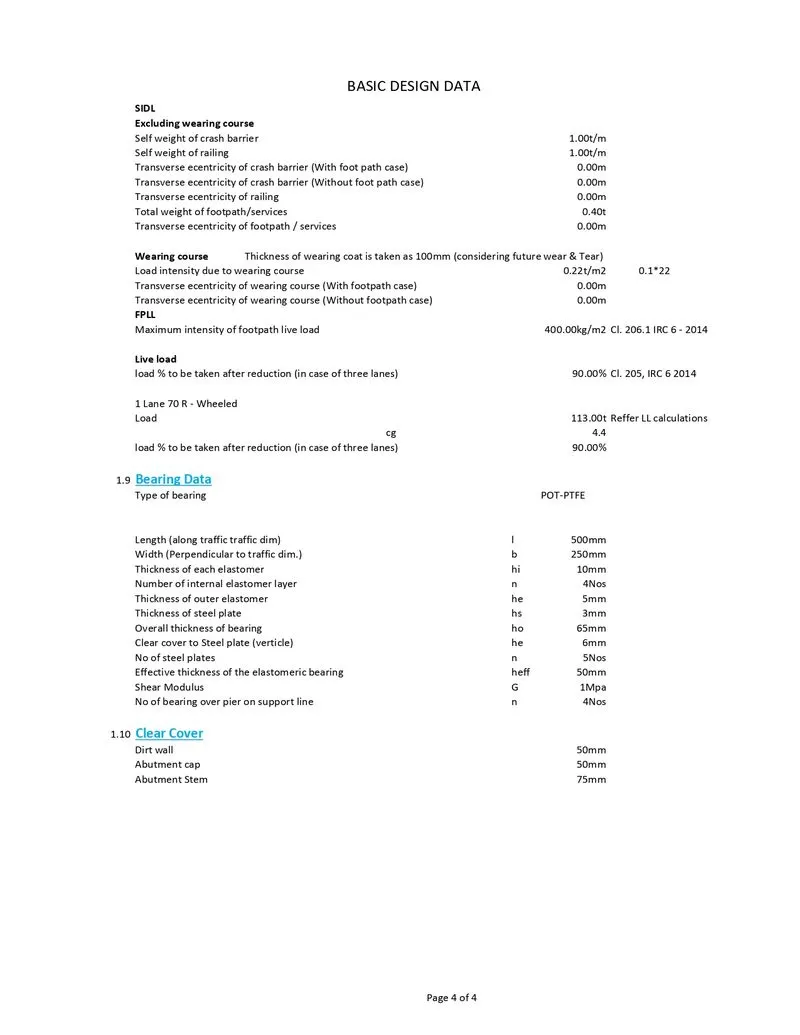
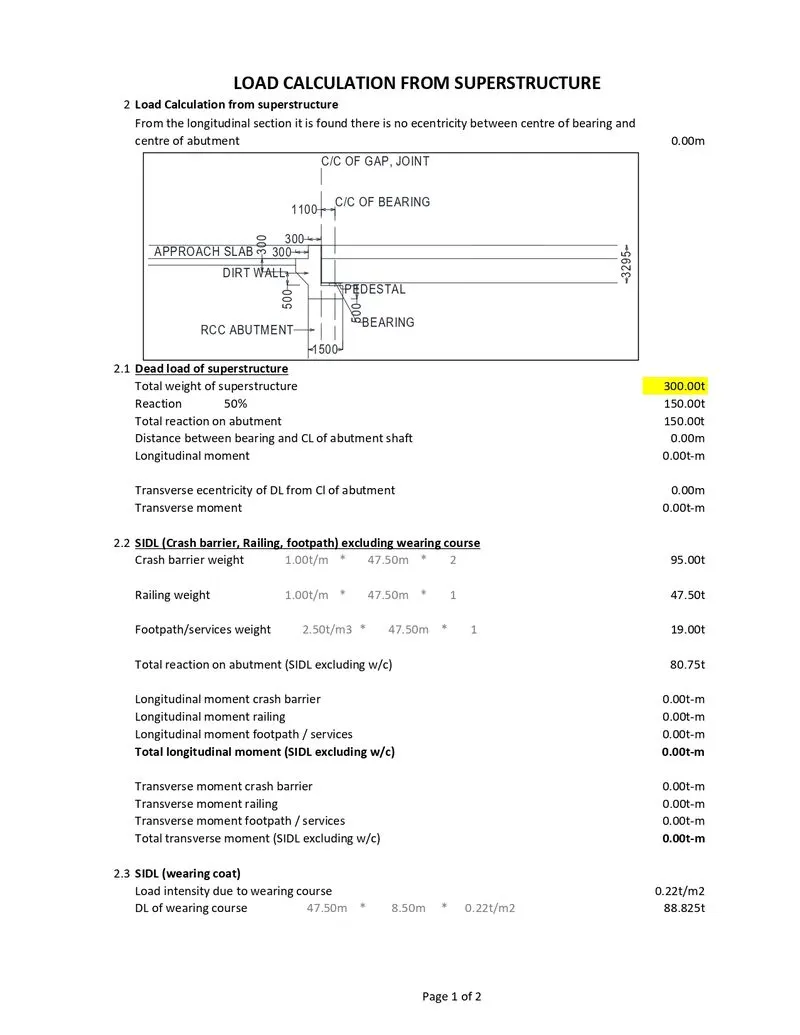
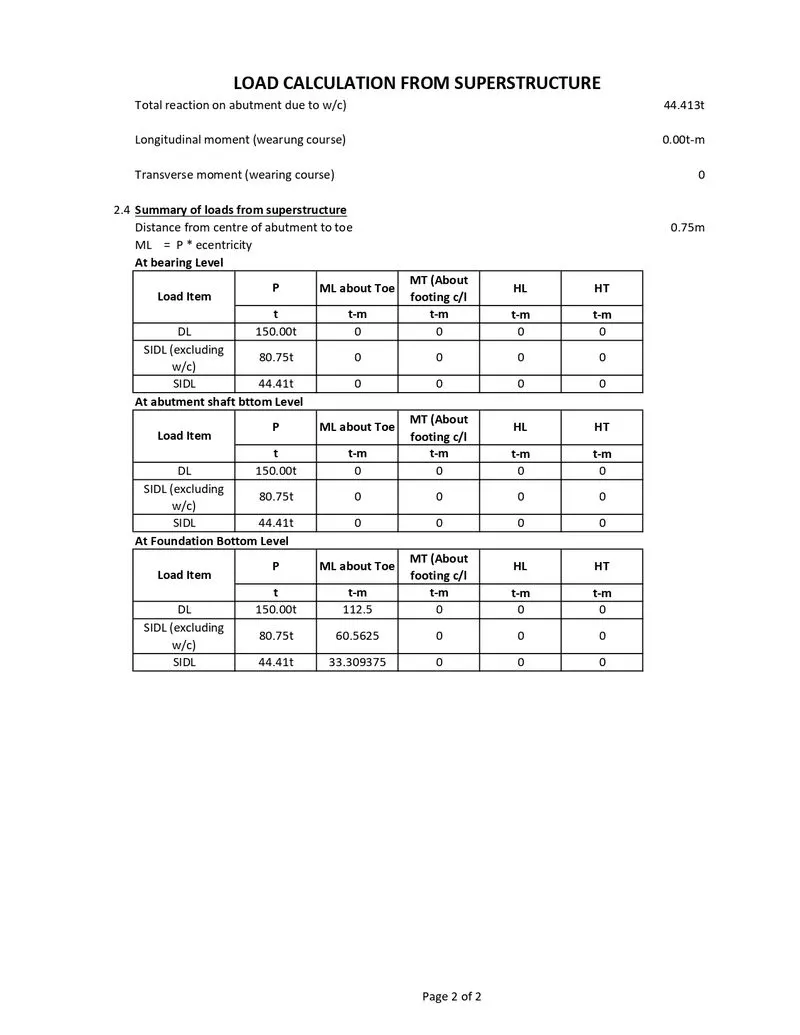
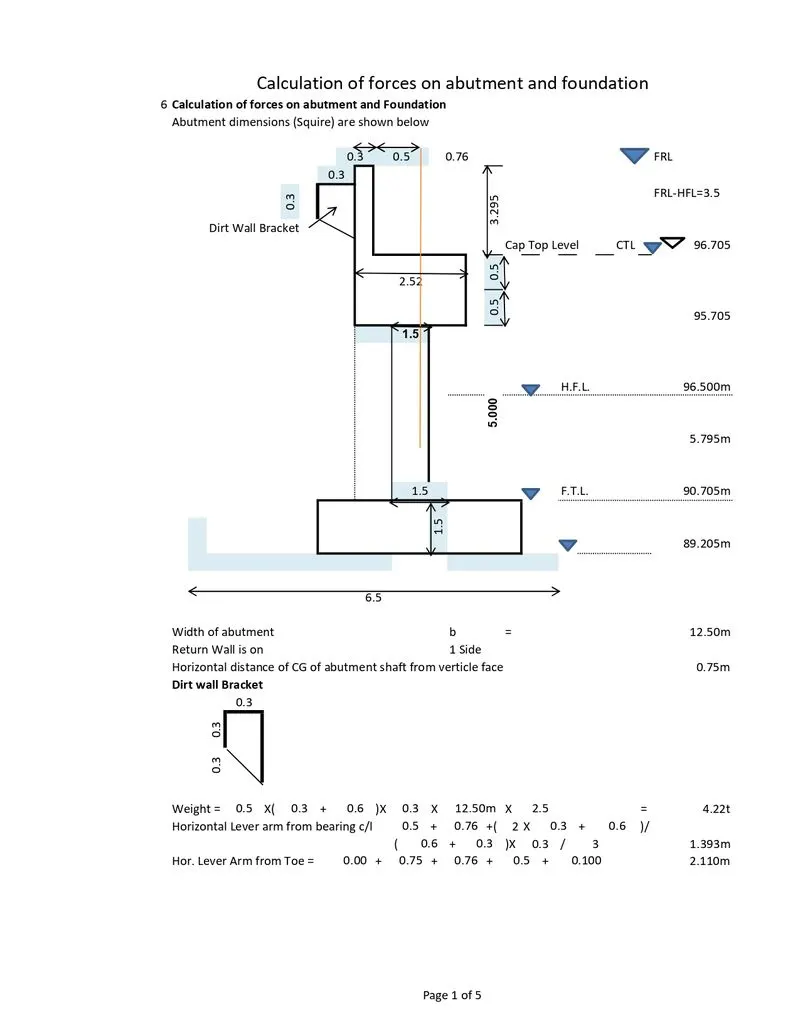
Q Calculate the forces as per IRC 6 on the foundation.
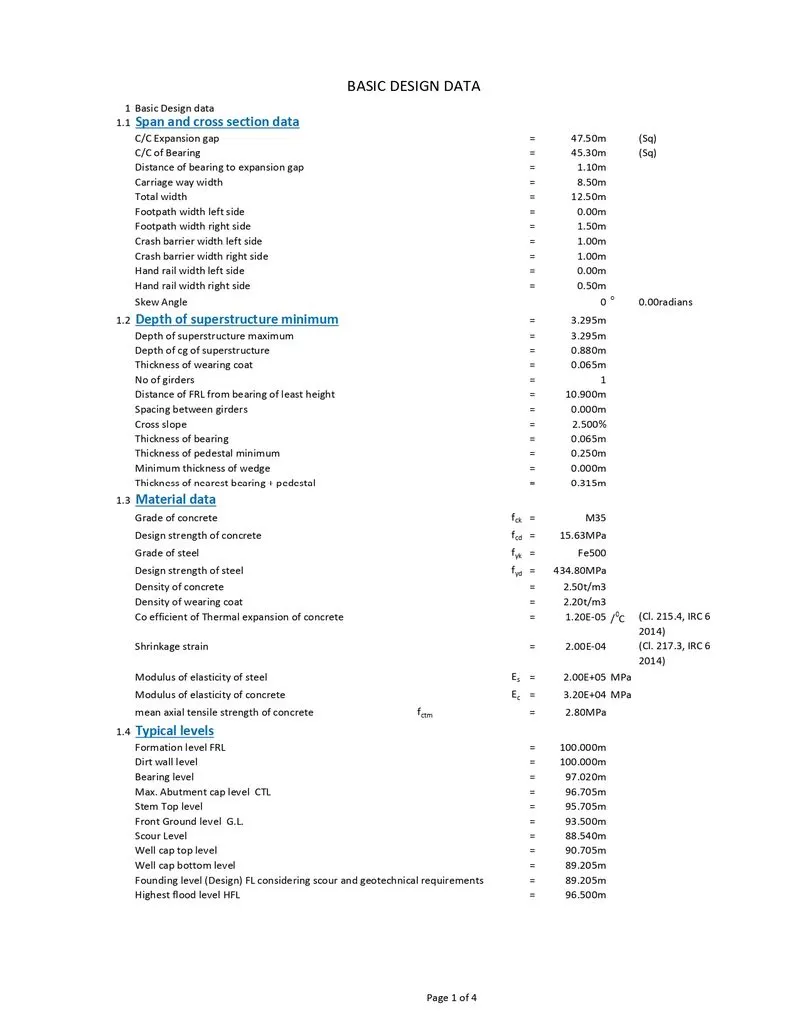
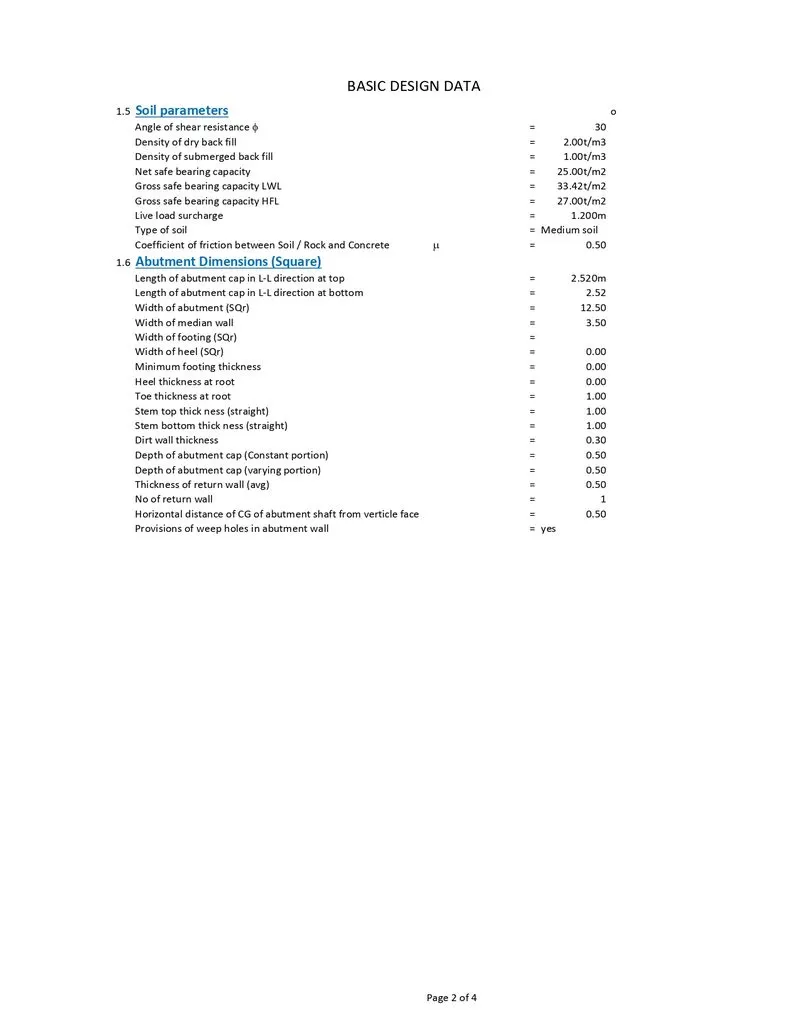
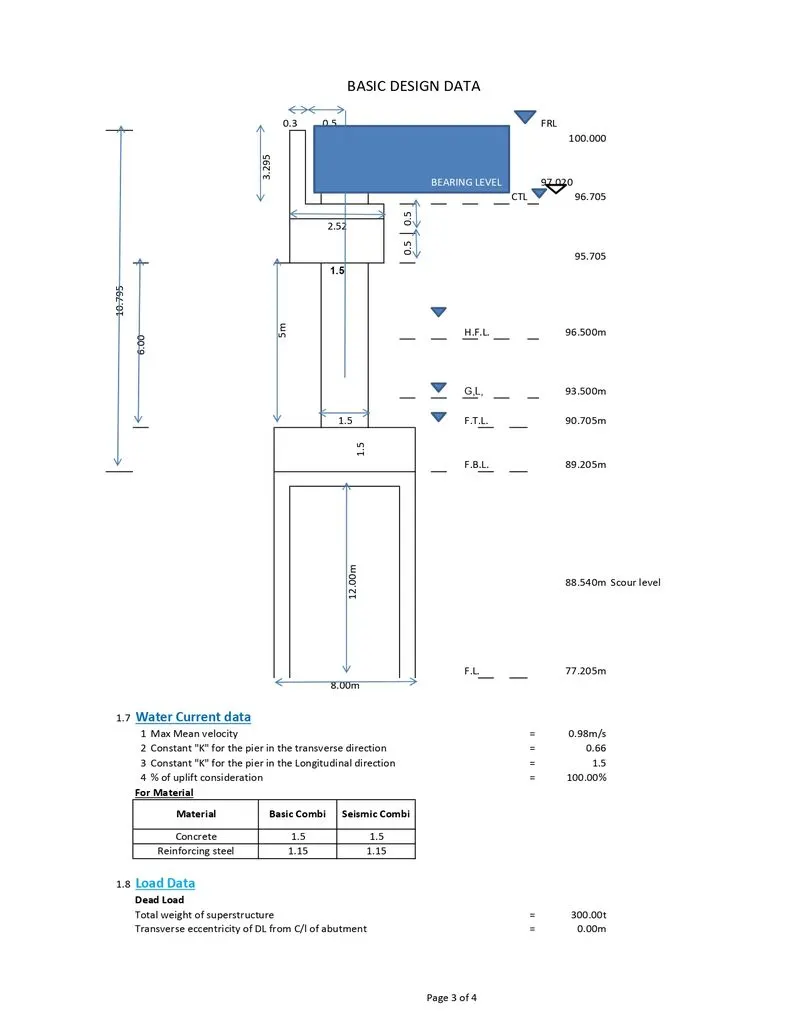
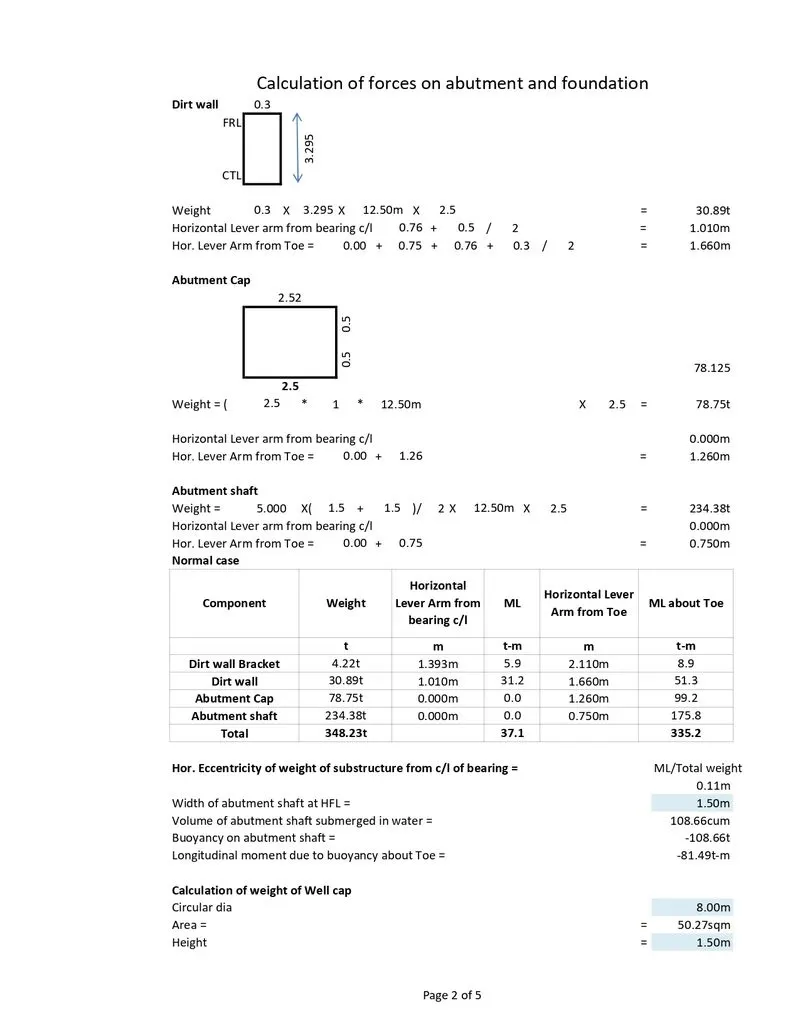
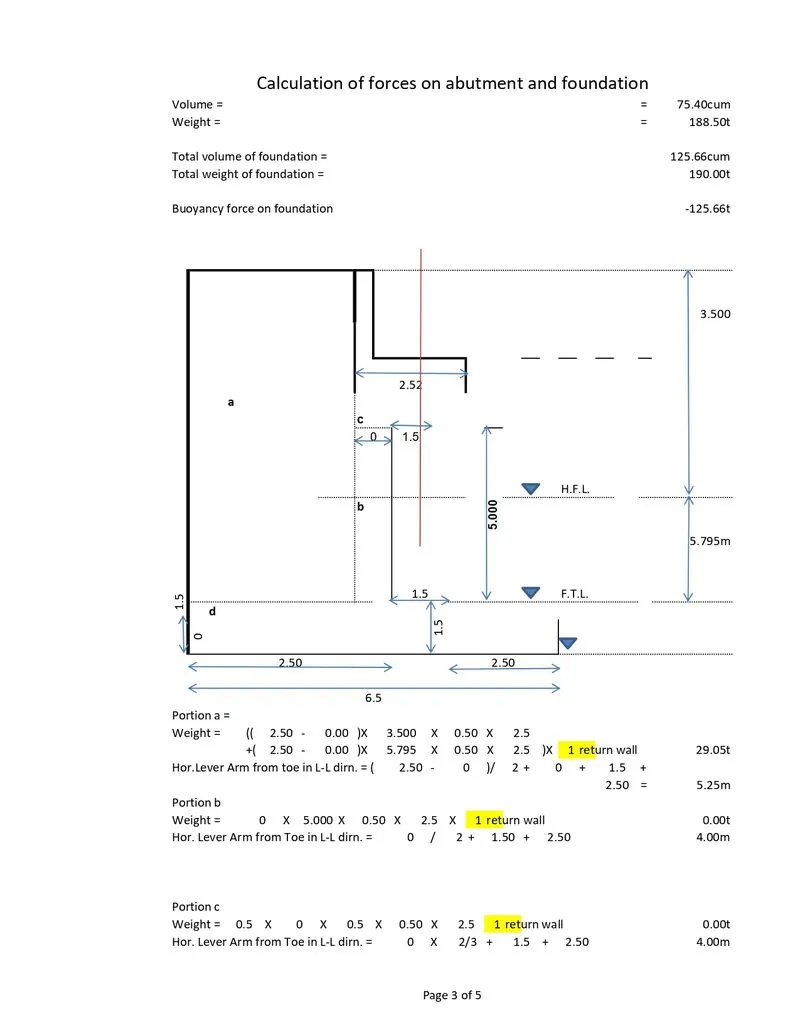
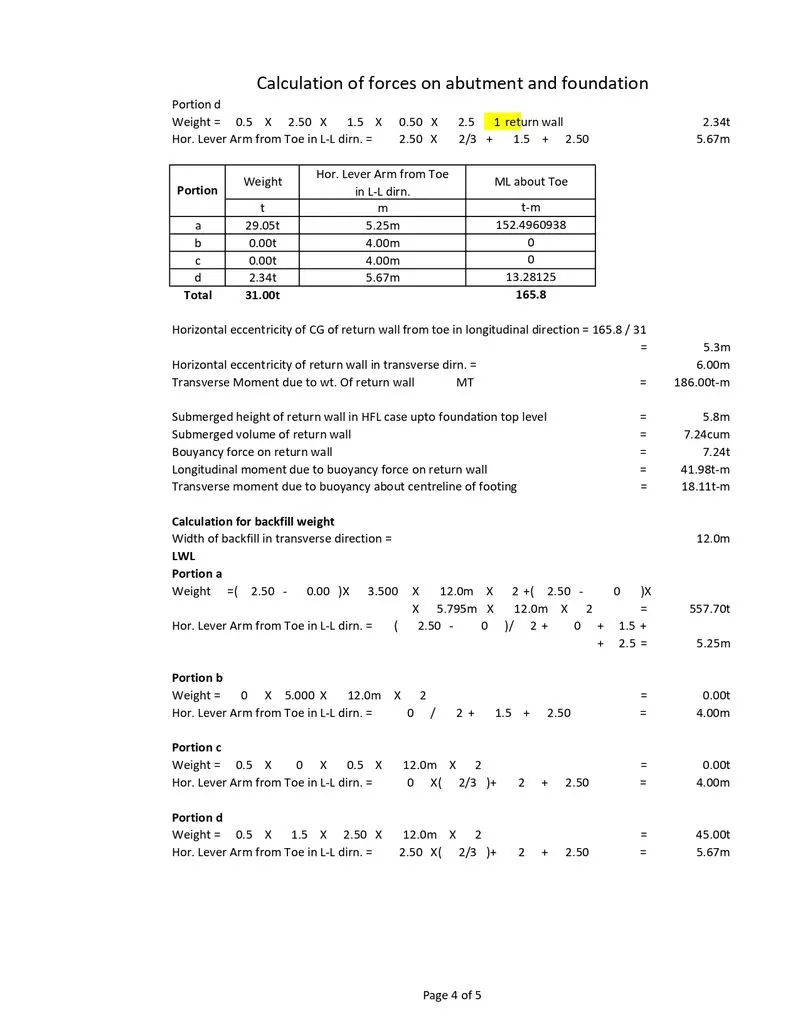
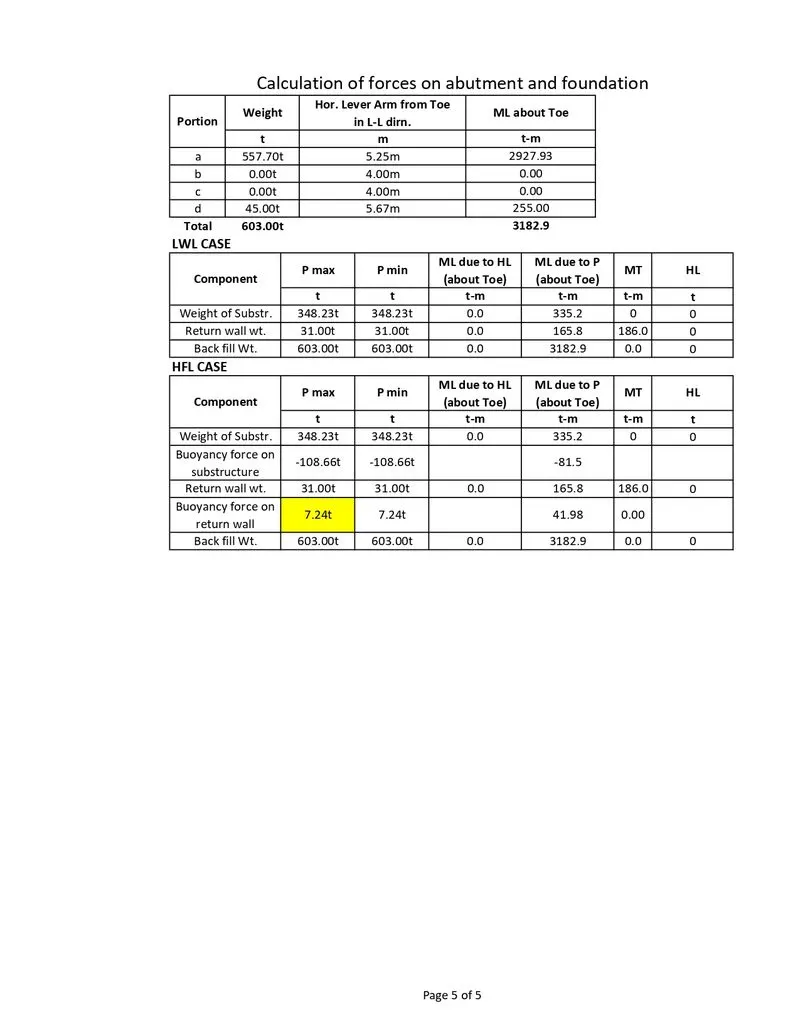
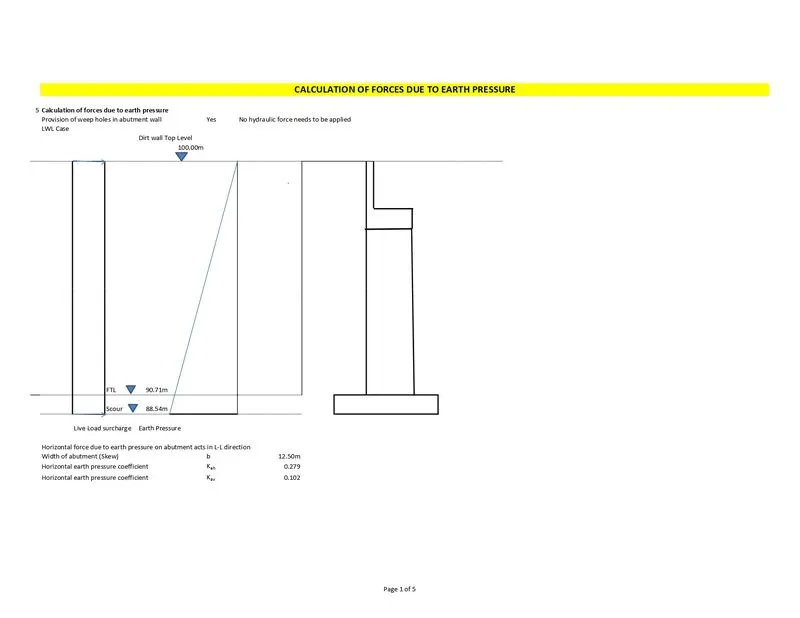
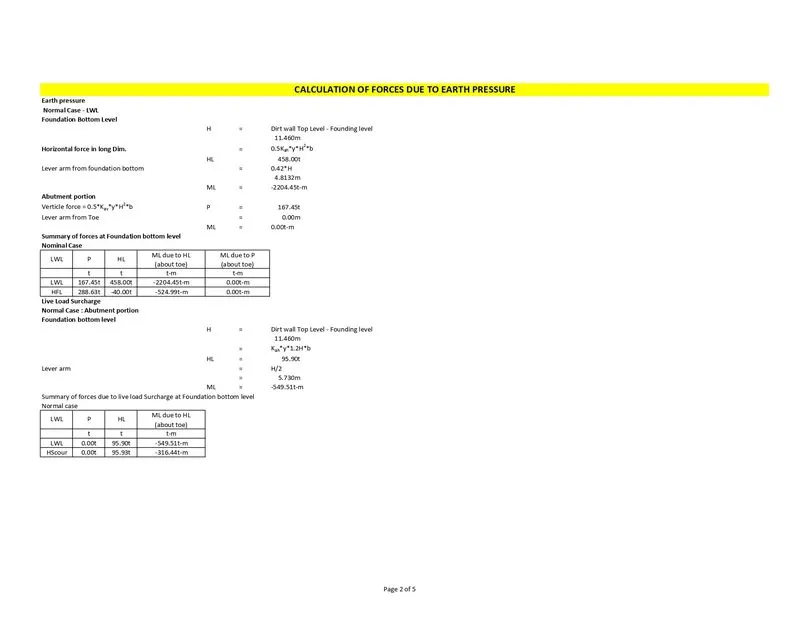
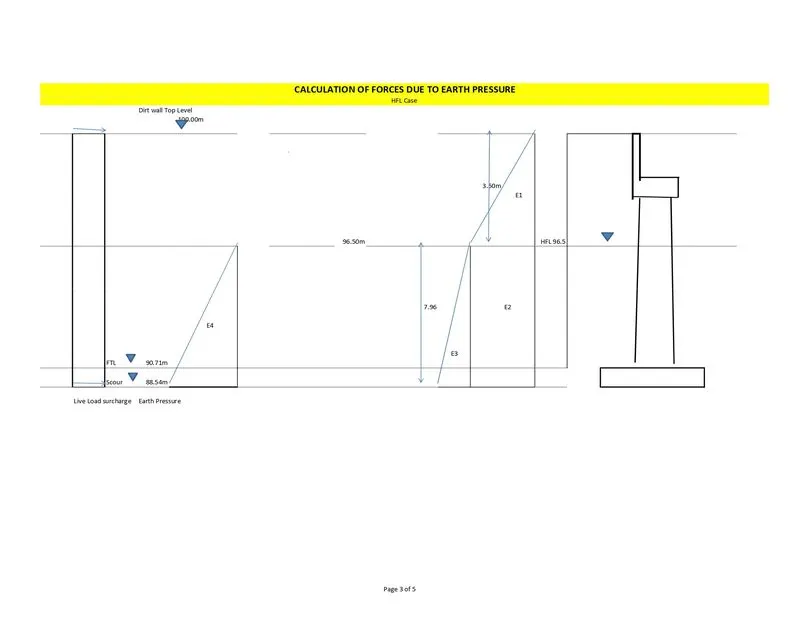
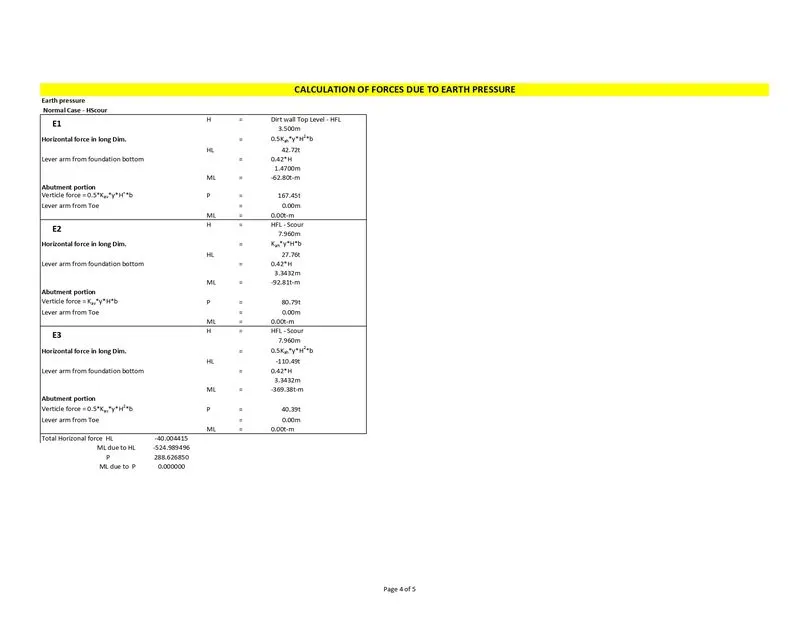
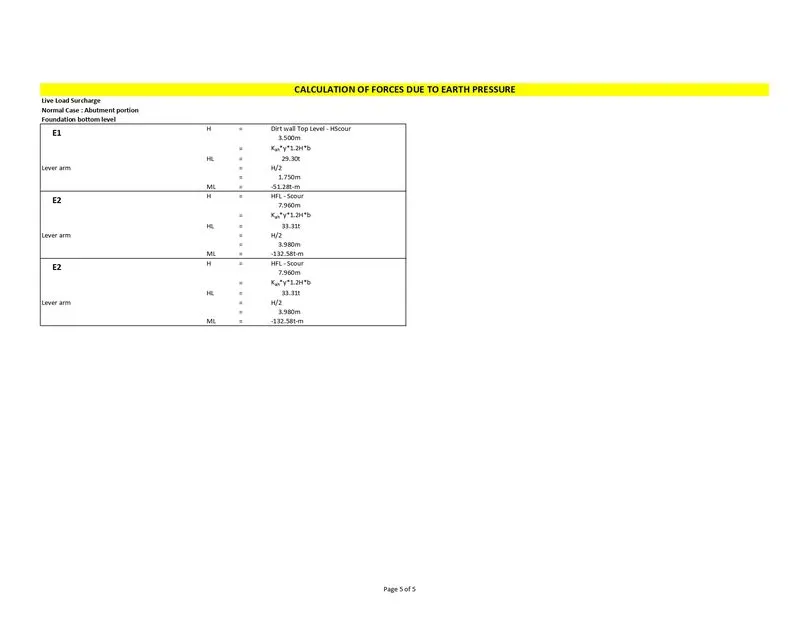
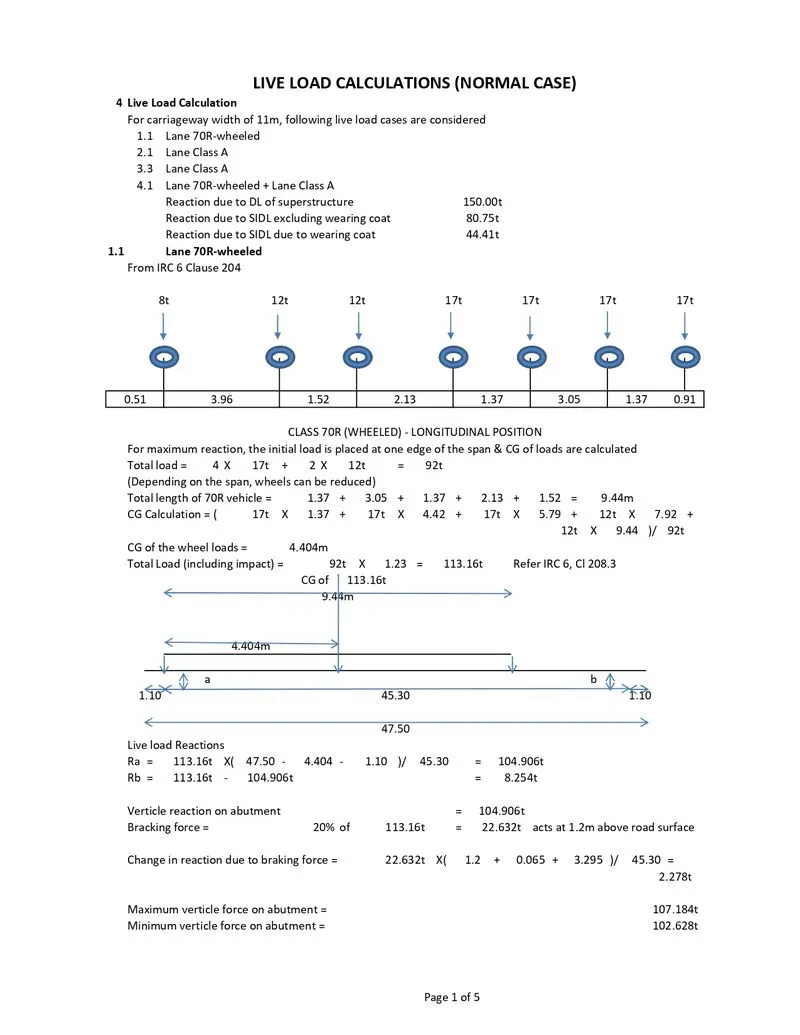
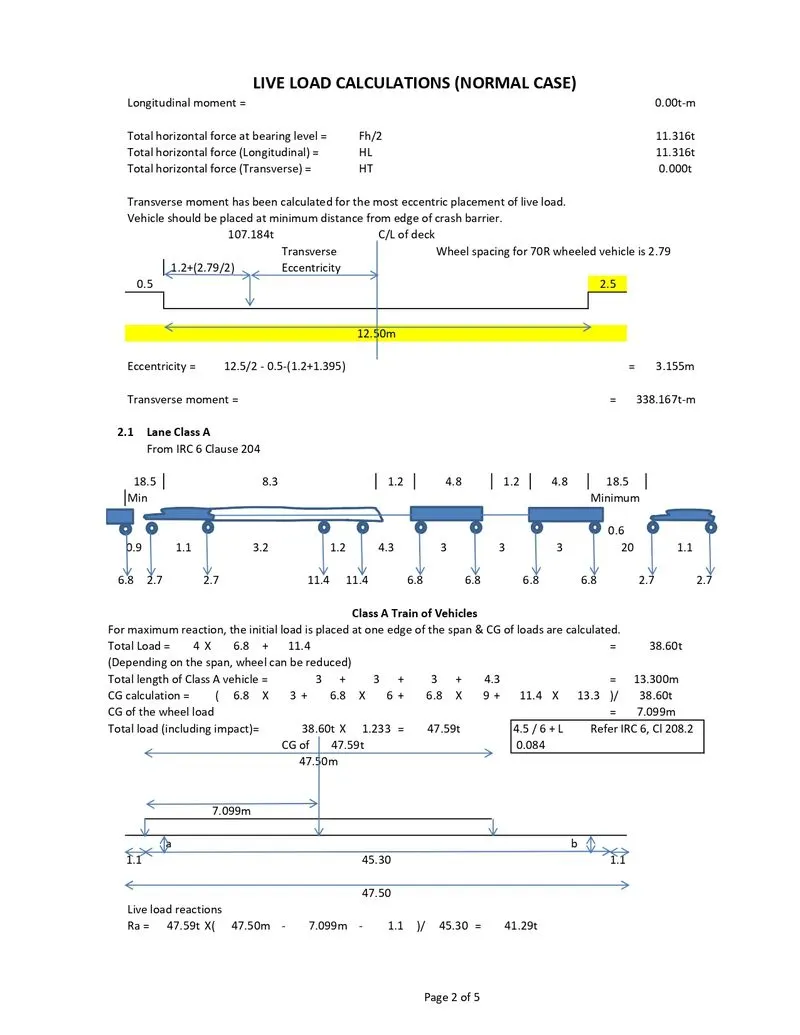
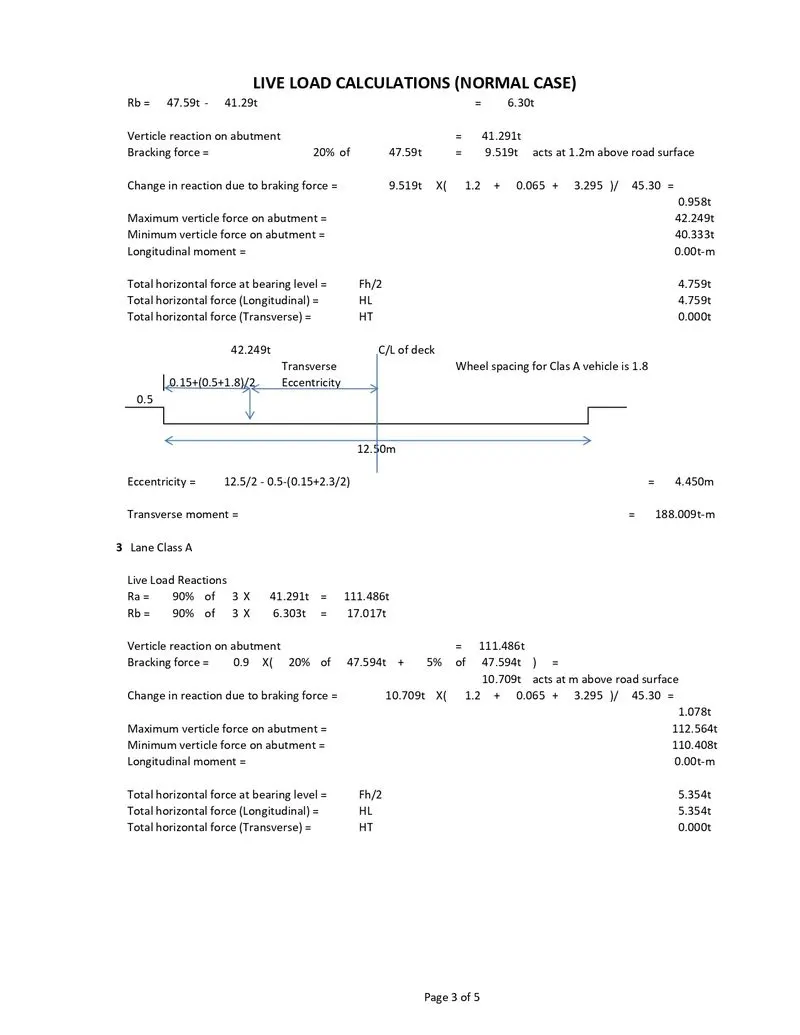
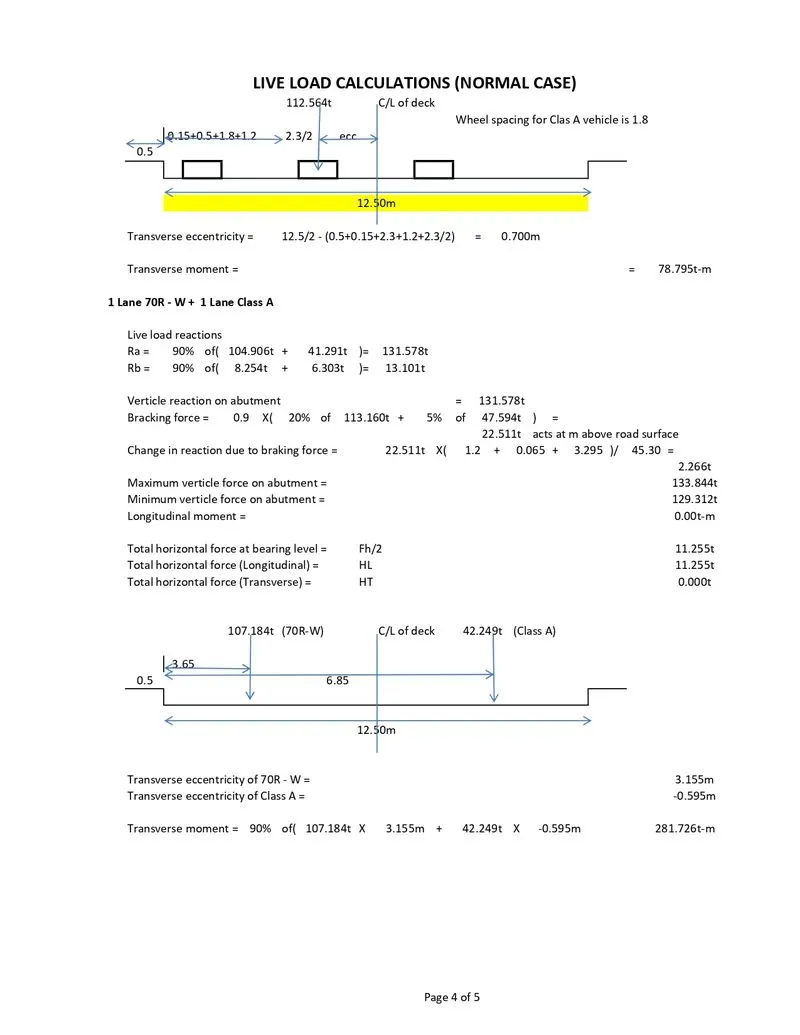
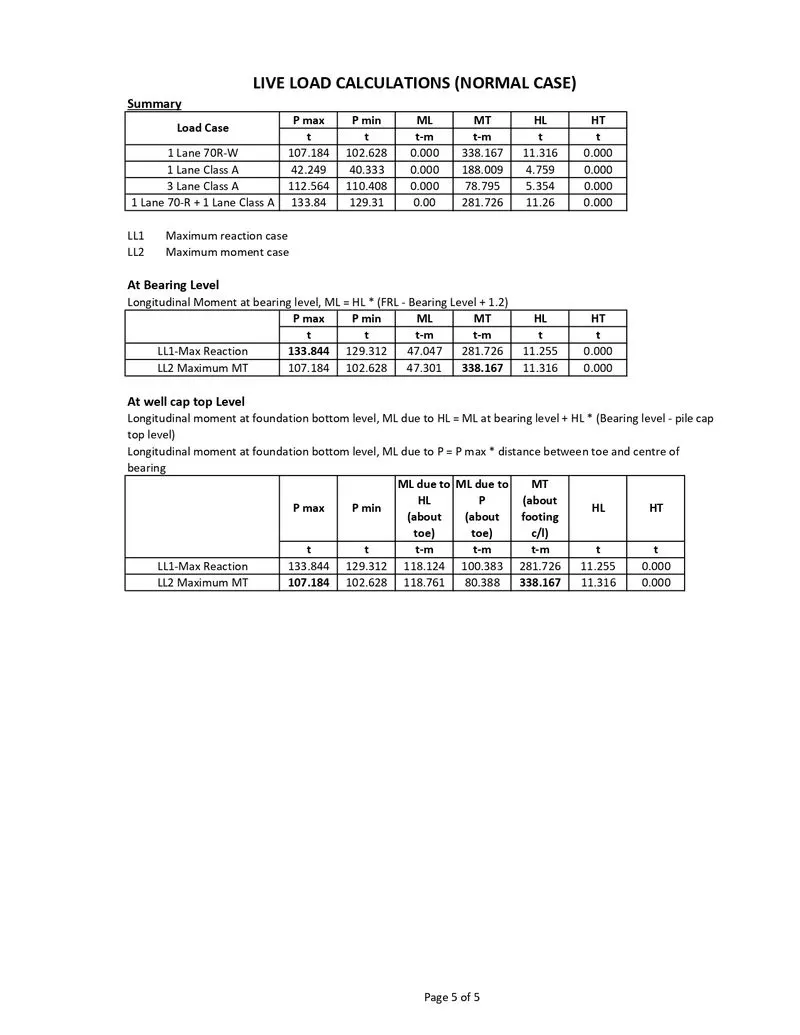
Q What is zero shear point, and if there is more scour at region what will be the effect of that on Zero shear point.
A The point where the bending moment is maximum the shear force is Zero. As the scour is more, earth pressure will start from that level. Point of Zero shear will be more lower than usual.
Q Define the Liquefaction and its effects, how it can affect foundation. Also list the remedial measures for the same.
Liquefaction takes place when loosely packed, water-logged sediments at or near the ground surface lose their strength in response to strong ground shaking. Liquefaction occurring beneath bridges and other structures can cause major damage during earthquakes.
According to the mechanism of earthquake liquefaction, it can be concluded that there are several key conditions for earthquake liquefaction in soil:
(1) The foundation soil is coarse-grained soil (sandy or gravelly), that is, there is almost no cohesion between soil particles;
(2) Foundation soil is in the state of loose, saturated, large pores and low density;
(3) The foundation soil is in an un drained state. Treatment of liquefiable foundations should be considered from the above several key factors to prevent it from liquefaction.
From the above analysis of the conditions for the soil liquefaction, the anti-liquefaction countermeasures can be divided into the following two categories:
One of the ideas is proceeding from the properties of liquefiable foundation soils, by the means of improvement for the soil’s qualities to enhance the capacity of soil’s anti-liquefaction in the early stage. For example:
(1) Reducing the void ratio of liquefiable foundation soil and improving the compactness of the foundation;
(2) Changing the structural properties of the liquefiable foundation soil, strengthening the structural connection between the soil particles and reducing the particle movement;
(3) Reducing groundwater level and reducing the saturation of liquefiable soil. The other idea is considering from the stress conditions of liquefiable foundation soils, and to reduce the liquefaction-induced disasters by changing the stress conditions of the soil.
For example:
(1) Applying the non-liquefied layer on the liquefiable soil layer to increase the effective stress of the liquefiable soil layer and improves the liquefaction resistance of the soil layer.
(2) Constraining the deformation of soil to reduce the excess pore water pressure due to volume contraction, and changing the stress conditions of the soil under dynamic loading;
(3) Changing the drainage conditions of the liquefiable foundation soil so that the excess pore water pressure is quickly dissipated. The following will summarize the treatments and countermeasures of liquefiable foundation in recent years, and compare the advantages, disadvantages and applicable conditions of various measures.
Improvement for soil’s qualities
Compaction method
Compaction method is the most fundamental method of liquefaction mitigation. Otherwise called densification of liquefaction-prone sand. By reducing the void ratio of the liquefiable foundation soil, the compaction degree can be increased to reduce the liquefaction potential of the foundation. Since dense sand does not develop high excess pore water pressure as loose sand does and since dense sand does not deform so easily as loose sand, densification by means of vibration has been carried out widely. The thickness of the compacted layer is not as thick as possible. There is an optimal viscous thickness. The common compact methods include dynamic compaction method, vibration compaction method, and blasting vibration compaction method.
Method of changing the structural properties of soil
According to the mechanism of earthquake liquefaction, under the action of cyclic dynamic load, the weak bonding of liquefiable soil makes the soil particles easily dislocation. This misalignment can cause the volume shrinkage of the soil skeleton, leading to the pore water pressure increase and the effective stress decrease. Furthermore, the shear resistance of the foundation soil will decrease. Therefore, by changing the structural properties of the liquefiable soil to enhance the connection between soil particles on the one hand can reduce the movement of soil particles to reduce the liquefaction potential, on the other hand can also increase the shear strength of soil.
Permeation grouting method
Deep mixing method and jet grouting method are common anti-liquefaction methods by changing the structural properties of the liquefiable soil in engineering. These methods develop cohesion in sandy soils and prevent large shear strain. Hence, excess pore water pressure does not rise. Permeation grouting is a method of injecting the silicon-based cement slurry or cohesive soil into liquefiable soil layer by way of infiltration. Deep mixing is a method of mixing soil with a cement-like material either by mechanical mixing. Jet grouting is a method of injecting cement-like material into liquefiable soil layer through high pressure. The role of silica-based cement grouts in the treatment of foundation soils was initially used to change the permeability of soils. The study of this method in seismic liquefaction started after the mid-1990s.
Desaturation method
When sand is not saturated with water, it is unlikely to liquefy. This is because the volume of unsaturated sand can change by compressing the volume of pore gas when dilatancy occurs. Therefore, the effective stress does not decrease significantly and the liquefaction potential is very low in soil lying above the ground water table. Studies have shown that when the saturation of sand is reduced from 100% to 70%, the liquefaction resistance of sand changes significantly. As the saturation decreases, the resistance to liquefaction gradually increases and can exceed 3 times the fully saturated sample. Similar conclusions have also gained support from more and more experimental results, and they began to propose engineering measures to reduce the saturation of sandy foundations. The commonly used de saturation methods include the dewatering method, air injection method, biogas method, chemical bubble method and electrolysis method. Relation between liquefaction strength ratio and saturation. The dewatering method is the simplest common method of de saturation, this method remove the water by using deep wells. But this method will produce settlement. So it needs to control the differential settlement of existing buildings. The air injection method involves injecting air into the sand (or injecting it into the foundation through compacted sand piles) through an air-filled pump, and draining water close to the injection point to form an effective area for reducing satiety. However, the distribution of air bubbles in the air injection method is not uniform, which usually leads to poor de saturation effect. The biogas method is a method for producing nitrogen gas through the de nitrification of microorganisms. The chemical bubble method generates gas by producing a chemical reaction in the sand by chemical substances. Although the bubble distributions by the chemical bubble method and the biological bubble method are more uniform than the air injection method. But they may cause environmental pollution problems. The electrolysis method produces gas by electrolyzing water and produces gas in saturated sand, which achieves saturation reduction. However, the electrical characteristics of the foundation are not clear. Based on the above constraints, the de saturation method has not been widely used in engineering.
Changing the stress conditions of soil
Supercharging method
Supercharging method is a commonly used anti-liquefaction foundation treatment method to change the stress state of soil. The non-liquefied weight gain layer is covered on the liquefiable soil layer by pressurization to increase the effective stress of the liquefiable soil layer and improve the anti-liquefaction ability of soil. Common supercharging methods include the preloading method and overload methods.
Constrained soil deformation method
The constrained soil deformation method is an anti-liquefaction method that indirectly changes the stress state of soil under dynamic load, thereby reducing the damage caused by liquefaction, such as the reinforcement method and the underground continuous wall method. There are two reasons why reinforcement method can improve the liquefaction resistance of the liquefiable foundation. The main reason is that due to the contact friction between the reinforced material and the foundation, the lateral tensile strength is enhanced, the stress and deformation state of the shallow soil are changed, and the shear strength of soil is improved. On the other hand, due to the deformation of the foundation, there will generate a lifting force on the middle of the foundation caused by the reinforced material, which makes the stress distribution of the foundation tends to be uniform, and reduces the stress concentration near the foundation, so that no stress concentration zone is formed under the foundation. It helps to prevent the unfolding of the plastic zone and limits the uneven settlement of the foundation soil. The underground continuous wall method mainly reduces the dislocation between soil particles under dynamic load through lateral restraints, thereby reducing the generated excess pore water pressure and changing the loss of soil effective stress to achieve anti-liquefaction effect.
Promotion of the excess pore pressure dissipation method
The promotion of the excess pore pressure dissipation method is an anti-liquefaction method that increases the effective stress by promotes the excess pore after dynamic load. The most common method of promoting pore water pressure dissipation is the gravel pile method and sand compaction pile method. The gravel pile and the sand compaction pile can effectively dissipate the super pore pressure accumulated in the soil around the pile due to the liquefaction of the soil. These two types of soil anti-liquefaction treatment pile method have been fully affirmed. At the same time sand compaction pile method is also a kind of compaction method. In recent years, some scholars have developed some new anti-liquefaction methods that promote pore pressure dissipation.
Q How it is different from scouring?
Scouring is a process by which the particles of the soil or rock around the periphery of the abutment or pier of the bridge spanning over a water body, get eroded and removed over a certain depth, when the velocity of flowing water exceeds the limit that the soil particles can handle.
This occurs in upper level where water flows.
Water table does not matter.
Velocity of water and soil particle size matters.
Liquefaction takes place when loosely packed, water-logged sediments at or near the ground surface lose their strength in response to strong ground shaking. Soil behaves like water.
This may be at any level of soil in foundation.
Water table matters.
Velocity of water does not matter.
Thank You !