Week 9 Challenge
Energy Management Strategy Model:
In other words, operational efficiency should always be optimized before asset replacement/upgrades. The basic premise of the Energy Management Strategy is that energy costs are variable operational costs that can and should be proactively managed.
Strategies for Energy Management:
- Identify Sources of Energy Consumption.
- Collect Utility Bill Data
- Analyze Meter Data.
- Identify Opportunities to Save on Costs.
- Track your progress
To design the model of EMS we have formulated the flow chart.
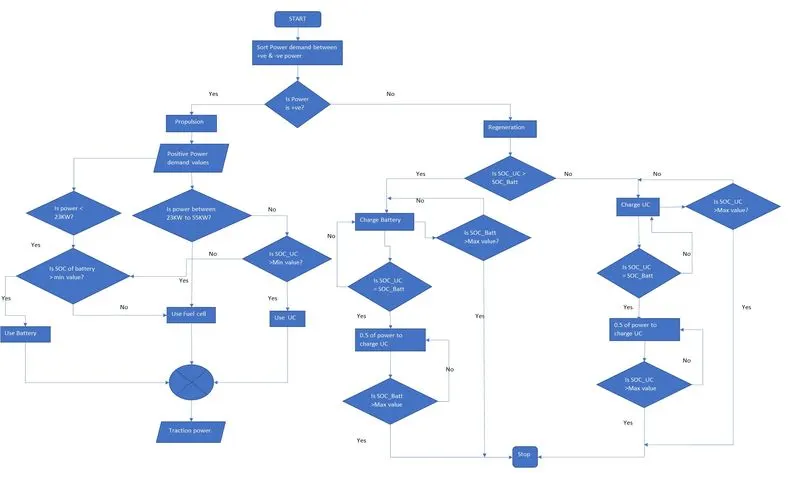
By considering the above flow chart we have designed a EMS system.
Blocks Used:
- Constant
- Signal Builder
- Switch
- Input/output ports
- Interval Test
- And
- Goto/From
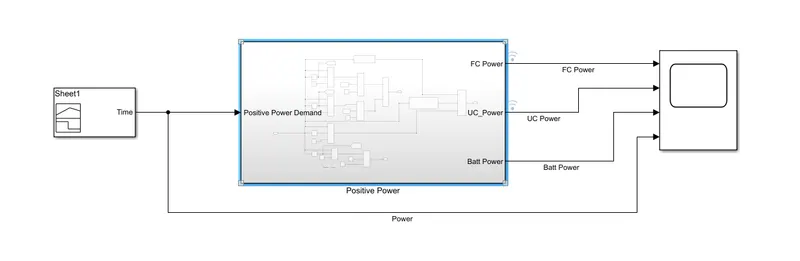
Now we will analyse the model[subsytem wise]:
Inside Positive Power:
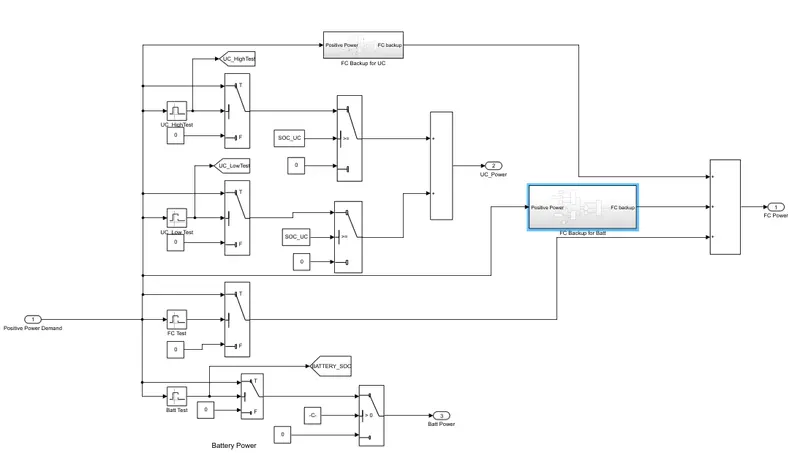
Here we have connected the interval test to determine the power source that need to supply power to the vehicle.
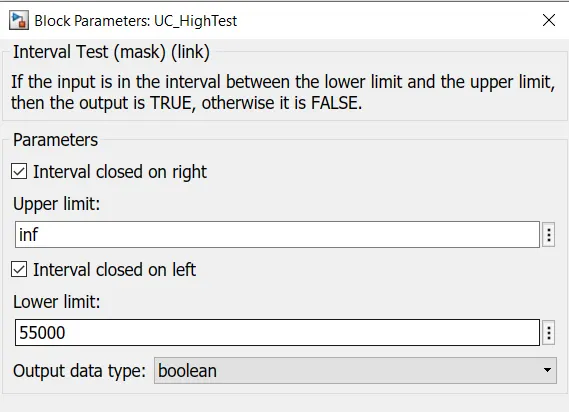
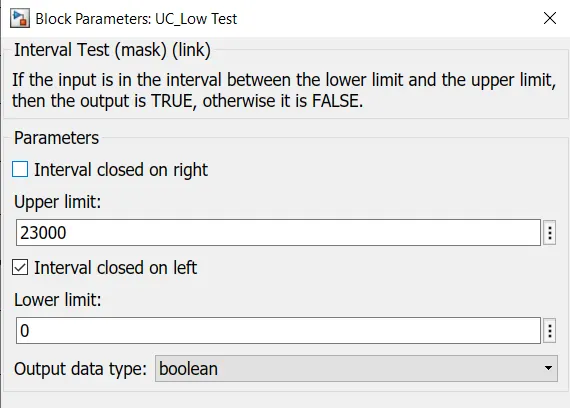
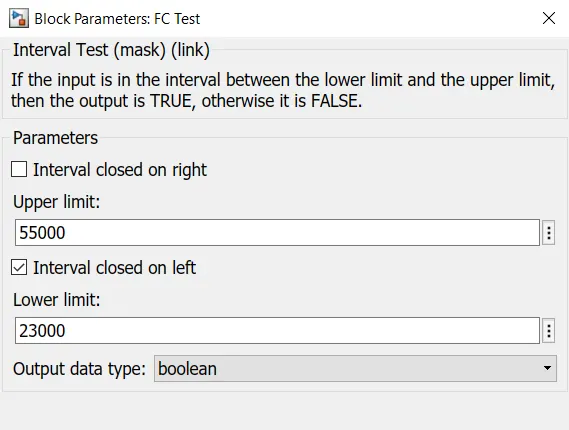
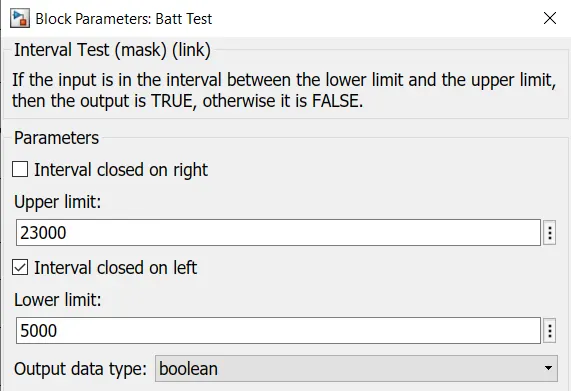
These are the parametric change that are done to implement the model.
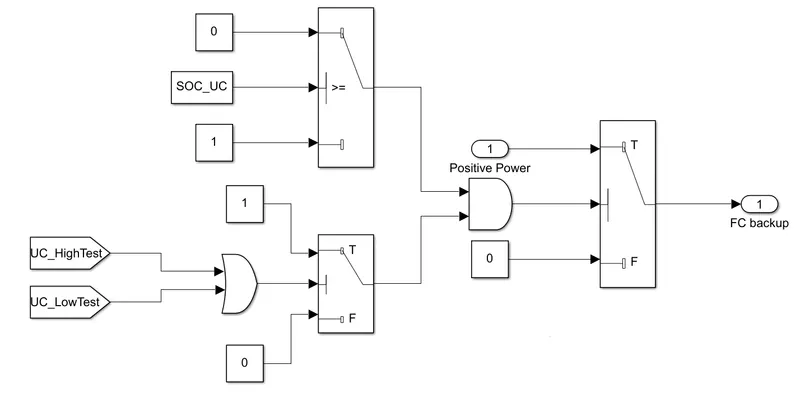
Inside FC Backup for UC:
Inside FC Backuo for Battery:
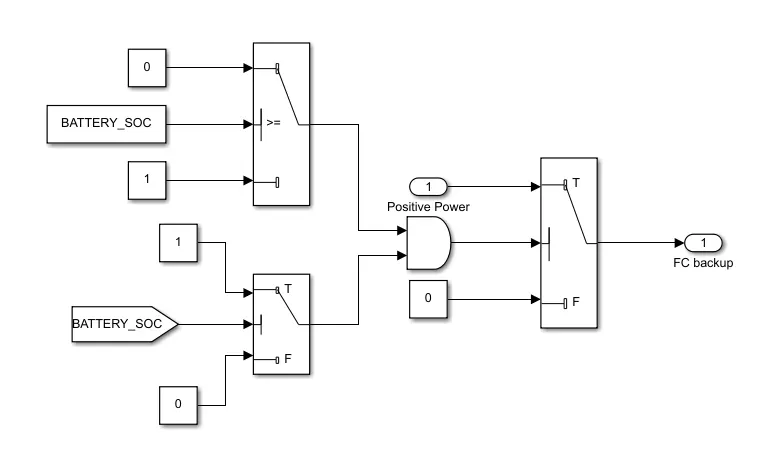
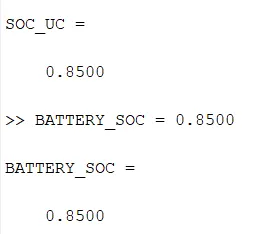
Here we have considered Battery_SOC and UC_SOC as 85%.
We have implemented the model with related logics in order to achieve the EMS of a vehicle.
Output of EMS Model:
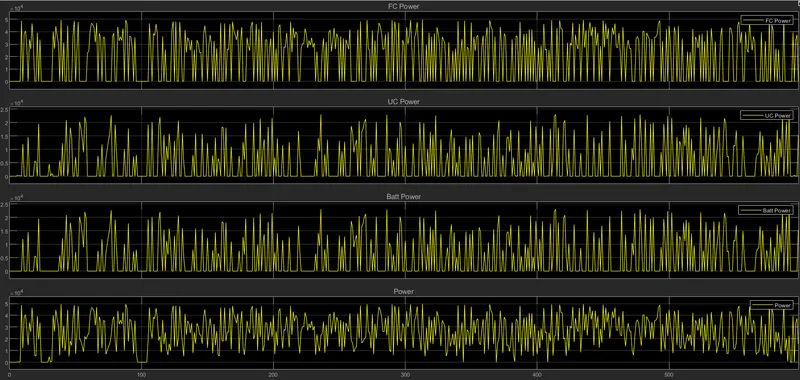
Here if we zoom-in to the output so we can more precisely understanf the power demand that is supplied by various sources at different input values.
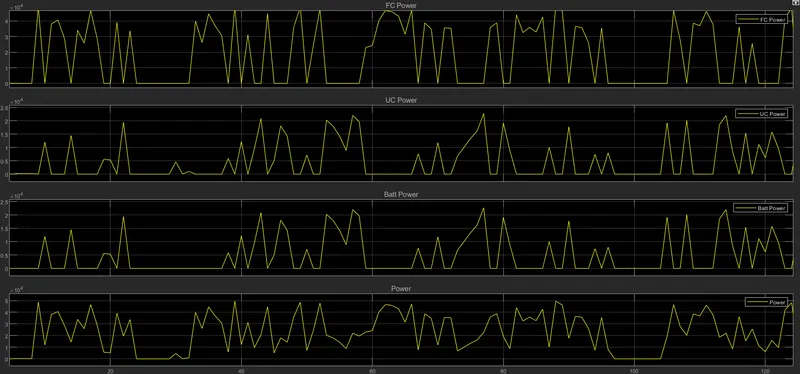
If we observe from output from 20 - 30 sec we can see that, becuse of excessive power demand FC and Battery are at rest and only battery supplying the power to the model.
Whereas from 30 - 40 sec we can see that, becuse of power demand UC and Battery are at rest and only FC supplying the power to the model.
Like this the sources in the model that are connected supplies power to maintain continuity in propulsion of the vehicle accordingly.