Week 9 - Challenge 3 - Bumper
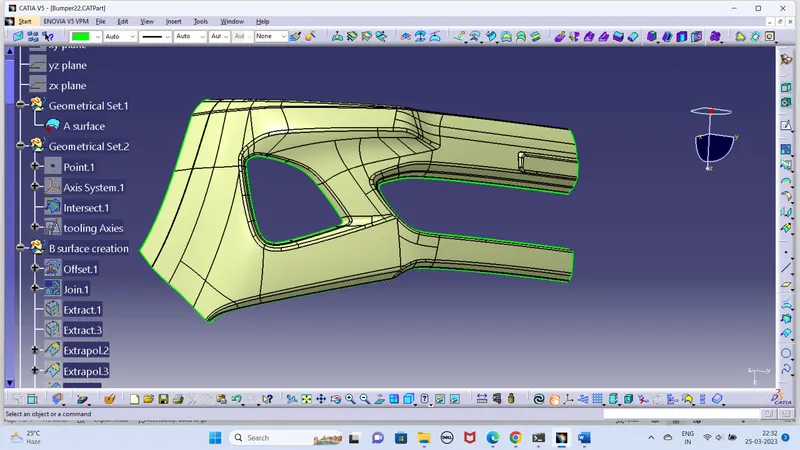
Class-A surface :
A surface made by designer which is given as input to the plastic modeler to work on.
Tooling axis :
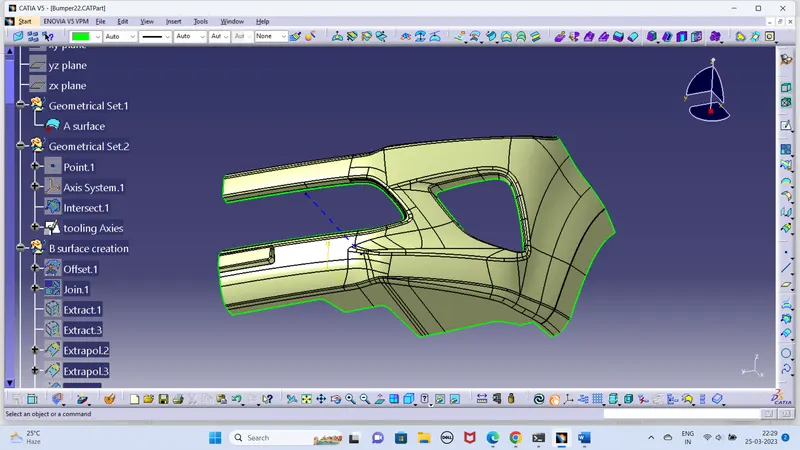
Tooling direction main consideration for plastic part and mould parts because it define movement of mould parts .
First take tooling axis along A- surface check draft analysis.
Tooling axis is created by bisection method first
Take a point on plane which is suitable for product take axis , Intersection , creating two lines outer sides of intersection and taken bisection line between two line .
Draft analysis:
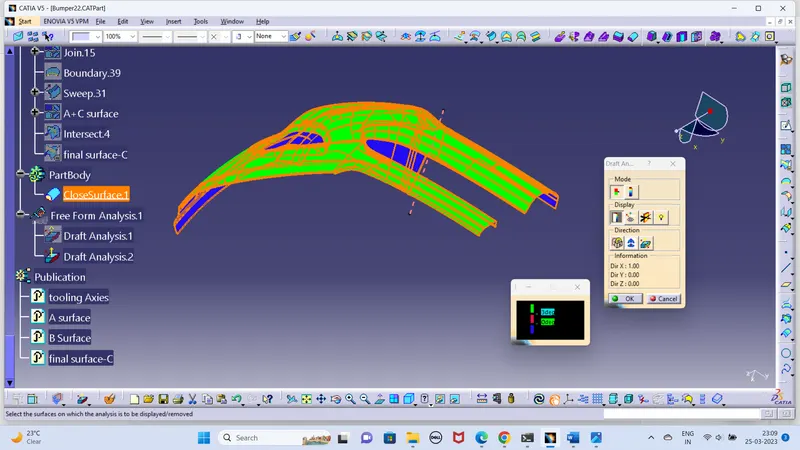
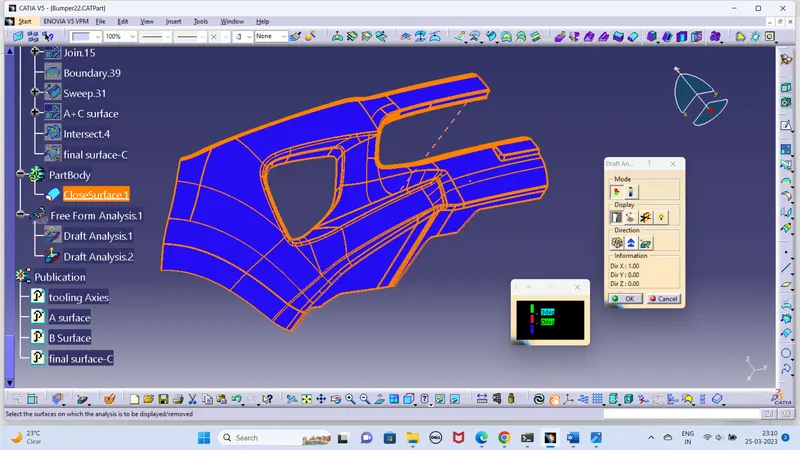
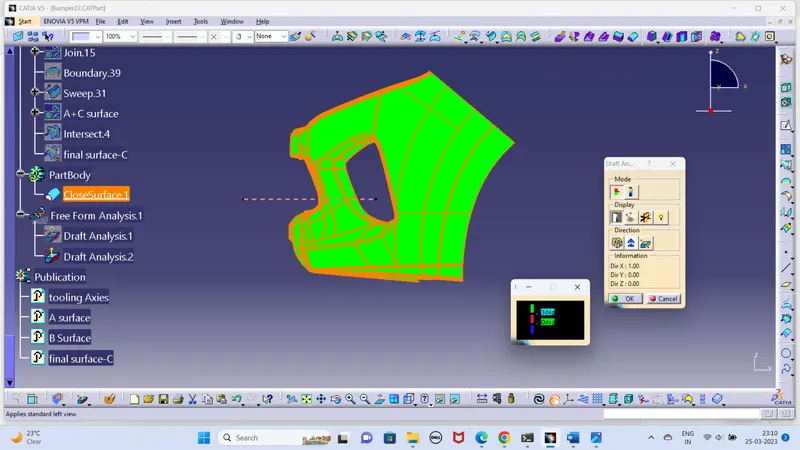
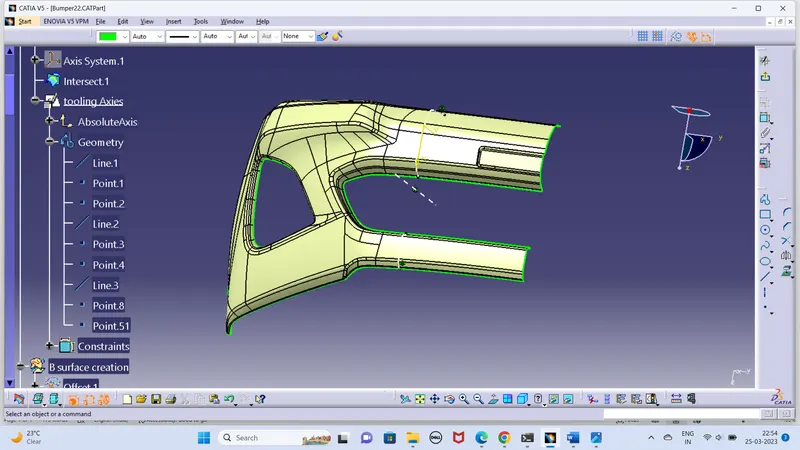
as shown in figure draft analysis on Class-A surface
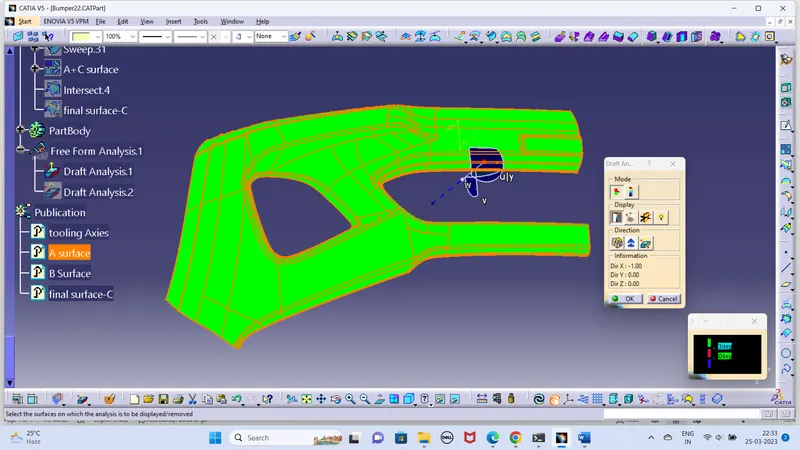
this type of analysis is performed based on colour based identifying zone on the analysis element where the deviation from the draft direction at any point corresponds to specified values
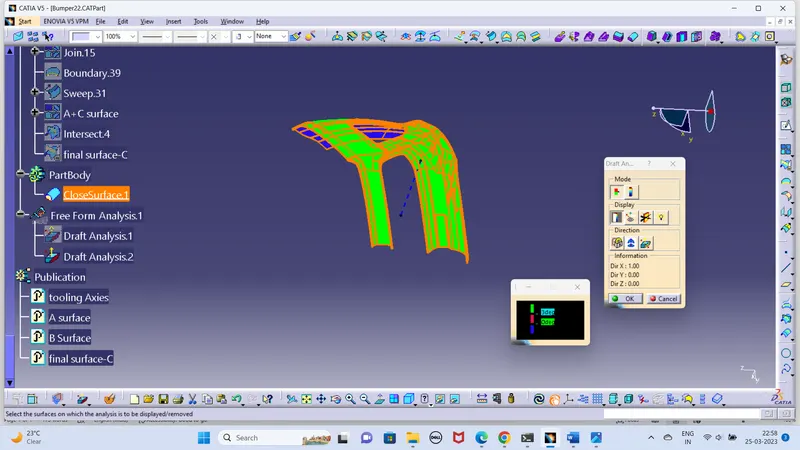
so from the picture we can say that all surface of solid are claering the minimum draft angle from the reasult we can say that part is manufaturable.
B- surface
Taking the thickness of the component to be 3 mm.
A surface below a certain thickness from the class -A surface is a class B surface this is the surface that engineering contains of the model.
Methodology used
- Tooling axis
- Draft analysis
- Class B surface
- Class c surface
- Making a solid model from class A surface
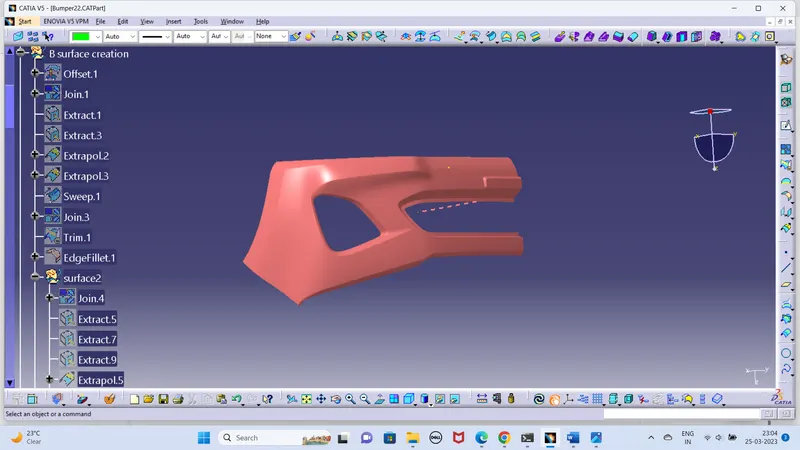
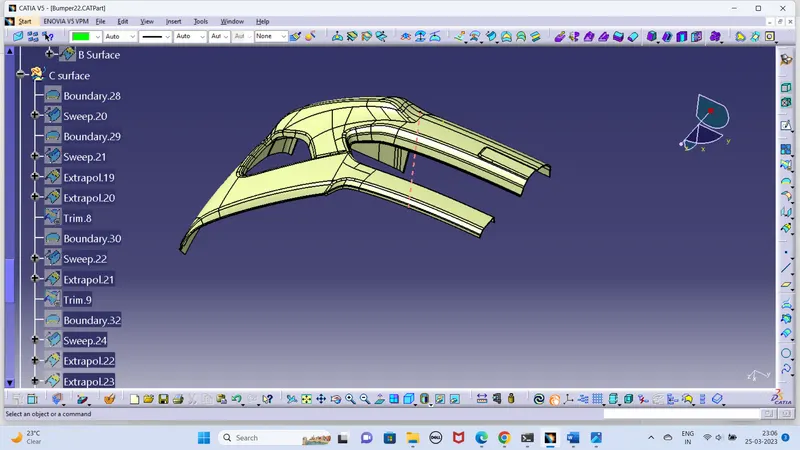
C- surface
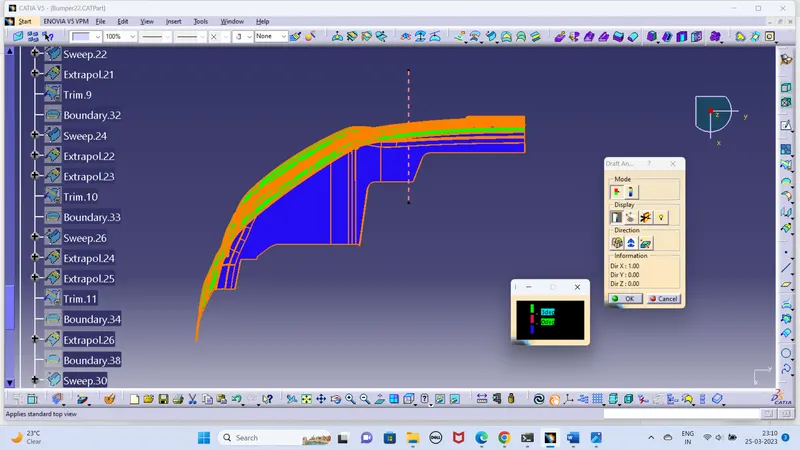
Took boundries for Class -A in some section and in other section took extrapolate for class A sweep using for boundries