Week 9 - Challenge 1 - Base Bracket Design
BASE BRACKET DESIGN USING SURFACE MODELLING
BASE BRACKET
typically refers to a component which is used to support or attach other parts according to our needs. its serves as a foundation for the components.
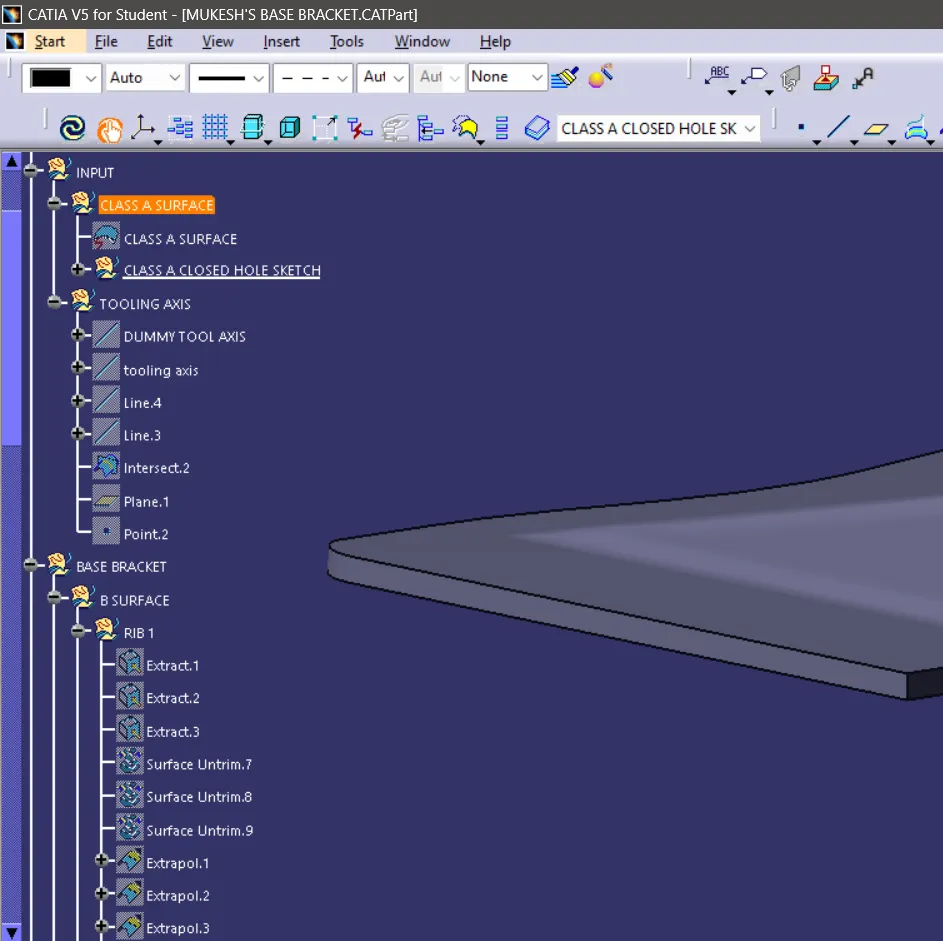
CLASS A SURFACE
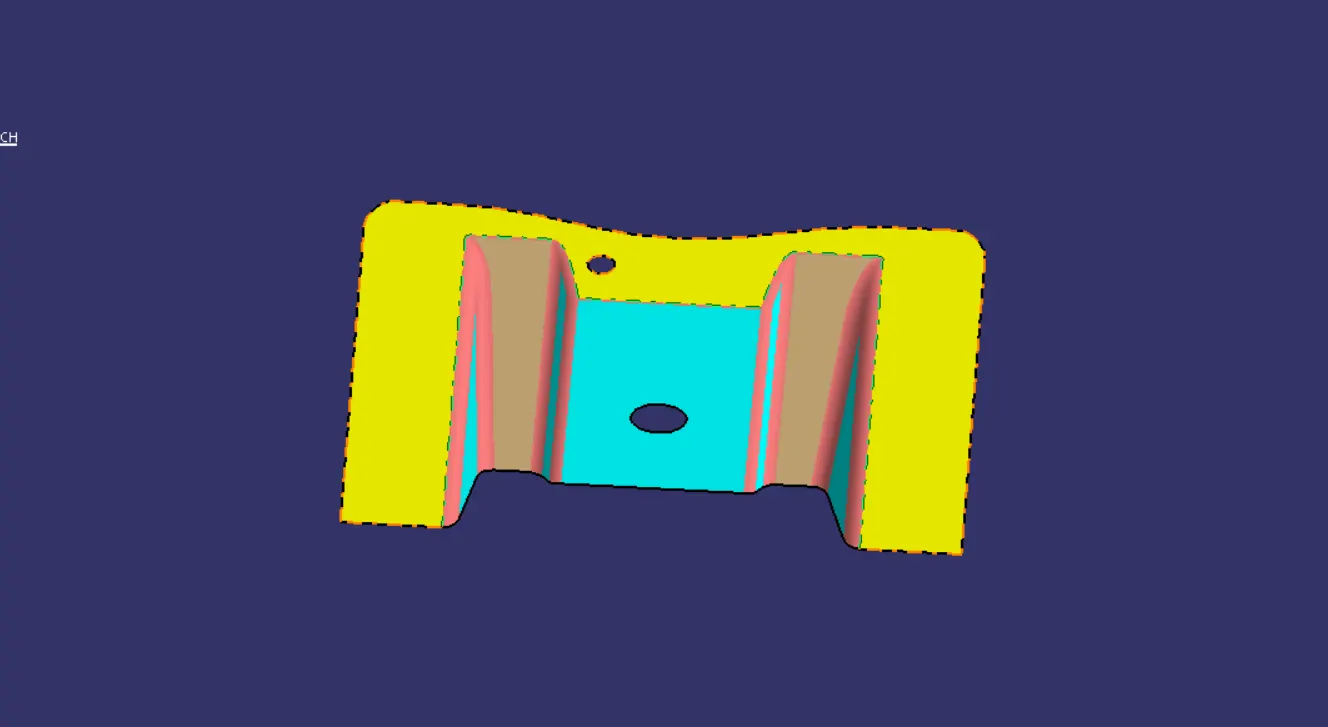
it is an freeform surface for high efficiency and quality. mainly used for asthetical purpose which gives good apealing quality for an product mainly for cars
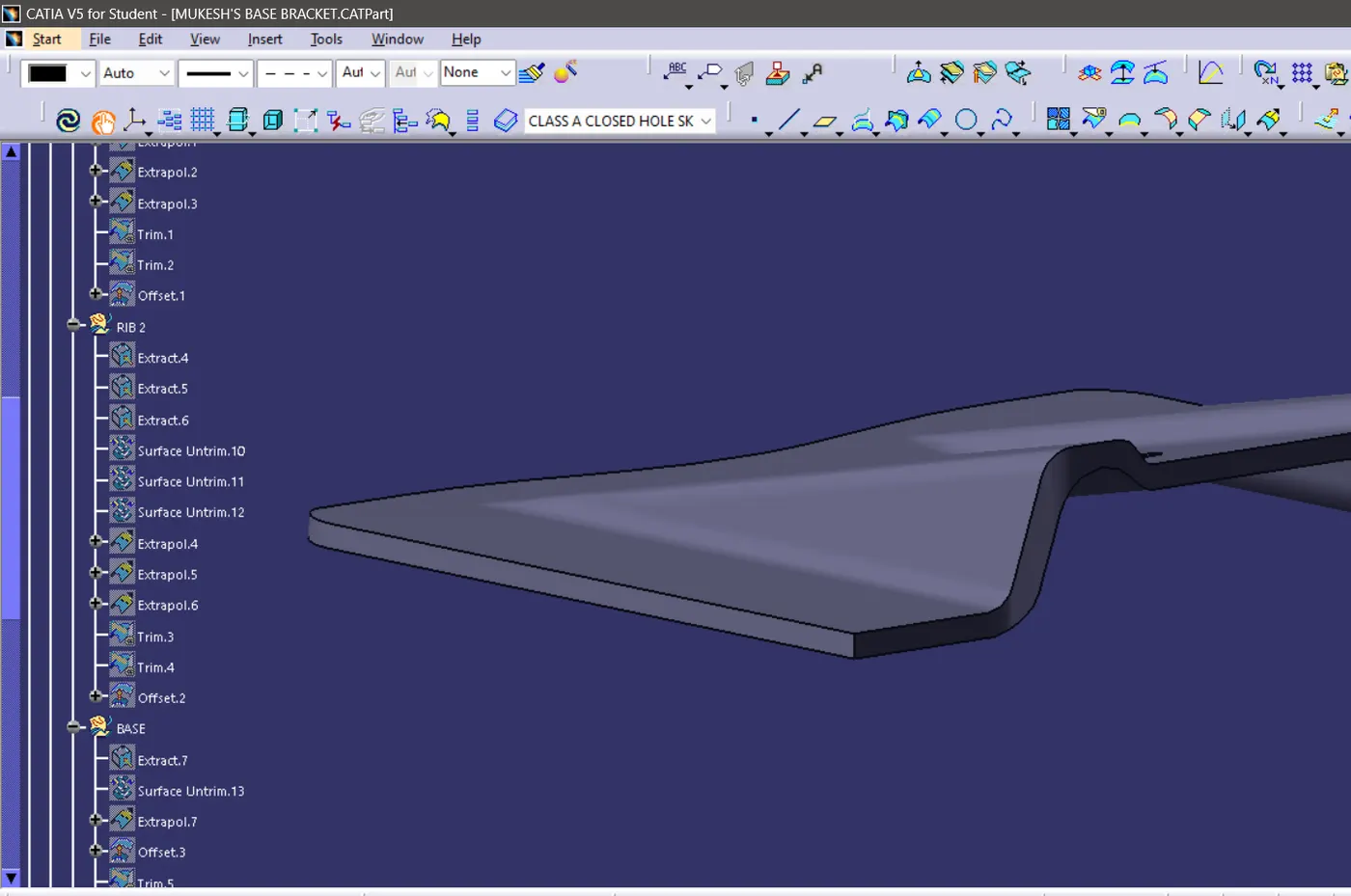
CLASS B SURFACE
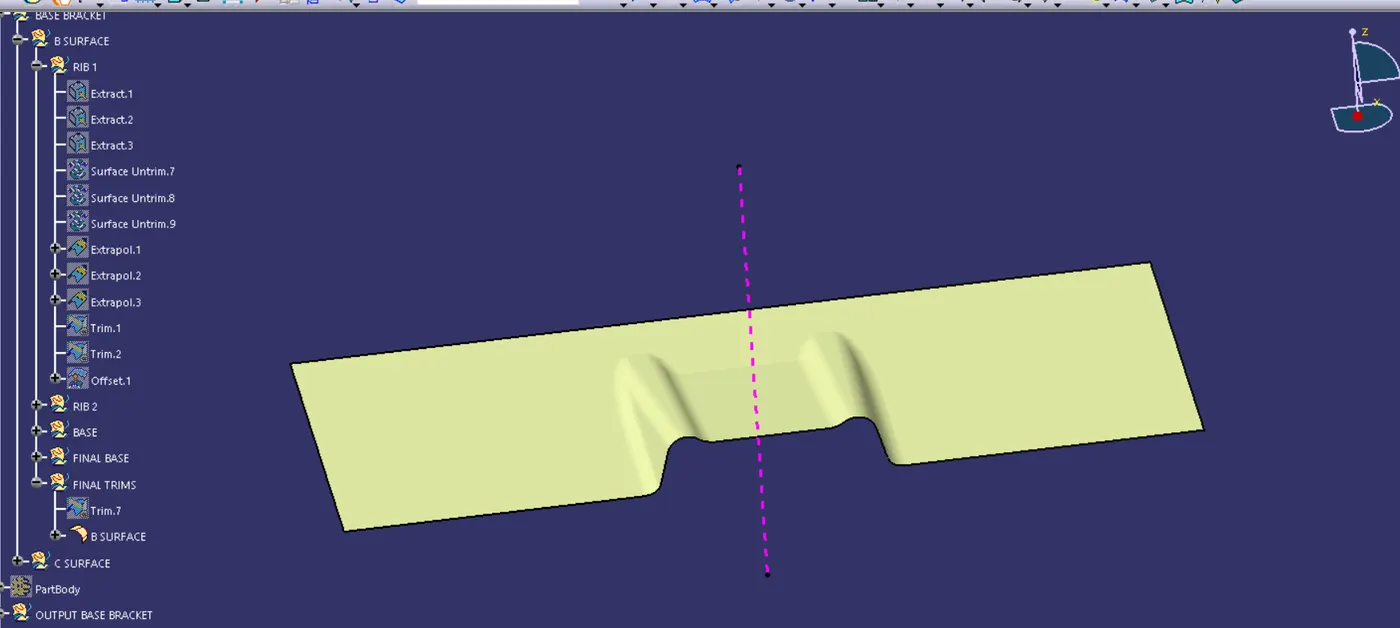
It is an invisible surface for an product class b surface are formed using the class A surface . it provides structural support for an components.it is also refered as engineered surface for structural integrity.
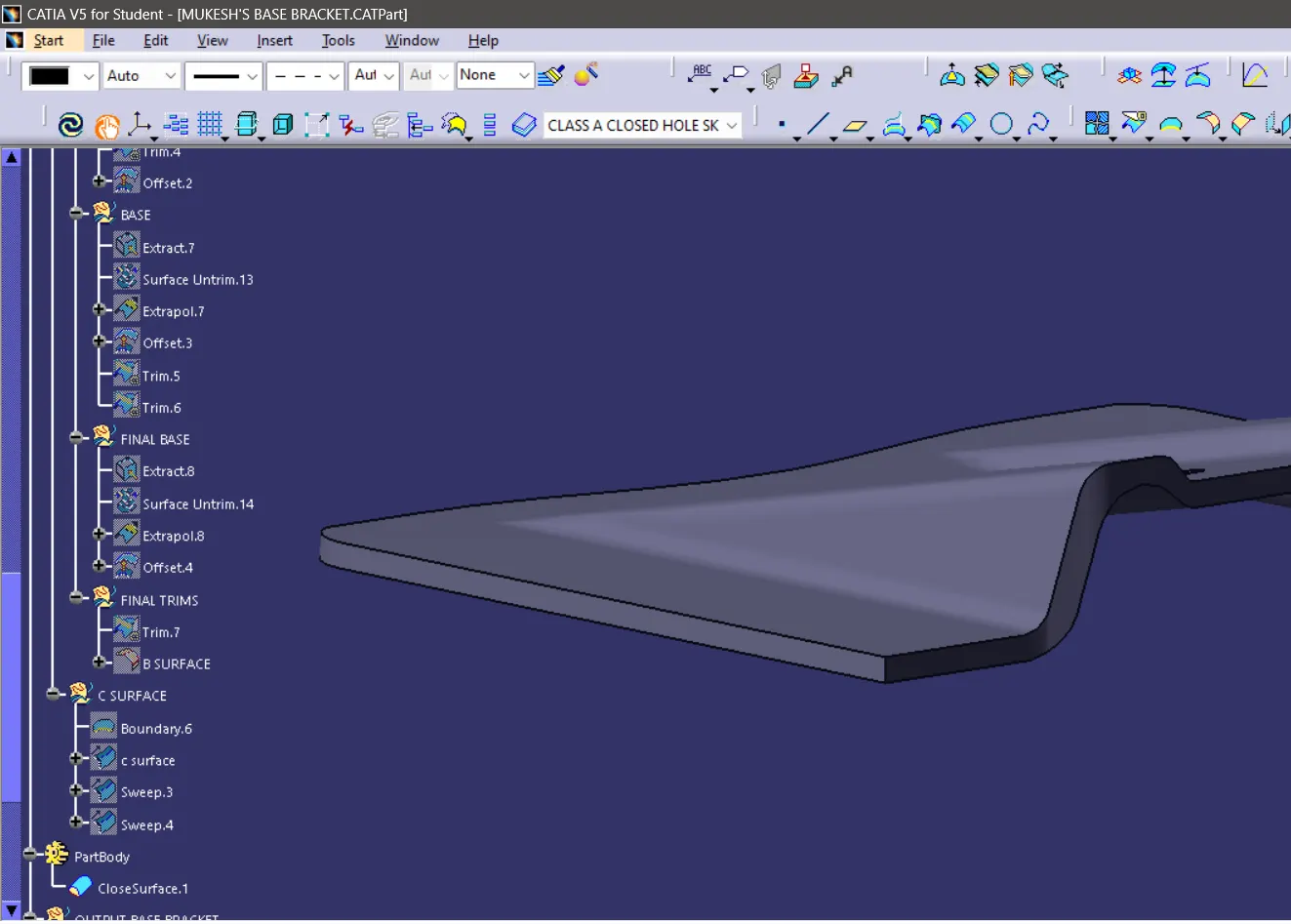
CLASS C SURFACE
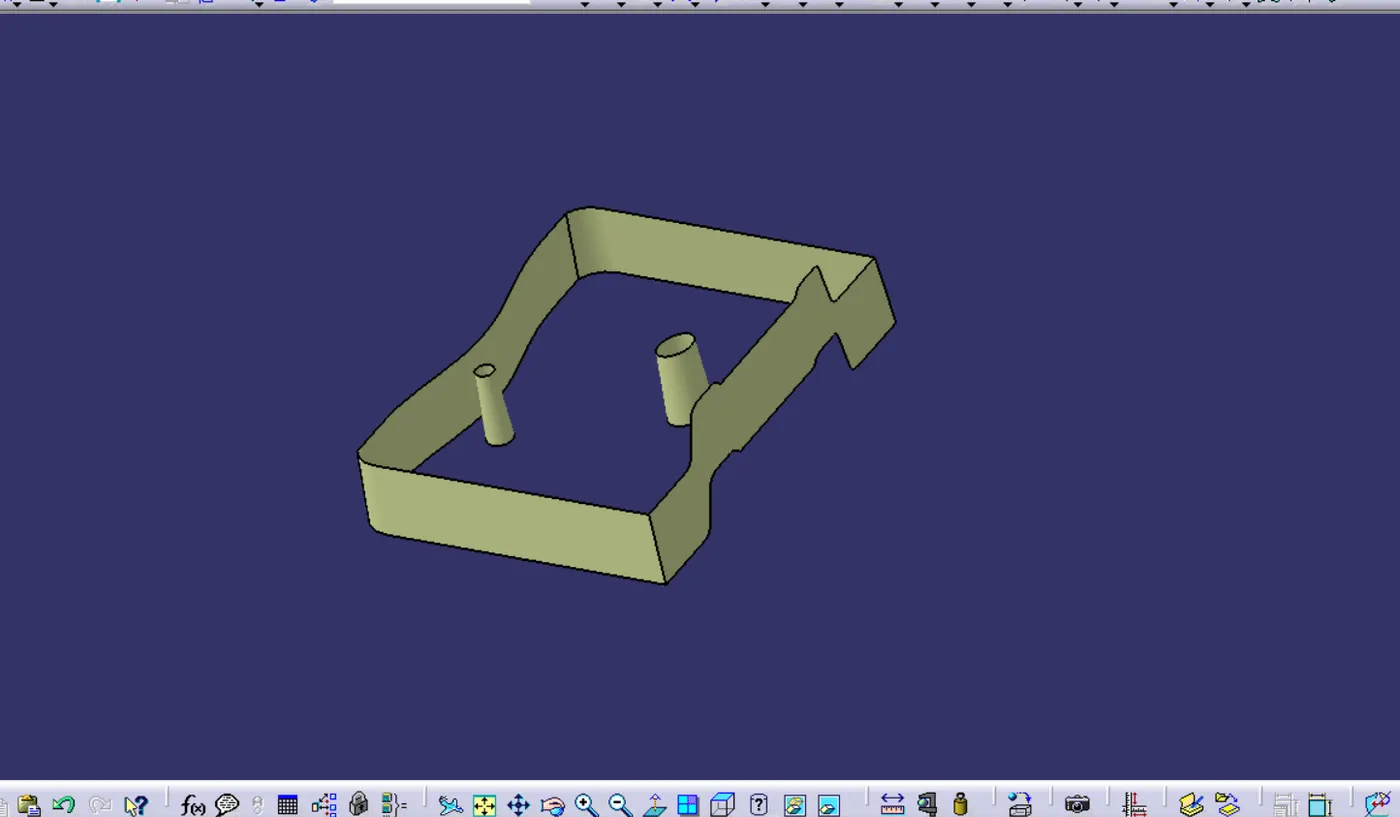
It is surface which connects class a and class b it does need any cosmetic perfection for an component
TOOLING DIRECTION
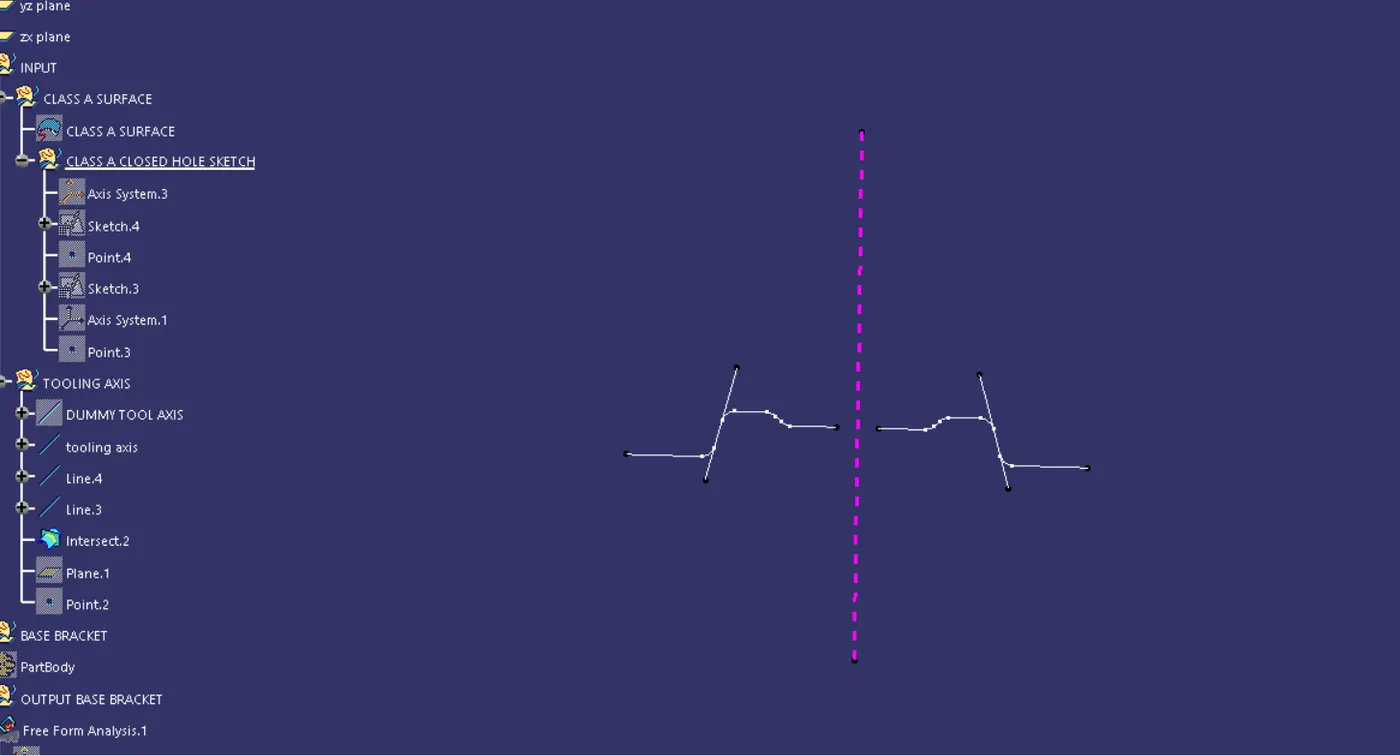
Tooling direction refers to the direction in which the mold pulls apart during the manufacturing process.
Molds are typically built in two seperate pieces cavity side and core side
 #
#
DRAFT ANALYSIS
It is a technique used to analyze whether our part model created is manufacturable or not.
in this model draft angle for the part is 2.6degree. the nominal draft angle is 3 dgree but minimum value for draft angle can be considered as 0.5degree for the complex component.
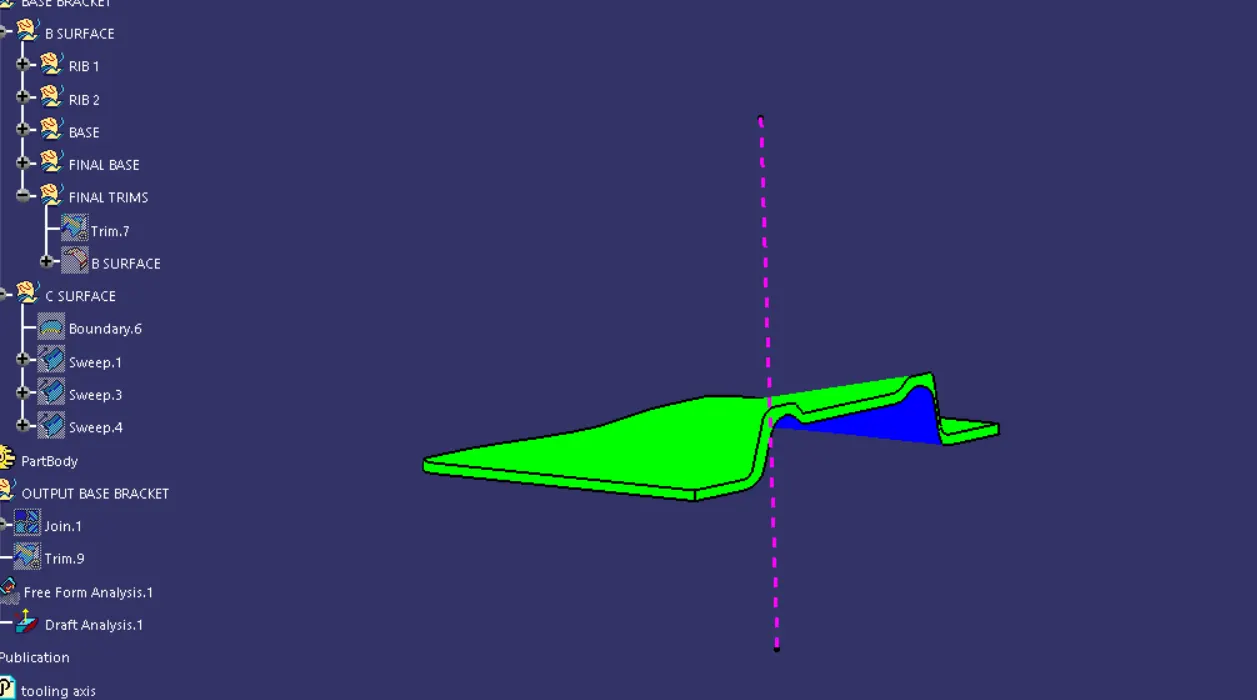
A AND C SURFACE
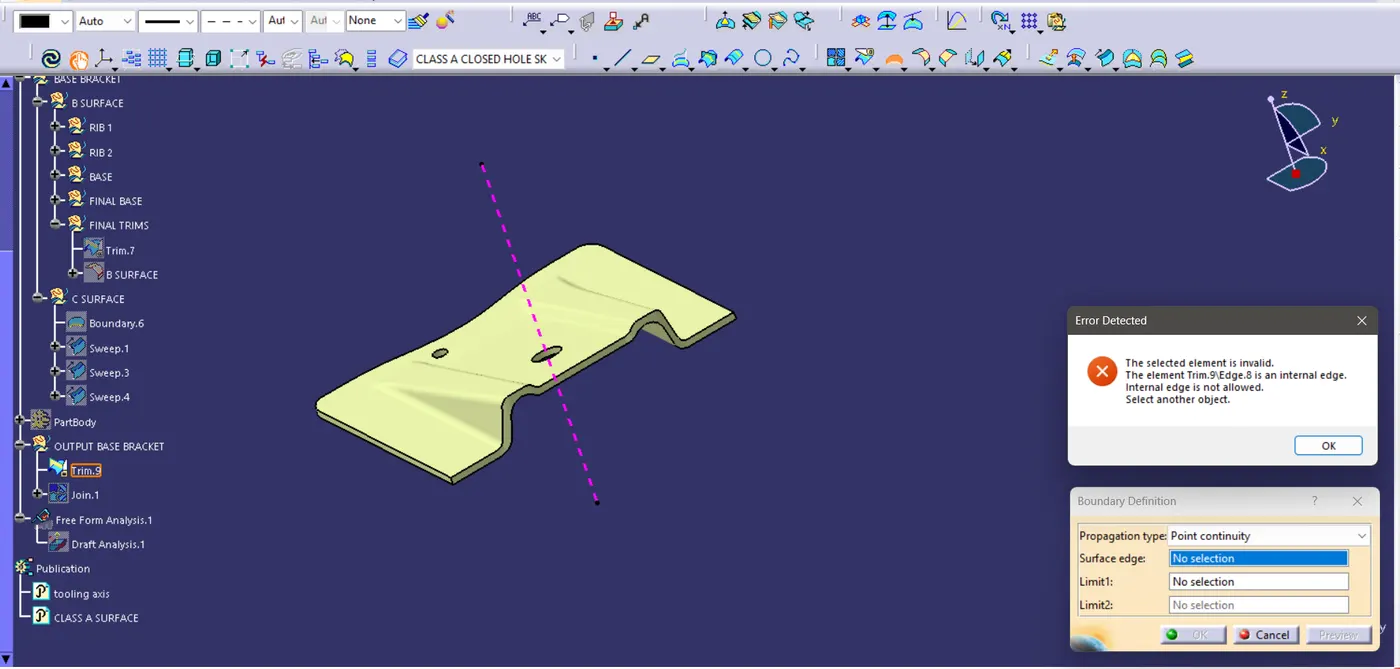
to check whether my model is properly closed or not applying boundry command on tge object will failing to creating the boundry
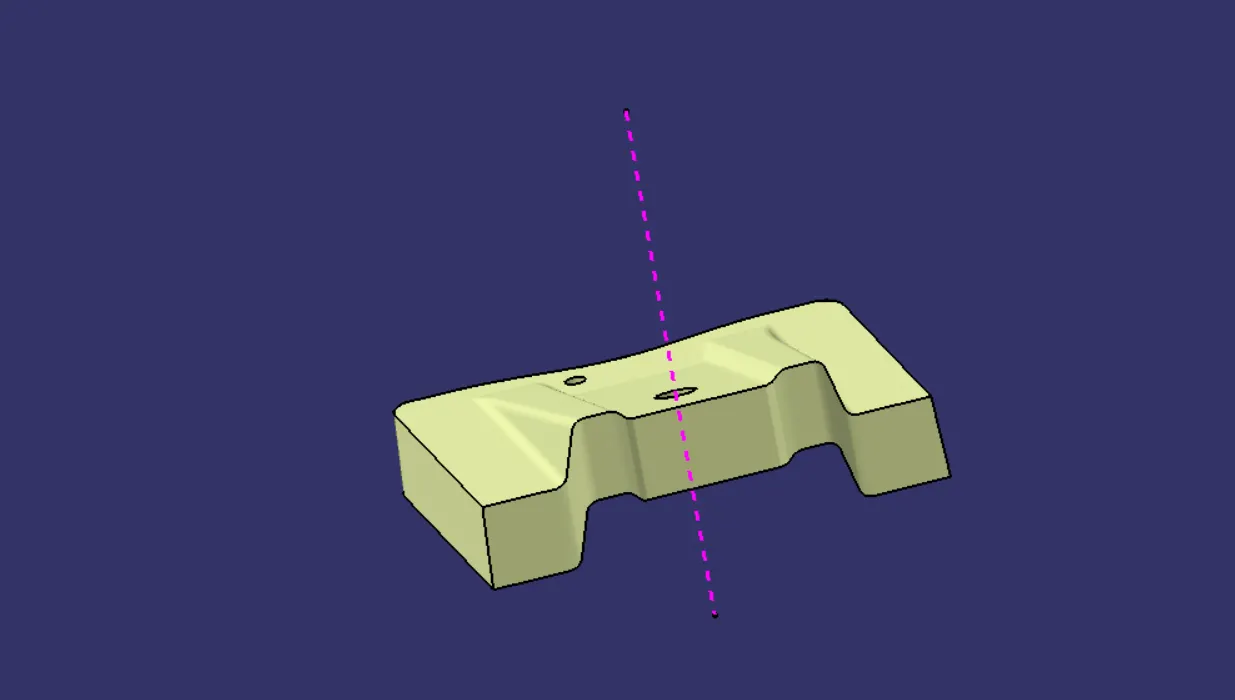
close surface
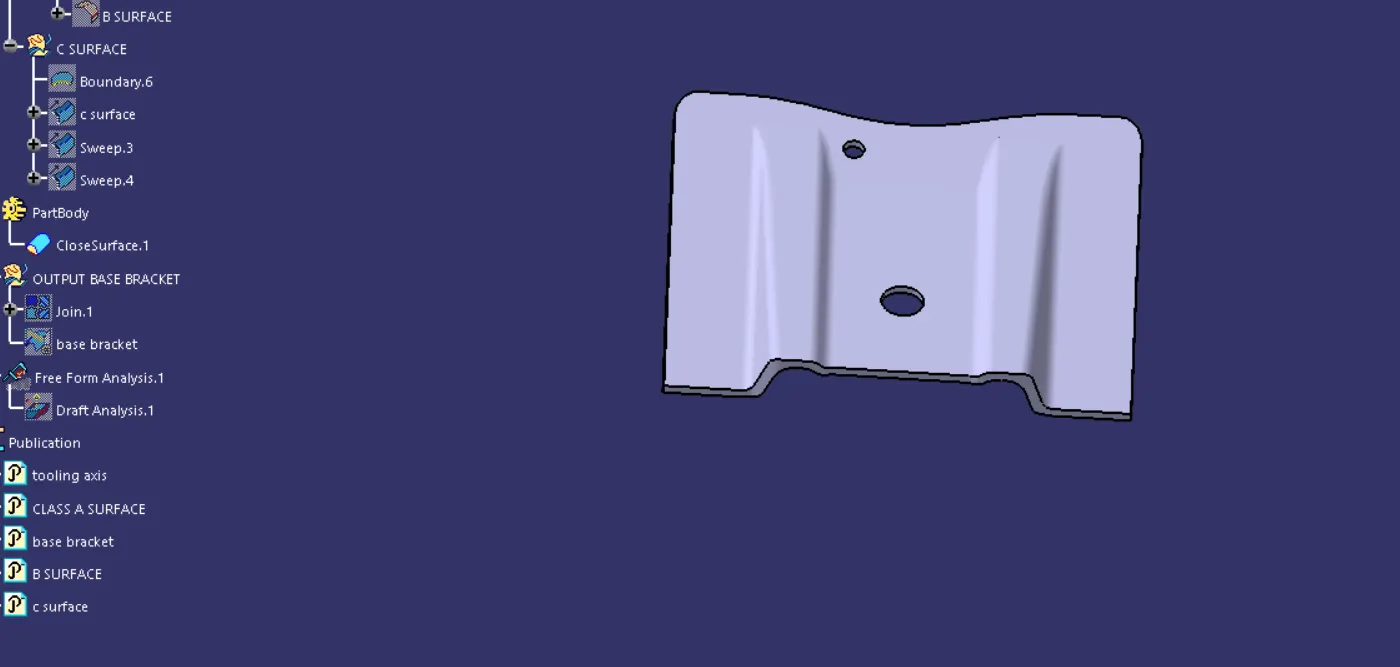
THICKNESS
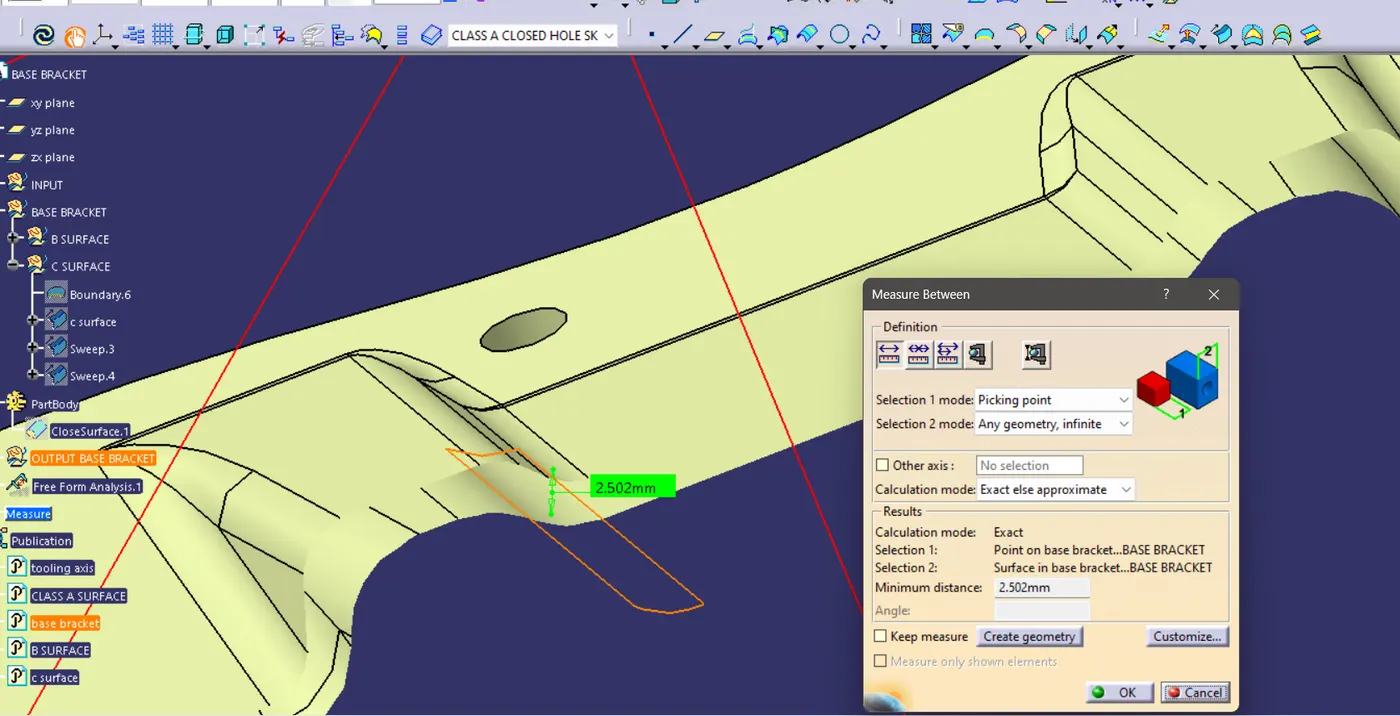
the thickness of the component is 2.5mm for base bracket. and it is attained.
thickness can be formed by offset the b surface from a surface for required length.
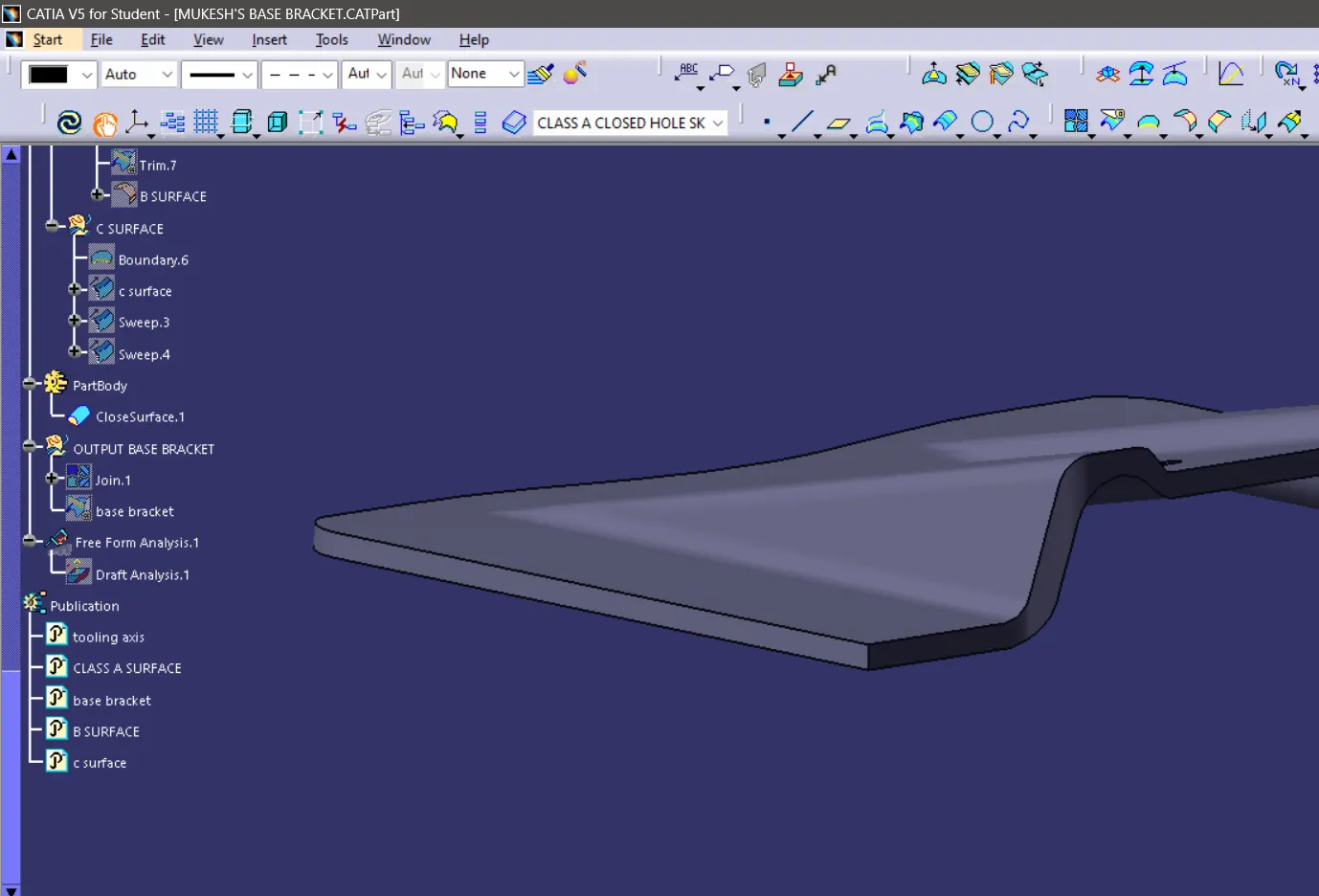
TREE STRUCTURE