Week 9 - Attachment Feature Creation (Ribs & Screw Boss) - Challenge 1
Attachment Feature Creation (Ribs & Screw Boss)
Aim: Create the rib and the Screw boss for the Drill Handle considering the design rules and considerations
General Guidelines for Bosses:
- Draft - 0.5 degrees on the walls of boss
- Thickness - Typically 40%* of the nominal wall at the base.
- Height to Diameter Ratio - 3:1
- Radii - 0.25mm maximum radii.
Class A Surface:
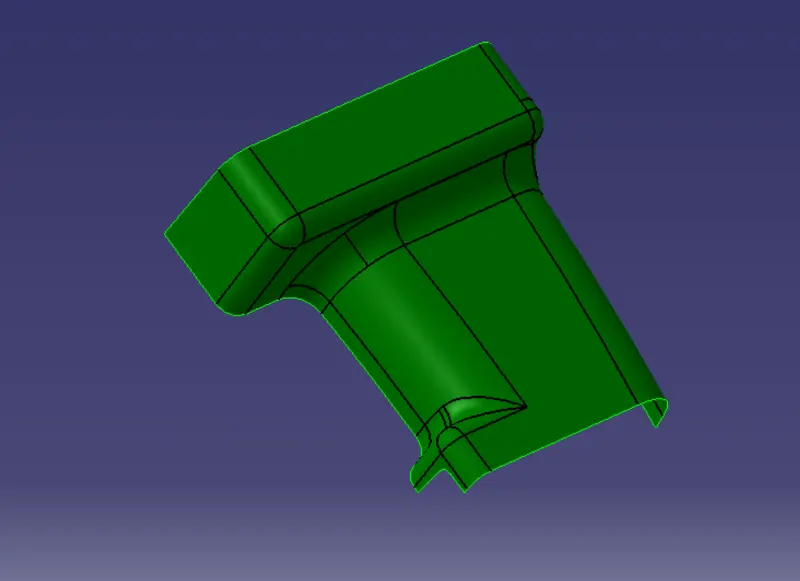
Tooling Axis:
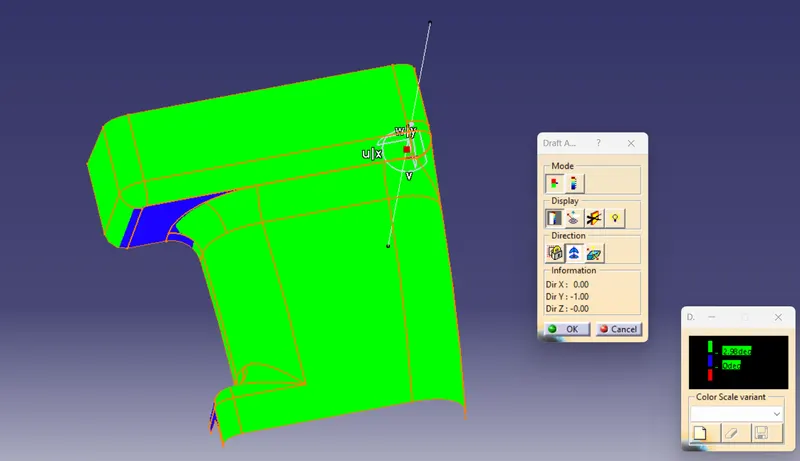
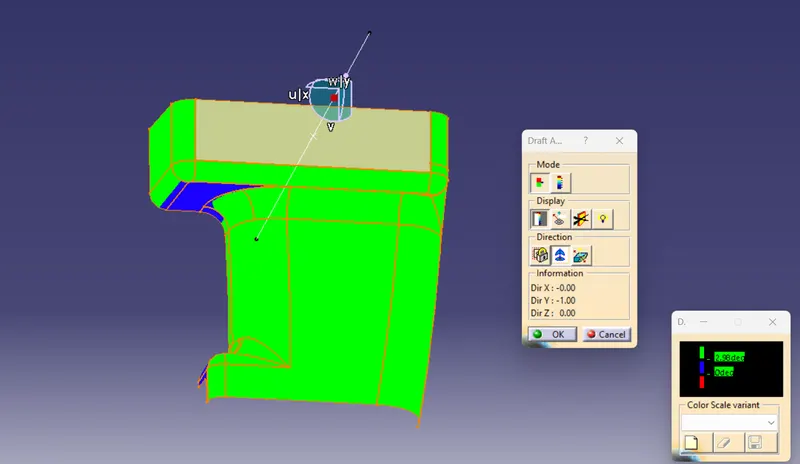
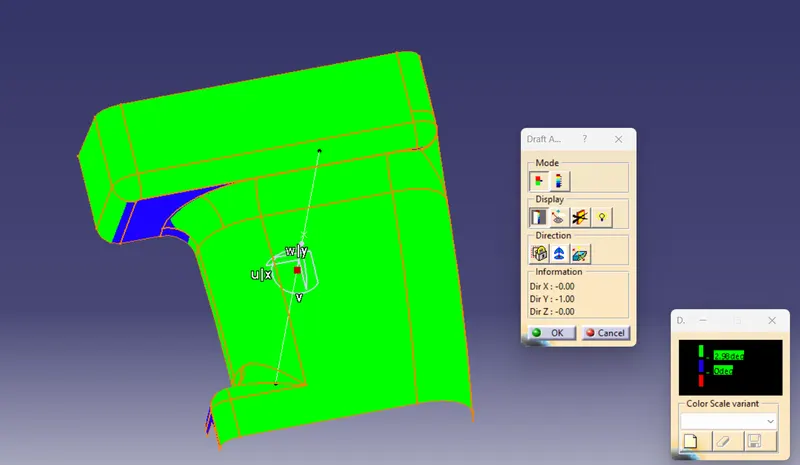
In this model, the tooling axis is created using different methods like the Point Direction Method, Normal to Surface Method, and Center of Gravity method. But still, any method is not satisfying the Draft Analysis. So, we conclude that there are some changes required by the Styling team. So, We have to create a detailed report to the Styling team mentioning all the issues and what can be the possible solutions to overcome that issues.
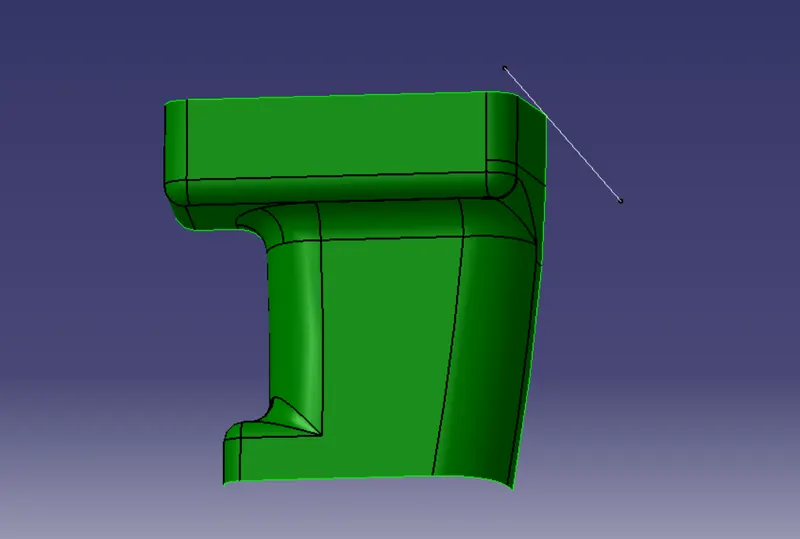
Point-Direction Method Tooling Axis:
In the Point-Direction Method, we need to check the possible views in which most of the part is visible So, we need to make sure that our Tooling axis covers most of the Surface. In this case, we got the view in the Y direction which is the reason why we have created our Tooling Axis along the Y axis.
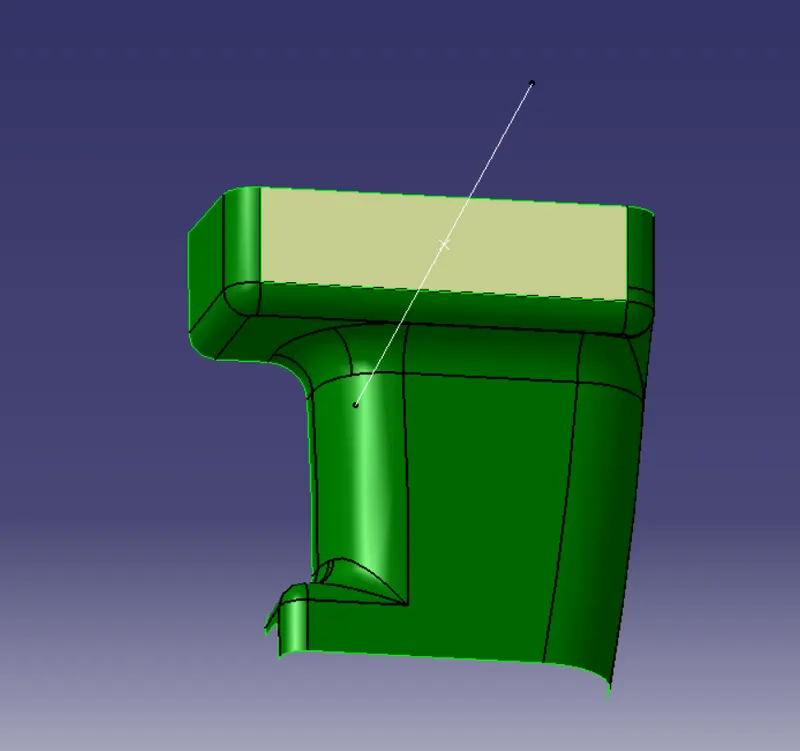
Normal to Surface Method Tooling Axis:
In the Normal to Surface Method, the Tooling Axis is Created using extract the Class A surface, In this method, we Extract a plane surface from the given Class A surface and make sure the extracted surface is plane, then we create a point on Surface at 0,0 and then we create tooling line along Y axis using Line command.
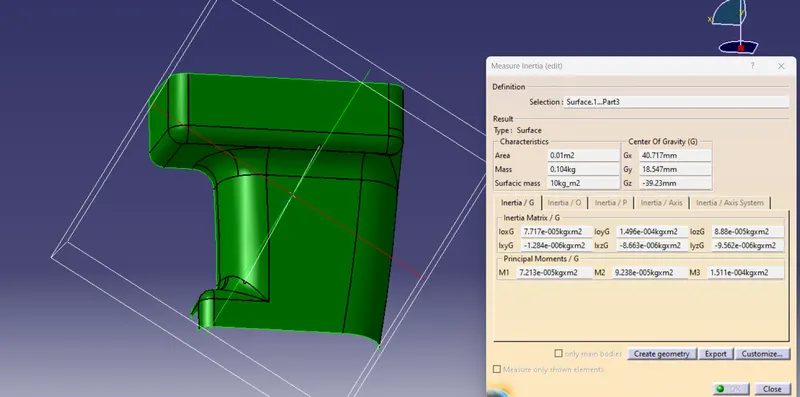
Centre of Gravity Method Tooling Axis:
In this method, we create the tooling axis using the Centre of Gravity point. Firstly we calculate the Centre of Gravity using the Inertia Command and after that, we create the Tooling axis along the Y axis.
Draft Analysis:
In this case, the Class A surface is not clearing the Draft Analysis So, we need to send a detailed report to the Styling team to make the required changes in the part to get the required Draft. For this Model, we have to follow this model as Design Engineers we do not have the authority to make any changes to the Class A Surface.
Draft Analysis using Point-Direction Method Tooling Axis:
Draft Analysis using Normal to Surface Method Tooling Axis:
Draft Analysis using Centre of Gravity Method Tooling Axis:
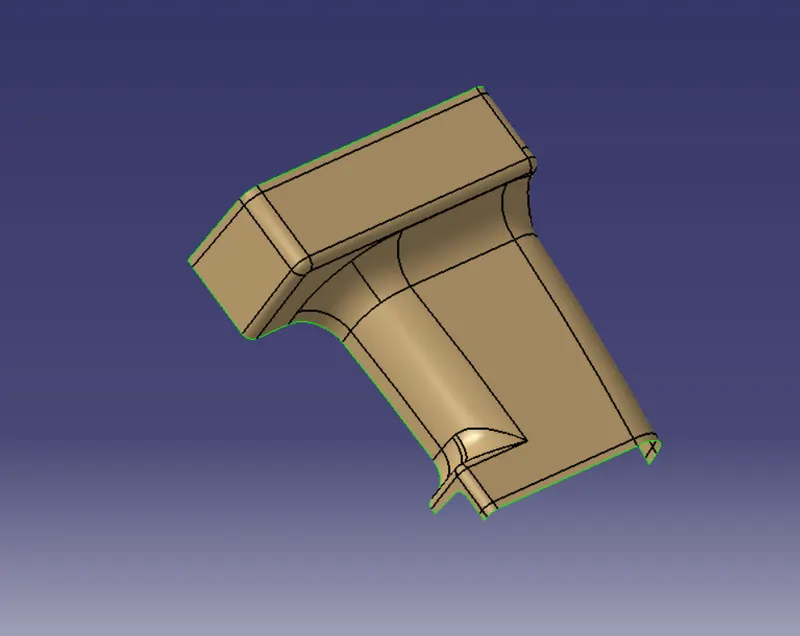
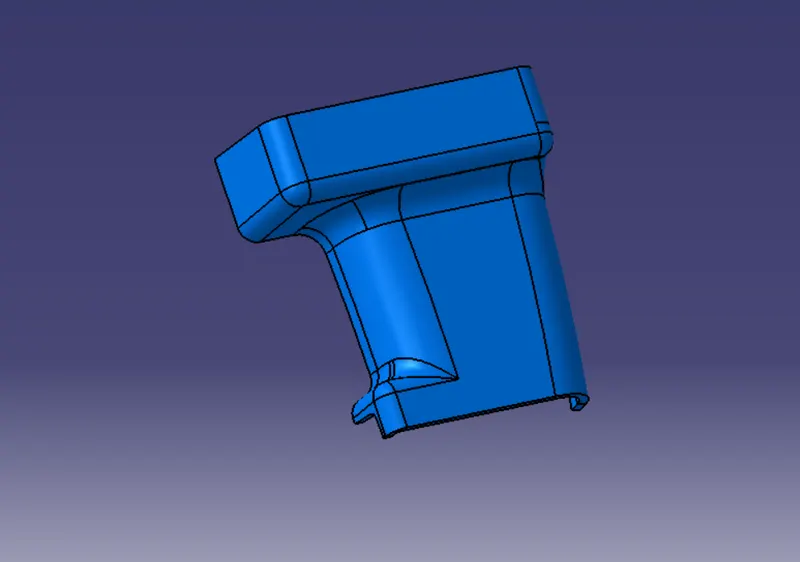
Class B Surface:
Class C Surface:
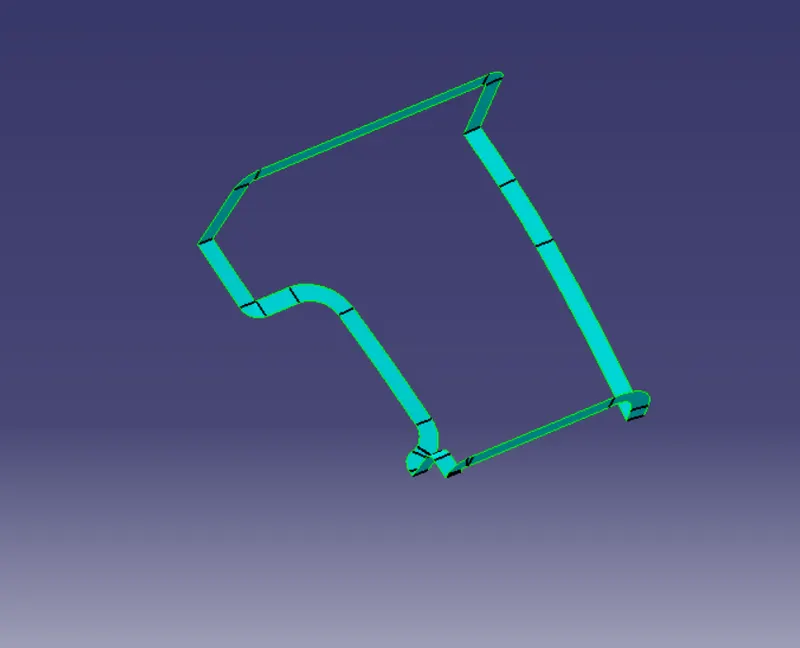
Final Join:
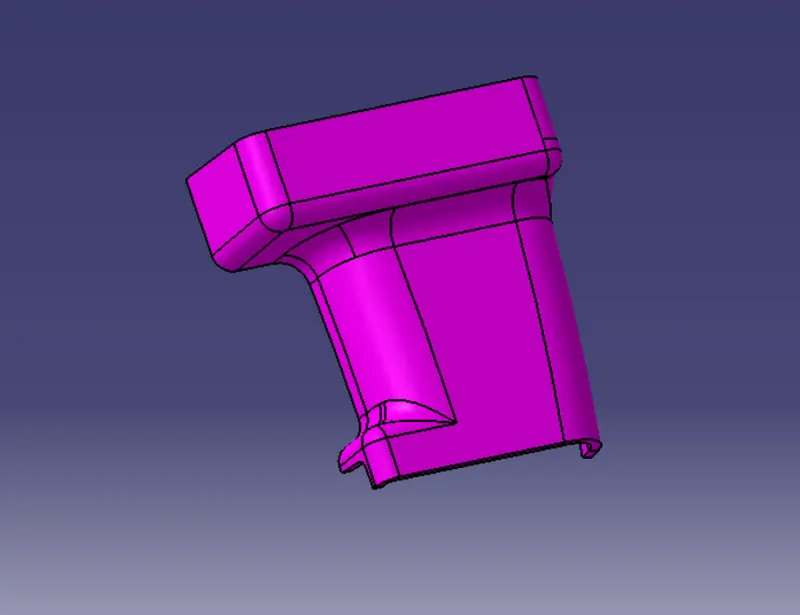
Close Surface:
Ribs:
Ribs provide stiffness and strength in the molded part without increasing the overall thickness of the wall, the ribs also facilitate:
- Locating and arresting components of the assembly.
- Providing Alignment in mating parts
- Acting as a stop or guide for the mechanism
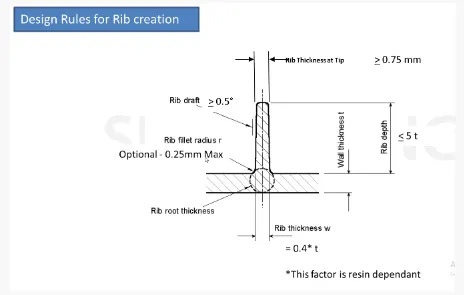
Proper rib design involves five main issues:
- Thickness
- Height
- Location
- Quantity
- Manufacturability
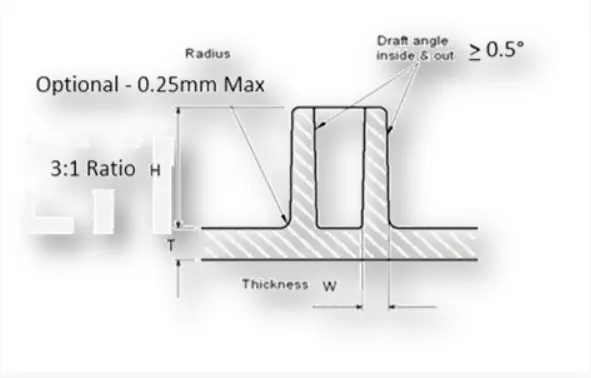
Guidelines for Ribs on Aesthetic Surface:
- Draft- 0.5-degree draft minimum on each side.
- Rib Thickness- Rib thickness at the bottom should be not less than 0.4 times the wall thickness.
- Rib Fillet Radius- Optional Rib fillet radius should be 0.25mm max.
- Rib Depth- The Rib depth should be less than 5 times the wall thickness.
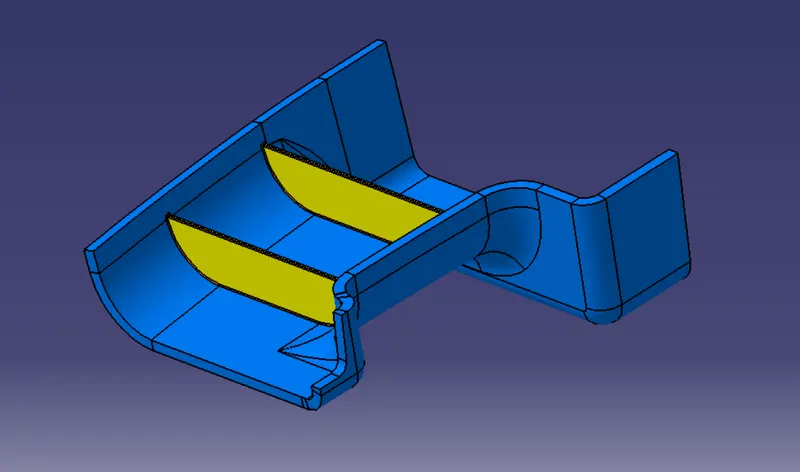
Draft Analysis for Ribs:
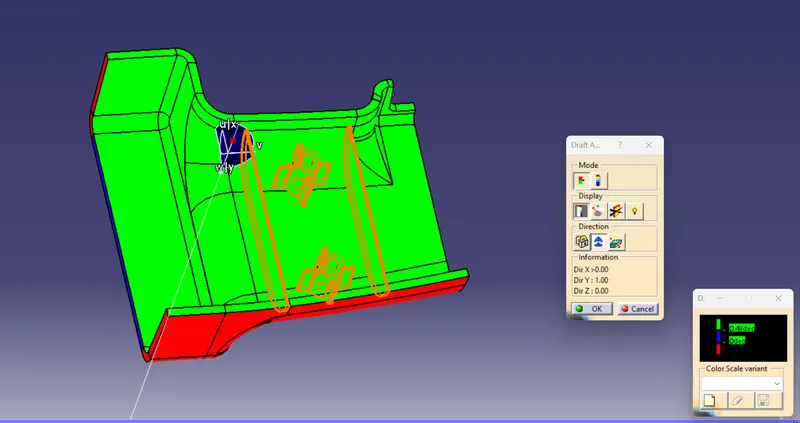
Screw Bosses:
Screw Bosses are used to aiding in the assembly of molded parts by providing a channel for a screw. Designing plastic screw bosses is fairly straightforward but there are a few considerations to ensure a strong connection between parts and mitigate cosmetic defects
General Guidelines for Bosses:
- Draft - 0.5 degrees on the walls of boss
- Thickness - Typically 40%* of the nominal wall at the base.
- Height to Diameter Ratio - 3:1
- Radii - 0.25mm maximum radii.
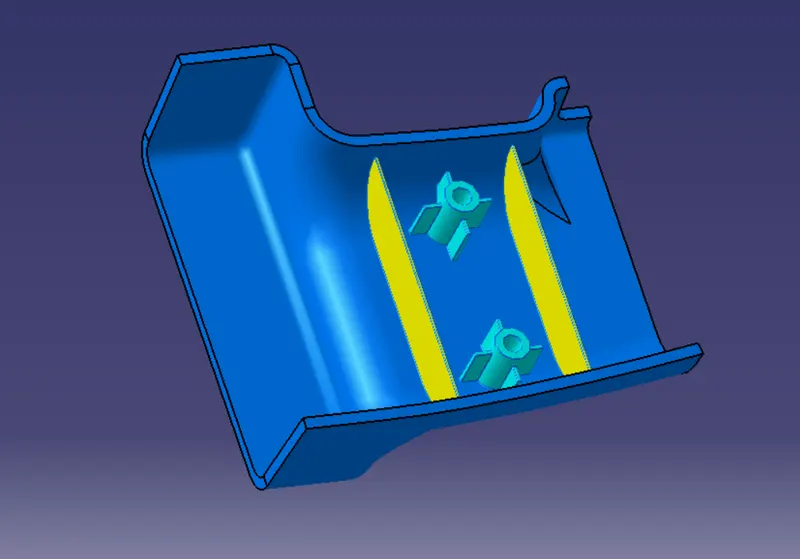
Draft Analysis for Screw Bosses:
Views:
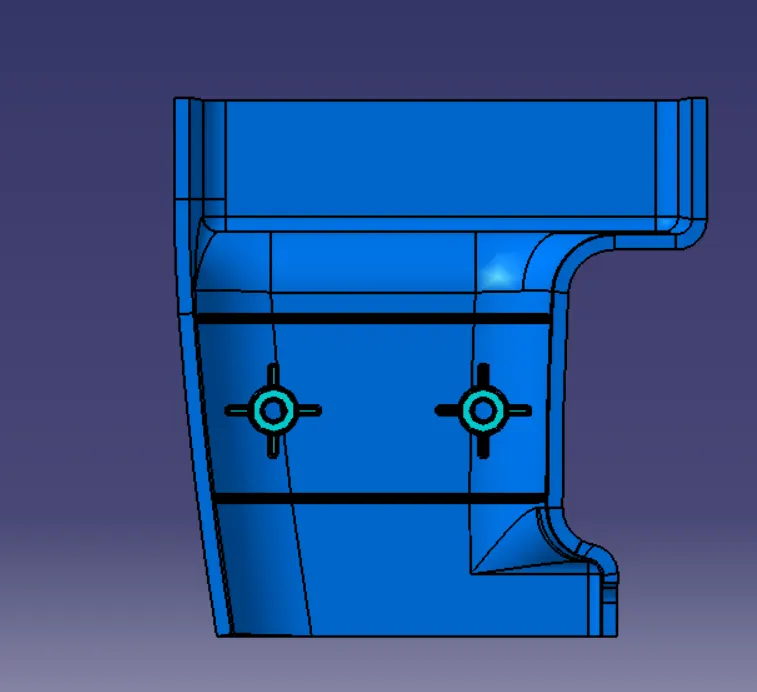
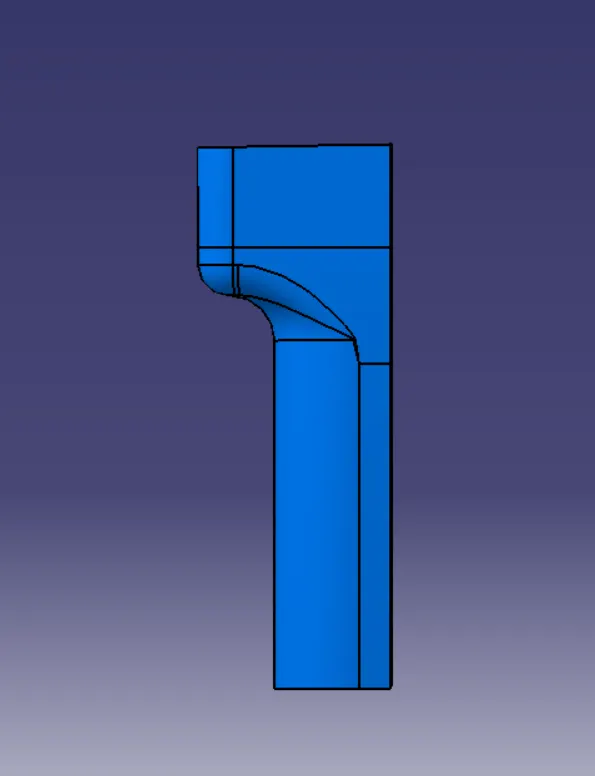
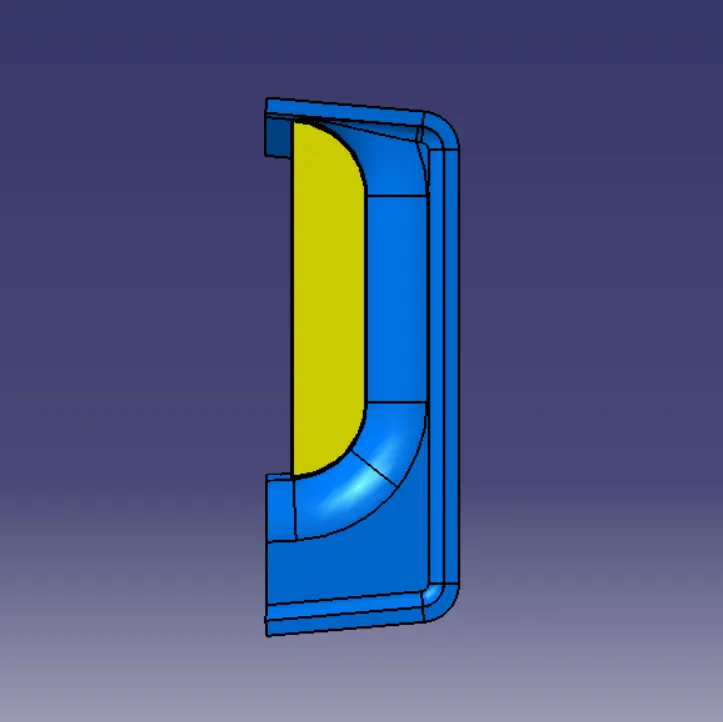
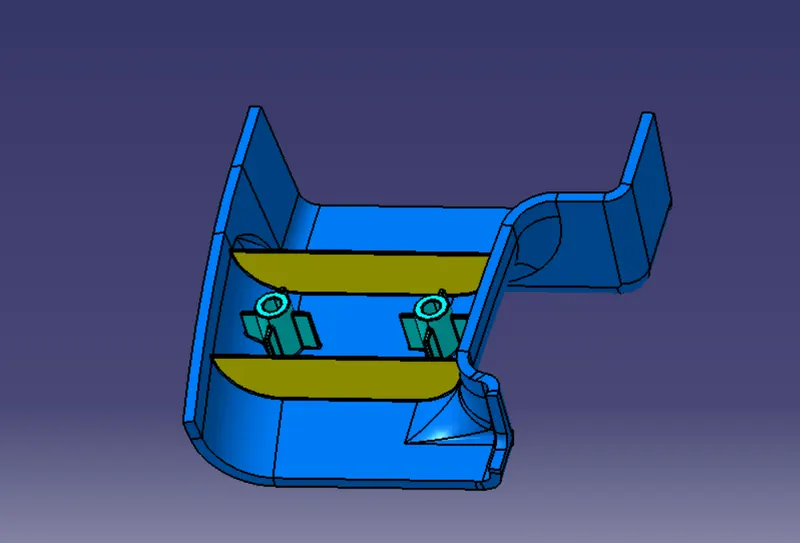
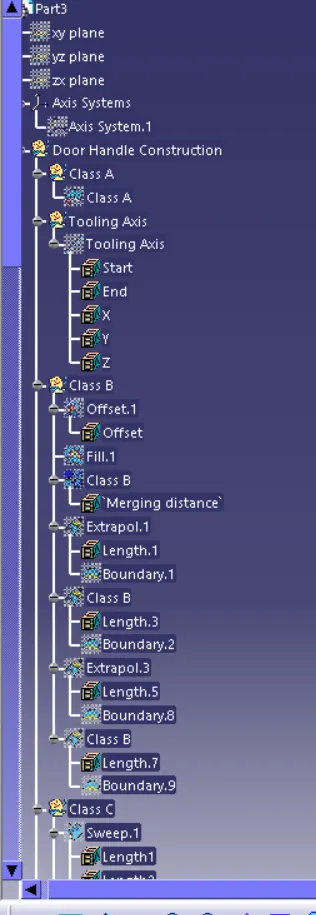
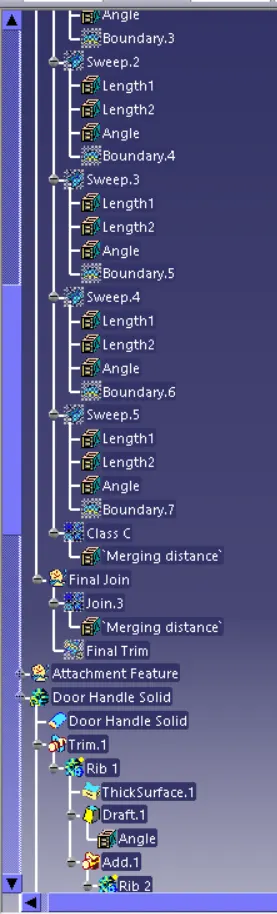
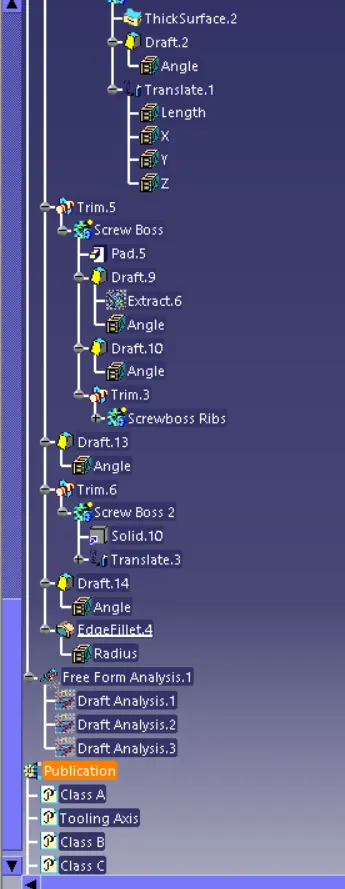
Tree Structure:
Conclusion:
The Engineering Feature like Ribs and Screw Heads are created using the proper methodology and by keeping all the Calculations and Design consideration in mind.