Attachment Feature Creation - DOG HOUSE
AIM
Create the Dog House for the Door Trim considering the design rules mentioned in the video.
Requirement
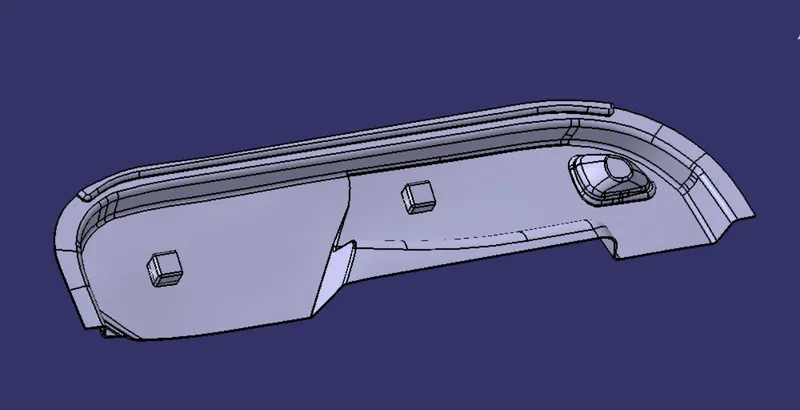
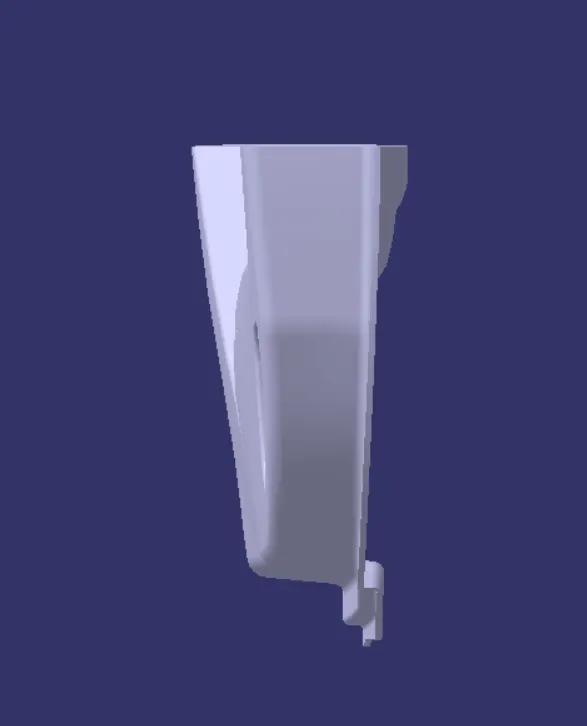
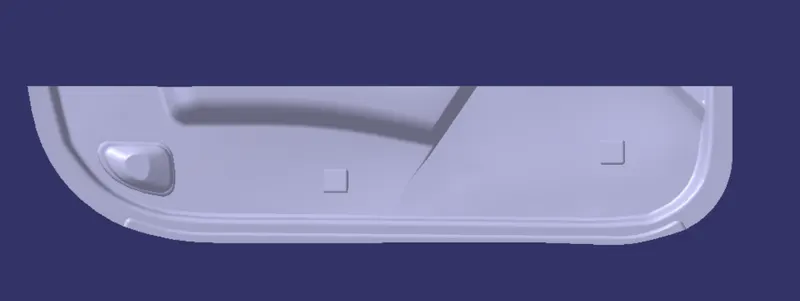
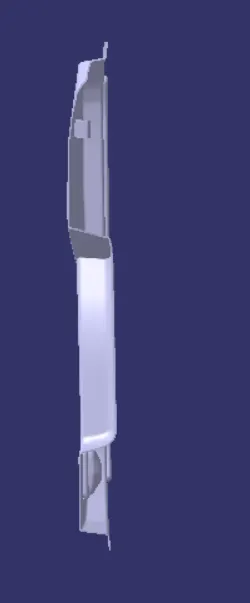
- Screenshots of the completed design in various orientations (Isometric, Front, Side, and Top View)
- A detailed report explaining the draft analysis and the tooling axis creation should be done.
- An explanation should be given on the way of creating the tooling axis, particularly the Bisecting method
- CATpart should be submitted as an attachment
REPORT
Dog House
The main use of Dog House is to avoid sink marks and install engineering features such as snaps, locators, etc. on it. It is also used to give support to long screw bosses to reduce their height. And to fit screw bosses in a direction other than the tooling axis.
-
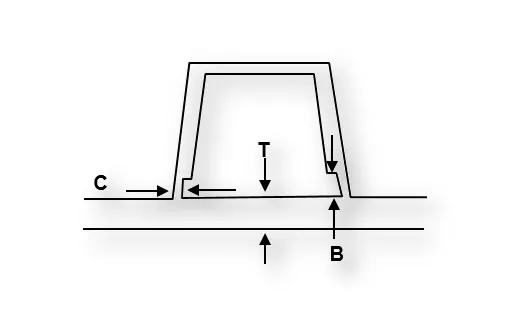
Doghouse wall thickness at the intersection of the part wall ( C ) should be 40% or less than the main wall stock ( T ).
-
The height of ( B ) should be between 3.0 – 6.0 mm
Tooling Axis
The tooling axis is a direction in which the core and cavity open and close. Draft angle is provided concerning the tooling axis. While creating mold components from the Class-A surface, we need to decide on the tooling direction. It can be decided by visual inspection, deciding complex surfaces, and bisecting methods.
Tooling Axis Creation- Bisecting Method
- First check for the discontinuity of the surface received by join or boundary command. The visual observation is done to decide which direction will be more feasible to create the components.
- Few surfaces are identified which can create concern over draft angle
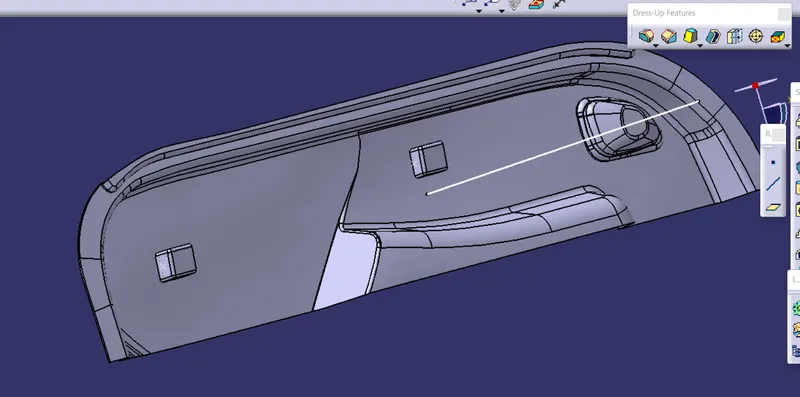
- A reference point is created in the center of the bottom surface. And Axis system is created at that point.
- Two different cross-section profiles are formed using intersection with the plane.
- For the first profile in the XY plane, Lines are drawn on the concerned boundary intersection profile. Then the line is drawn bisecting these two lines.
-
Draft Analysis
To reduce the risk of damage to parts and tools while ejecting from the mold a draft angle is provided to walls that are parallel to the tooling direction. It assists with releasing the part from the mold.
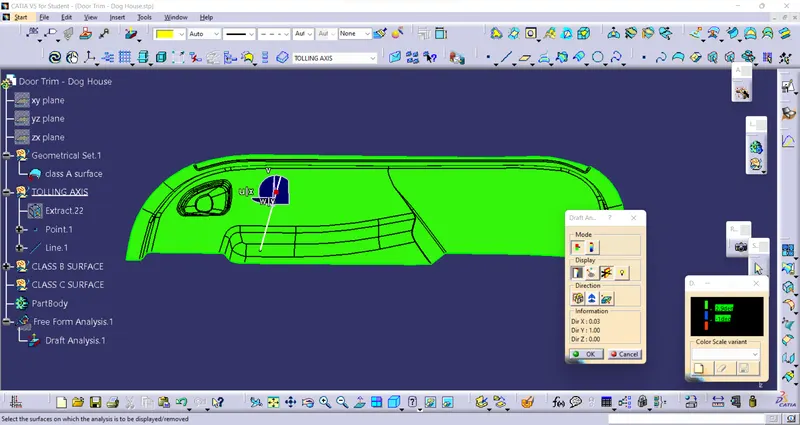
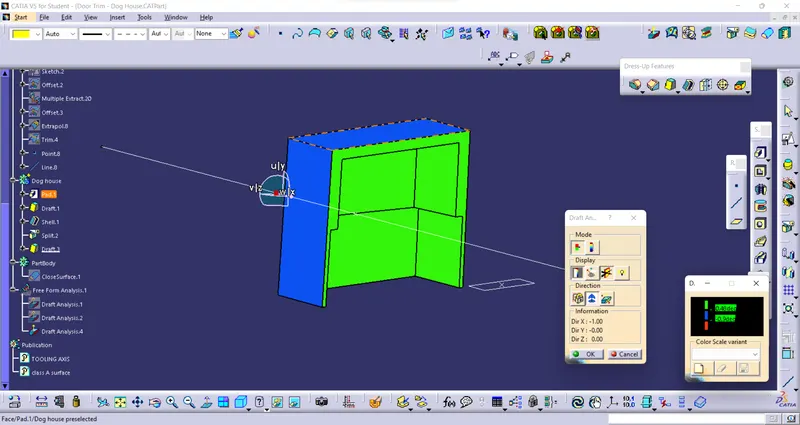
To perform Draft analysis in Catia, the Draft analysis feature is used. For that First tooling, Direction decided. Then make sure material view mode is used. After opening the window, align the compass with the tooling axis by dragging it on the axis. Then click on the surface of the body on which draft analysis is needed to perform. In the bottom black color window provide the minimum draft angle and then match the body color with this color scale. Green indicated draft angle is more than the minimum draft angle. If it is blue then it is between 0 to minimum draft angle. And red denotes it is less than zero. In this way, we can identify the areas with a draft angle less than the minimum draft angle and work on that area by changing the tooling axis angle.
Procedure
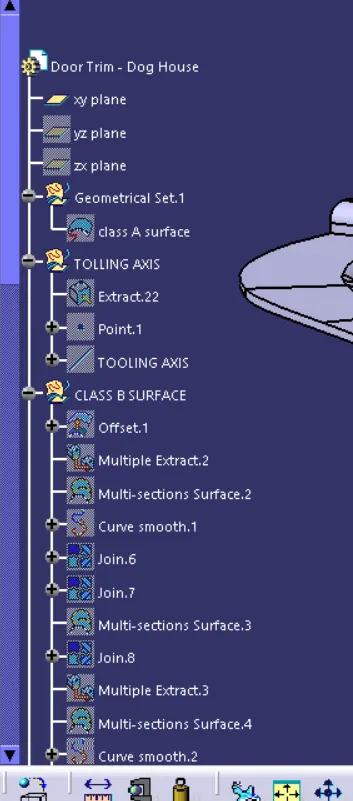
- Check for Discontinuity. If any, join the surface. And Publish it as CLASS A surface
- Identify concern planes. Create a line in every concern plane. From this line create bisecting line ie. the final Tooling axis.
- Perform Draft analysis on Class A surface in the Tooling Direction
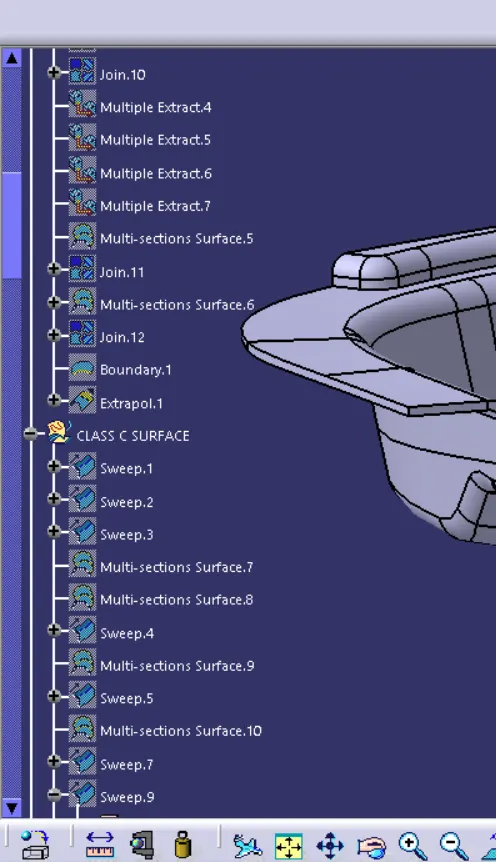
- Create Class B surface by offsetting Class A surface and joining them by trimming. Fillet Edges. Or use fill by creating a close profile.
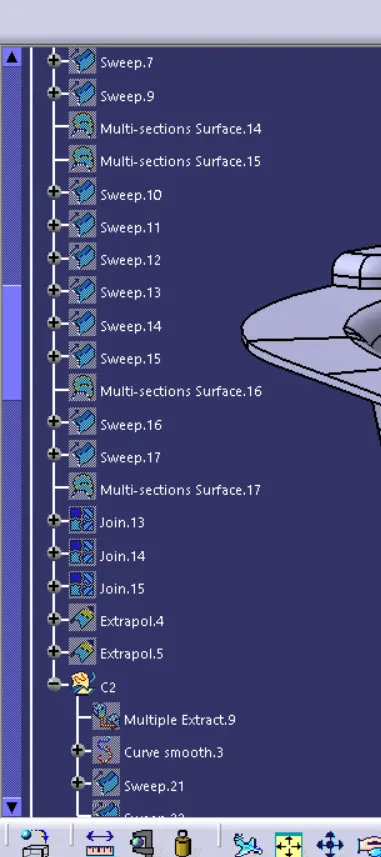
- Create a Class C surface by extracting the boundary of the class A surface and sweeping it by a minimum draft angle along the tooling direction.
- To create the final closed surface body, join and trim all three surfaces together and finish by giving the remaining fillets.
- Convert this surface body into a Solid body by Close Surface Tool
- Create a sketch for the outer walls of the Dog house and sweep it in tooling axis direction with draft angle. Create a side tooling axis for the inner draft. Give fillets, thickness and add them to the main body.
CONCLUSION
Class A surface of Door Trim is successfully converted into a solid body. And Dog houses are created on Class B surface and draft analysis is performed on it.