Attachment Feature Creation - Challenge 2
1. Aim
To Create an Solid Component along with some Engineering Feature such as Dog House from the given Class A surface. Also the Engineering or B side Features should be designed as per the Design Standards.
2. Dog House
When a Plastic Component has more than a 3mm of thickness, then it has an possibility of creating an Sink mark in the Class A Surface which can spoils the component's aesthetic look. In these regions Dog House can be helpful at the same time it can act as an supporting feature too. It has certain design rules to be followed while designing like,
- It should have a minimum height of 12mm
- Dog house wall thickness at intersection of part wall should be 40% or less than main wall thickness
3. Procedure
3.1 Work Flow Pattern
- Creation of Tooling Axis
- Creation of B Surface
- Creation of C Surface
- Creation of Dog House
- Assembling
- Draft Analysis
3.2 Creation of Tooling Axis
For the Creation of Tooling axis, Normal to surface method was used. Because of so many surfaces, it is not possible to create line to each of them for bisecting.
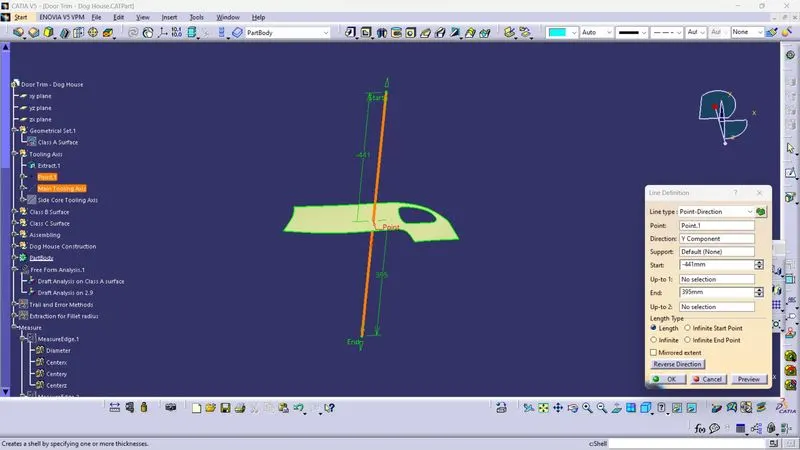
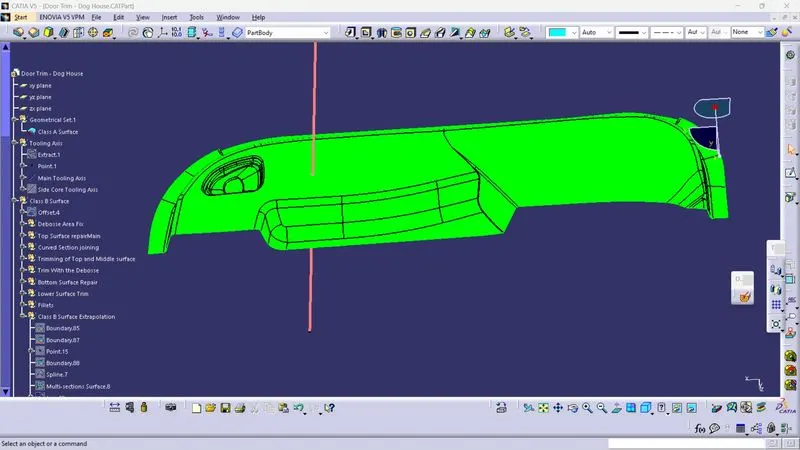
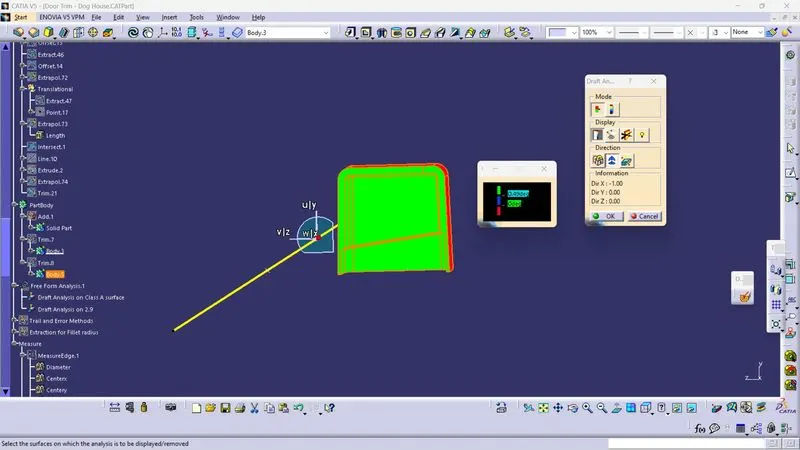
While Performing the draft analysis there are some red patches which has less than 3 degree of draft. Other methods were also used but those pathches can't be drafted at 3 degree. This Class A Surface has an defect and it can't be fully drafted at 3 degree.
3.3 Creation of Class B Surface
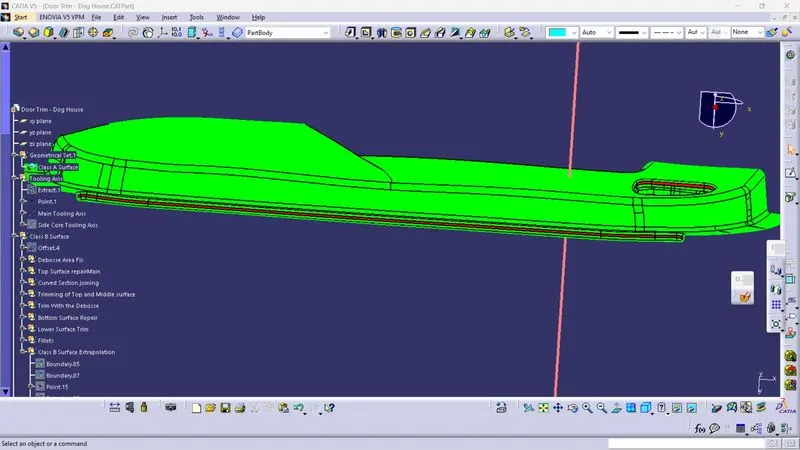
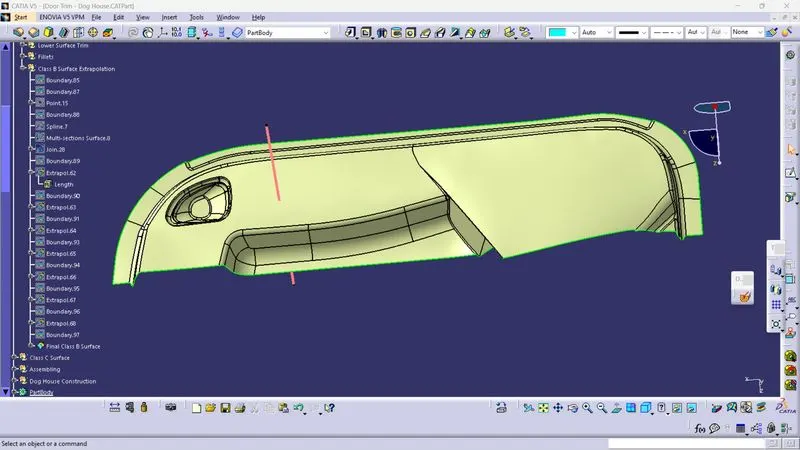
The thickness of the component is 2.5mm. With this the class A surface was offseted to 2.5 mm to create class B surface. While offseting, some of the small fillets and some surfaces got convexity error and it was not offseted. To create the unoffseted surfaces, it was segregated into sections to perform the trimming operations. Each sections were Extracted--> Extrapolated and then trimmed. For fillet radius, it was taken reference from the Class A Surface.
Offseted Class B Surface:
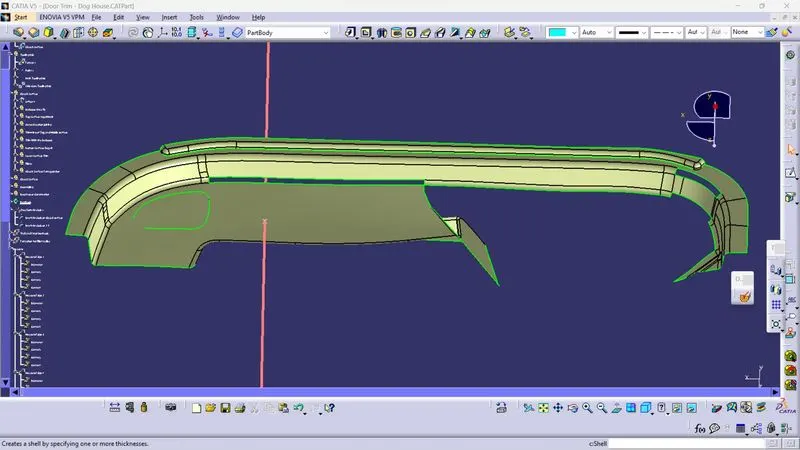
Final Class B Surface:
3.4 Creation of Class C Surface
Class C Surface is nothing but the surface which joins Class A and B. For the Creation of Class C Surface
- The surface which are perpendicular to the tooling axis will be Sweeped along reference to surface method at 90 degree angle.
- The surface which are parallel to the tooling axis will be Sweeped along draft direction method at 3 degree angle.
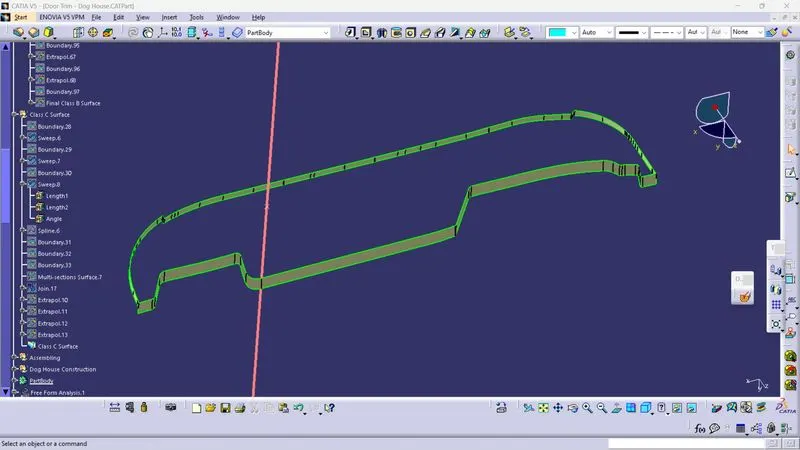
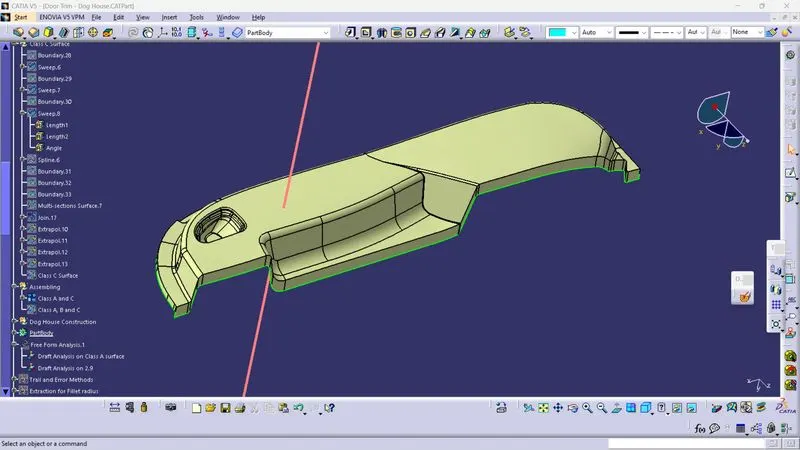
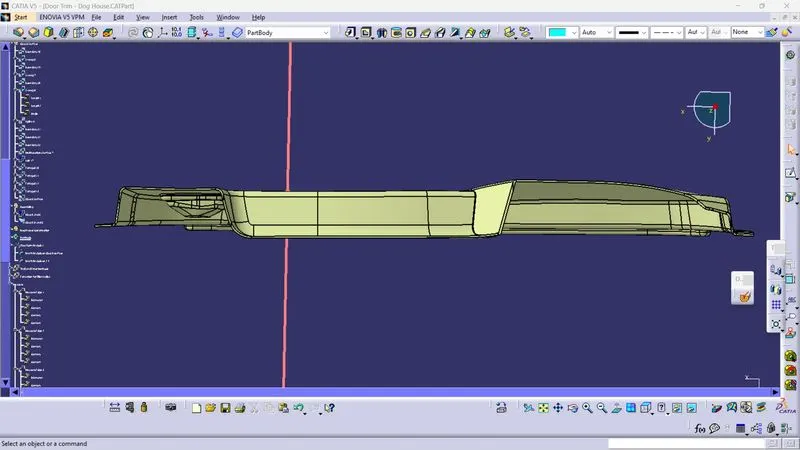
After the Creation of Class C, Class A and C surface was joined and trimmed along the Class B Surface to create the final Closed surface.
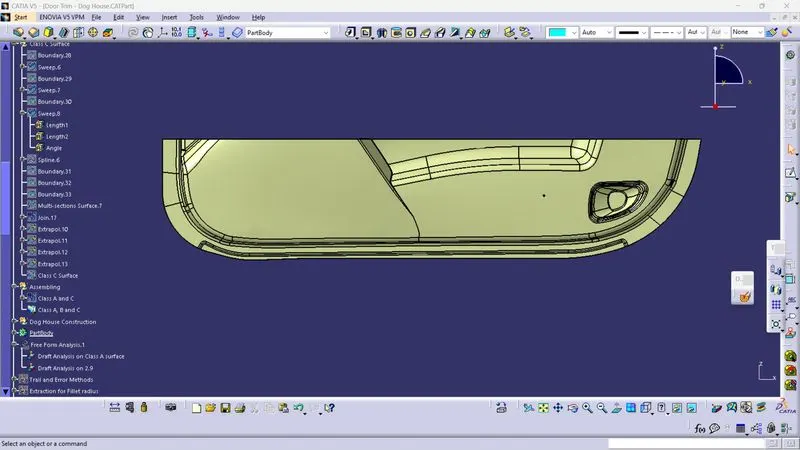
Then in part workbench it was converted into Part by using Close Surface Tool.
Class A and C Surface:
Final Close Surface:
3.5 Creation of Dog House
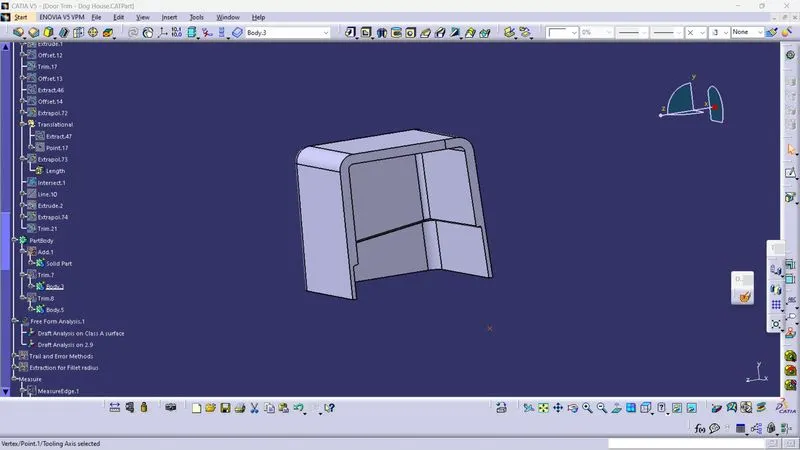
For the creation of Dog House, a flat B side surface was extracted to create a plane to draw an Positioned Sketch. With the created plane, Skectches were drawn --> extruded --> Thickened . Dog House Has an Shell like shape it can't be manufactured only with Main Tooling Axis, so for that there will be an additional Tooling Axis namely Sidecore Tooling Axis.
- Wall Thickness - 2mm
- Core Wall Thickness -1mm
- Outer Wall Fillet Radius - 3mm
- Inner Wall Fillet Radius -1mm
- Core Wall Fillet Radius - 0.25mm
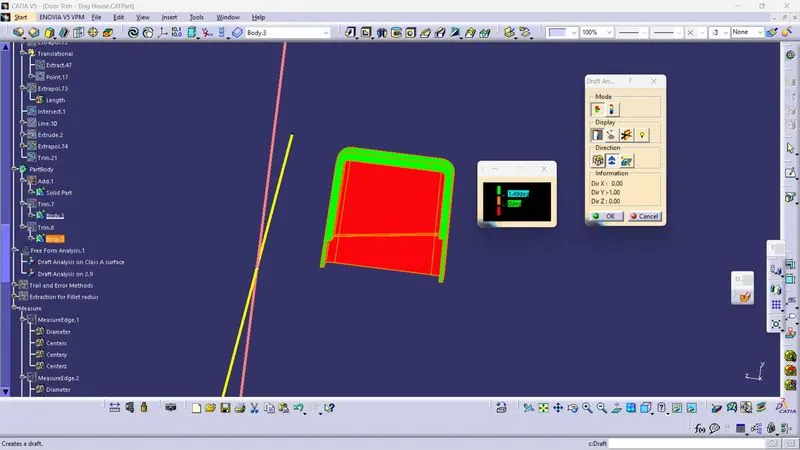
- Main Tooling Axis Draft Degree - 1.49 degree
- Side Core Tooling Axis Draft Degree - 0.49 degree
Isometric View:
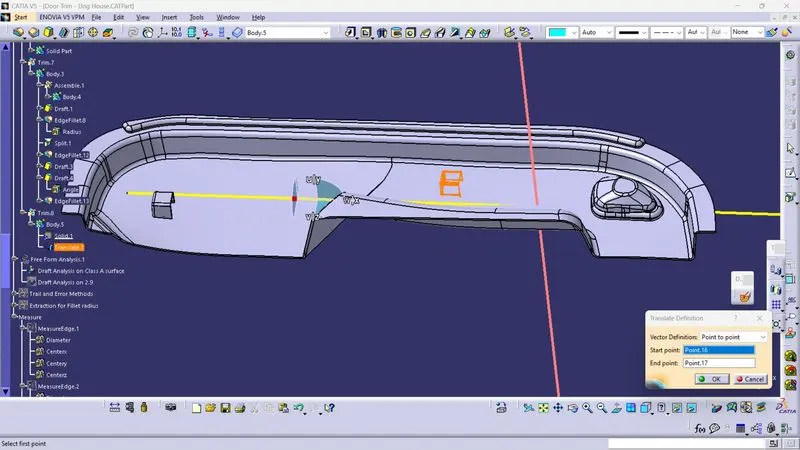
There were Two Dog Houses, So after the creation of one, it was copied and translated to another by Point to Point Translation tool.
3.6 Assembling
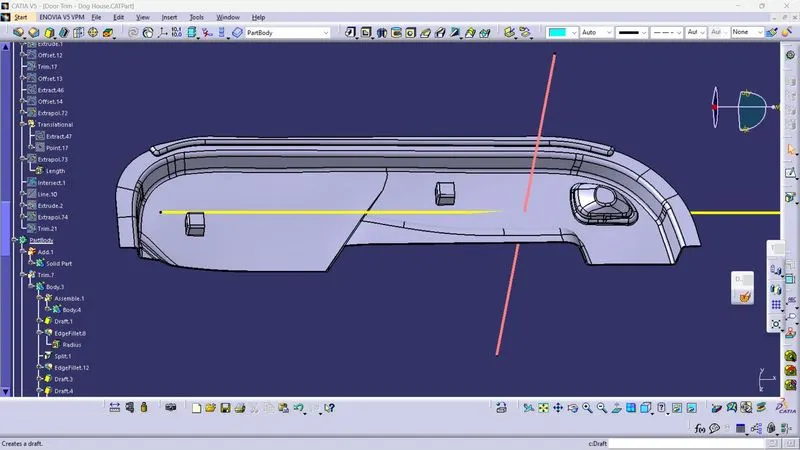
After the Thickening method all the parts were assemble into the Main Part by using Boolean Operations
Final Part:
3.7 Draft Analysis
3.7.1 Draft Analysis on Final Part
On the Final part, draft analysis was performed at 2.9 degree.
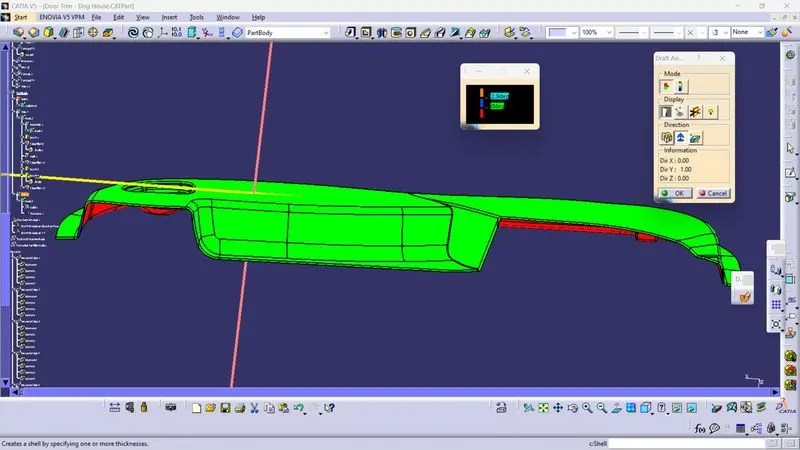
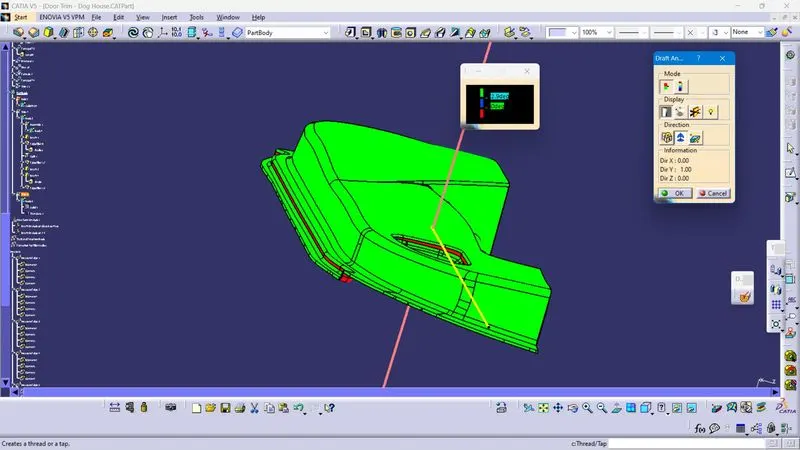
3.7.2 Draft Analysis on Engineering Features
Draft Analysis from Main Tooling Axis for 1.49 Degree:
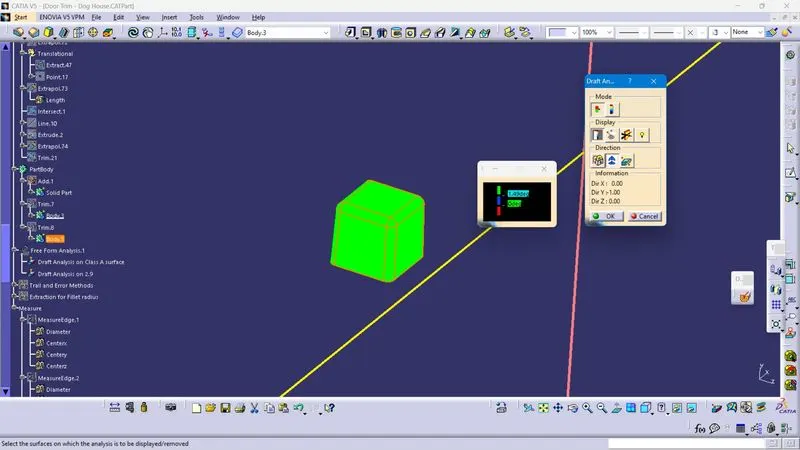
Draft Analysis from Side Core Tooling Axis for 0.49 Degree:
4. Conclusion
With the given Class A surface as an input, Tooling Axis, Class B Surface , Class C Surface and Dog House were Created. Also both the Final Component and Engineering Features were clearing the Draft Analysis.