Week 9 - Attachment Feature Creation - Challenge 1
DESIGN REPORT:
Coin Holder: The coin holder is an automotive plastic trim component. It is an attachment found in instrumental panel of cars to hold coins. The geometry of the coin holder differs with respect to the automobile used but the purpose remains the same.
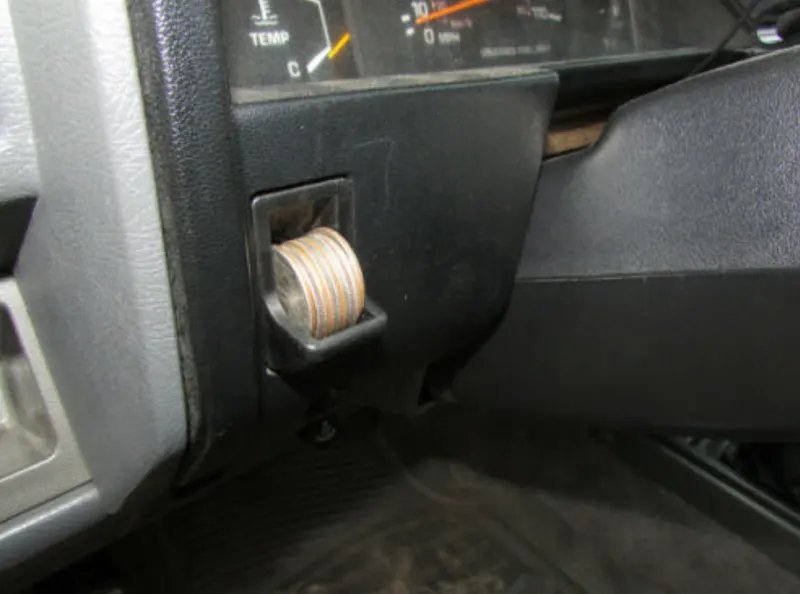
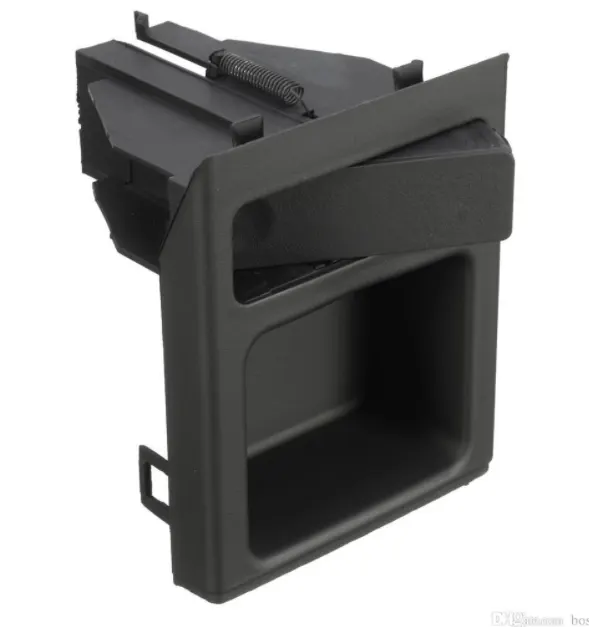
Coin Holder
Ribs: The ribs are support featues which helps to increase the strength of the component. Without ribs the thickness of the component is to be increased to a greater extent, which is considered to be poor design. The ribs reduces the weight of the component. Usually the ribs are made on the invisible side of the component, which is considered to be the B surface in automotive trims. This specific design report is mainly focoused on the design of ribs.
Input: The Class A Surface serves as a input to design a plastic component. Class A is also considered to be the styling surface, it is most conserned with the external asthetic features of an automobile. Once the Class A surface is obtained from the studio the plastic product designer checks its curvature continuity and draft. If the A surface passes the continuity and draft analysis, then the design is proceeded to the next step.
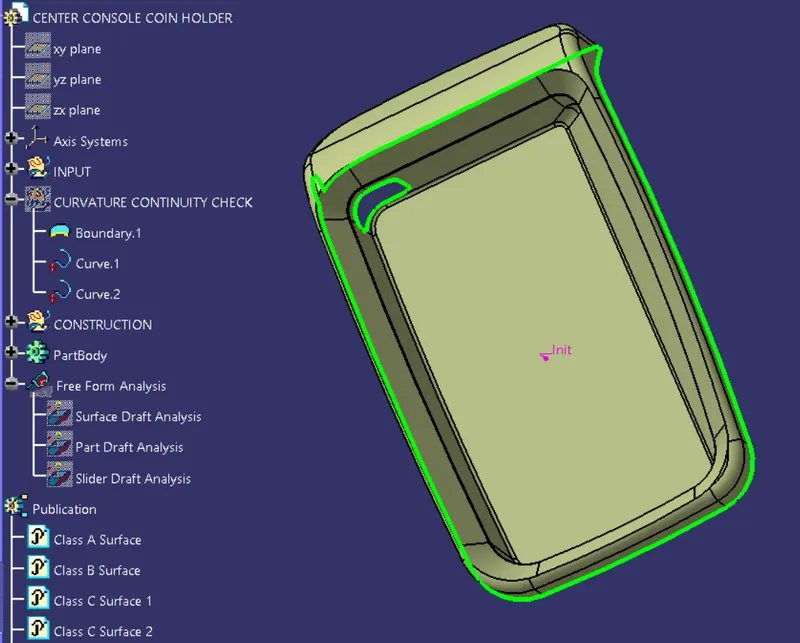
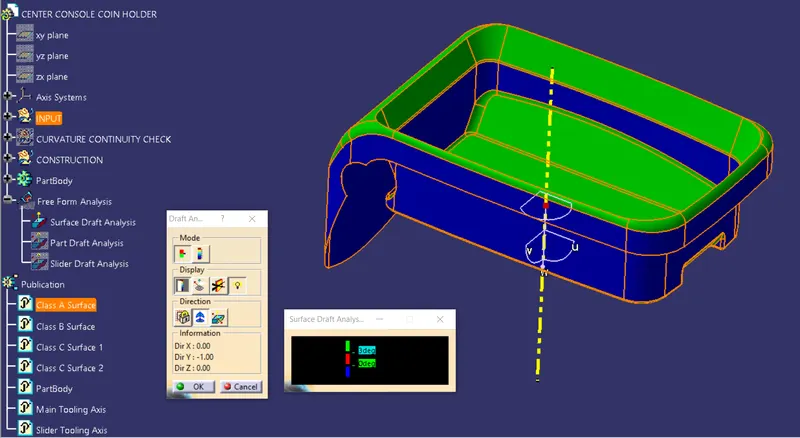
Curvature Continuity and Draft Analysis of Class A Surface
Construction Geometry and Surfaces: The geometrical features are mainly conserned with tooling axises and geometry for ribs. The partially bidirectional method of axis creation is prefered over here since the surface model is symetrical only about a single plane. The B and C surfaces are parallel and normal surface based features, to that of A surface. Unfortunately no draft is provided on the A surface over here, so B and C surfaces are also created without draft. The internal and the external radius of the B side surfaces are modified with respect to A surface, as per design requirements.
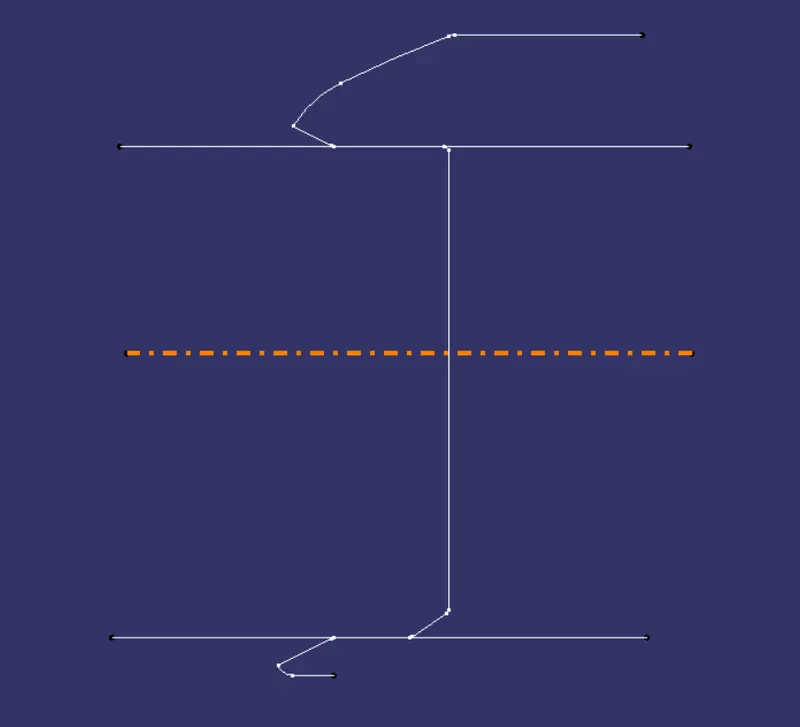
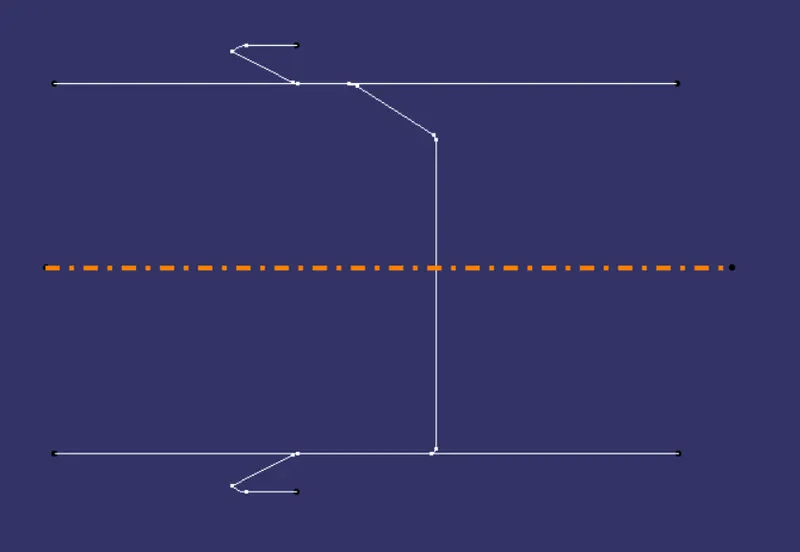
Tooling Clearing Along - XY and YZ Plane
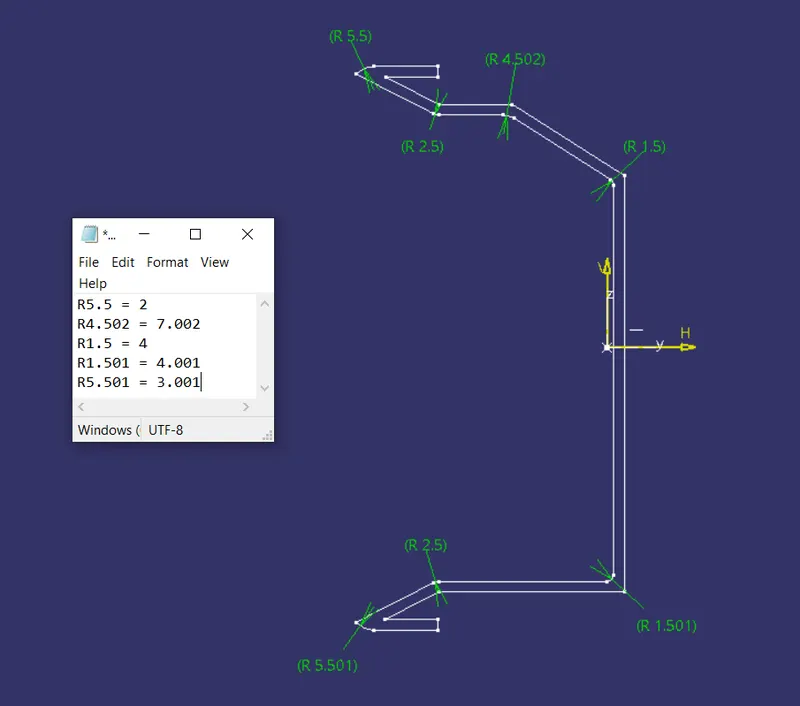
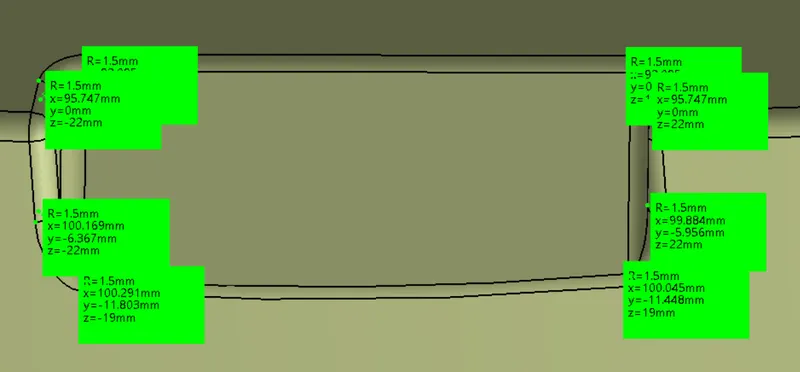
Internal and External Radius
Draft Analysis and Mold Setup: The Draft analysis is made for the part in 3 ways. The draft along the main and slider tooling axis, helps us to visualize weather the design is manufacturable or not. Usually an nominal draft of 3 degrees are provided to every plastic trim components, but unfortunately here the design do not have an optimal draft, which shows that its hard to eject an plastic component without wear and damage as per the design created. Inorder to provide a plastic trim component with high strength and low weight and displacement, ribs are provided with the draft angle of 0.5 degrees. An rough sketch of core and cavity cross section is made to visually the entire mold setup in a pictorial manner.
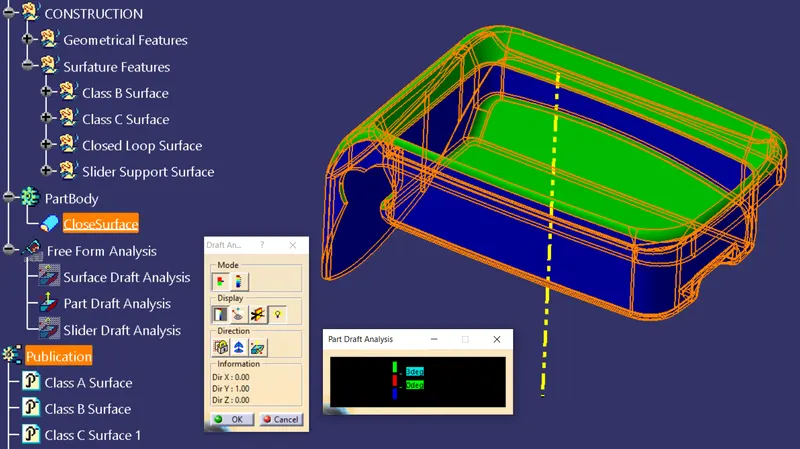
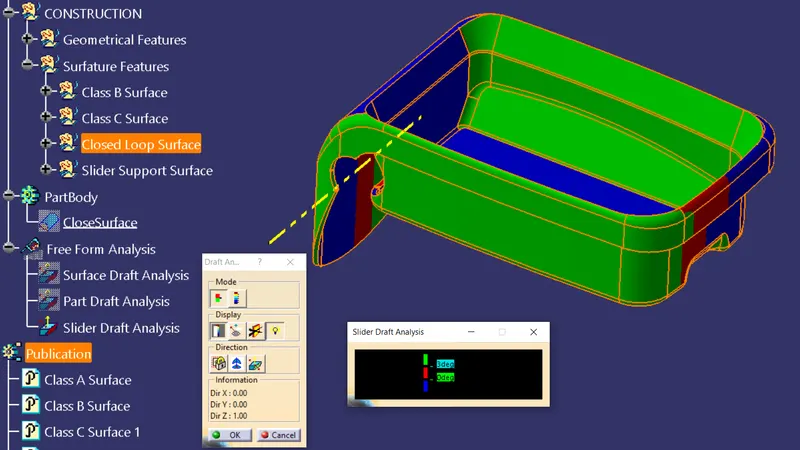
Part and Slider Draft Analysis
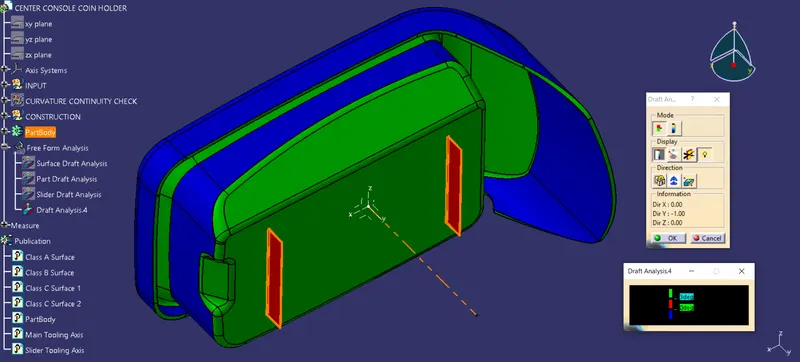
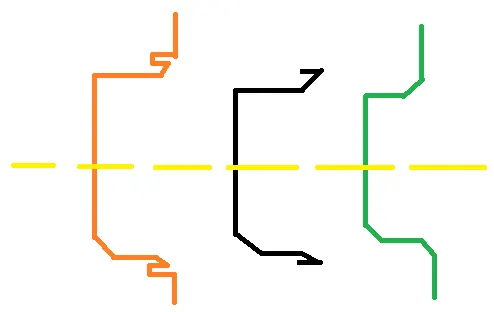
Core and Cavity Sketch with Rib Draft Analysis
Publication and Rib Inspection: Inorder to visualize the obtained results easily, publications are made for surfaces, part bodies and tooling axises. The basic type of ribs are created over here. To know that the designed rib is right or wrong the thickness of the component is compared with rib root diameter. As per the design rule 30% of deviation is allowed so [2.5x(130%) = 2.5x1.3 = 3.25] the rib root diameter must be lesser then or equal to 3.25. By measuring the values, the thickness shown is 2.5mm and rib root diameter is [1.343x2 = 2.686] 2.686. Therefore the design rule is satisfied and the sink mark would not occur.
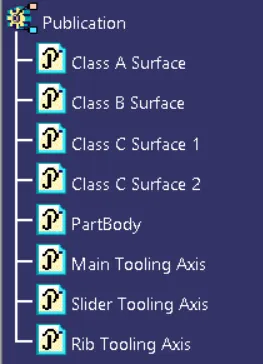
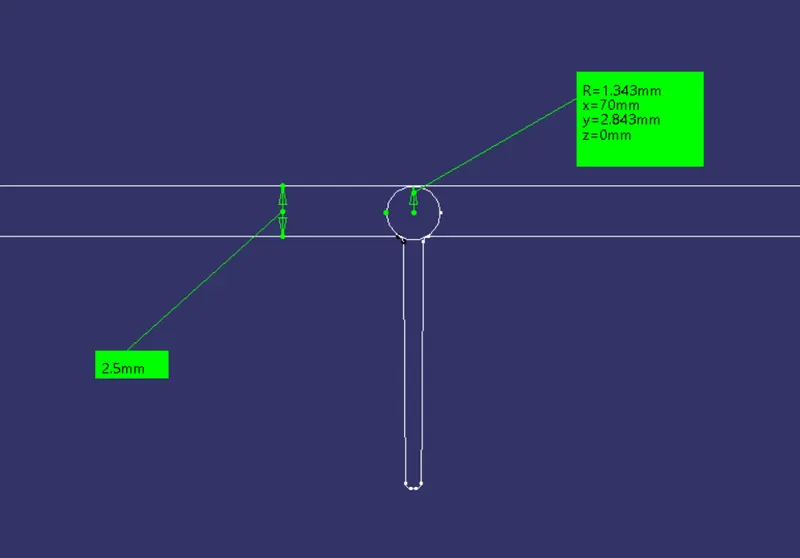
Publication and Rib Inspection
Views: For attaining an detailed idea of component, it is necessary to attain better visualization. Visualizing the components in various views helps us to design a product in a better manner.
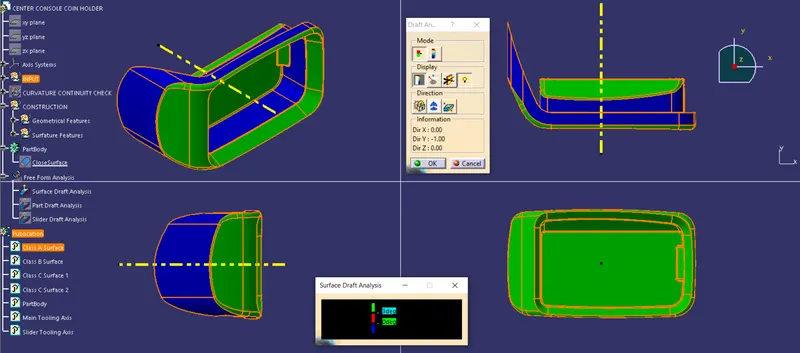
Front, Top, Side and Isometric view of Surface Draft Analysis
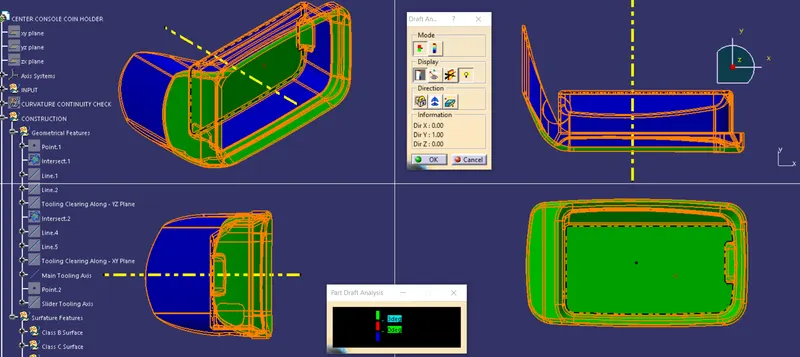
Front, Top, Side and Isometric view of Part Draft Analysis
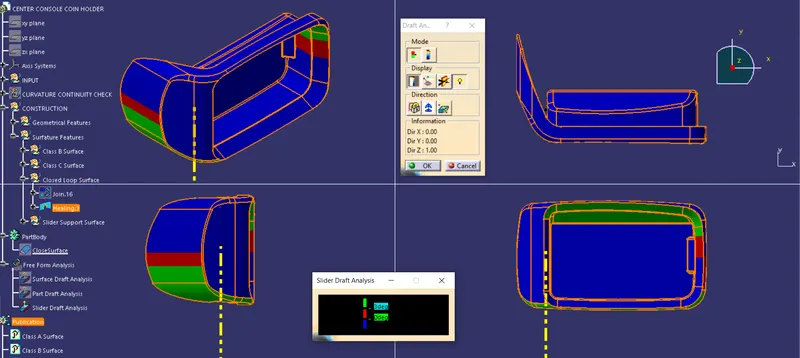
Front, Top, Side and Isometric view of Slider Draft Analysis
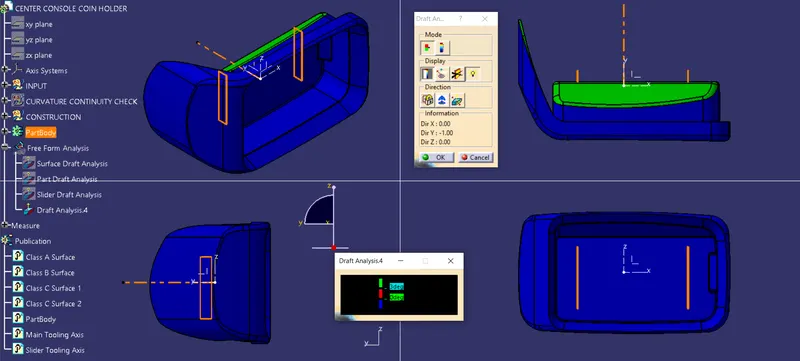
Front, Top, Side and Isometric view of Rib Draft Analysis