Week 8 - Universal Joint
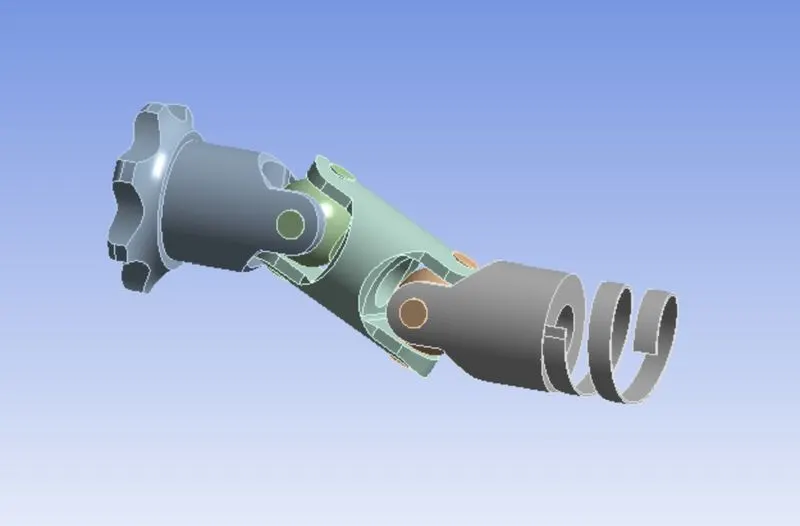
Objective: To perform a transient structural analysis on a double universal joint with a spring using three different materials
Case 1: Structural steel
Case 2: Stainless steel
Case 3: Titanium Alloy
1. Geometry:
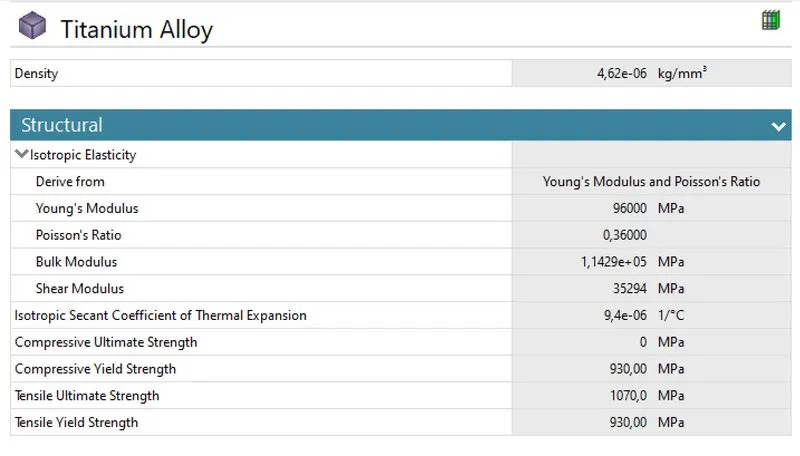
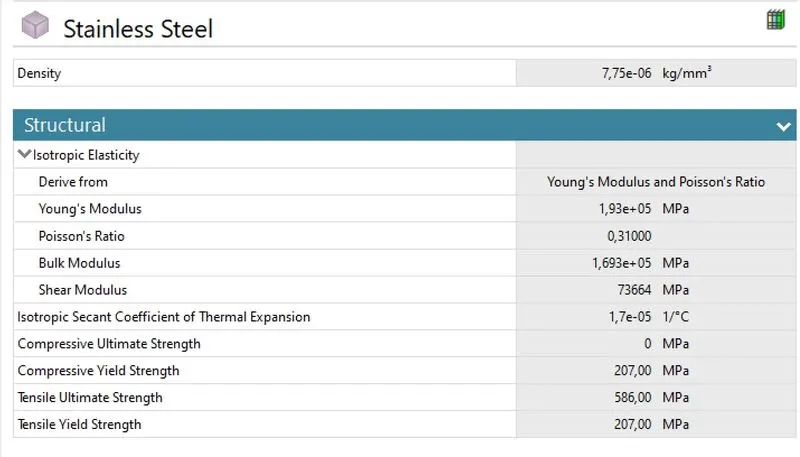
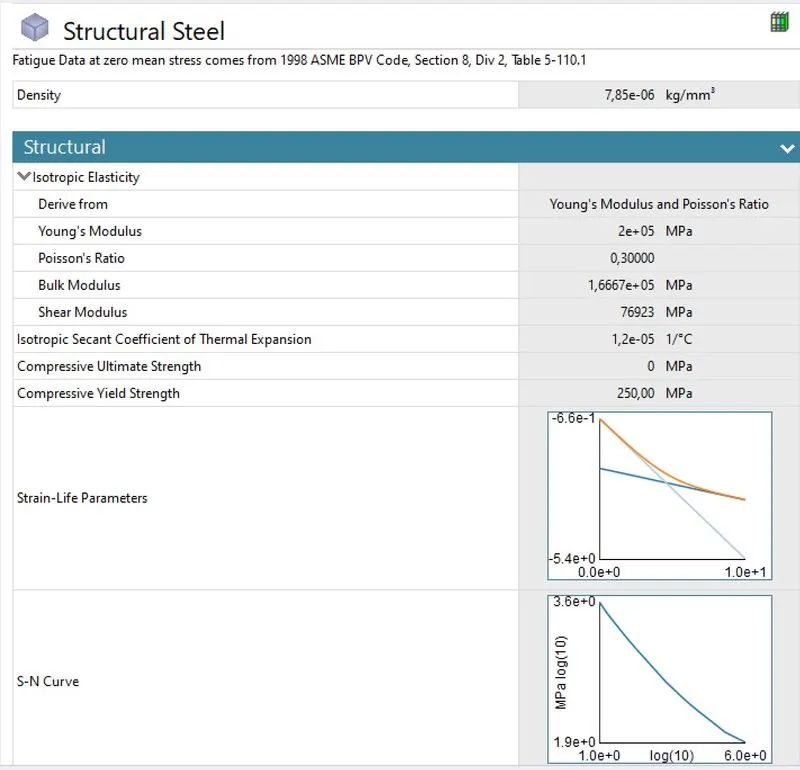
2. Material data:
The Spring is assigned with 3 different materials for each case, as mentioned above.
3. Case set up and settings:
a. Connections:
i. Contacts:
Here the contacts were not considered, the generated contacts were deleted.
ii. Joints:
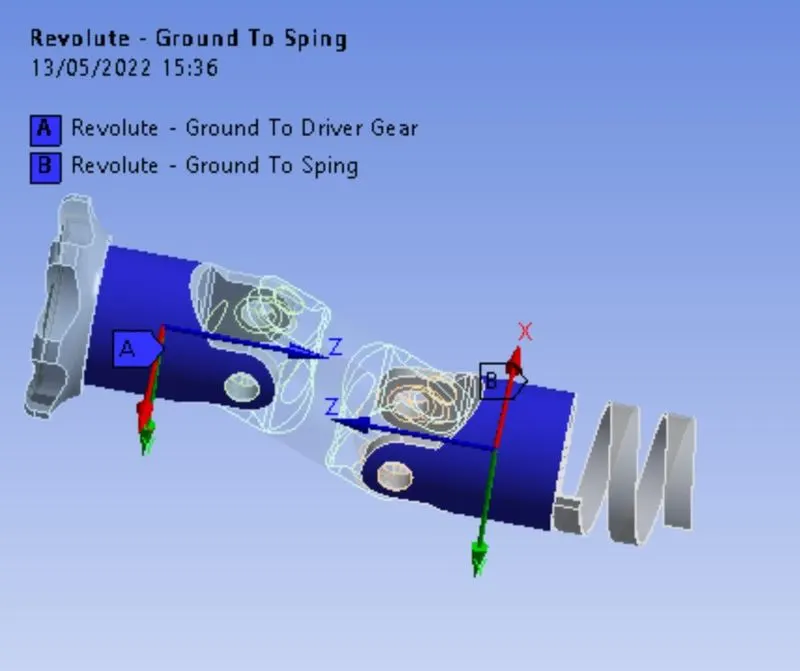
- Fixed joint: The end of the spring is fixed for the evaluation of stress on the spring with a revolute load.
(Body to ground)
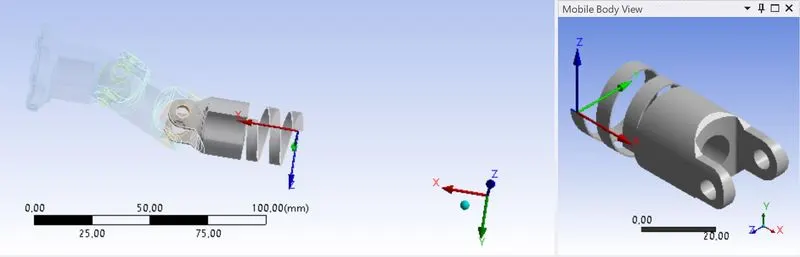
- Revolute joints for the driver and driven component: (Body to ground)
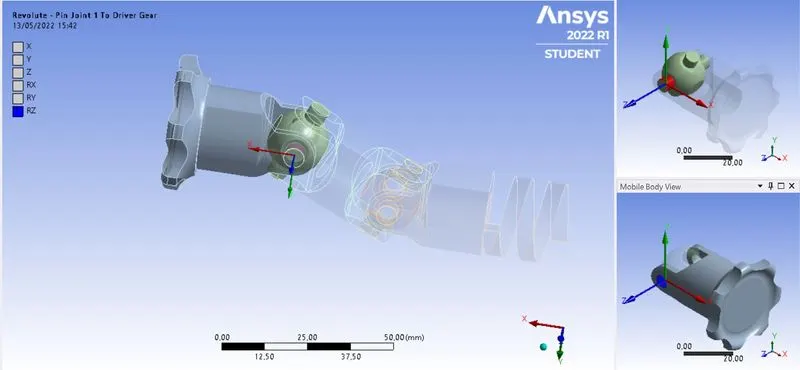
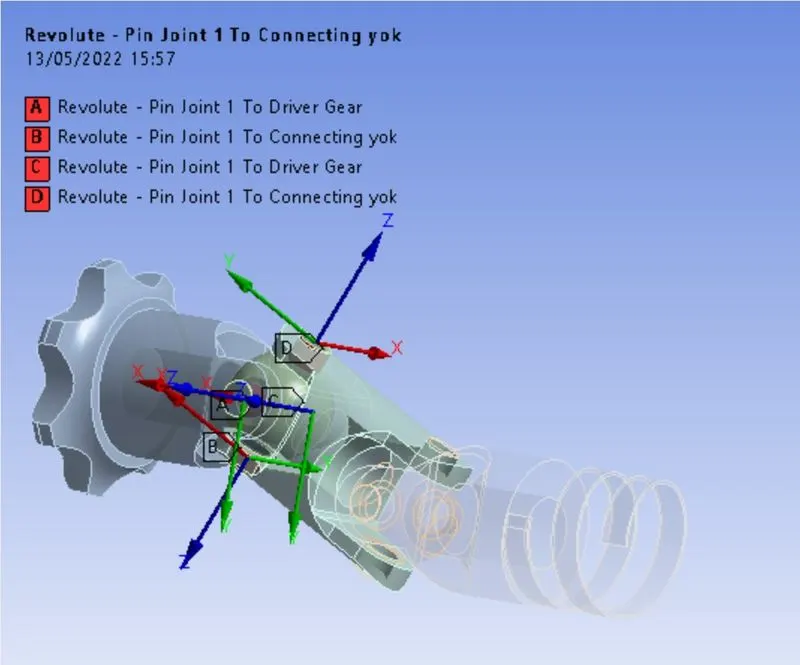
- Revolute joints for the pin Joints 1 :
4 pin joint were given a body to body revolute joint connection as shown in the fig. below.
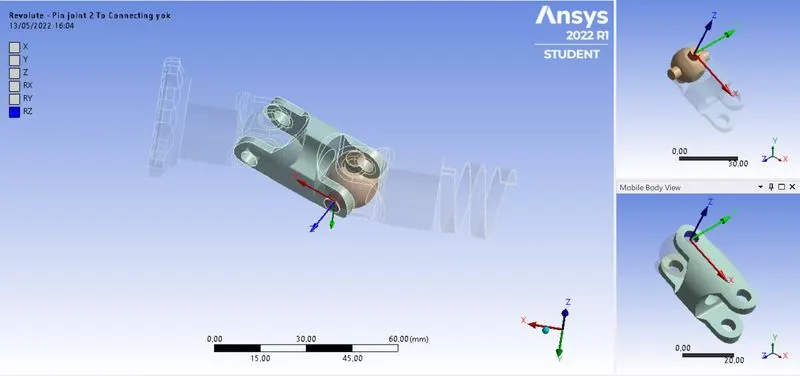
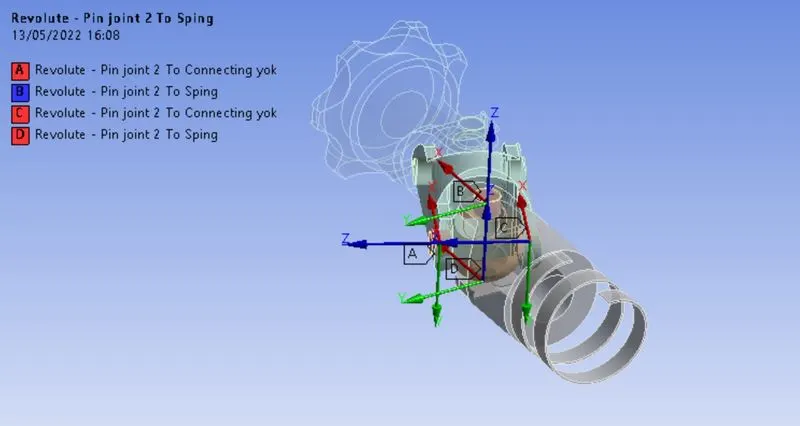
- Revolute joints for the pin Joints 2:
4 pin joint were given a body to body revolute joint connection as shown in the fig. below.
b. Mesh:
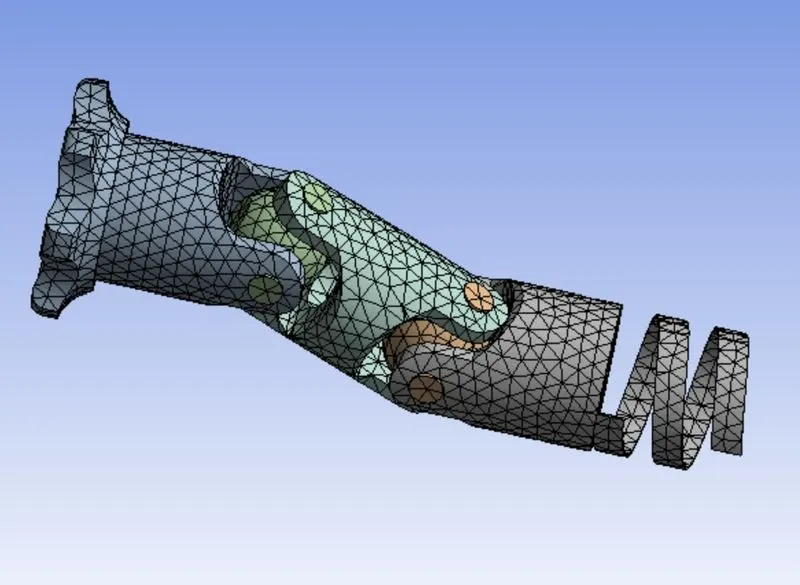
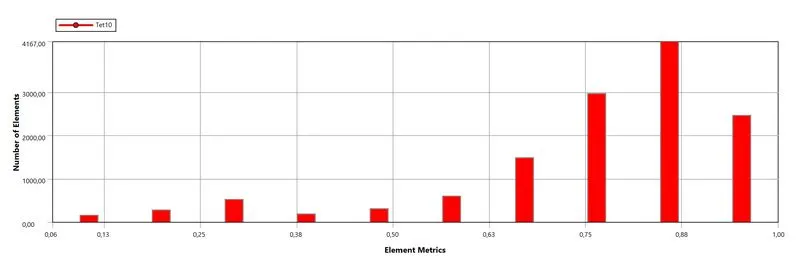
A mesh of element size 3 mm which is well within the academic limit is generated.
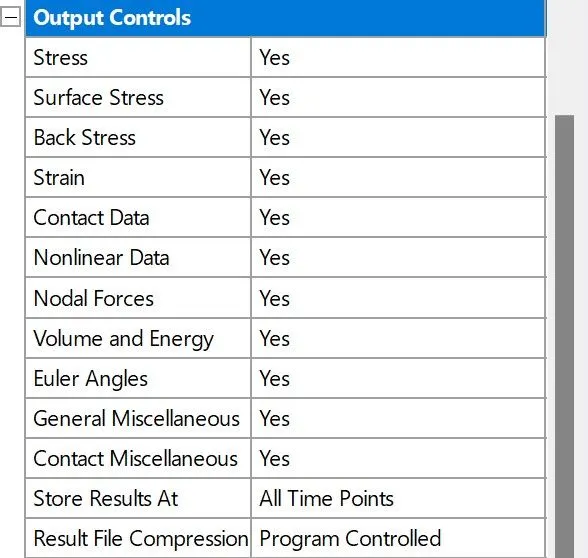
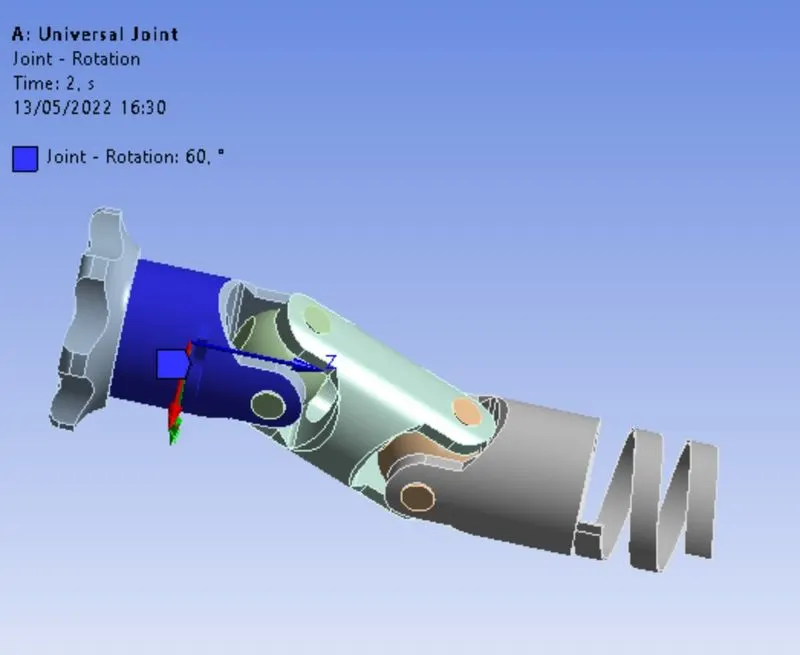
c. Analysis settings and input load details:
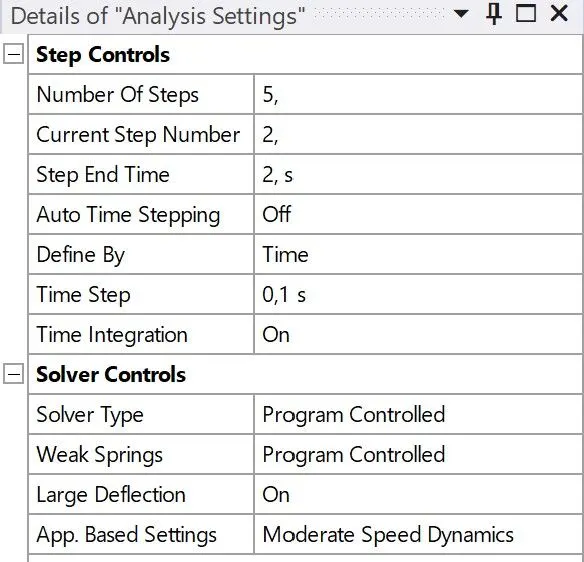
i. Analysis settings:
ii. Load:

d. Solution:
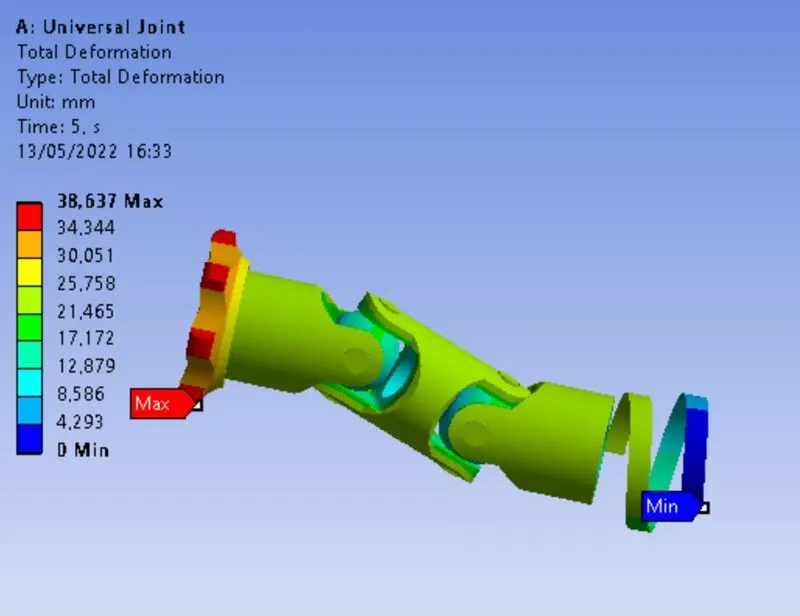
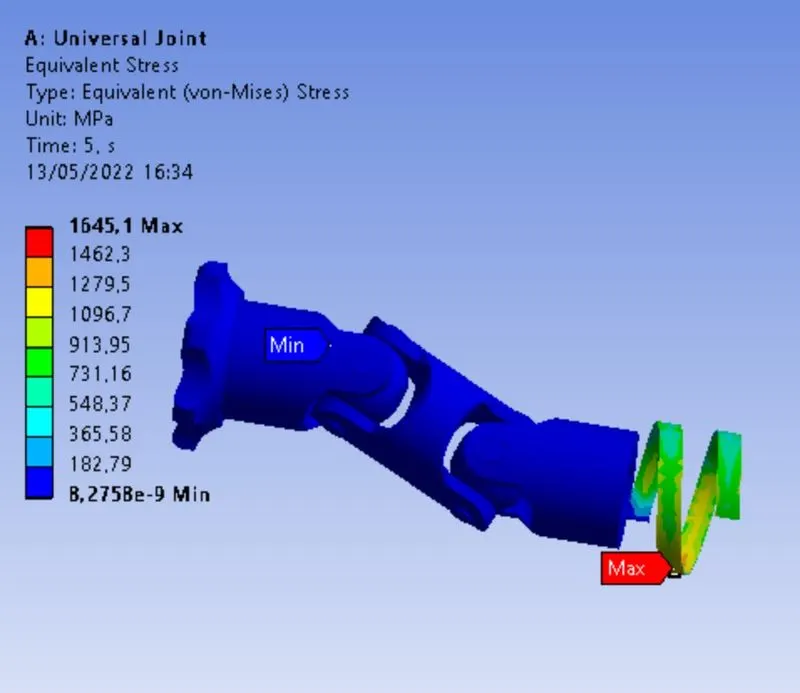
(Case 1 is demonstrated)
i. Total deformation:
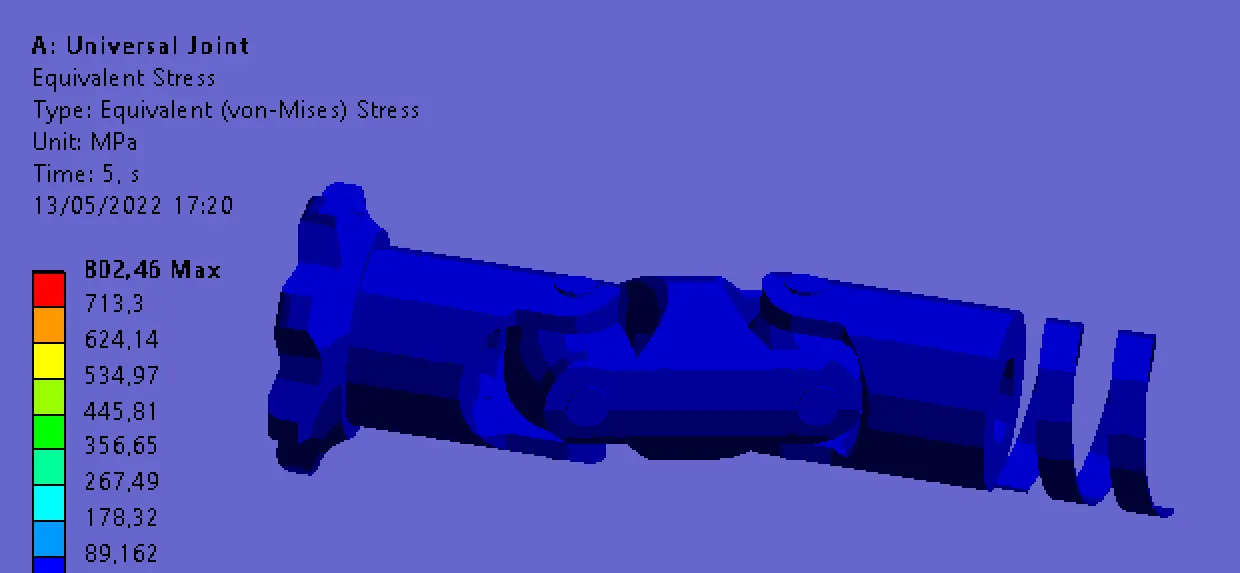
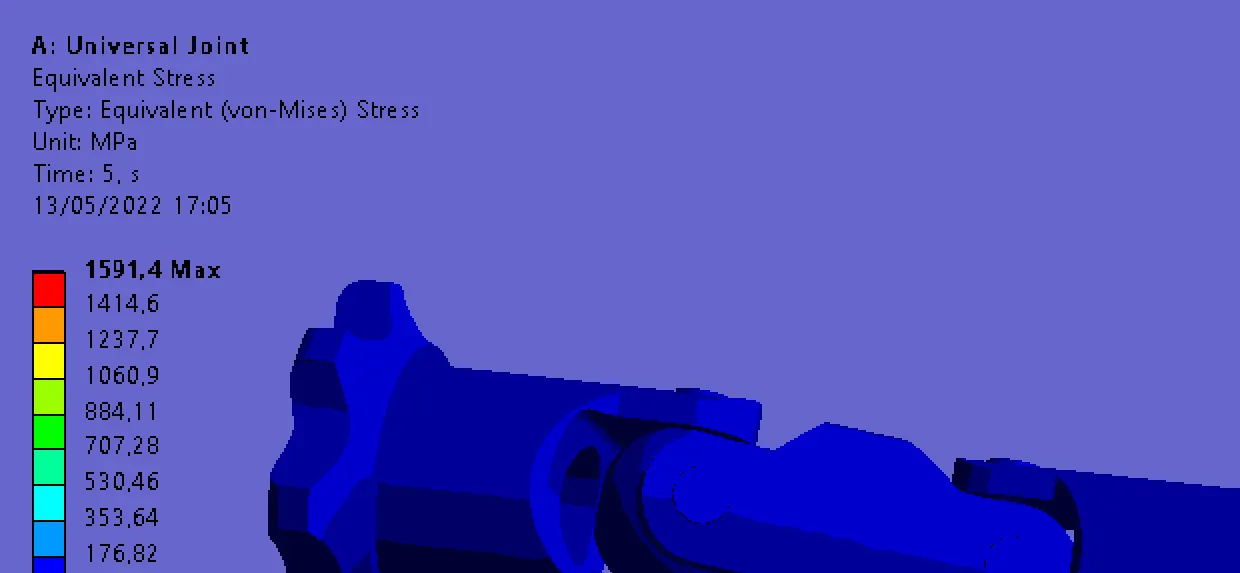
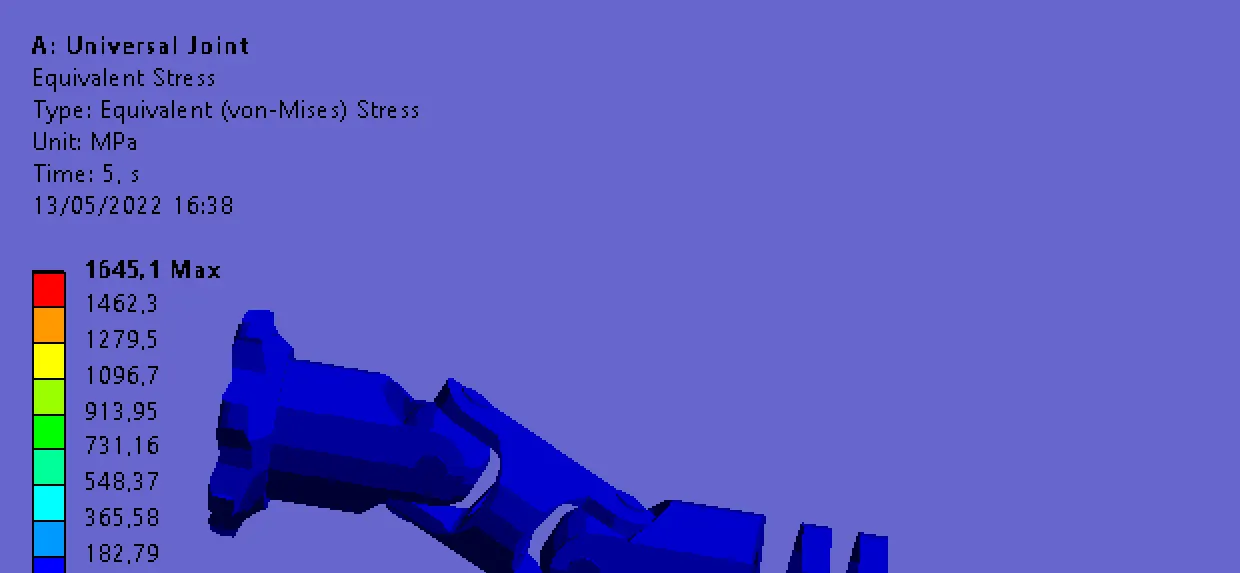
ii. Equivalent Stress:
4. Result:
| (Max values are considered) | Total deformation | Equivalent Stress |
| CASE 1 | 38.637 | 1645.1 |
| CASE 2 | 38.637 | 1591.4 |
| CASE 3 | 38.637 | 802.46 |
5. Conclusion:
It is observed that the yield strength and ultimate strength of titanium alloy (930 MPa & 1070 MPa respectively) is much greater than structural steel (250 MPa, 460 MPa) and stainless steel (207 MPa, 586 MPa). Thus, the stress value of titanium will be much lower than the other 2 materials. However, total deformation remains the same for all the cases.