Week 8 - Universal Joint
Obejective:
You have to perform a transient structural analysis on a double universal joint with a spring using three different materials: Structural Steel, Stainless Steel and Titanium alloy(They can all be found in the General Materials section) The three materials must be used on the joint with the springs alone.
Solution:
-Firstly, we need to open ANSYS workbench and drop down transient structural.
-Assign required materials in the directory.
-Now, import geometry to spaceclaim and see if there are any abnormalities.
-If there are any then fix them and open the geometry in mechanical module.
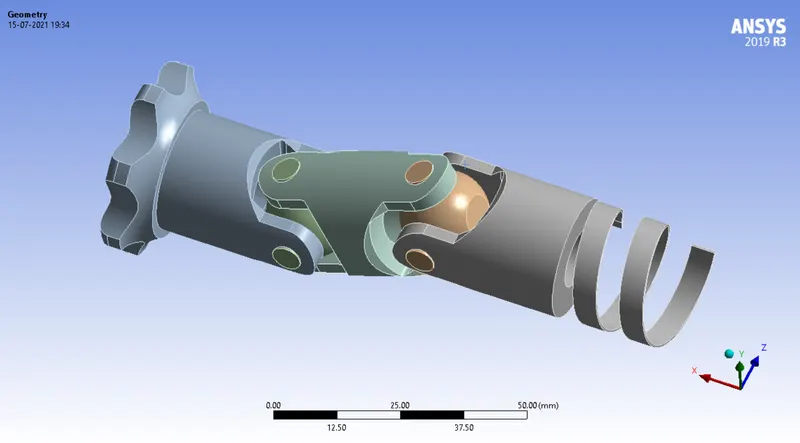
-Now, we need to assign joints to the geometry.
-Fixed Joint:
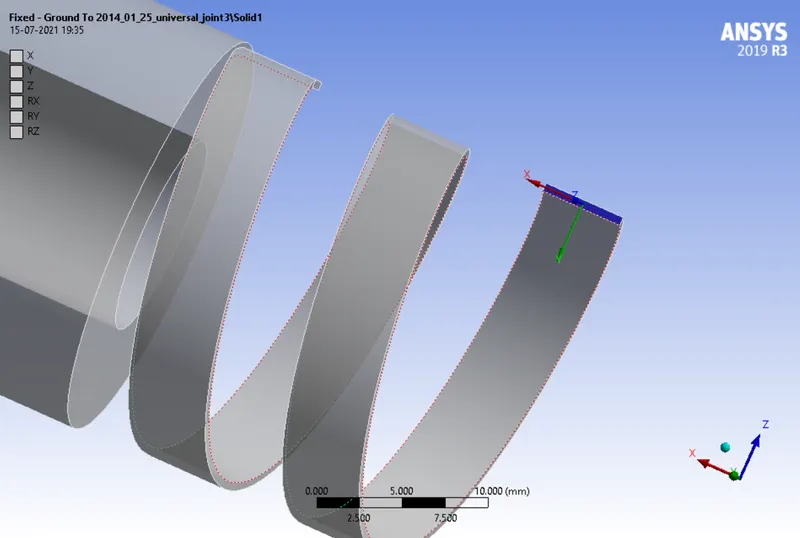
-Revolute Joint-1:
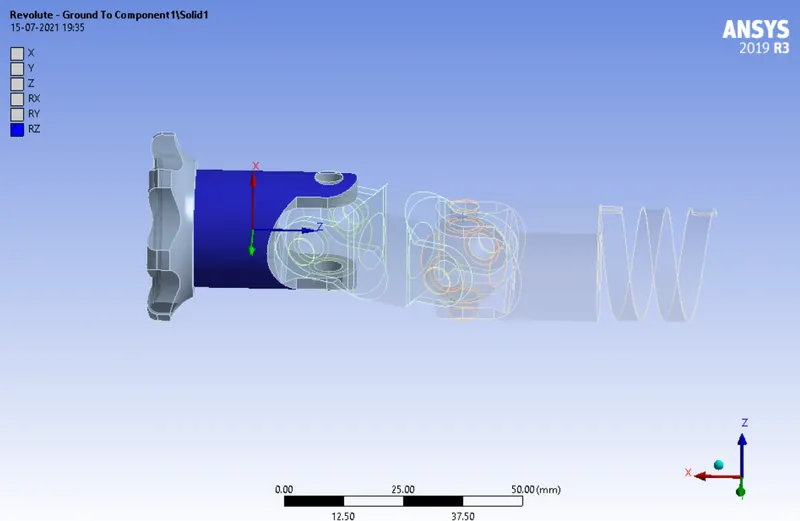
-Revolute Joint-2:
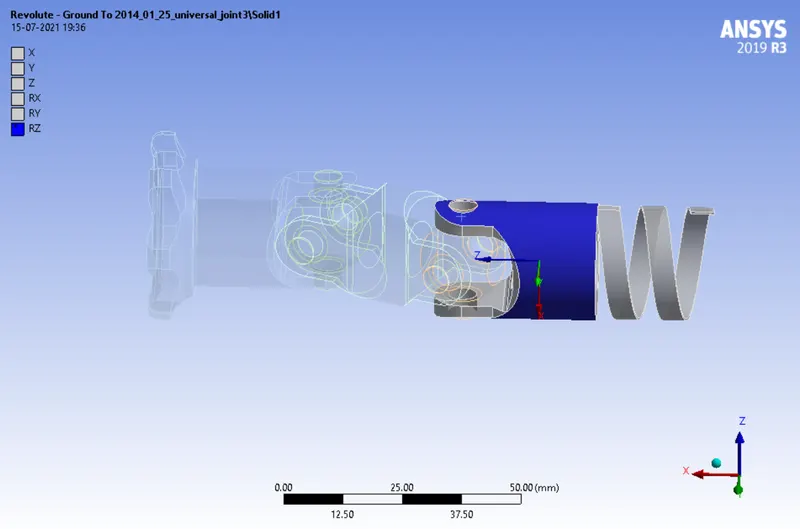
-Revolute Joint for the first 4 bolts:
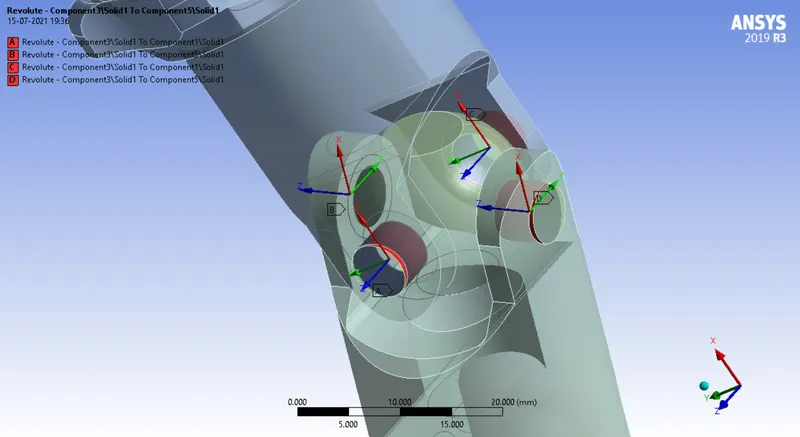
-Revolute Joint for the next 4 bolts:
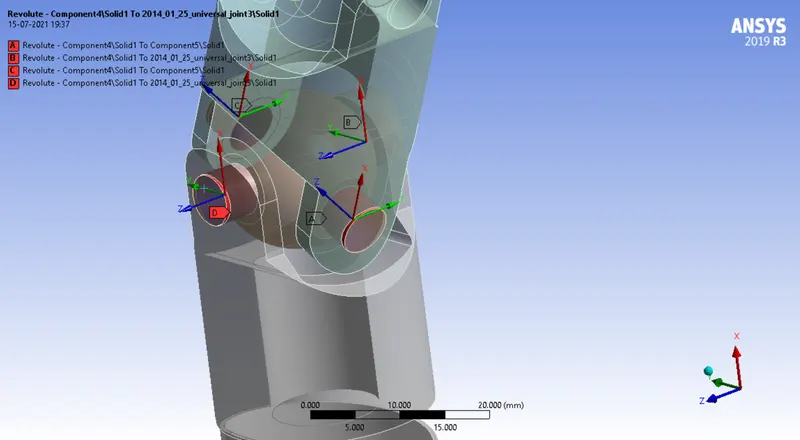
-Now, we need to mesh the geometry with 3mm element size.
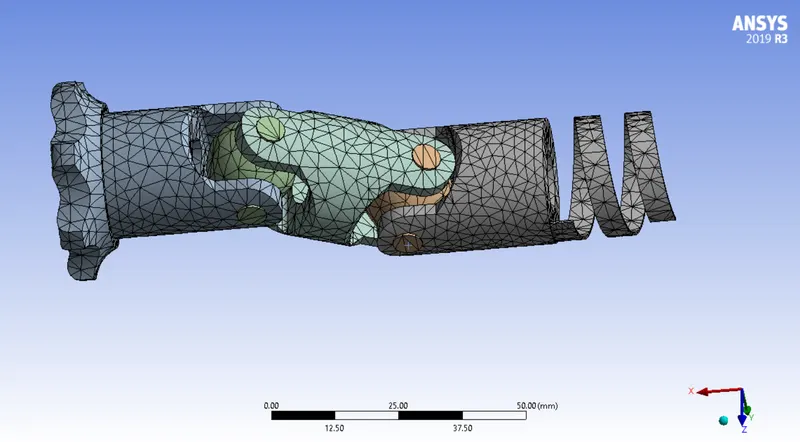
-Now, we need to assign boundary conditions to run the simulation
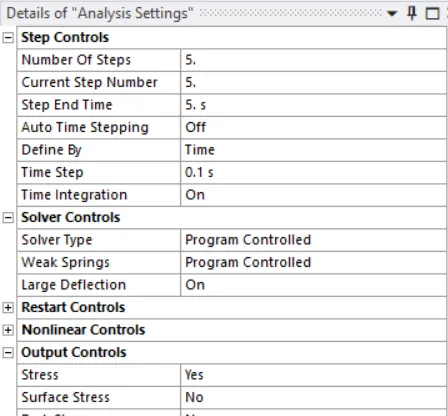
-Now, we need to assign the revolute motion of rotation of 150 degrees to the simulation.
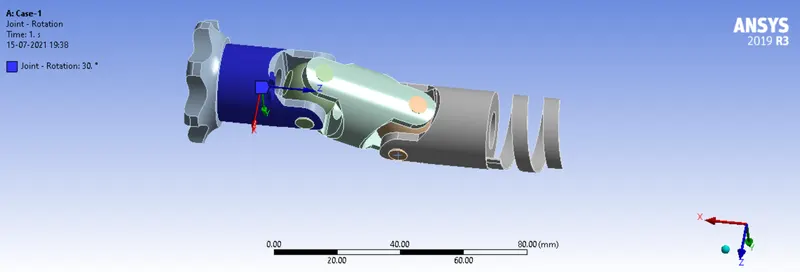
-Now, we need to give the output parameters to run the simulation.
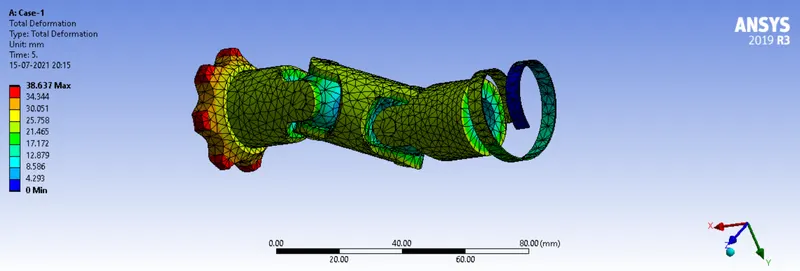
Case-1: Structural Steel
Total Deformation:
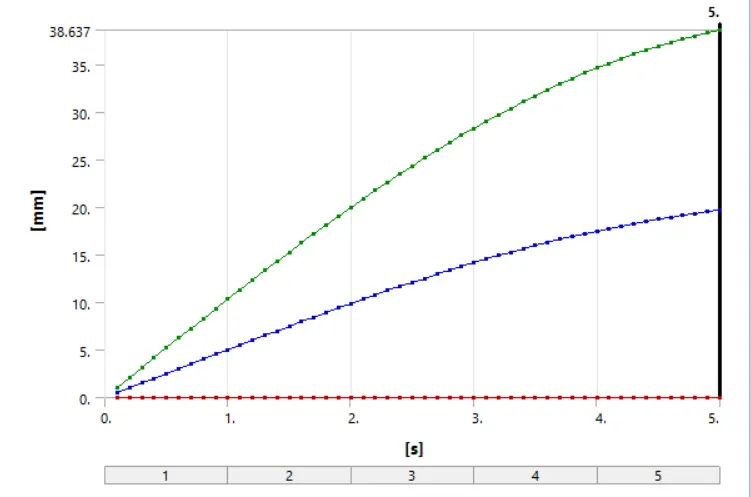
Total Deformation graph:
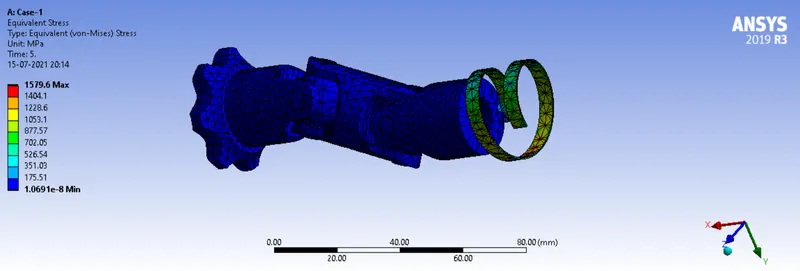
Equivalent Stress:
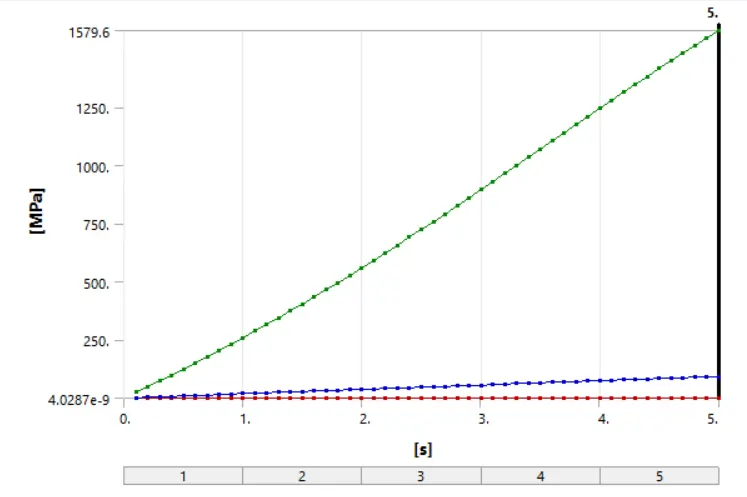
Equivalent Stress graph:
Case-2: Strainless Steel
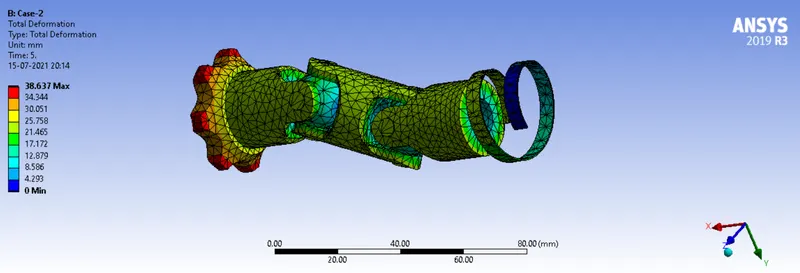
Total Deformation:
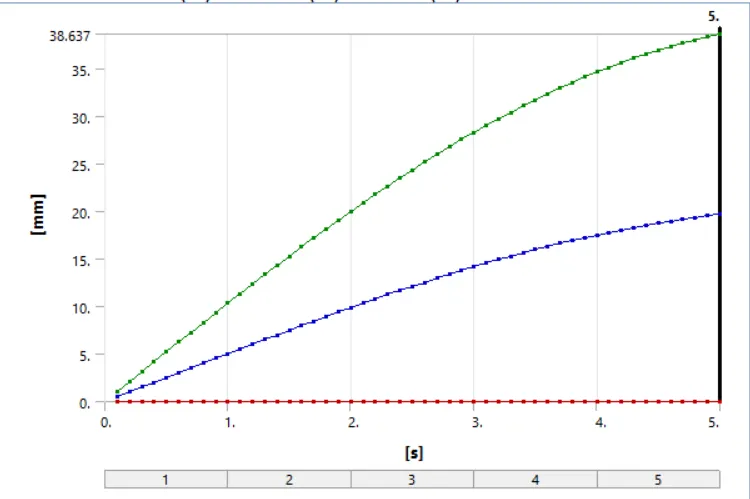
Total Deformation graph:
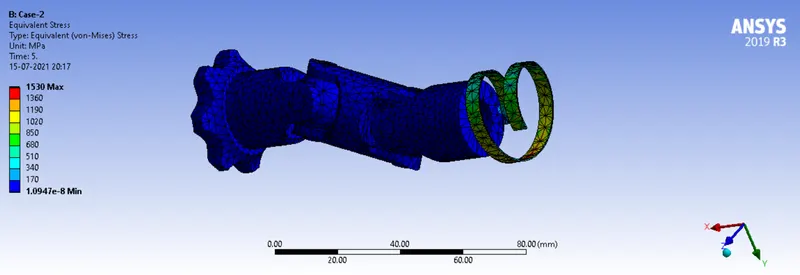
Equivalent Stress:
Equivalent Stress graph:
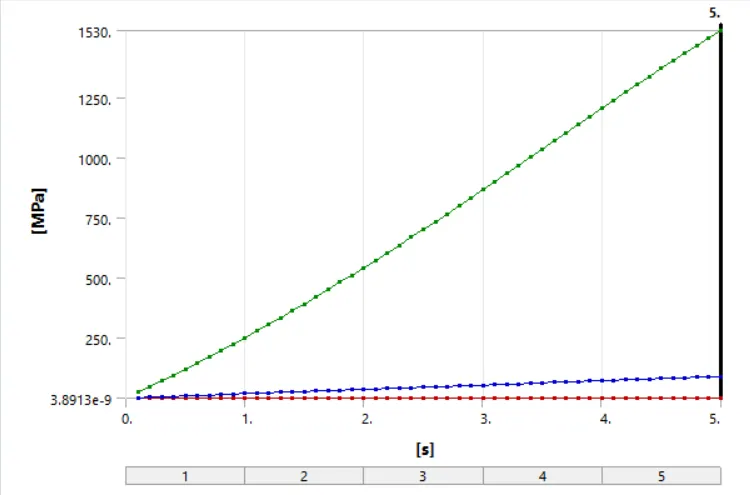
Case-3: Titanium Alloy
Total Deformation:
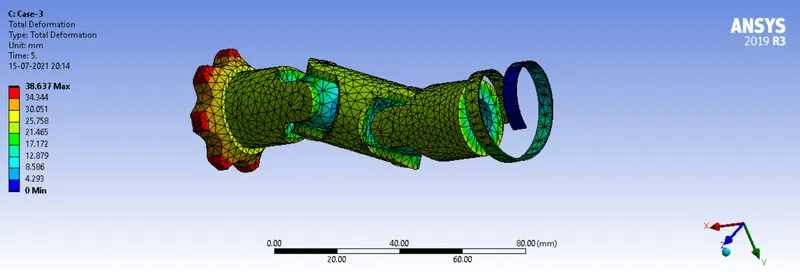
Total Deformation graph:
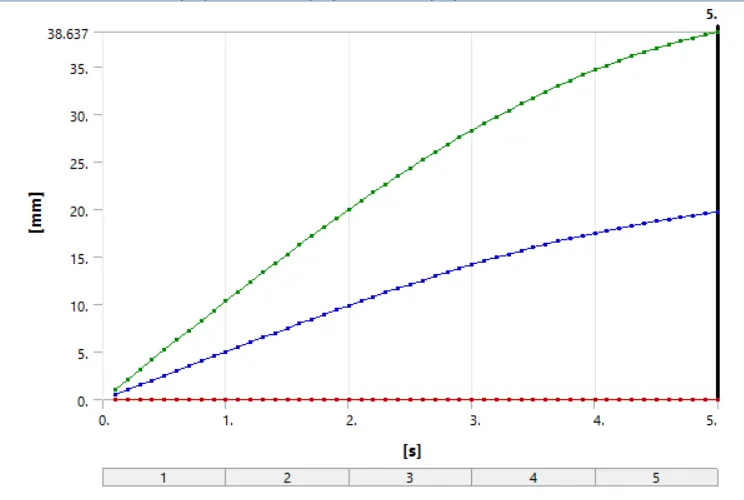
Equivalent Stress:
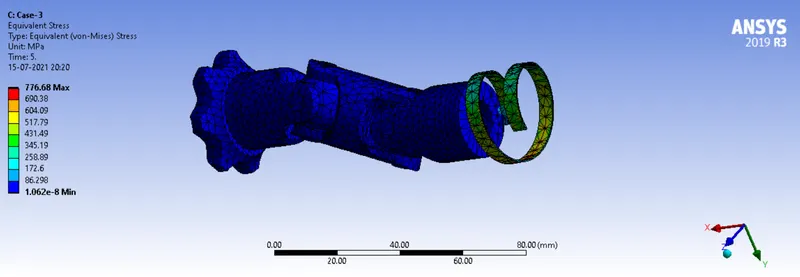
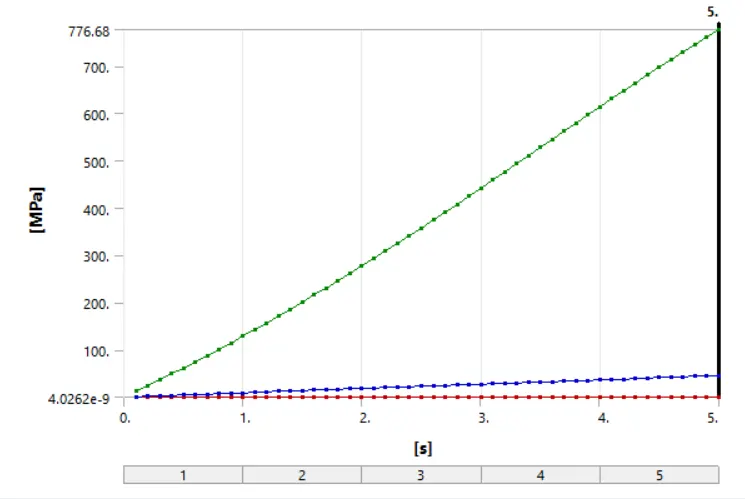
Equivalent Stress graph:
Comparison Table:
Case-1 Case-2 Case-3
Total Deformation(mm) 38.637 38.637 38.637
Equivalent Stress(MPa) 1579.6 1530 776.68
Simulation Animations:
Conclusion:
From the above table we can say that the Deformation for all the three cases is constant. But, Equivalent stress of the three cases differ where Case-1(Structural Steel)> Case-2(Strainless Steel)> Case-3(Titanium Alloy).
As young's modulus of Structural steel is higher than that of titanium alloy. Hence, stress of structural steel is higher than that of titanium alloy.