Week 8 - Universal Joint
OBJECTIVE:
- The main objective of this challenge is to perform a Transient structural Analysis on a double universal joint with a spring using three different materials such as Structural Steel, Stainless Steel and Titanium alloy. And to obtain the Equivalent stress and total deformation for all the three cases and compare them.
INTRODUCTION:
- A universal joint (universal coupling, U-joint, Cardan joint, Spicer or Hardy Spicer joint, or Hooke's joint) is a joint or coupling connecting rigid rods whose axes are inclined to each other, and is commonly used in shafts that transmit rotary motion. It consists of a pair of hinges located close together, oriented at 90° to each other, connected by a cross shaft. The universal joint is not a constant-velocity joint.
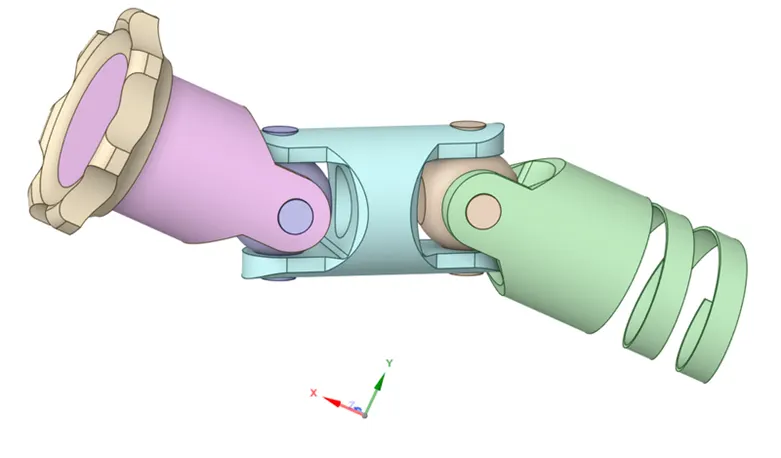
CASE-1: Structural Steel Material
PROCEDURE:
- Open the ANSYS Workbench software. Under the Analysis system select the Transient structural and wait for few seconds to pop up the window, which contains Engineering data, Geometry, Model, setup, Solution and Results.
- Under geometry import the Long Universal Joint.
- Update the model by right click and edit the Model for Preprocessing.
- Wait for few seconds and ANSYS Mechanical will open as shown below.
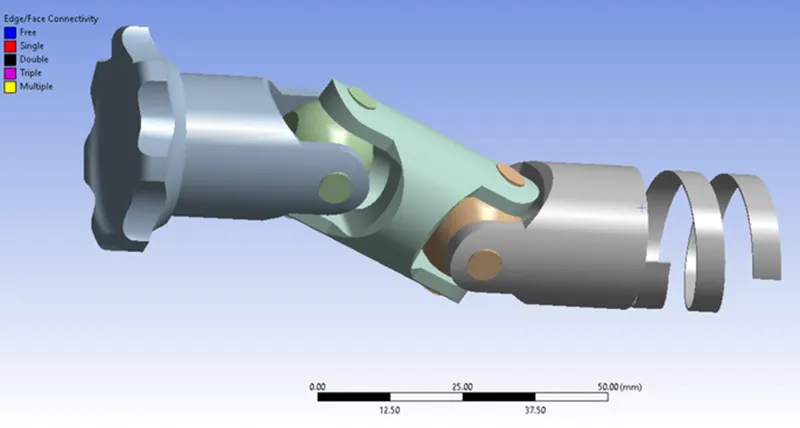
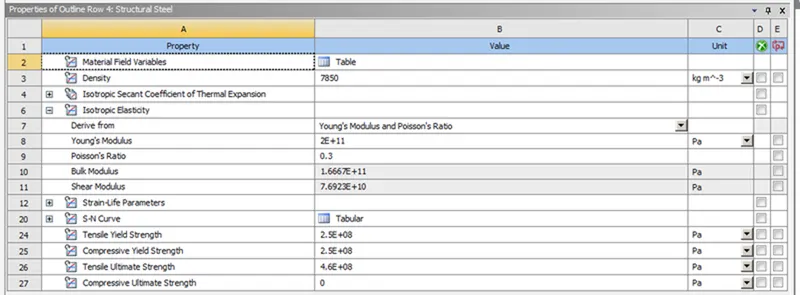
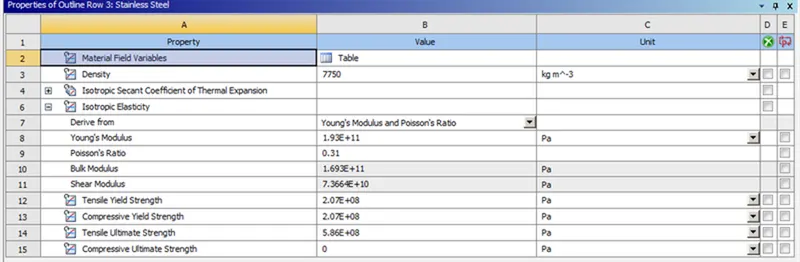
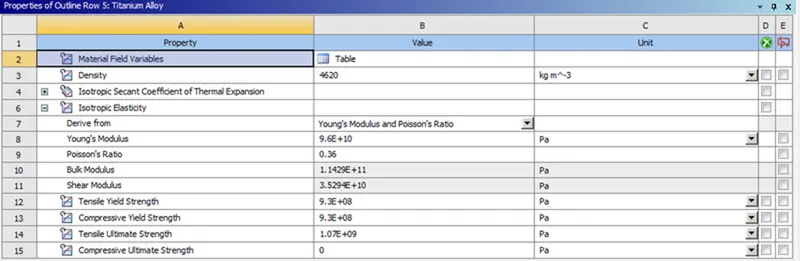
- Assign the material to the model. Default we have structural steel. We have to change the material of springs alone and assign three different type of material for three cases. first assign structural steel, then Stainless Steel and Titanium alloy.
- In this case we are not concentrated on the contacts. So delete the contacts and insert joints.
- a) Fixed Joint: For the tip of the spring we have to insert fixed joint and select the face as shown below. Use body to ground option.
- b) Revolute joint: Insert a revolute joint for the gear part(Driver Yoke) and select the face as shown below. Connection type as body to ground. Make sure that the rotation axis must be oriented correctly.
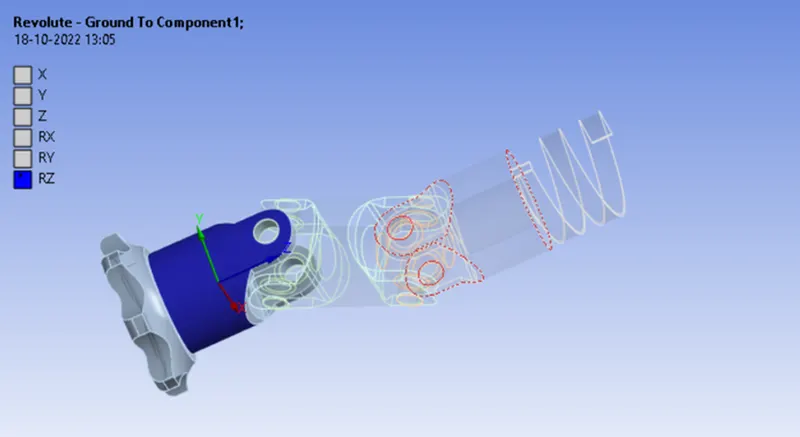
- c)Revolute joint: Insert a revolute joint for the spring part(Driven Yoke) and select the face as shown below. Connection type as body to ground. Make sure that the rotation axis must be oriented correctly.
- d)Revolute joint:
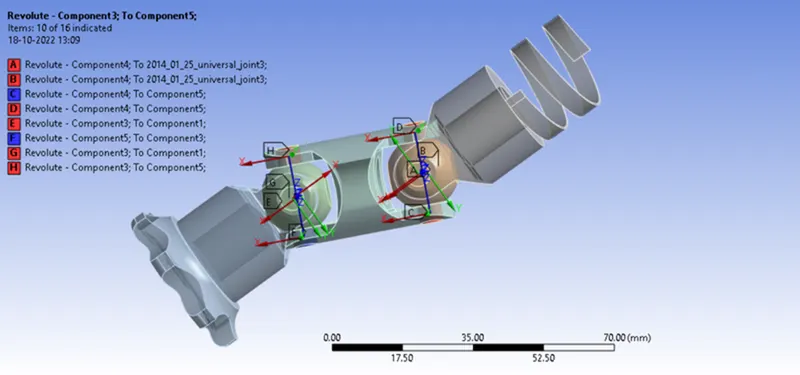
- In universal joint we have 8 pins, that connect the driver yoke to driven yoke through a cross trunnion. So we have to make the pins as revolute joint. Here we have shown one pin as example. Follow the same method for remaining pins.
- Insert a revolute joint to the pin of gear part(Driver Yoke) and select the face as shown below. Connection type as body to body. Make sure that the rotation axis must be oriented correctly.
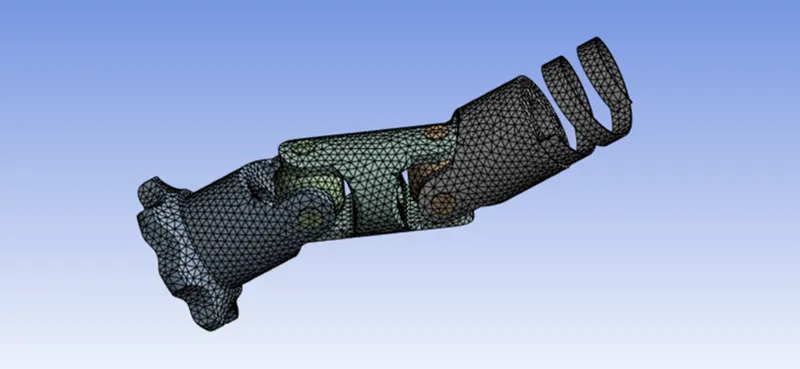
- In ANSYS automatic mesh will be performed with Default mesh size, so assign a element size of 2 mm
Mesh
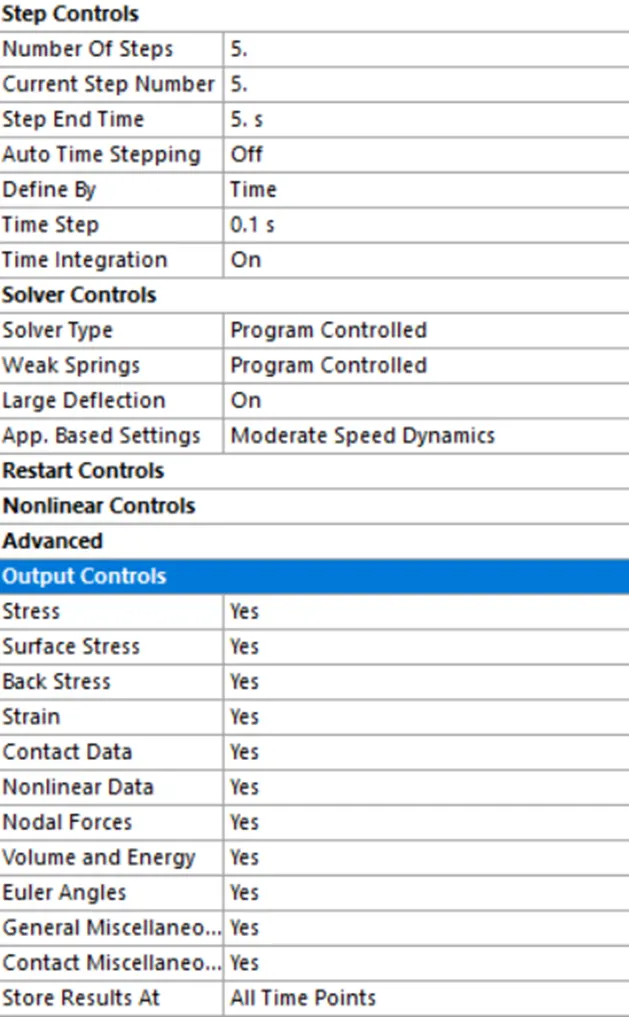
- Analysis settings Change no. of steps as 5, Weak spring as program controlled, large deflection on, output controls all as yes, auto time step off and select all steps and provide the time step as 0.1s.
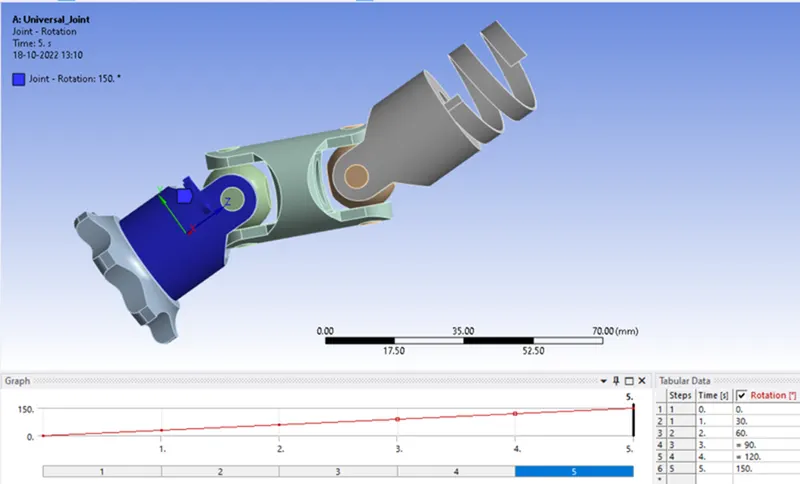
- Joint Load for the gear part is defined by inserting a joint load and change the type as rotation, (Z) select the face as shown below for scope and magnitude of 0,30,60,90,120,150.
- Now request for the outputs such as equivalent stress, equivalent elastic strain, Total deformation.
CASE-2: Stainless Steel Material
In this case just change the material of driven yoke (spring part) as stainless steel and remaining procedure are same as mentioned in the case-1, and run the simulation.
CASE-3: Titanium alloy Material
In this case just change the material of driven yoke (spring part) as Titanium alloy and remaining procedure are same as mentioned in the case-1, and run the simulation.
SIMULATION RESULT:
CASE-1: Structural Steel Material
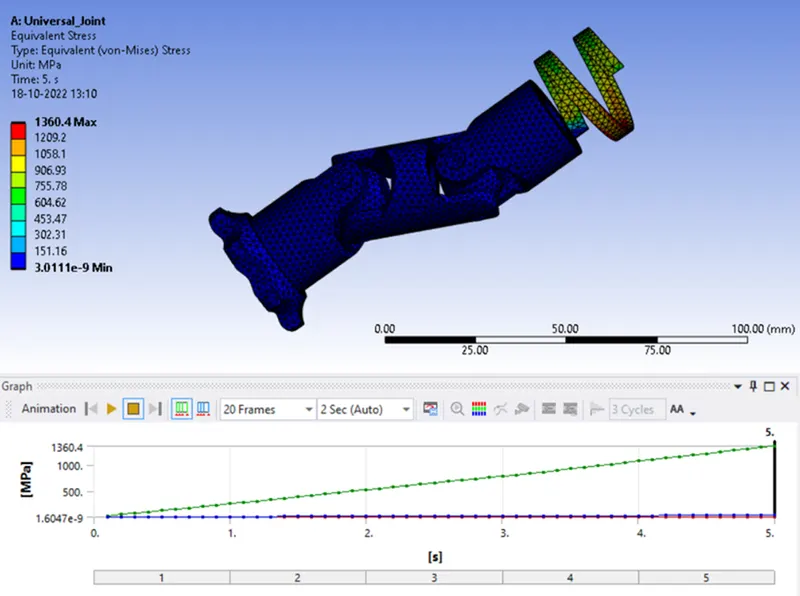
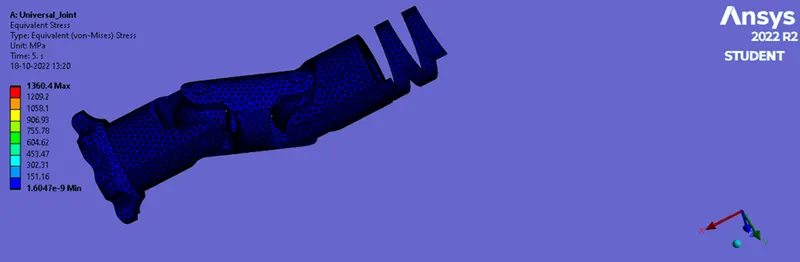
- Equivalent Stress -
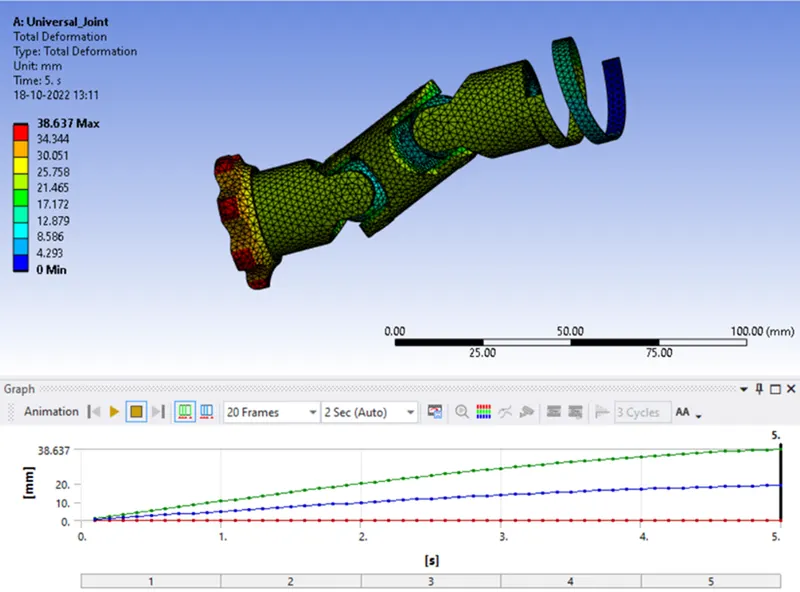
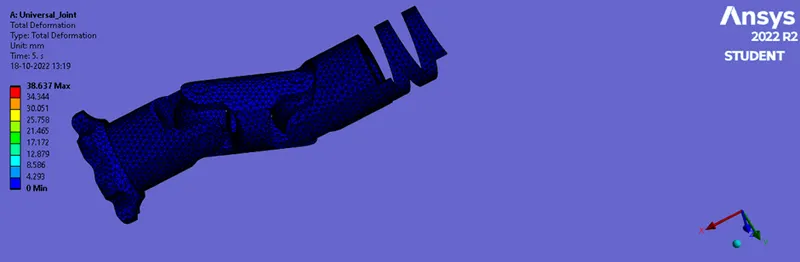
- Total Deformation-
Equivalent strain
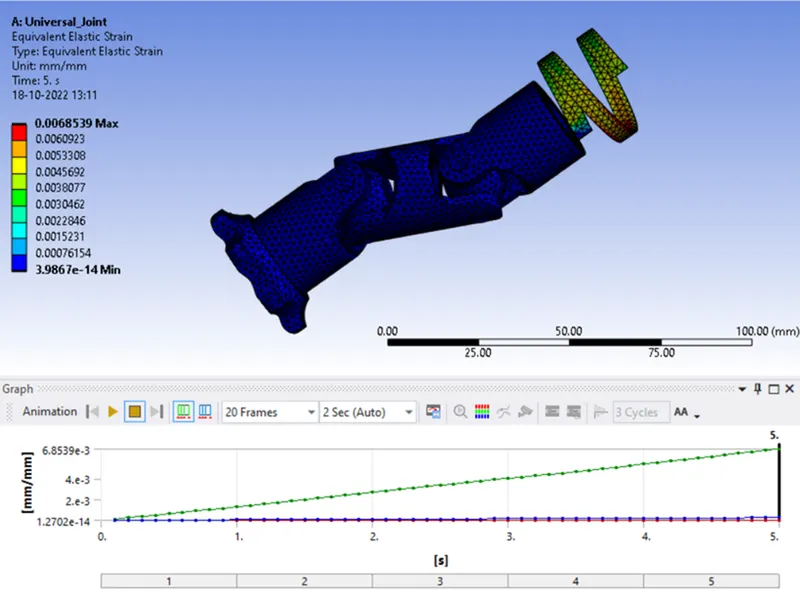
Animation
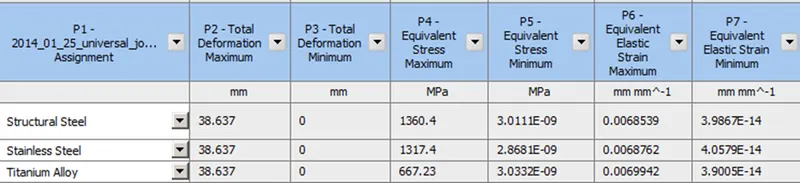
Comparison of results: Parametric Study
CONCLUSION:
- From the above result we can conclude that the Maximum equivalent stress of 1360MPa is experienced at Structural steel, and minimum equivalent stress of 667.23MPa is experienced at Titanium alloy, Moderate equivalent stress of 1317.4Pa is experienced at Stainless steel.
- The Maximum equivalent elastic strain of 0.0069942 is experienced at Titanium alloy, the Minimum equivalent elastic strain of 0.0068539 is experienced at Structural steel. The total deformation of 38.637mm in all the cases remains same. So we conclude that the changing of different material to a model will not effect the total deformation and it remains same for all the cases.