Week 8 - Universal Joint
Analysis of a double universal joint in Ansys Workbench.
Objective:
To perform transient structural analysis on a double universal joint with a spring using three different materials:
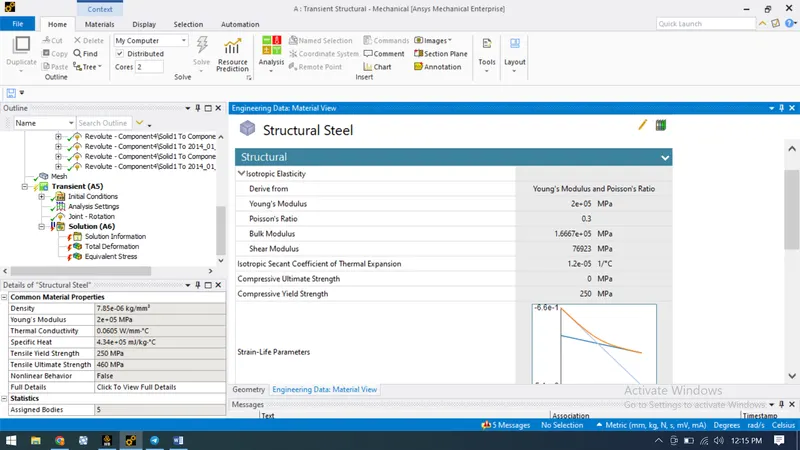
Case1 : Structural Steel
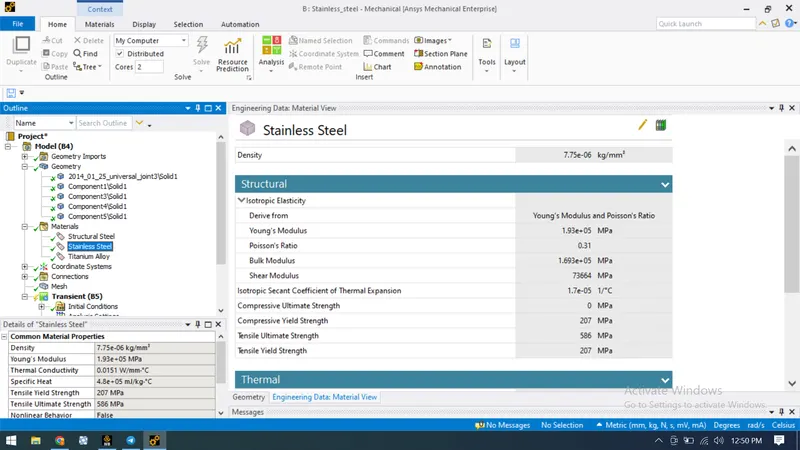
Case2 : Stainless Steel
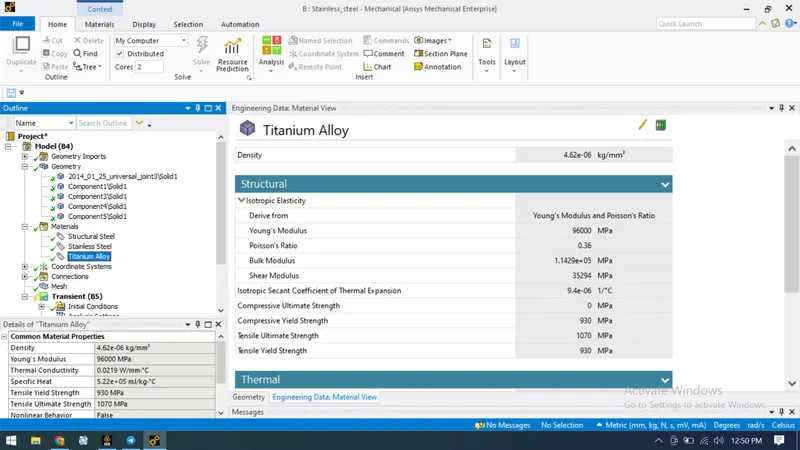
Case3 : Titanium Alloy
on the joint with the springs alone.
Aim is to solve for Equivalent stress and total deformation.
Material:
Case1;
Case2;
case3;
Mesh:
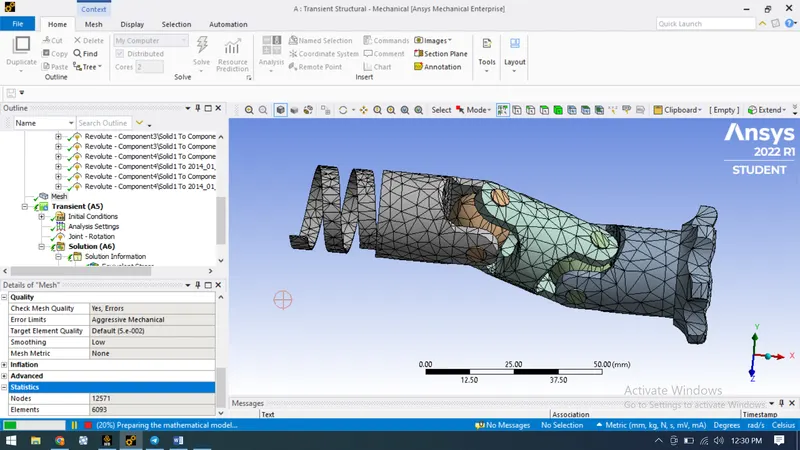
no of nodes: 12571
no of elements: 6093
Connection Details:
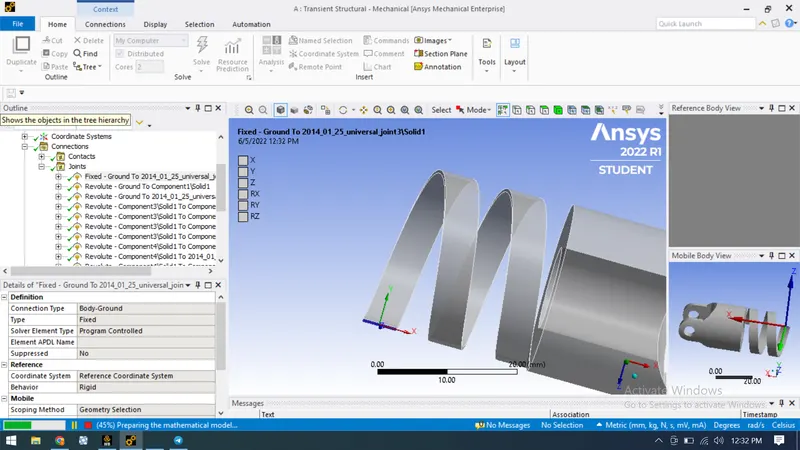
a fixed support is provided on the end of the spring.
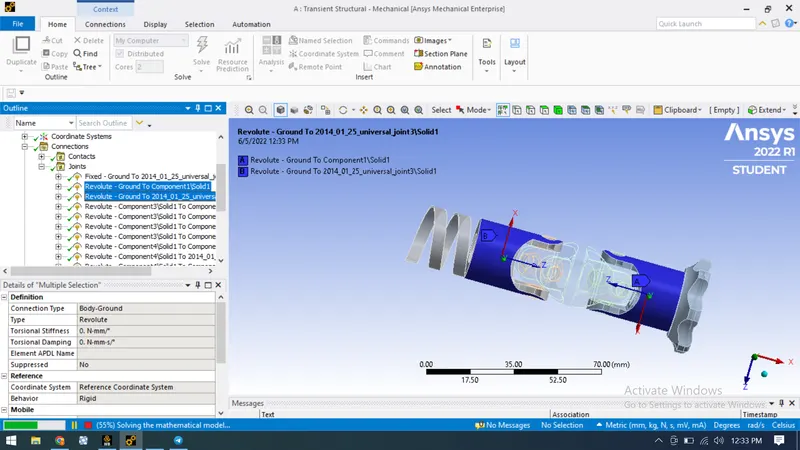
a body to ground revolute contact is provided for face A & B with z axis as axis of rotation
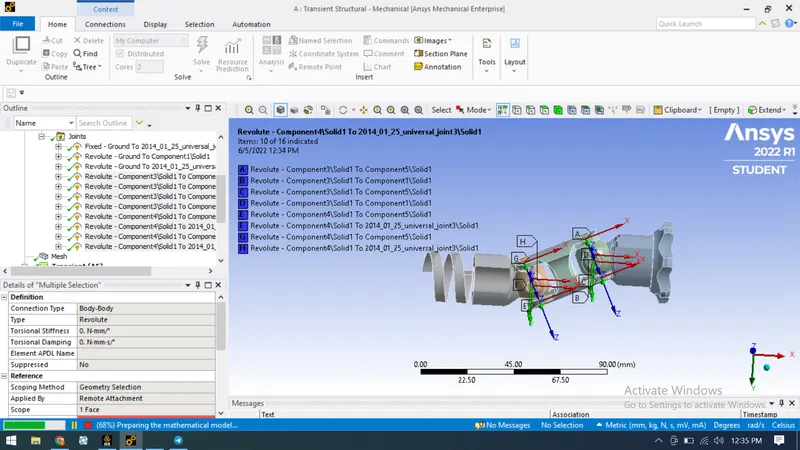
a body to body revolute contact is assigned for mating rotating contact of universal joint.
Analysis Settings :
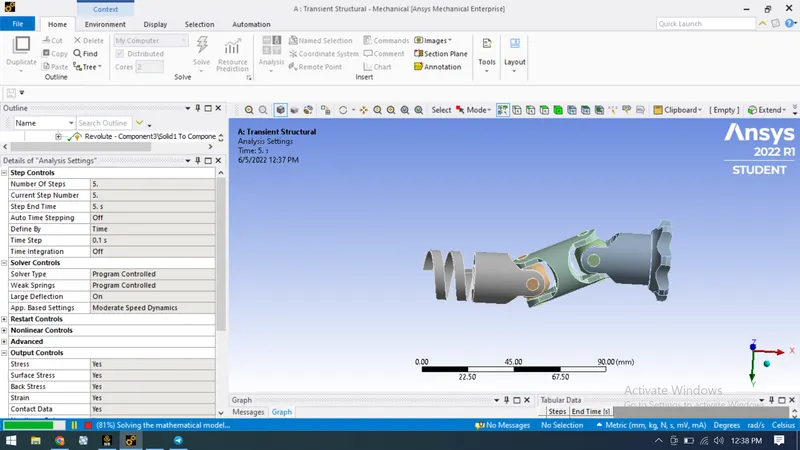
the simulation is carried out in 5 steps with time step of 0.1 sec and auto time stepping off , large deflection on and weak springs as program controlled.
Boundary Conditions:
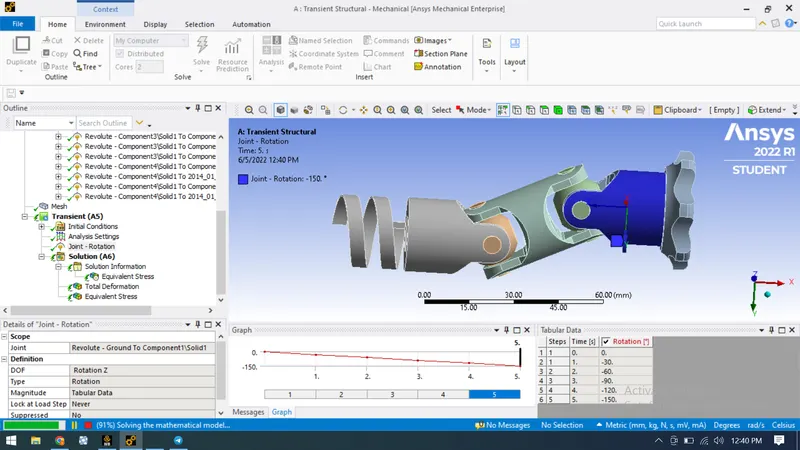
A joint rotation of 150 degree is provided to the face of universal joint as displayed above with an increment of 30 degree.
Results:
Case1: Structural Steel
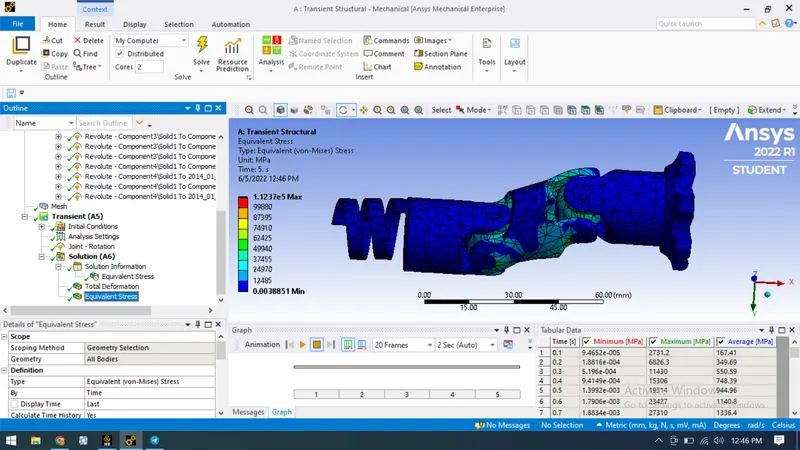
Equivalent stress:
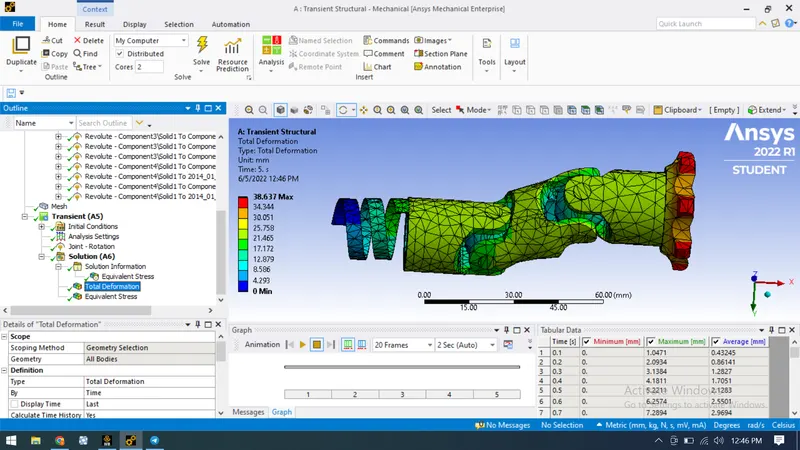
Total Deformation:
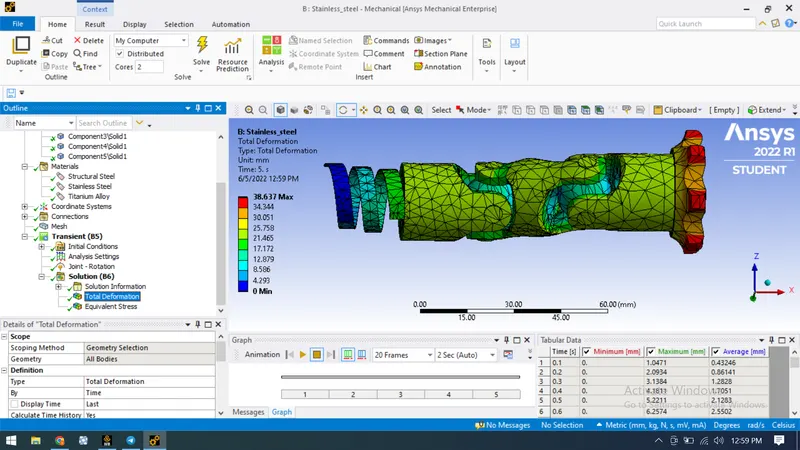
Case2: Stainless Steel
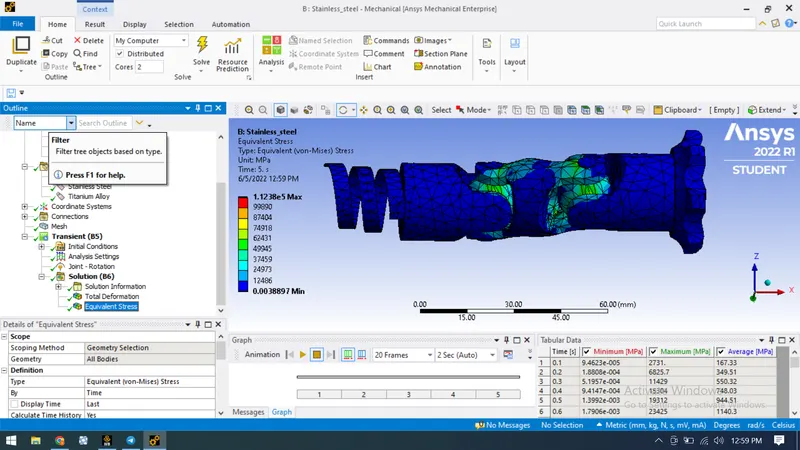
Equivalent stress:
Total Deformation:
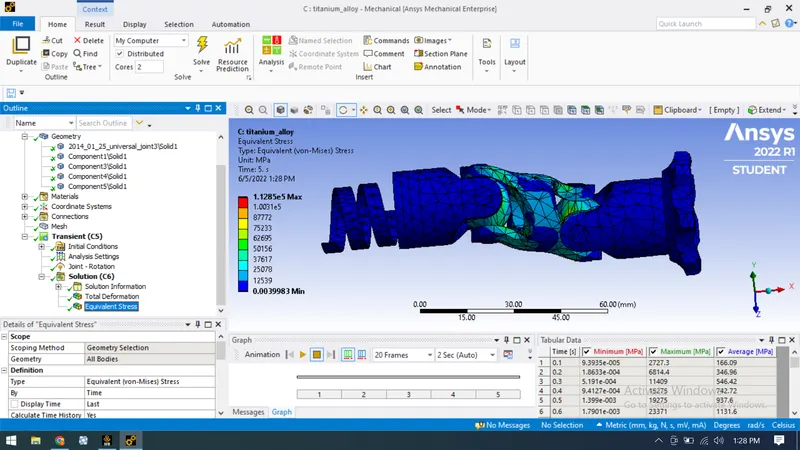
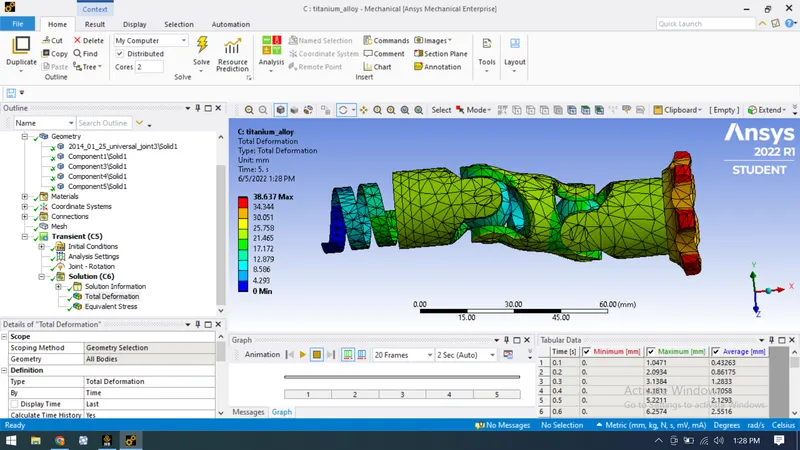
Case3: Titanium Alloy
Equivalent stress:
Total Deformation:
CONCLUSION:
Tabular representation for comparison;
| Analysis | Case1: Structural Steel | Case2: Stainless Steel | Case3: Titanium Alloy |
| Max Equivalent Stress | 1.1237e5 MPa | 1.1238e5 MPa | 1.1285e5 |
| Max Total Deformation. | 38.637 mm | 38.637 mm | 38.637 mm |
From the above table, we can see that the maximum stress induced on the double universal joint and just the joint is in a material made up of structural steel. The total deformation and equivalent stress almost remains to be same.
But if a material is to be chosen from the materials present above, Titanium alloy is the best beacuse least amount of stresses are induced on the double universal joint and also on just the joint itself.