Week- 8 - Solid meshing
AIM: The main aim of this challenge is to check for geometrical errors and to do volume mesh for the given rear view mirror as per below element quality criteria.
|
S.no |
Element Quality Criteria |
Value |
|
1 |
Target/Average length |
1 |
|
2 |
Minimum Length |
0.5 |
|
3 |
Maximum Length |
2 |
|
4 |
Tet Collapse |
0.2 |
OBJECTIVE: The objectives of this challenge are as follows:
- To deploy tria mesh on the surface of the component in such a way that it passes for min &max length element criteria.
- Converting the surface mesh into volume mesh by following TET COLLAPSE quality criteria.
PROCEDURE:
- The CAD file in ANSA can be opened by selecting the open option in file tab.
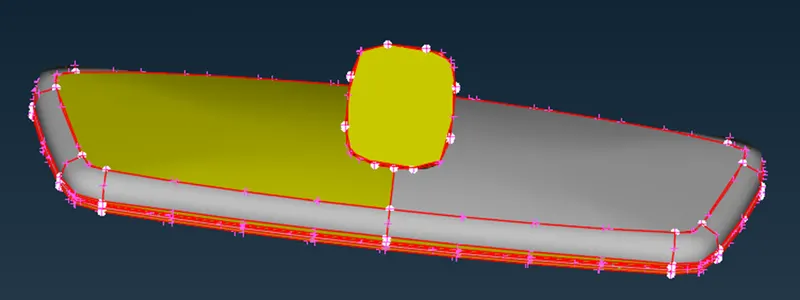
- After opening the file, topo operation (TOPO MODULE-->FACES-->TOPO) was performed to convert the unstitched surfaces (single cons) to stitched surfaces (double cons).Then orient operation (TOPO MODULE-->ORIENT-->VISIBLE) was performed to get the consistent normal in one direction.
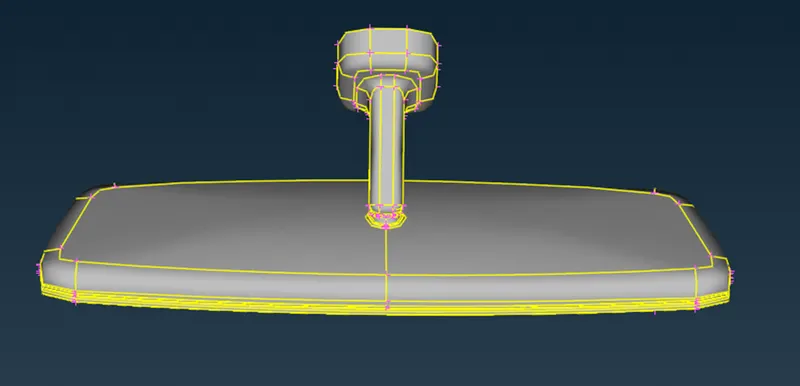
- After performing the topo operation, geometry check (TOOLS-->CHECK--> GEOMETRY) was done in order to remove geometrical errors.
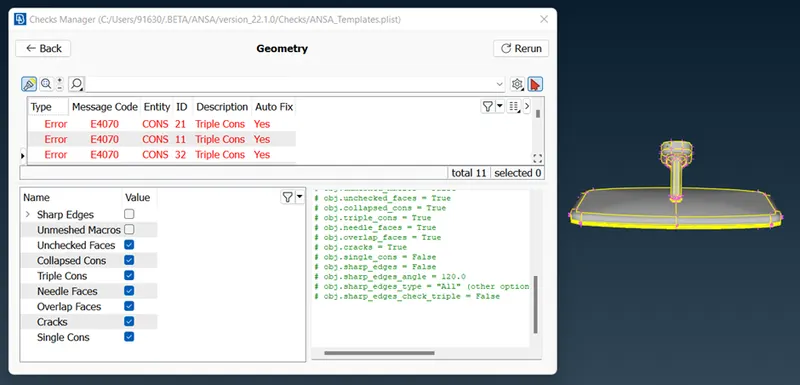
- Geometry check was done for unchecked faces, collapsed cons, triple cons, needle faces, overlap faces, cracks & single cons.
- Some of the errors can be fixed automatically by using fix option and the errors that cannot be fixed automatically needs human attention and those errors should be solved manually.
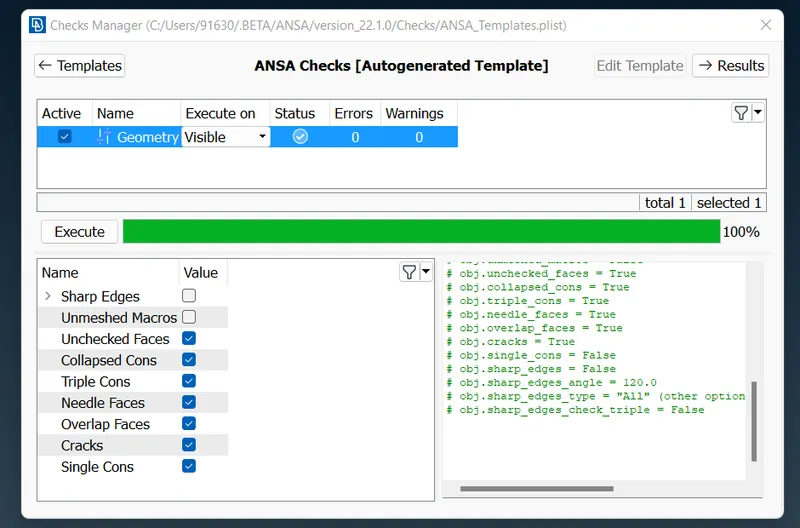
6.Quality criteria has been set set according to the given question.
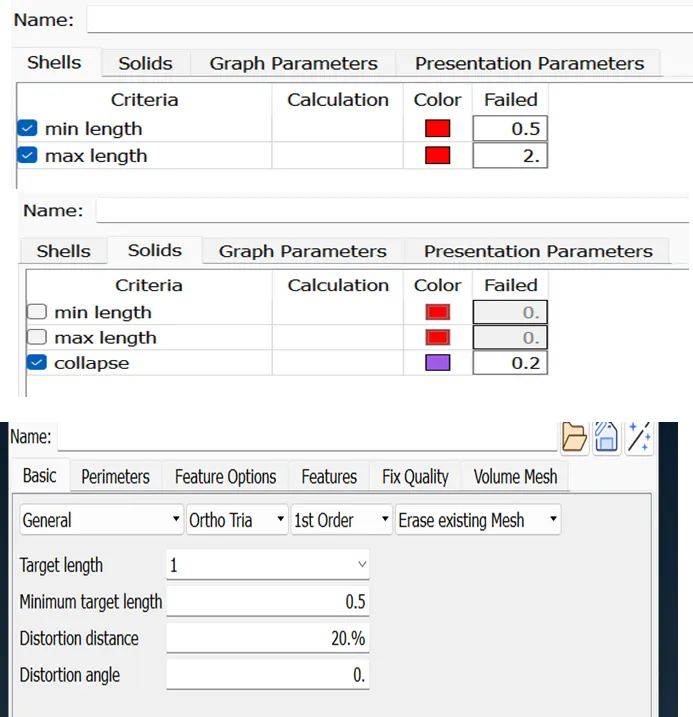
- Before meshing the surface with trias, all the macros and perimeters (MESH MODULE-->PERIMETERS--LENGTH) of the components were set to 1mm target length.
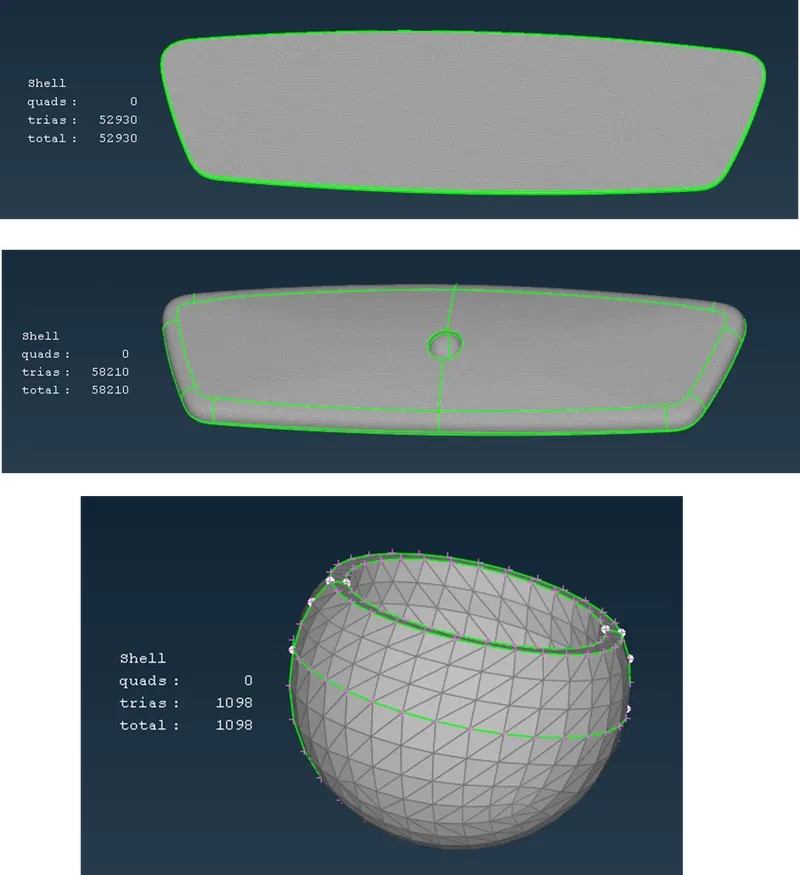
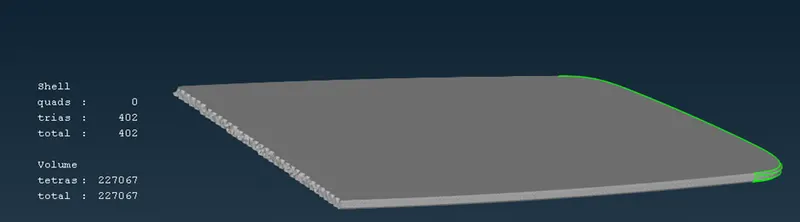
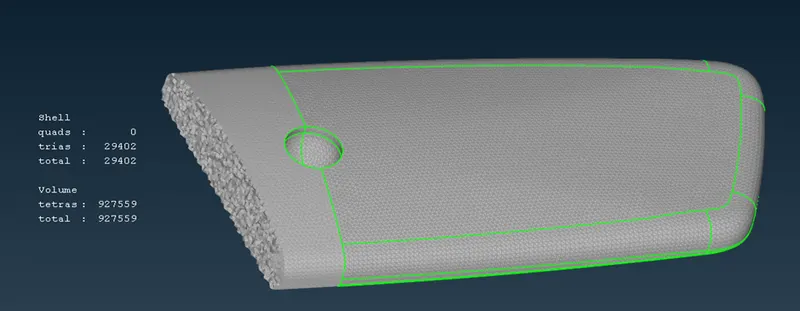
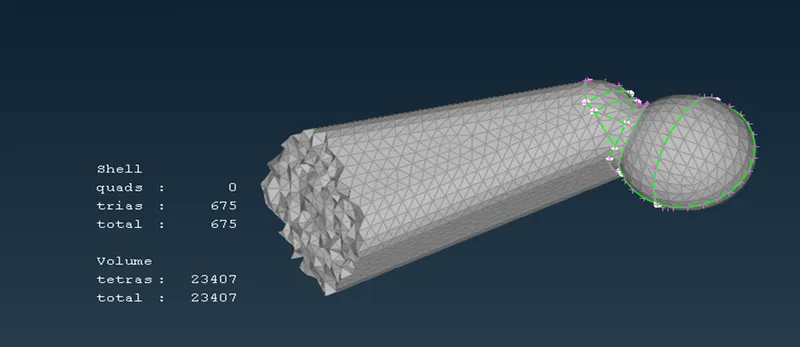
- After assigning the target length to all macros and perimeters, first the tria mesh has been deployed on all the 4 components surfaces by following min and max length element quality criteria. Normal trias were used for flat surfaces capturing and ortho trias were used to capture curved surfaces.
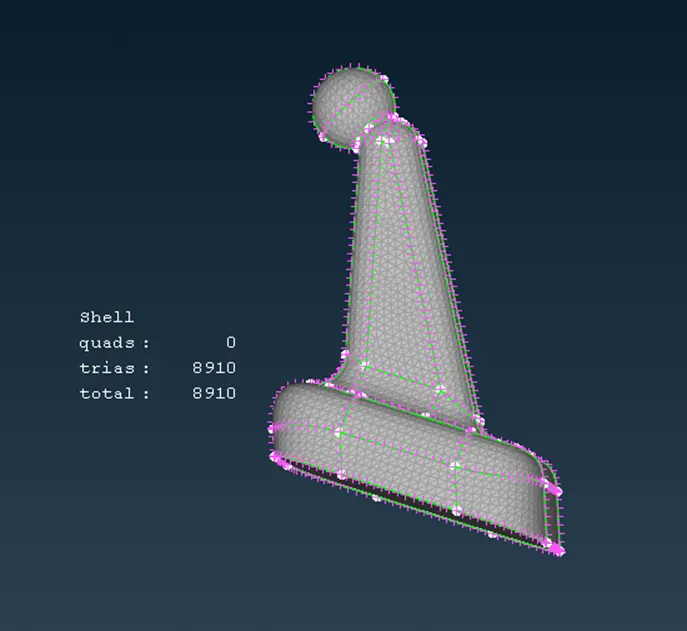
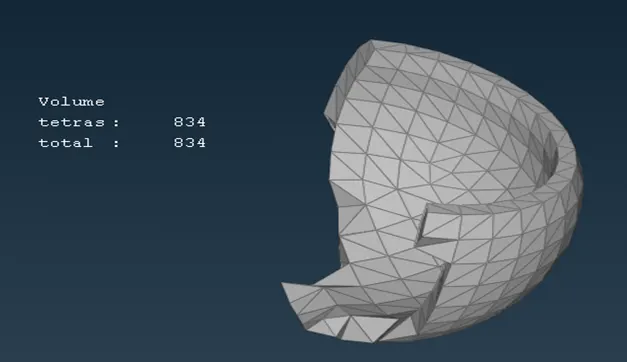
- Once the surface mesh has been done, volume has to be defined for each component (VOLUME MESH MODULE-->VOLUM-->DEFINE) so that ANSA recognizes the particular component as a closed volume and converts the surface mesh to volume mesh
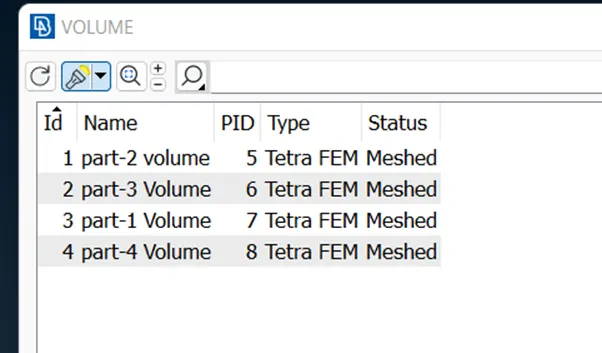
- After defining the volume for each component, unstructured tetra FEM mesh algorithm was used to convert surface mesh to volume mesh. The volume mesh formation can be confirmed by cutting a section along the component.
CONCLUSIONS:
- Successfully modeled the given rear view mirror for the given element quality criteria and generated solid mesh for the same.
LEARNING OUTCOMES:
- Learnt about solid meshing and shell meshing.
- Learnt about the usage of normal and ortho trias while doing surface meshing.
- Learnt about structured and unstructured meshing.
- Learnt about defining the volume for given components.
unable to upload my model. Pls find the below the link for the model
https://drive.google.com/file/d/1LlQKSJmBPCS4CZFCg8zQtlBwK8uJ3GTZ/view?usp=sharing