Week 8 - Simulating Cyclone separator with Discrete Phase Modelling
Aim: To perform analysis on cyclone separator and calculate the separation efficiency and pressure drop.
Theory:-
Cyclones are devices that employ a centrifugal force generated by a spinning gas stream to separate particles from the gas. Their simple design, low cost capital and maintenance-free operation make them ideal for use as precleaners for more expensive final control devices such as baghouses or electrostatic precipitators. Cyclones are particularly well suited for high temperature and pressure conditions because of their rugged design and flexible component materials. Cyclone collection efficiencies can reach 99% for particles bigger than 5 micrometer and can be operated at very high dust loading. Cyclones are used for removal of large particles for both air pollution control and process use. Application in extreme condition includes removal of coal dust in a power plant and use as a spray dryer.
Engineers are generally interested in two parameters in order to carry out an assessment of the design and performance of a cyclone. These parameters are the collection efficiency of particle and pressure drop through the cyclone. An accurate prediction of cyclone efficiency is very important because an inaccuracy in the efficiency prediction may result in an inefficient design of the cyclone separator. CFD has a great potential to predict the flow field characteristics and particle trajectories inside the cyclone as well as the pressure drop. The complicated swirling turbulent flow in a cyclone places great demands on the numerical techniques and the turbulence models employed in the CFD codes when modelling the cyclone pressure drop.
This study presents an application of computational fluid dynamics, in the prediction of cyclone efficiency. This study also reviews the prediction of four different empirical models for cyclone efficiency, namely Lapple [1], Koch and Licht [2], Li and Wang [3], and Iozia and Leith [4] . The simulation results are then compared with experimental data found in the literature for different inlet flow rates, pressures and temperatures. In this study, the CFD calculations are carried out using a commercial finite volume code, FLUENT , and the empirical models are performed in Microsoft Excel spreadsheet.
Four empirical models used to calculate the cyclone separator efficiency:-
1. Lapple :-
Lapple [1] model was developed based on force balance without considering the flow resistance. Lapple assumed that a particle entering the cyclone is evenly distributed across the inlet opening. The particle that travels from inlet half width to the wall in the cyclone is collected with 50% efficiency. The semi empirical relationship developed by Lapple [1] to calculate a 50% cut diameter,`dpc`is
`dpc=[9mub/2piNevi(rhop-rhog)]^1/2`
Where `Ne` is the number of revolutions
`Ne=1/alpha[h+H-h/2]`
The efficiency of collection of any size of particles is given by
`etai=1/1+(dp/ds)^2`
2. Koch and Licht :-
Koch and Licht collection theory recognized the inherently turbulent nature of cyclones and the distribution of gas residence times within the cyclone. Koch and Licht described particle motion in the entry and collection regions with the additional following assumptions:
- The tangential velocity of a particle is equal to the tangential velocity of the gas flow, i.e. there is no slip in the tangential direction between the particle and the gas.
- The tangential velocity is related to the radius of cyclone by: `uR^n`constant.
A force balance and an equation on the particles collection yields the grade efficiency `etai`
`etai = 1-exp{-2[GnQ/D^3(n+1)]^(0.5/(n+1))}`
where
`G=(8kc)/(Ka^2*Kb^2`
`n= 1-{1-(12D)^0.14/2.5}*{(T+460)/530}^0.3`
`taui = (rhopdpi^2)/(18mu)`
G is a factor related to the configuration of the cyclone, n is related to the vortex and `tau` is the relaxation term.
3. Li and wang model :-
The Li and Wang model includes particle bounce or reentrainment and turbulent diffusion at the cyclone wall. A two dimensional analytical expression of particle distribution in the cyclone is obtained. Li and Wang model was developed based on the following assumptions:
- The radial particle velocity and the radial concentration profile are not constant for uncollected particles within the cyclone.
- Boundary conditions with the consideration of turbulent diffusion coefficient and particle bounce reentrainment on the cyclone wall are:
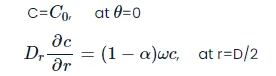
- The tangential velocity is related to the radius of cyclone by: `muR`=constant.
The concentration distribution in a cyclone is given as:
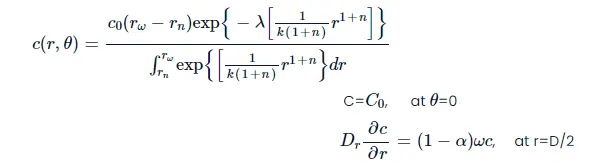
- The tangential velocity is related to the radius of cyclone by `muR`=constant.
The concentration distribution in a cyclone is given as:
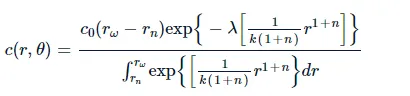
where
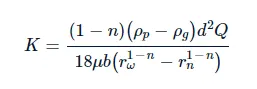
and
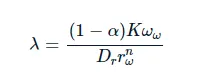
The resultant expression of the collection efficiency for particle of any size is given as
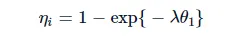
where
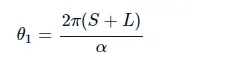
4. Iozia and Leith Model :-
Iozia and Leith logistic model is a modified version of Barth Model, which is developed based on force balance. The model assumes that a particle carried by the vortex endures the influence of two forces: a centrifugal force, Z and a flow resistance, W. The collection efficiency `etai` of particle diameter `dp i`can be calculated from
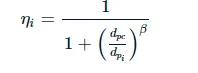

and `dp idpc` is the 50 % cut size.
CAD setup and Modelling :-
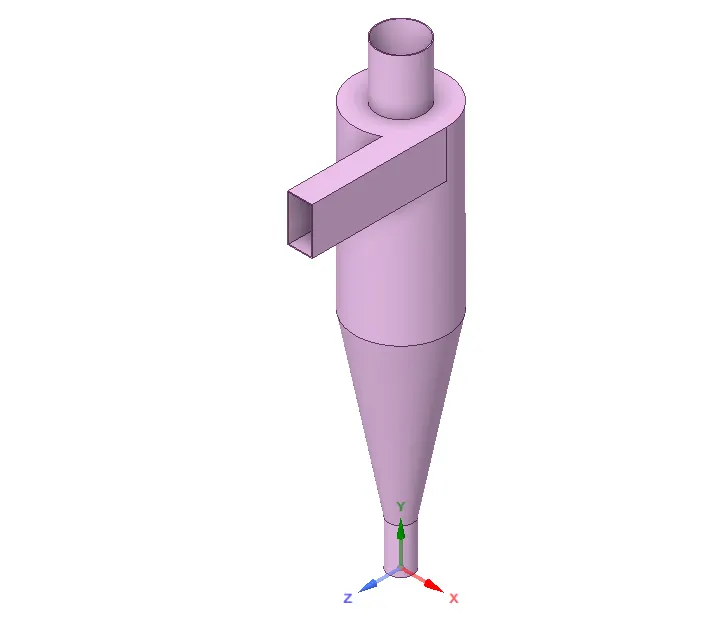
Here, We imported geometry into space-claim for CAD cleanup where solid part is removed and volume region is taken out from the model.
This Volume region is then saved and move forward for meshing into design modeler.
set 1:- importing the geometry into space-clam
images of geometry (isometric view)
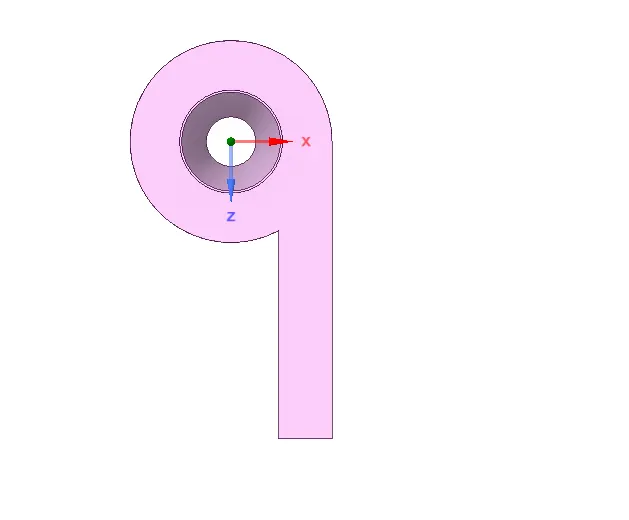
top view
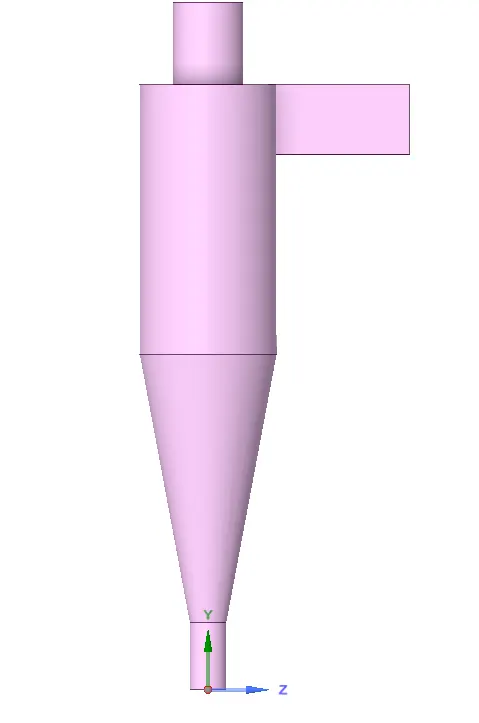
side view
set 2:- meshing the geometry
meshed geometry
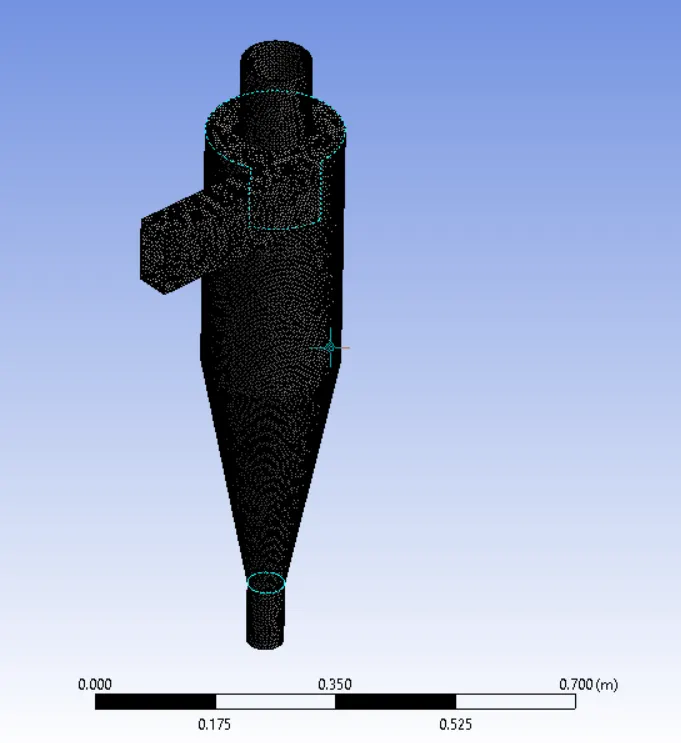
meshimg details
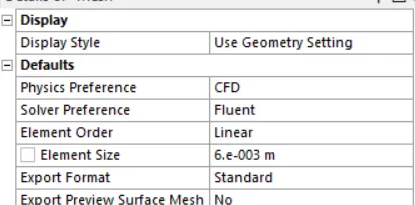
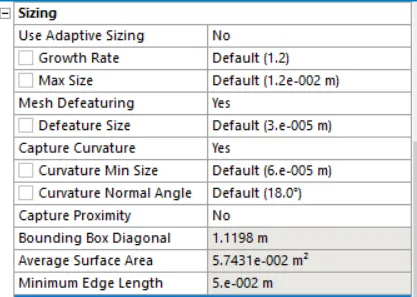

step 3:- setting up of physics
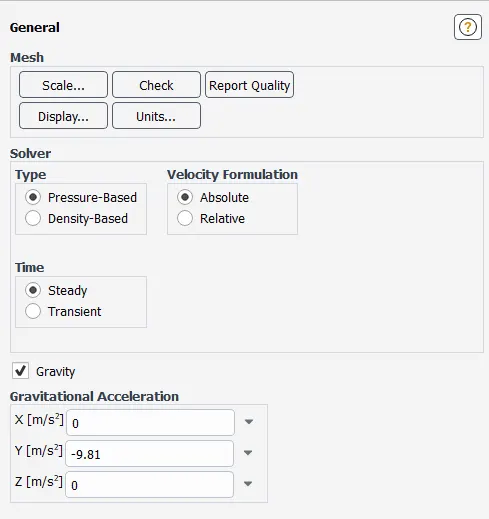
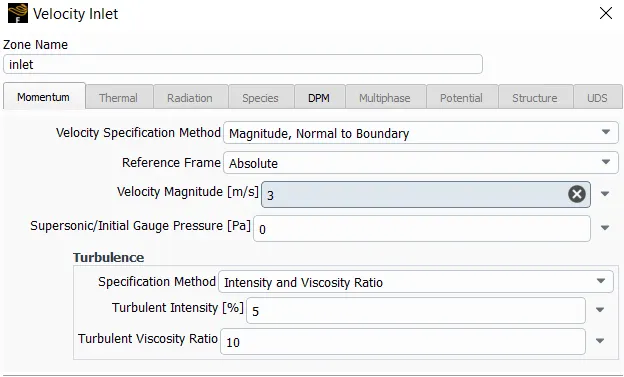
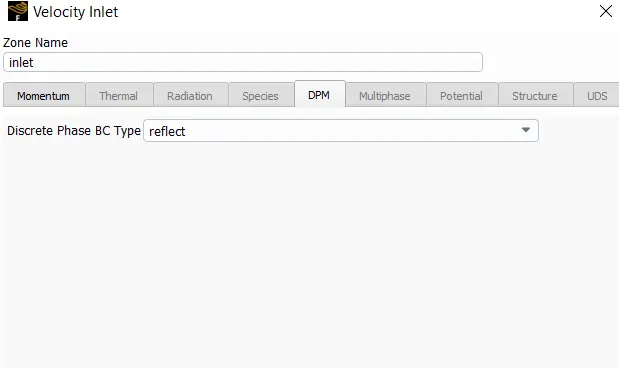
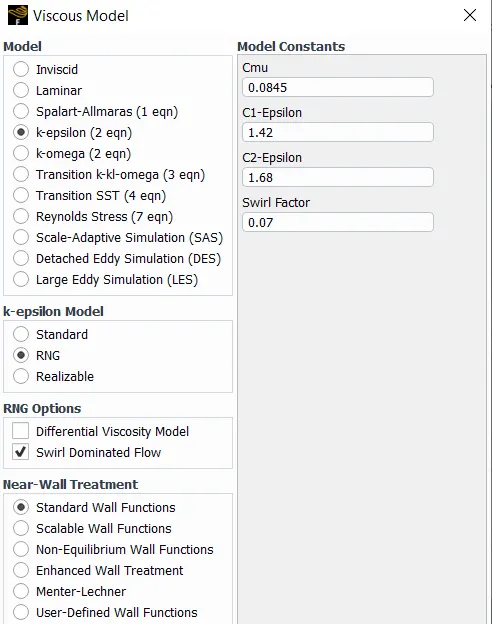
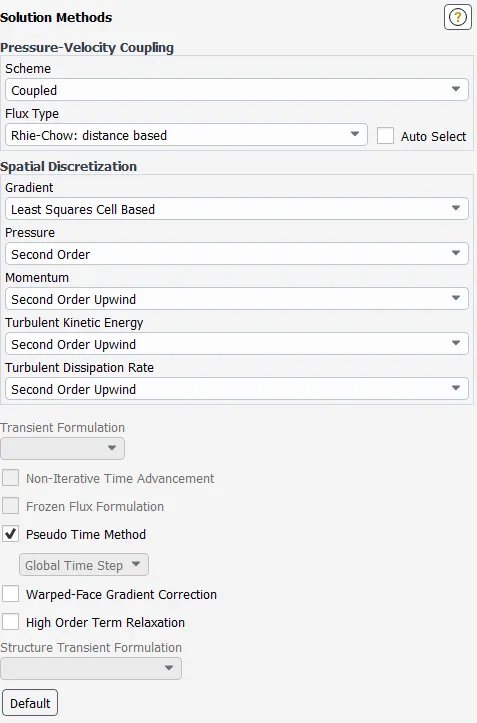
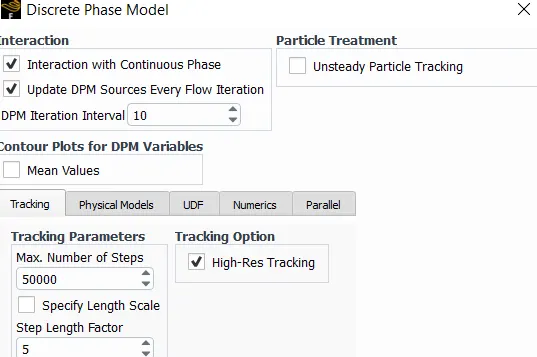
injection particle is set to 3m/s and diameter is 1micrometer
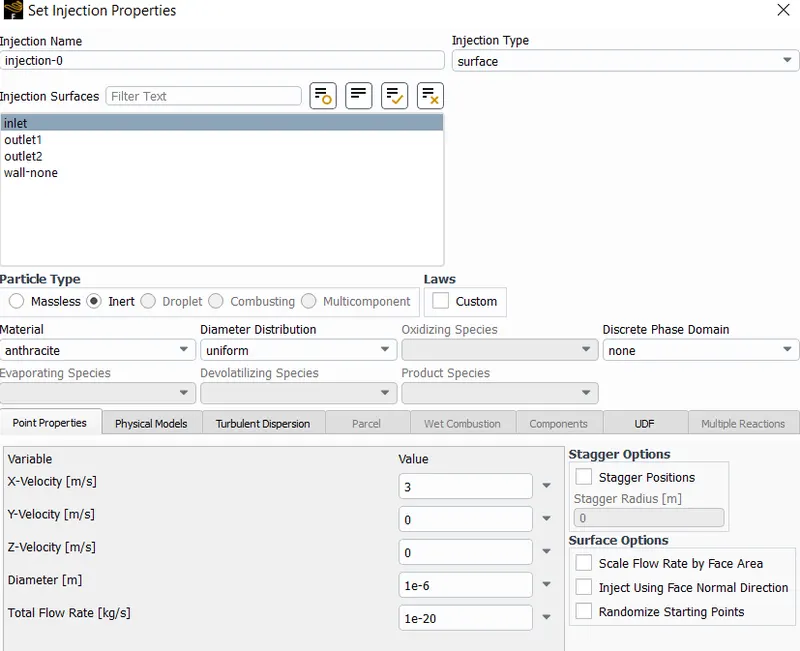
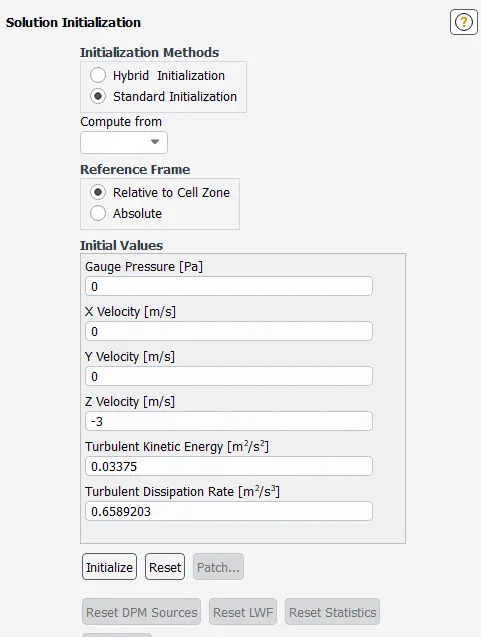
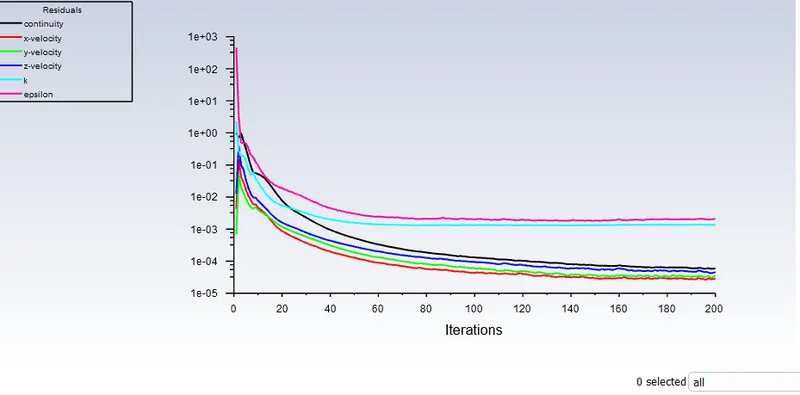
1.)plot for particle size 1micrometer with the inlet velocity 3m/s(number of iteration 200)
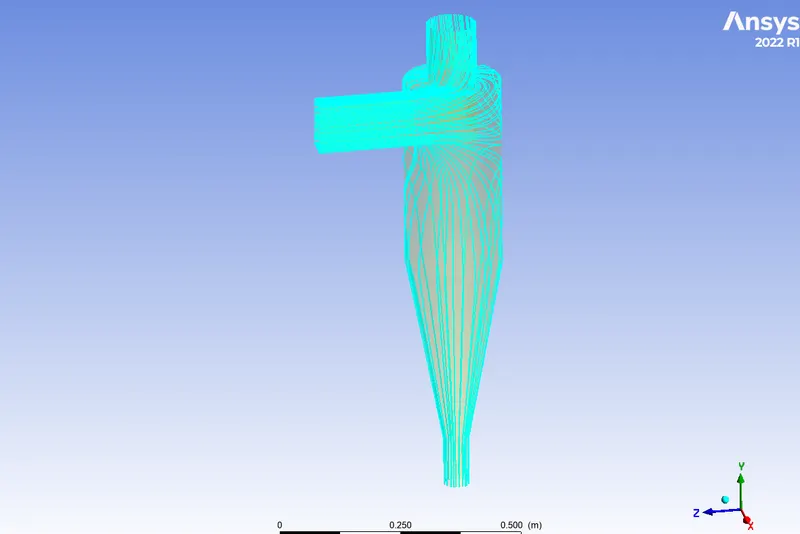
after exporting the particle data number of tracked paricle is 102 and escaped is 102
plot for the particle size 5micrometer
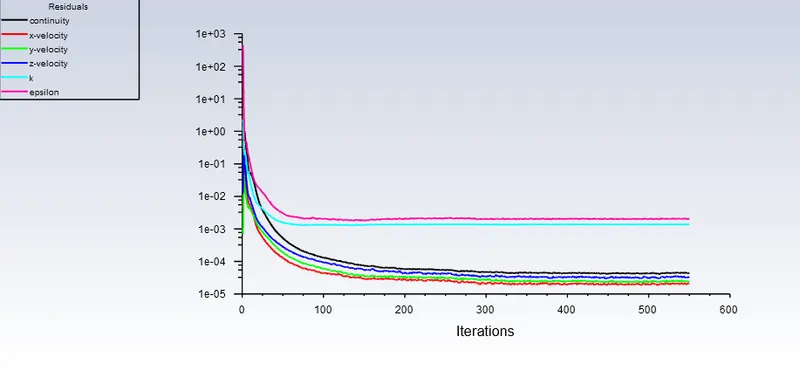
2)in this set the mesh is refined much more furture the inlet paricles velocity is been set to 1m/s and particle side is set to 5micro meter
1)residual plot for 1m/s of sixe 5micrometer
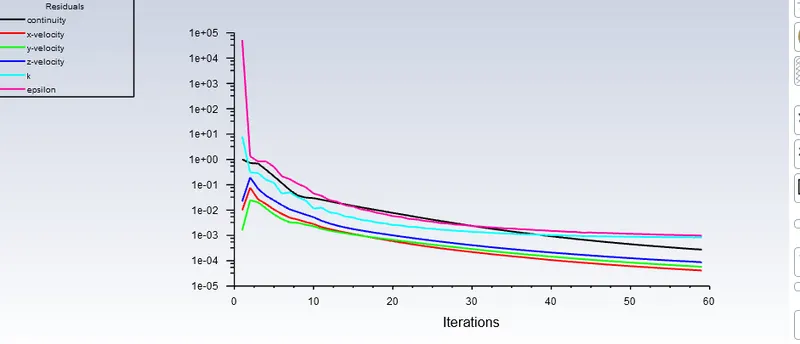
from the above plot we can observe that the number of iteration as been set 200 but the solution is converged for 60iteration
this means paricle sise and velocity is co related to each other.
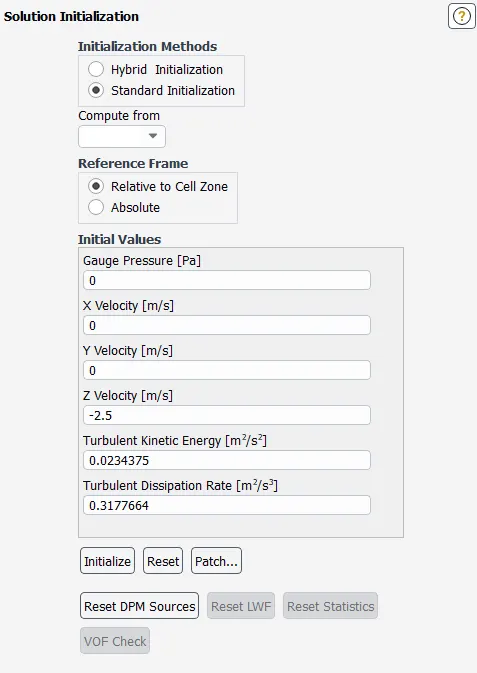
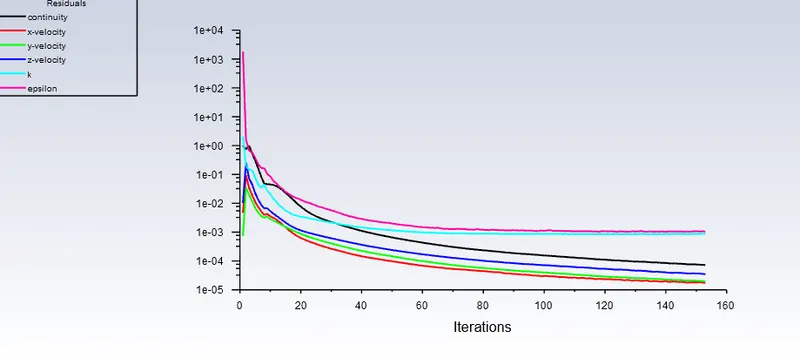
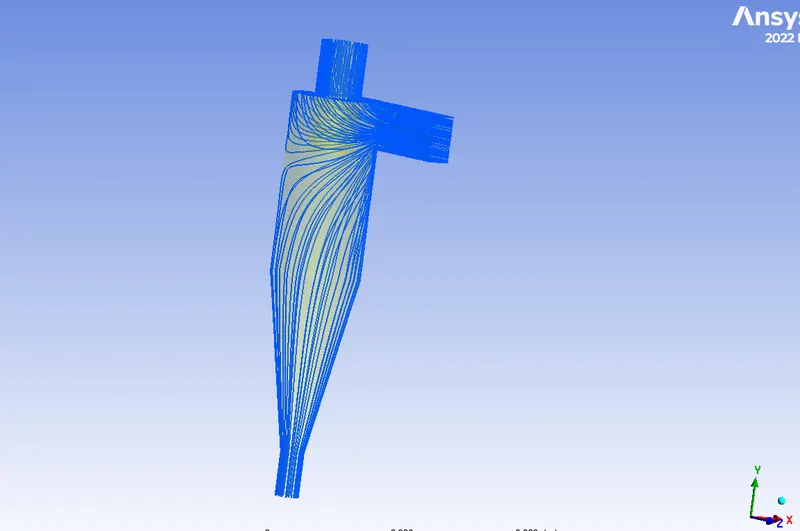
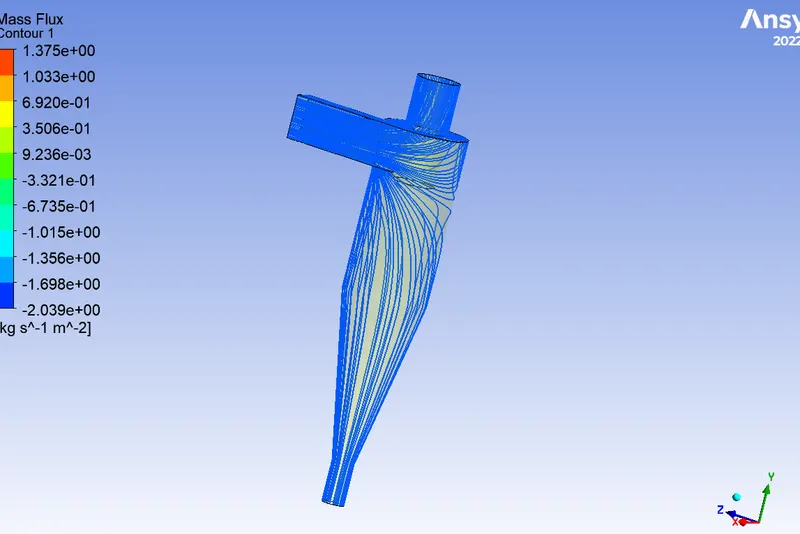
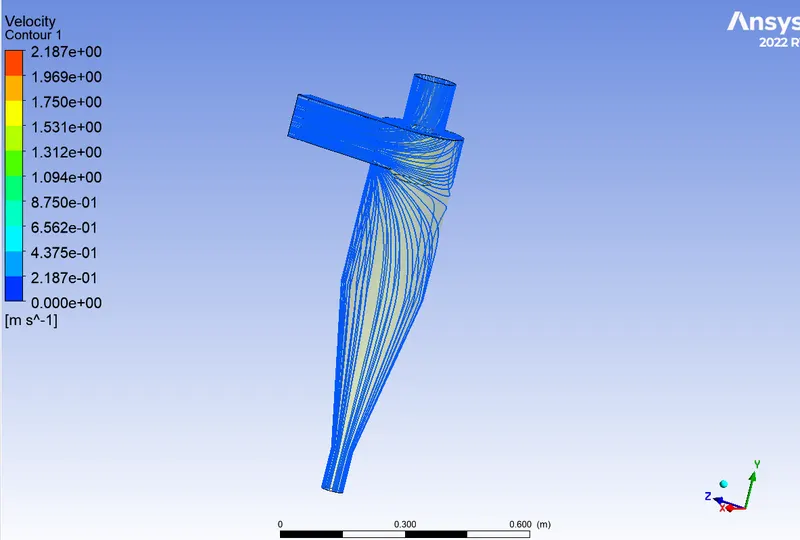
2) plot for the particls velocity 2.5 m/s with paticles size 5micro meter
concustion:-
In this simulation, we can observe the change in separator efficiency due to the change in velocity of the particle and gas, and size of the particle.
Cyclone efficiency is influenced by various parameters such as inlet velocity, particle size and density, length of the cyclone separator, the diameter of inlet and outlets, etc.