Week 8 - Simulating Cyclone separator with Discrete Phase Modelling
Aim:- To perform analysis on cyclone separator and calculate the separation efficiency and pressure drop.
Objective:-
- To write a few words about any four empirical models used to calculate the cyclone separator efficiency.
- To perform an analysis on a given cyclone separator model by varying the particle diameter from 1 μm to 5 μm and calculate the separation efficiency in each case. Discuss the results. [Use both the velocity's as 3m/sec.]
- To perform an analysis on a given cyclone separator model by varying the particle velocity from 1 m/sec to 5 m/sec and calculating the separation efficiency and pressure drop in each case. Discuss the results. [Use particle diameter size as 5 μm for all cases & keep flow velocity same as particle velocity]
Boundary Conditions:-
Inlet and wall:- Reflect
Outlet(Top):- Escape
Outlet(Bottom/dustbin) - Trap
Theory:
Introduction:
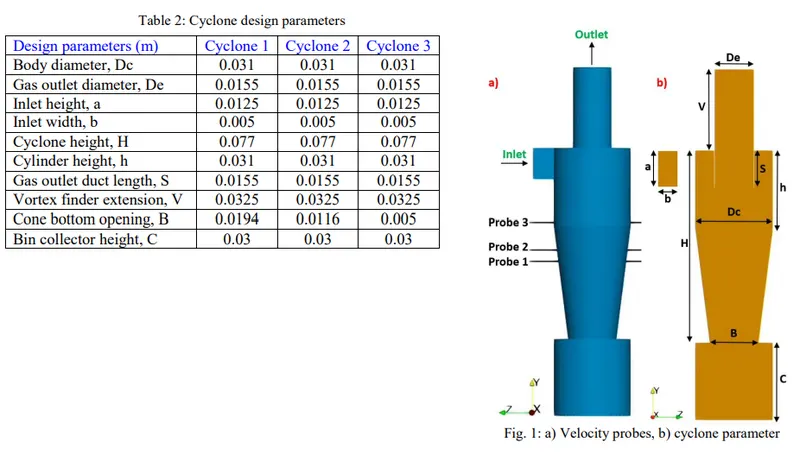
Cyclone separator is a device for separate solid or liquid particles from carrier gases by centrifugal force wich exists in a stationnaries mechanical device. Cyclones separators are the most widely used for air pollution reducted devices in industries or agricultural processing , without the use of filters The cyclone separator is a highly effective and strong equipment due to the absence of moving parts, so that it can be operated in any environments. The efficiency of separator systems is determined by the size of particles to be separated and the velocity of flow entering devices. [1]. The cyclone separators advantages compared with the other devices, are : x Capital investment and maintenance cost is low. x No moving parts. x Very strong. x The particles are separated remains dry and can be used again. x Very compact to be operated. x Can be formed from a variety of materials needed or suitable such as : casting metals, plate steel, aluminium , alloys, ceramics, plastics, etc. x Can be equipped with coating material to resist corrosion and erosion such as Teflon. x With appropriate design can separate either liquid particulates , solid particulates or even both in combination. Besides the favorable things that there are some things less well among : x Fluid through cyclone separator has higher pressure loss than the other separator such as scrubber or bag filters. x Low efficiency values for very small particulate size when operated under small amount particle in the fluids. x Subject to fouling for the sticky particulate and to erosive wear if particulates being processed are abrassive. x If the cyclone designed and operated are not properly then product is below expectations. Figure 1. shows a schematic of a cyclone separator. The tangential inlet gas flow enters cyclone separator at near the top, which gives rise to an axially descending spiral of gas and a centrifugal force field that causes the incoming particles to concentrate along the inner walls of the cyclone separator, and spiral down. Denser or larger size of particles in the rotating stream have big inertia to follow the tight curve of the stream then it strike the outside wall, fall to the bottom of the cyclone where they can be colected. The rotational radius of the stream is reduced in a conical system, so the rotating flow moves towards the narrow end of the cyclone, thus separating smaller and smaller particles The maximum collection efficiencies is quantified by W.B.Faulkner and B.W.Shaw for the inlet velocities obtained for 1D3D (cylindrical section height = 1 x body diameter ; conical section height = 3 body diameter ) and 2D2D (cylindrical section height = 2 x body diameter ; conical section height = 2 body diameter ) cyclones and demonstrated that for large particles,
The problem of ash settling on super-heater tube bank, due to improper velocity distribution, in the cyclone separator used at Circulating Fluidized Bed Combustion (CFBC) has been investigated by means of computational fluid dynamic techniques. With the help of Computational Aided Design (CAD) software packages, the geometries of recycling cyclone, has been constructed. With the suitable domain decomposition for the cyclone geometry, multi-block structured mesh has been generated and exported to commercial Computational Fluid Dynamic (CFD) solver – TASCflow. After assembling these grids in the flow solver, duplicate elements at mating surfaces are eliminated through generalized grid interfaces. Incompressible viscous flow for the specified flow conditions are simulated and numerical results are interpreted through contour plots and streak lines. The velocity distribution pattern obtained from the analysis exhibits strong flow recirculation with large turbulent eddies in the cyclone outlet. The analysis also observed high pressure drop across the cyclone separator. To improve the velocity distribution and to reduce the pressure drop, geometry has been modified with the deflector plates in the outlet duct and repeated the simulation. The results obtained for modified geometry are encouraging and shown the improved velocity distribution pattern in the outlet duct. The calculation of particle trajectories depends upon Stokes number, relative velocity of fluid/particles and concentration of particles. If the Stokes number, defined as the ratio of particle response time to system response time is less than one, particles motion is inline with the fluid motion. If the Stokes number is greater than one, particle motion deviates the fluid streams. Effects of these particle impacts are significant on component surface, especially, when they reacts/rebounds the wall surfaces.
Since a particle swarm optimization (PSO) algorithm uses a coordinated search to find the optimum solution, it has a better chance of finding the global solution. Despite this advantage, it is also observed that some parameters used in PSO may affect the solution significantly. Following this observation, this research tries to tune some of the parameters and to add mechanisms to the PSO algorithm in order to improve its robustness in finding the global solution. The main approaches include using uniform design to ensure uniform distribution of the initial particles in the design space, adding a mutation operation to increase the diversity of particles, decreasing the maximum velocity limitation and the velocity inertia automatically to balance the local and the global search efforts, reducing velocity when constraints are violated, and using Gaussian distribution based local searches to escape local minima. Besides these efforts, an algorithm is also developed to find multiple solutions in a single run. The results show that the overall effect of these approaches can yield better results for most test problems.
Solving and Modelling Approach:
Geometry:
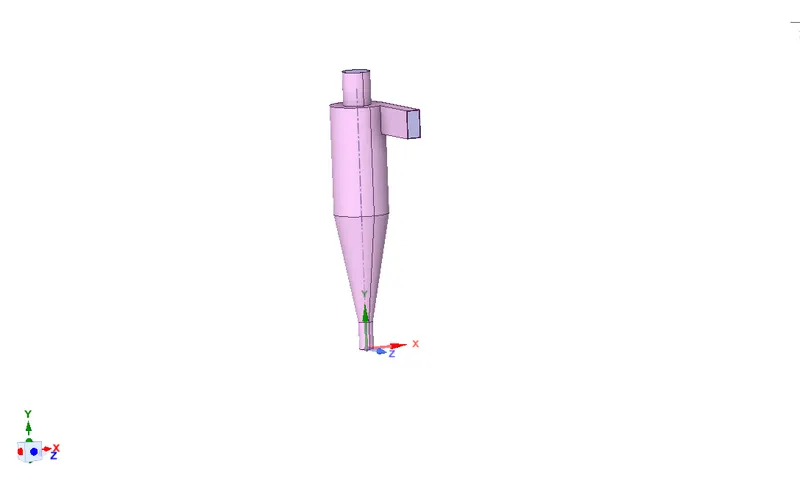
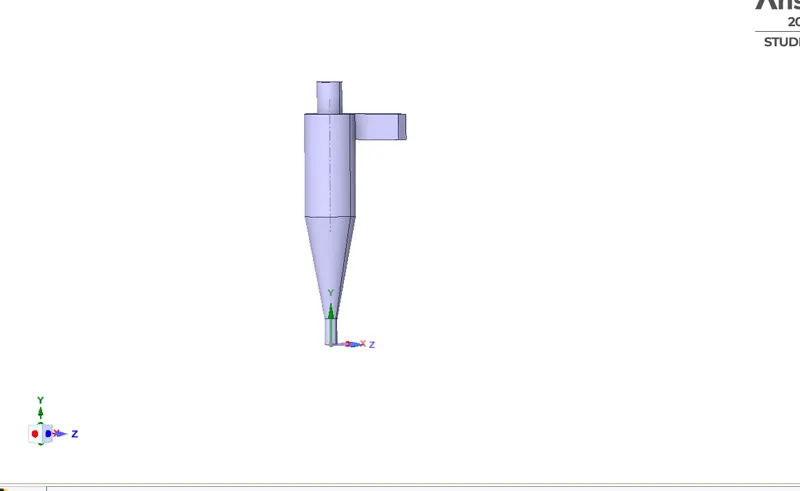
Fluids Volume seperated:
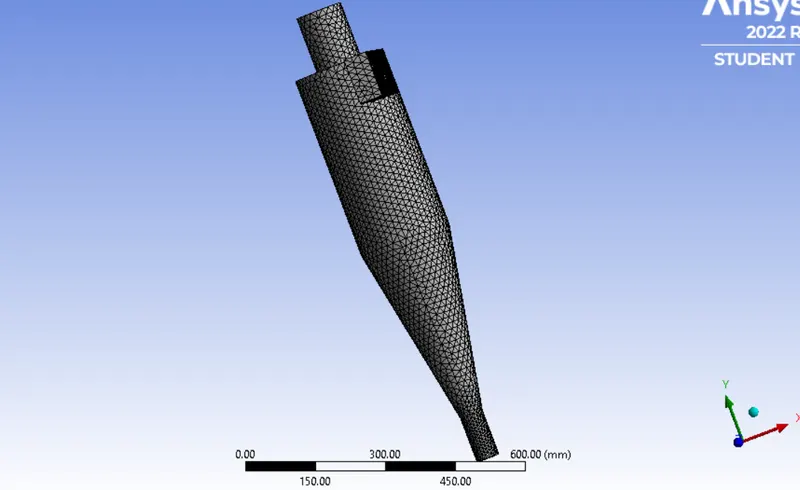
Meshing :
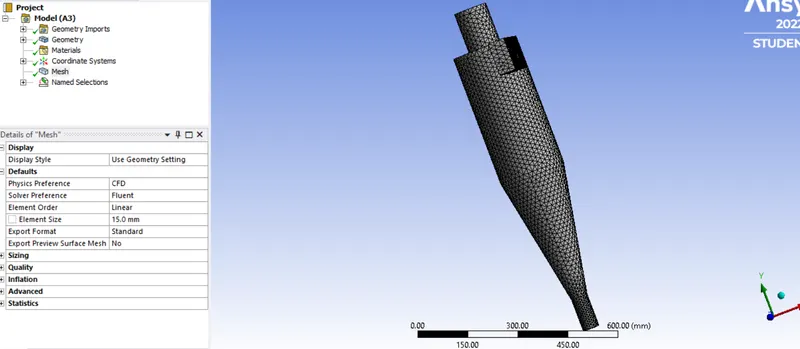
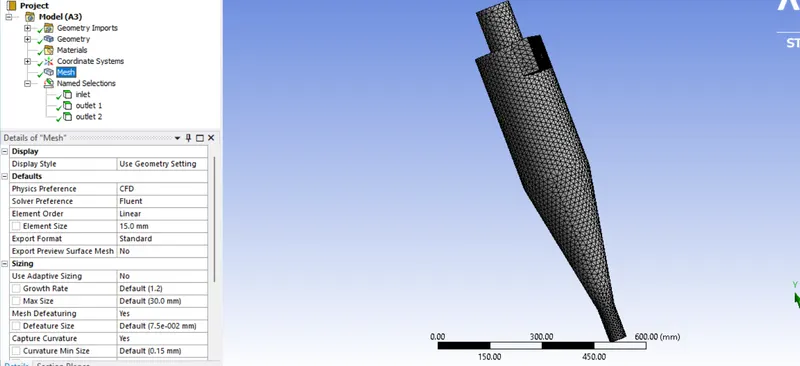
Preprocessor in Fluent flow:
Setup:
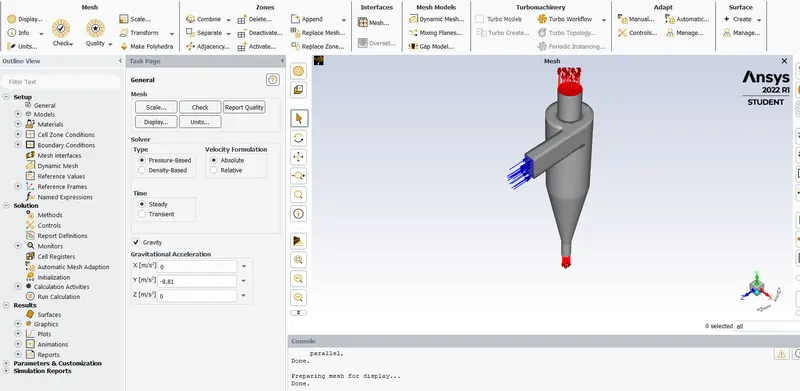
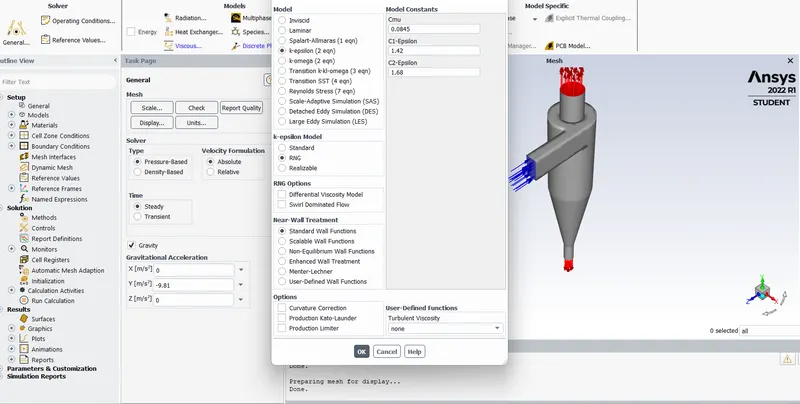
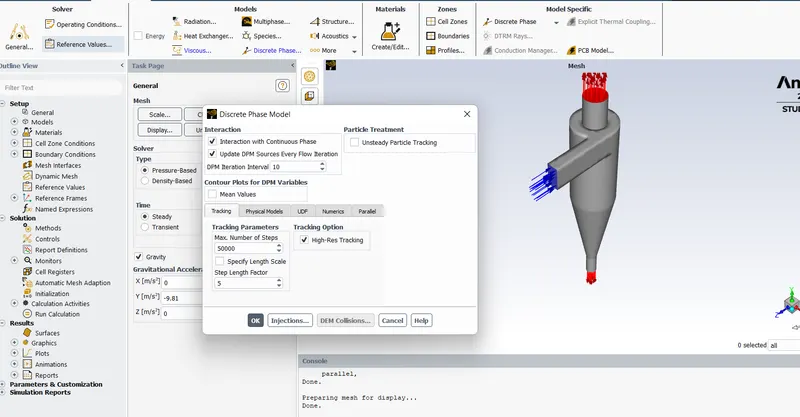
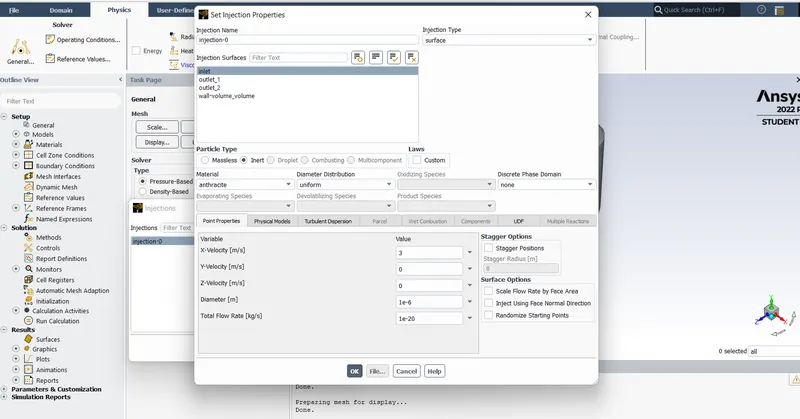
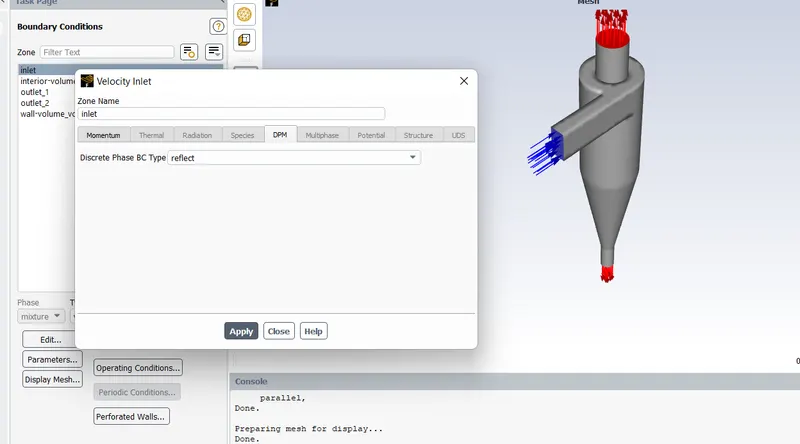
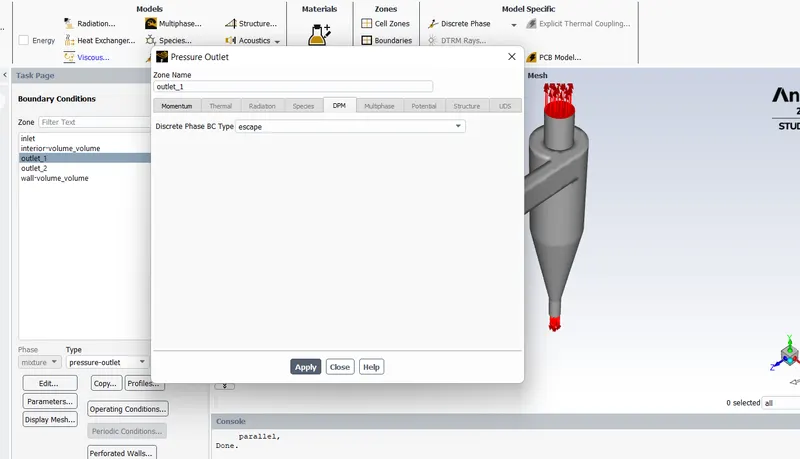
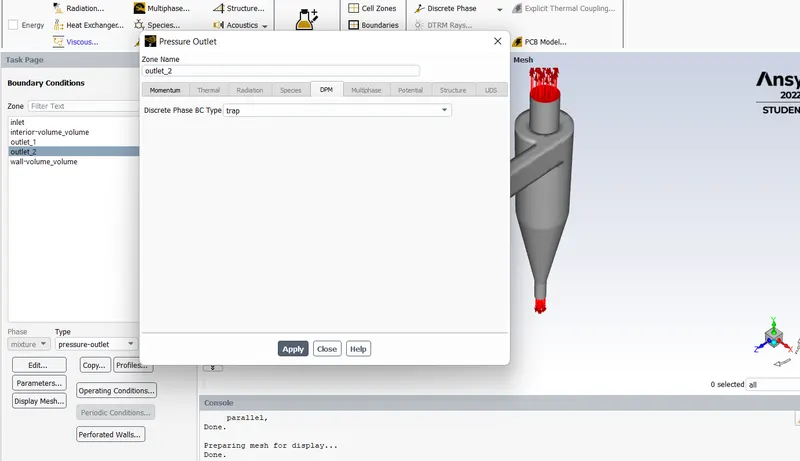
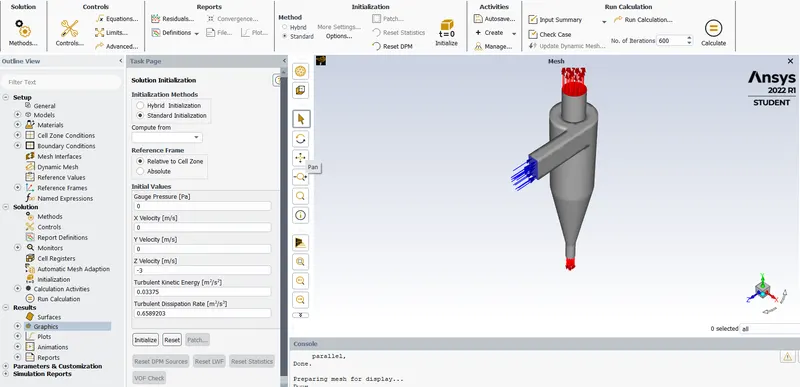
Result of Preprocessing:
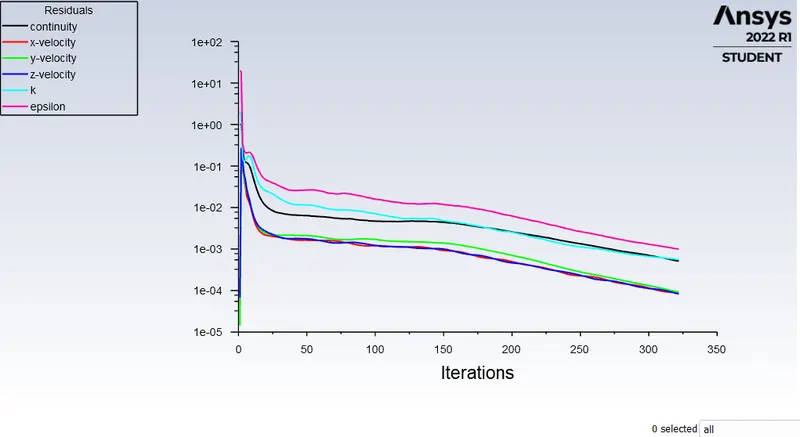
Result:
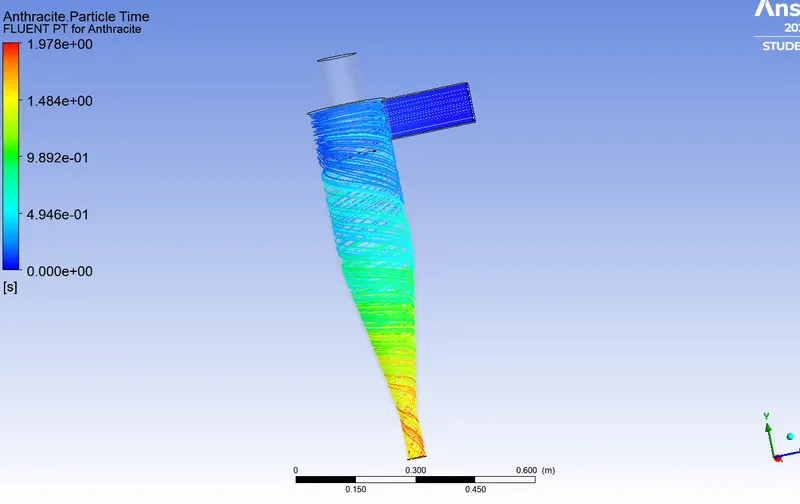
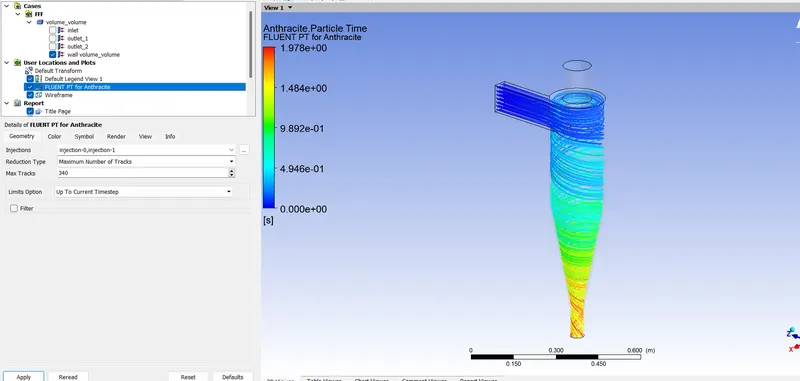
Varying Diameter 2e-6:
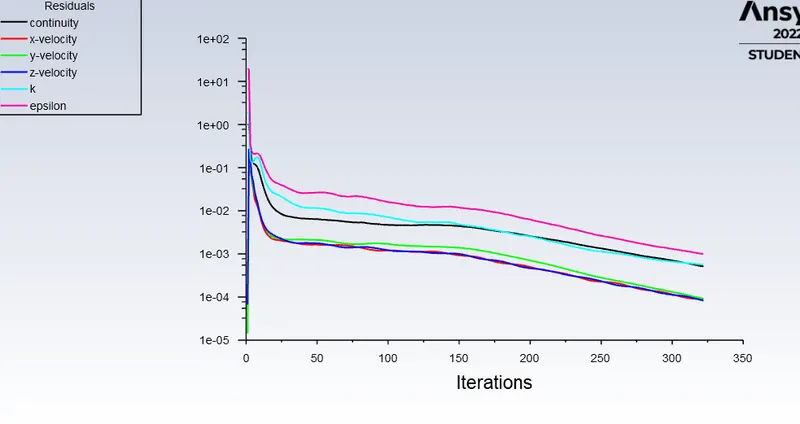
Result:
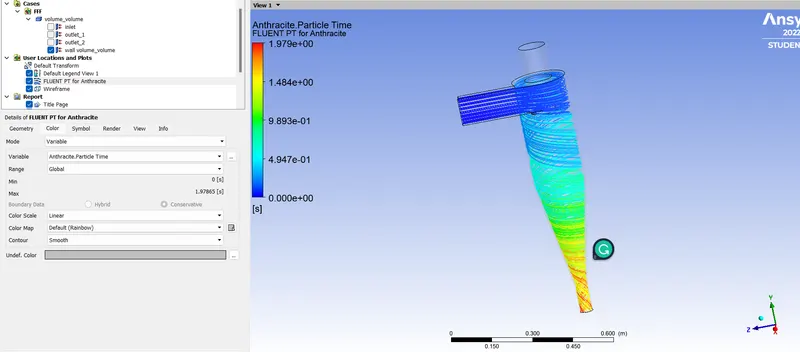
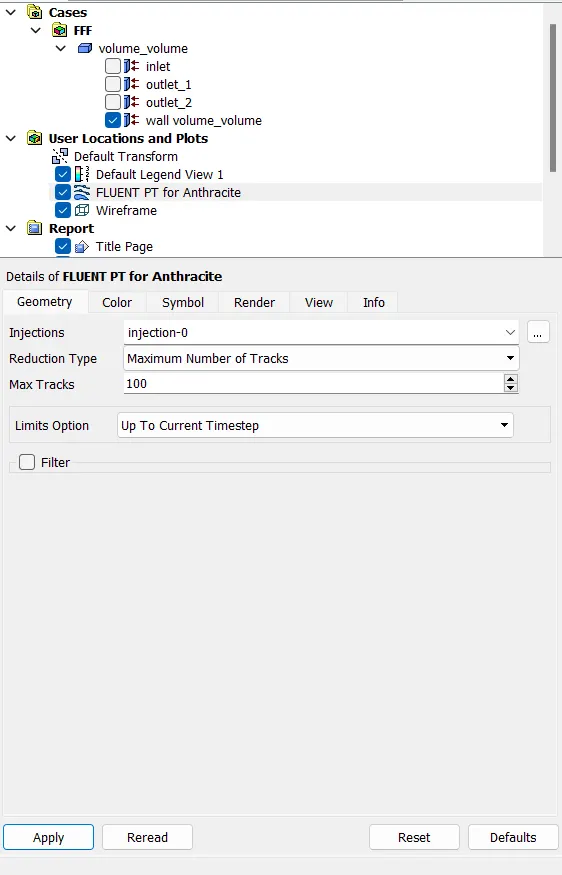
Diameter varying at 3e-6:
Result:
Diameter varying at 4e-6:
Result:
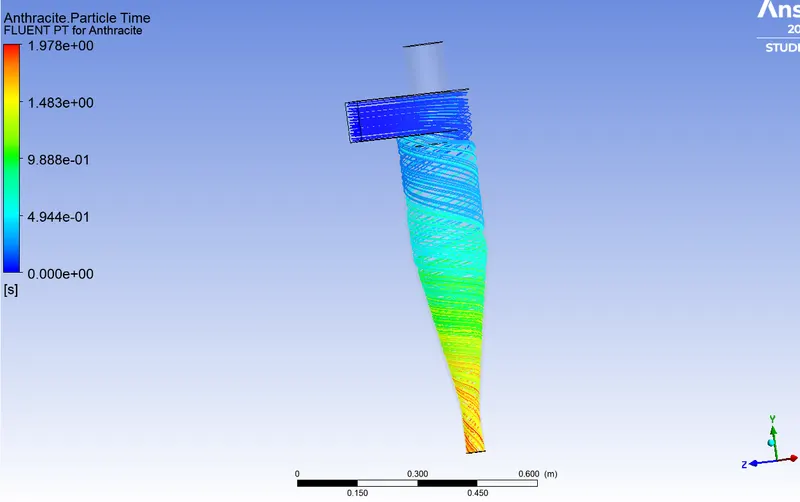
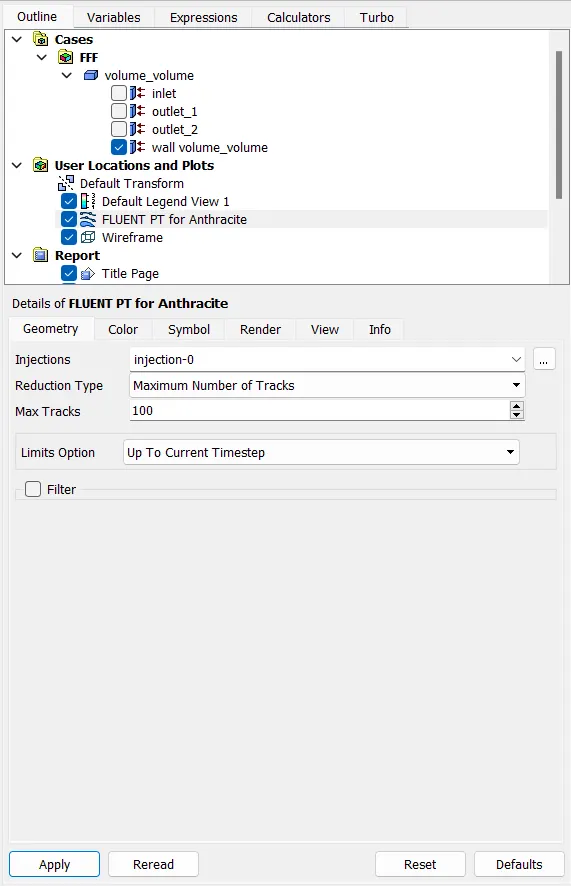
Diameter varying at 5e-6:
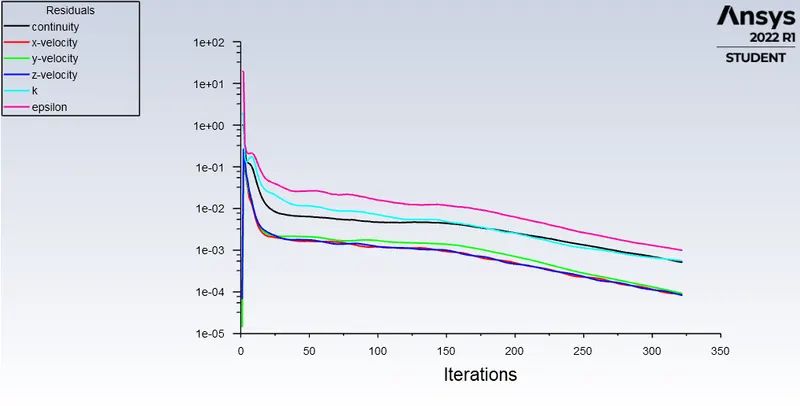
Result:
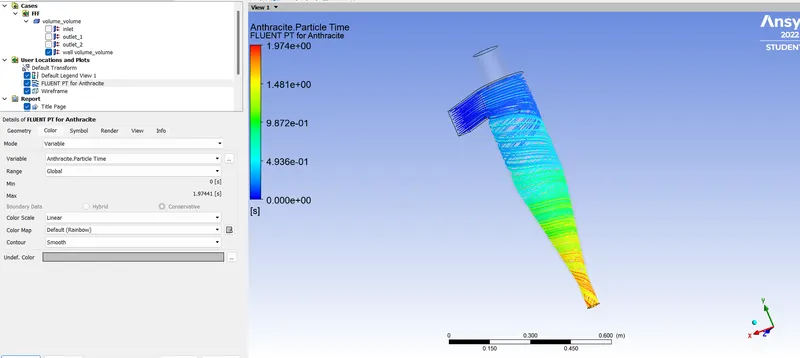
velocity:
5m/s
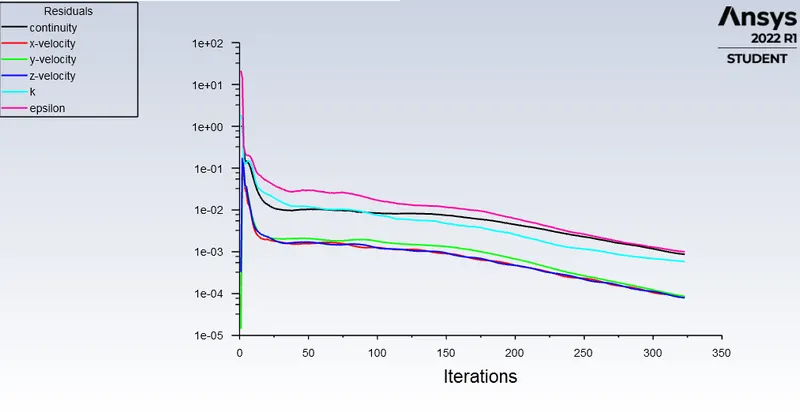
Result:
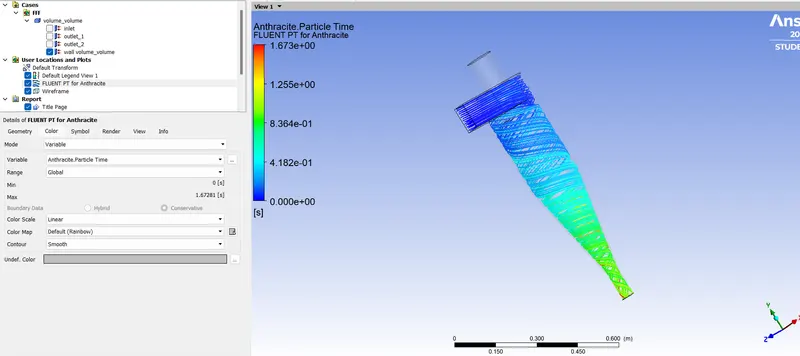
Conclusion:
Hence we have performed an analysis on the cyclone separator and calculated the separation efficiency and pressure drop.
we have obtained the Results based on different Diameters and velocities.