Week 8 - Simulating Cyclone separator with Discrete Phase Modelling
Aim –
To perform analysis on cyclone separator and calculate the separation efficiency and pressure drop.
Introduction –
- Cyclone separator are devices which employ centrifugal force by spinning gas stream to separate the particle from the gas carrier.
- It is normally use to separate the particle of size up to 100 μm .These are normally employed in the industries as dust collector.
- In marine industries it is used in oil purifiers to separate the lighter fluid from the higher denser fluids with help of centrifugal force principle.
- Empirical models for cyclone separator - Koch and licht model , Lappel model , Lozia and leith ,LI and Wang model etc.
Geometry –
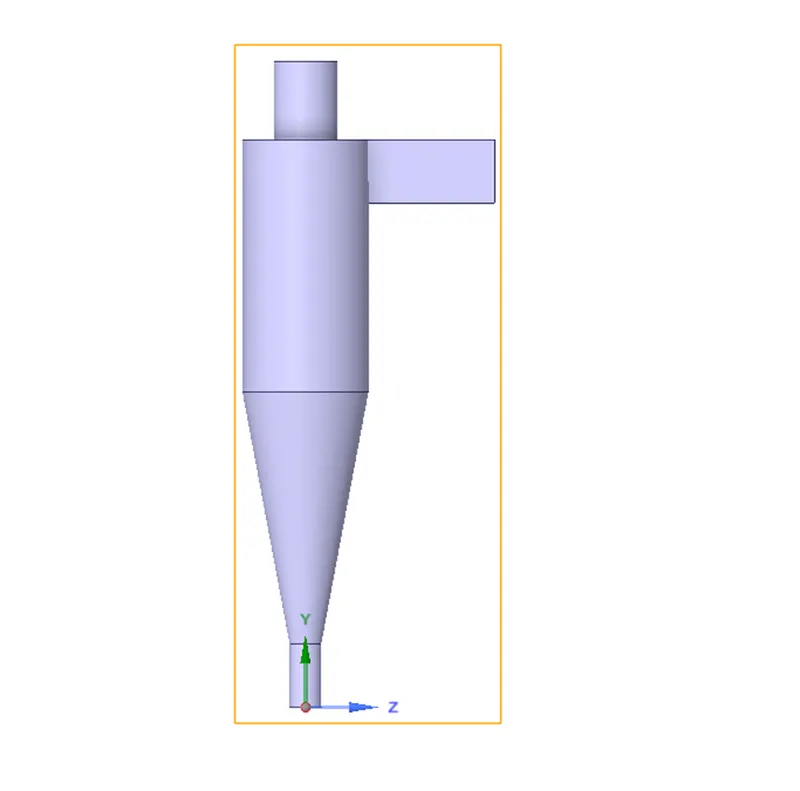
Import the geometry in space claim and extract the volume. For better understanding of the fluid flow.
Meshing –
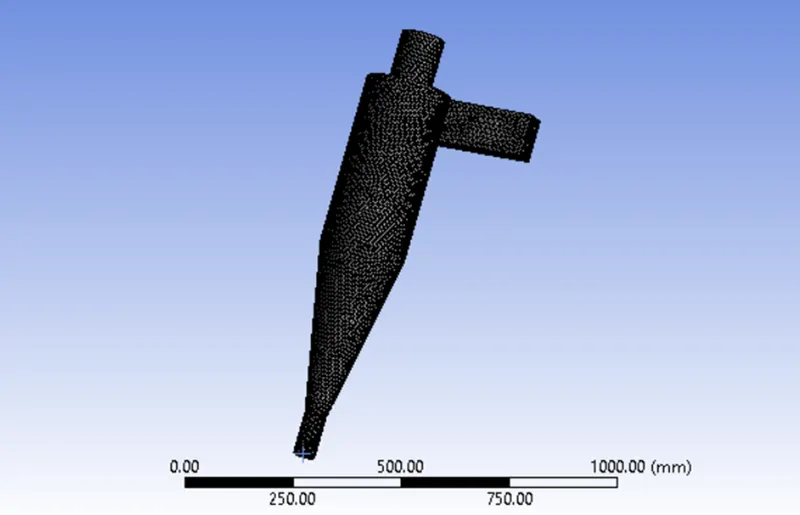
Define the boundaries as inlet , outlet top and outlet bottom .
Do the meshing of size - 10 mm
Setup
Solver Type – Pressure based and Steady
velocity formulation – Absolute
Tick marks the gravity and define the gravitational acceleration as - 9.81 m/sec.
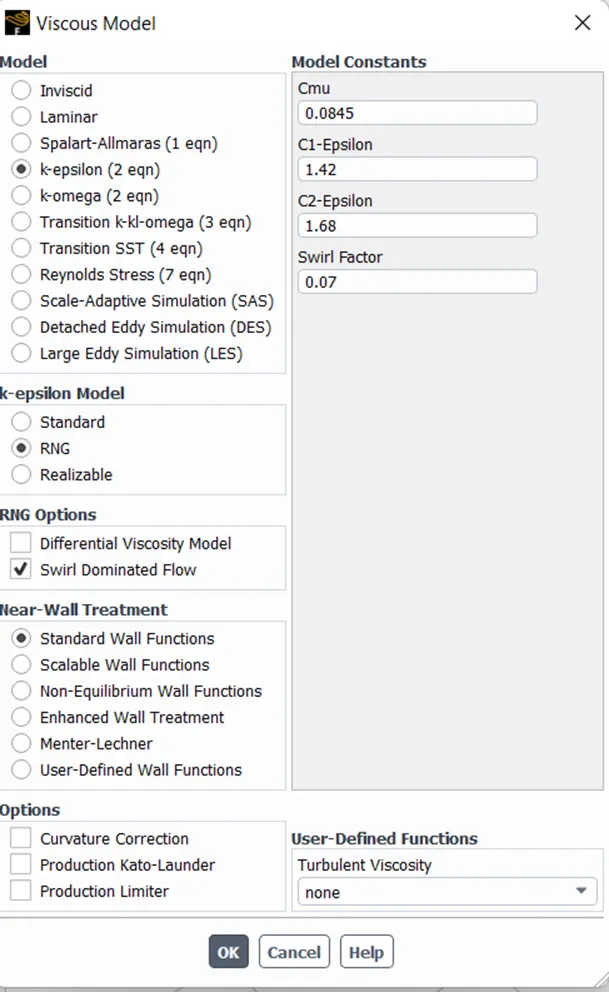
Model – RNG K-E with Swirl dominated flow and standard wall function
Discrete Phase Model –
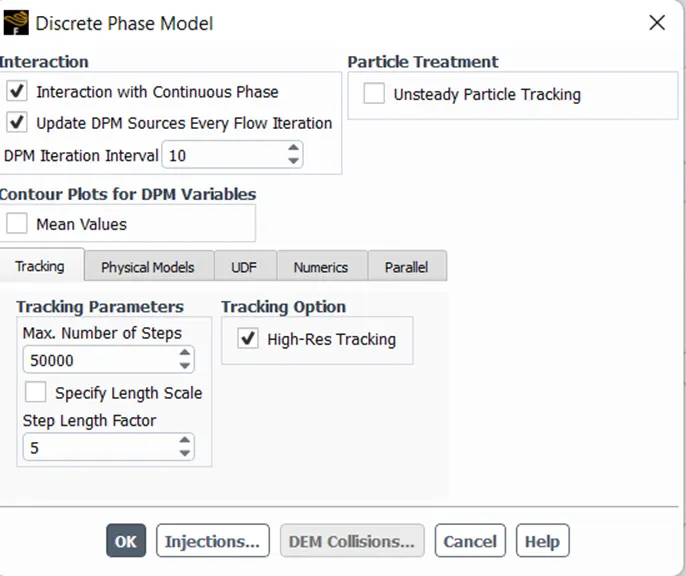
A discrete phase model (DPM) is used when the aim is to investigate the behaviour of the particles from a Lagrangian view and a discrete perspective.
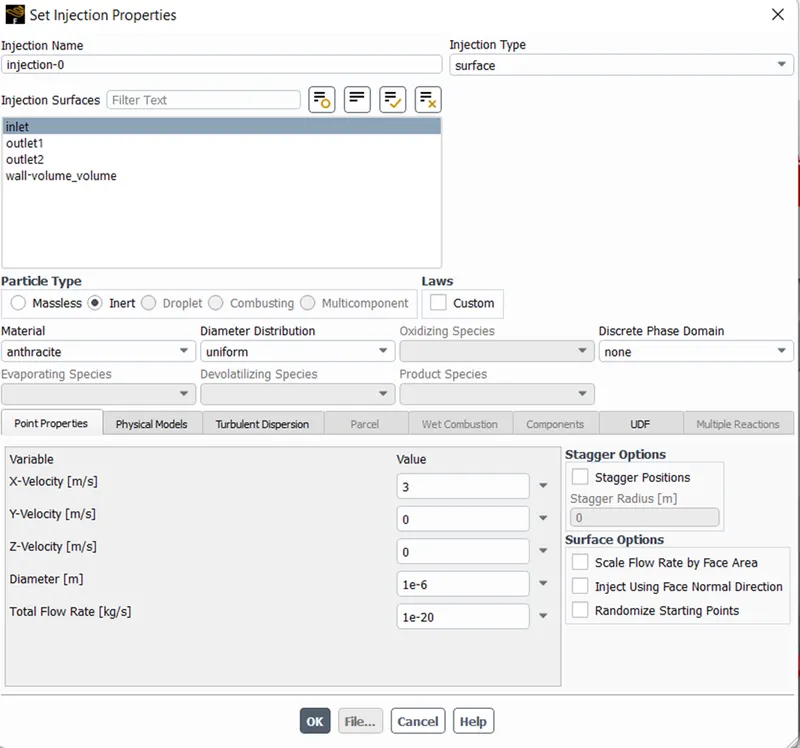
Boundary Conditions:-
Inlet and wall: - Reflect
Outlet (Top): - Escape
Outlet (Bottom/dustbin) – Trap
Material - Antracite
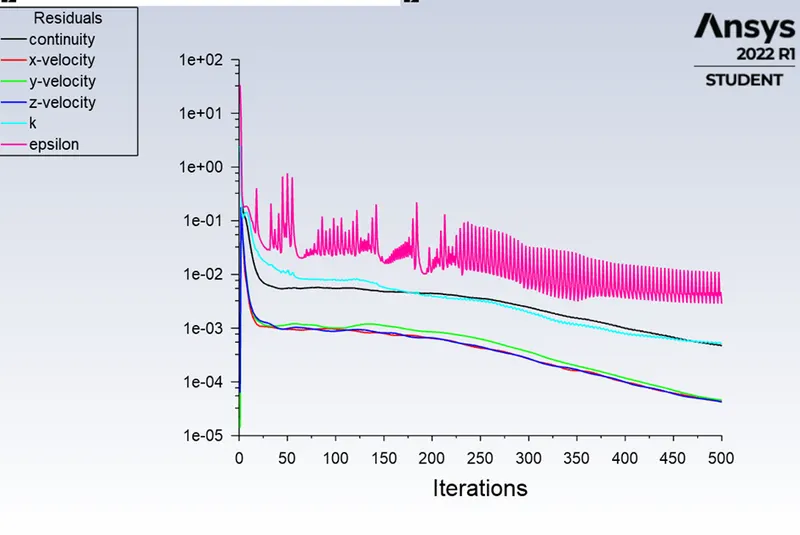
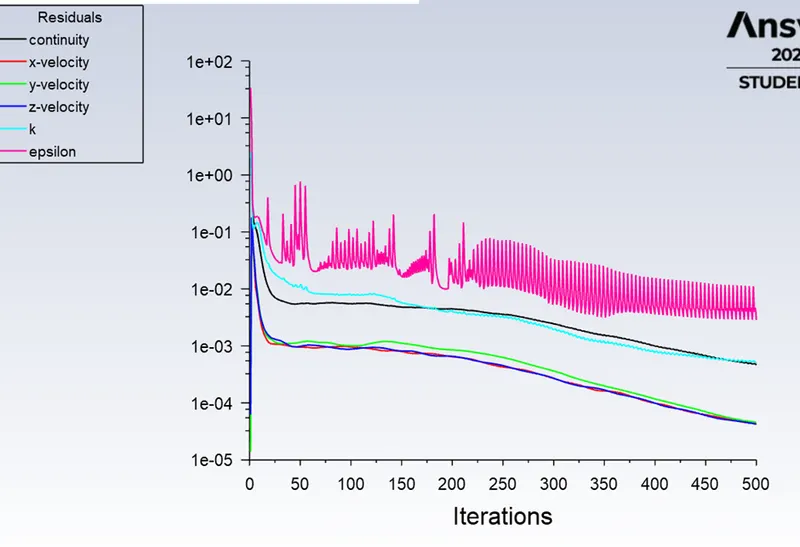
No of iteration – 500
Task 1 - To perform an analysis on a given cyclone separator model by varying the particle diameter from 1 μm to 5 μm and calculate the separation efficiency in each case. Use both the velocity's as 3m/sec.
Case 1 -
Grid diameter size- 1 micro meter
Velocity at inlet - 3m/sec
Output -
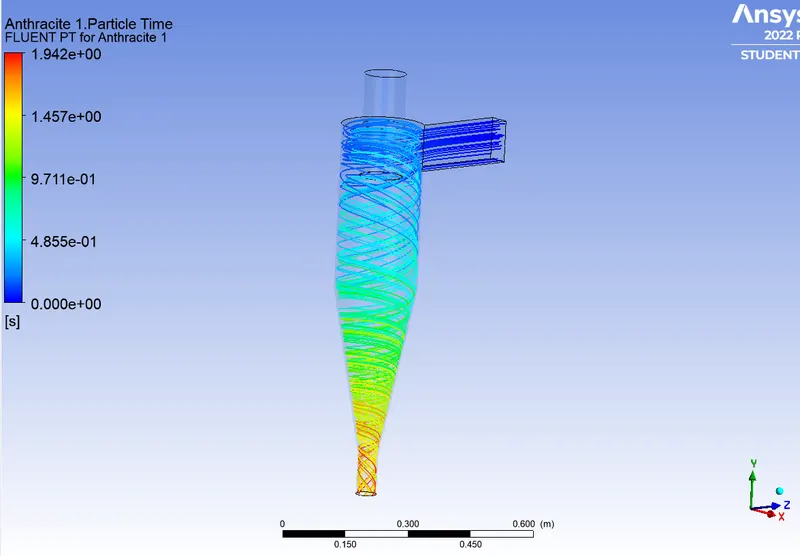
Number tracked = 120
Trapped = 120
Escaped = 3
Residual plot –
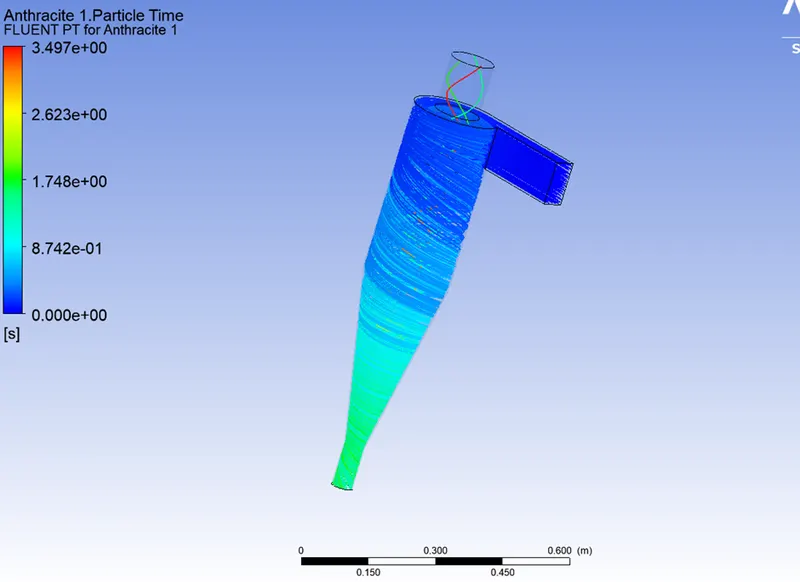
Anthracite Particle Time –
Case 2 -
Grid diameter size- 3 micro meter
Velocity at inlet - 3m/sec
number tracked = 120
Trapped = 120
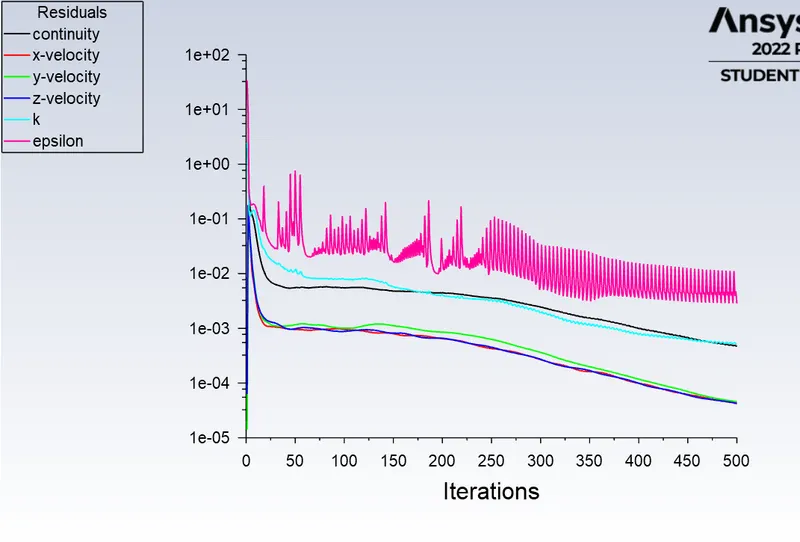
Residual plot –
Case 3 -
Grid diameter size- 5 micro meter
Velocity at inlet - 3m/sec
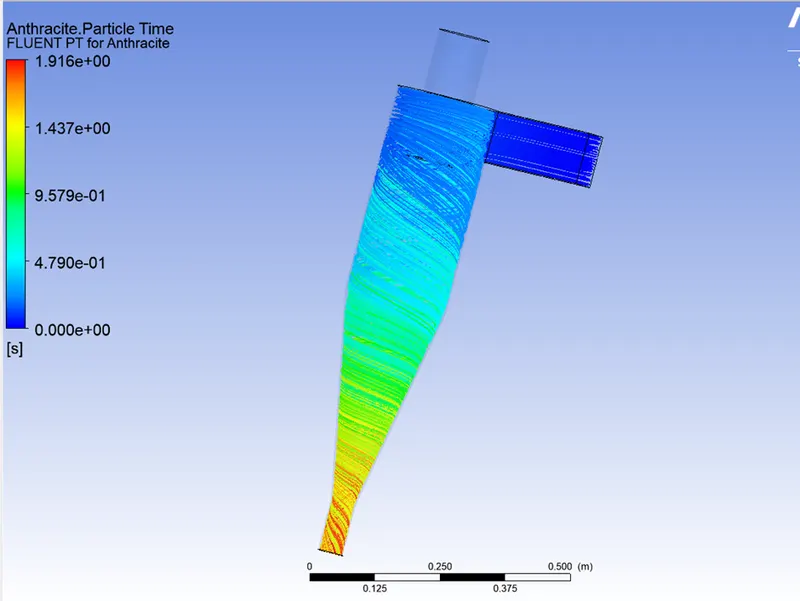
Number tracked = 120
Trapped = 120
Residual plot –
Anthracite Particle Time –
separation efficiency –
It is ratio of particle trapped to the particle going into cyclone.
It basically depends on the density of the particles, velocity at entry, diameter of separator etc.
Case 1 Efficiency - no of particle trapped / no of particle tracked = 117 / 120 = 97.5 %
Case 2 Efficiency - no of particle trapped / no of particle tracked = 120/ 120 = 100%
Case 3 Efficiency - no of particle trapped / no of particle tracked = 120 / 120 = 100%
It is observed that when particle size increased the effciency of the seprator is increased.
Task -2 -
To perform an analysis on a given cyclone separator model by varying the particle velocity from 1 m/sec to 5 m/sec and calculate the separation efficiency and pressure drop in each case. Discuss the results. [Use particle diameter size as 5 μm for all cases & keep flow velocity same as particle velocity]
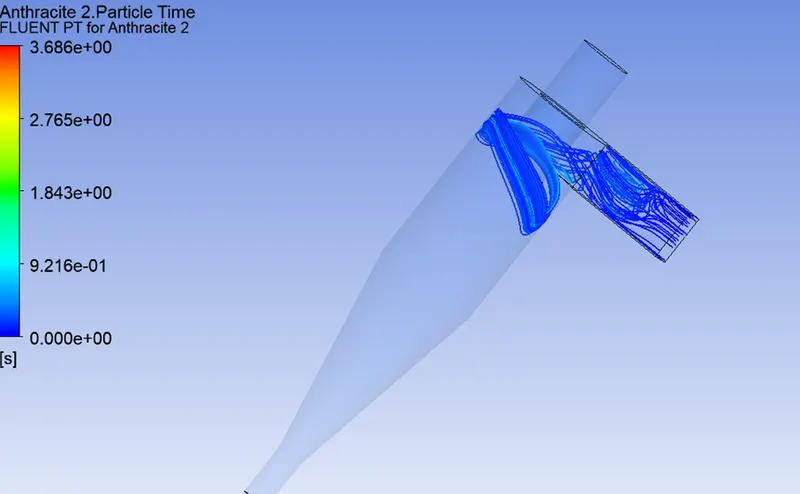
Case 1 -
Grid diameter size- 5 micro meter
Particle Velocity- 1 m/sec
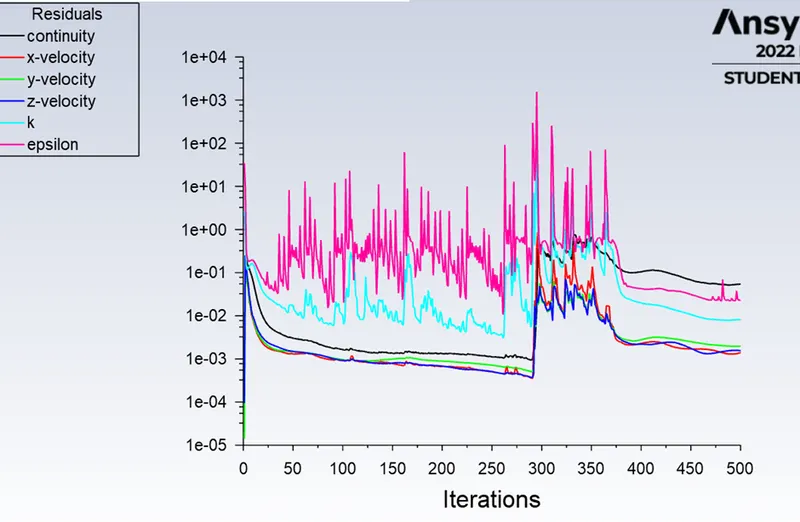
Number tracked = 120
Incomplete = 120
Residual plot –
Anthracite Particle Time –
Case 2 -
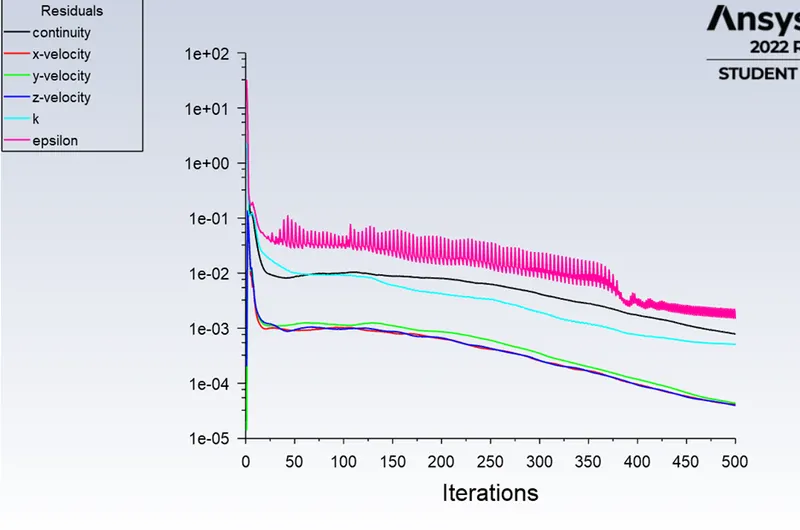
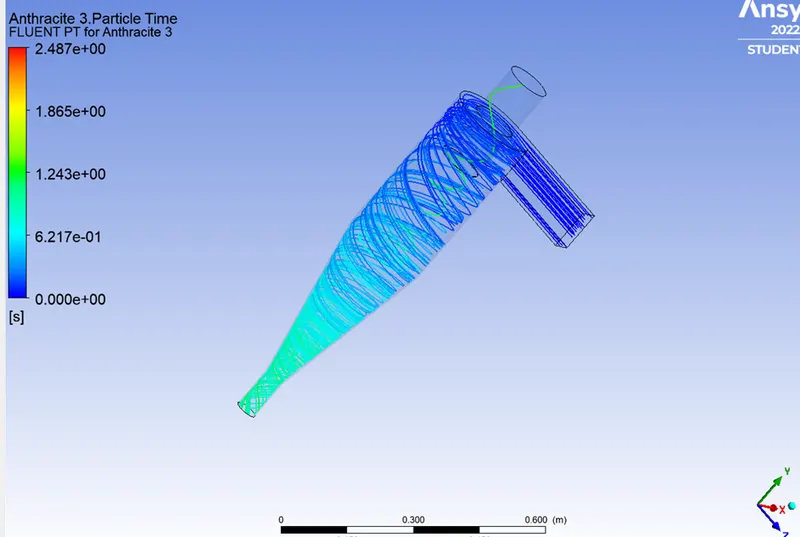
Grid diameter size- 5 micro meter
Velocity at inlet - 5m/sec
Number tracked = 120
Escaped = 4
Trapped = 116
Residual plot –
Anthracite Particle Time –
separation efficiency –
Case 1 Efficiency - no of particle trapped / no of particle tracked = 0 / 120 = 0 %
Case 2 Efficiency - no of particle trapped / no of particle tracked = 116 / 120 = 96.5%
Velocity also plays main role in the sepration of particle as it is seen in first case velocity was quite low due to which the partcicles are unable to tavel due to low motive force.
Pressure Drop –
It is basically difference at inlet and outlet pressure of fluid.
Case 1
P1 = 9.0865338e+08 [Pa]
P2 = 1.0607633e+08 [Pa]
Pressure Drop – P1 -P2 = 8.02577050 e+08 Pa
Case 2 P1 - 56.133318 pa
P2 - 4.5680761 pa
Pressure Drop – P1-P2 = 56.133318 - 4.5680761 = 51.56524
Conclusion –
- From both of the study it is noticed that the particle size plays main role in separation of particle. As we increase the size of particle the efficiency increases.
- From task 2 it is clear that the driving medium has to be at high speed for the better separation of the particle.
- Pressure drop also effect the effciency in sepration .