Week - 8 Mass Scaling
*AIM:-
-Use mass scaling to reduce the run time of the model.
*objective:-
-The limit on mass scaling is 8%
-To plot a histogram to compare the runtime with mass scaling tials.
-To optimize the both DT & TSSFAC parameters.
-To run the simulation with implicit solver with necessary change and compare implicit and explicit runtime.
*Introdution:-
-Mass scaling is a term that is used for the process of scaling the elements in explicit simulation to adjust its timestep.
-The LS-DYNA allows to two different types of mass scaling(Depends on the value of DT2MS):-
i) DT2MS<0 :-
LS-DYNA adds mass of each elements whose timestep is below DT2MS value that the elements updated DT is equal to abs DT2MS value.
ii) DT2MS>0:-
LS-DYNA adds mass of each elements whose timestep is below DT2MS value And remove mass of each elements whose timestep is above DT2MS value.
Note:-Here use DT2MS value is -3.5E-5, because our termination time is 600 ms, means 0.6 sec.
We know that DT2MS value is in the range of 10^-05.
*Explicit analysis:-
trial:-1
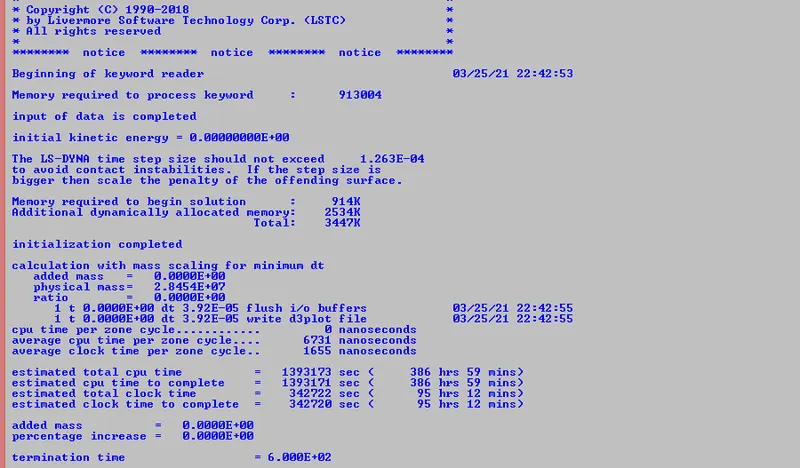
DT2MS=-3.5e-5
i)TSSFAC=0.9
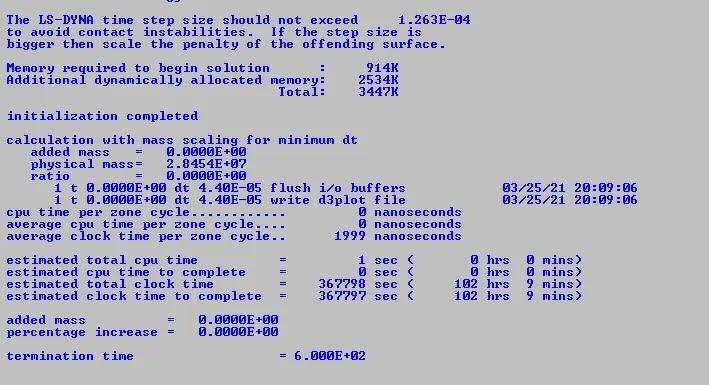
-Here we seen that estimate clock time is 102 hrs 9 mins.
ii)TSSFAC=0.8
trial:-2
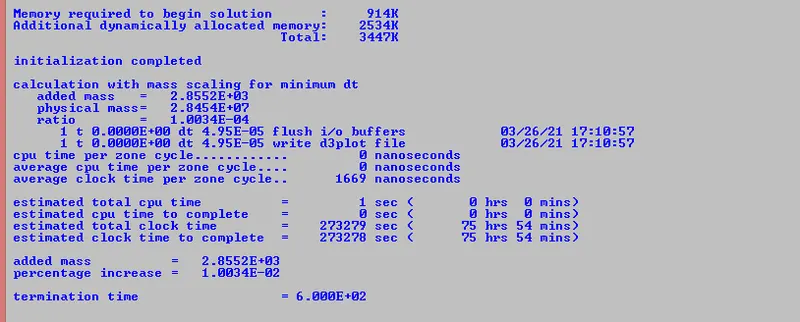
DT2MS=-5.5e-5
i)TSSFAC=0.9
ii)TSSFAC=0.8
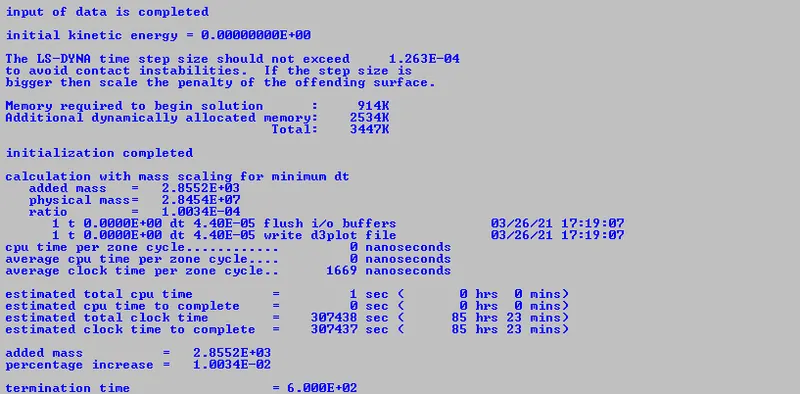
-For DT2MS=-5.5e-5 , The estimated total clock time to complete the simulation for TSSFAC=0.9 is 75 hrs 54 mins & for TSSFAC=0.8 is 85 hrs 23 mins.The percentage increase of the mass for both is 0.010034%
trial:-3
DT2MS=-7.5e-5
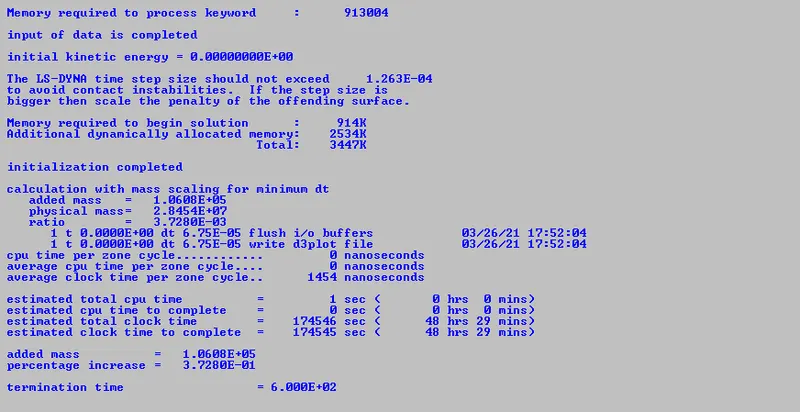
i)TSSFAC=0.9
ii)TSSFAC=0.8
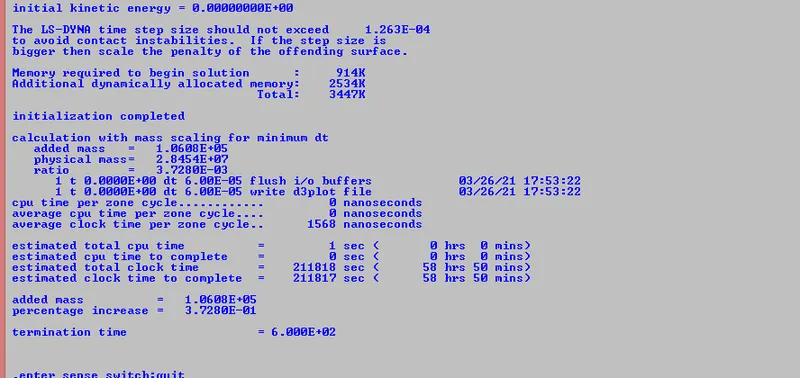
-For DT2MS=-7.5e-5 , The estimated total clock time to complete the simulation for TSSFAC=0.9 is 48 hrs 29 mins & for TSSFAC=0.8 is 58 hrs 50 mins.The percentage increase of the mass for both is 0.03728%
trial:-4
DT2MS=-9.5e-5
i)TSSFAC=0.9
ii)TSSFAC=0.8
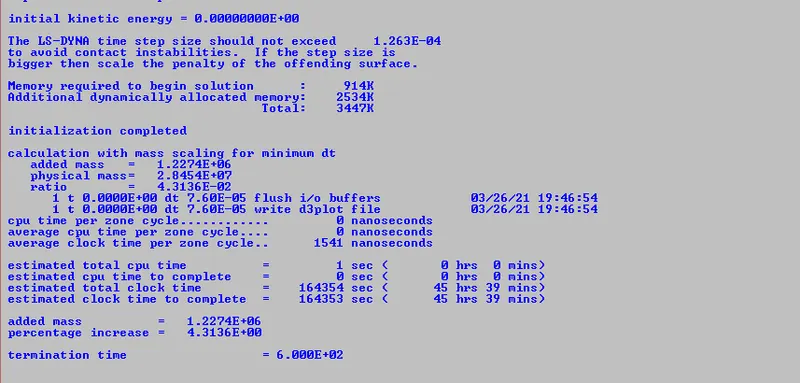
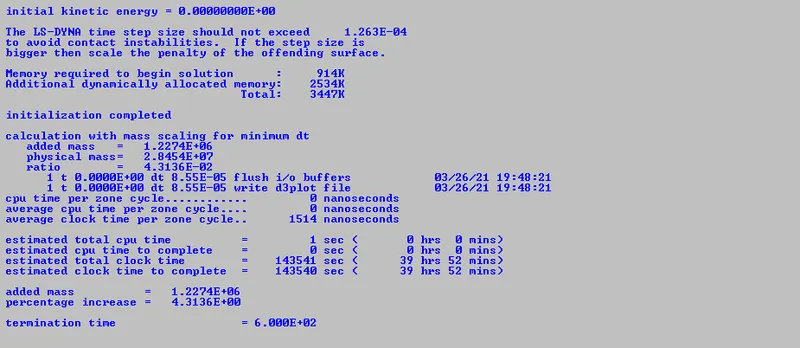
-For DT2MS=-9.5e-5 , The estimated total clock time to complete the simulation for TSSFAC=0.9 is 39 hrs 51 mins & for TSSFAC=0.8 is 45 hrs 39 mins.The percentage increase of the mass for both is 4.3136%. The run time is reduced wheather the percentage increase in the mass has increase compare to trial 3.
trial:-5
DT2MS=-1e-4
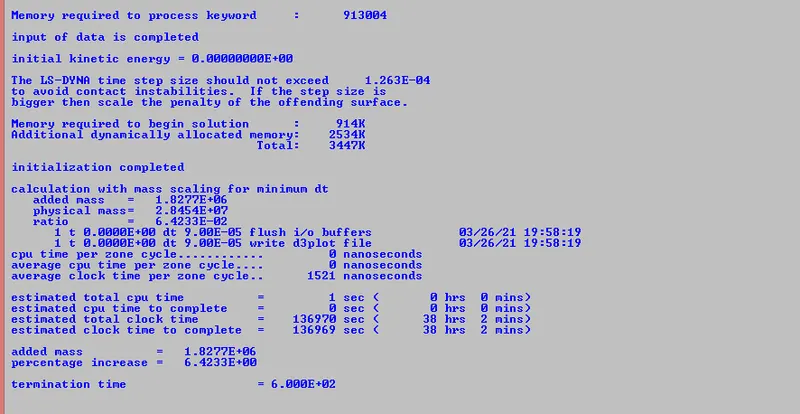
i)TSSFAC=0.9
ii)TSSFAC=0.8
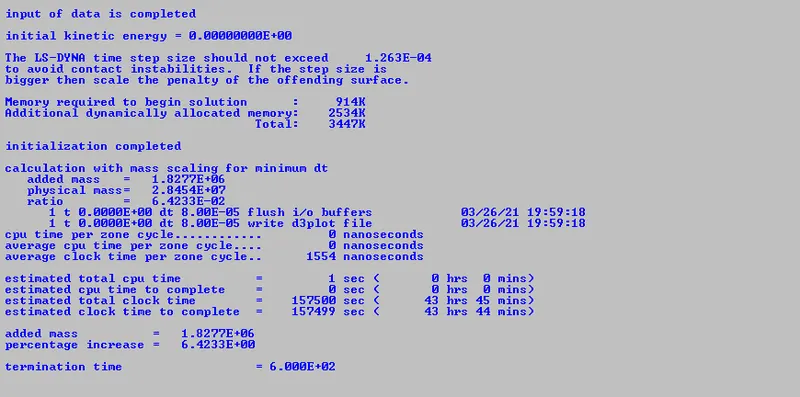
-For DT2MS=-1e-4 , The estimated total clock time to complete the simulation for TSSFAC=0.9 is 38 hrs 2 mins & for TSSFAC=0.8 is 43 hrs 45 mins.The percentage increase of the mass for both is 6.4233%. The run time is reduced wheather the percentage increase in the mass has increase compare to trial 4.
trial:-6
DT2MS=-1.1e-4
i)TSSFAC=0.9
ii)TSSFAC=0.8
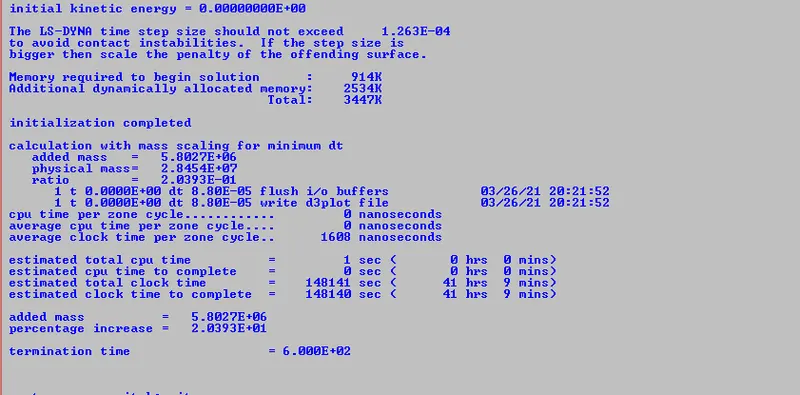
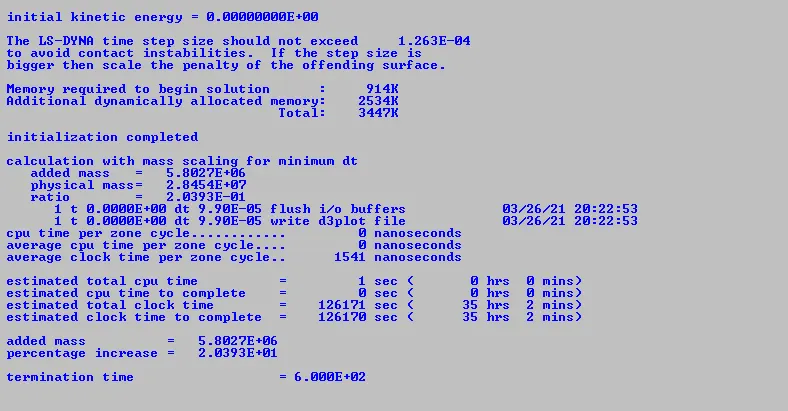
-For DT2MS=-1.1e-4 , The estimated total clock time to complete the simulation for TSSFAC=0.9 is 35 hrs 2 mins & for TSSFAC=0.8 is 41 hrs 9 mins.The percentage increase of the mass for both is 20.393%. It is beyond the acceptable limit, Because our acceptable limit is 8%.
trial:-7
-Now we reduce the DT2MS value because of percentage increase in trial no 6
DT2MS=-1.08e-4
i)TSSFAC=0.9
ii)TSSFAC=0.8
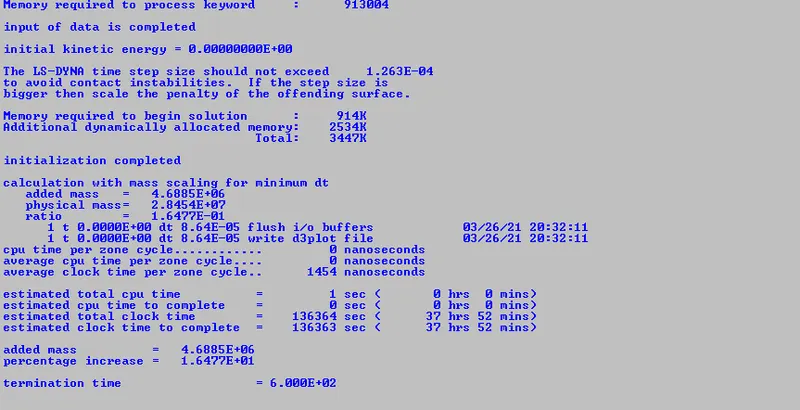
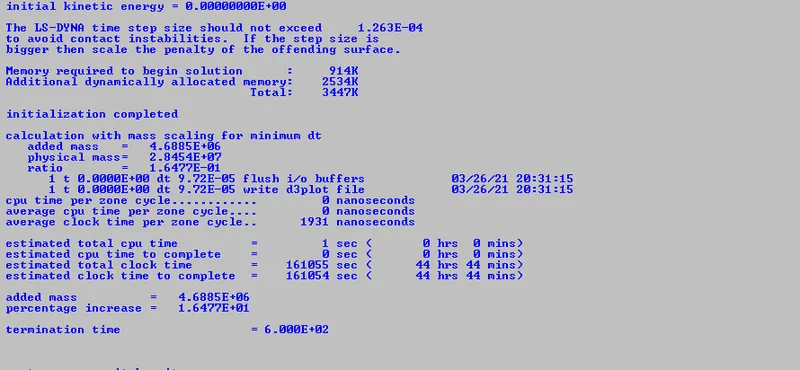
-For DT2MS=-1.08e-4 , The estimated total clock time to complete the simulation for TSSFAC=0.9 is 44 hrs 44 mins & for TSSFAC=0.8 is 37 hrs 52 mins.The percentage increase of the mass for both is 16.477%.It is decrease compare to trial 6 but beyond the acceptable limit. So we need to further decrease of DT2MS value.
trial:-8
DT2MS=-1.06e-4
i)TSSFAC=0.9
ii)TSSFAC=0.8
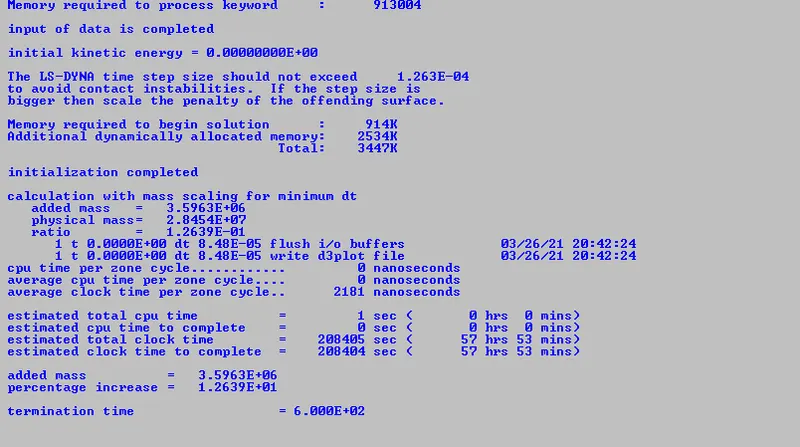
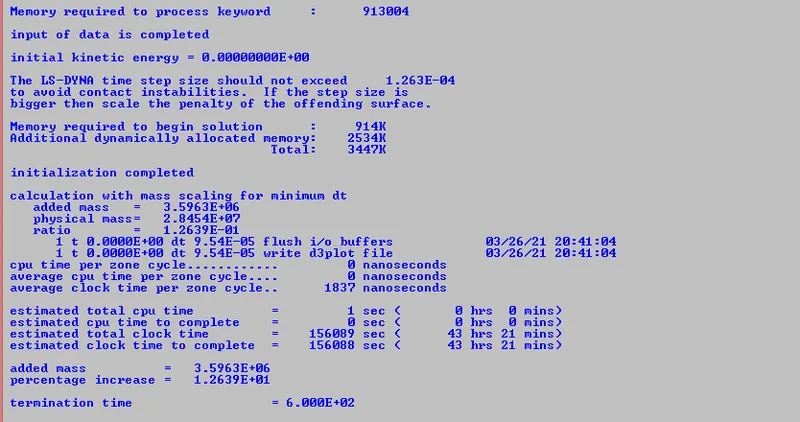
-For DT2MS=-1.06e-4 , The estimated total clock time to complete the simulation for TSSFAC=0.9 is 43 hrs 21 mins & for TSSFAC=0.8 is 57 hrs 52 mins.The percentage increase of the mass for both is 12.639%.It is decrease compare to trial 7 but beyond the acceptable limit. So we need to further decrease of DT2MS value.
trial:-9
DT2MS=-1.04e-4
i)TSSFAC=0.9
ii)TSSFAC=0.8
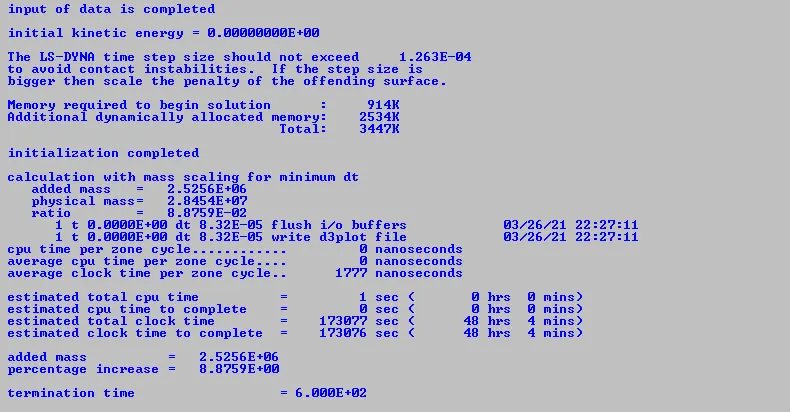
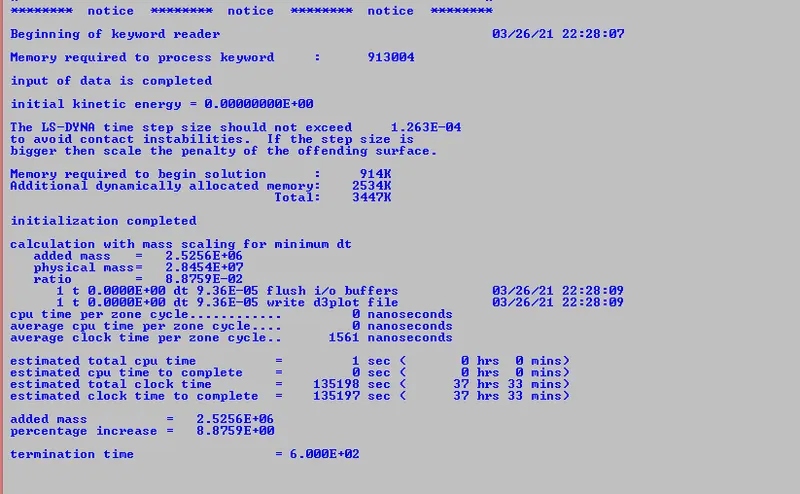
-For DT2MS=-1.04e-4 , The estimated total clock time to complete the simulation for TSSFAC=0.9 is 37 hrs 33 mins & for TSSFAC=0.8 is 48 hrs 4 mins.The percentage increase of the mass for both is 8.8759%.It is decrease compare to trial 8 but beyond the acceptable limit. So we need to further decrease of DT2MS value.
trial:-10
DT2MS=-1.02e-4
i)TSSFAC=0.9
ii)TSSFAC=0.8
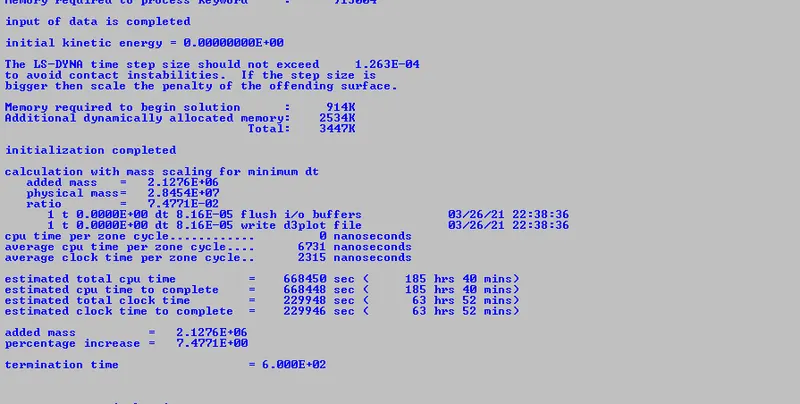
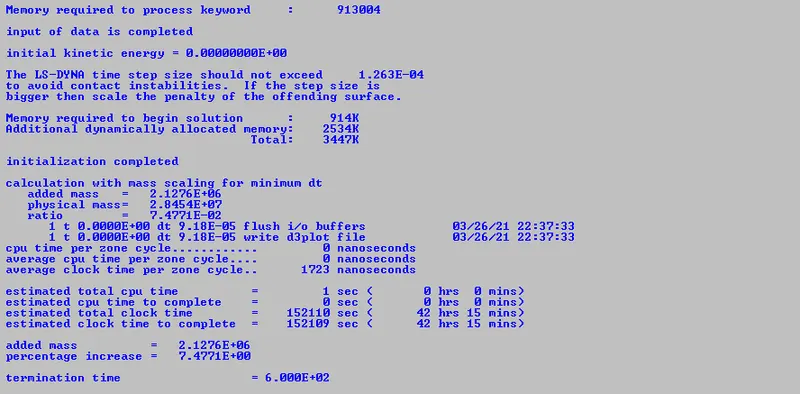
-For DT2MS=-1.02e-4 , The estimated total clock time to complete the simulation for TSSFAC=0.9 is 42 hrs 15 mins & for TSSFAC=0.8 is 63 hrs 52 mins.The percentage increase of the mass for both is 7.4771%.It is decrease compare to trial 9 & in the acceptable limit. So we need to increase of DT2MS value for reach near but less than 8% value.
trial:-11
DT2MS=-1.022e-4
i)TSSFAC=0.9
ii)TSSFAC=0.8
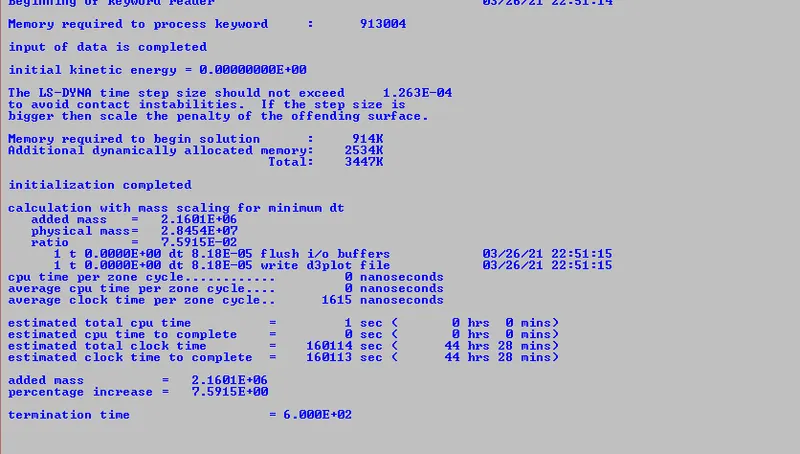
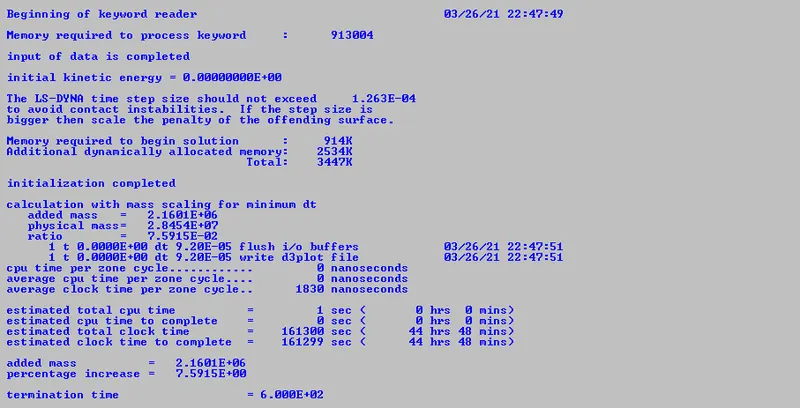
-For DT2MS=-1.022e-4 , The estimated total clock time to complete the simulation for TSSFAC=0.9 is 44 hrs 48 mins & for TSSFAC=0.8 is 44 hrs 28 mins.The percentage increase of the mass for both is 7.5915%.It is increase compare to trial 10 & in the acceptable limit. So we need to increase of DT2MS value.
trial:-12
DT2MS=-1.024e-4
i)TSSFAC=0.9
ii)TSSFAC=0.8
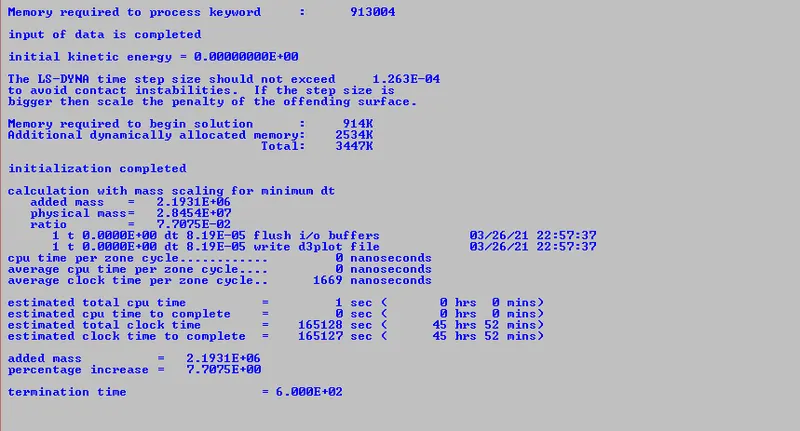
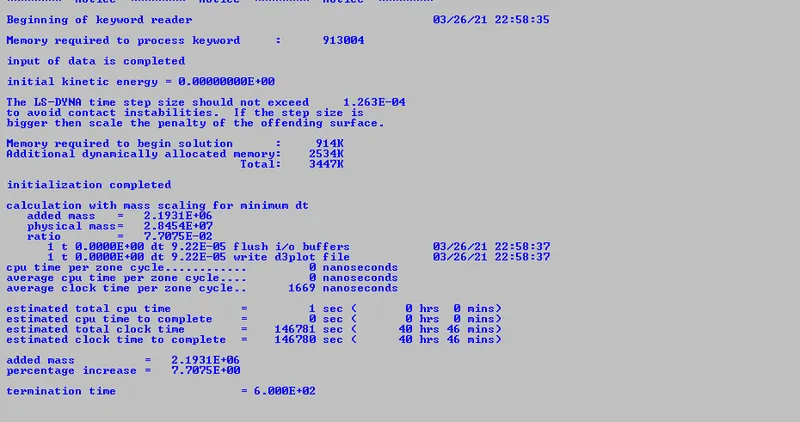
-For DT2MS=-1.024e-4 , The estimated total clock time to complete the simulation for TSSFAC=0.9 is 40 hrs 46 mins & for TSSFAC=0.8 is 45 hrs 52 mins.The percentage increase of the mass for both is 7.7075%.It is increase compare to trial 11 & in the acceptable limit. So we need to increase of DT2MS value.
trial:-13
DT2MS=-1.026e-4
i)TSSFAC=0.9
ii)TSSFAC=0.8
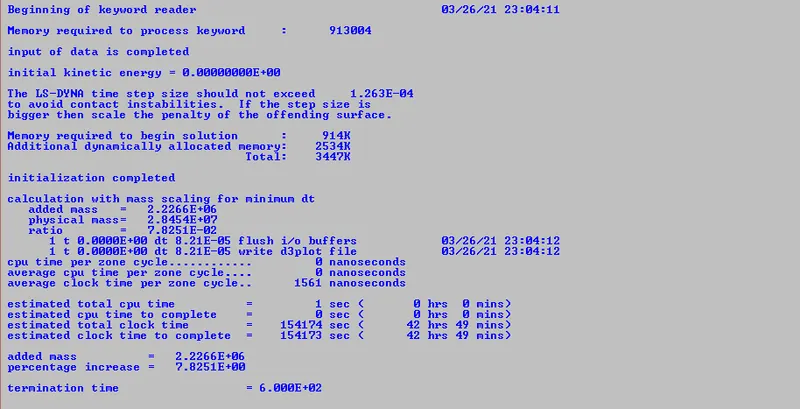
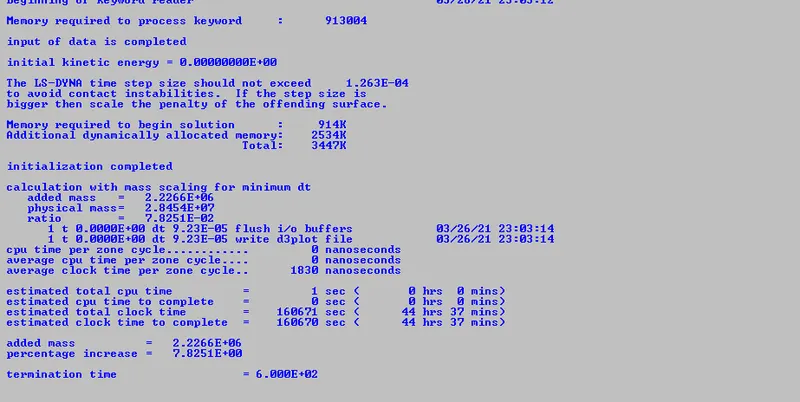
-For DT2MS=-1.026e-4 , The estimated total clock time to complete the simulation for TSSFAC=0.9 is 44 hrs 37 mins & for TSSFAC=0.8 is 42 hrs 49 mins.The percentage increase of the mass for both is 7.8251%.It is increase compare to trial 12 & in the acceptable limit. So we need to increase of DT2MS value.
trial:-14
DT2MS=-1.028e-4
i)TSSFAC=0.9
ii)TSSFAC=0.8
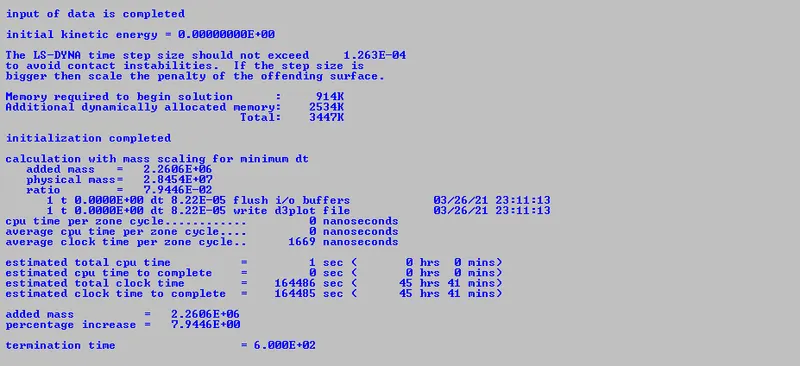
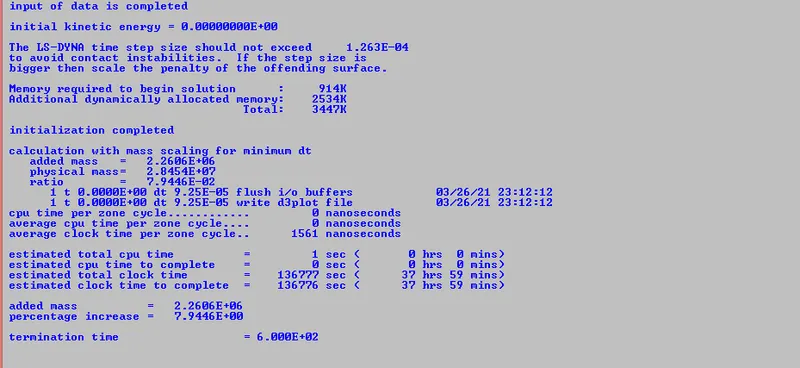
-For DT2MS=-1.028e-4 , The estimated total clock time to complete the simulation for TSSFAC=0.9 is 37 hrs 59 mins & for TSSFAC=0.8 is 45 hrs 41 mins.The percentage increase of the mass for both is 7.9446%.It is increase compare to trial 13 & in the acceptable limit. So we need to increase of DT2MS value.
trial:-15
DT2MS=-1.0284e-4
i)TSSFAC=0.9
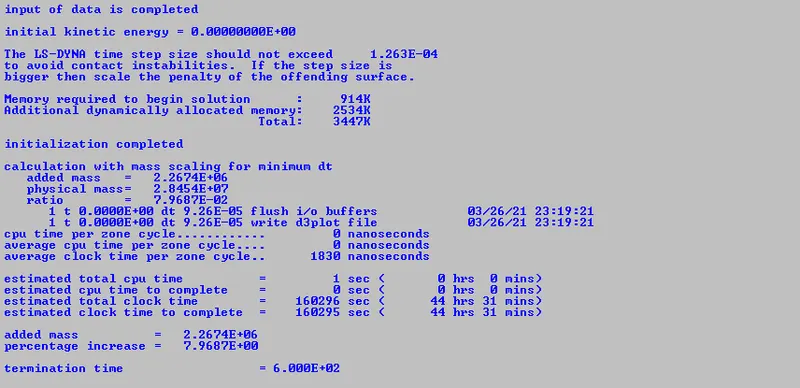 ii)TSSFAC=0.8
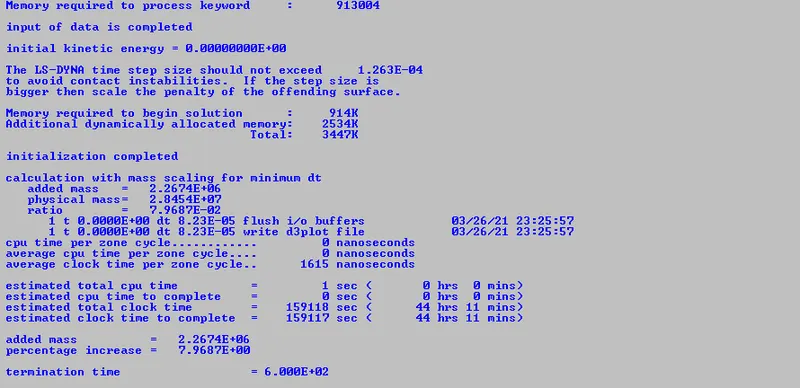
-For DT2MS=-1.0284e-4 , The estimated total clock time to complete the simulation for TSSFAC=0.9 is 44 hrs 31 mins & for TSSFAC=0.8 is 44 hrs 11 mins.The percentage increase of the mass for both is 7.9687%.It is increase compare to trial 14 & in the acceptable limit. So we need to increase of DT2MS value.
trial:-16
DT2MS=-1.0288e-4
i)TSSFAC=0.9
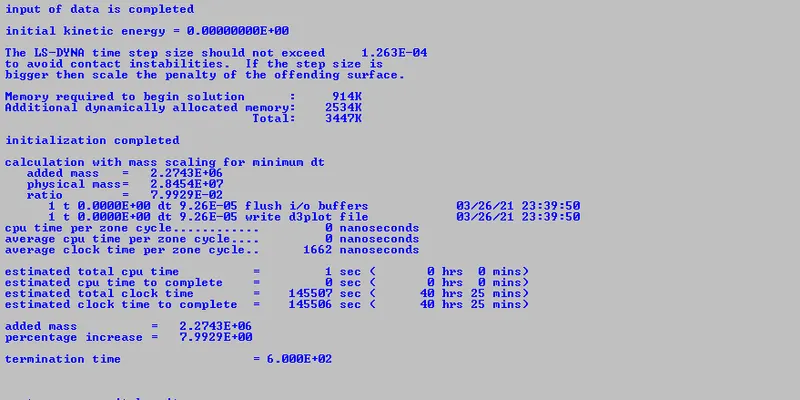
ii)TSSFAC=0.8
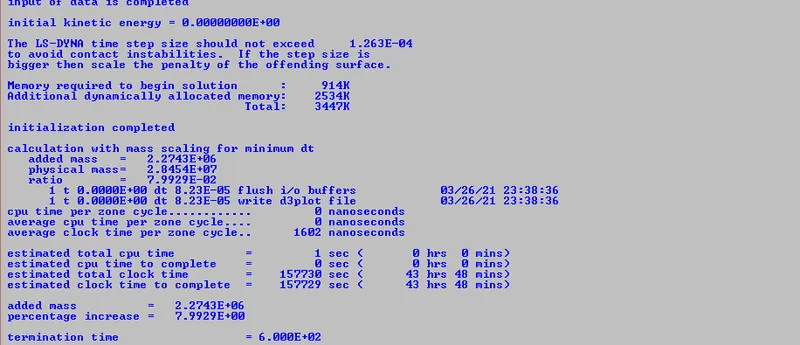
-For DT2MS=-1.0288e-4 , The estimated total clock time to complete the simulation for TSSFAC=0.9 is 40 hrs 25 mins & for TSSFAC=0.8 is 43 hrs 48 mins.The percentage increase of the mass for both is 7.9929%.It is increase compare to trial 15 & in the acceptable limit. So we need to increase of DT2MS value.
trial:-17
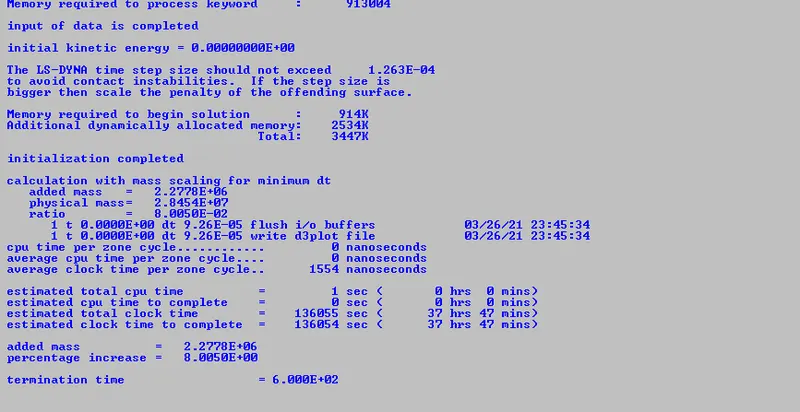
DT2MS=-1.029e-4
i)TSSFAC=0.9
ii)TSSFAC=0.8
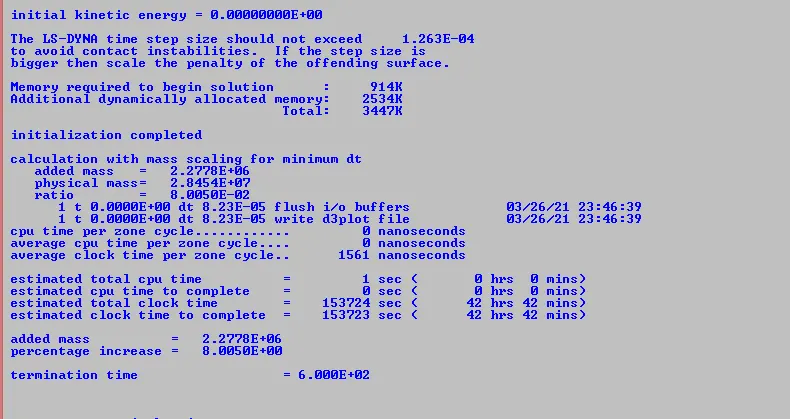
-For DT2MS=-1.029e-4 , The estimated total clock time to complete the simulation for TSSFAC=0.9 is 37 hrs 47 mins & for TSSFAC=0.8 is 42 hrs 42 mins.The percentage increase of the mass for both is 8.005%.It is increase compare to trial 16 & over the acceptable limit. So we need to decrease of DT2MS value.
trial:-18
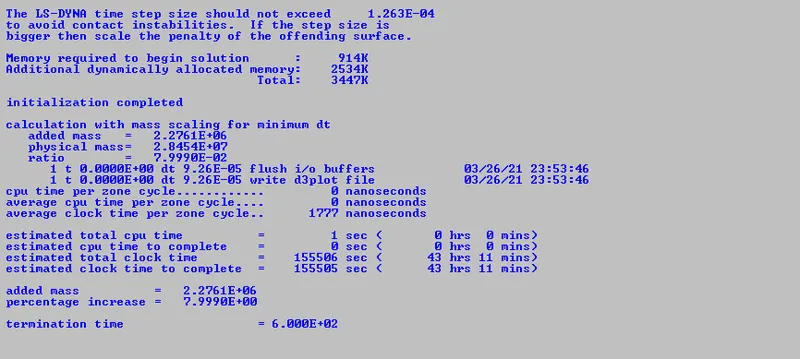
DT2MS=-1.0289e-4
i)TSSFAC=0.9
ii)TSSFAC=0.8
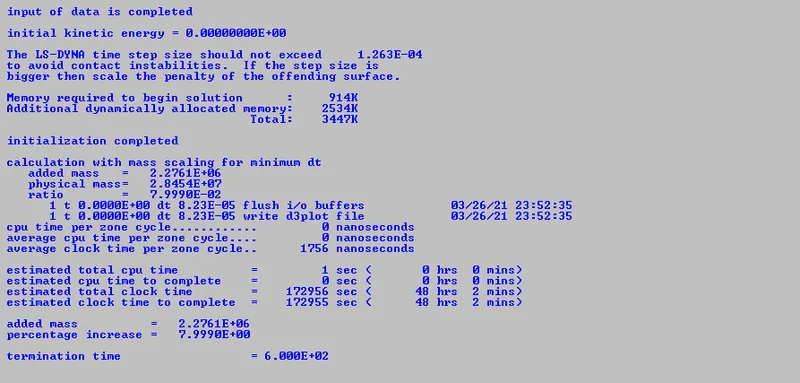
-For DT2MS=-1.0289e-4 , The estimated total clock time to complete the simulation for TSSFAC=0.9 is 43 hrs 11 mins & for TSSFAC=0.8 is 48 hrs 2 mins.The percentage increase of the mass for both is 7.999%.
*Implicit analysis:-
-Now we find the timeing for the implicit analysis.
trial:-1
DT2MS=-3.5e-5
i)TSSFAC=0.9
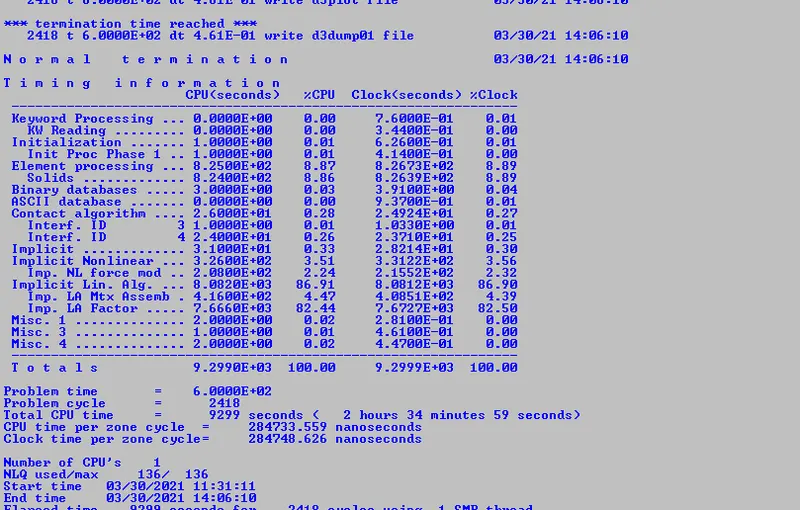
-Here time required for the run the simulation is 2 hrs 34 mins 59 secs.
trial:-2
DT2MS=-1.0289e-4
i)TSSFAC=0.9
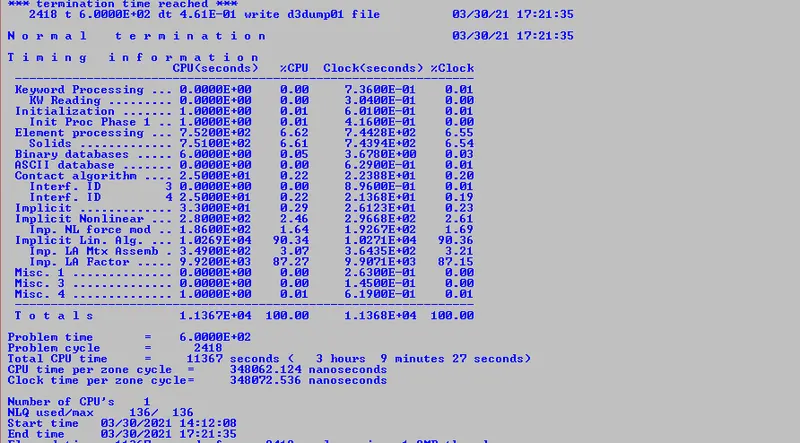
-Here time required for the run the simulation is 3 hrs 9 mins 27 secs.
*Result & discussion:-
*Explicit analysis:-
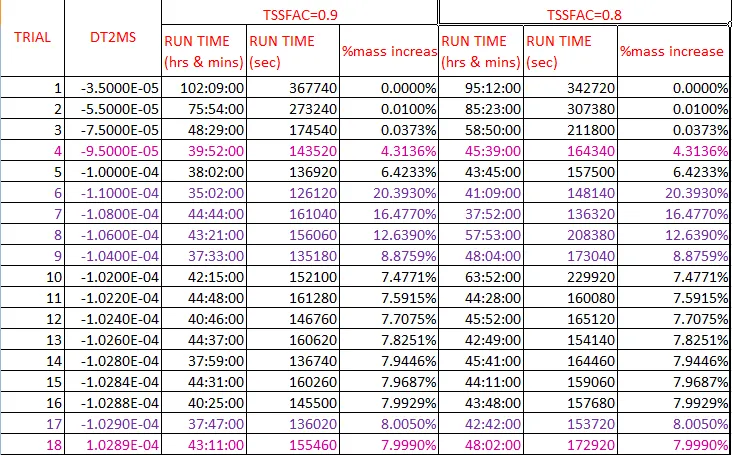
*Histogram:-
-We plot the histogram of run time vs DT2MS value using microsoft excel software.
*Run time vs DT2MS:-
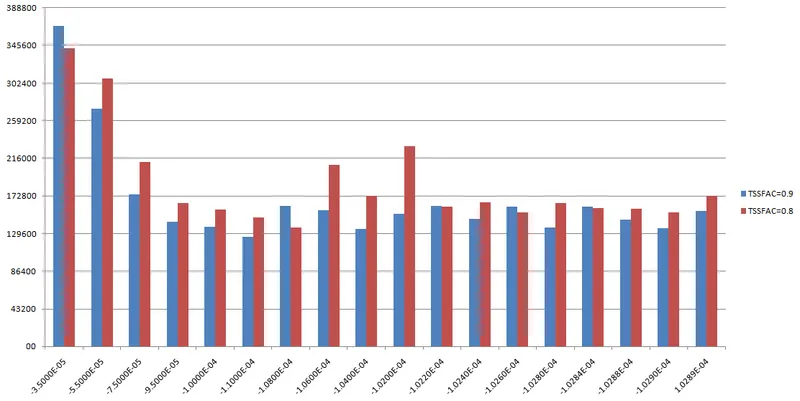
-From the graph we can be conclude that optimum value of DT2MS is -1.0289E-04 which has an estimated run time is 43 hrs 11 mins.
-The run time of the simulation for TSSFAC=0.8 values are more compare to the TSSFAC=0.9 value for most of cases. So TSSFAC=0.9 is more ideal for this simulation.
*%mass increase vs DT2MS:-
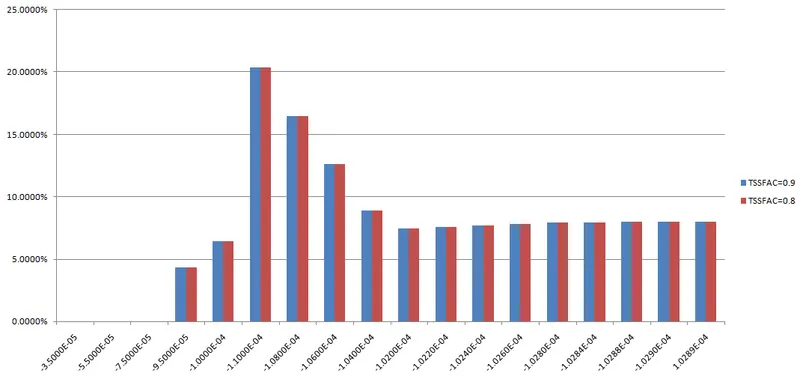
-From the graph, the value of percentage mass increase for TSSFAC=0.8 & 0.9 are same for all DT2MS value.
-The optimum value is 7.999% at the DT2MS=-1.0289E-04
*Comparision between explicit and implicit analysis:-
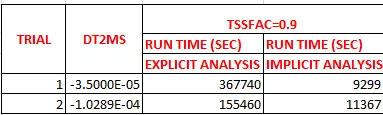
-Here we seen that the value of runtime for implicit analysis is not more different with change of DT2MS value. Means parameters just like DT2MS and TSSFAC are not affect the implicit analysis.
*Conclusion:-
-From this exercise we lot of learn about how to reduce the time of simulation for explicit analysis with mass-scalling.
-Here also learn mass scalling is not affect for implicit analysis.