Week - 8 Mass Scaling
AIM
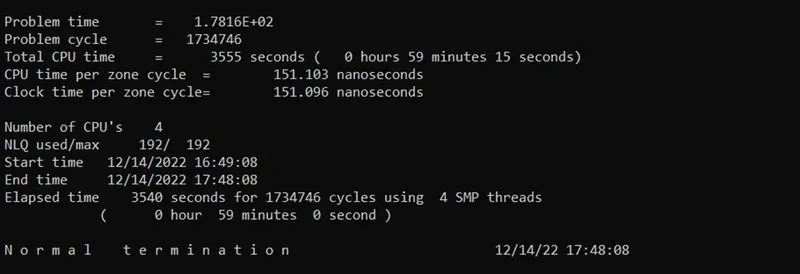
Do the trial and error for mass scaling and data generated henceforth. Both the DT and TSSFAC parameters should be optimized. Once the mass scaling objective is reached, a histogram should be plotted to compare the runtime with mass scaling trails. Finally run the same model using the implicit solver with necessary changes and compare implicit and explicit runtime.
OBJECTIVE
- Trial and error for mass scaling and optimize the system.
- Histogram should be plotted to compare runtime with mass scaling trials.
- Compare implicit and explicit runtime with necessary changes.
THEORY
Time Step: Division of time to complete simulation of model.


and E = 2G(1+v)
Mass Scaling: It is a technique whereby nonphysical mass is added to a structural in order to achieve a larger explicit timestep.
In Ls dyna for mass scaling *CONTROL TIMESTEP keyword is used.
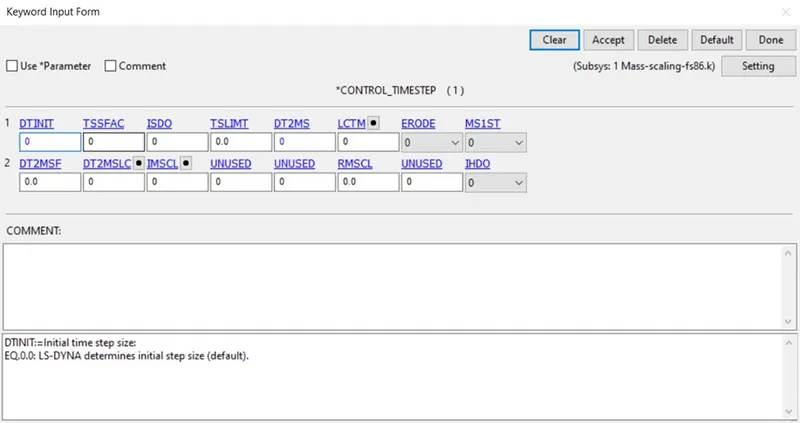
DTINT: This is initial time step size. It means the defined time step by the user.
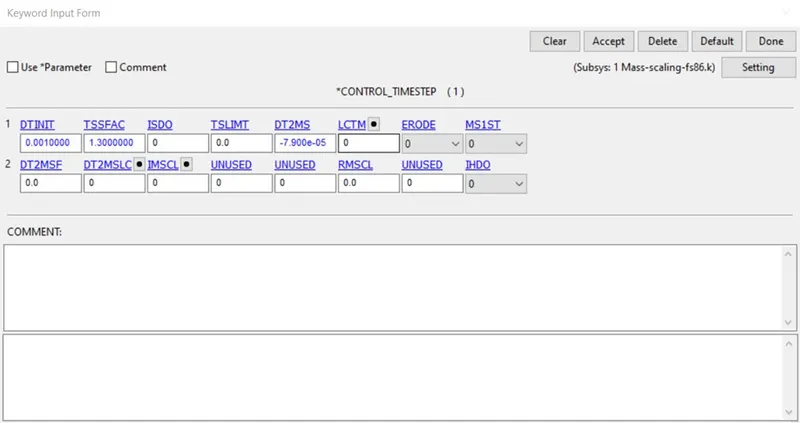
TSSFAC: This is Scale factor for computed time step. It is used for determining new time step by taking minimum value over all elements.
Δ𝑡 𝑛+1 = TSSFAC × min {Δ𝑡1, Δ𝑡2, ..., Δ𝑡𝑁
DT2MS: This is Time size for mass scaled solutions. It is used to add mass to structure for increasing time step.
Case I: No *control time step
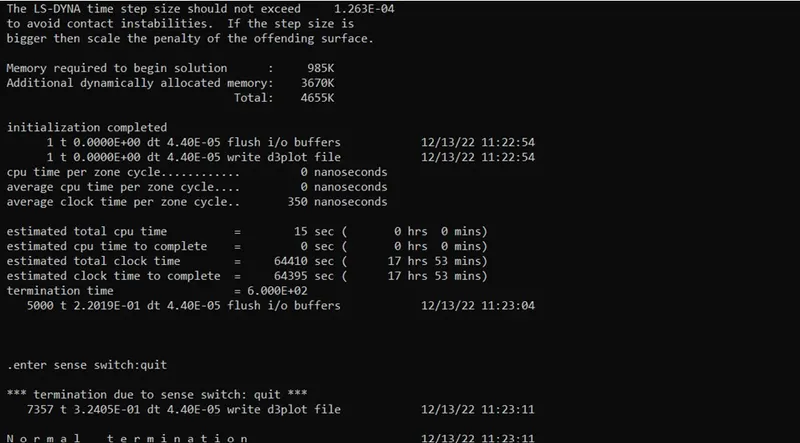
In this we can see termination time is 6.000E+02 and time step is 4.40E-05 and there is no addition of extra mass.

Case II: Use *control time step
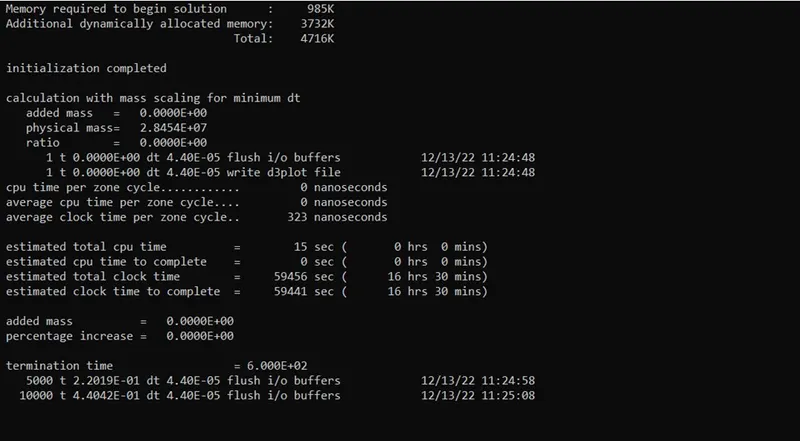
Here by using there is no much difference in anything however it is physical mass is written which is not available in previous one.
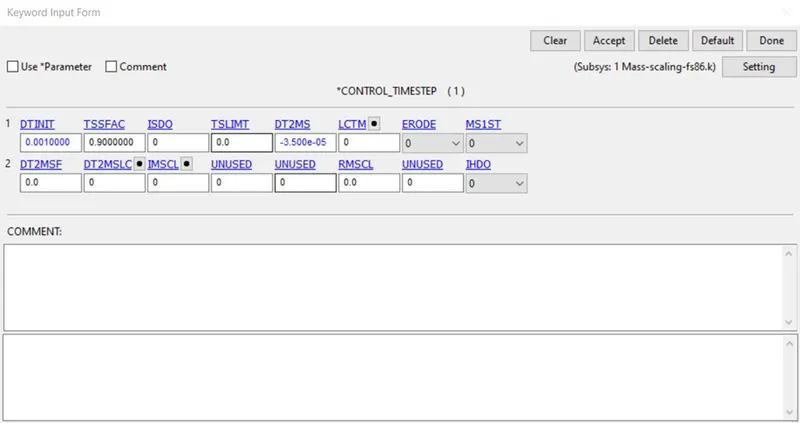
Case III DT2MS = -3.500E-05 and TSSFAC = 0.900000
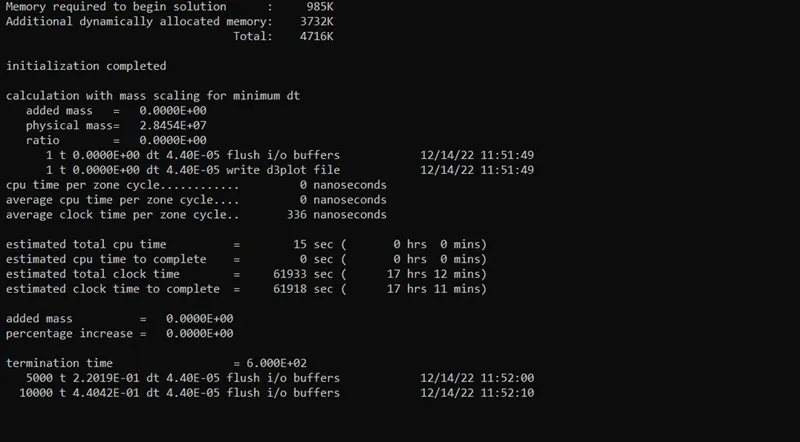
DT2MS = -4.00E-05
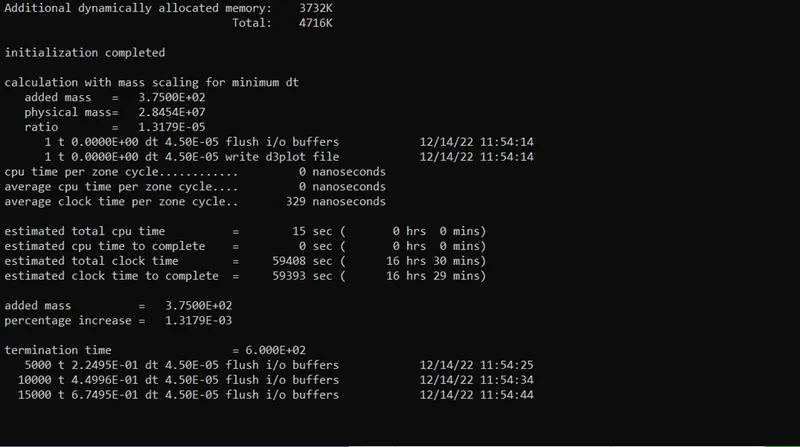
DT2MS = -5.00E-05
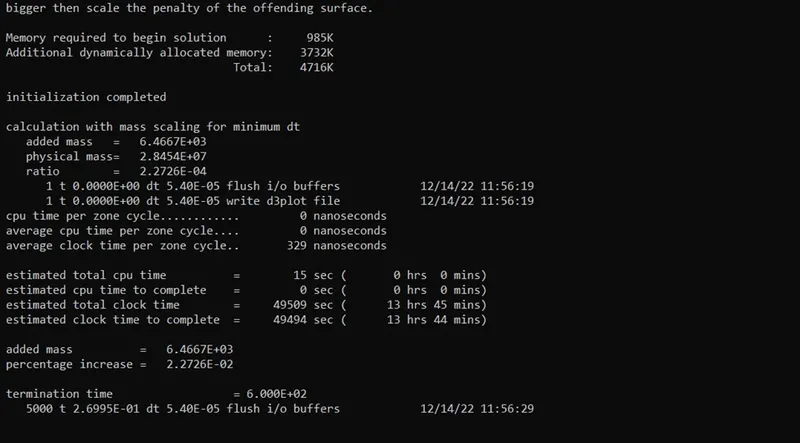
DT2MS = -6.00E-05
DT2MS = -7.00E-05
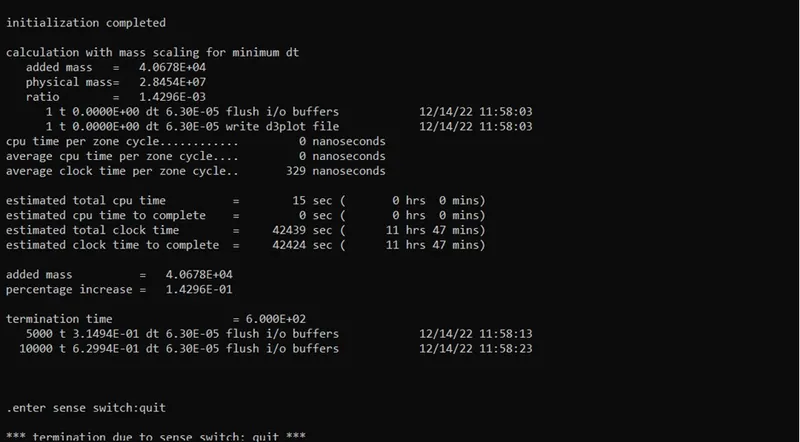
DT2MS = -7.90E-05
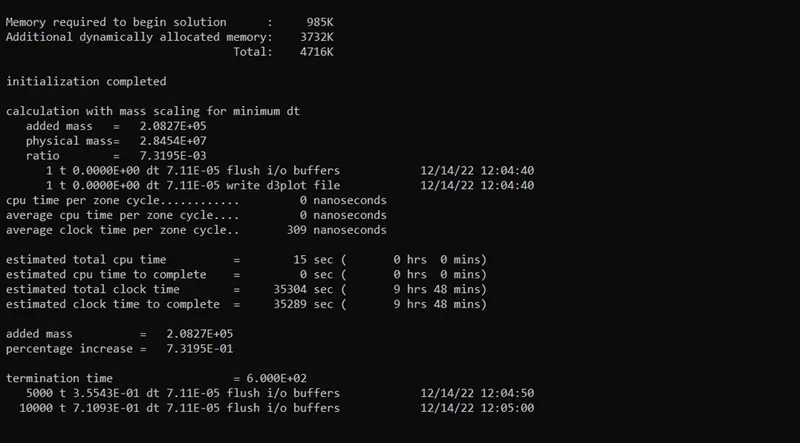
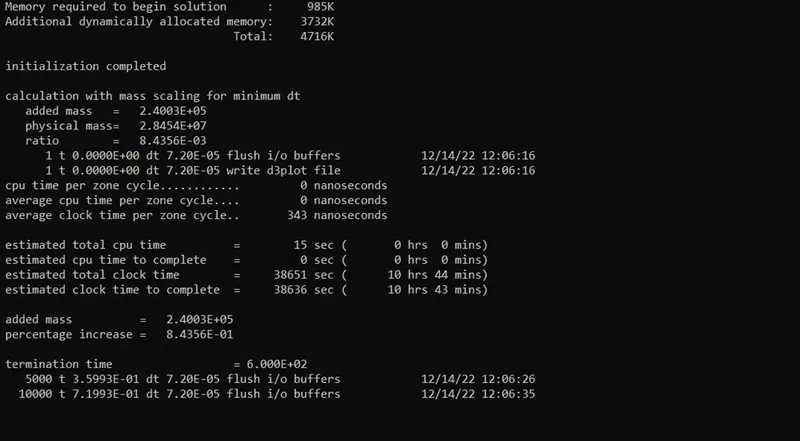
DT2MS = -8.00E-05
|
DT2MS |
Time step |
Increase of mass(%) |
|
-3.5X10⁻⁵ |
4.40X10⁻⁵ |
0 |
|
-4.0X10⁻⁵ |
4.40X10⁻⁵ |
1.31X10⁻³ |
|
-5.0X10⁻⁵ |
4.50X10⁻⁵ |
1.31X10⁻³ |
|
-6.0X10⁻⁵ |
5.40X10⁻⁵ |
2.27X10⁻² |
|
-7.0X10⁻⁵ |
6.30X10⁻⁵ |
1.42X10⁻¹ |
|
-7.9X10⁻⁵ |
7.11X10⁻⁵ |
7.31X10⁻¹ |
|
-8.0X10⁻⁵ |
7.20X10⁻⁵ |
8.43X10⁻¹ |
From above table it is evident that by increasing DT2MS value mass will increase which lead to increase in time step.
CASE IV: TSSFAC = 0.900000 DT2MS = -3.500E-05
TAAFAC = 3.0
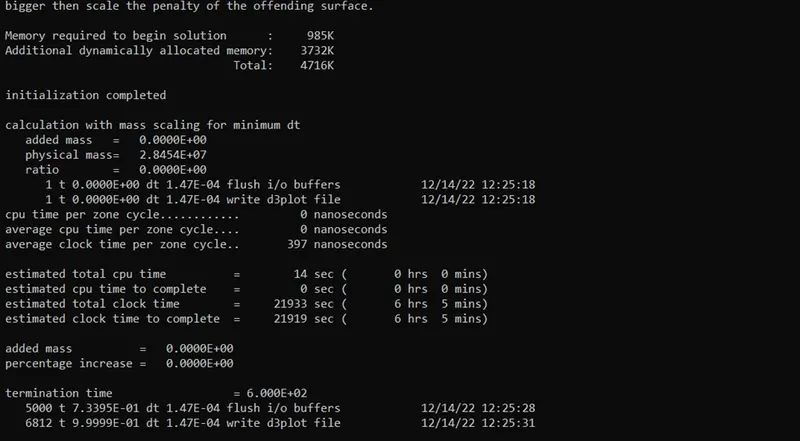
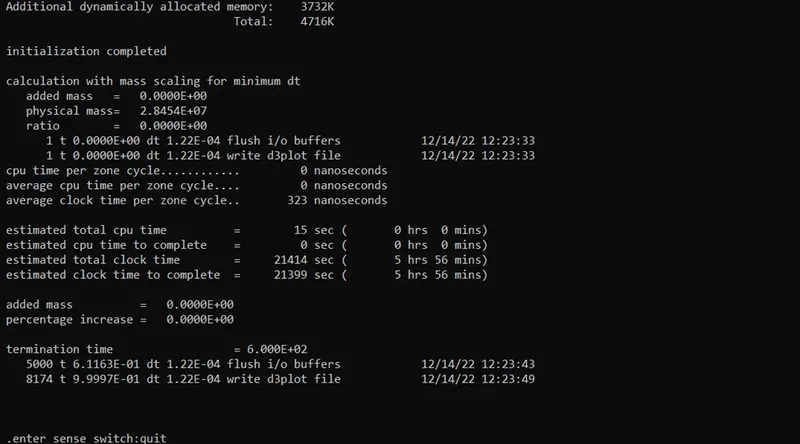
TAAFAC = 2.5
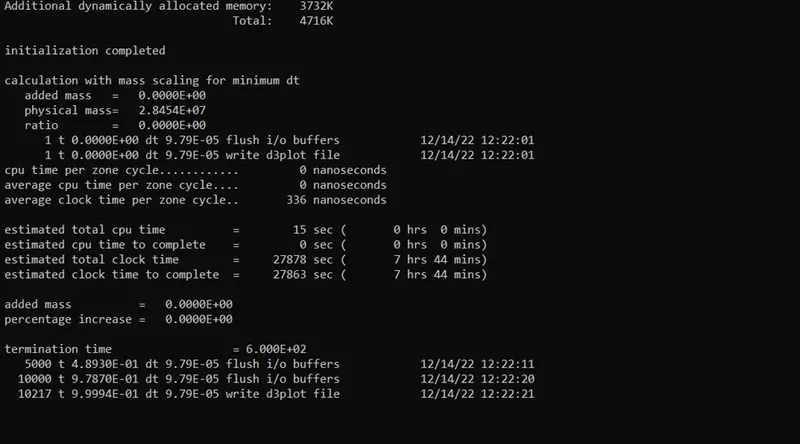
TAAFAC = 2.0
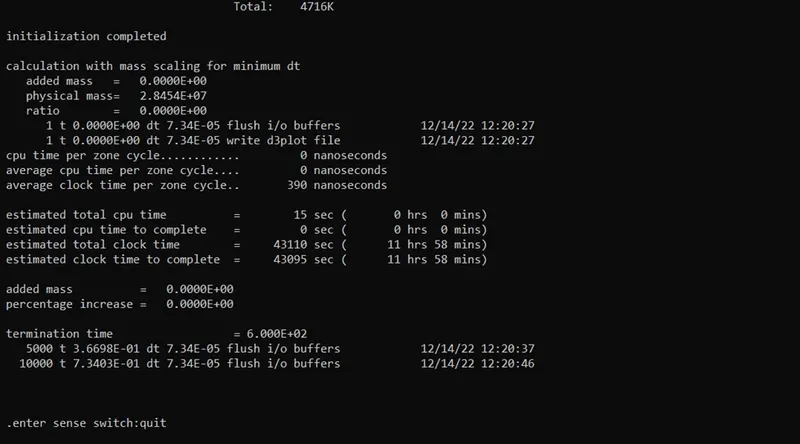
TAAFAC = 1.5
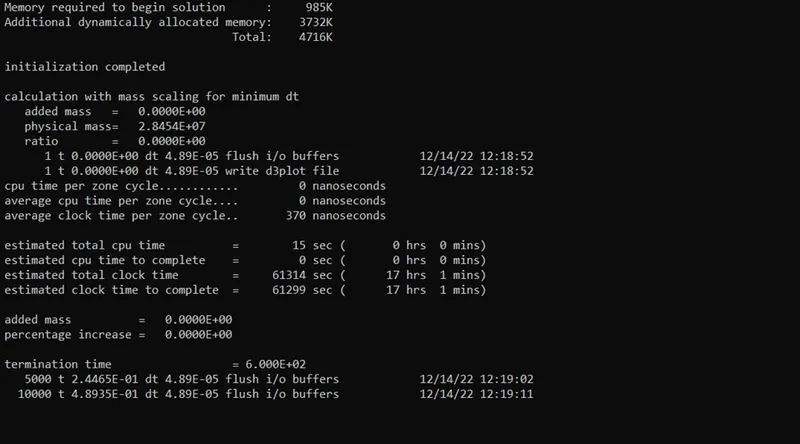
TAAFAC = 1.0
TAAFAC = 0.9
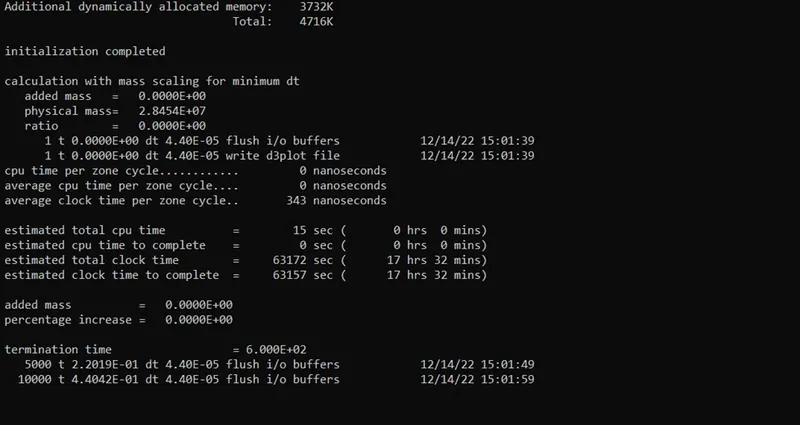
TAAFAC = 0.8
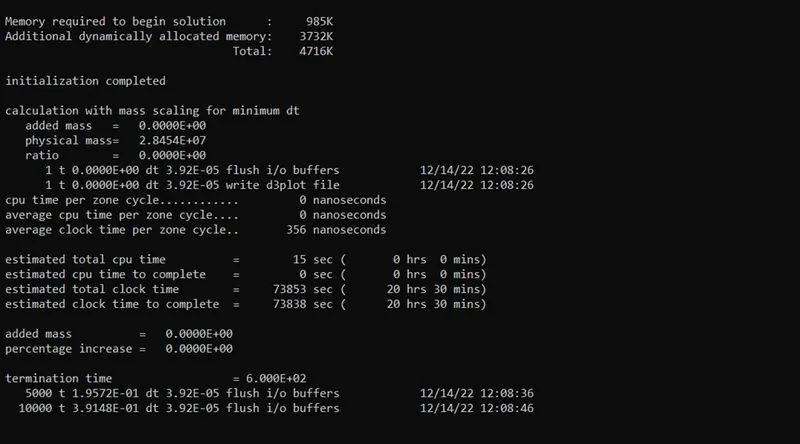
TAAFAC = 0.7
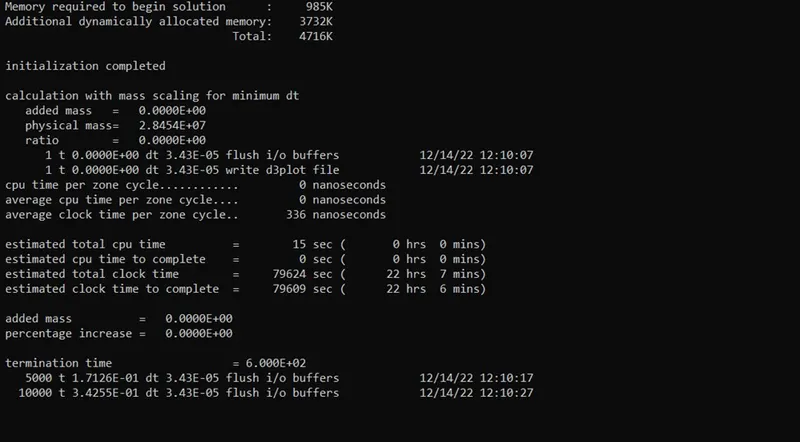
TAAFAC = 0.6
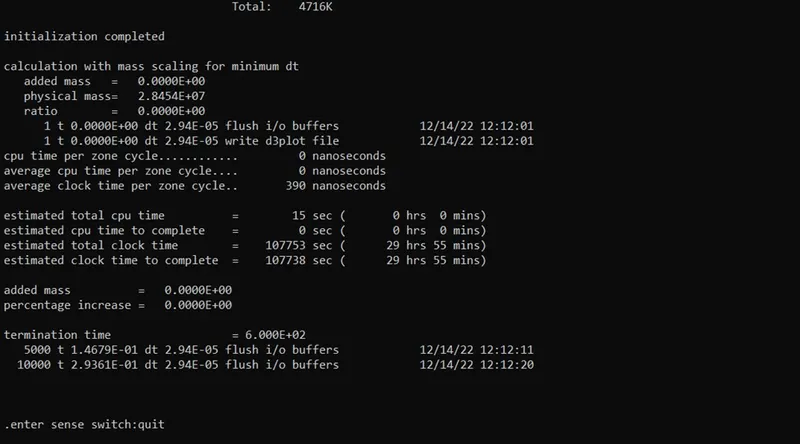
|
TSSAFC |
Time step |
|
3.0 |
1.47X10⁻⁴ |
|
2.5 |
1.22X10⁻⁴ |
|
2.0 |
9.73X10⁻⁵ |
|
1.5 |
7.34X10⁻⁵ |
|
1.0 |
4.89X10⁻⁵ |
|
0.9 |
4.40X10⁻⁵ |
|
0.8 |
3.92X10⁻⁵ |
|
0.7 |
3.34X10⁻⁵ |
|
0.6 |
2.94X10⁻⁵ |
From above table it is evident that by increasing TSSFAC value time step will increase.
Explicit
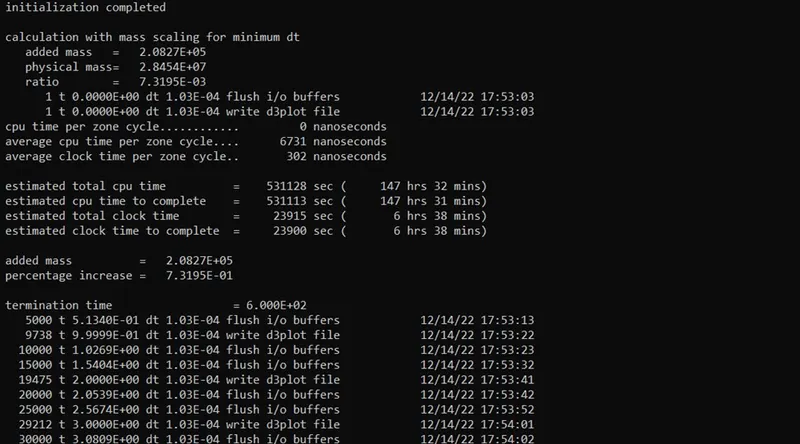
TSSFAC = 1.300000 and DT2MS = -7.900E-05
Implicit
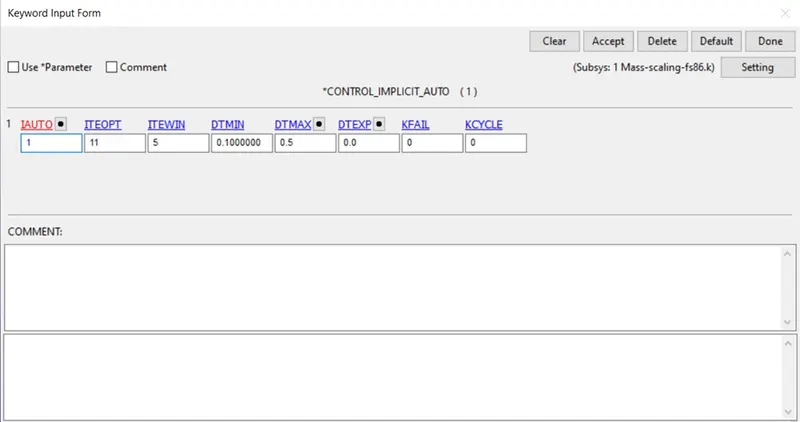
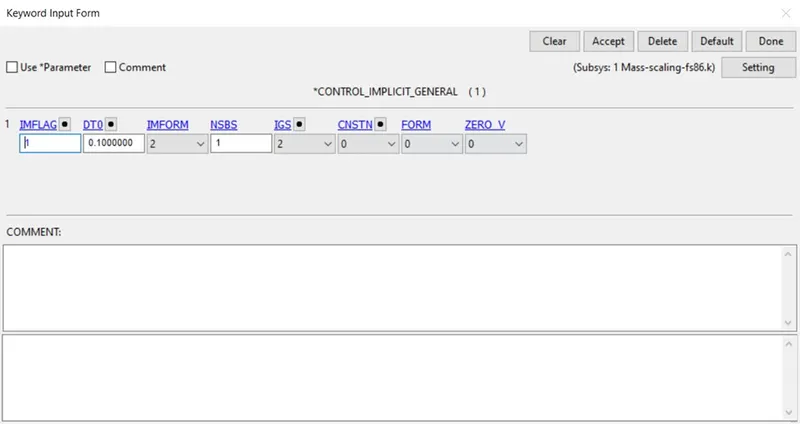
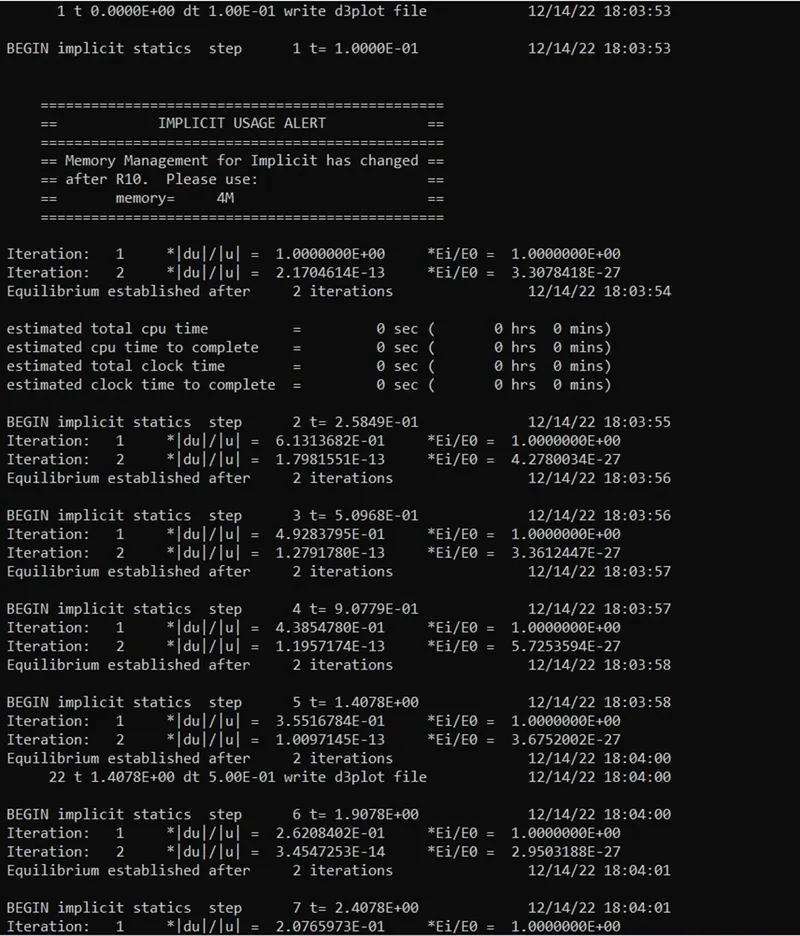
In implicit analysis two cards are introduced in the existing model i.e.
Implicit auto and Implicit general
Conclusion
From above trial and error, it is evident that by reducing TSSFAC time step is reduced and by reducing DT2MS mass is added and step size is also reduced.
For Explicit Analysis time has taken 22 mins.
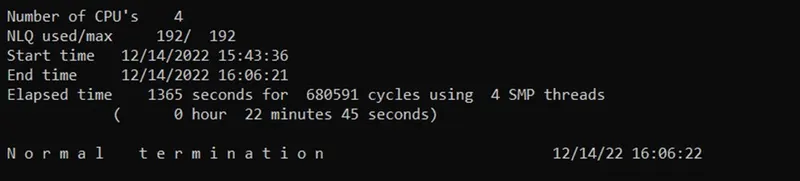
For Implicit Analysis time runs till eternity.