Week 8 - Challenge 6 - Core & Cavity Design
SWITCH BEZEL
Aim:
To design the complete solid model of Switch Bezel with the help of Class A surface(input) by creating the tooling axis and analysing the draft angle.
Draft angle:
Draft angle (the degree of taper of the side wall of the mold or the angle of clearance designed to aid removal of a part from a mold) increase causes a linear decrease of the force required to remove a molded object from a mold. It is also used to avoid one of the plastic defects while casting is said to be a Drag lines.
Tooling Axis:
The tooling axis is a direction along which the core and cavity tends to move. Here the tooling axis is created in direction, which is normal to the surface of the Switch bezel bottom base.
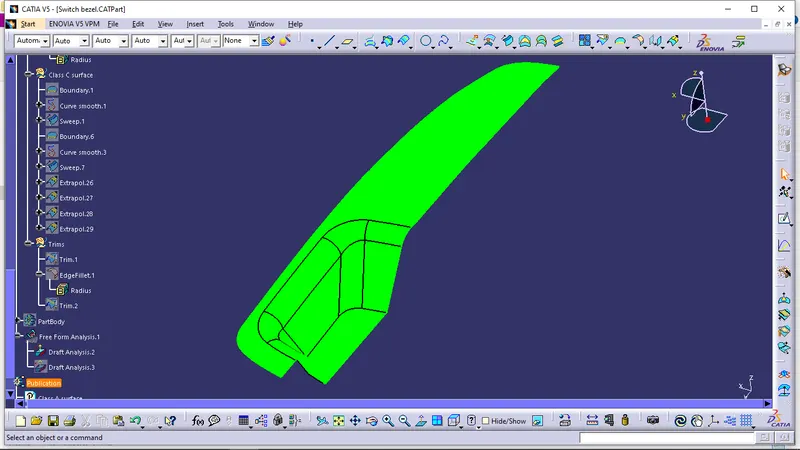
Draft Analysis of Class A surface:
The minimum draft angle for the design of plastic components is 3 degree.
Core and Cavity Block:
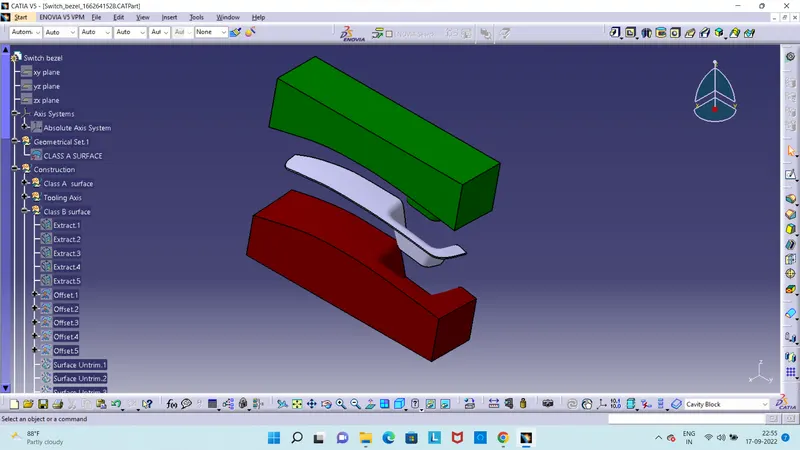
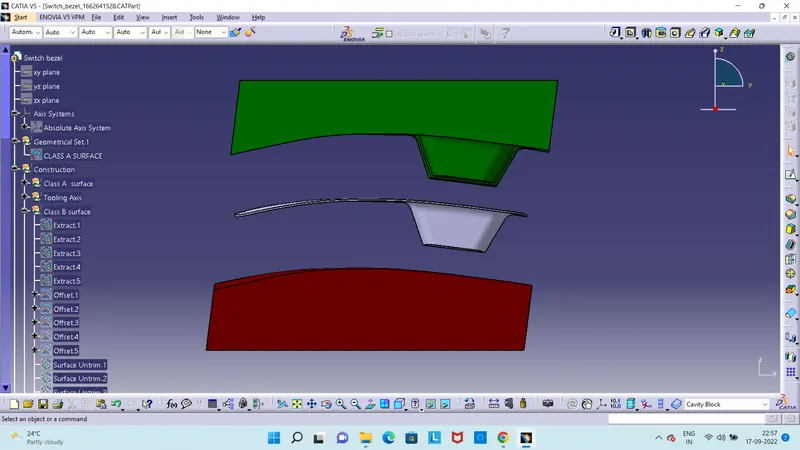
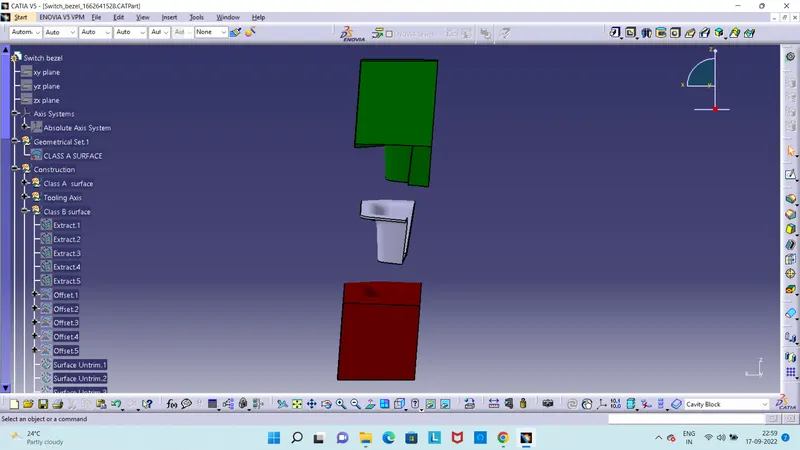
The Mould Core & Cavity are the shaped sections in either half of the mould tool which give the plastic product its final shape. The hot molten material is injected into the core & cavity and then sets hard into shape. The design of the core & cavity is essential in the correct formation of the product.
The core is the male part which forms the internal shape of molding. The cavity is the female part which forms external shape of molding.
Isometric view:
Front view:
Top view:
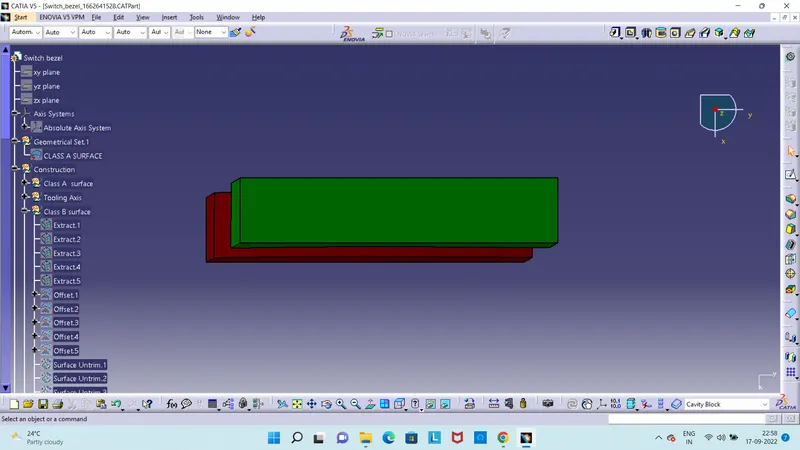
Side view:
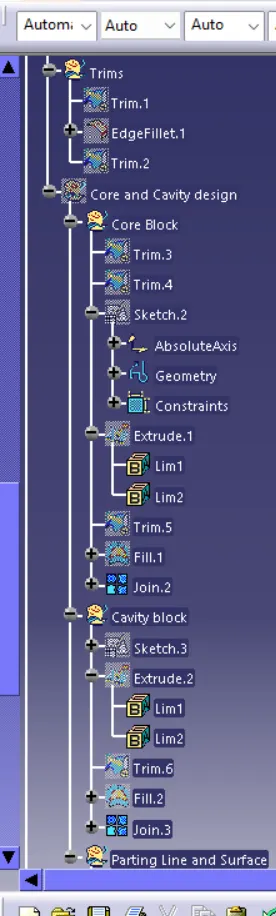
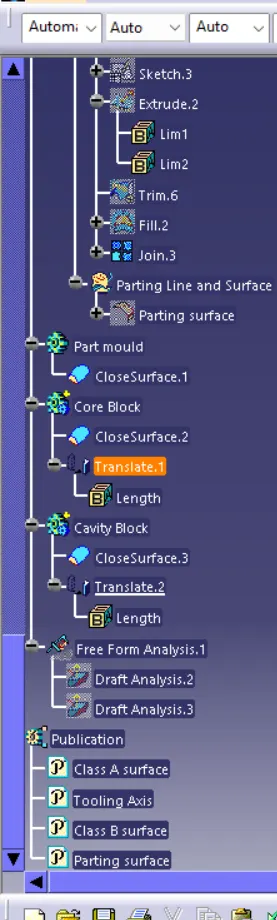
Tree structure:


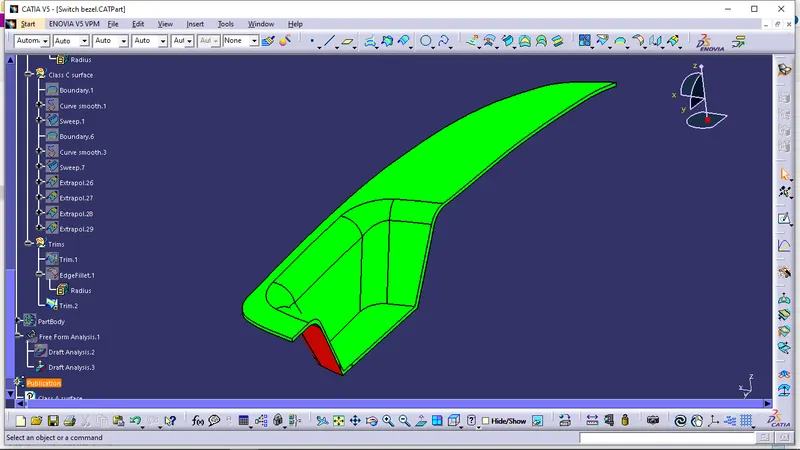
Draft Analysis of Final model:
Here the complete solid model is achieved the minimum draft angle of 3 degree.
Conclusion:
Thus the complete solid model of the Switch Bezel is formed from the Class A surface(input) and the analysed draft angle is 2.9 degree.