Hood design-Week 2
HOOD
Hood is the main component of a car at the front portion. It is used to decorate the car and add luxurious look. The shape of the hood is made aerodynamic in order to minimize the air effect. Hood is generally used to access the parts easily such as radiator, engine and many other parts. In automotive world the weight optimization plays an important role.
Pedestrian safety:
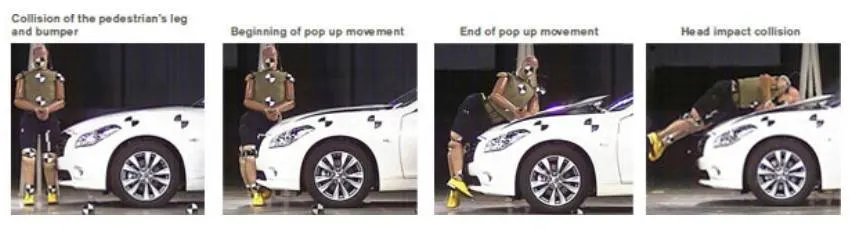
Pedestrian safety from front collision is also to be considered. The European New Car Assessment Program (Euro NCAP) is a European car safety performance assessment program which has developed test specification and rating systems for assessing pedestrian injuries during impacts with the front of vehicles such tests include a series of tests using impactors designed to mimic a collision at a speed of 40Kmph. They describe a situation in which pedestrian is situated laterally and a car first hits one of his legs. Tests are conducted on the leg, upper leg and most importantly head, as head trauma is most commonly responsible for casualties.
The parts of the hood:
- Outer panel
- Inner panel
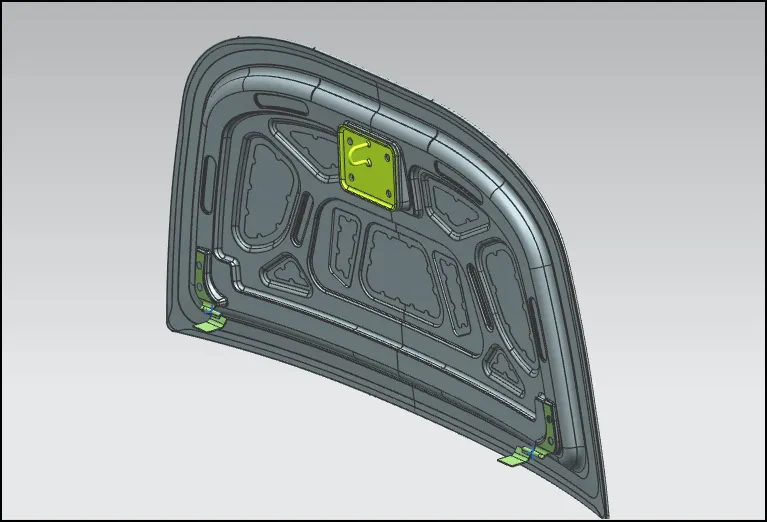
- Latch and striker
- Hinge Reinforcement
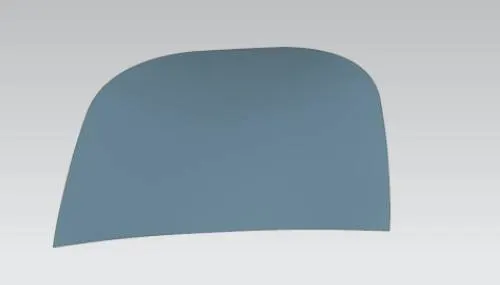
Outer Panel:
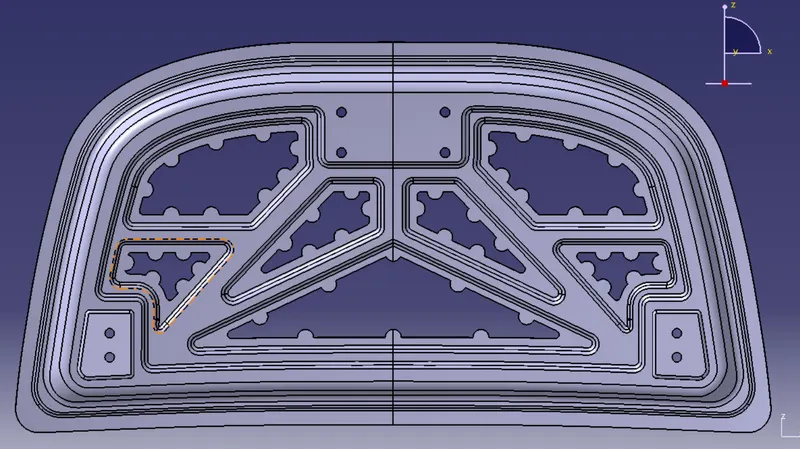
Inner Panel:
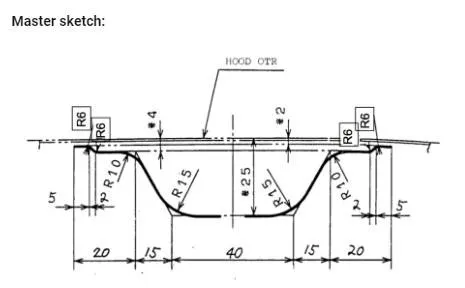
Master section:
This data is used for the design of our hood inner panel it gives all the information about the standard dimensions to be followed for the inner panel also information about radius values, maximum height of the hood inner panel from the top.
There are two types of support is there,
• Gas stay
• Support rod
1.Gas stay
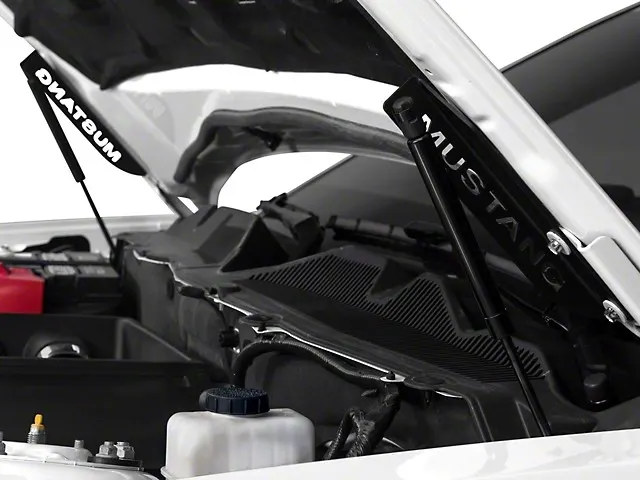
spring stays are designed to be used on upward lifting doors, once you have opened the door slightly the spring will push the door to the fully open position, Euro fit stock various size springs depending on the door size requirements. This is mostly used for where the car bonnet weight is heavy.Struts contain nitrogen gas under pressure and some oil to damp movement and to lubricate the seals.
2. Support Rod
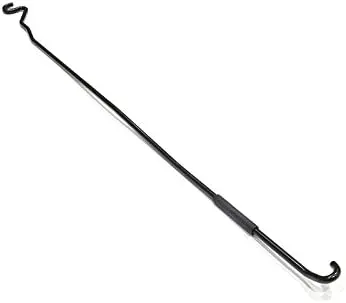
- Support Rod can be mounted with grommet side on the engine compartment of Body and rod locking hole on hood or vice versa.
- Grommet and the clip of the rod are standard parts.
Support rod is used to increase the support force, automatic buffering, stable and reliable, strong load-bearing capacity, safe use, not easy to fall, avoid hot hands, support the engine more easily, and balance the force without shaking
Hemming:
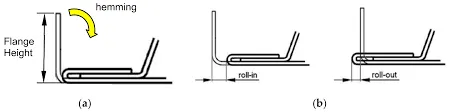
Hemming is a sheet metal forming process in which sheets are joined by bending it usually to 180°. Automotive body panels and automotive parts such as deck-lids, trunk-lids, doors, hoods and tailgates are formed by hemming process. Normally hemming operations are used to connect parts together, to improve the appearance of a part and to reinforce part edges.
Mastic Data Design:
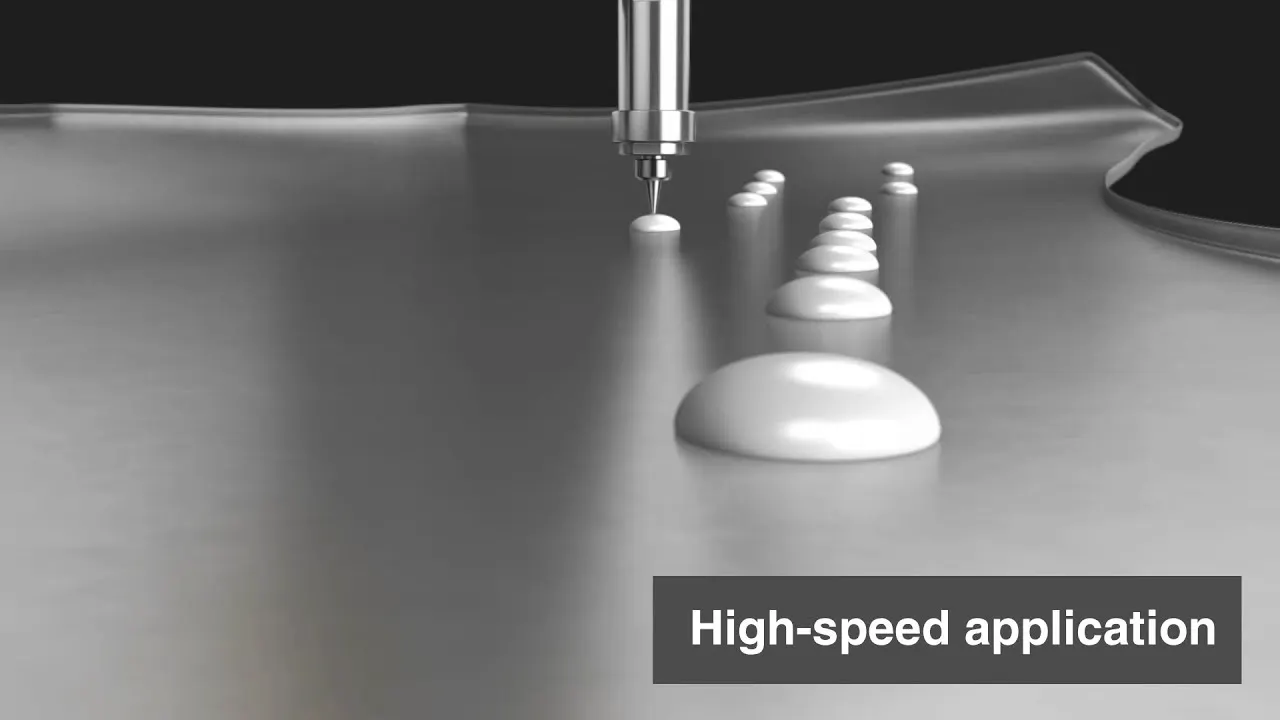
• The main purpose of the outer panel is for the aesthetic looks. Thus we cannot use bolts or welding. This has to be done with the help of the hemming and mastic sealants. Mastic sealants are elastic compound that behaves like the rubber. It is placed between the outer and inner panels. Initially is it in paste form, but after the hot furnace bath, it gets hardened thus joining the outer and inner panel. Mastic sealant has the tendency to increase the strength of the panel and has the influence of 80mm diameter.
Latch And Hinge Reinforcement:
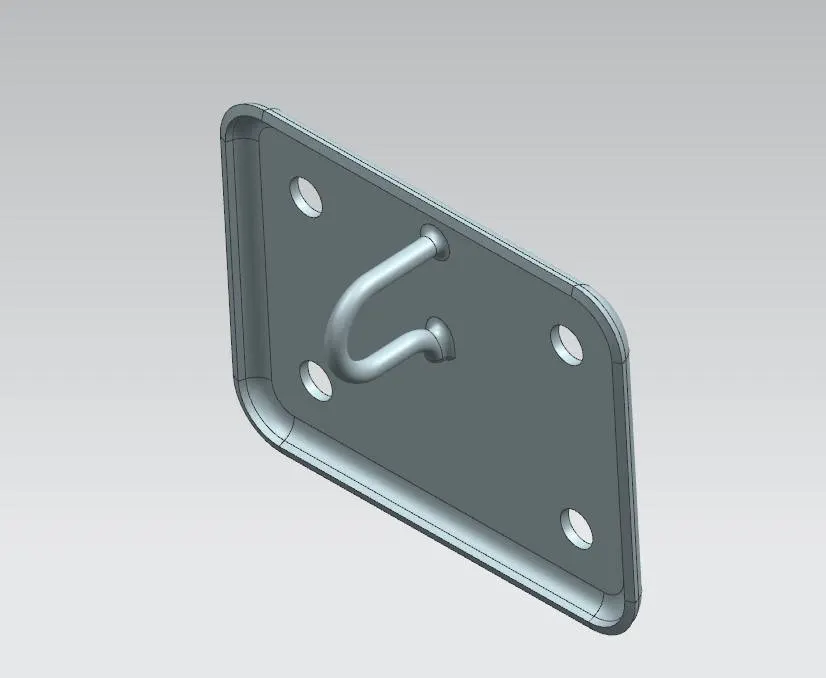
• To furthermore reduce the impact to the occupants inside the car, additional latch and hinge reinforcement to the hood. When latch and striker are placed, there is a drop in strength at that position thus reinforcement is required. Also, stiffness pads are placed to reduce NVH. Hinge and latch reinforcement thickness is kept at 1.2 mm but it may vary.
Hinge and striker:
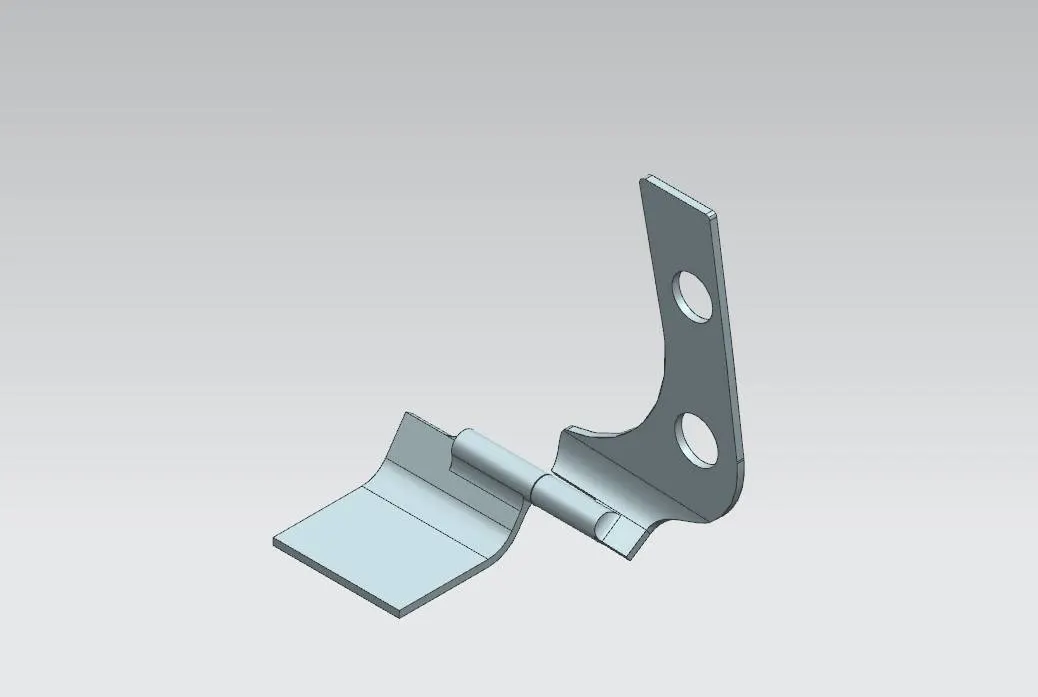
• For the proper opening and closing of the hood, the striker should be perpendicular to the trajectory of the hood. For this, the hinge is assembled at its position. Once it is placed, the hinge axis is drawn. Using the hinge axis as the center we draw a big circle to the position the latch in such a way that it is perpendicular to the hood trajectory.
Embossing Operation:
• Sheet metal embossing is a stamping process for producing raised or sunken designs or relief in sheet metal. This process can be made by means of matched male and female roller dies or by passing sheet or a strip of metal between rolls of the desired pattern.
• Embossing is done by pressing a sheet of paper (or another substrate) into a female die, that has a design engraved or etched into it. This is usually done with a male counterpart underneath the paper so that the paper is sandwiched between the two and the design is transferred to the paper.
Purpose of Embossing Operation:
• Embossing enables you to highlight important elements of your printed products, such as letters and designs, to make sure they stand out. Embossing can also be combined with foil stamping to help create the effect of a 3d image on printed paper that really shines.
Assembled view of hood: