Week 8 - Challenge 4 - Coin Holder Design
AIM: To create a Solid COIN HOLDER from the given Class A Surface as Input.
OBJECTIVE:The objective is to create COIN HOLDER using Class A Surface along with draft analysis and following the OEM Design standards
INPUT CLASS A SURFACE:
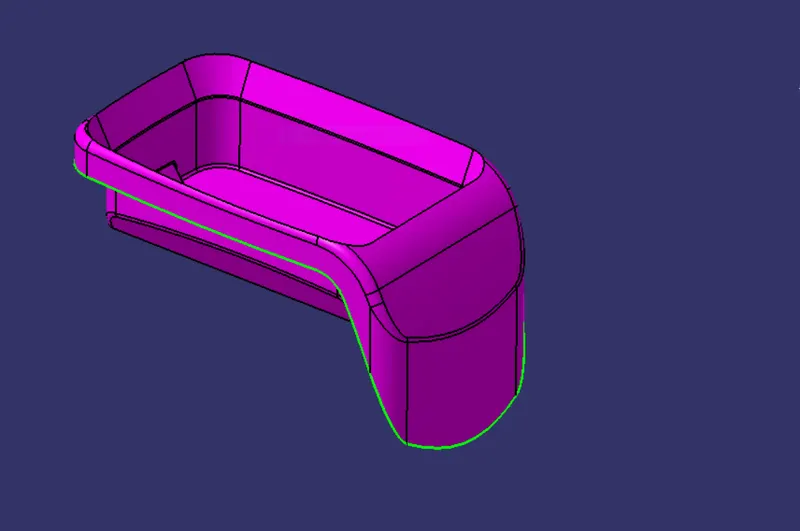
SOLID BODY :
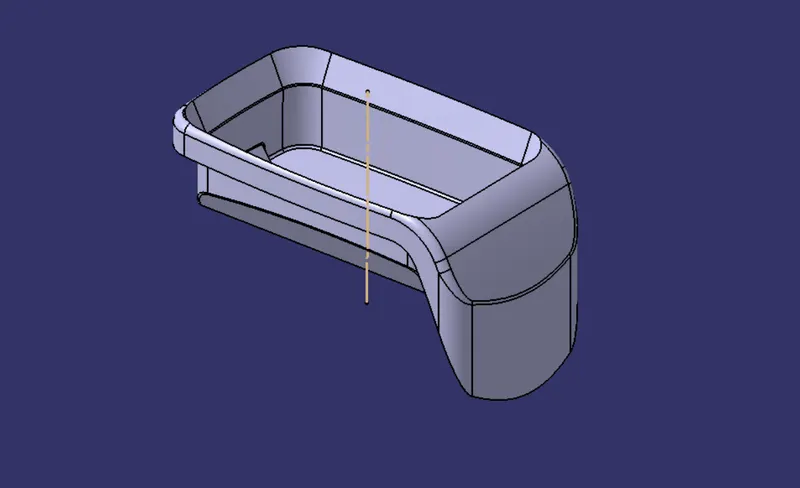
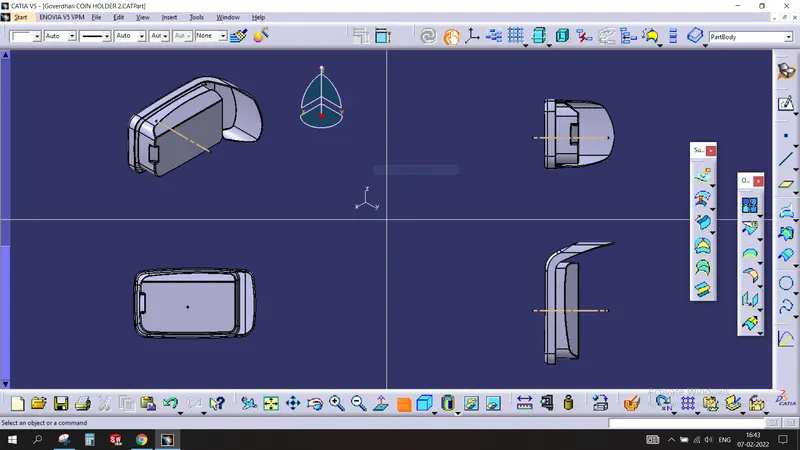
TOOLING AXIS CREATION:
- Class A surface is first analysed for creation of tooling axis which tells about the direction of the mould or core and cavity slides.The tooling axis plays a vital role in the plastic design as there should be clearance between the tooling axis and mould.
- The minimum of 3 degree draft angle is provided on the surfaces which are 90 degrees to avoid the Interference between the mould and Injection moulding machine.
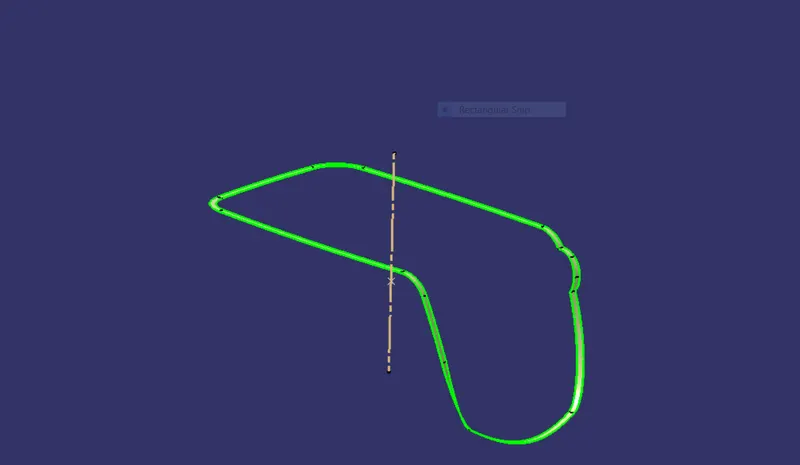
- Here in this CLASS A surface the side walls are having 0 degree, so here we drawn a centre line to the base surface and treated it as the TOOLING AXIS.
- We need to interact with the class A surface designer and to inform whether it is possible to give a minimum of 3 degree draft on side walls.
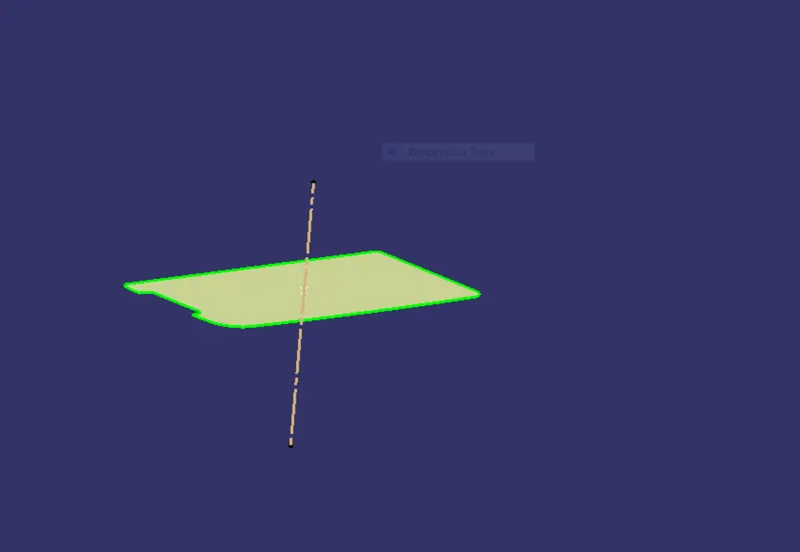
CLASS B SURFACE:
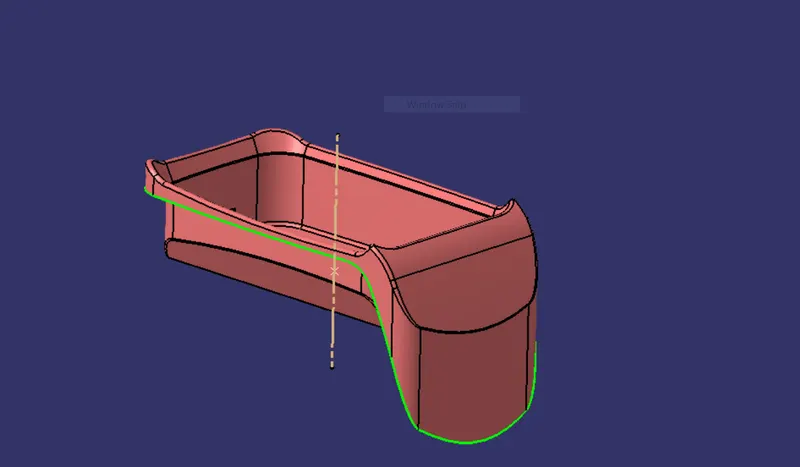
CLASS C SURFACE:
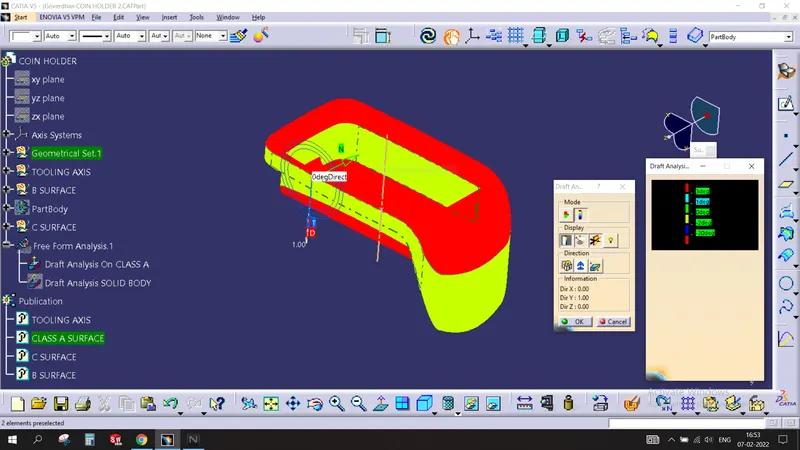
DRAFT ANALYSIS:
- Draft angle is nothing but the amount of the taper is provided on the core and cavity for ease ejection of the mould after cooling.
- After Injection moulding the plastic parts shrinks and gets stuck to the core and it will make it difficult to remove the plastic part.
- If no draft or taper is provided on the core and cavity the inner layers of the platic part will undergo wear and tear and there will be NO smooth surface finish.
- The draft angle is provided on both the inner and outer walls of the core and cavity.
- The Nominal draft angle is 3 degrees
- The 5 degree draft can be given by the manufacturing cost will be more.
- The 7 degree draft is given for the textured surface.
STEPS FOLLOWED FOR THE DRAFT ANALYSIS:
- The part created has to be changed to the material mode.
- compass is enabled and aligned to the tooling axis.
- Lock command is used to lock the position of the compass.
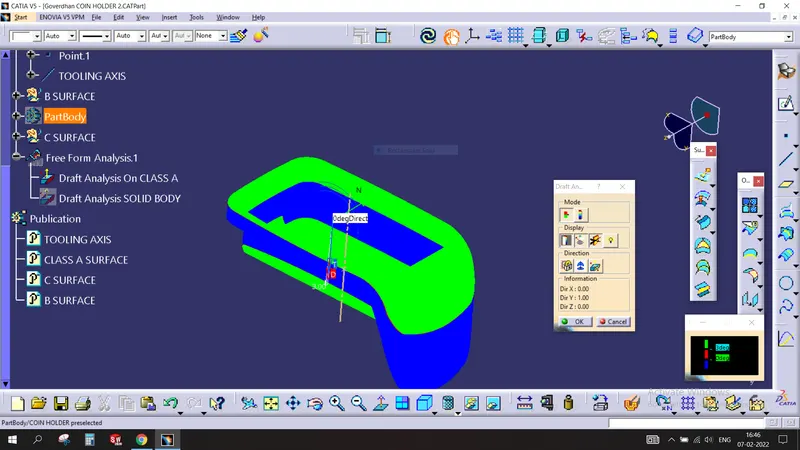
- colour codes are classified and draft angle is analysed.
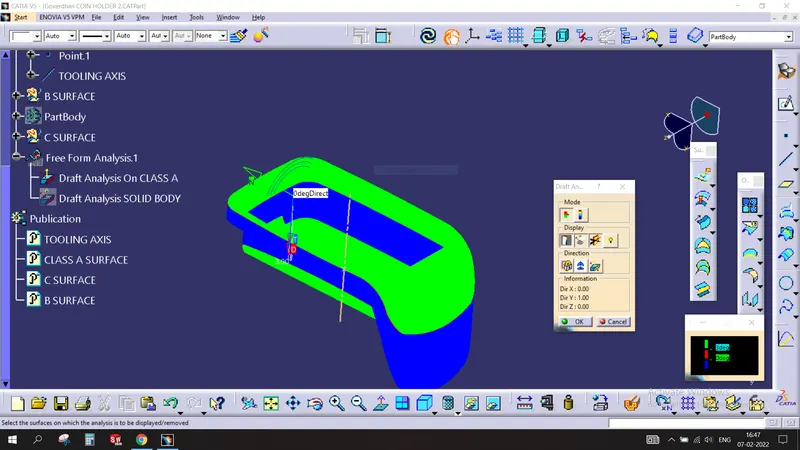
- Running point analysis is used to display draft angle at a specific position.
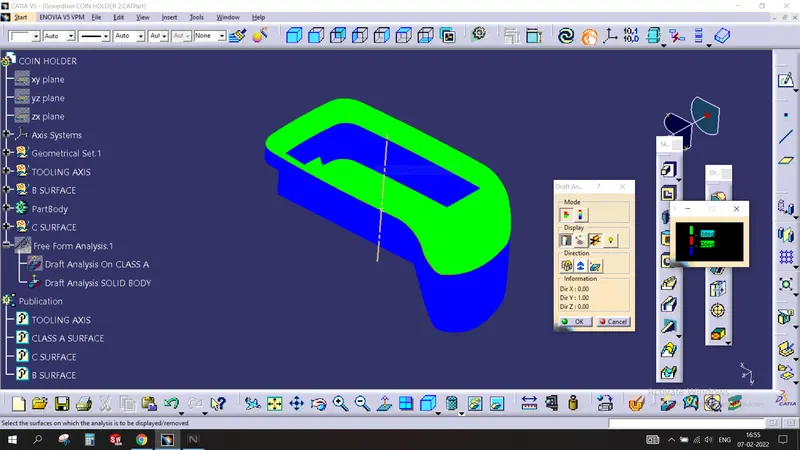
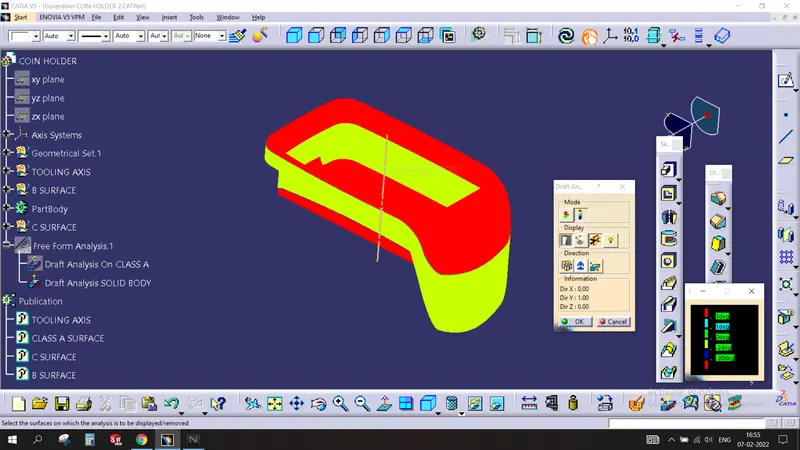
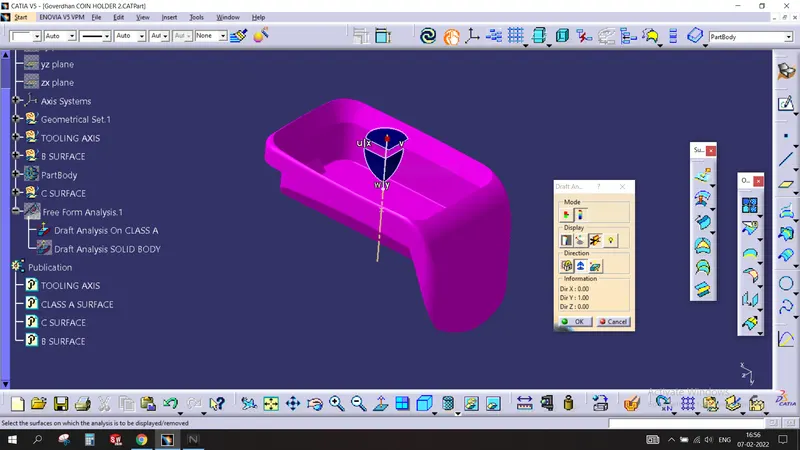
Here I have done draft analysis on both class A surface and final solid body.
Draft Analysis On CLASS A Surface:
Draft Analysis On solid body: