Week 8 - Challenge 4 - Bumper
TITTLE: BUMPER
AIM:Bumper plastic component design usin CATIA V5
OBJECTIVE: create center console coin holder plastic design from given class A and draft analysis of the component
INTRODUCTION:
pumber is a plastic component used in vehicles, the Class A surface is provided for creating a solid component with a thickness of about 2.5mm.
Class A surface:
It is also called a styling surface, which consists of textures and represents the part having surfaces with a curvature continuity.
Class B Surface:
It is the surface that is created on the B-side of the part which majorly doesn’t consist of any textures, but the surface should have tangent continuity.
Class C surface:
It is the surface that actually joins both A and B surfaces to create a closed surface part.
PROCEDUR
Import the part and check for the surface continuity by using the Boundary command which shows the open surface.
DRAFT ANALYSIS:
The Draft Analysis allows the user to easily analyze a part for proper draft angle. A Draft Angle describes the amount of taper for molded or cast parts perpendicular to the parting line. Find the Draft Analysis in Tools tab. Draft Analysis is applicable for 3D part models.
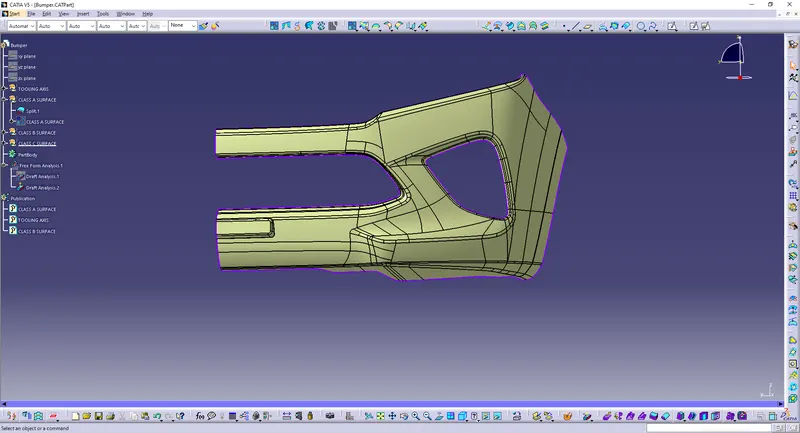
CLASS A: Following surface is given as the input for the component creation.
To continue with the design process first we need to find out the tooling axis for the surface and check for all the drafts using Draft Analysis tool of CATIA.
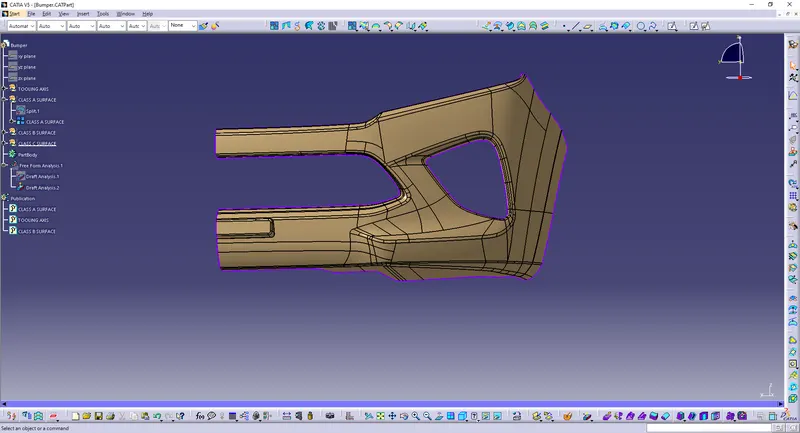
Draft Analysis for Surface A:
The analysis is done for 3degree draft. So as can be seen all the surfaces are more than 3deg.
Creating of Tooling Axis:
- Create an intersection of CLASS A surface with ZX plane and from the intersection create the tooling axis as shown below.
-
A) TOOLING AXIS CREATION:
- Create a point on class A surface with the aim to move the main tool for component creation
- .
- Mask an axis over the point created with the same directions as the main axis
 .
.- Using Intersect command from Generative Shape design select the YZ plane as the first element and the class A surface as the second element
 .
.- After creating the intersecting lines select the Line command and join the vertices which show the most possible draft angle manufacturable and bisect those two lines over the axis point we selected at the first

- TOOLING AXIS IS TWO METHOD
BISECTING
NORMAL TO SURFACE
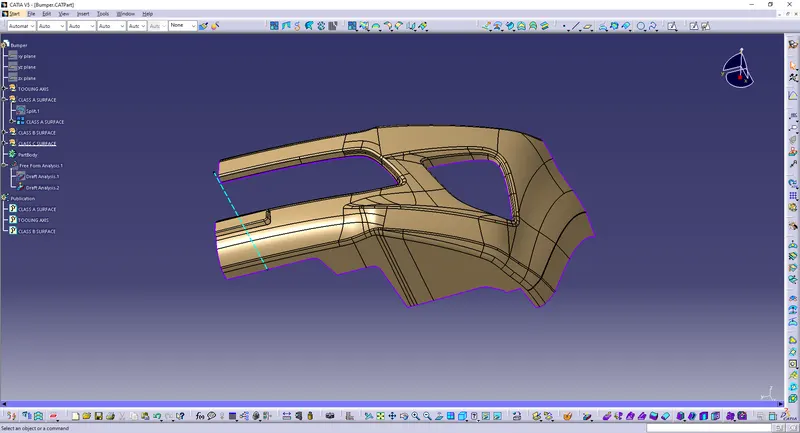
I follow in normal to surface Refer to circle and after create in point in mid cicrle and line devolped in z axis an they analysis in class a surface.
Here, Line shown in dotted pink is our tooling axis.
Creation of Class B:
- Now for Class B creation, we have extracted surface from Class A and them to obtain the original parent surface.
- And using a boundry
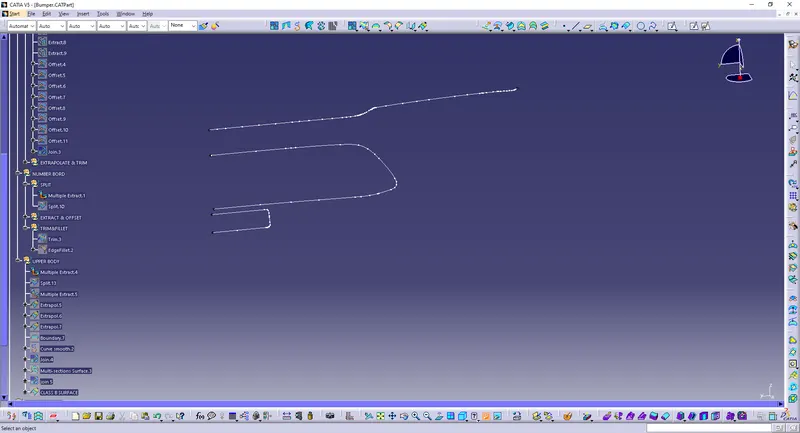
- These surfaces are then offset to the required thickness.
- And to using a extrapolate in point to continu
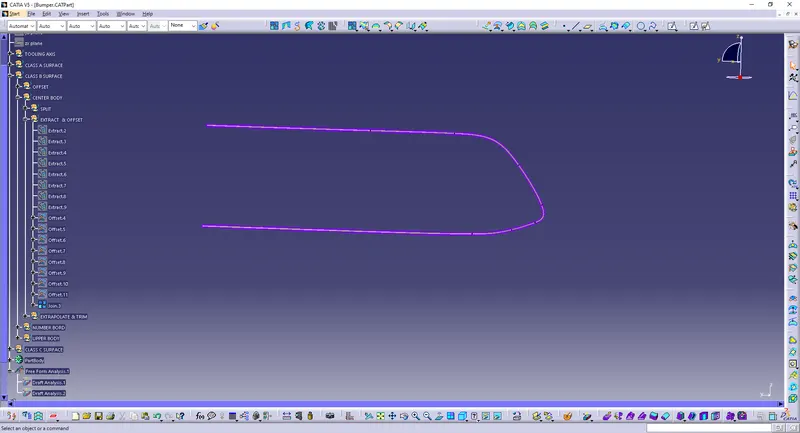
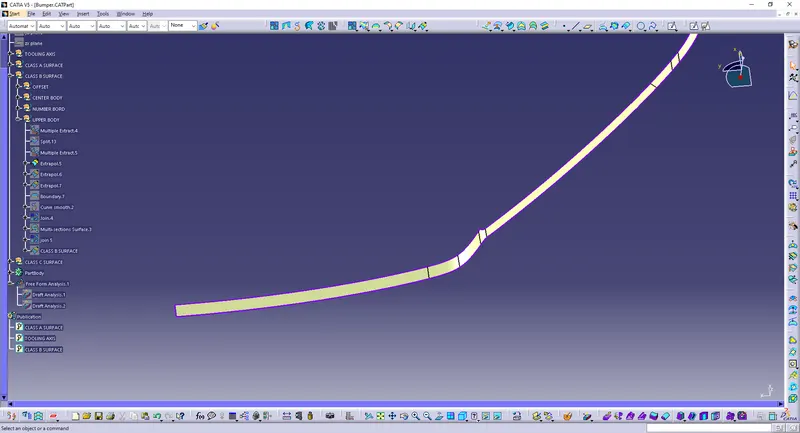
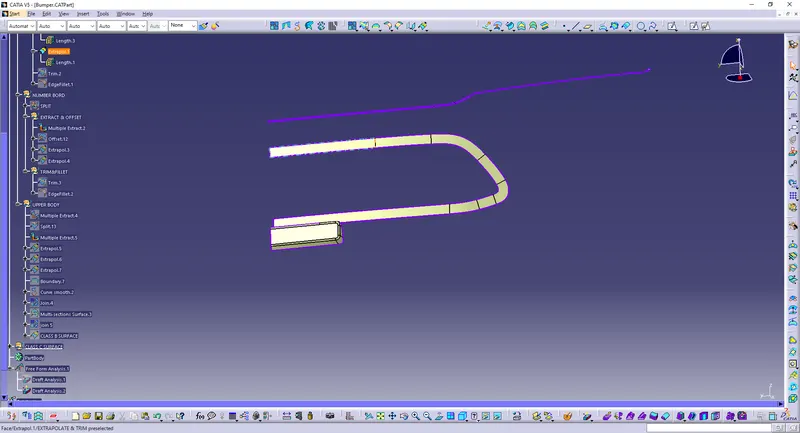
- After extract and offsetting, all the surfaces are trimmed into the required shape and requred fillet are given to the surface
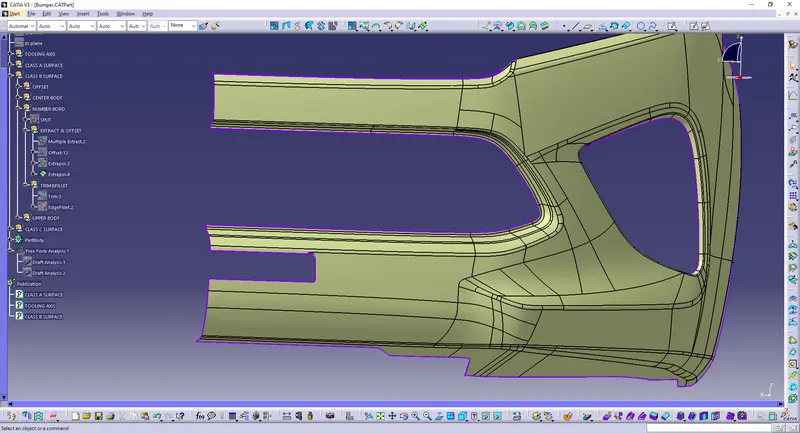
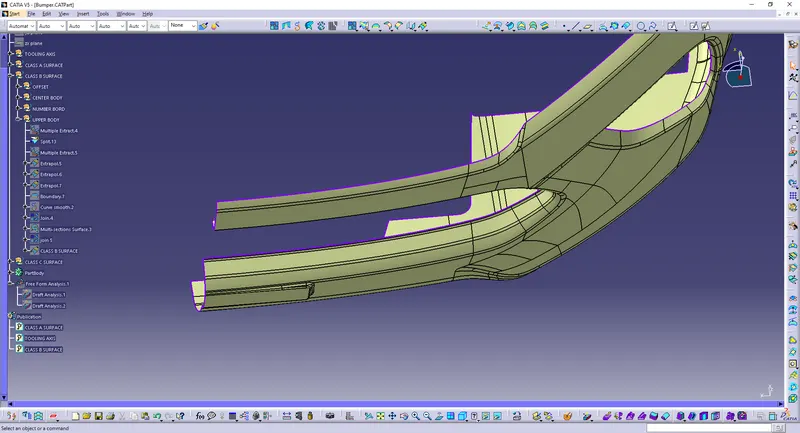
- After all the surface are trimed in to the requred shap
- Required fillets are given to the surfaces.
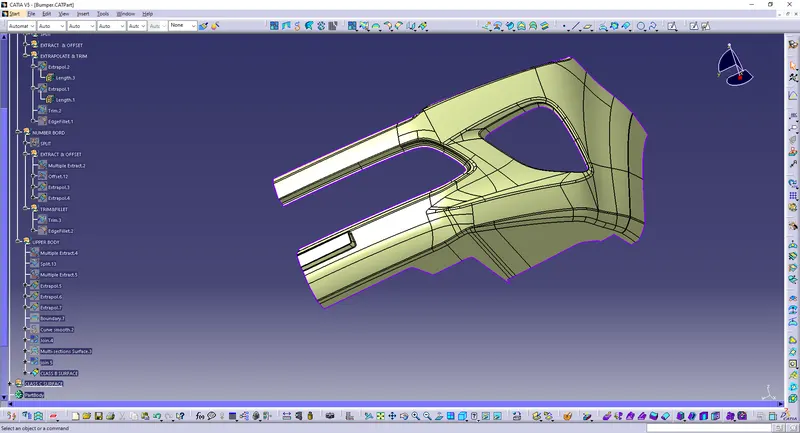
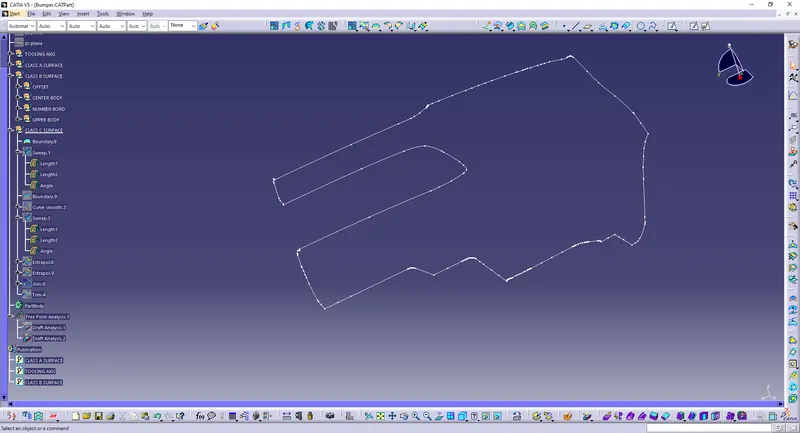
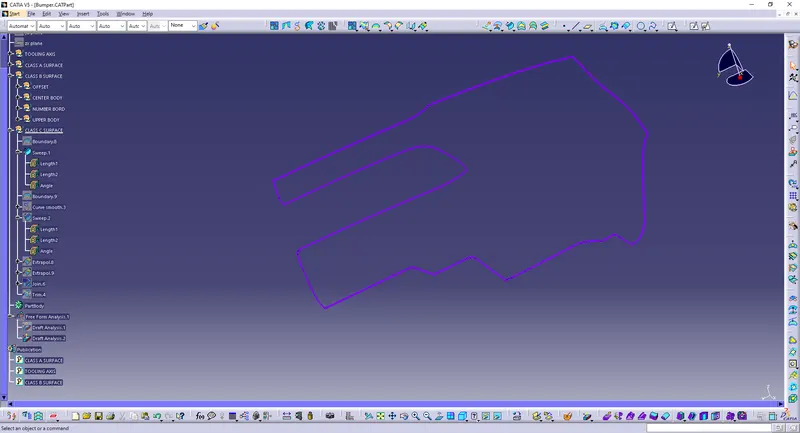
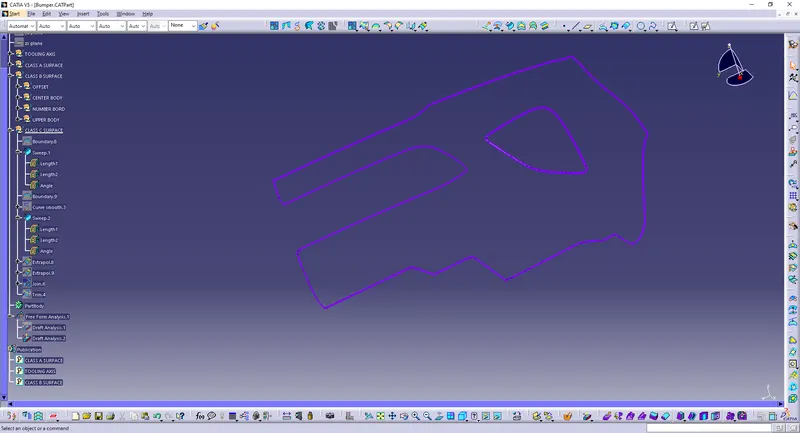
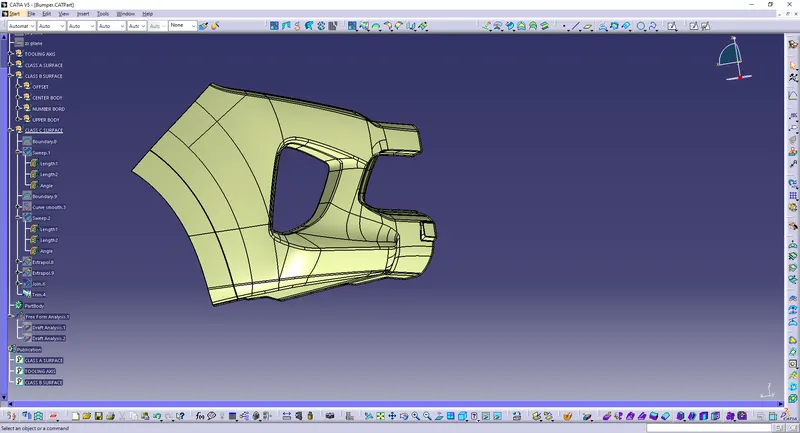
Creation of Class C:
- For creating this surface we have extracted the boundry of Class A using multi-extract and then converted to smooth curve.
- Now this smooth curve is swept along the draft direction with a 90deg draft.
Final Trims:
Class A Class C and Class B Join:
To make sure that there is not any open boundry between class A and class C, we have used join option to created the single body. This is done to make sure that the parting line doesn't lie between the these two surfaces.
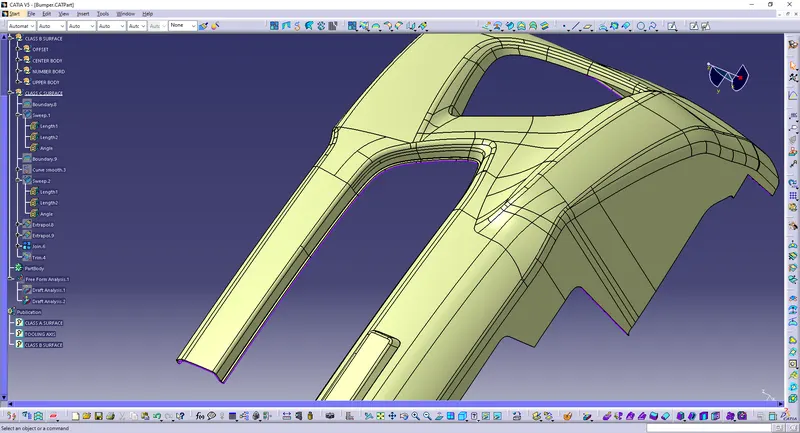
For this we have trimmed the above shown surface with the Class A,B and C surface using trim feature.
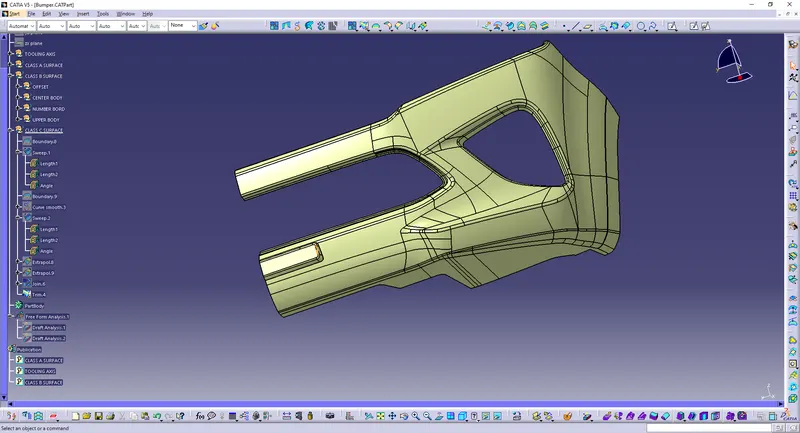
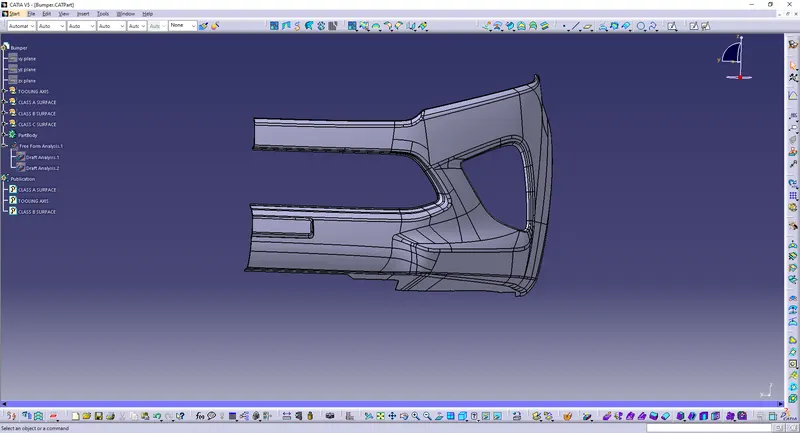
All the main features are published as can be seen in the image shown above.
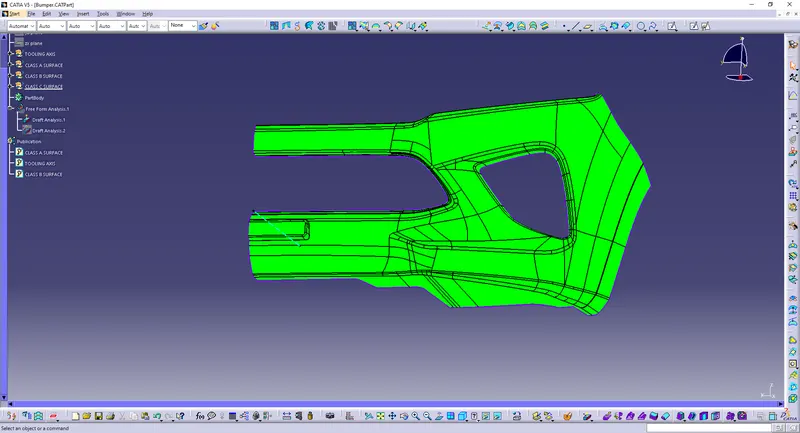
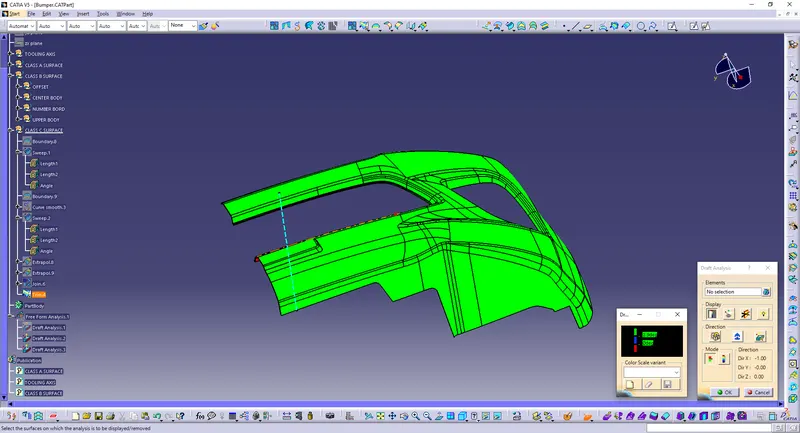
Draft Analysis on the Final Component:
For this analysis, main tooling axis is taken draft reference.
Following results were obtained:
MATERIAL CHOSE:
PLASTIC ABS SHEET
Acrylonitrile butadiene styrene, or ABS plastic, is one of the toughest and most beneficial plastic materials to use across various industries. Similar to acrylic mirror sheets, ABS plastics offer extreme resistance to impact, making them a great, durable solution for heavy-duty applications. Due to their low cost, investing in ABS plastic sheeting is a smart decision for saving money long-term.
Our selection of ABS sheet plastic has a haircell finish and includes thicknesses of 1.5mm-6mm to meet the individual requirements for each of our clients. Our products are either available in 48" X 96" or 72" X 96" options, but can be manufactured in a range of thicknesses from 200 microns to 5mm with a maximum width of 1600mm. However, you can order specialized ABS plastic sheets with extruded layers of acrylic sheet if needed. And, custom colors can be made-to-order but may be subject to a minimum order requirement.
CONCLUSION:-
Finally the Class – A, B&C surfaces with the Tooling Direction have been Published and the BUMPER is moved on to the designing of the next operation – the creation of B-side features.