Week 8 - Challenge 3 - Coin Holder Design
- Aim - This project aims to create a Coin Holder plastic component using the given class A surface following the OEM standard. and perform the draft analysis.
Objective -
- Ensure Proper Tree Structure.
- Geometrical sets should have a proper name based on the sketches present inside them.
- All the sketches should be created under the Geometrical set.
- Use the Close Surface feature to make a solid body from the surface.
- To publish the Tooling Axis, Class A.
Design methodology -
- Insert the class A surface of the Coin Holder in CATIA software.
- Determining the tooling axis for the Coin Holder.
- Creation of class B surface.
- Creation of class C surface.
- Join the Coin Holder's class A, class B, and class c surfaces and ensure all the surfaces are closed surfaces.
- Use the Close Surface feature to make a solid body from the surface.
Theory -
1.Tooling Axis - Generally 3 methods used to create the tooling axis.
- Normal to plane (Large surface avilable).
- Bisecting the line.
- Point and Direction.
For Coin Holder Normal to plane (surface ) is used for tooling axis as Class A surface clears in draft analysis.
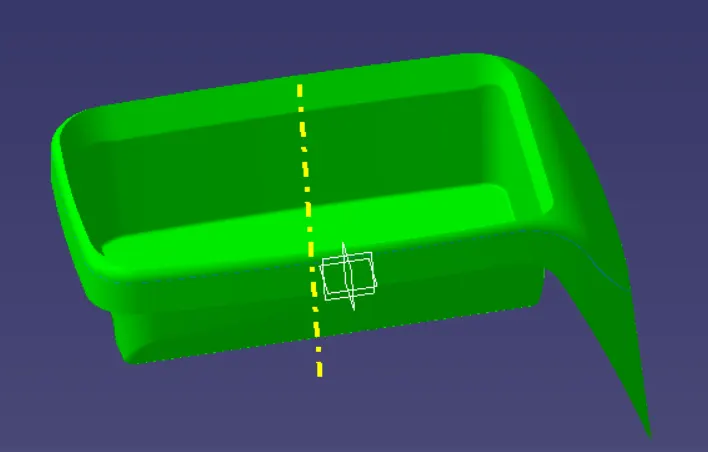
2. Creation of B surface - Divided the class-A surface into 5 different surfaces as shown below.
- Side Walls
- Base
- Top Walls
- Top Flanges
- Block
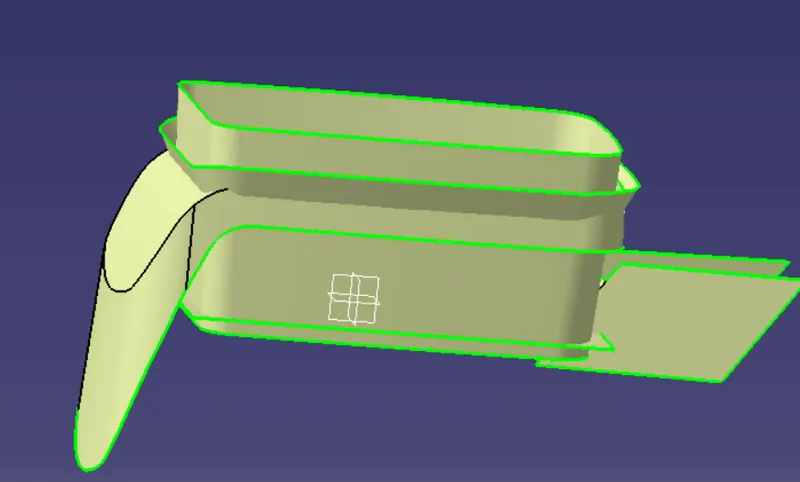
After triming of these we get a B-Surface.
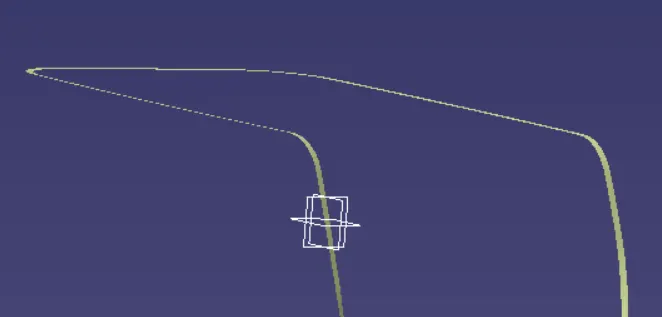
3. Creation of C Surface -
The edges of the Class-A surface are extracted using the multiple extracts and then with help of sweep command we extrapolated at 90 Degree.This method used because closing surface is perpendicular to the tooling axis.
4.Final Trims -
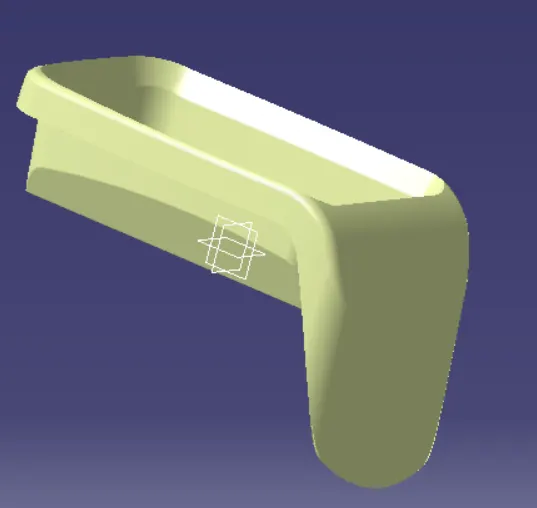
Joining the Surface A + Surface B + Surface C
And last Close the surface.
5.Draft Analysis -
Draft Analysis is used to check the whether the minimum draft of 3deg is maintained or not.The draft analysis command enables you to detect if the part you drafted will be easily removed. This type of analysis is performed based on color ranges identifying zones on the analyzed element where the deviation from the draft direction at any point, corresponds to specified values.