Week 8 - Challenge 2 - Base Bracket Design
DRAFT ANALYSIS AND PLASTIC COMPONENT MODELLING FOR BASE BRACKET.
AIM: To perform the draft analysis, tooling axis creation for both the given class-A surface and the final plastic component.
OBJECTIVES:
BASE BRACKET
- Explaining the draft analysis and the tooling axis creation.
- Creating the tooling axis particularly the bisecting method.
- Draft analysis report for both the given class –A surface and the final plastic component.
ABSTRACT:
DRAFT ANALYSIS: The major consideration of Draft analysis is whether sufficient Draft angle is provided on the component. Components while designing should be provided with a considerable amount of draft angle depending on the manufacturing consideration. For plastic components we provide a draft angle of 3 degree. But for Automotive sheet metal parts, it will be selected as inputs.
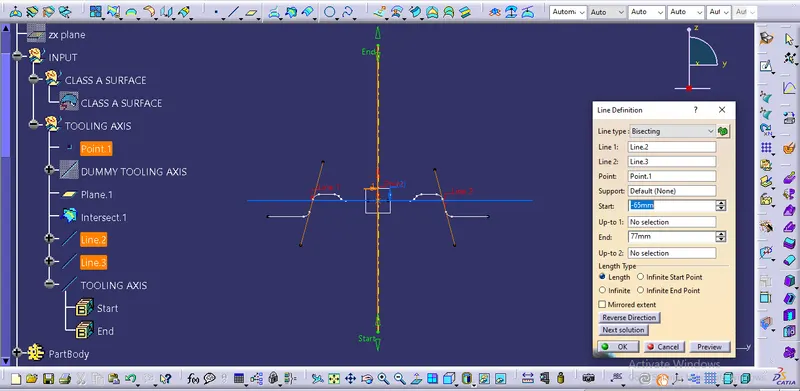
TOOLING AXIS CREATION: The direction in which the mold or core and cavity opens is the tooling axis. With the help of the tooling axis created along the X-axis and the Y-axis, these tooling axis are used for creating the Bisecting method. Where the two lines and point will be selected as inputs.
PROCEDURE TO PERFORM A DRAFT ANALYSIS AND TOOLING AXIS CREATION IN CATIA
STEP 1
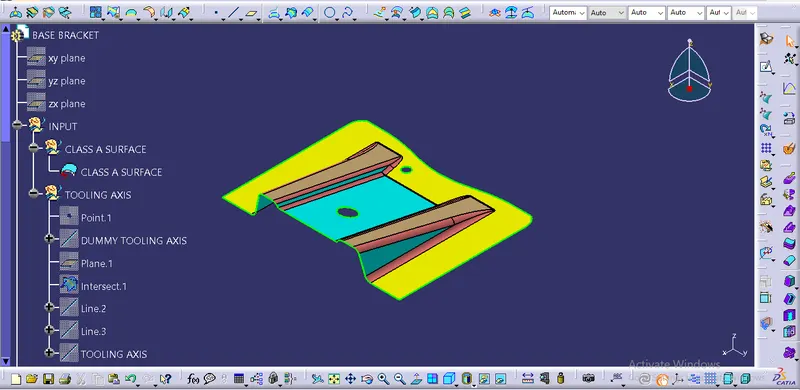
Connectivity of class-A surface: First checking the connectivity of the class-A surface, this can be done by creating boundaries or by using join command and see how well it is connected. Just ensure there is no gap between component or surfaces. This is the first design step to check continuity and the Quality of class-A surface.
STEP 2
Analyze visually for the best possible tooling axis for the component.
Checking possibilities in all three X, Y, and Z axis directions and finding what are the problem creation parts of the component.
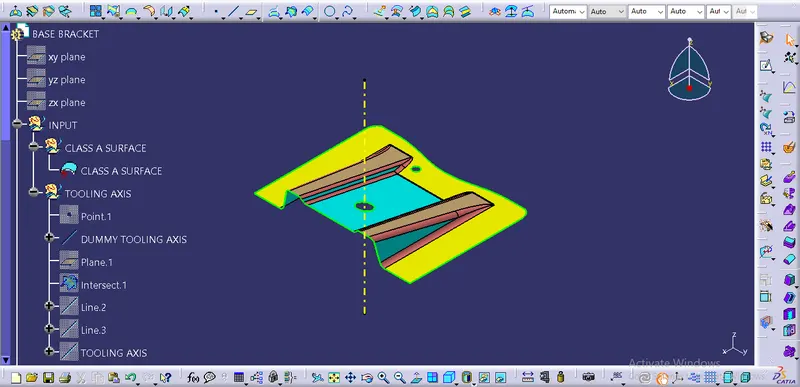
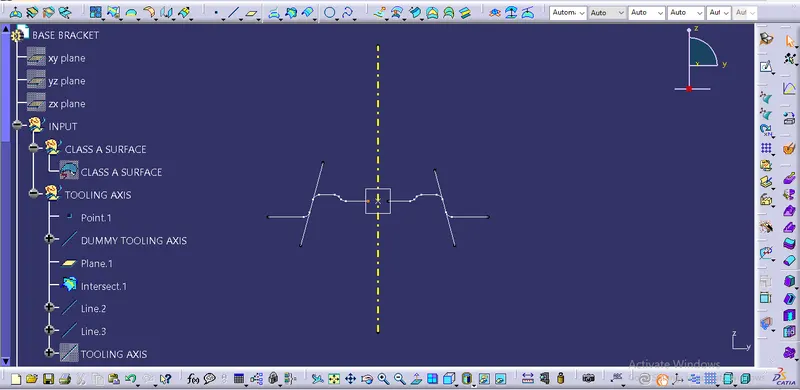
The clearance checking along all the axis direction will be done by creating an intersection along an axis on a plane by creating a new axis system with the model and constructing two lines contact with the walls, the line bisecting the two lines and passing through the point will be tooling axis.
A Dummy tooling axis will be directly created using point-direction command after creating boundary for class-A surface and crating intersection with the model.
TOOLING AXIS CREATION:
Using the intersection created lines will be created along the inclined walls, these lines are used for creating tooling axis by bisection method where are two lines and point will be selected as inputs.
Creating intersection for checking along X-axis.
Using the tooling axis created along X-axis, these are used for creation of tooling axis by bisection method where the two lines and point will be selected as inputs.
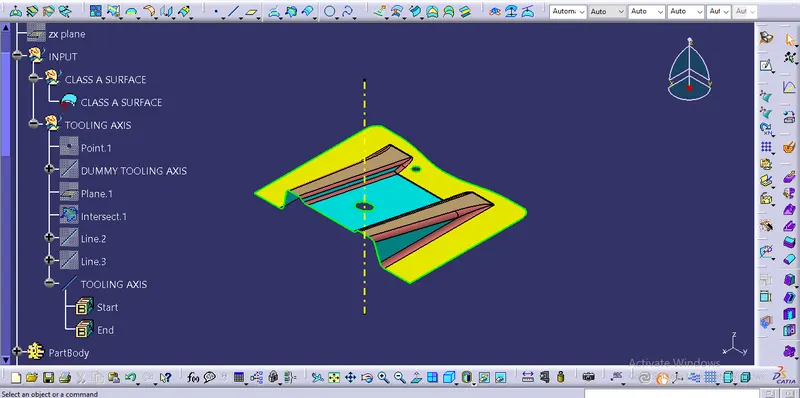
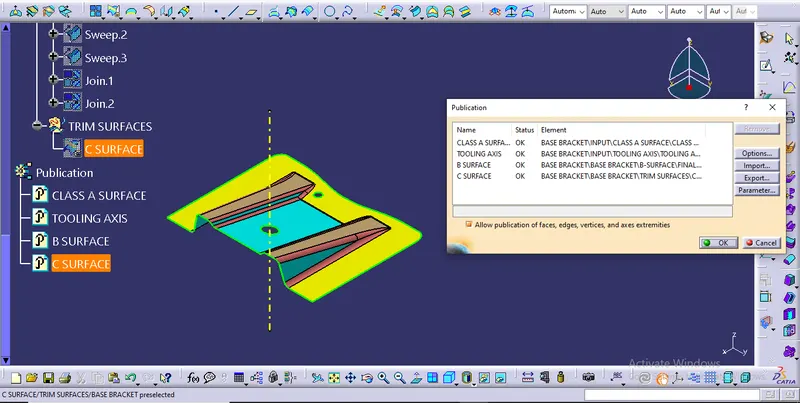
PUBLICATION:
Publication is used to make easily accessible of the published components.
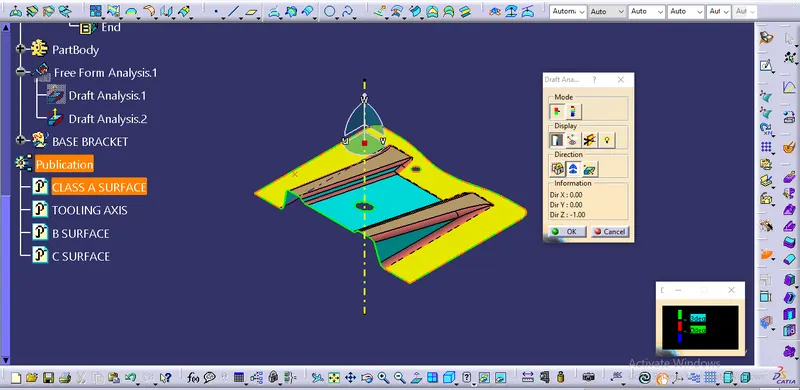
Draft Analysis:
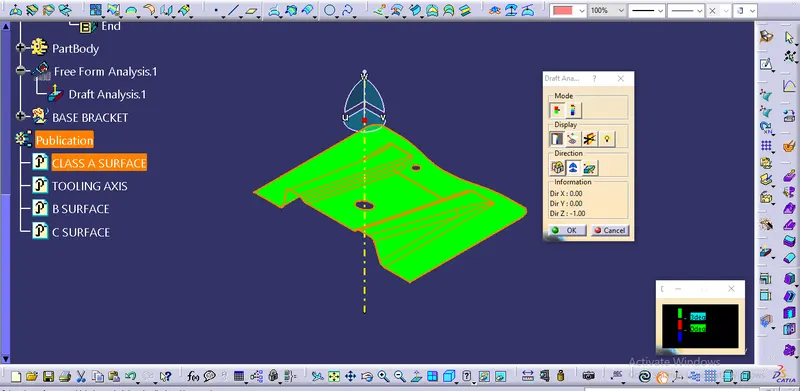
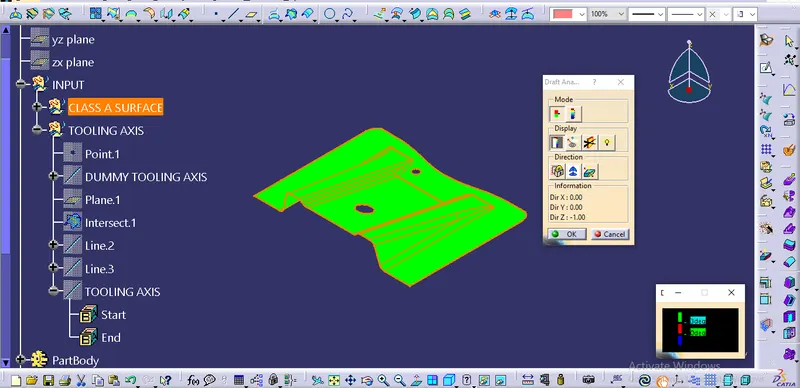
Draft analysis is done after determining the tooling axis, draft analysis is used to check whether the minimum draft 3 degree is maintained or not.
Compass is used to define the draft direction.
If the minimum draft 3 degree is provided the whole component changes into green colour.
Class-B surface:
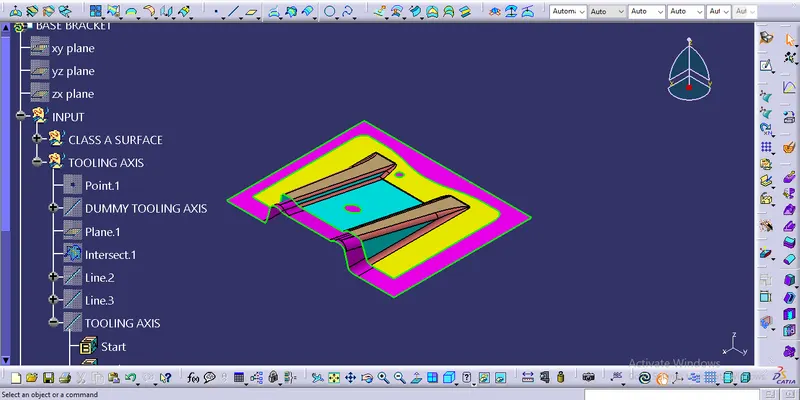
Class-B surface is created by extracting each walls and un-trimming and extrapolating the walls to obtain the shape by trimming the excess surfaces and offsetting it to certain distance based on the thickness of the model. The offset surface will be the class-B surface.
Class-C surface:
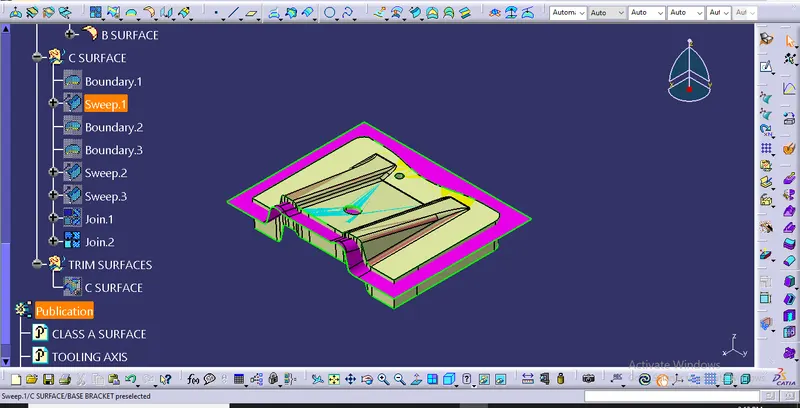
The surface created using sweep command by sweeping the boundaries of class-A surface along the tooling axis to connect from A to B-surfaces will give us class-C surface.
Using the B and C surfaces created a closed surface will be formed by trimming the excess surface will be converted into a solid model using closed surface option.
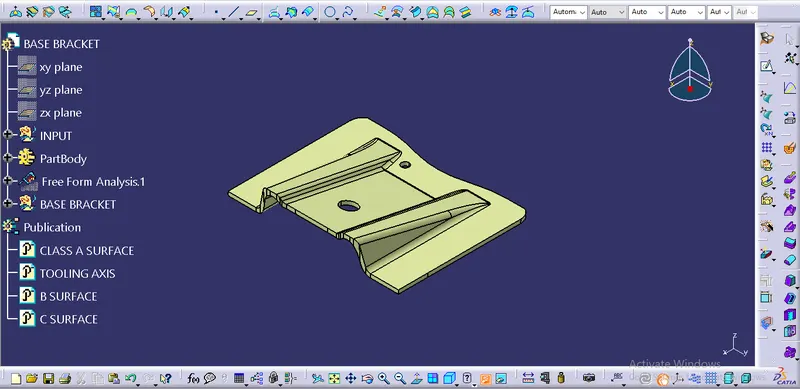
After getting the C-surface will be going to part mechanism to get a closed surface or a solid model.
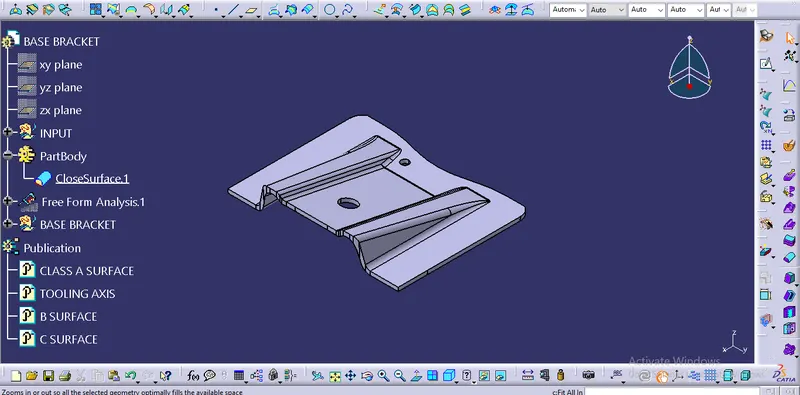
DRAFT ANALYSIS FOR PLASTIC COMPONENTS:
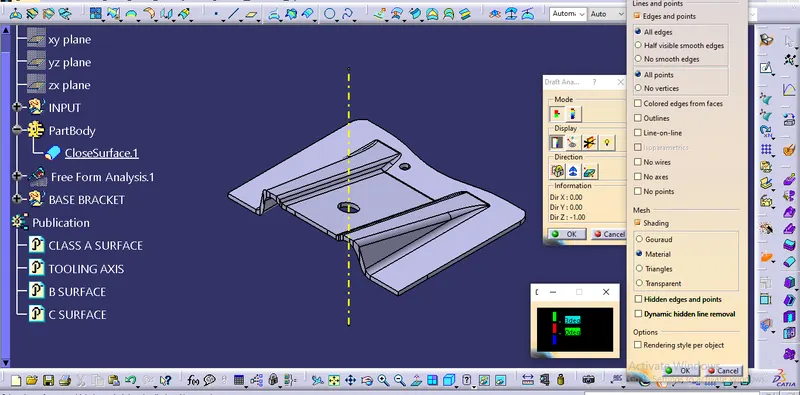
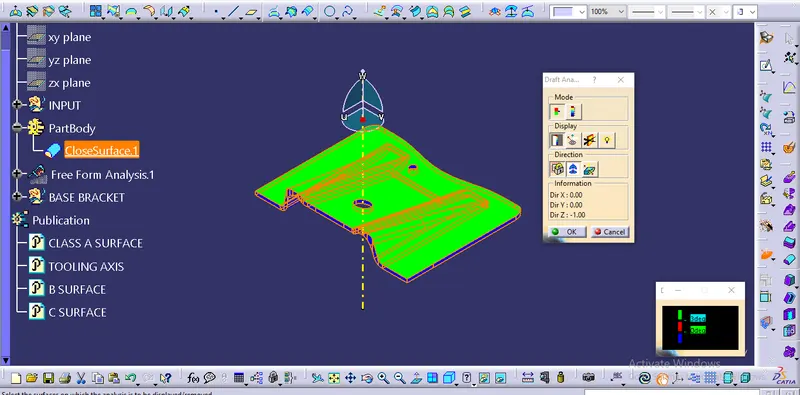
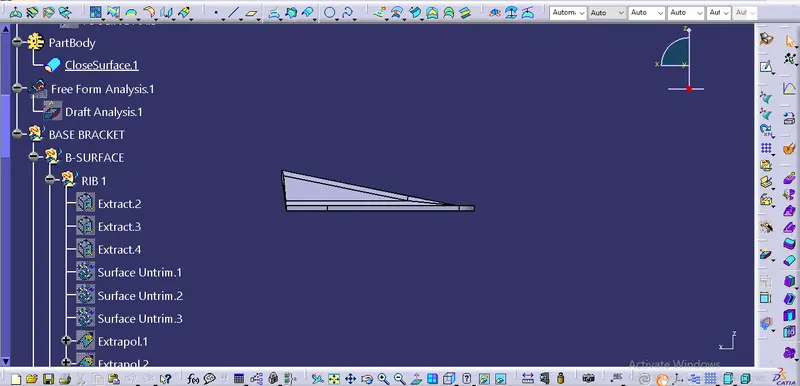
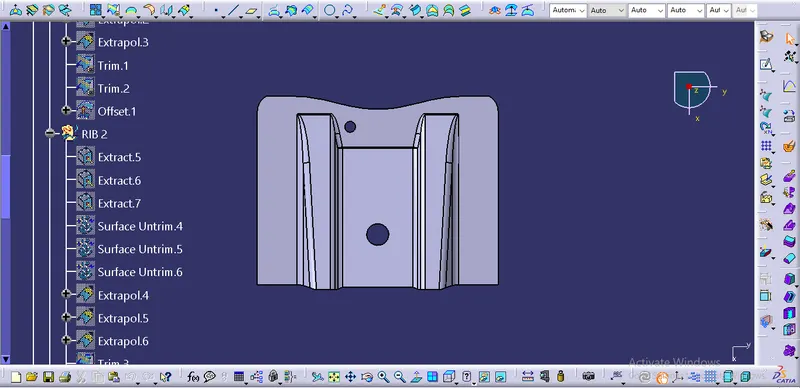
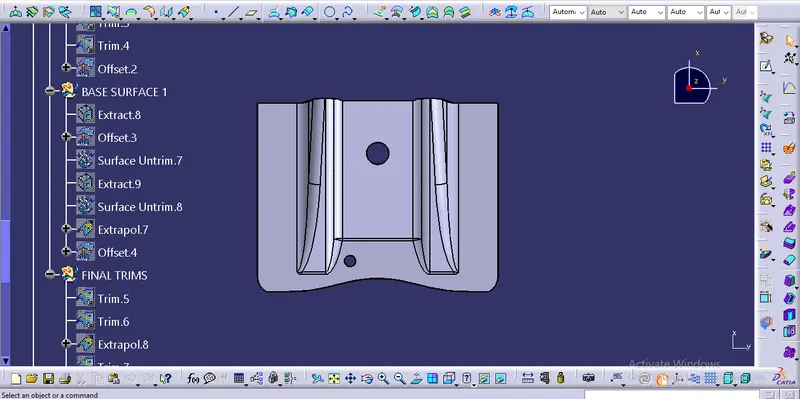
Screenshots of the model which includes tree structure and the four views, are attached below.
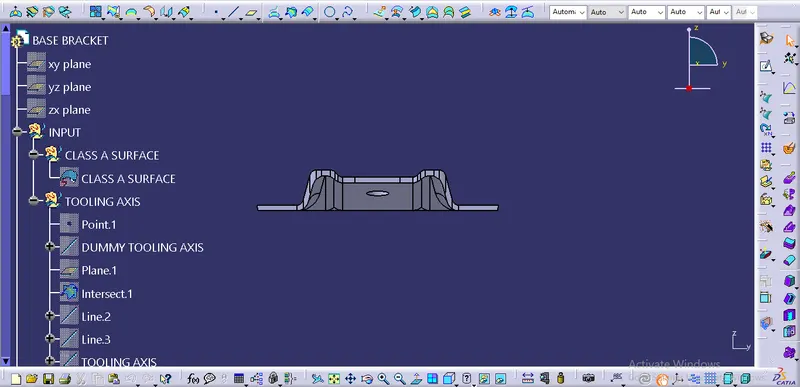
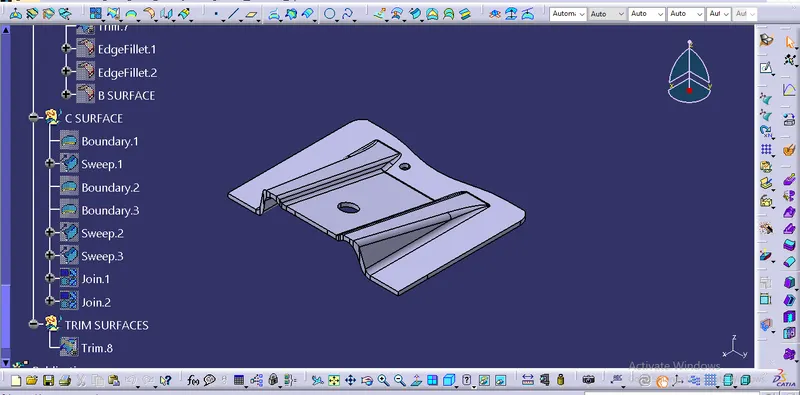
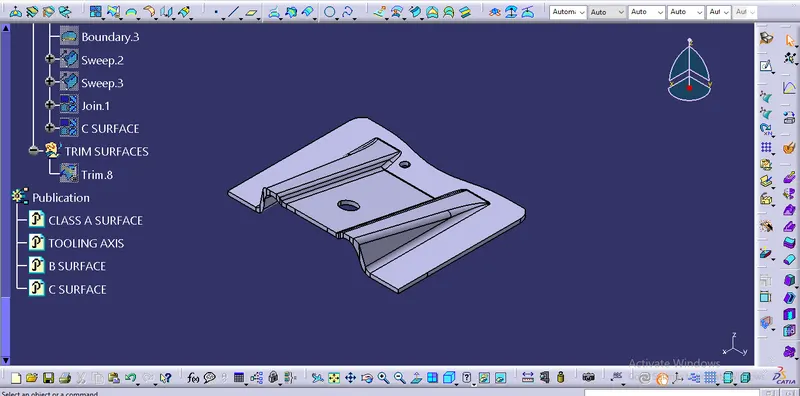
Conclusion: The closed body surface of an Base bracket is aceived by creating multiple surfaces like class-B and class-C surfaces with help of given class-A surface.