Week 7 State of charge estimation
Aim of the challange is to run the simulation model of State of charge estimation:-
1.Simulate the 3 test cases from harness dashboard and write a detailed report on the results
2.What is coulomb counting? Refer to the above model and explain how BMS implements coulomb counting for SOC estimation ?
1.Simulate the 3 test cases from harness dashboard and write a detailed report on the results:-
Objectives:-
First thing we are downloading the doucument from the given link . Then extracting the zip file to get file from trhe floder.
From tyhat folder open the BMS closed loop matlab model file in the matlab.
model open as :"
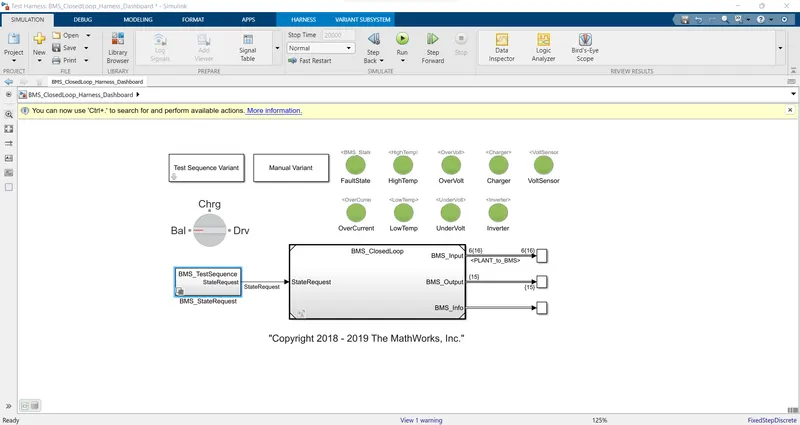
1.Dashboard
- Select the test sxequence varient
- manual varient
- BMS-test sequence state to provide state request commands
- lamps are indicates fault state ,high temperature,over voltage,over current,charging,voltage sensor, low tem,if any fault in these cases it indicates in res colour and if its all are in good conditions it will indicates in green colour.
- Rotating switch for manual varient changes while running simulation.
- In scope the result will be displayed.
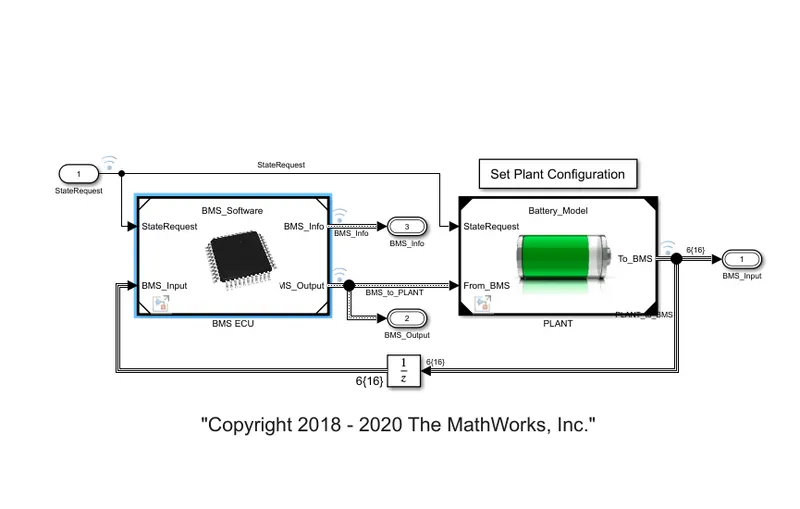
2. BMS CLOSED LOOP
In this main block it consists of to subsytems, BMS ECU AND PLANT UNITS
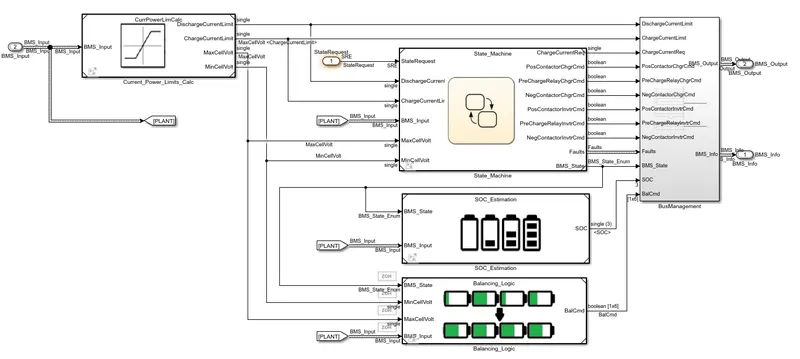
In this BMS ECU unit the current power liomits calculation are done used in state machine block, soc estimation, cell balancing logics
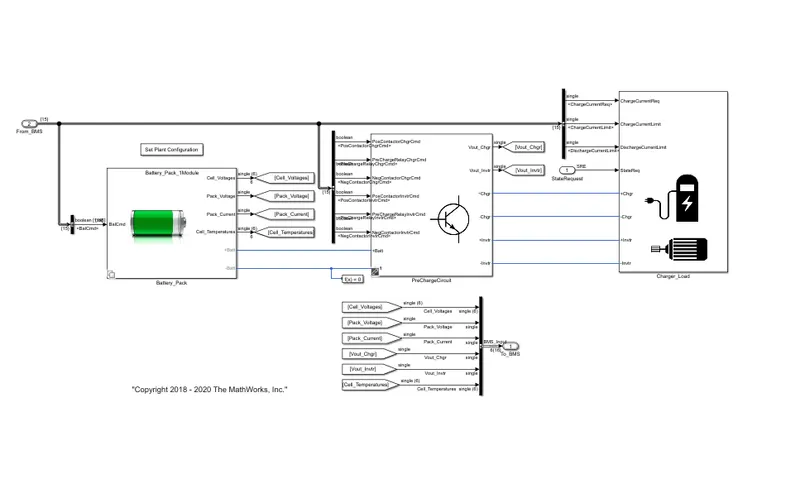
In plant unit the battery pack units pre charging unit are created.
in battery pack there are two types of configurations as 1 module(6 cell) and 16 moduels (96 cells).
A. To run the three test cases from the BMS harness dashboard if closed loop BMS control:
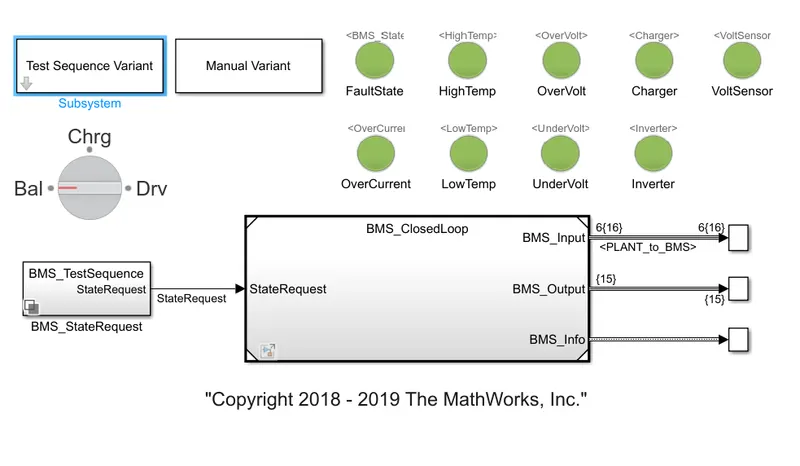
In these case we have to test the three cases for this model by selecting test sequence varient and the cases one by one
Test cases 1:-
selecting the test sequence varient dialogbox
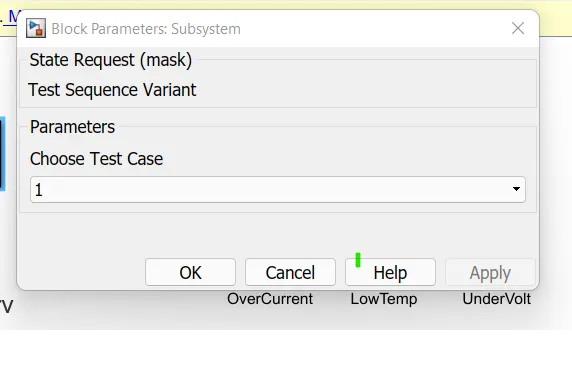
Then selection consists of selection changes in masked BMS_State request subsystem as
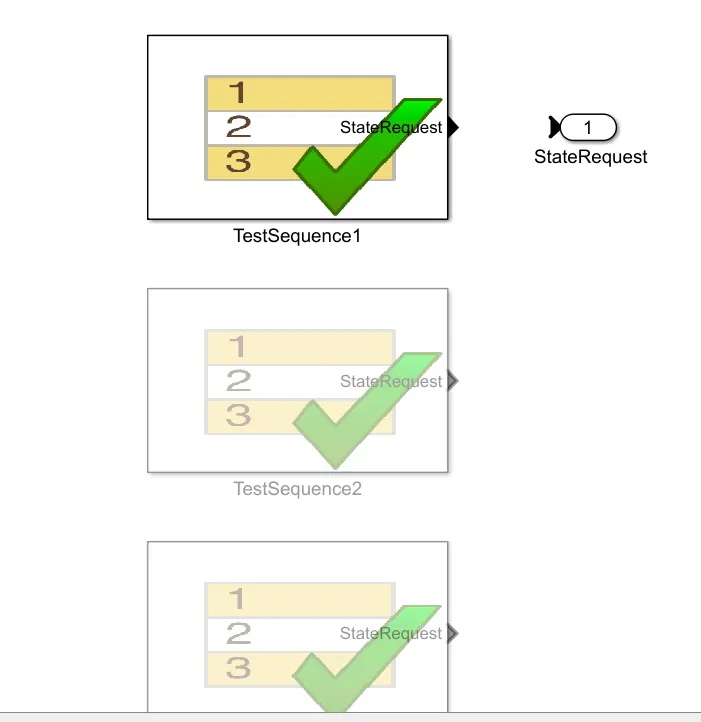
Here the above sequence
- Driving for first 3000 seconds
- after 3000 sec start balancing operations occures for next 1000 sec.
- Then charging and balancing occurs for next 5000 secs.
scope result:-
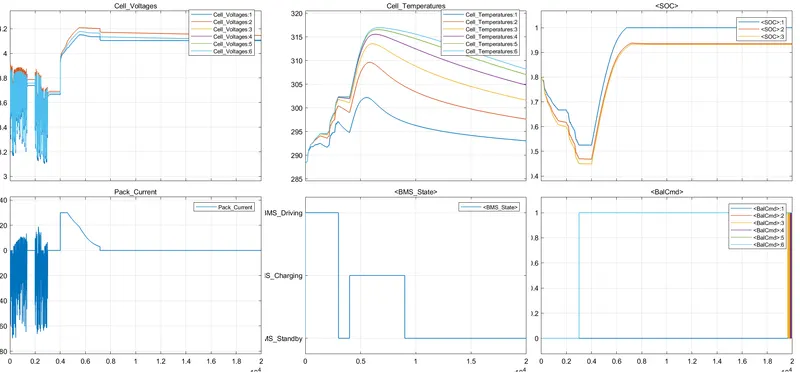
from this result we understand the reesultys like voltrage temperatyutes of cells through this graphs as shown .
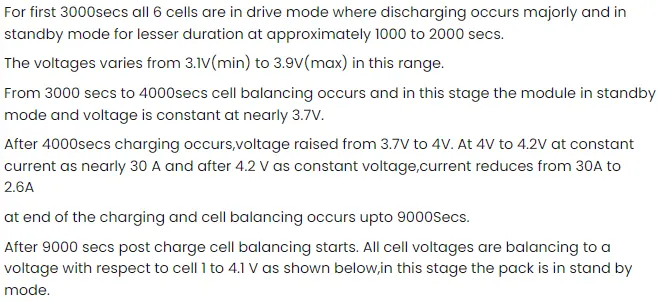
intially upto 3000 seconmd balancing was not performing.
After 3000 sec cell balancing start with on cell 6 and 2 as they raised
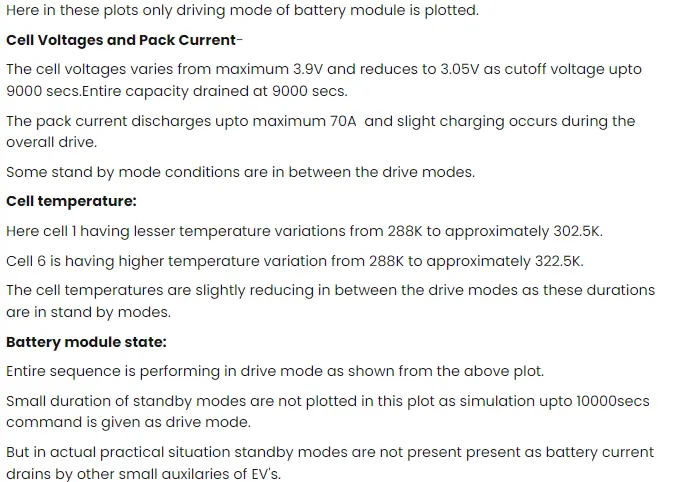
Test cases 2:-
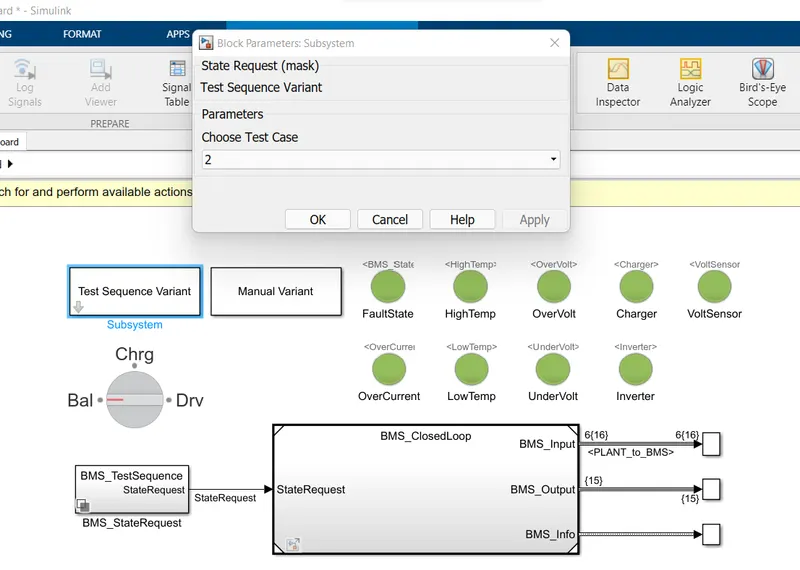
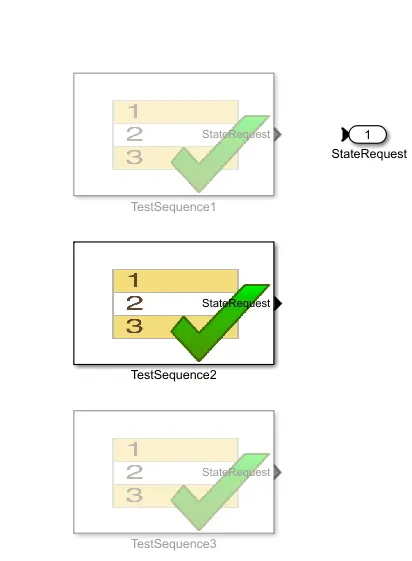
Then selection consists of selection changes in masked BMS_State request subsystem as
now run ythe model and the result can be viewed
Results:
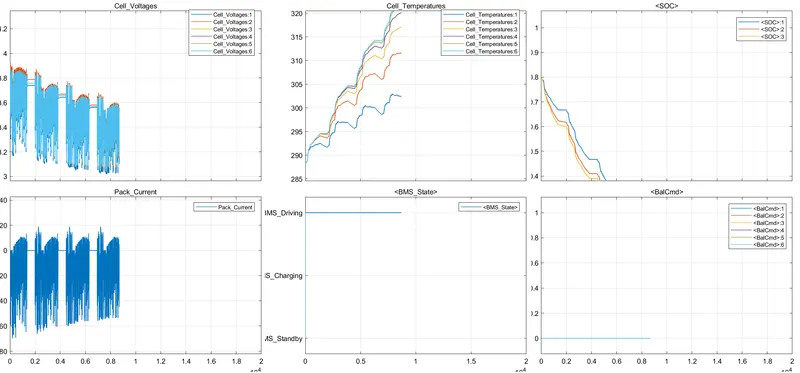
scope results are :
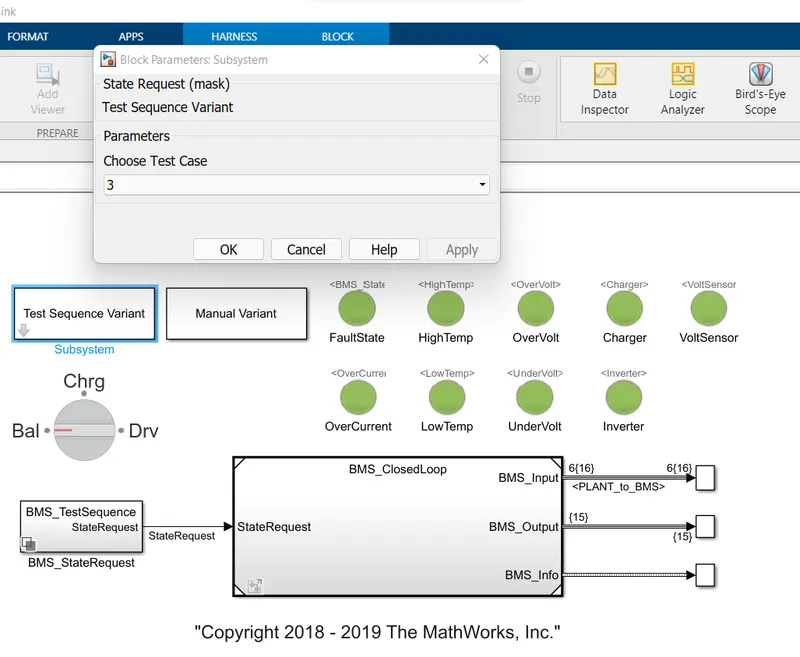
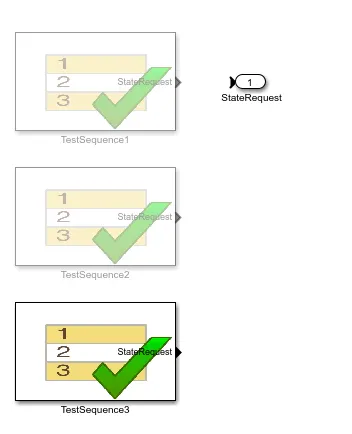
Test cases 3:-
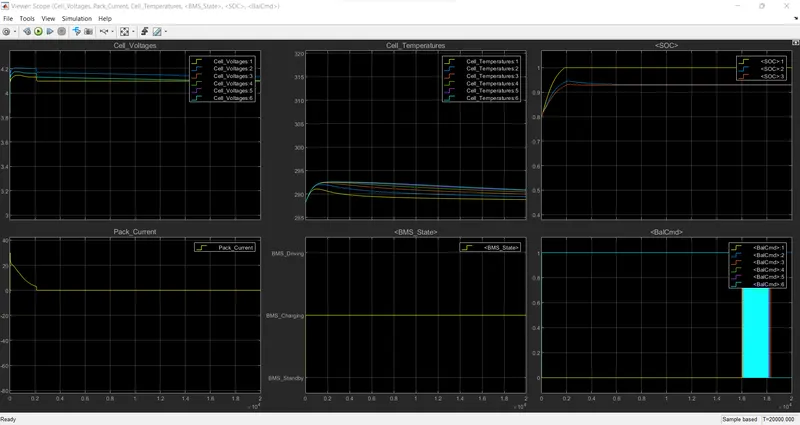
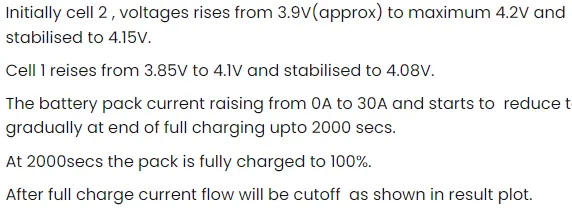
Results:
conclusion:-
Hence from above three cases the performance of BMS on various factors are discussed and analysed.
2.What is coulomb counting? Refer to the above model and explain how BMS implements coulomb counting for SOC estimation ?
Coulomb counting is a technique used to track the State of Charge of a battery pack. It works by integrating the active flowing current (measured in amps) over time to derive the total sum of energy entering or leaving the battery pack. This produces a capacity that is typically measured in Amp-hours.
The state of charge of a battery describes the difference between a fully charged battery and the same battery in use. It is associated with the remaining quantity of electricity available in the cell.
It is defined as the ratio of the remaining charge in the battery, divided by the maximum charge that can be delivered by the battery. It is expressed as a percentage as below.
Q0/mAh=Q0/mAh= Initial charge of the battery.
Q/mAh=Q/mAh= The quantity of electricity delivered by or supplied to, the battery. It follows the convention of the current: it is negative during the discharge and positive during the charge.
Qmax/mAh=Qmax/mAh= The maximum charge that can be stored in the battery.
SoC0/%=SoC0/%= The initial state-of-charge (SoC/%)(SoC/%) of the battery.
- If the battery is new: Qmax=CrQmax=Cr and Q0=0.5QmaxQ0=0.5Qmax generally. CrCr is the rated capacity of the battery as given by the manufacturer.
- If the battery is fully charged: Q0=QmaxQ0=Qmax and SoC0=100%SoC0=100%.
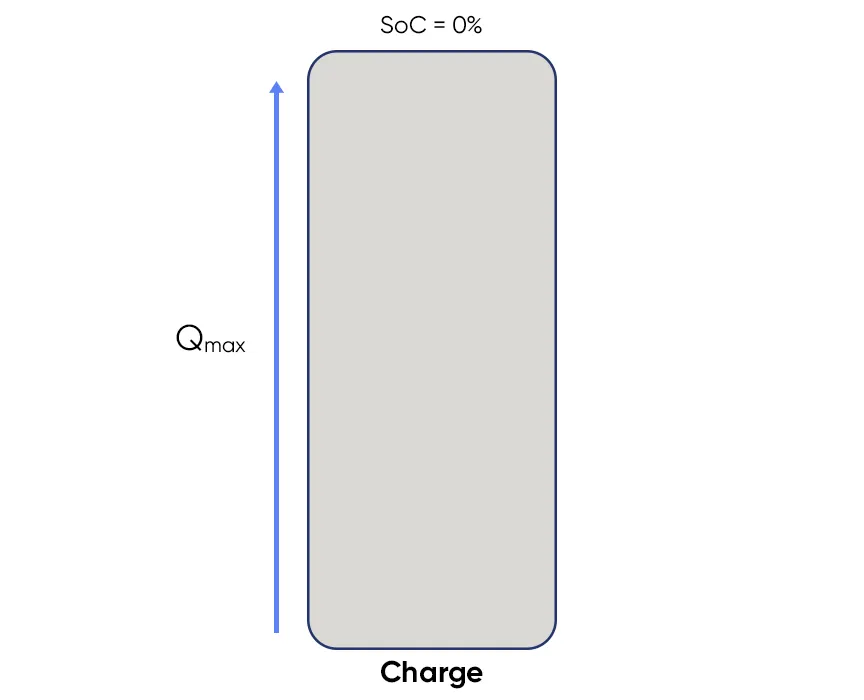
Figure 1: Evolution of the S0C0S0C0 of a battery during charge and discharge
The state-of-charge may also be considered the other way around and it is called the Depth of Discharge (DoD)(DoD). It is calculated as followed: