Week 7 State of charge estimation
AIM:
To simulate the given challenges.
OBJECTIVE:
To determine the following,
1.Simulate the 3 test cases from harness dashboard and write a detailed report on the results.
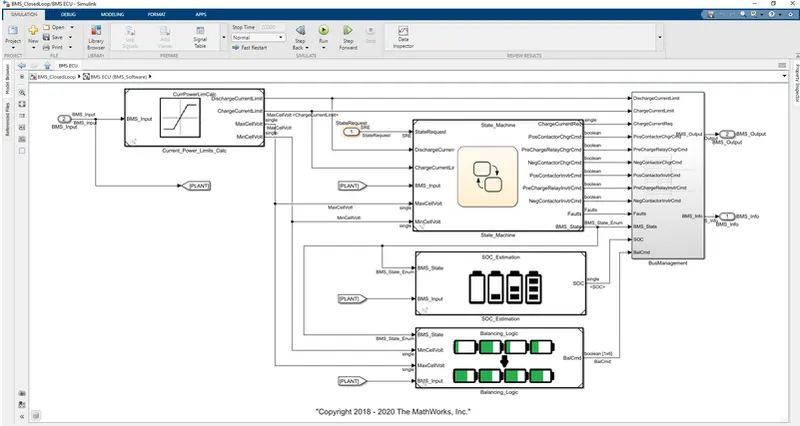
2.What is coulomb counting? Refer to the above model and explain how BMS implements coulomb counting for SOC estimation.
THEORY:
ECU IN THE BMS SUBSYSTEM:
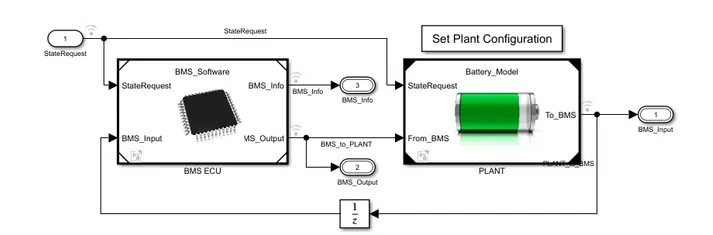
The subsystem of ECU are going to view as a flowchart of commands governs the flow of process within BMS.
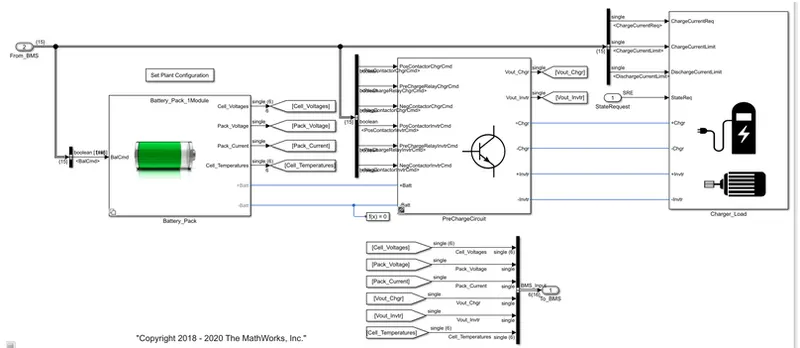
BASE SETUP AND INTERIOR BLOCK OF PLANT BLOCK:
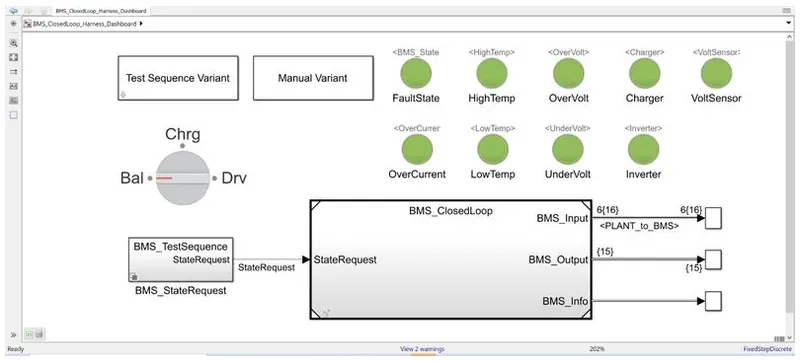
The harness dashboard from the project MATLAB window and export the model.
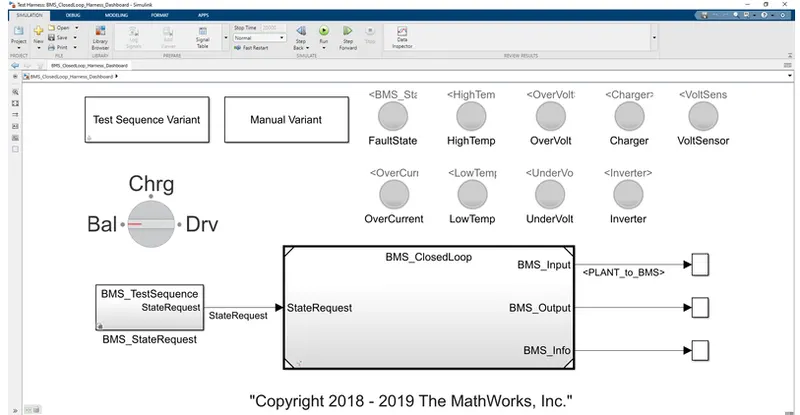
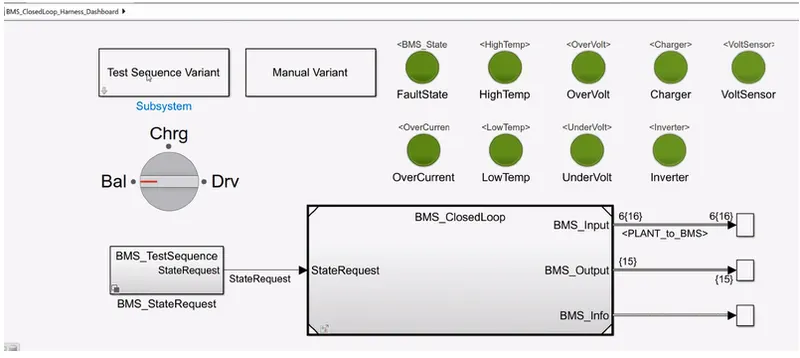
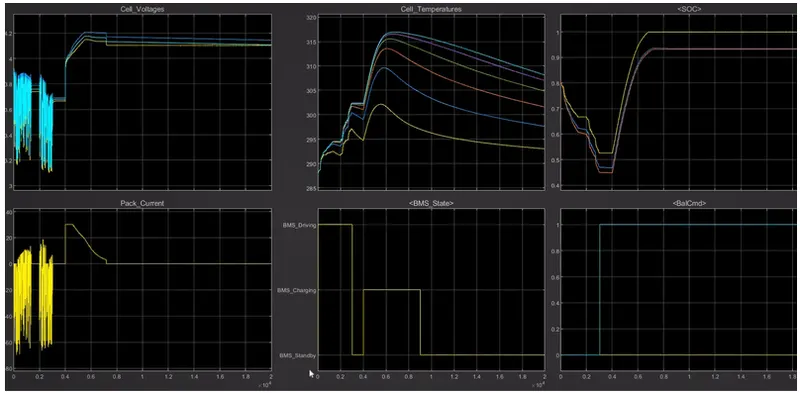
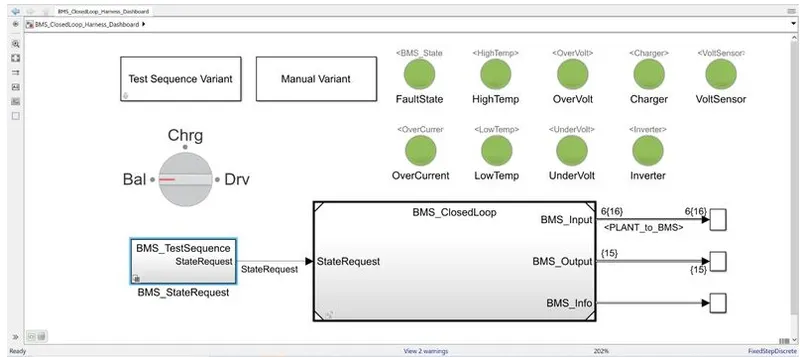
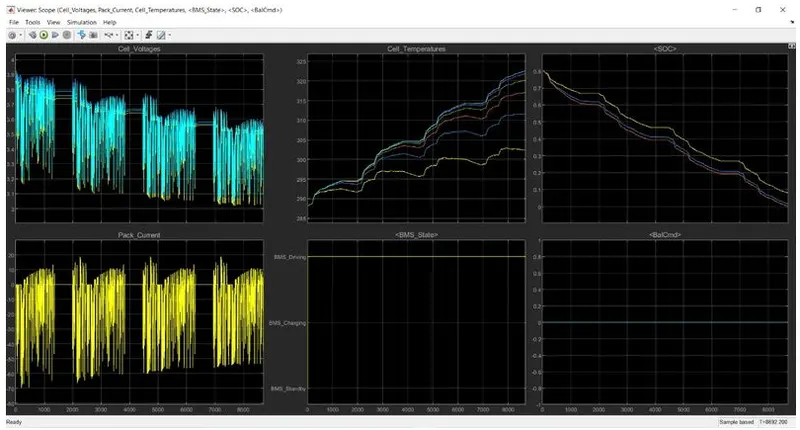
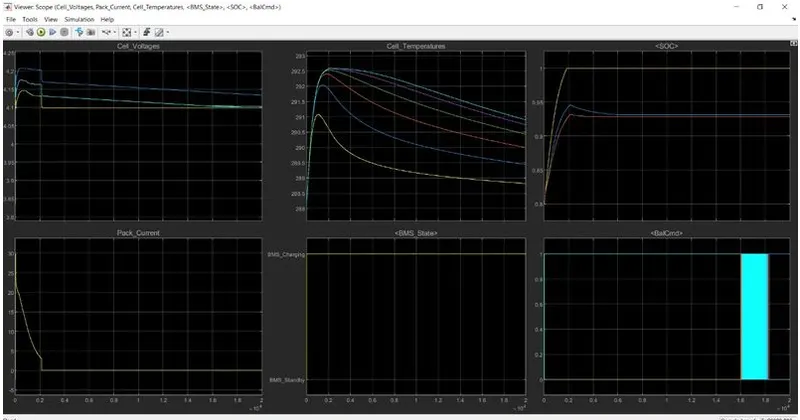
It consists of 3 cases where green light indicates the simulation is running smoothly. The dashboard also helps in determining the fault states and other parameters. After running the simulation for 20,000 seconds we get the output.
TEST-1:
MODEL:
OUTPUT:
TEST-2:
MODEL:
OUTPUT:
TEST-3:
MODEL:
OUTPUT:
COULOMB COUNTING:
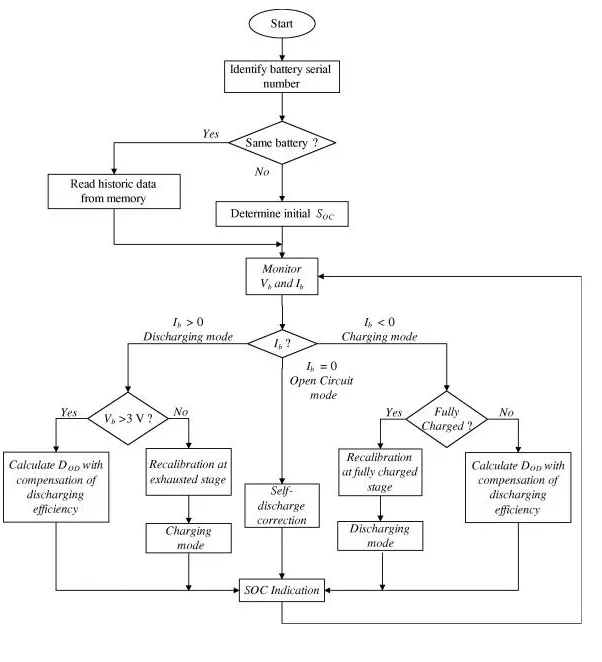
To determine the avaliable capacity coulomb counting relies on the integration of the current drawn from and supplied to a battery over time as given by,

where,
I is the current
η is the efficiency during charge and discharge operations.
Coulomb counting is advatangeous in terms of a simple structure and it is ease of implementaion. Battery capacity and efficiency are significantly influenced by opearting temperature and current direction.
These factors should be considered to correct for battery SOC. Sensor accuracy is also important because accumualted errors can lead to a drift in the estimated battery SOC.
FLOWCHART OF COULOMB COUNTING:
ENHANCED COULOMB COUNTING ALGORITHM:
The short coming of the coulomb counting method and to improve its estimation accuracy an enhanced coulomb counting algorithim has been proposed for estimating the SOC and SOH parameters of LI-ion batteries.
The initial SOC is obtained from the loaded voltages. The losses are compensated by considering the charging and discharging efficiences. With dynamic recalibaration on the maximum releasable capacity of an operating battery, the SOH of the battery is evaluated at the same time.
This in turn leads to a more precise SOC estimation.
The expanding issues of the embedded devices equipped with the rechargeable batteries especially Li-ion batteries that have higher power and energy density. The battery management system is becoming increasingly important.
The estimation accuracy of the amount of the remaining charges is critical as it affects the devices operational autonomy. The battery SOC is defined to indicate its estimated avaliable charge.
A solution is proposed for Li-ion battery SOC estimation based on an enhanced coulomb counting algorithm to be implemented for multimedia applications.
However, the coulomb counting algorithm suffers form cumulative errors due to the initial SOC and the errors of measurements uncertainites therefore to overcome these limitaions we use the open-circuit voltage(OCV).
Thus having SOC-OCV relationships and performing periodic re-calibration of the battery capacity. This solution is implemented and validated on a hardware platform based on the PIC18F MCU family.
The measured results are correlated with the theoretical ones. They have shown a reliable estimation since accuracy is less than 2%.
OBSERVATION:
Thus the given challenge is determined.
RESULT:
Thus the simualtion verified sucessfully.