Week 7: Shock tube simulation project
Objective: To set up a transient shock tube simulation.
Theory: The shock tube is an instrument used to replicate and direct blast waves at a sensor or a model in order to simulate actual explosions and their effects, usually on a smaller scale. Shock tubes (and related impulse facilities such as shock tunnels, expansion tubes, and expansion tunnels) can also be used to study aerodynamic flow under a wide range of temperatures and pressures that are difficult to obtain in other types of testing facilities. Shock tubes are also used to investigate compressible flow phenomena and gas phase combustion reactions. More recently, shock tubes have been used in biomedical research to study how biological specimens are affected by blast waves. A simple shock tube is a tube, rectangular or circular in cross-section, usually constructed of metal, in which gas at low pressure and gas at high pressure is separated using some form of a diaphragm. The diaphragm suddenly bursts open under predetermined conditions to produce a wave propagating through the low-pressure section. The shock that eventually forms increases the temperature and pressure of the test gas and induces a flow in the direction of the shock wave. Observations can be made in the flow behind the incident front or take advantage of the longer testing times and vastly enhanced pressures and temperatures behind the reflected wave.
The low-pressure gas, referred to as the driven gas, is subjected to the shock wave. The high-pressure gas is known as the driver gas. The corresponding sections of the tube are likewise called the driver and driven sections. The driver gas is usually chosen to have a low molecular weight, for safety reasons, with high speed of sound, but maybe slightly diluted to 'tailor' interface conditions across the shock. To obtain the strongest shocks the pressure of the driven gas is well below atmospheric pressure (a partial vacuum is induced in the driven section before detonation).
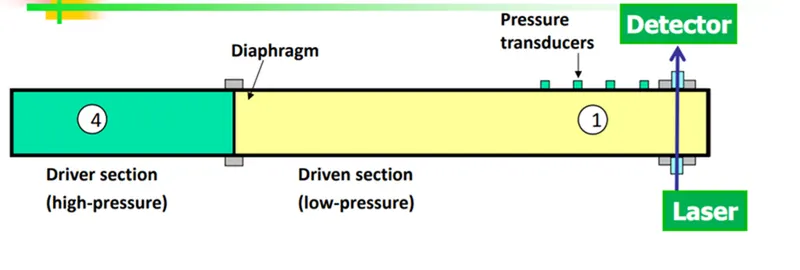
Shock Tube Characteristics
- Instantaneous heating/compression from shock waves
- Accurately known incident- and reflected-shock conditions (from incident shock MS)
- Wide range of post-reflected shock Temperature and Pressure (600-4000 K, 0.1-1000 atm)
PROCEDURE:
STL file is imported into Converge.
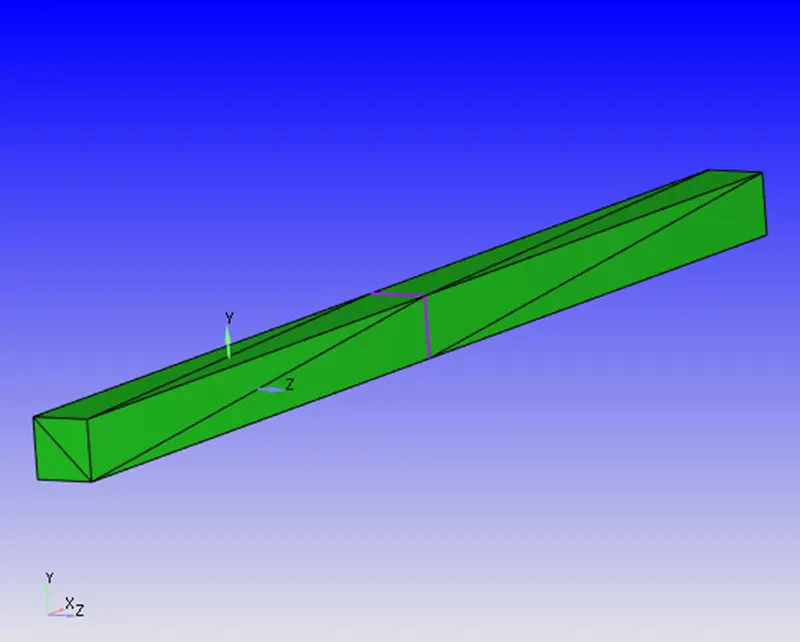
Then a diagnosis test was run to check if there is any issue in the geometry or not, upon running the test we came to know that it had non-manifold edges.
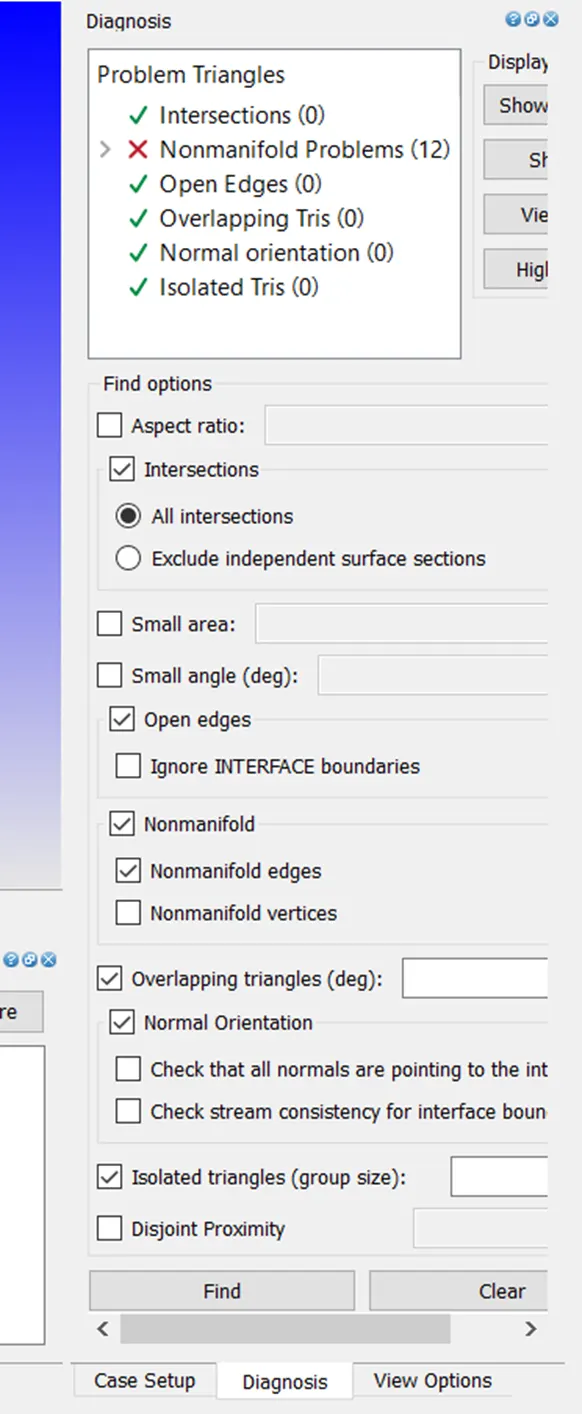
This was due to the presence of a diaphragm inside the tube. This was deleted for the purpose of this analysis. With the deletion, the problem of non-manifold edges disappeared. We also transformed the normal to point towards flow region.
After this boundary were flagged as high-pressure boundary and low-pressure boundary.
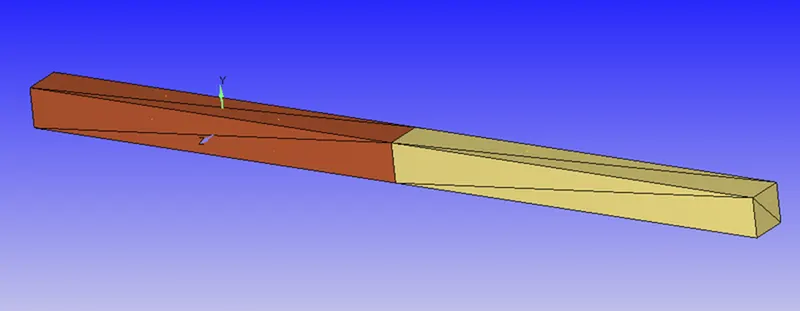
After this we began with case setup
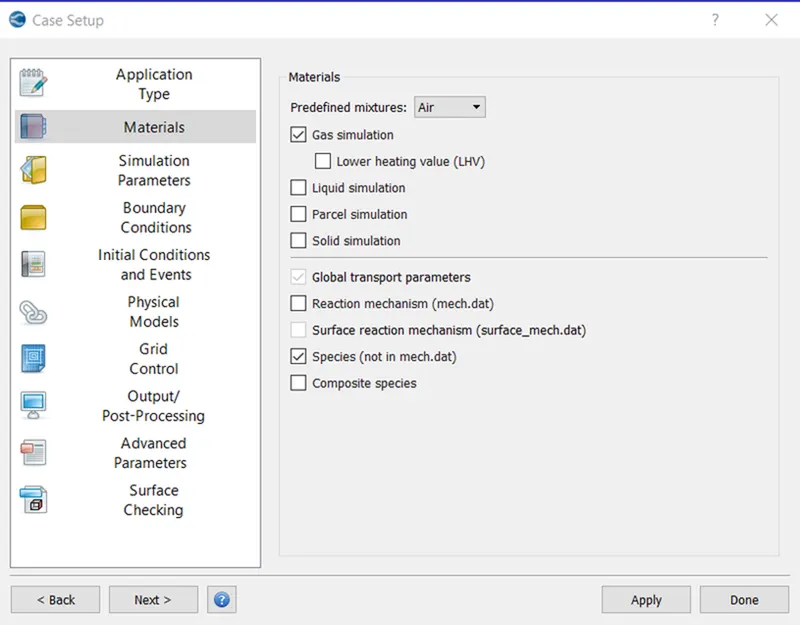
Predefined mixture was set as air and in species we added O2 and N2 and also we checked in for events in region and Initialisation.
Gas simulation and global transport properties were set as default.
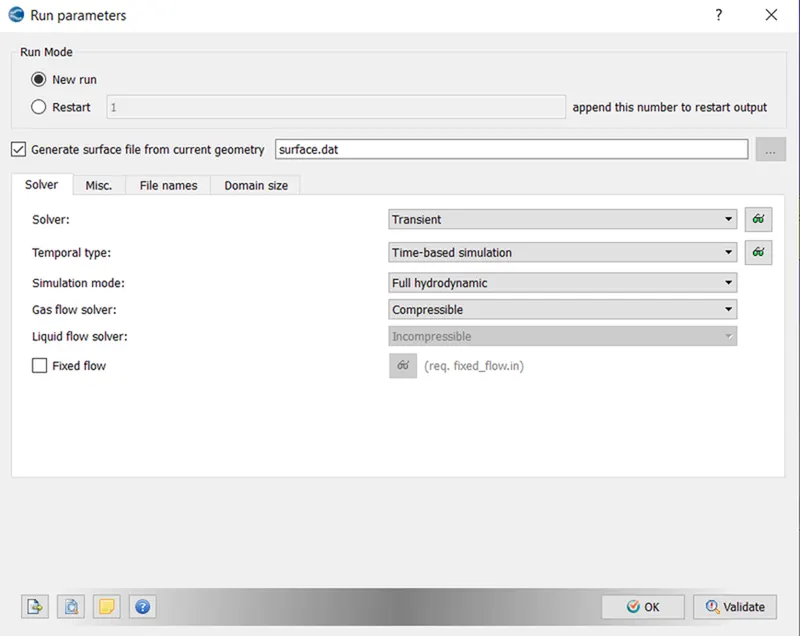
After this we setup run parameters as Time-based transient full hydrodynamic compressible simulation.
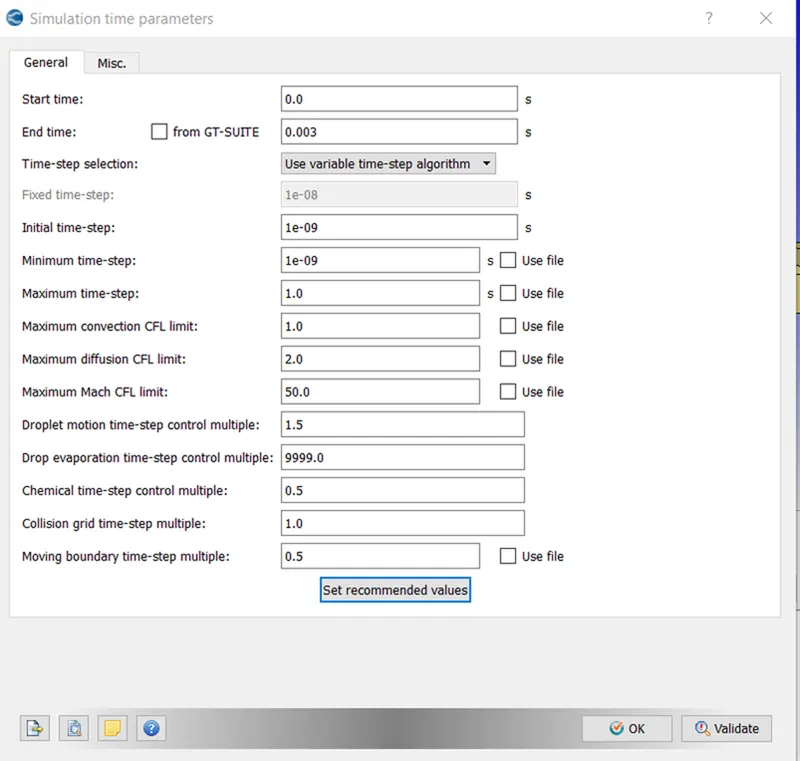
Simulation time parameters were set as following.
After this regions and initialisation were set where two regions were created High pressure region and low pressure region.
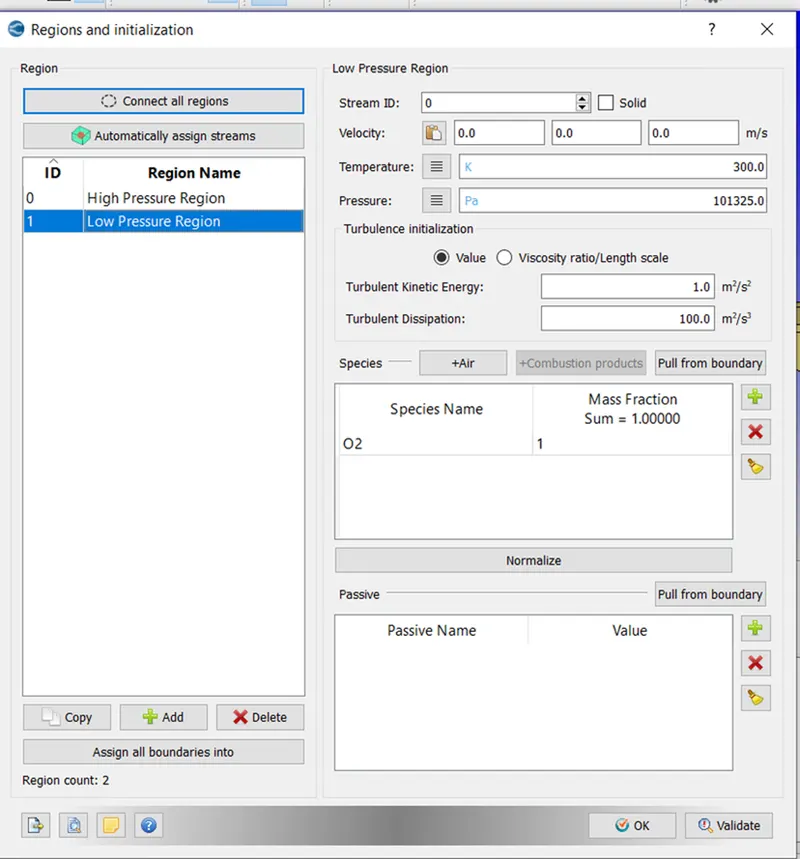
High pressure region had N2 with mass fraction of 1 and pressure of 600000Pa.
After this we setup events, which was set as sequential event where interaction between the two regions were set to open at 0.001 sec.
After this we setup our boundary conditions in boundaries as following.
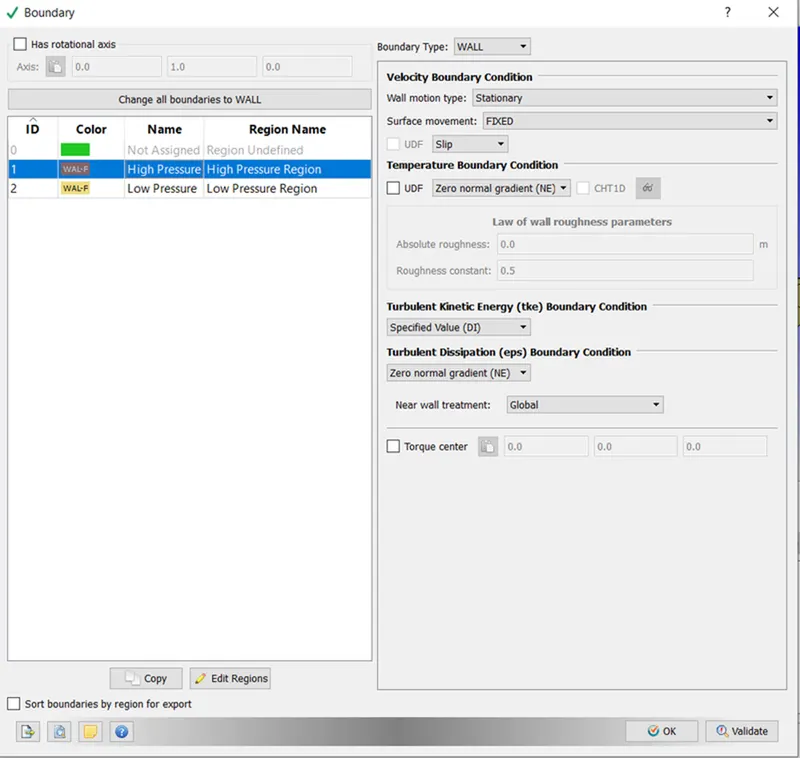
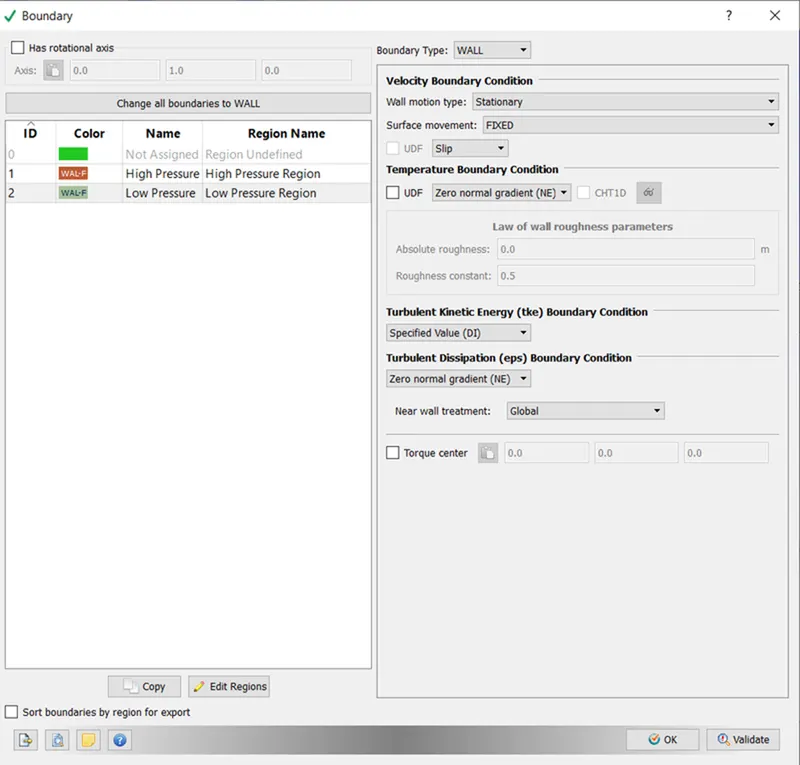
After this turbulence modelling was set to default settings which was RANS K-epsilon model.
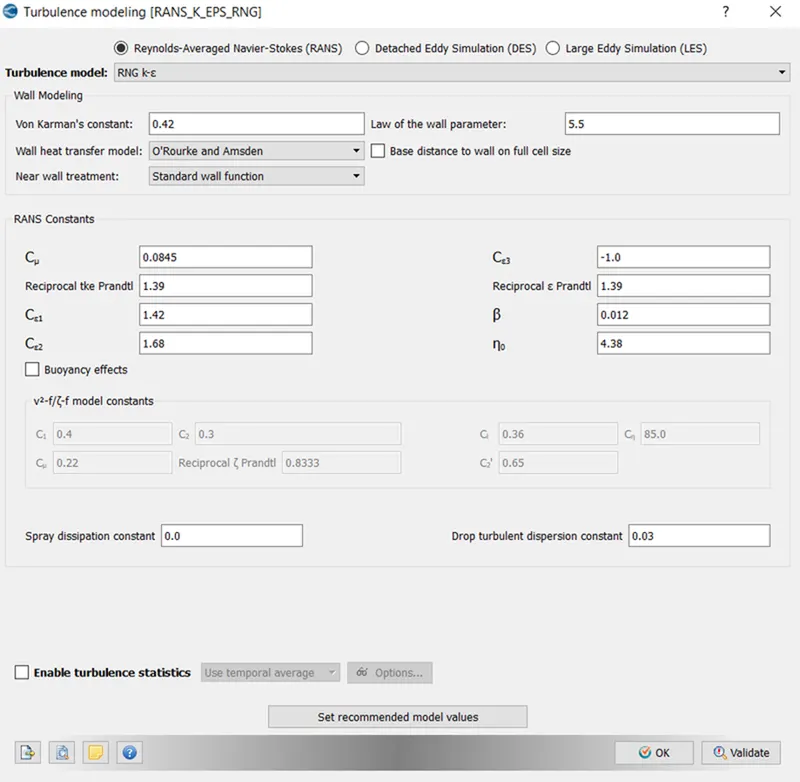
After this mesh base grid was set to be as 0.001 and then adaptive mesh refinement was set for species where N2 had permanent AMR with SGS of 0.001 and embed scale of 3.
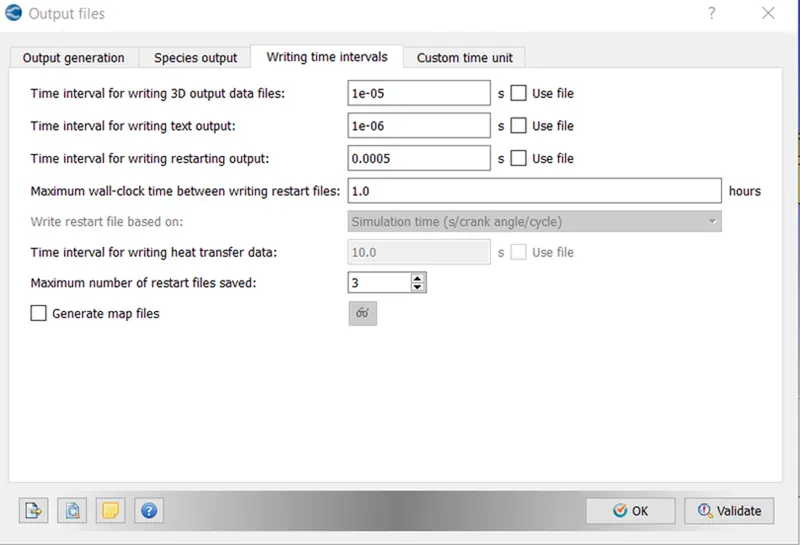
After this output file writing time was setup as following and then input files were exported and simulation was run.
RESULTS:

Base mesh with AMR
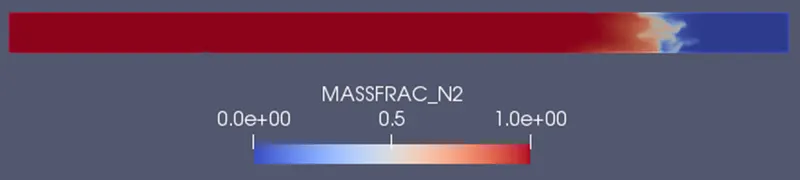
N2 mass-fraction contour

Pressure contour

Temperature contour
GRAPHS
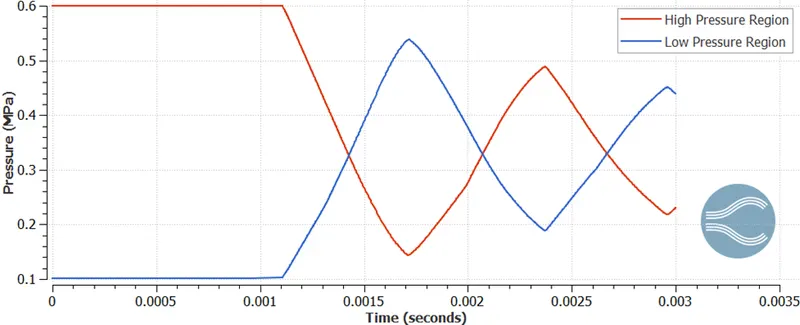
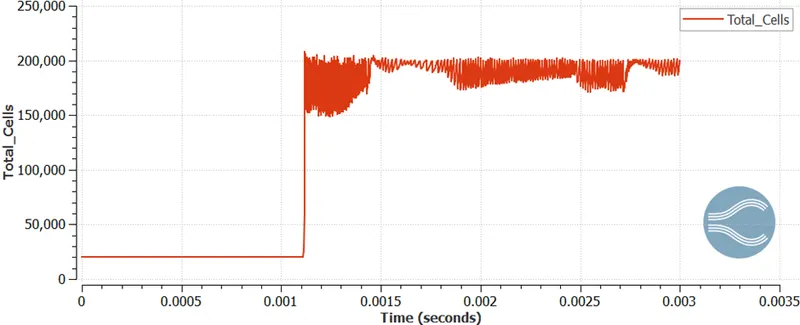
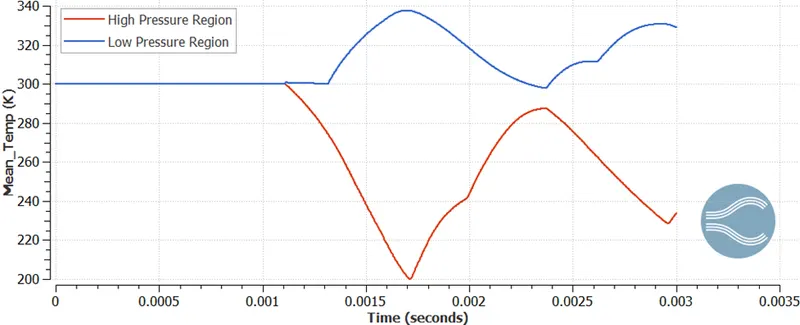
CONCLUSION: Bursting of the diaphragm results in creation of shock waves. Compression waves propagate in the low-pressure section where as expansion waves in the high-pressure section. Shock waves get refracted back resulting in mixing of fluid. Cell count varies once the shock wave is created. The variation is primarily due adaptive mesh refinement and rupturing of diaphragm.