Week 7-Long Piston With Cam
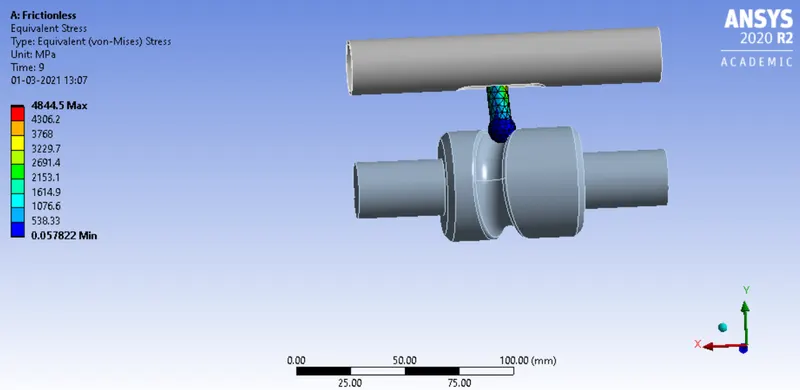
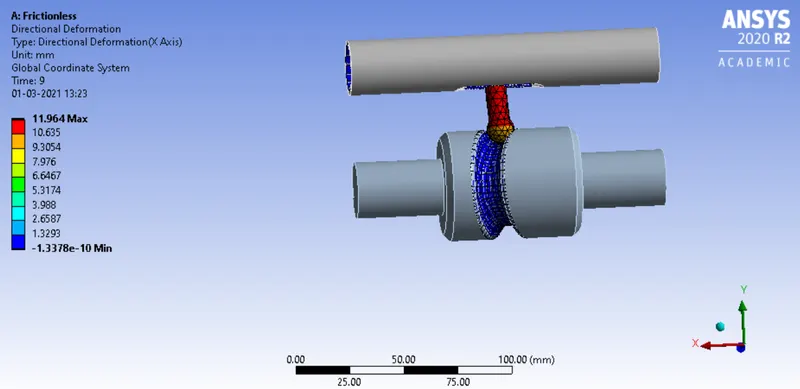
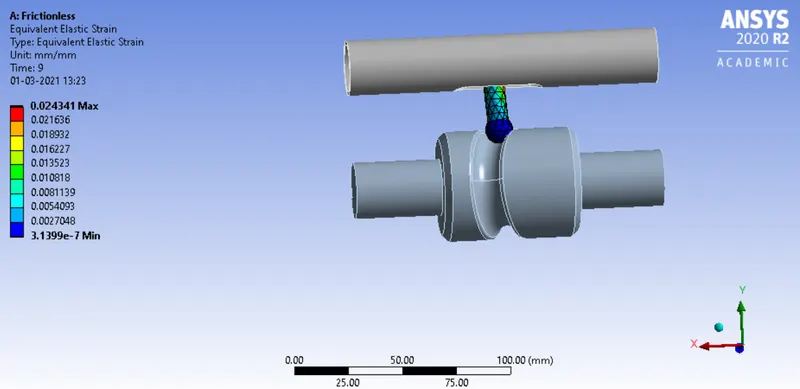
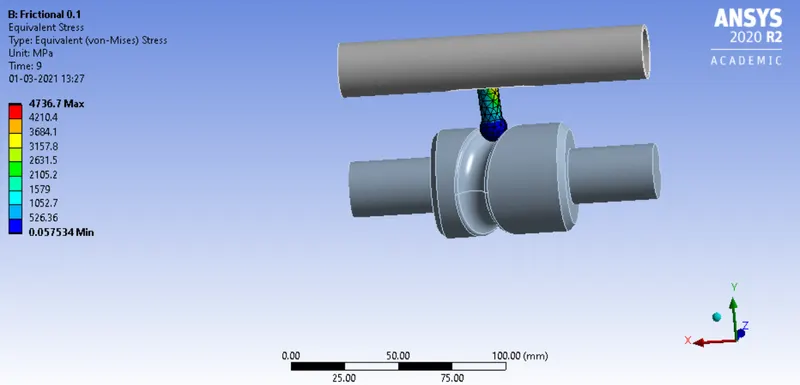
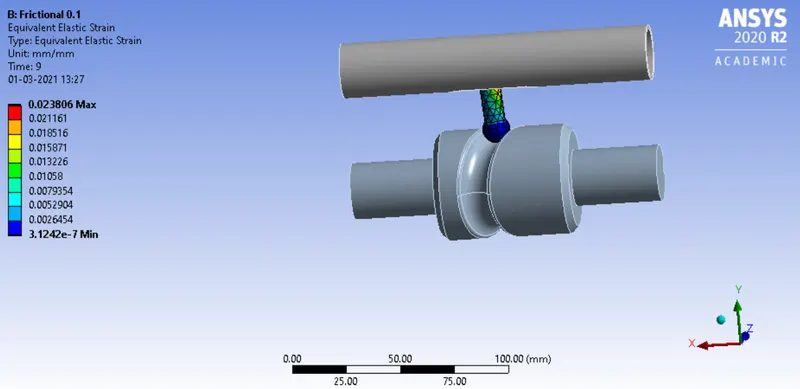
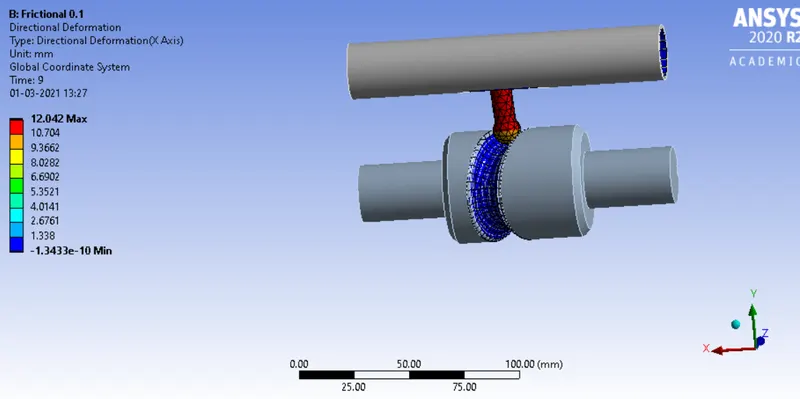
Aim: Using Transient Analysis find the difference in deformation, stress developed and strain generated for the model using frictionless, Frictional Coefficient 0.1 and 0.2 contacts.
The material being used for this simulation is structural steel.
We begin by flipping the target and contact of the assembly in connections to define them followed by distinguishing the type of contact between them (Frictionless, Coefficient 0.1 and 0.2).
We then proceed to define the joints of the simulation which are Fixed-Ground to Barrel, Revolute-Ground to Barrel Cam and Translational-Barrel to Follower.
The simulation is processed over 9 steps with rotation being load applied to the revolute joint.
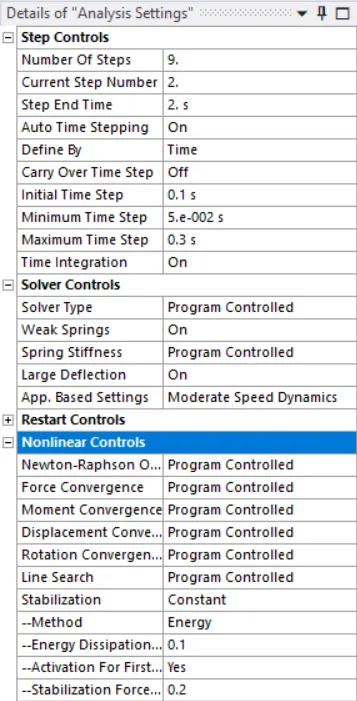
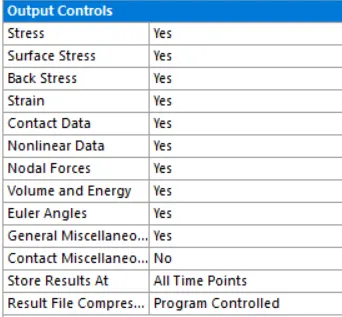
The rotation applied is 30deg per step.
We mesh the geometry with a face sizing of 3mm along the contact region between the barrel cam and the follower.
Results:
|
Stress MPa |
Directional Deformation mm |
Strain |
|
|
Frictionless |
4844.5 |
11.964 |
0.0243 |
|
0.1 |
4736.7 |
12.042 |
0.0238 |
|
0.2 |
4811.6 |
12.182 |
0.241 |
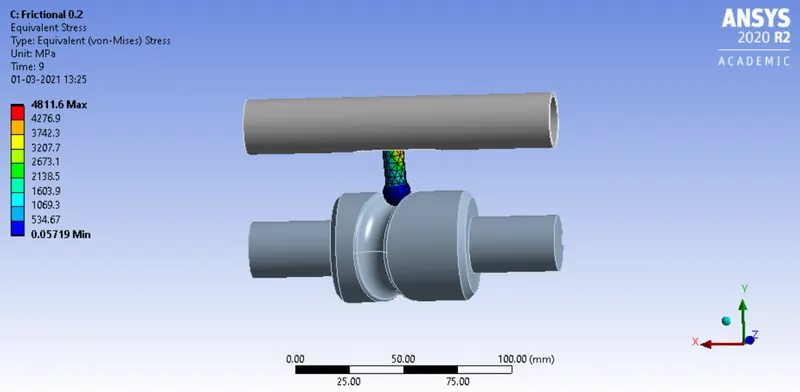
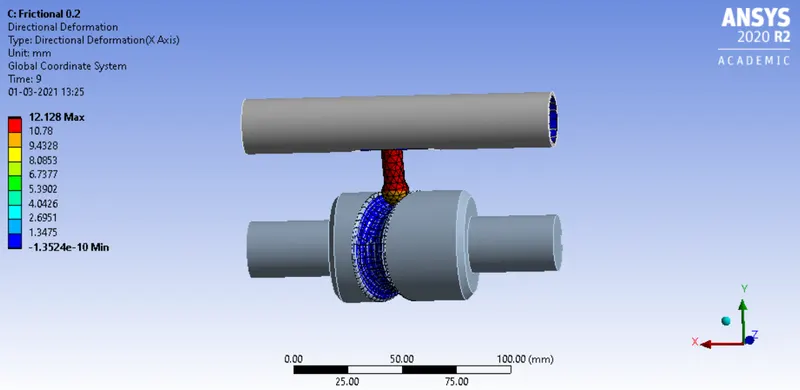
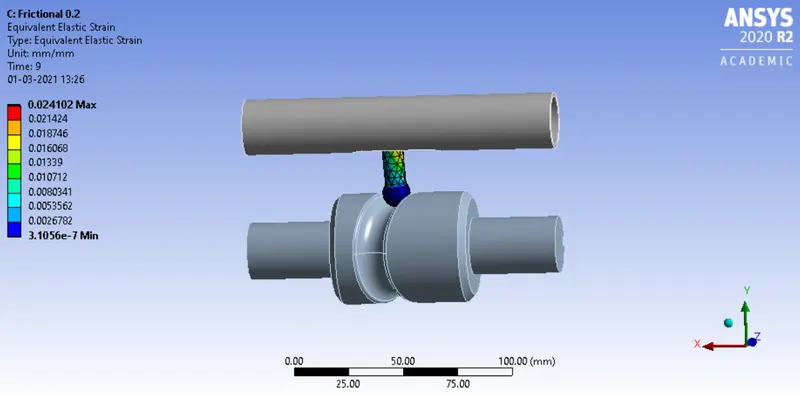
Inference:
Due to increasing friction the follower stem sees an increase in stress developed, directional deformation and stress generated.
The contact between the cam and the follower also experiences more sticking.