Week 7-Long Piston With Cam
OBJECTIVE :
Compare the results of trasient analysis of long piston cam with different coeffient frctional values and check how stress and deformation taking place in the different cases.
CASE 1:
1. Download the model from the challenge.
2. Open the ANSYS workbench and drag the transient structure analysis.
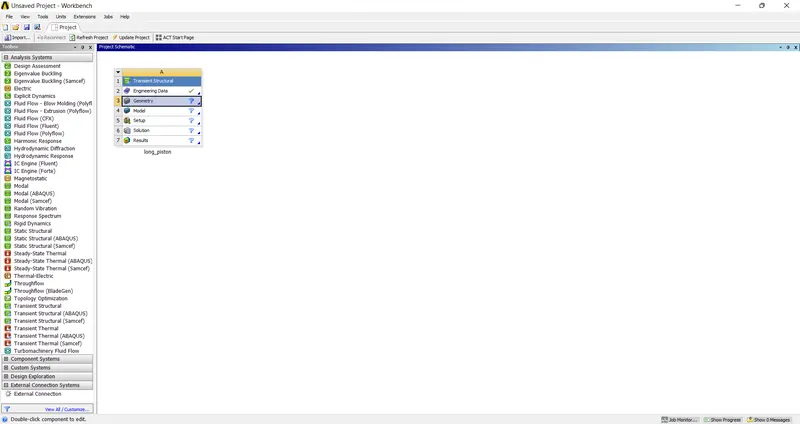
3. Double click on the engineering materials if we want to change the material.
4. now right click on the geometry, import the model downloaded.
5. Now double click on the model. And check the model loaded properly or not.
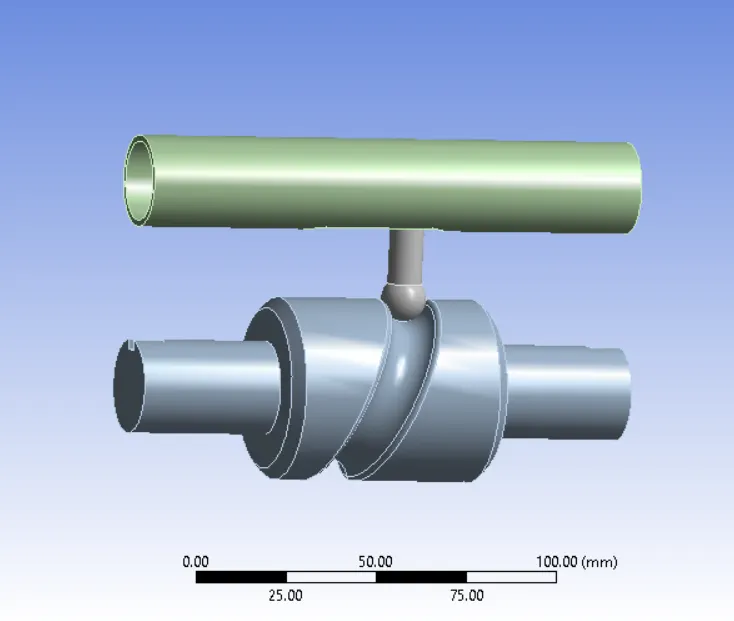
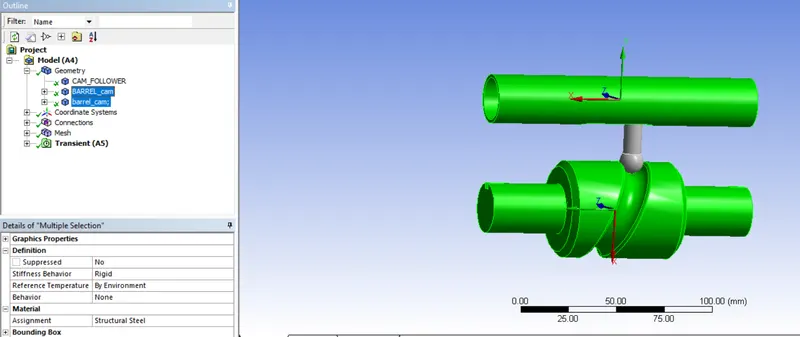
6. Now click on the geometry in the outline tree. And assign the stainless steel to the all the parts.
7.change the type from flexible to rigid to the barrel cams.
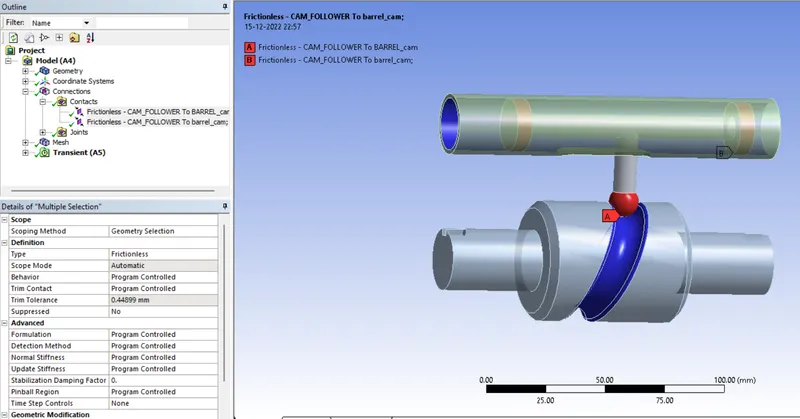
8. Now click on the contacts. It shows some default contacts. And make that re arrange the contact on basis of definition. And change the contact as frictionless.
9.Now insert the joints. one is fixed and other is revolt joint. select the face respectively as shown in below.
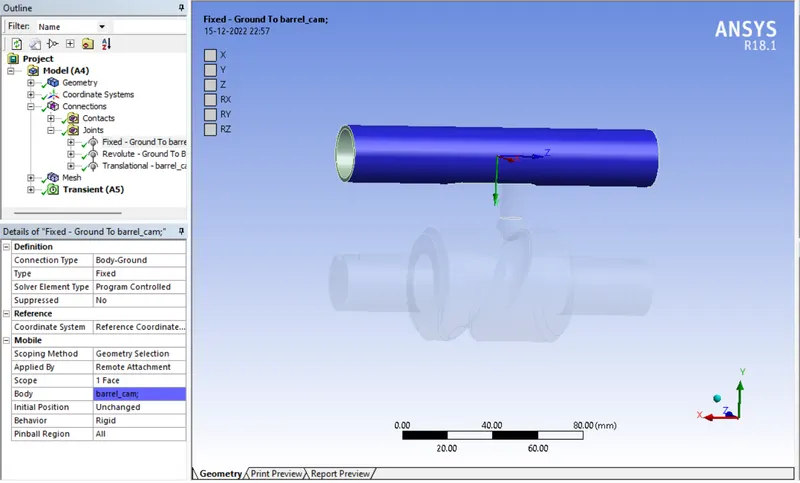
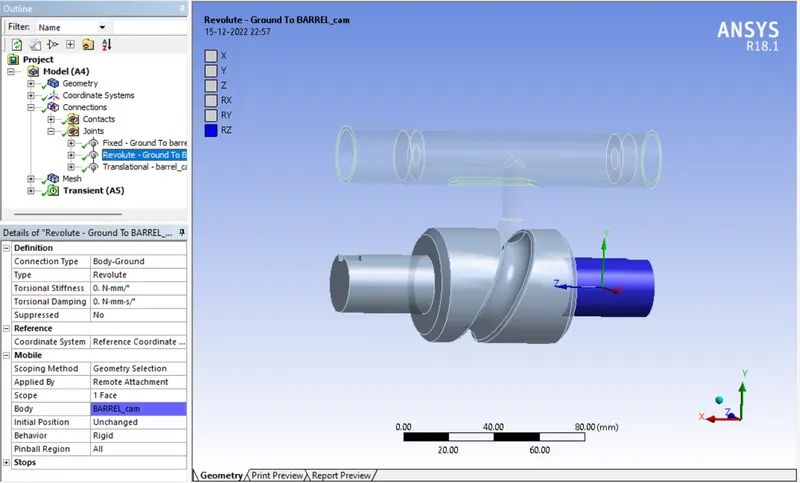
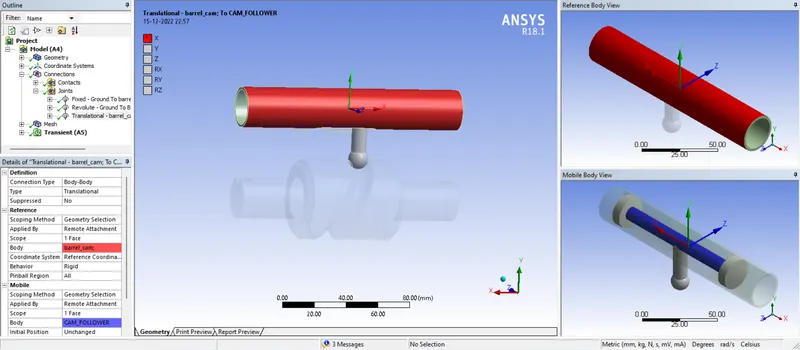
10. Provide the translation between the barrel can and piston.
8. Click on the mesh and insert the one mesh tab. Select the tibs and give the size of 3 mm mesh.
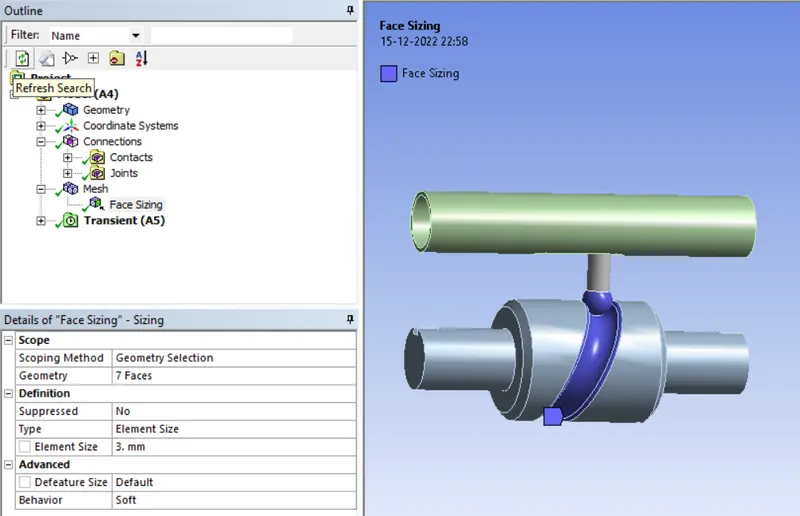
9. Now generate the mesh.
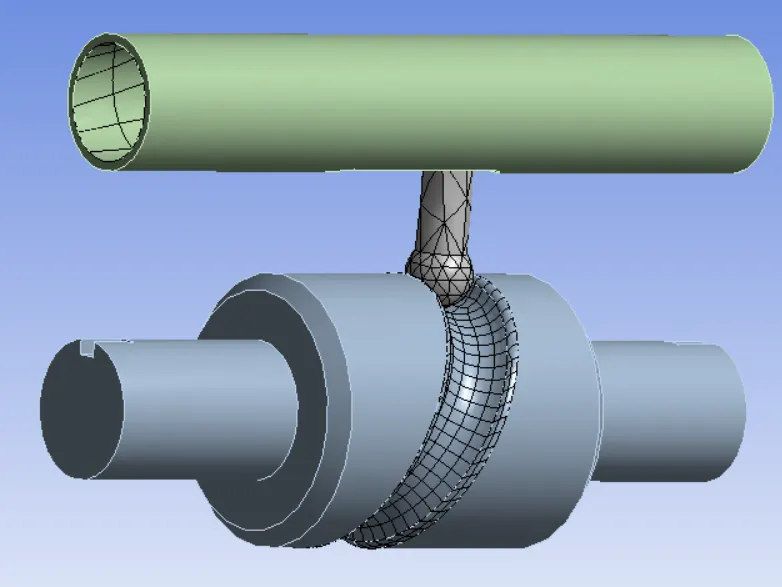
10. Now go to analysis setting and insert the 9 parts.
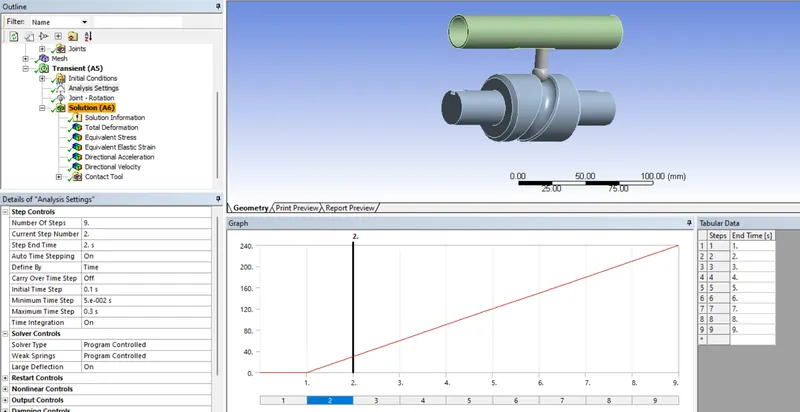
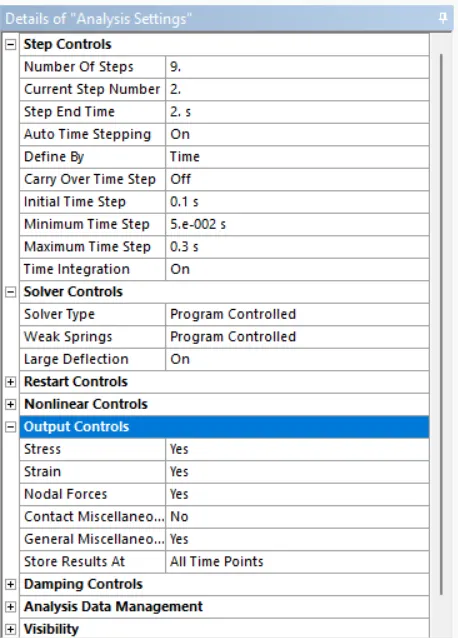
11.change the changes as shown below.make it ON Large deformation.
12. Now insert the joint revolute to the barrel with the tabular data.
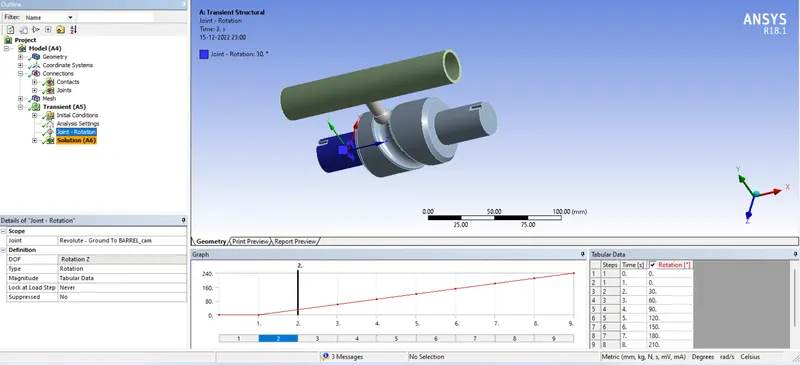
13. Now insert the solution parameters as shown below.
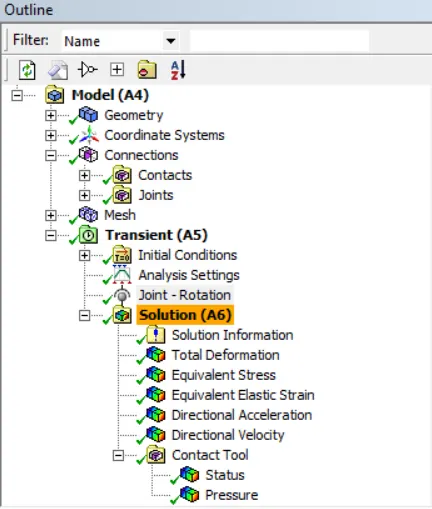
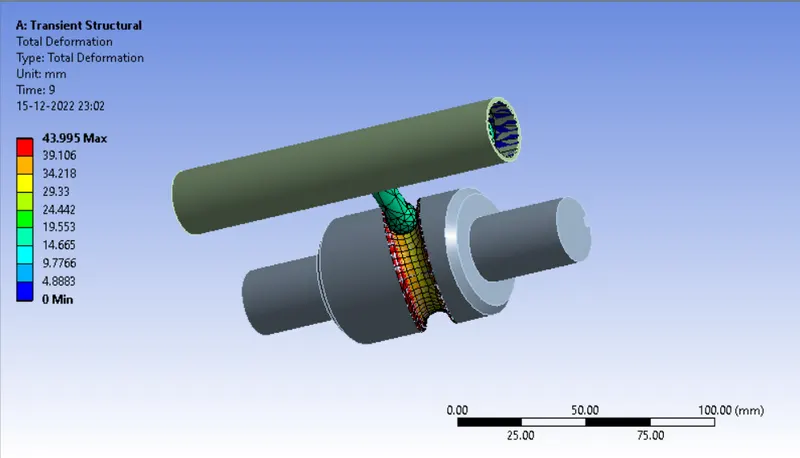
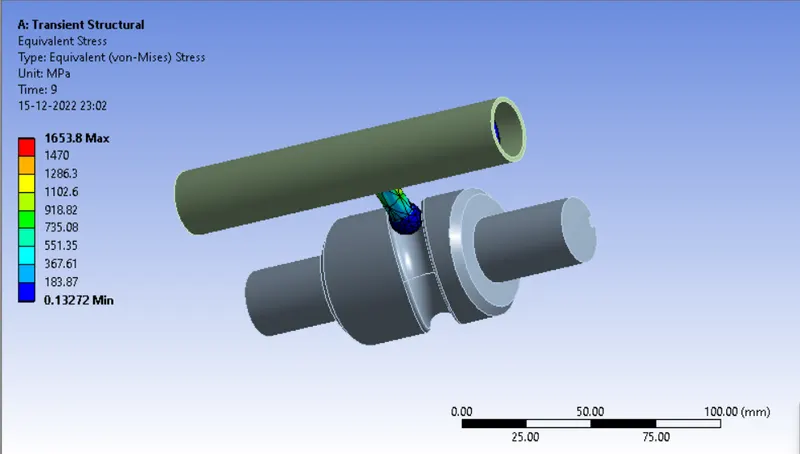
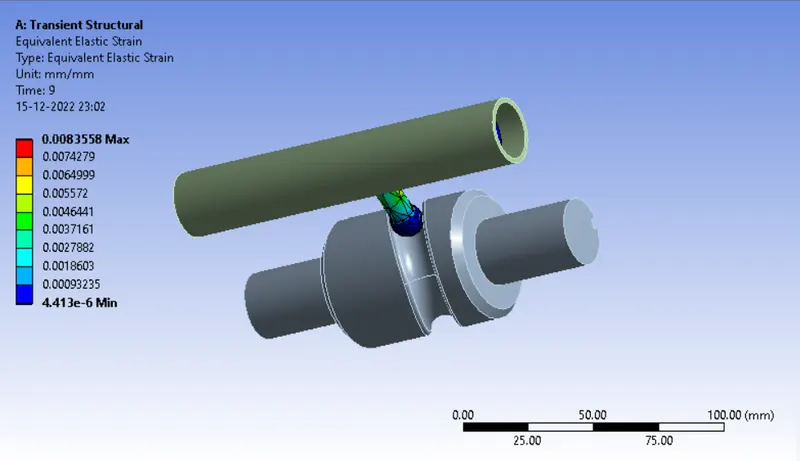
14. Now solve the model. After providing the solution it shows the following results.
CASE 2 :
1. Now duplicate the model static analysis.
2. Now double click on the model. The model will open in the model tab.
3. Now change the contact as friction with 0.1 coeffient of friction.
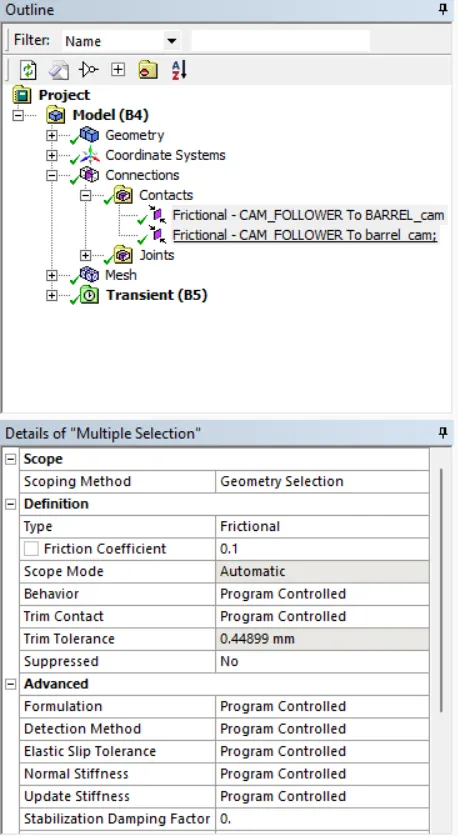
4. Now solve the model. And wait until the solution we get.
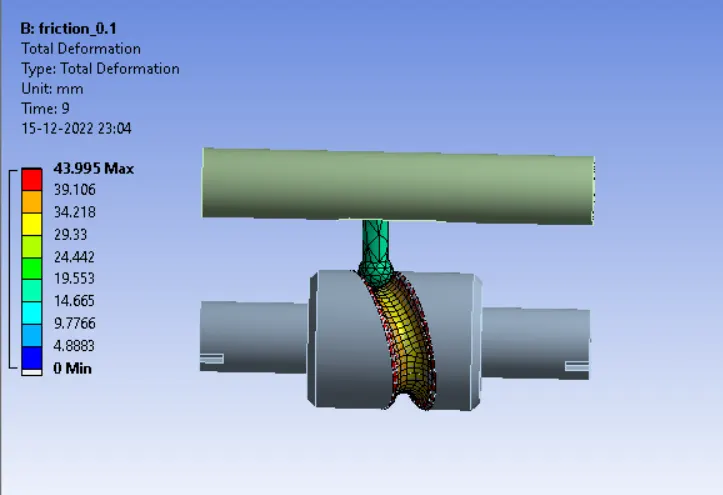
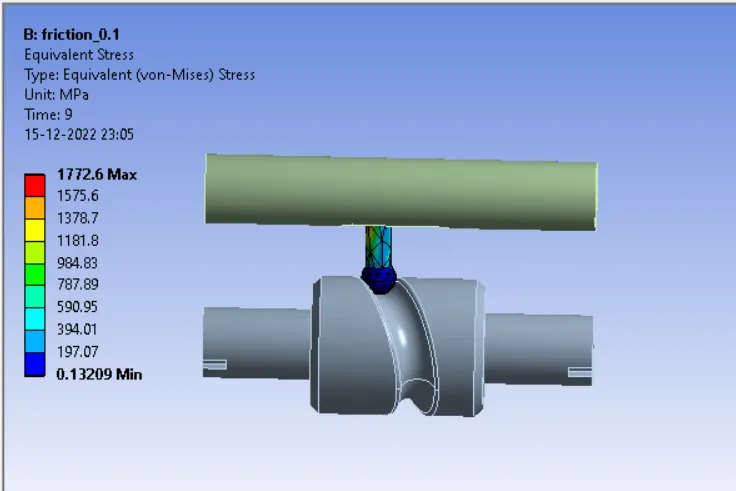
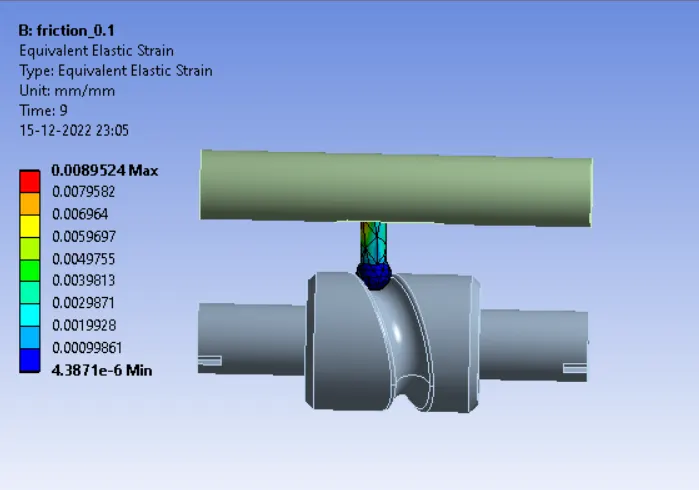
5. The results are shown below.
CASE 3 :
1. Now duplicate the model static analysis.
2. Now double click on the model. The model will open in the model tab.
3. Now change the contact as friction with 0.1 coeffient of friction.
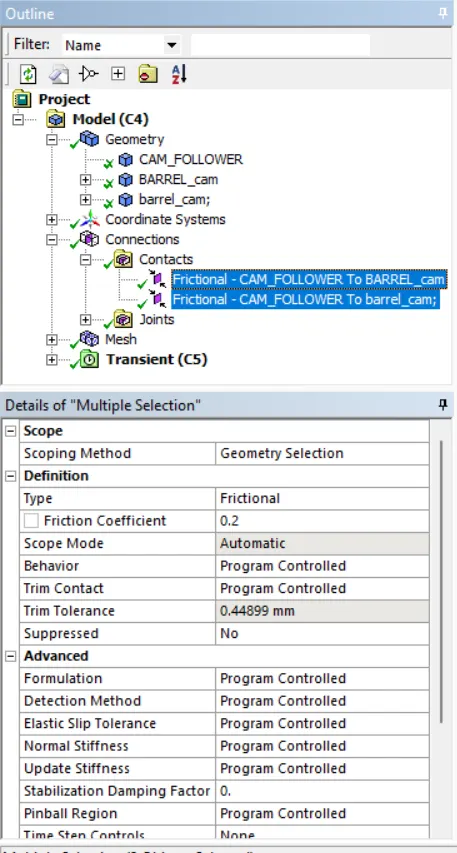
4. Now solve the model. And wait until the solution we get.
5. The results are shown below.
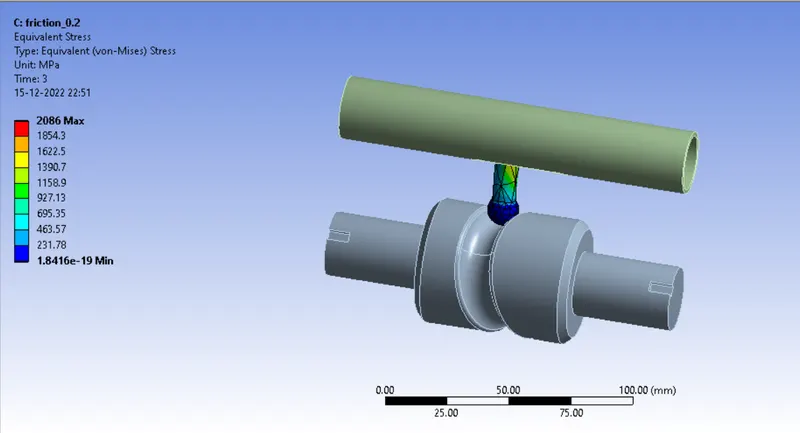
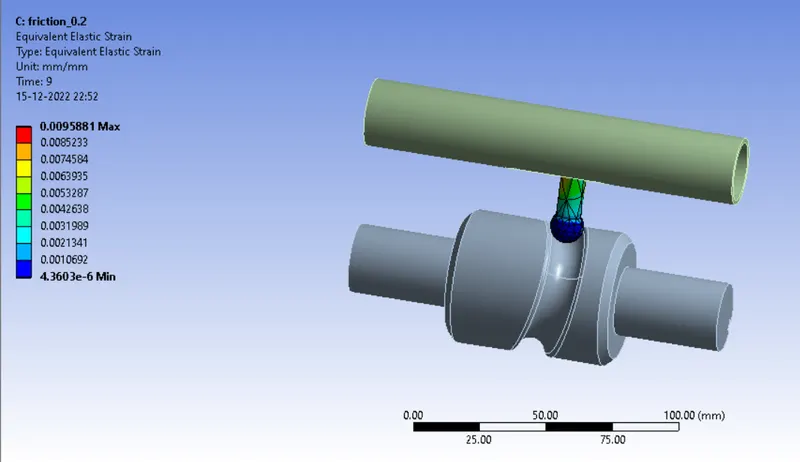
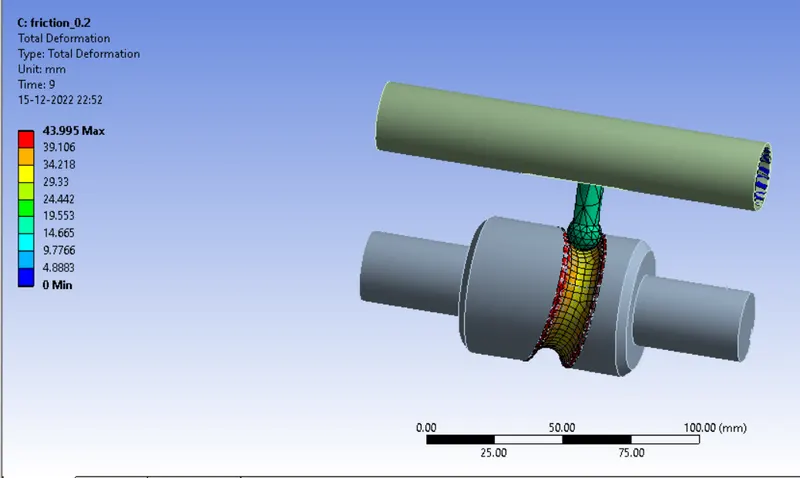
CONCLUSION:
|
Total deformation (mm) |
minimum stress (MPa) |
maximum stress (MPa) |
minimum strain | maximum strain | |
| case 1 | 43.995 | 0.13272 | 1653 | 4.413e-6 | 0.00835 |
| case 2 | 43.995 | 0.132 | 1772.6 | 4.38e-6 | 0.008952 |
| case 3 | 43.995 | 0.13146 | 1899 | 4.3e-6 | 0.009588 |
when there is no frictional contact between the surface we can see stress value is 1653 MPa but when there is friction with coefficient of friction is 0.1 is between the surface, the stress value is 1772.6 MPa and when there is friction with coefficient of friction is 0.2 is 1899 MPa. from this data we conclude that as friction increses the stress developed in the cam contact is increses becuase the cam has to over come the frction.
And the values are good when there is no friction. as the friction increses the values are also increses.