Week 7-Long Piston With Cam
Long Piston with Cam
OBJECTIVE:-
To perform a transient analysis of the piston and cam mechanism model using ANSYS Workbench.
To analyse the simulation for the given three conditions of friction.
Case-1 Frictionless
Case-2 Friction Coefficient = 0.1
Case-3 Friction Coefficient = 0.2
To find out Equivalent Stress, Directional Deformation and Equivalent Elastic Strain and to explain why the results vary for the three cases.
PROCEDURE:-
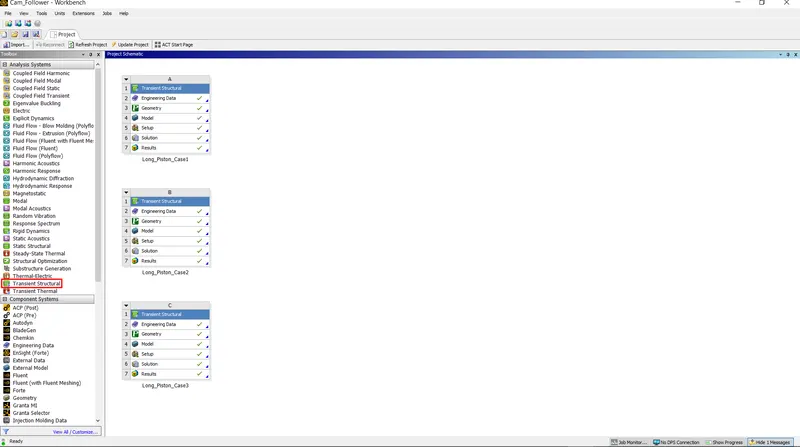
1) Open a new ANSYS Workbench session and double click on Transient Structural, now give it a name here we have given it Long_Piston_Case1.
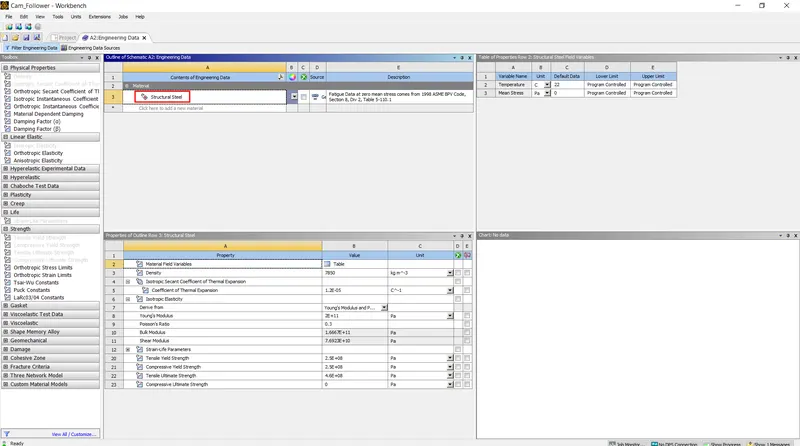
2) Click on Engineering Data, here we have Structural Steel as our default material.
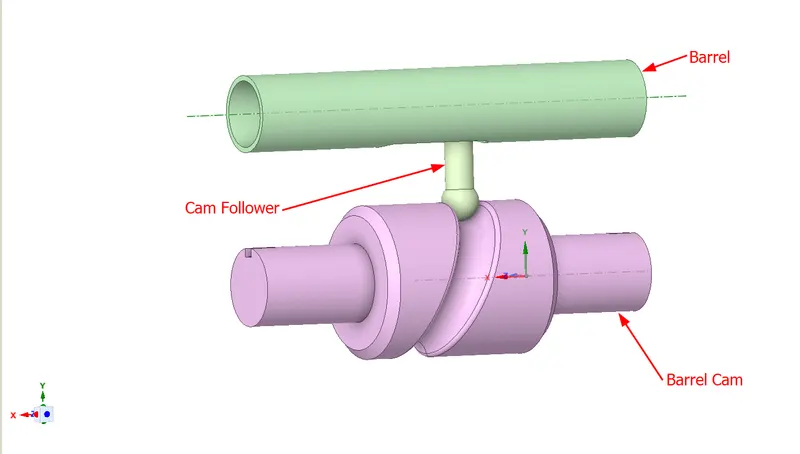
3) Now import the geometry model into the SpaceClaim and check the model. We have the model with 3 parts -
1. Barrel
2. Barrel CAM
3. CAM Follower
4) Now open the model in ANSYS Mechanical and rename all the 3 parts.
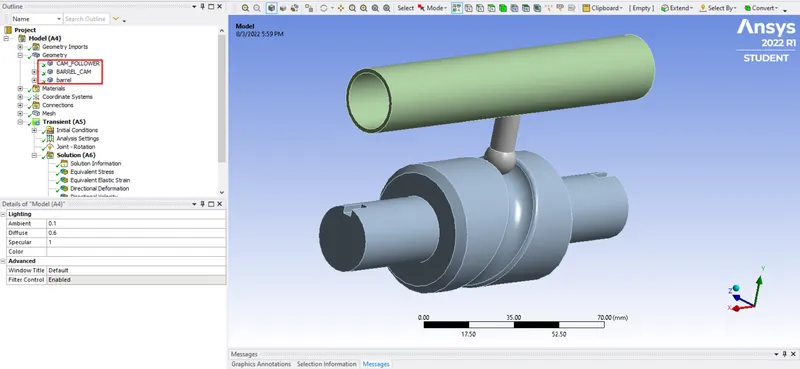
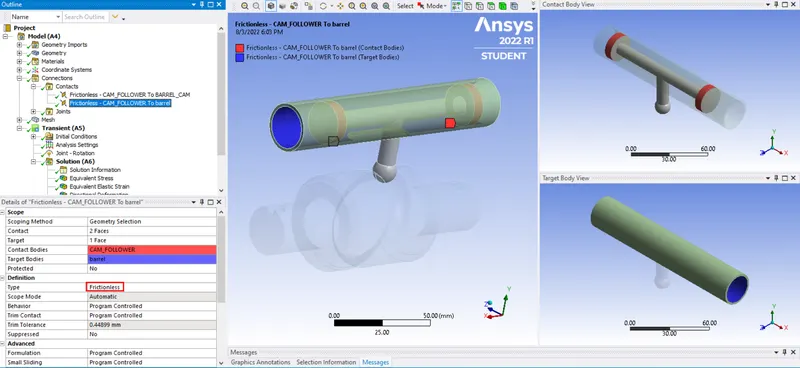
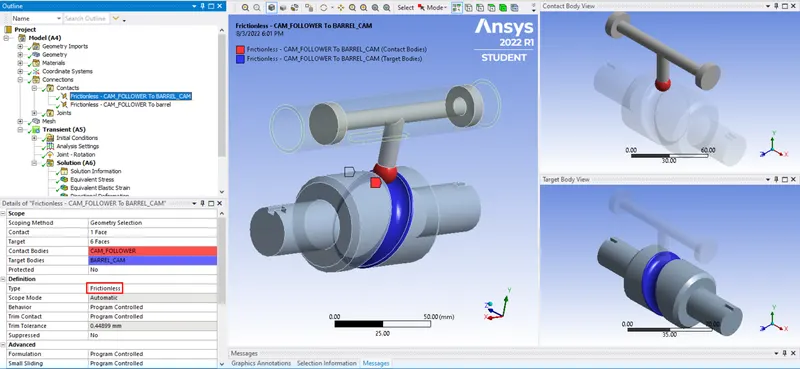
5) Define the contact between 1. Barrel and CAM Follower 2. CAM Follower and Barrel CAM as shown in the image below.
6) Define joints as fixed, revolute and translational.
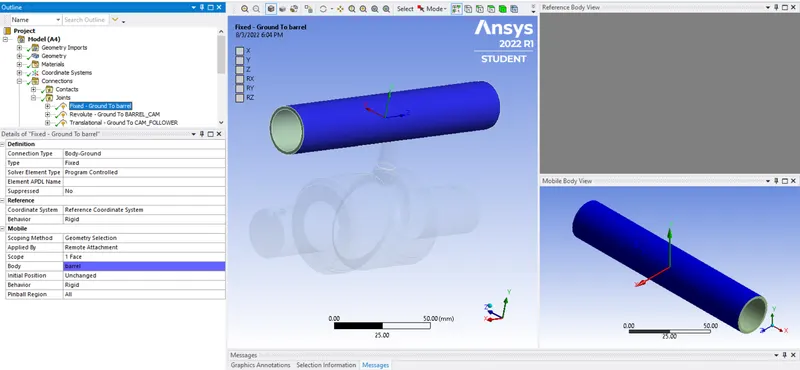
Fixed joint is defined for the barrel so that it can be fixed.
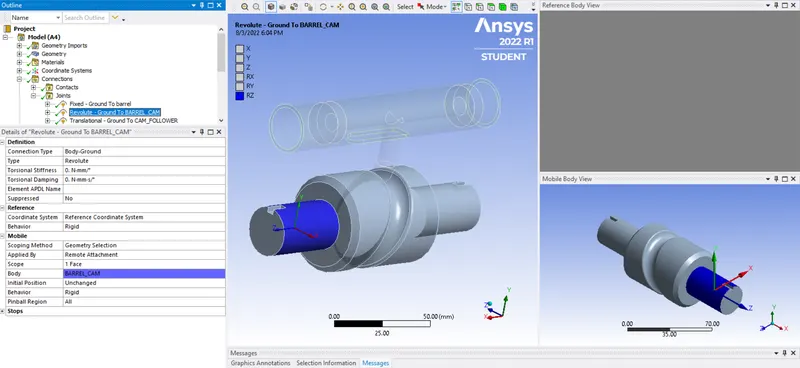
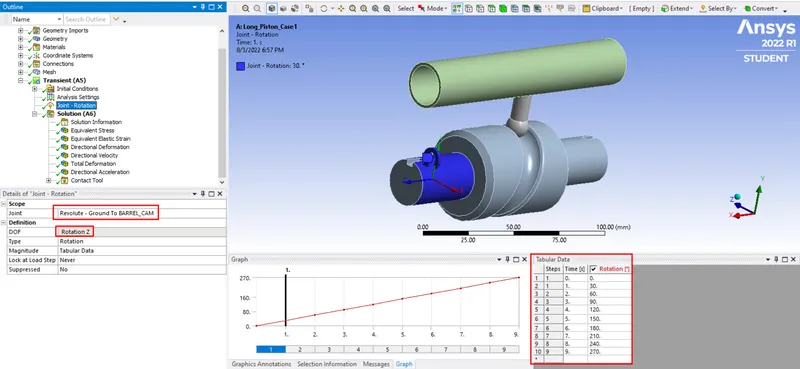
Revolute joint is defined for the Barrel CAM so that it can rotate with respect to Z axis.
Translational joint is defined for CAM Follower because it has to translate along X axis in hollow barrel with the rotation of the Barrel CAM.
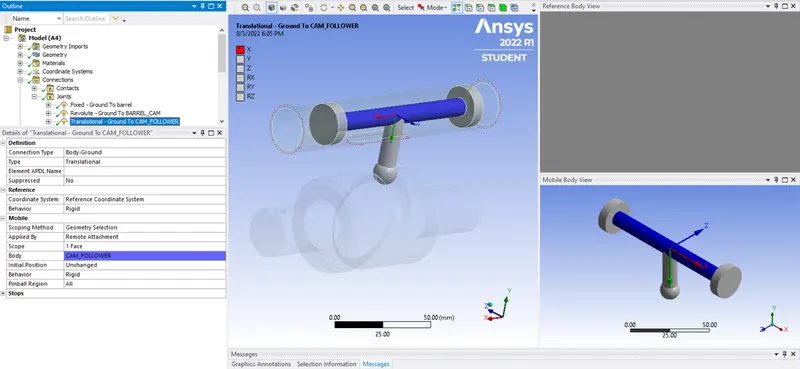
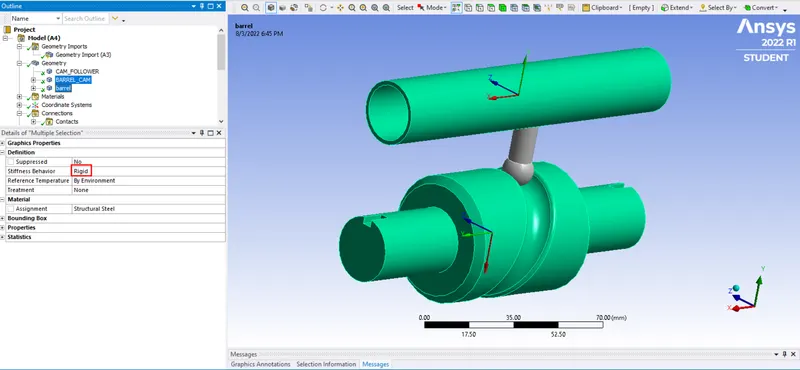
7) Set the stifness behaviour to Rigid for both the barrel and the barrel cam.
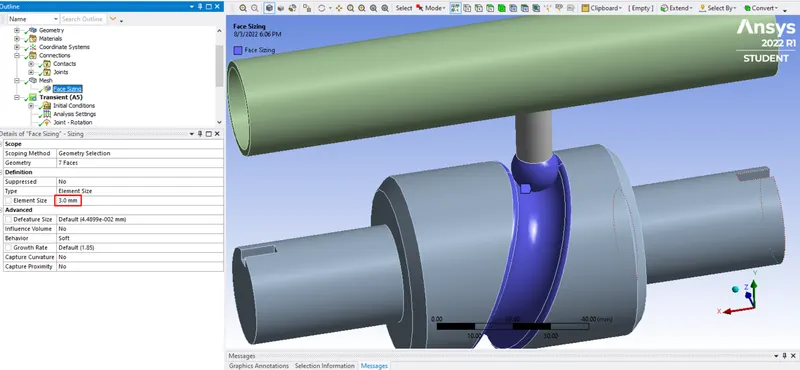
8) Select the faces that goes into contact and insert sizing for them to get best results preferably for that areas.
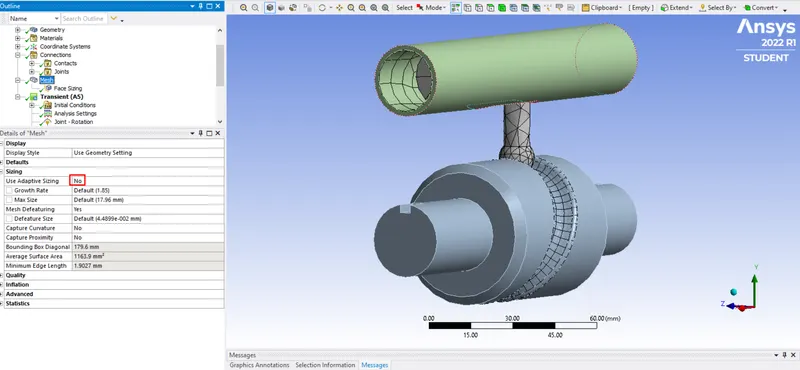
Turn off the adaptive sizing in the mesh window.
Mesh will not be generated on the rigid bodies as they are under point loads and will be treate as point masses.
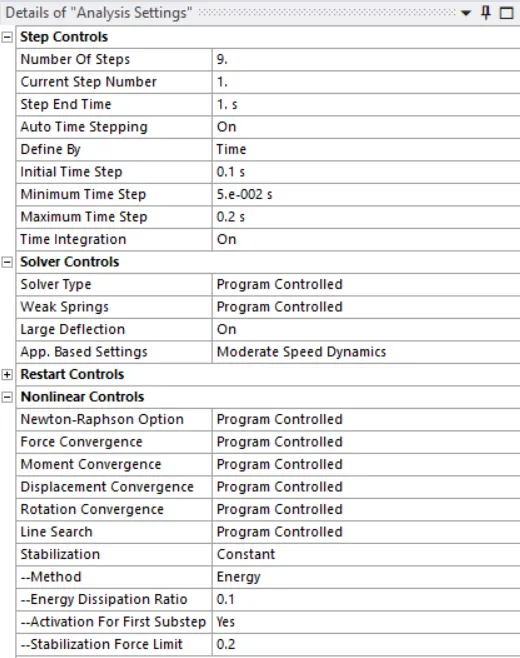
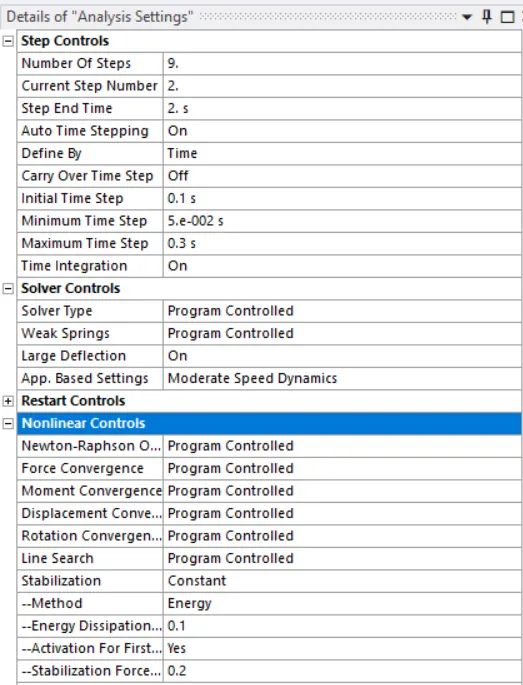
9) Define Analysis Settings. The simulation has to be runned for a total of 9 steps, the steps to be set as below.
For step-1
For step-2
10) Create a Joint rotation for revolute ground to barrel and insert the tabular data as following.
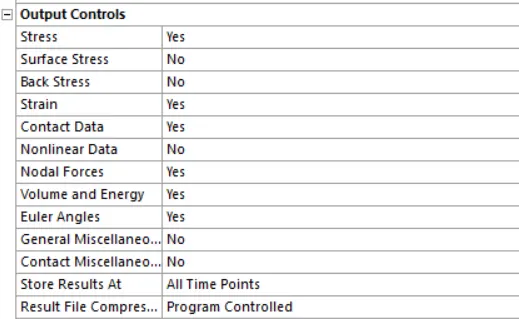
11) Request for following outputs from the simulation as results.
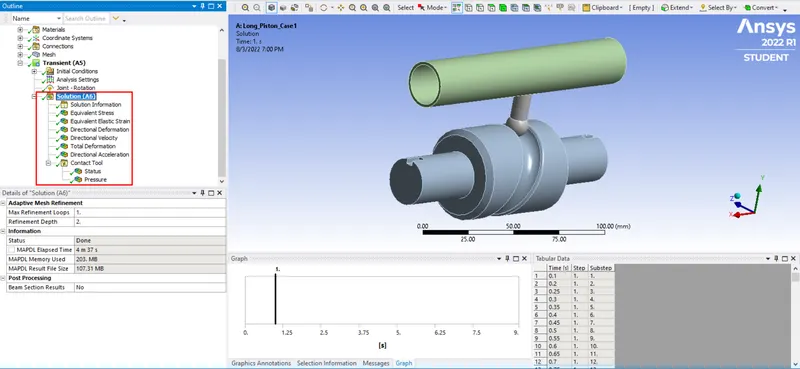
NOTE - In the same way we can setup the other two cases with Friction Coefficient = 0.1 and 0.2 and perform the simulations.
RESULTS:-
1) Case-1 Frictionless
Directional Deformation -
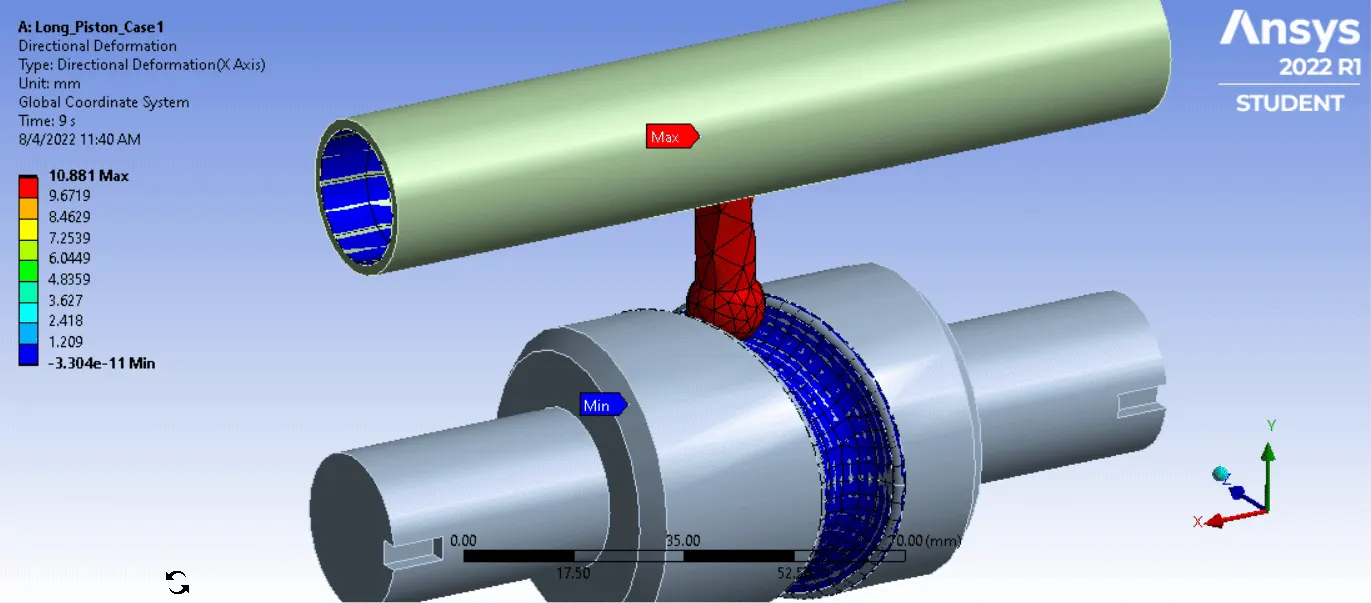
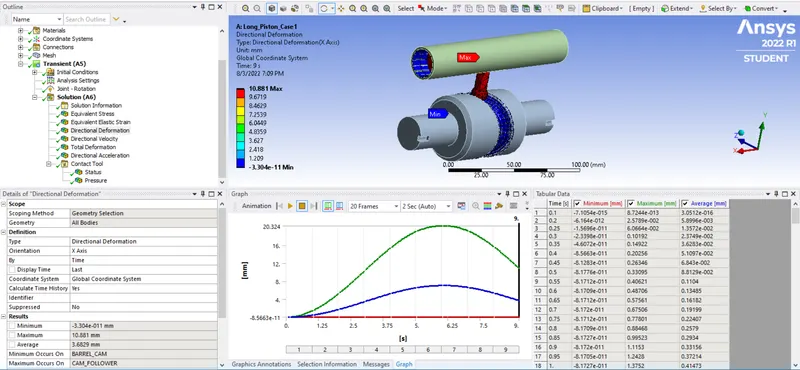
The max. directional deformation is found to be 20.324mm.
Equivalent Stress -
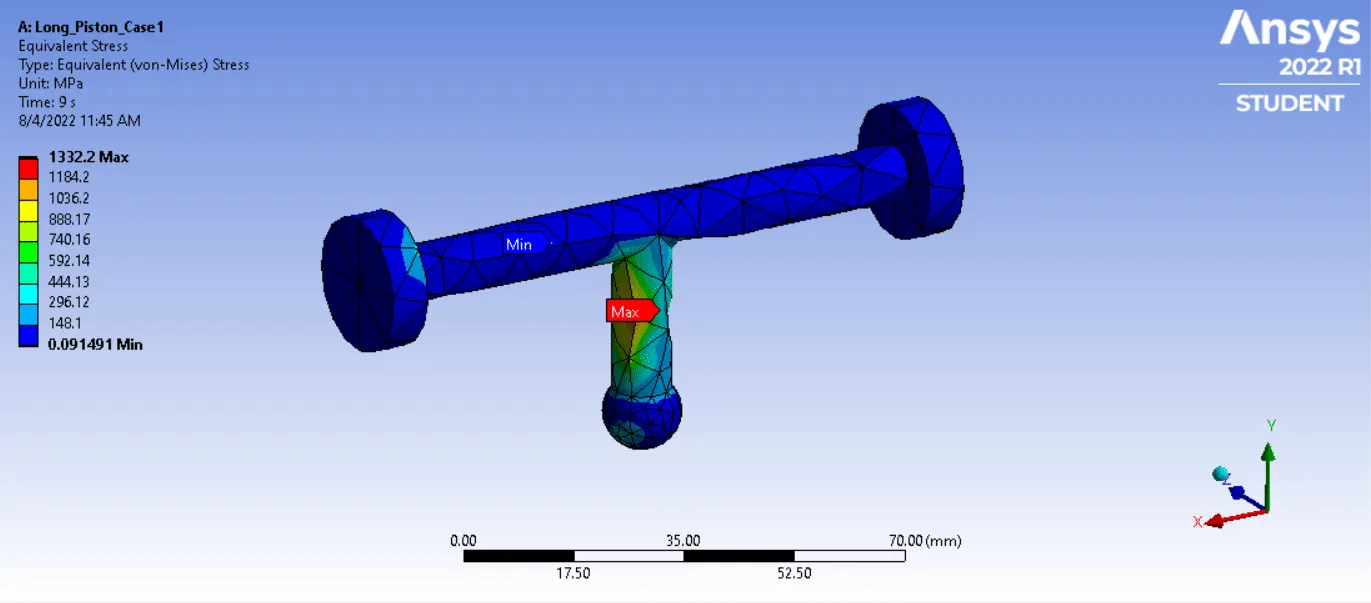
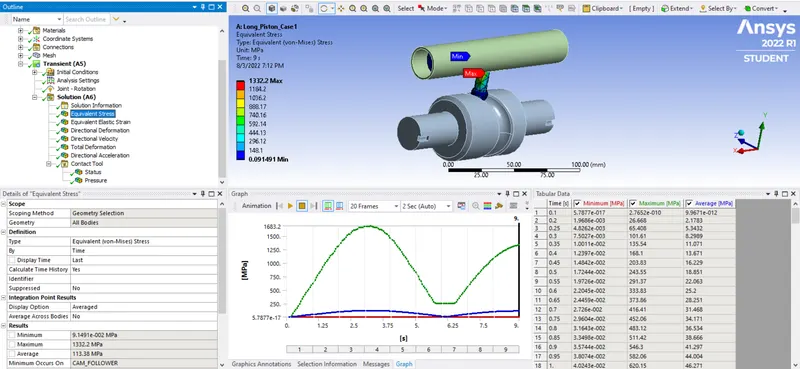
The max. equivalent stress is found to be 1683.2MPa.
Equivalent Elastic Strain -
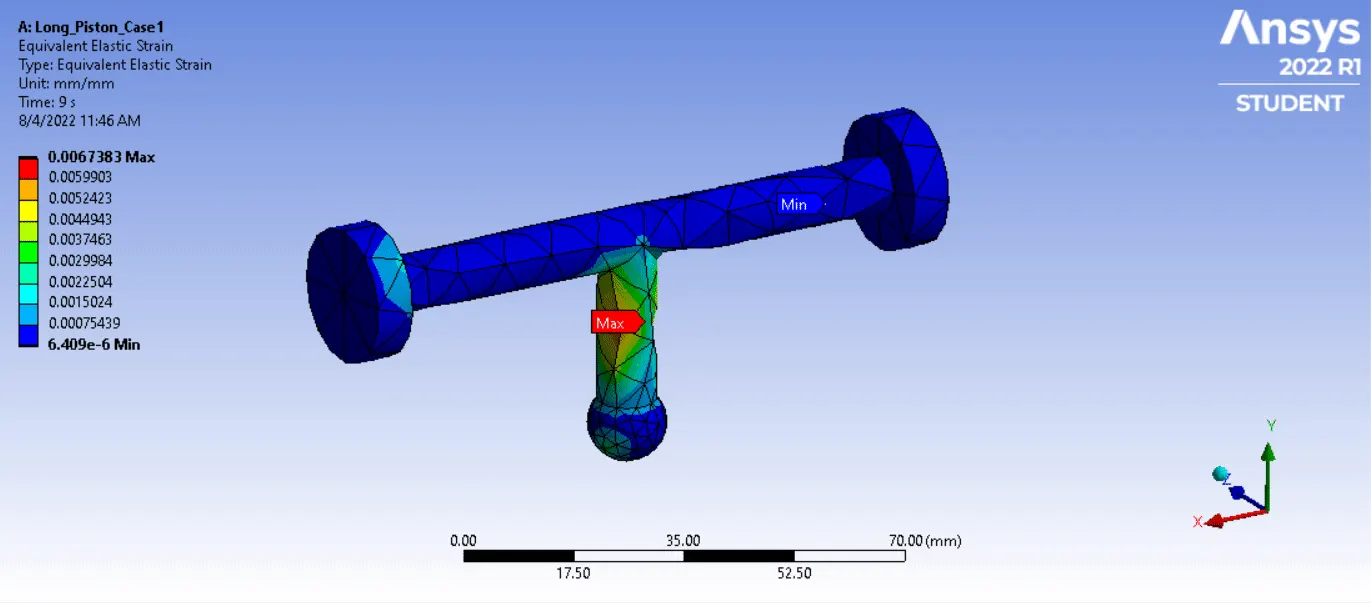
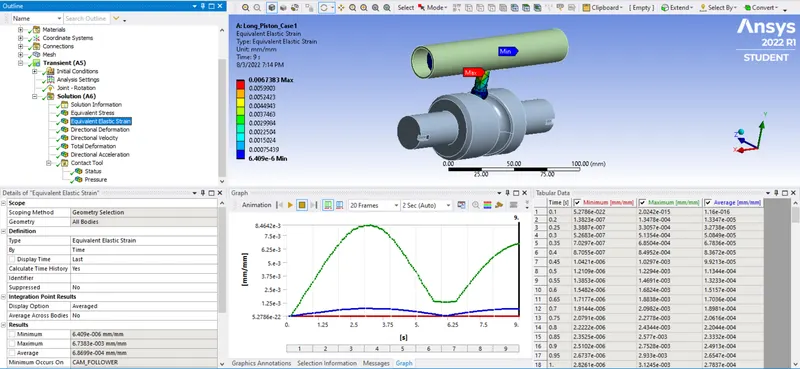
The max. equivalent elastic strain is found to be 0.0084642.
2) Case-1 Friction Coefficient = 0.1
Directional Deformation -
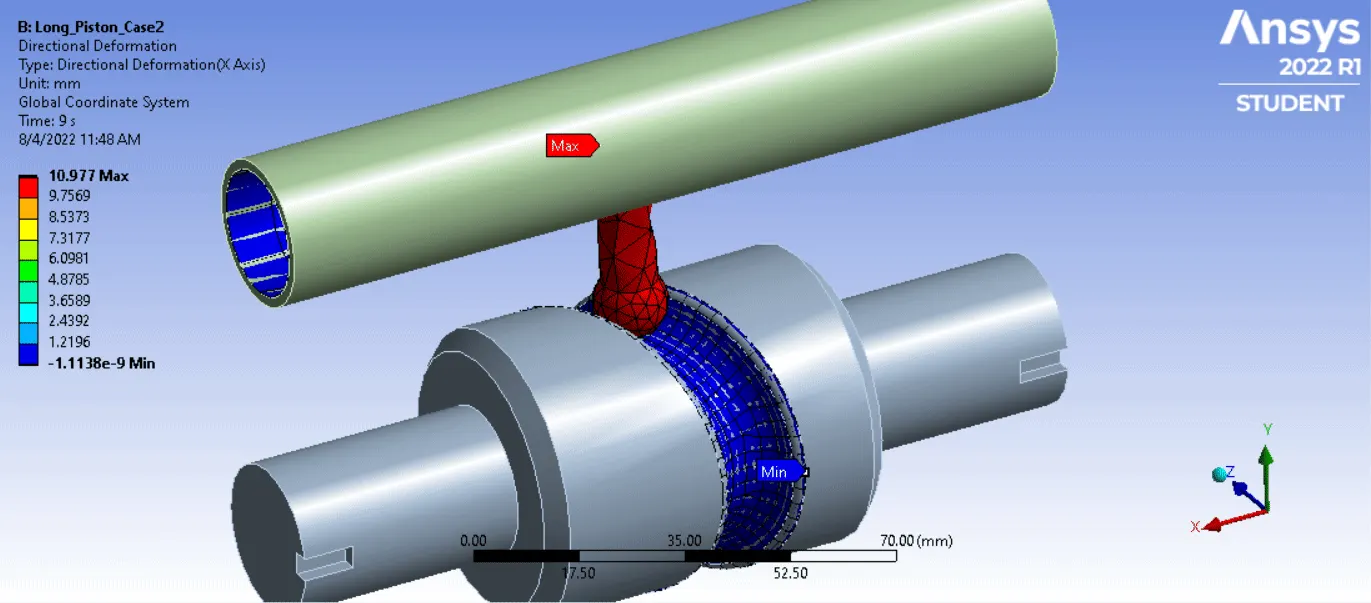
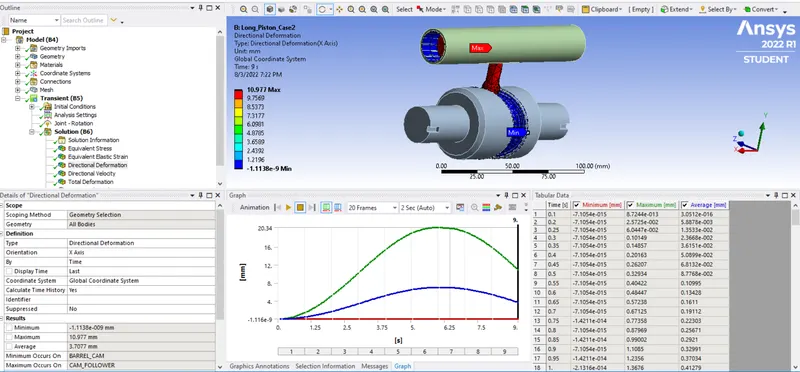
The max. directional deformation is found to be 20.34mm.
Equivalent Stress -
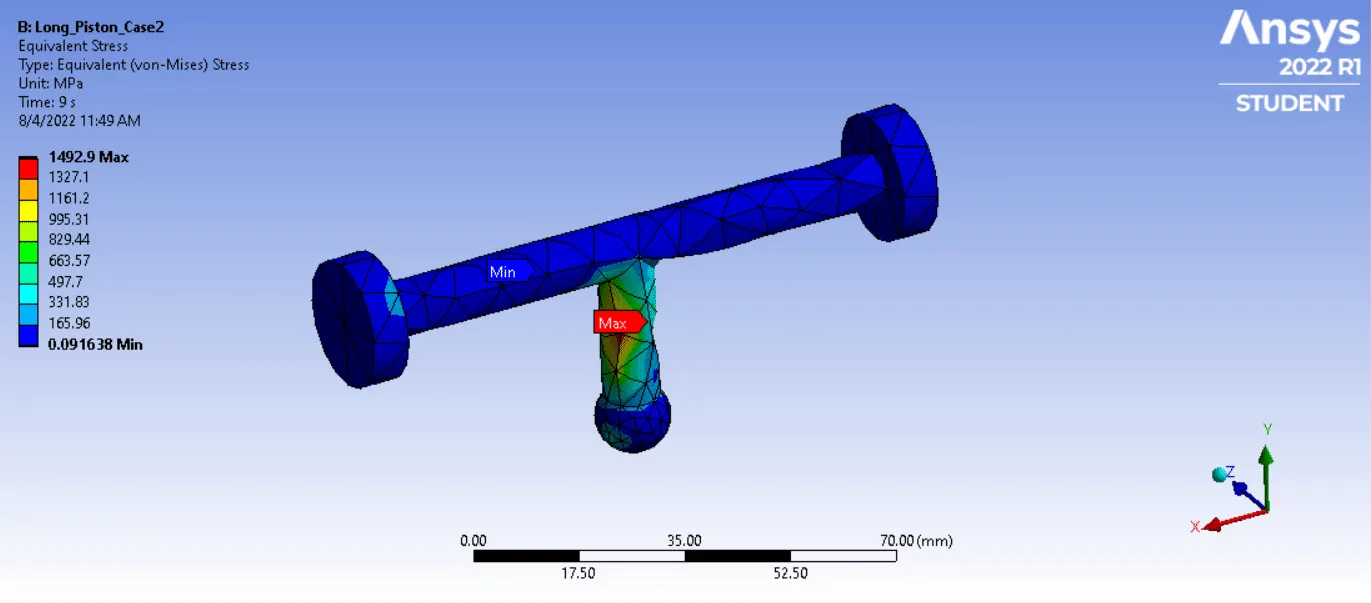
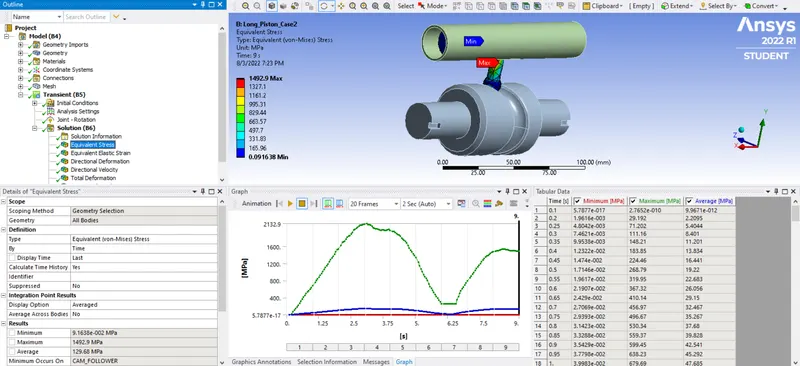
The max. equivalent stress is found to be 2132.9MPa.
Equivalent Elastic Strain -
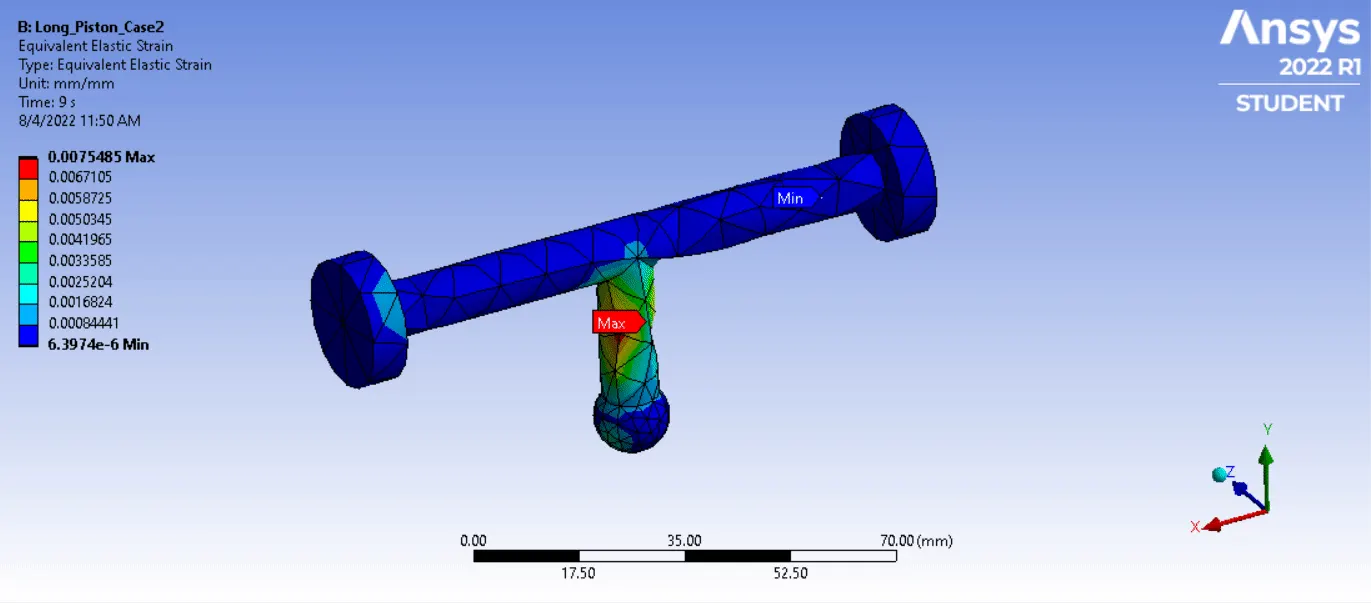
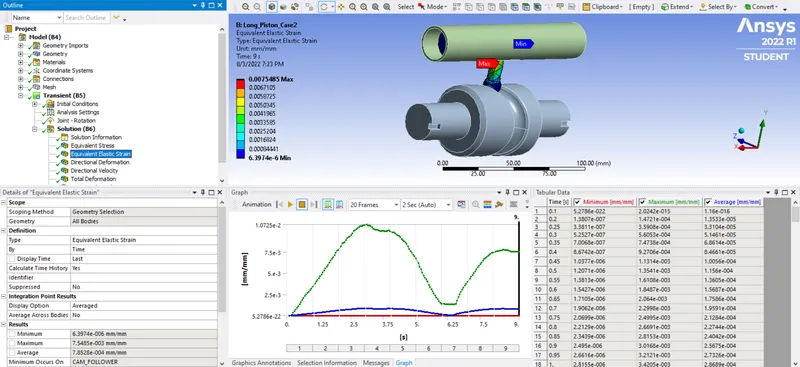
The max. equivalent elastic strain is found to be 0.010725.
3) Case-3 Friction Coefficient = 0.2
Directional Deformation -
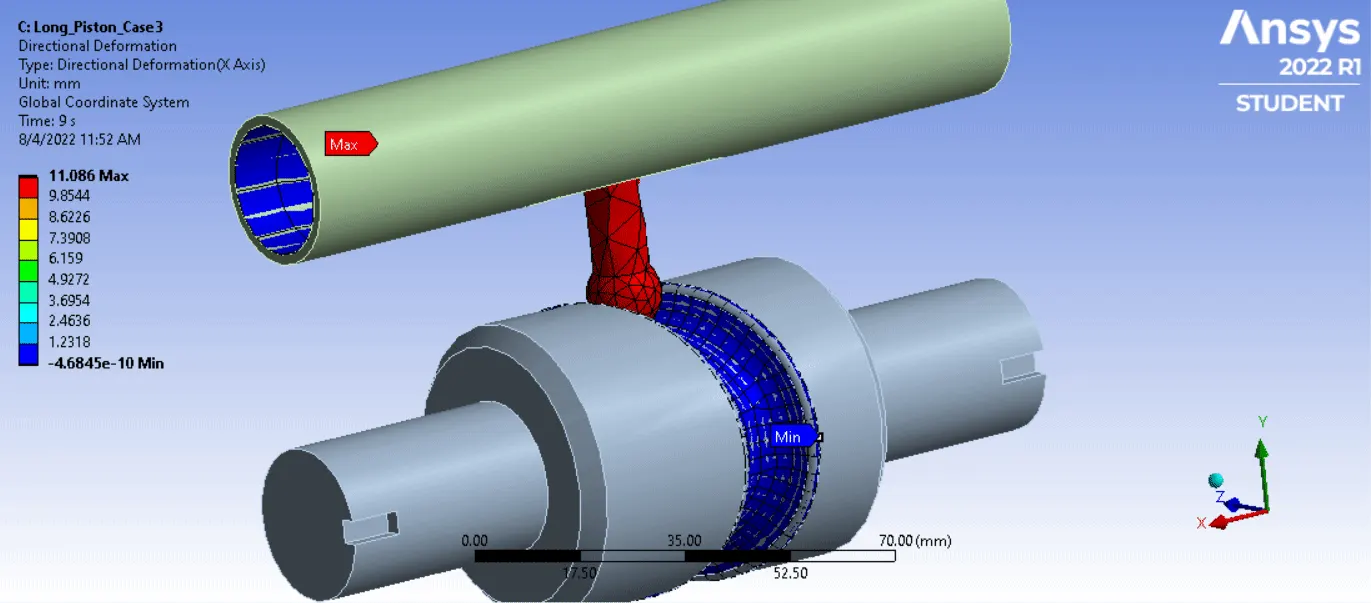
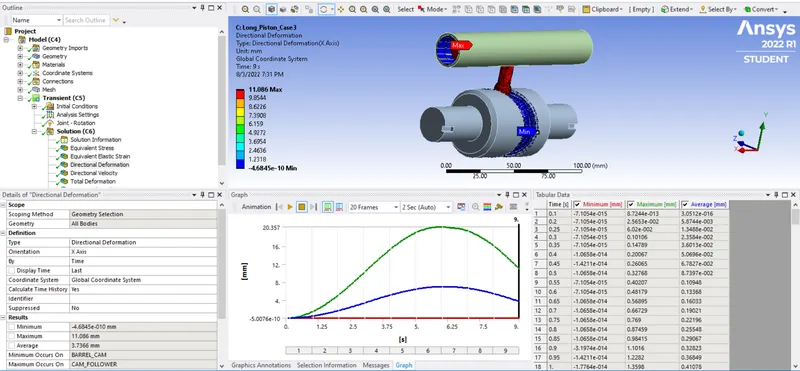
The max. directional deformation is found to be 20.357mm.
Equivalent Stress -
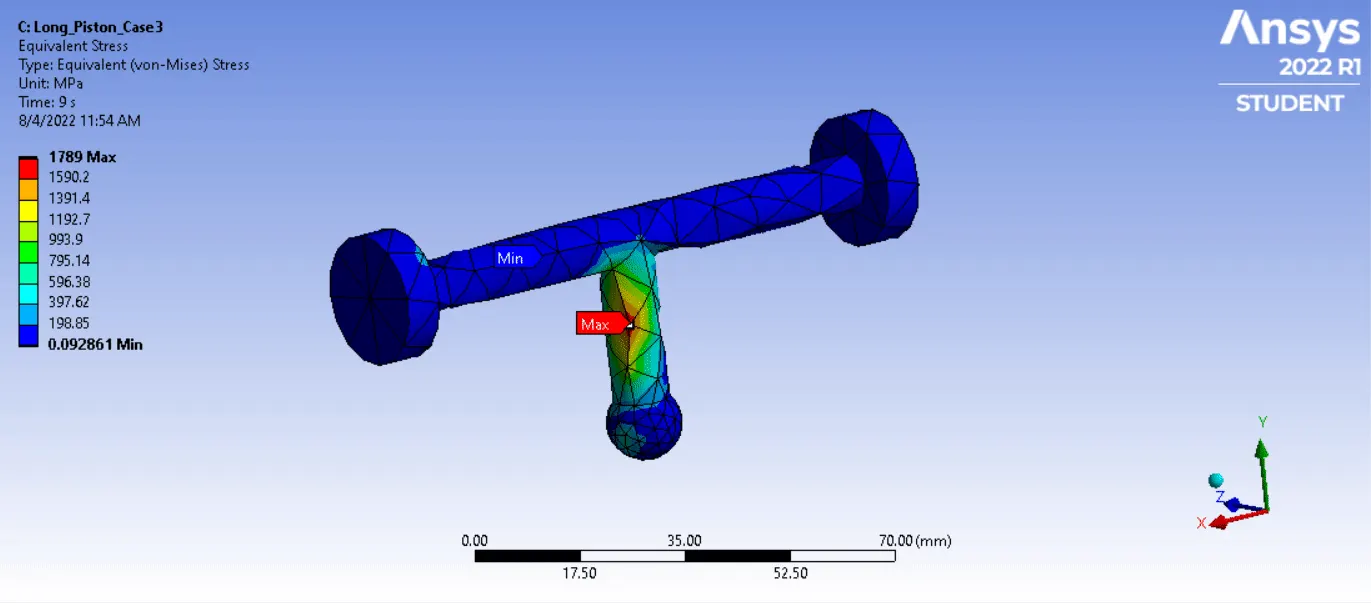
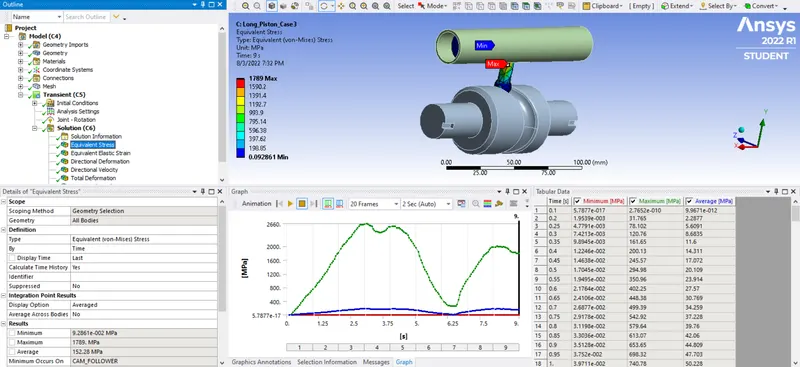
The max. equivalent stress is found to be 2660MPa.
Equivalent Elastic Strain -
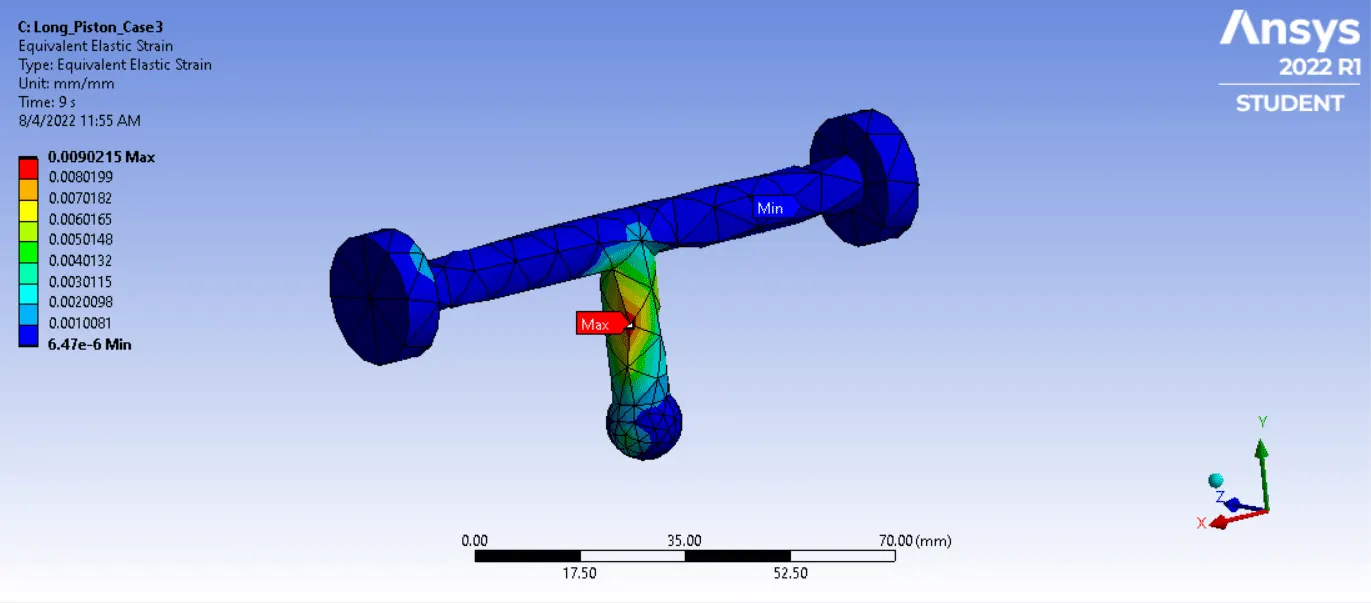
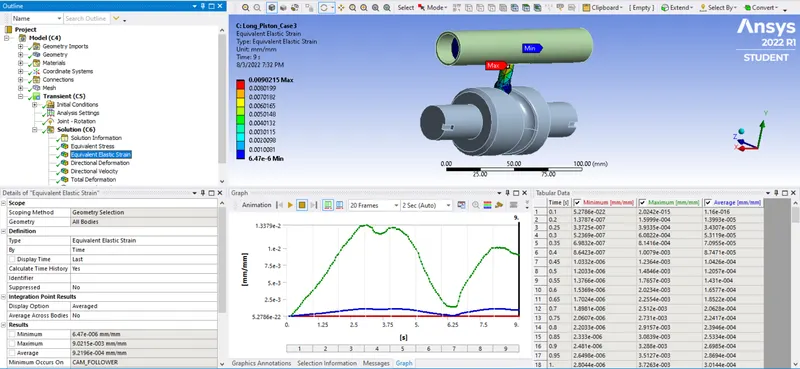
The max. equivalent elastic strain is found to be 0.013379.
COMPARISION:-
| Cases | Directional Deformation | Equivalent Stress | Equivalent Elastic Strain |
| Case-1 (Frictionless) | 20.324mm | 1683.2MPa | 0.0084642 |
| Case-2 (Friction Coefficient =0.1) | 20.34mm | 2132.9MPa | 0.010725 |
| Case-3 (Friction Coefficient =0.2) | 20.357mm | 2660MPa | 0.013379 |
As we can see in the table above that all the 3 values are minimum in the case-1 of frictionless as compared to other 2 cases and increases with increment in Friction Coefficient hence max. values of Equivalent Stress, Directional Deformation and Equivalent Elastic Strain can be observed in the case-3 where the Friction Coefficient = 0.2.
CONCLUSION:-
It is observed that as the coefficient of friction is increased, the value of Max. deformation, v-m stress and equivalent elastic strain is also increased, because as coefficient of friction is increased the frictional resistance to motion is also increased. Hence, for case-3 with frictional contact having coefficient of friction as 0.2 has the highest value for max. deformation, v-m stress and equivalent elastic strain compared to case-2 and case-1.