Week 7-Long Piston With Cam
Objective: To perform a transient analysis on a piston and cam mechanism model for the following three cases of contacts:
- Case 1: Frictionless Contact.
- Case 2: Frictional Contact `mu=0.1`.
- Case 3: Frictional Contact `mu=0.2`.
Procedure:
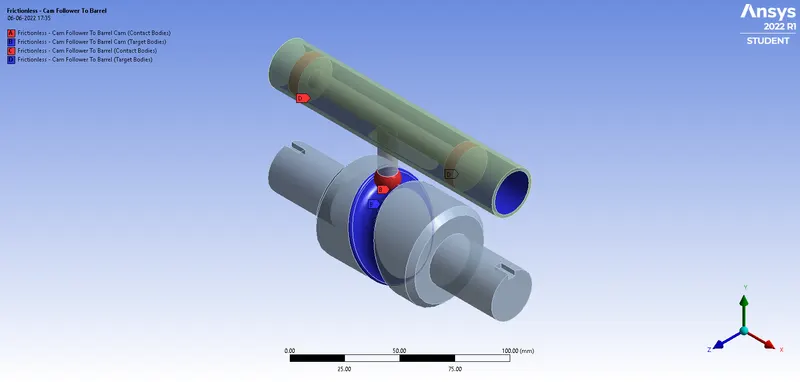
- Contacts:
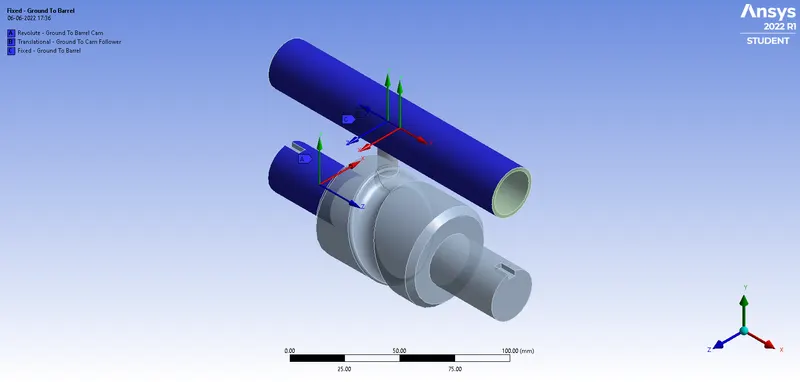
- Joints:
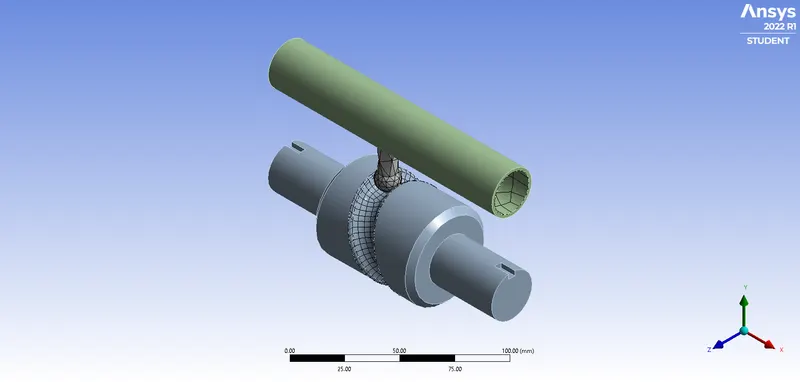
- Meshing:
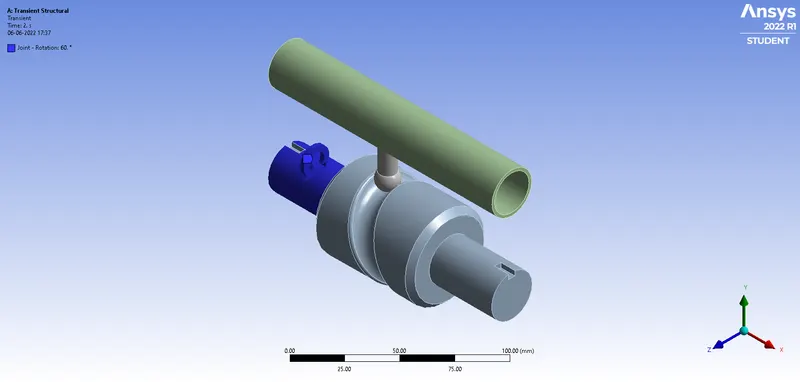
- Boundary Conditions:
Analysis:
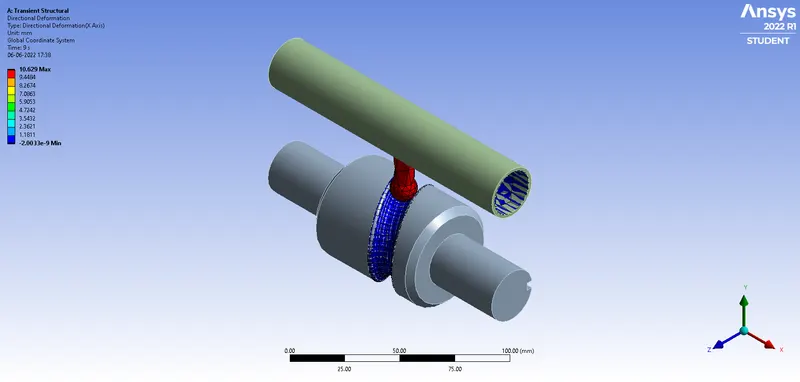
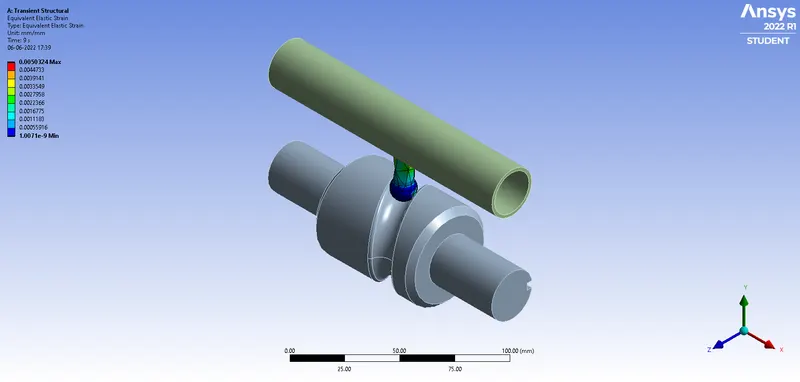
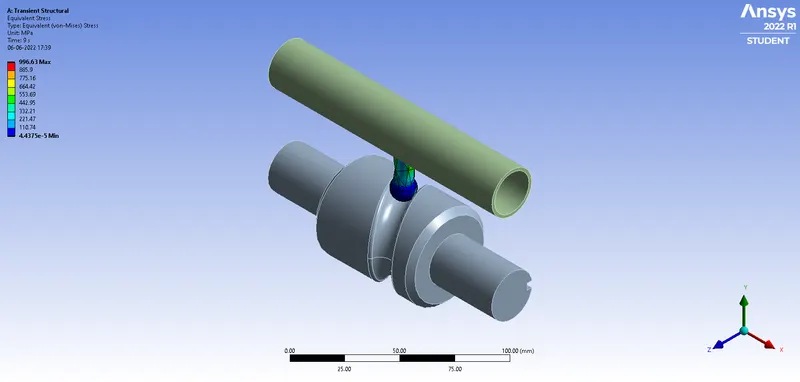
- Case 1:
- Directional Deformation:
- Equivalent Elastic Strain:
- Equivalent Stress:
- Directional Deformation:
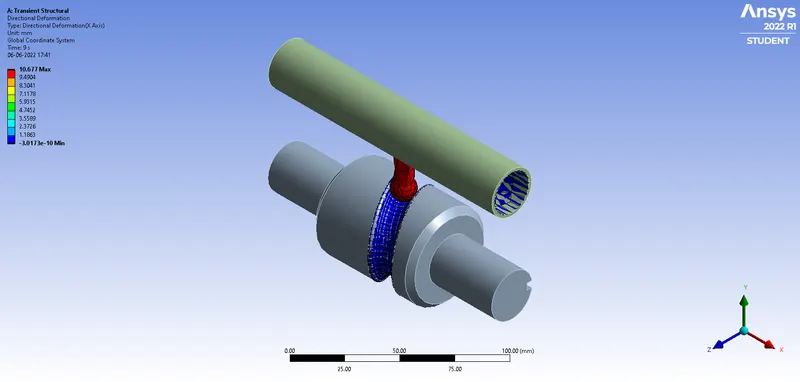
- Case 2:
- Directional Deformation:
- Equivalent Elastic Strain:
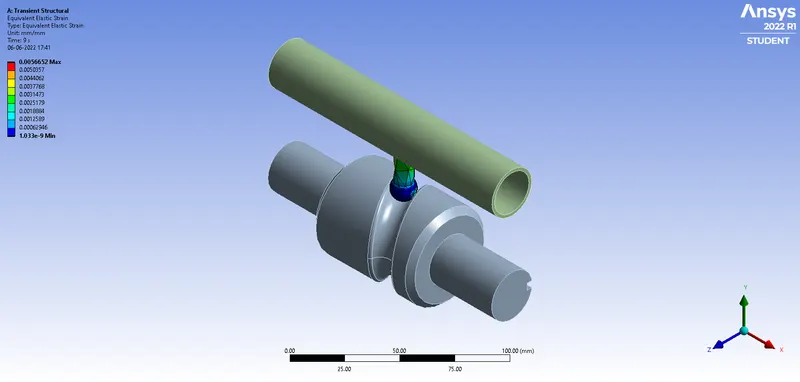
- Equivalent Stress:
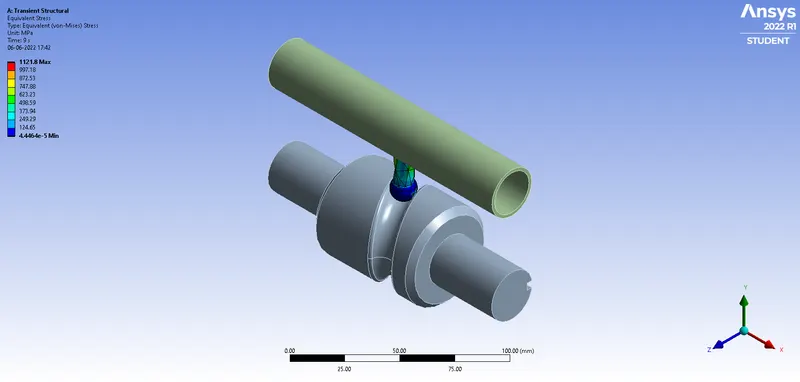
- Directional Deformation:
- Case 3:
- Directional Deformation:
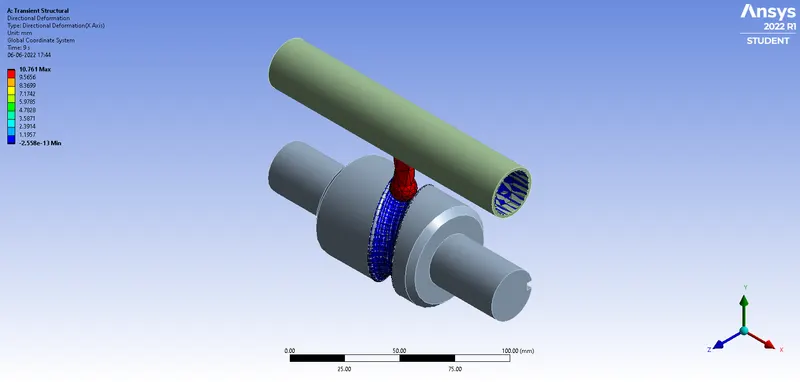
- Equivalent Elastic Strain:
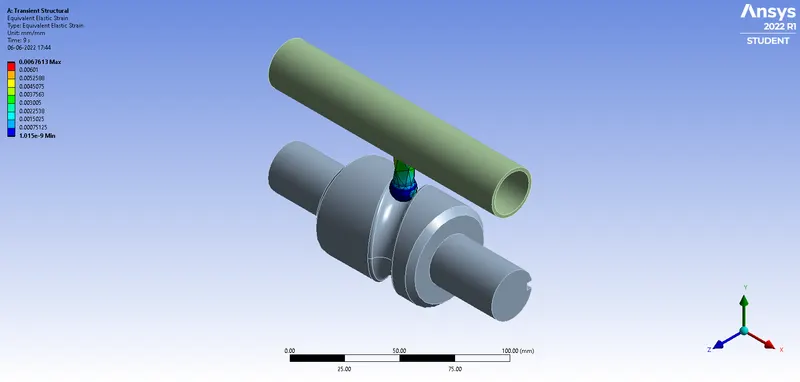
- Equivalent Stress:
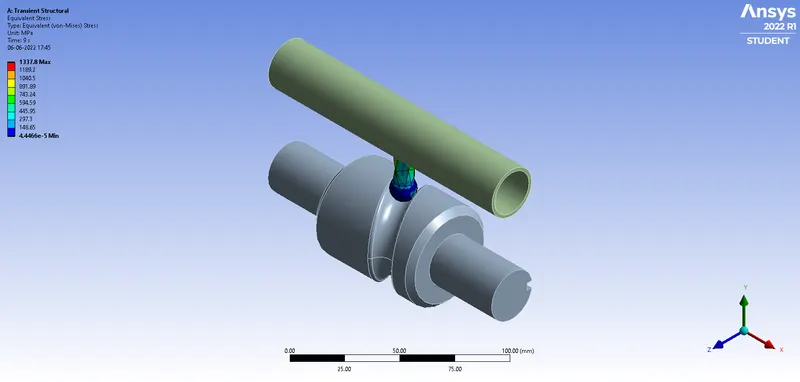
- Directional Deformation:
Result:
| Cases | Frictional Coefficient | Directional Deformation (mm) | Equivalent Elastic Strain (mm/mm) | Equivalent Stress (MPa) | |||
| Maximum | Minimum | Maximum | Minimum | Maximum | Minimum | ||
| Case 1 | 0 | 10.629 | -2.0033×10^-9 | 0.0050324 | 1.0071×10^-9 | 996.63 | 4.4375×10^-5 |
| Case 2 | 0.1 | 10.677 | -3.0173×10^-10 | 0.0056652 | 1.033×10^-9 | 1121.8 | 4.4464×10^-5 |
| Case 3 | 0.2 | 10.761 | -2.558×10^-13 | 0.0067613 | 1.015×10^-9 | 1337.8 | 4.4466×10^-5 |
Conclusion: As the frictional coefficient increases, the directional deformation, the equivalent elastic strain and the equivalent stress also increase. Thus, the directional deformation, the equivalent elastic strain and the equivalent stress are maximum for case 3, lesser for case 2 and least for case 1.