Week 3 Sheet metal Bending challenge
Objective: To perform sheet metal bending simulations for the following cases:
- Case 1: With Aluminum Alloy 1199, Copper Alloy NL and Magnesium Alloy NL
- Case 2: With Aluminum Alloy 1199 and friction coefficient 0.19
- Case 3: With Aluminum Alloy 1199 and finer mesh size for the sheet
Procedure:
- Contacts:
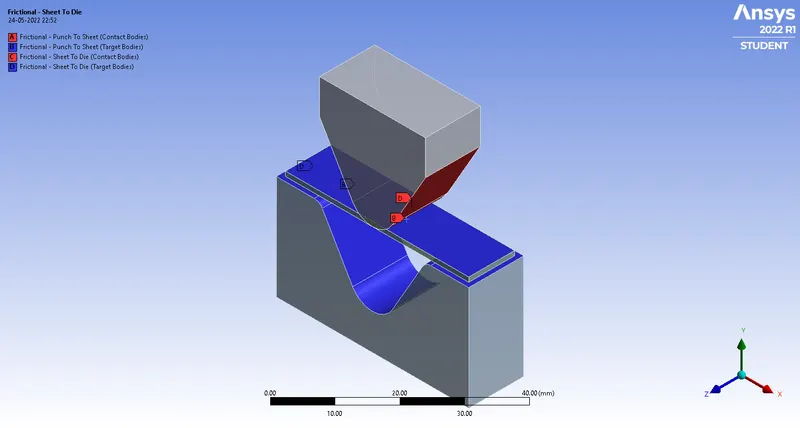
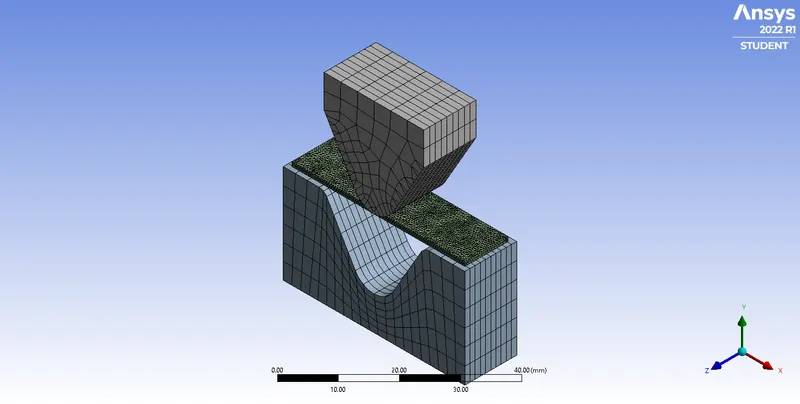
- Meshing:
- Case 1 (Sheet Mesh Size 1 mm):
- Case 2 (Sheet Mesh Size 1 mm):
- Case 3 (Sheet Mesh Size 0.5 mm):
Analysis:
- Case 1:
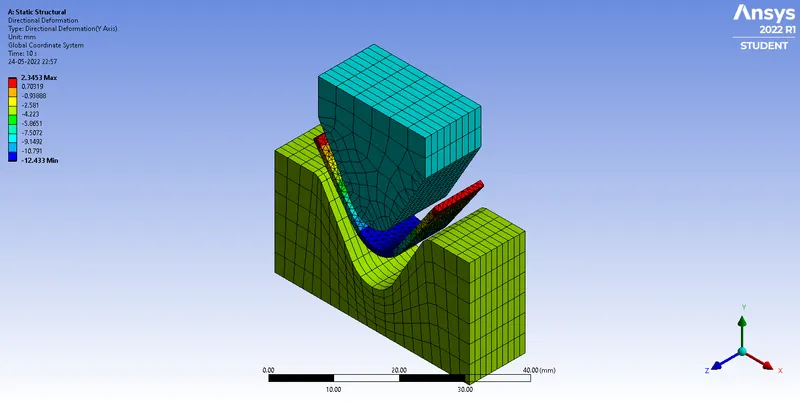
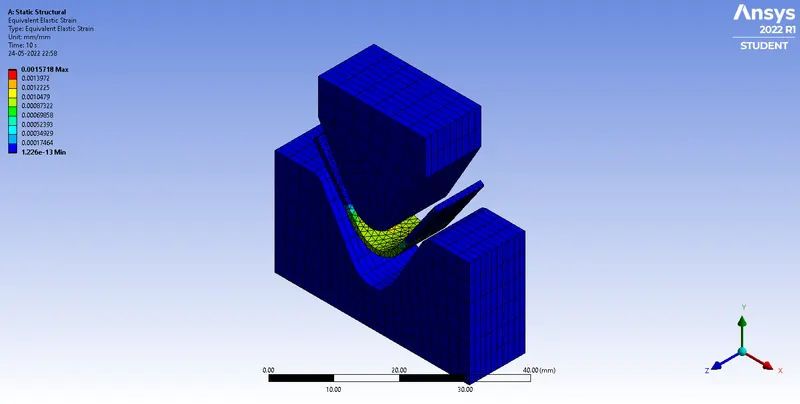
- Aluminum Alloy 1199
- Directional Deformation:
- Equivalent Elastic Strain:
- Equivalent Stress:
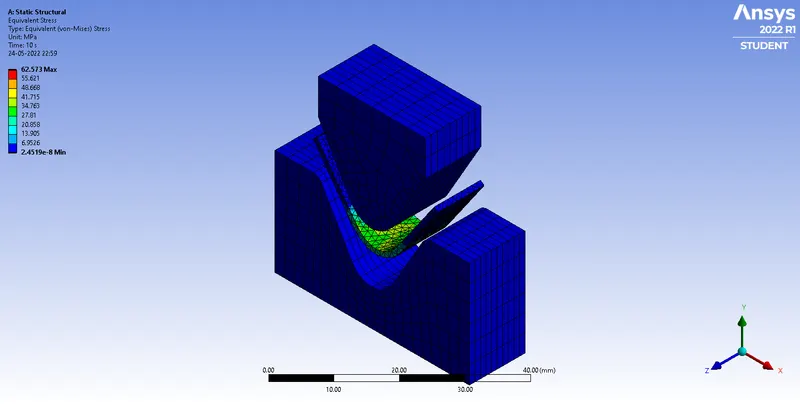
- Directional Deformation:
- Copper Alloy NL
- Directional Deformation:
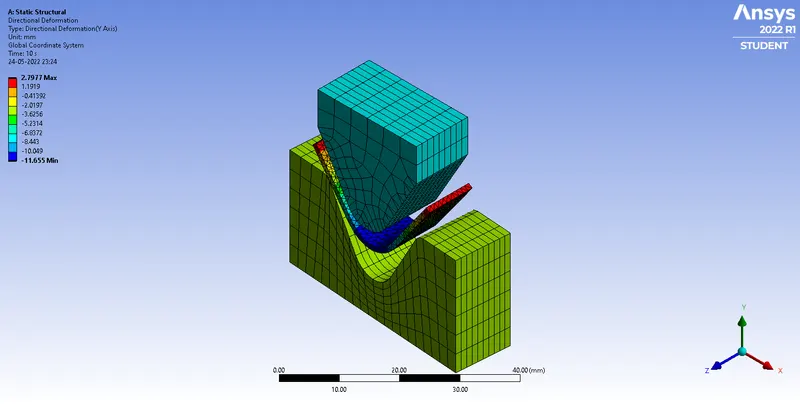
- Equivalent Elastic Strain:
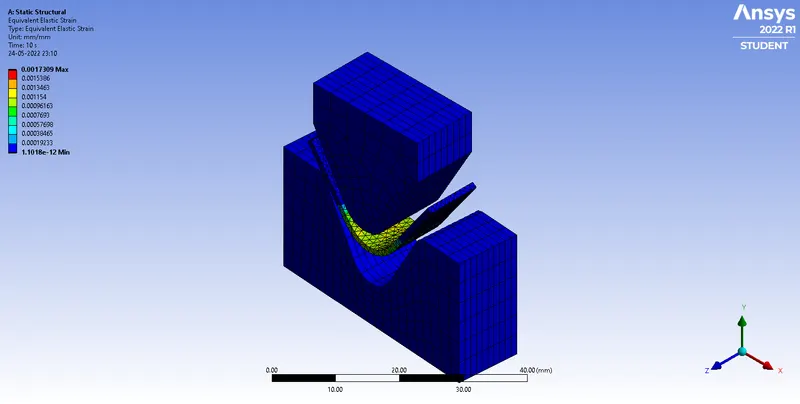
- Equivalent Stress:
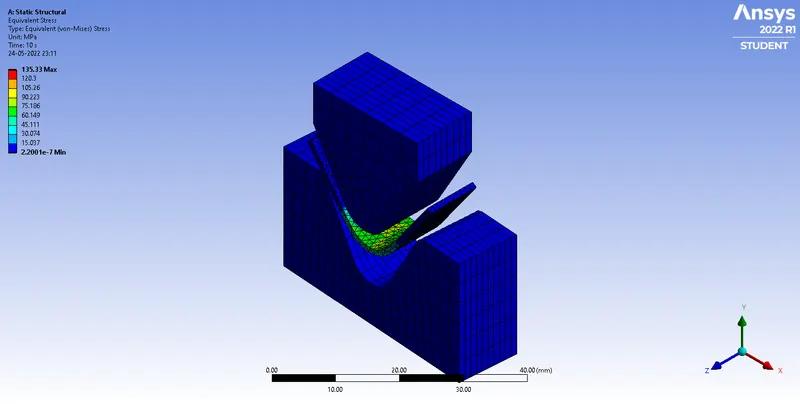
- Directional Deformation:
- Magnesium Alloy NL
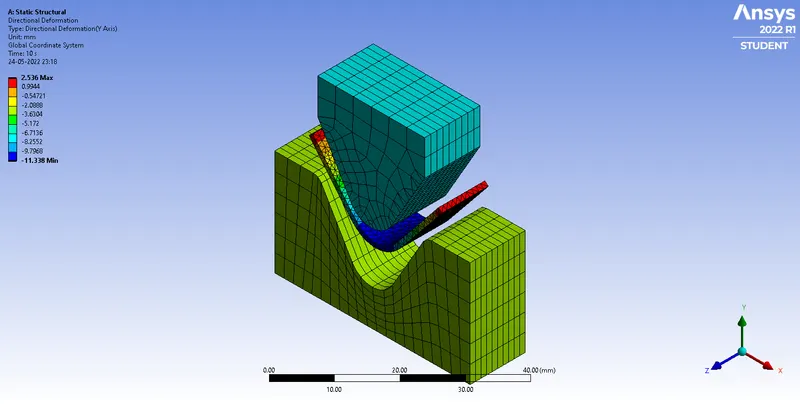
- Directional Deformation:
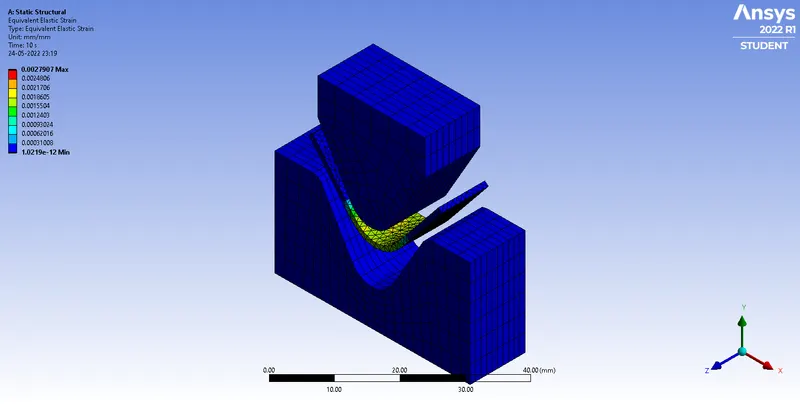
- Equivalent Elastic Strain:
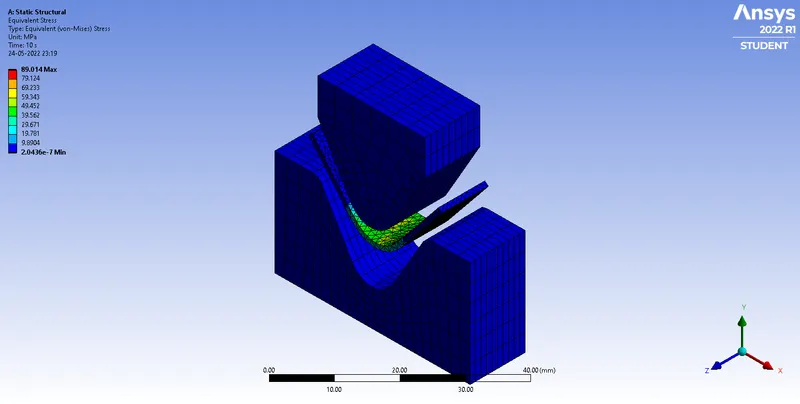
- Equivalent Stress:
- Directional Deformation:
- Aluminum Alloy 1199
- Case 2:
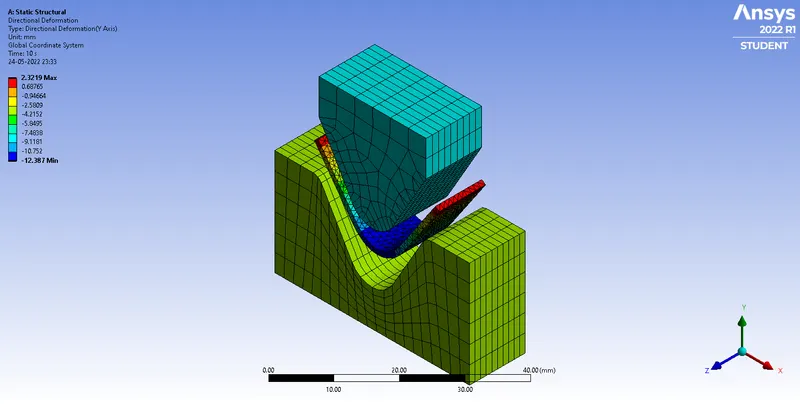
- Directional Deformation:
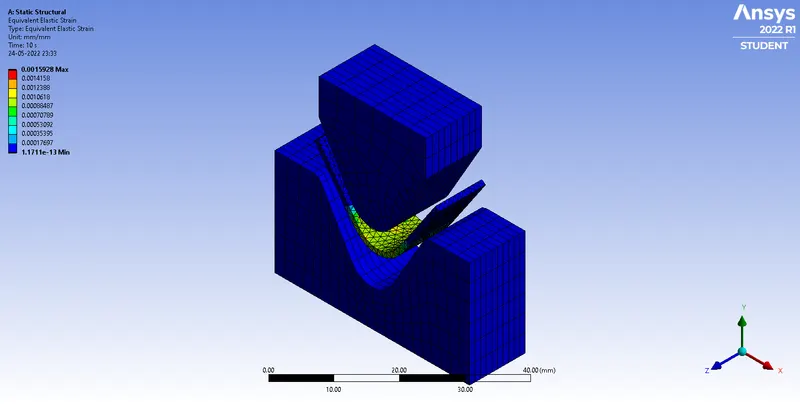
- Equivalent Elastic Strain:
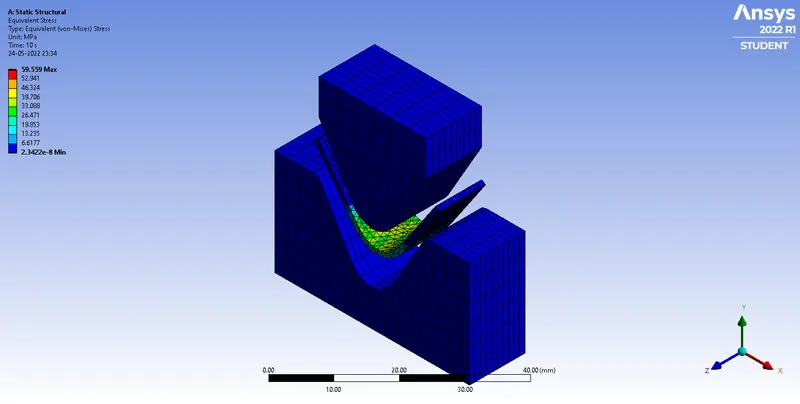
- Equivalent Stress:
- Directional Deformation:
- Case 3:
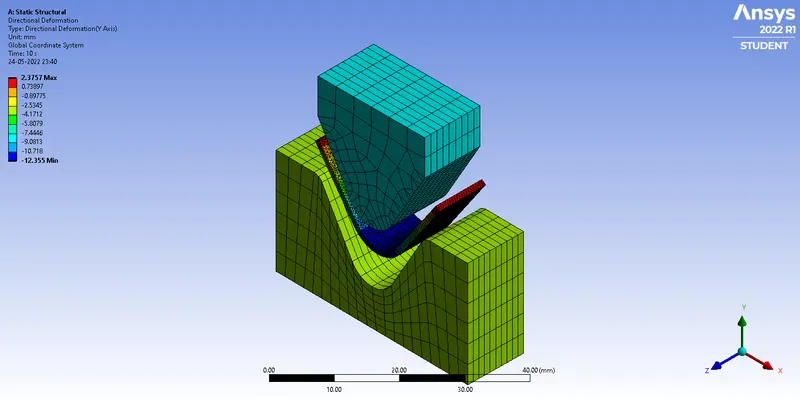
- Directional Deformation:
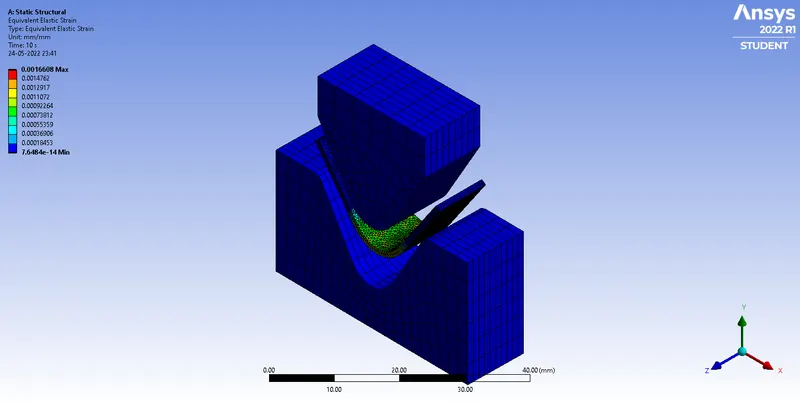
- Equivalent Elastic Strain:
- Equivalent Stress:
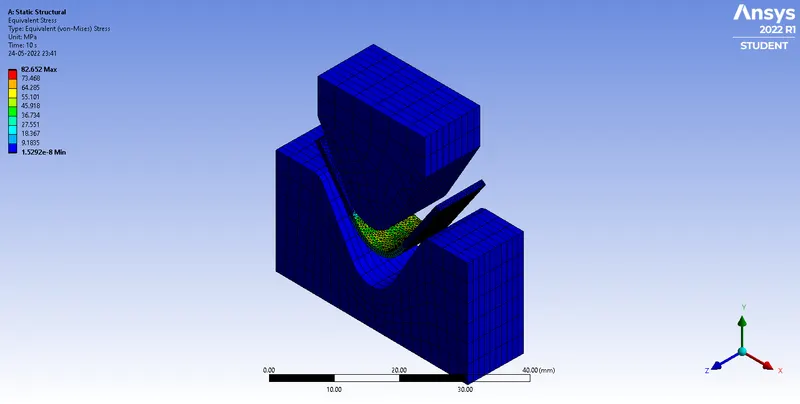
- Directional Deformation:
Result:
| Cases | Material | Friction Coefficient | Directional Deformation (mm) | Equivalent Elastic Strain (mm/mm) | Equivalent Stress (MPa) | |||
| Maximum | Minimum | Maximum | Minimum | Maximum | Minimum | |||
| Case 1 | Aluminum Alloy 1199 | 0.1 | 2.3453 | -12.433 | 0.0015718 | 1.226×10^-13 | 62.573 | 2.4519×10^-8 |
| Copper Alloy NL | 0.1 | 2.7977 | -11.655 | 0.0017309 | 1.1018×10^-12 | 135.33 | 2.2001×10^-7 | |
| Magnesium Alloy NL | 0.1 | 2.536 | -11.338 | 0.0027907 | 1.0219×10^-12 | 89.014 | 2.0436×10^-7 | |
| Case 2 | Aluminum Alloy 1199 | 0.19 | 2.3219 | -12.387 | 0.0015928 | 1.1711×10^-13 | 59.559 | 2.3422×10^-8 |
| Case 3 | Aluminum Alloy 1199 | 0.1 | 2.3757 | -12.355 | 0.0016608 | 7.6484×10^-14 | 82.652 | 1.5292×10^-8 |
Conclusion: The directional deformation and stress are maximum for Copper Alloy NL, lesser for Magnesium Alloy NL and least for Aluminum Alloy 1199. Strain is maximum for Magnesium Alloy NL, lesser for Copper Alloy NL and least for Aluminum Alloy 1199. As friction coefficient increases, the directional deformation and stress decrease whereas strain increases. Thus, the Young's Modulus of the material plays an important role in it.