Week 7-Long Piston With Cam
Objective: Transient analysis on a piston and cam mechanism model is performed and its Equivalent Stress, Directional Deformation and Equivalent Elastic Strain were calculated for 3 different cases.
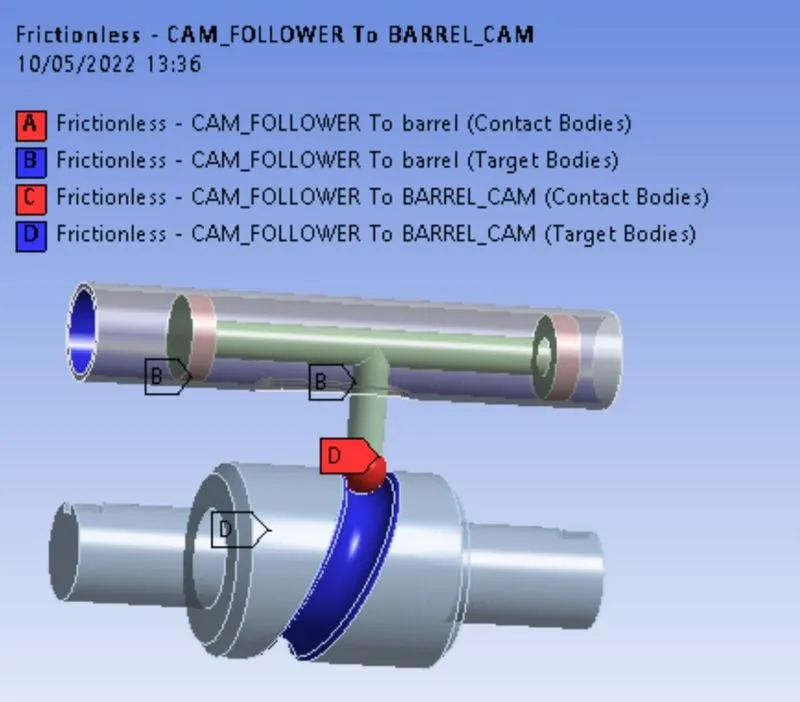
CASE 1: Frictionless contact
CASE II: Frictional contact with coefficient 0.1.
CASE III: Frictional contact with coefficient 0.2.
1. Geometry:
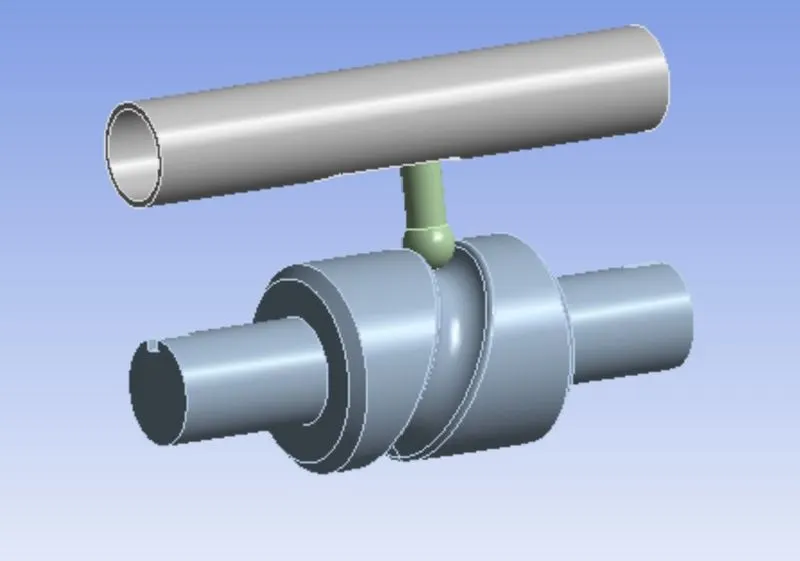
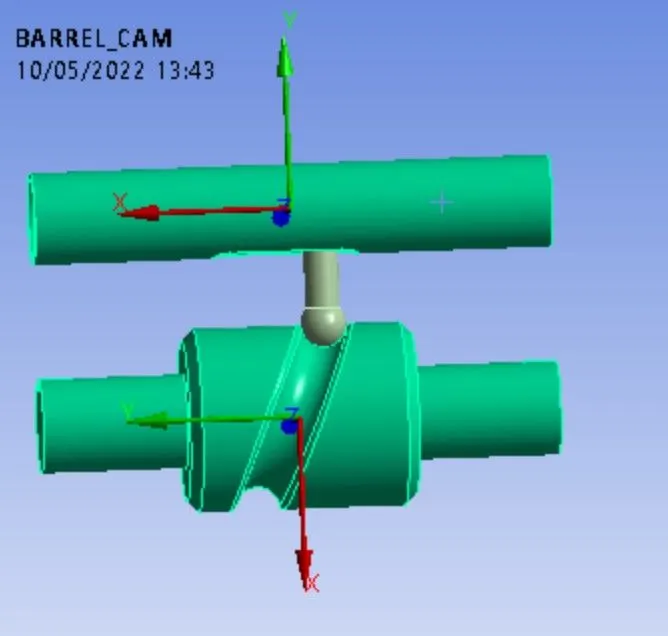
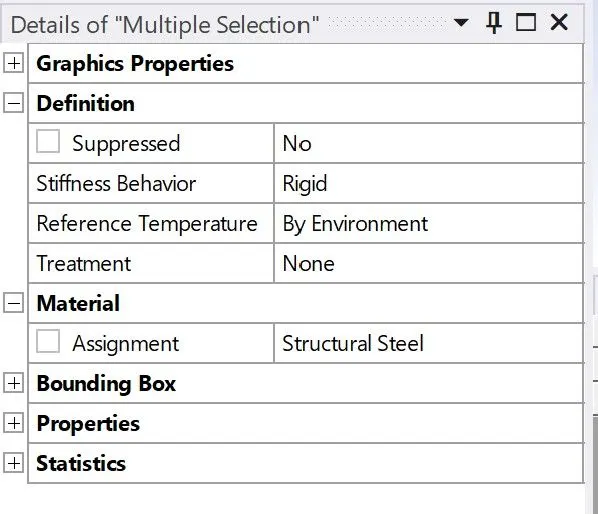
The Barrel and the Cam are considered rigid body here . The analysis is primarily considering the Cam follower, and the rigid bodies are considered as point masses.
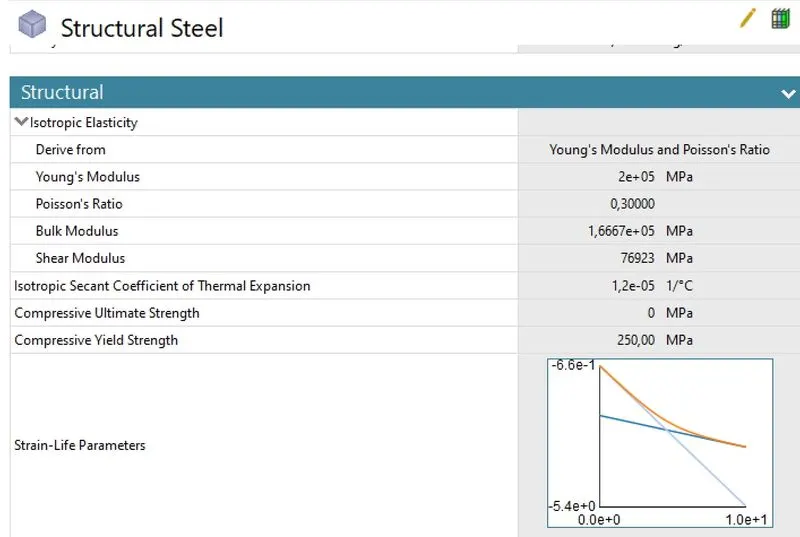
2. Material Data:
3. Case setup and settings:
a. Connections:
i. Contacts:
ii. Joints:
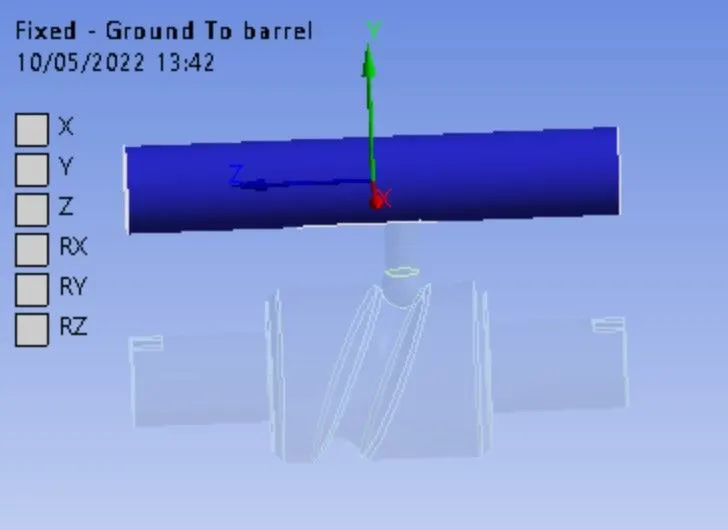
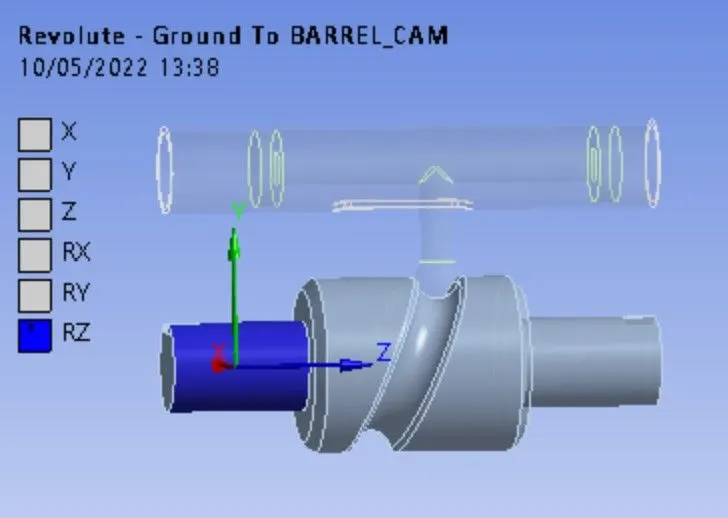
Fixed joint Revolute joint
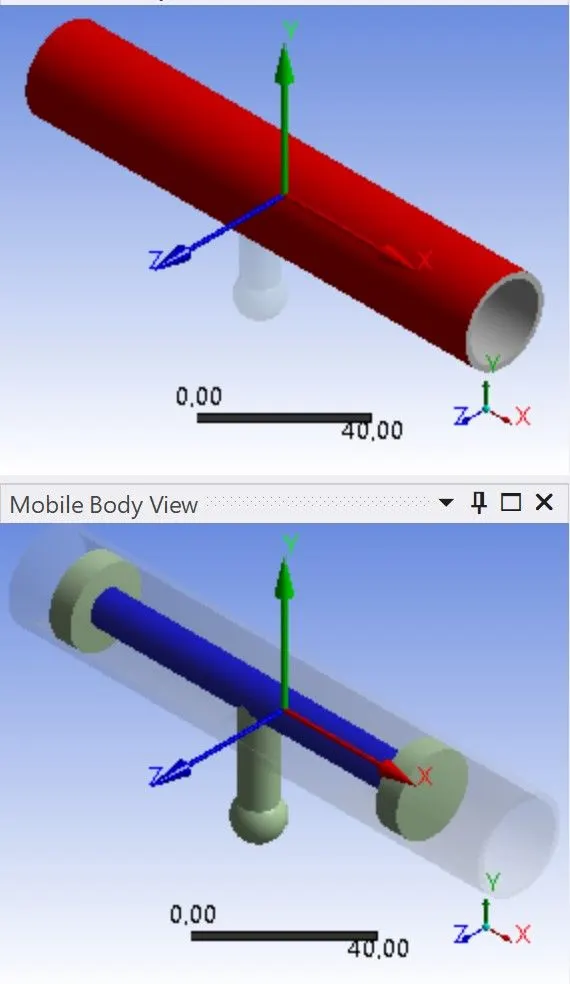 Translational joint.
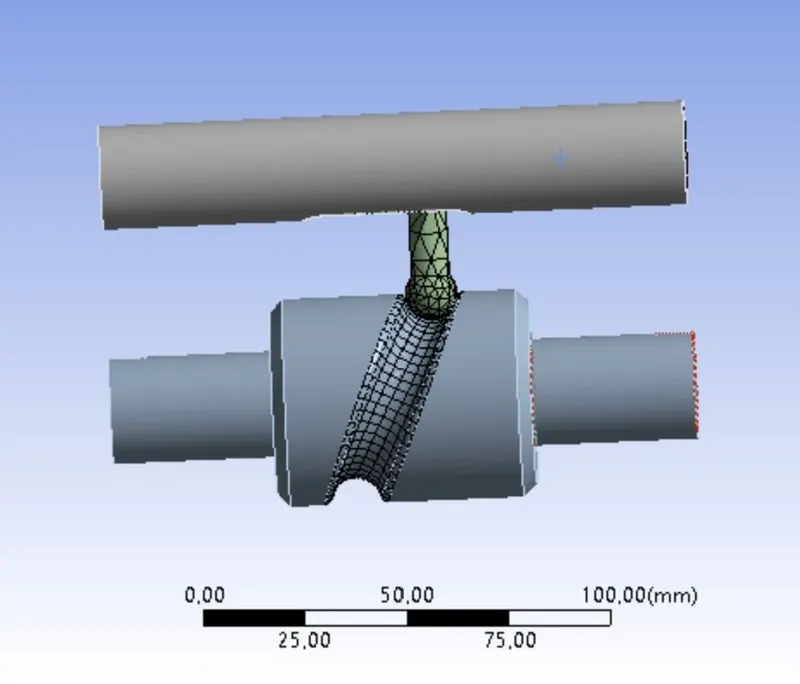
b. Mesh:
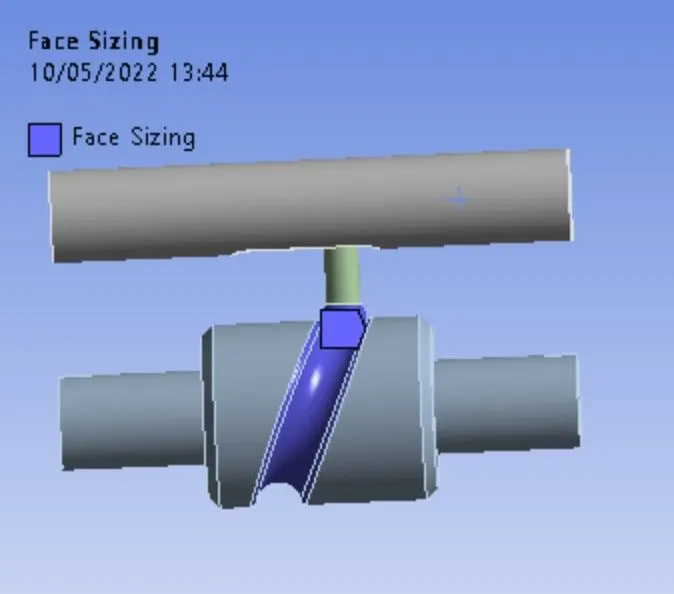
Face sizing is provided with an element size of 3 mm

c. Analysis settings and input data:
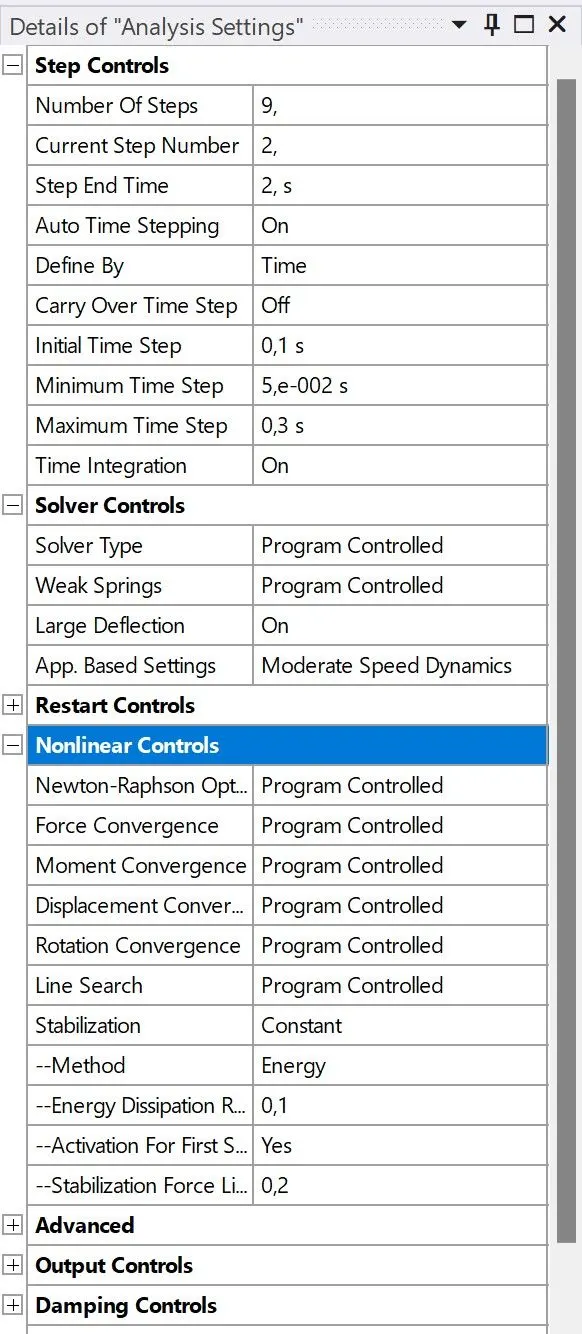
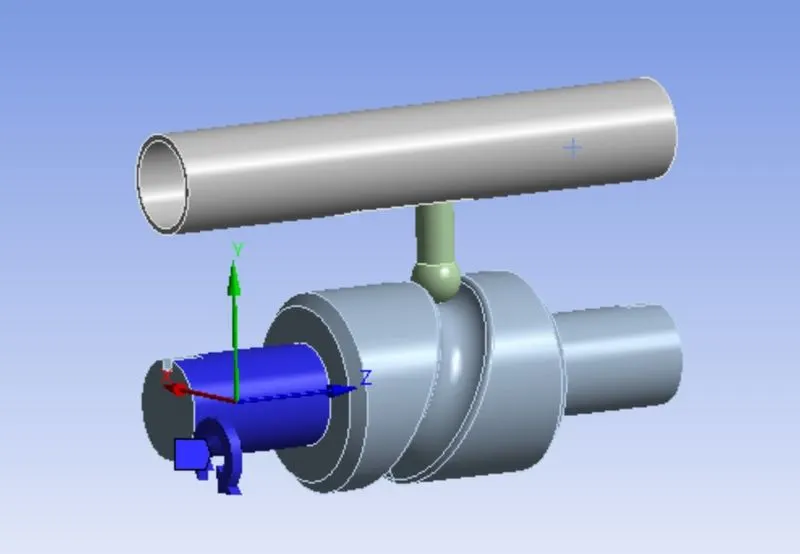
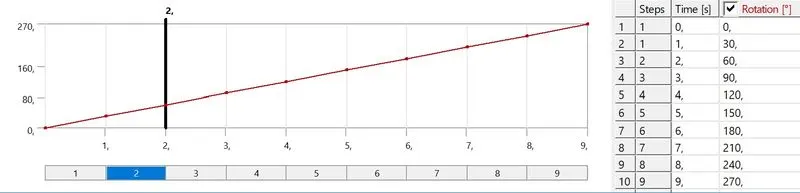
i. Analysis settings: ii. Joint load:
d. Solutions:
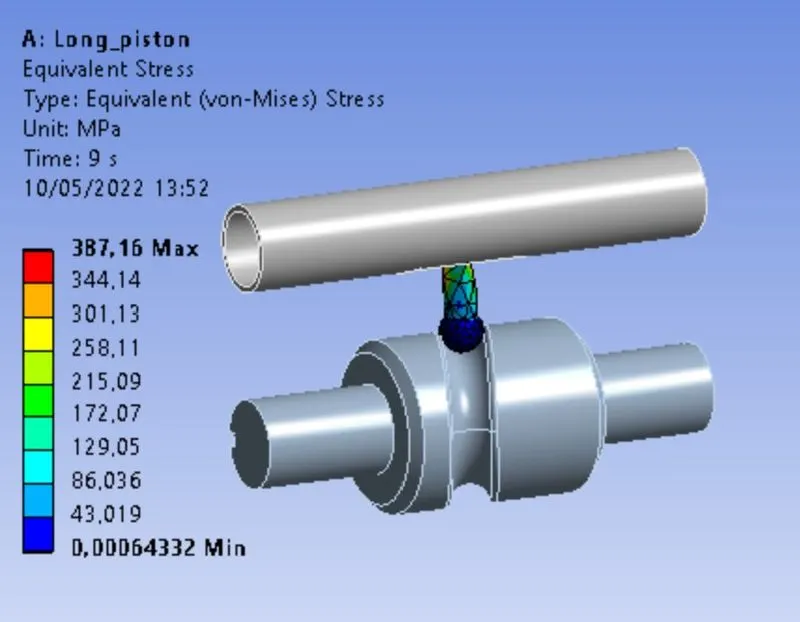
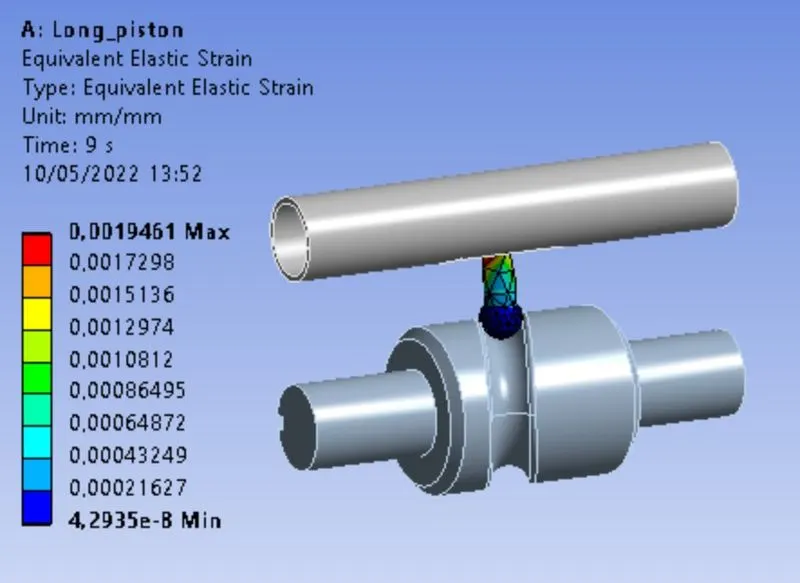
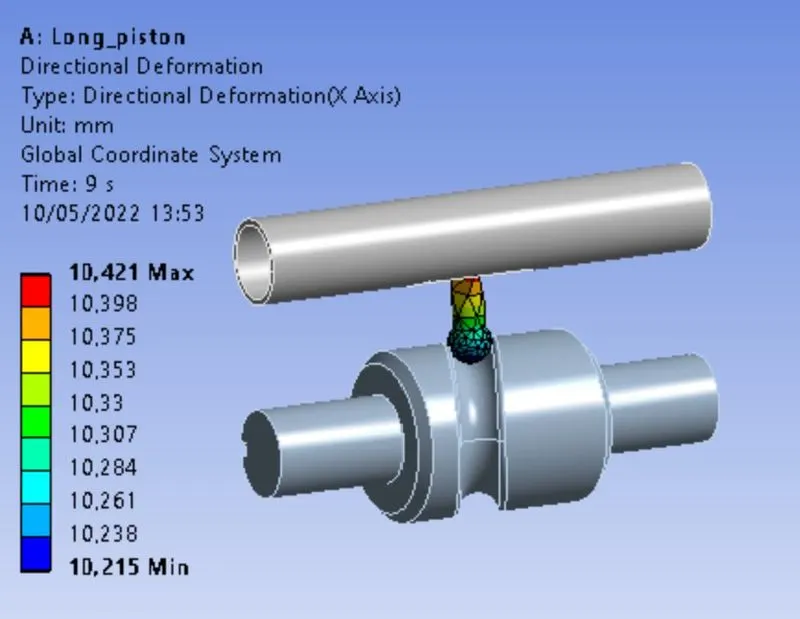
(For demonstration, Case 1 is presented).
a. Equivalent stress:
b. Equivalent Elastic Strain:
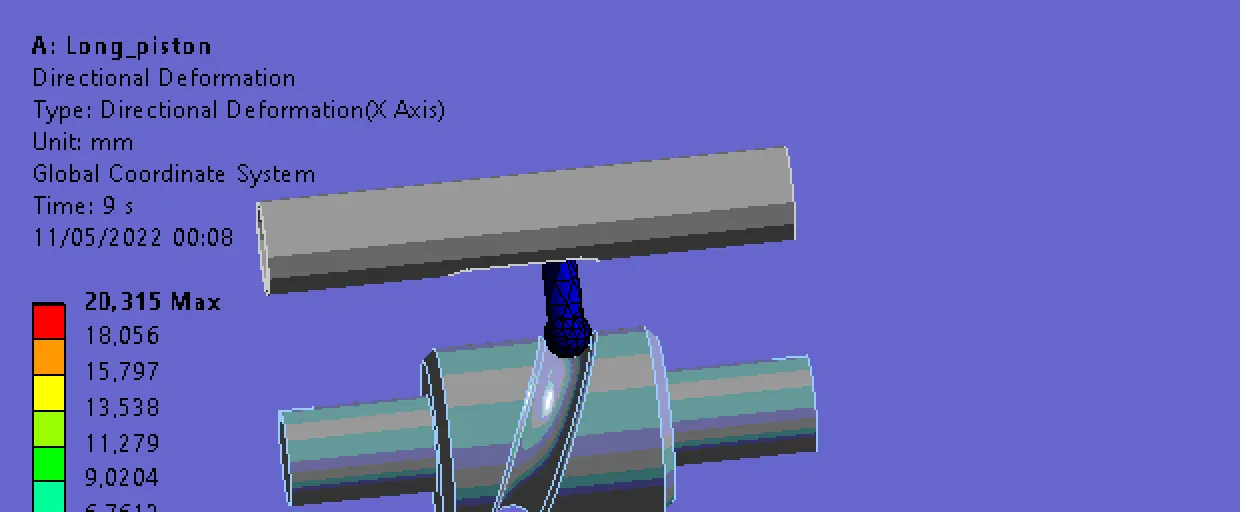
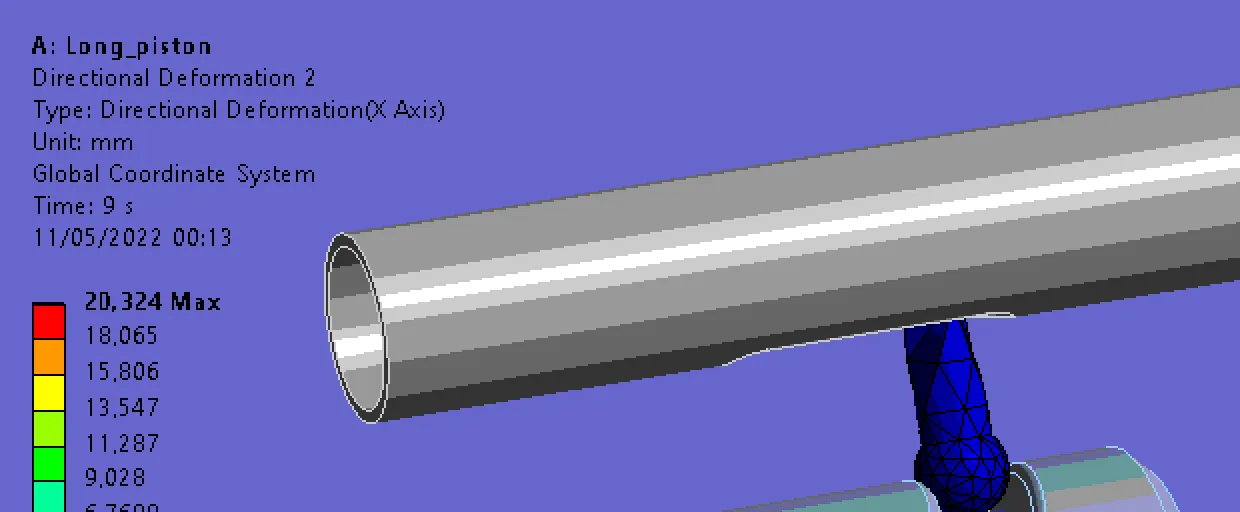
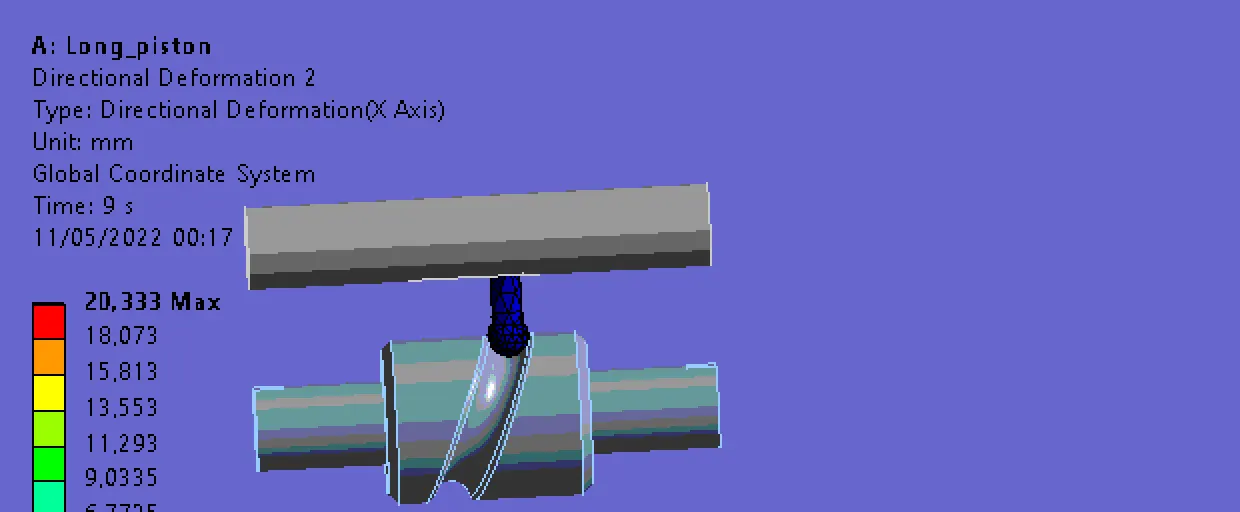
c. Directional Deformation:
4. Result:
| Equivalent stress | Equivalent Elastic Strain | Directional Deformation | |
| CASE I | 387.16 | 0.00194 | 10.421 |
| CASE II | 498. 77 | 0.00258 | 10.471 |
| CASE III | 714.87 | 0.00369 | 10.536 |
5. Conclusion:
- The stress increases gradually as the frictional coefficient increases.
- Strain values have a very small increase
- Directional deformation also increases as the frictional coefficient increases.