Week 7-Long Piston With Cam
Aim : To perform a transient analysis on a piston and cam mechanism model.
Objectives :
- Run the analysis with Frictionless contact, Frictional with 0.1 and 0.2 as the frictional contact for a total of 3 cases.
- Find out the Equivalent Stress, Directional Deformation and Equivalent Elastic Strain and compare them for all the three cases.
- Give an inference as to why the results vary between cases.
Procedure :
- Open Ansys Workbench and select the Transient Structural.
- Import the geometry and open spaceclaim to check for geomtery checkup.
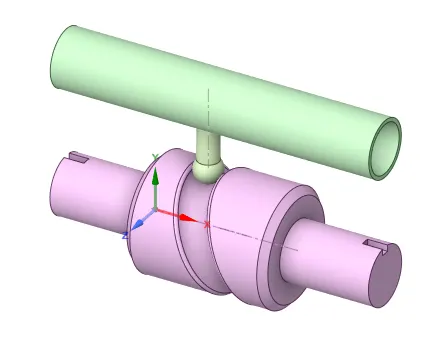
Model Setup :
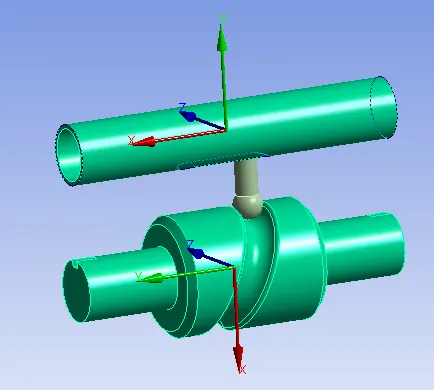
- Go to geometry rename parts as Barrel Cam, Barrel, Cam-follower.
- Set the stifness behaviour to Rigid for both Barrel and the Barrel cam.
Contacts :
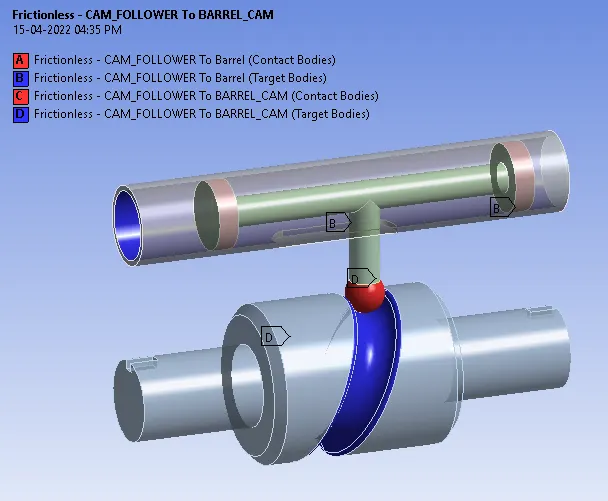
- Select the contacts and flip the contacts.
- Select both contacts set as frictionless for Case 1.
- By using given frictional values set contacts as frictional for Case 2 and Case 3.
Joints :
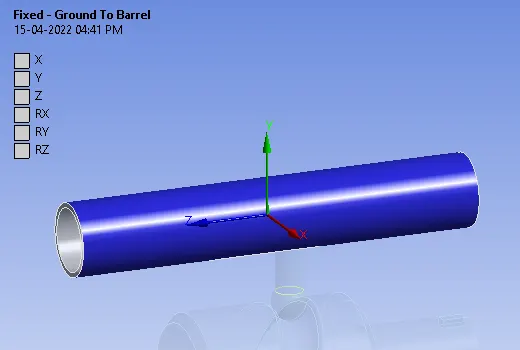
- Set fixed body-ground joint for Barrel.
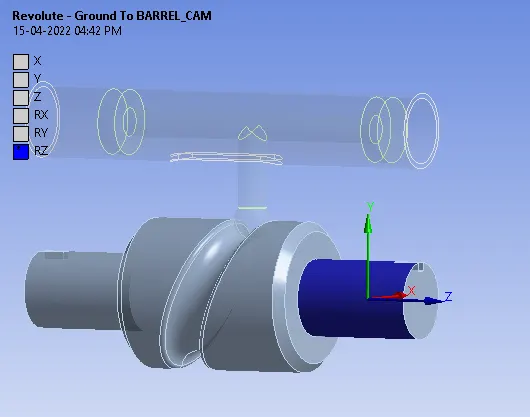
- Set revolute joint for Barrel cam.
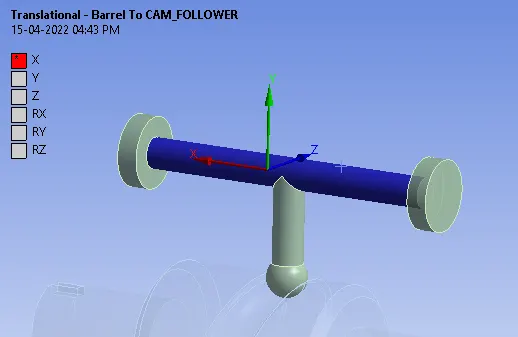
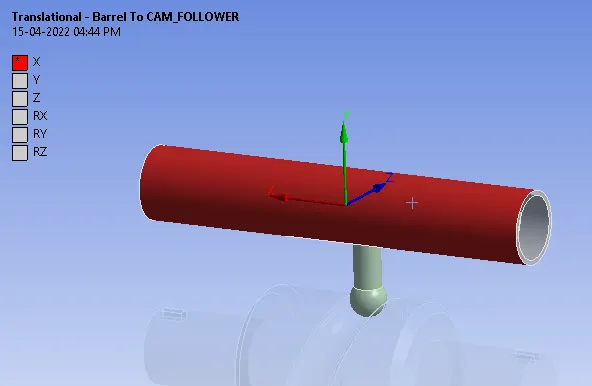
- Set body-body translational joint for Piston.
Mobile body :
Reference body :
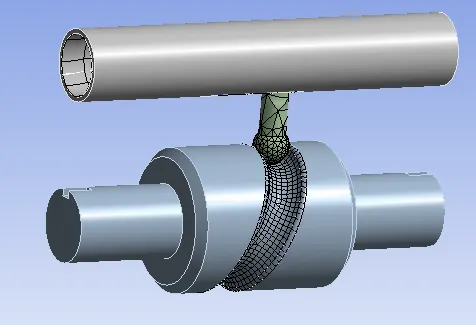
Meshing :
- Insert face sizing for contact surfaces.
- Set Element size as 2 mm.
- Set adaptive sizing to No.
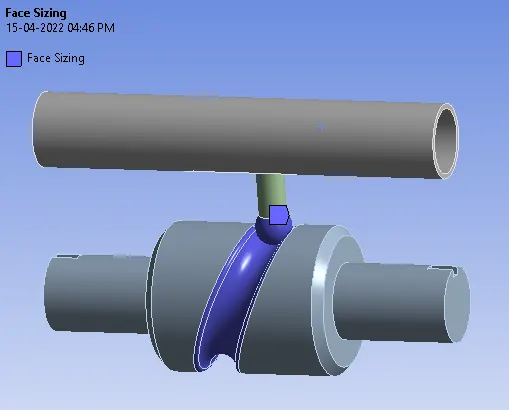
- Generate mesh.
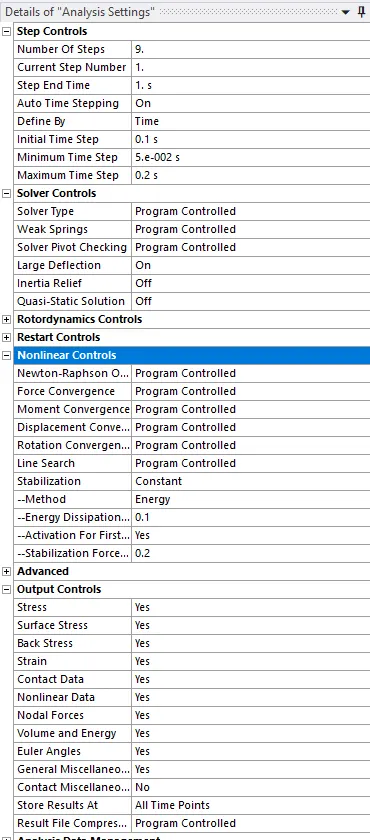
Analysis settings :
For 1st step :
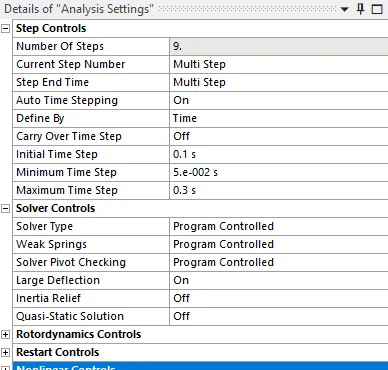
For Step 2 to 9 :
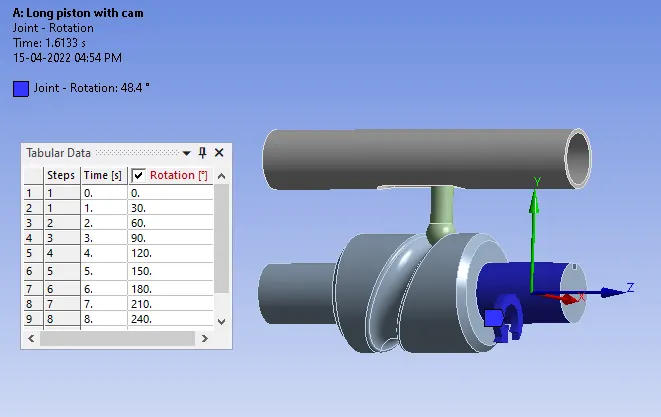
Joint load :
- Insert revolution to Barrel cam.
Solution :
Create output results for :
- Directional deformation.
- Equivalent stress.
- Equivalent strain.
Results :
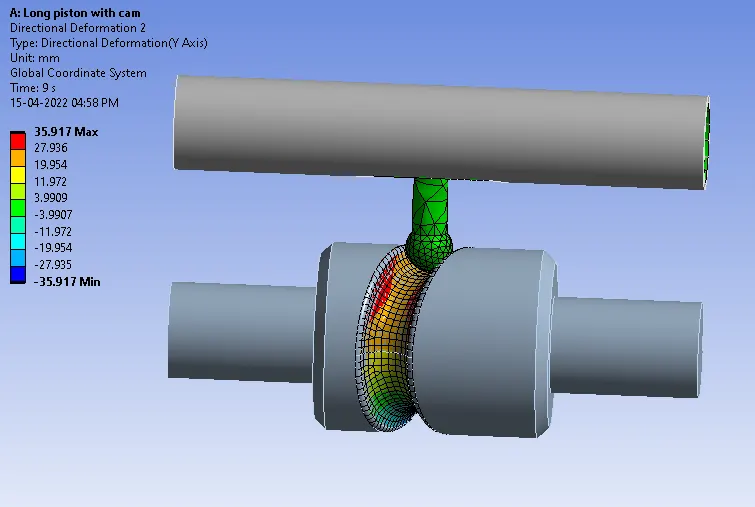
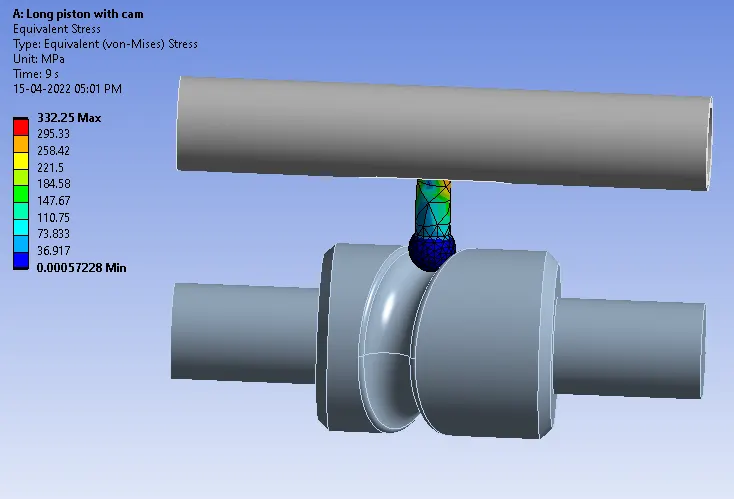
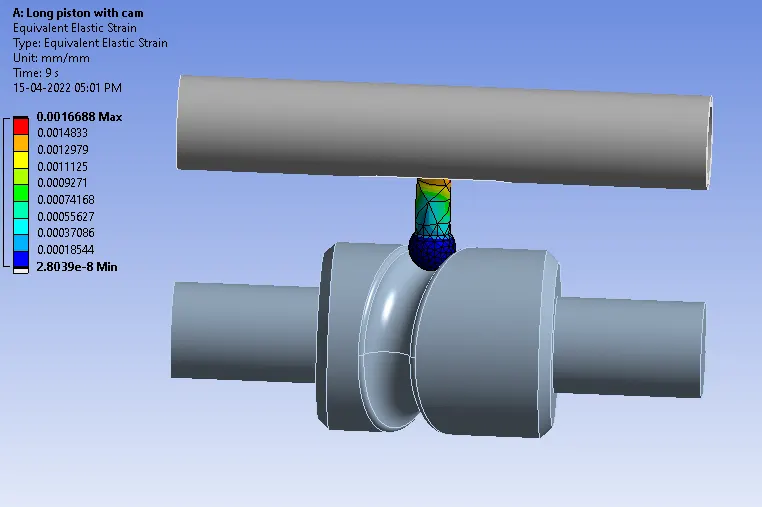
Case 1 : Frictionless Contacts
Directional deformation :
Equivalent stress :
Equivalent strain :
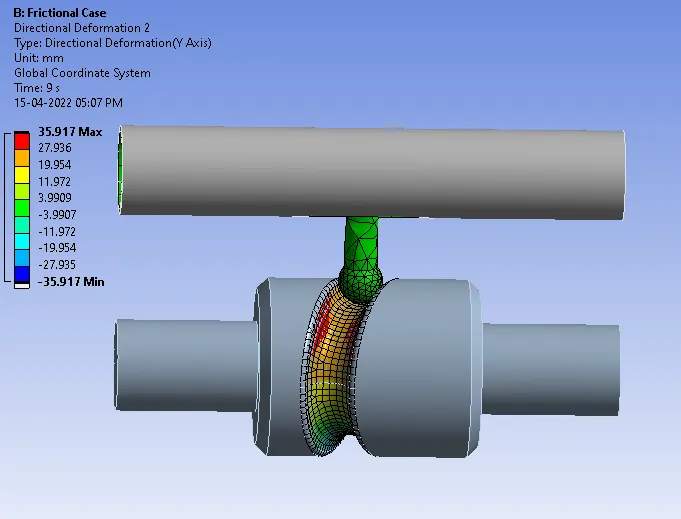
Case 2 : Frictional contact having coeff. friction = 0.1
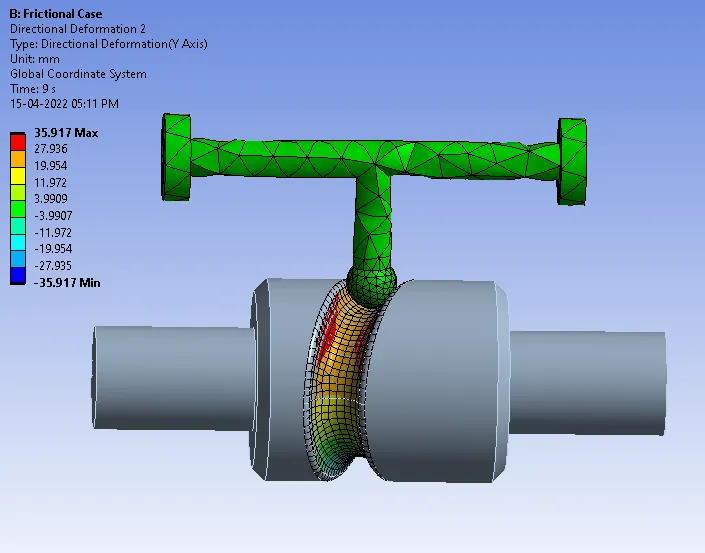
Directional deformation :
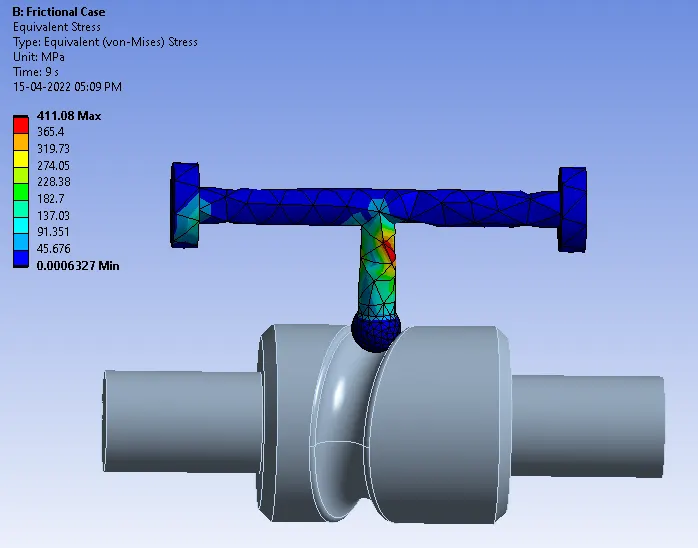
Equivalent stress :
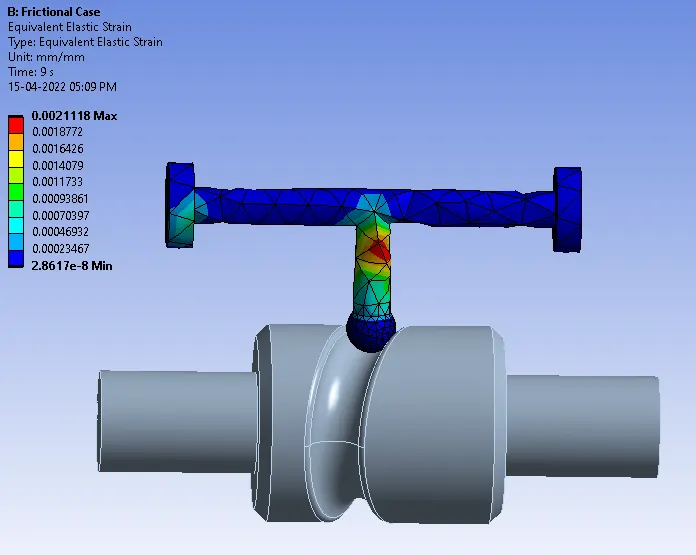
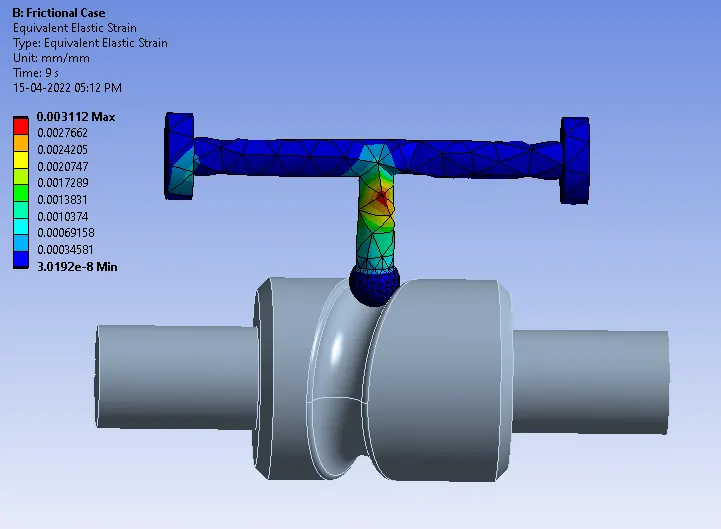
Equivalent strain :
Case 3 : Frictional contact having coeff. friction = 0.2
Directional deformation :
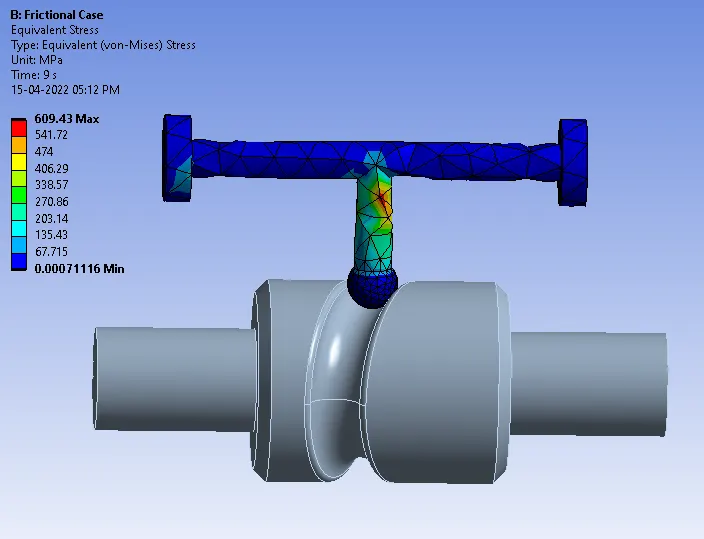
Equivalent stress :
Equivalent strain :
Comparison of Results :
| Sr. No. | Results | Case 1 | Case 2 | Case 3 |
| 1 | Maximum Directional deformation for model (mm) | 35.917 | 35.917 | 35.917 |
| 2 | Maximum Equivalent stress for Model (MPa) | 332.25 | 411.08 | 609.43 |
| 3 | Minimum Equivalent stress for Model (MPa) | 0.00057 | 0.00063 | 0.00071 |
| 4 | Maximum Equivalent strain for Model | 0.00166 | 0.00211 | 0.00311 |
| 5 | Minimum Equivalent strain for Model | 2.8039 E-8 | 2.8617 E-8 | 3.0192 E-8 |
Conclusion :
- From results as coefficient of friction increases equivalent stress is increases.
- For the Equivalent Stress : There's a significant change in stress for the 3 cases i.e frictionless contact, frictional contact with coefficient of friction 0.1 & 0.2.
- For the Equivalent Strain : The equivalent strain for the 3 cases rises gradually with change of contact from frictionless to frition with with increasing friction coefficient.