Week-7 Head Impact
Aim: To simulate the impact of headform on an automobile hood and calculate head impact coefficient.
Case 1): Impact simulation of a simple sphere impact with the Rigid floor.
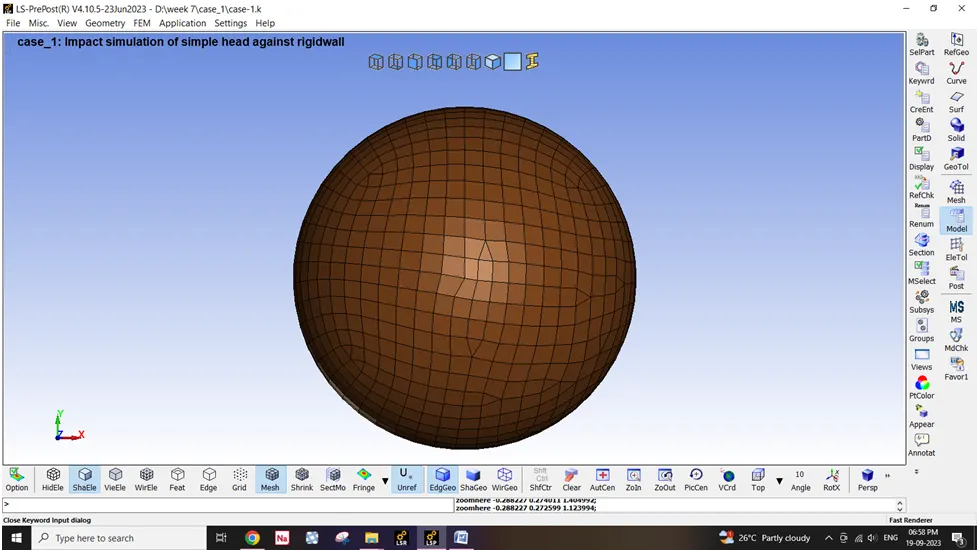
Given simple sphere of shell elements is imported in the LS-Prepost environment.
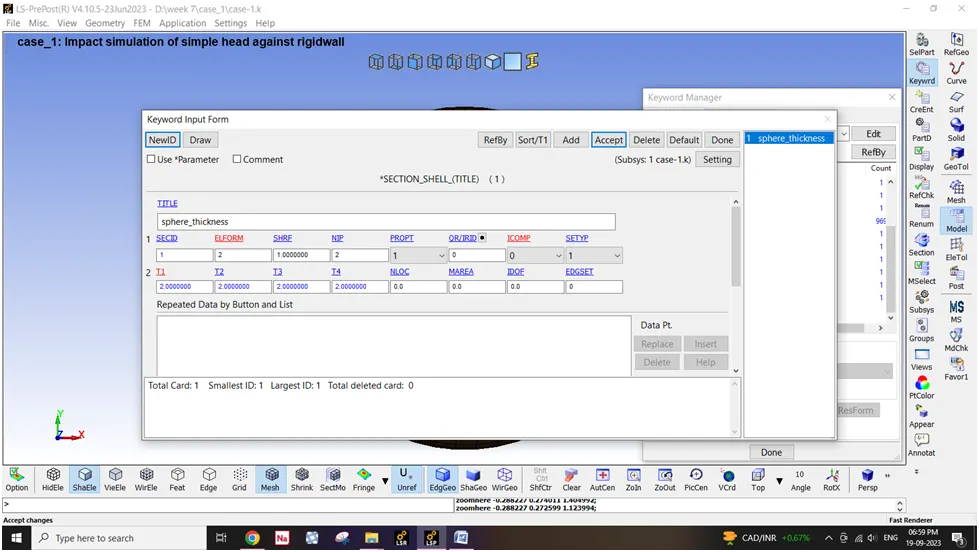
The thickness of the headform is assumed to be 2 mm. A SECTION_SHELL keyword is defined as shown below
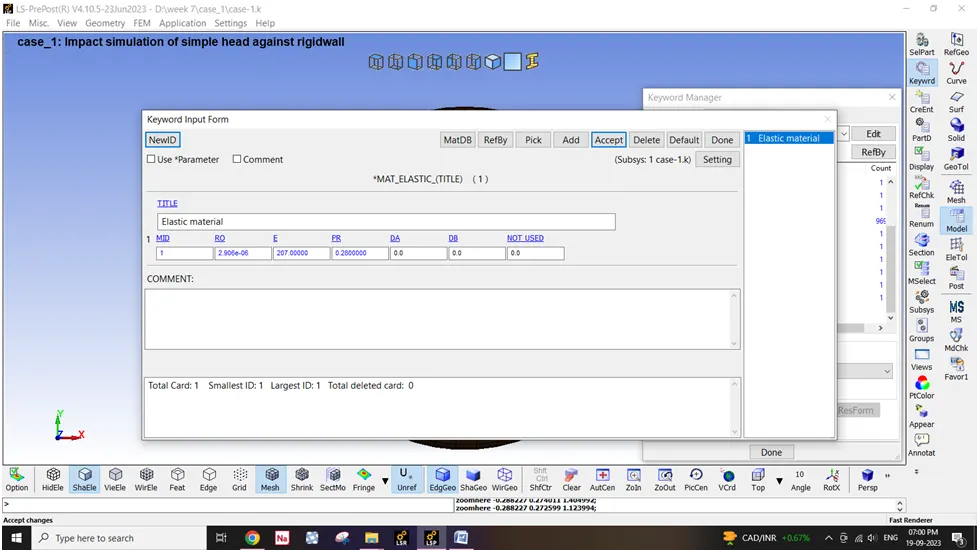
The material is assumed to be uniform throughout with following properties. As the model is used to replicate the headform, the elastic material properties of skull provided in the input is used to define the MAT_001 keyword.
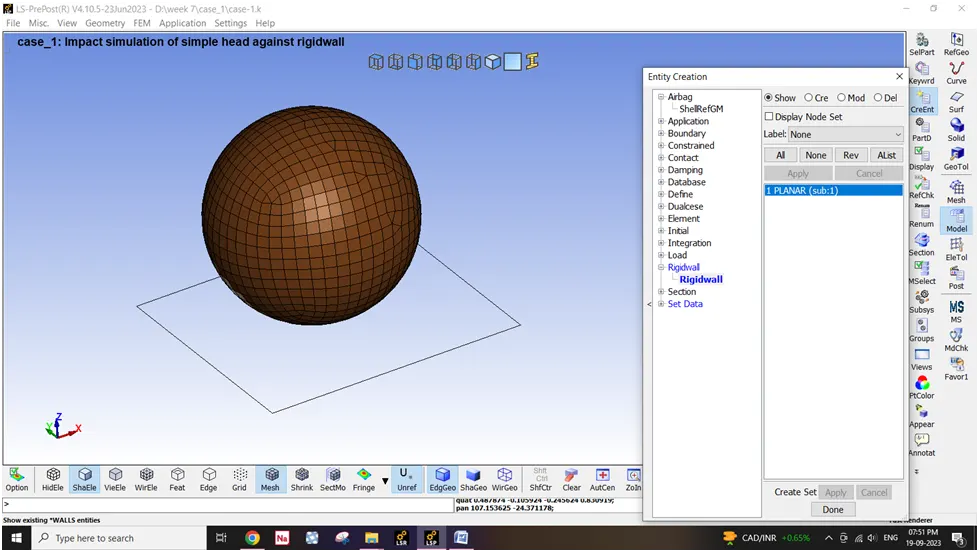
In this Case to simulate the impact of head onto the hood of car, a rigid wall is created to simulate the hood of the automobile. A rigidwall is created using entity creation as shown below.
Boundary condition
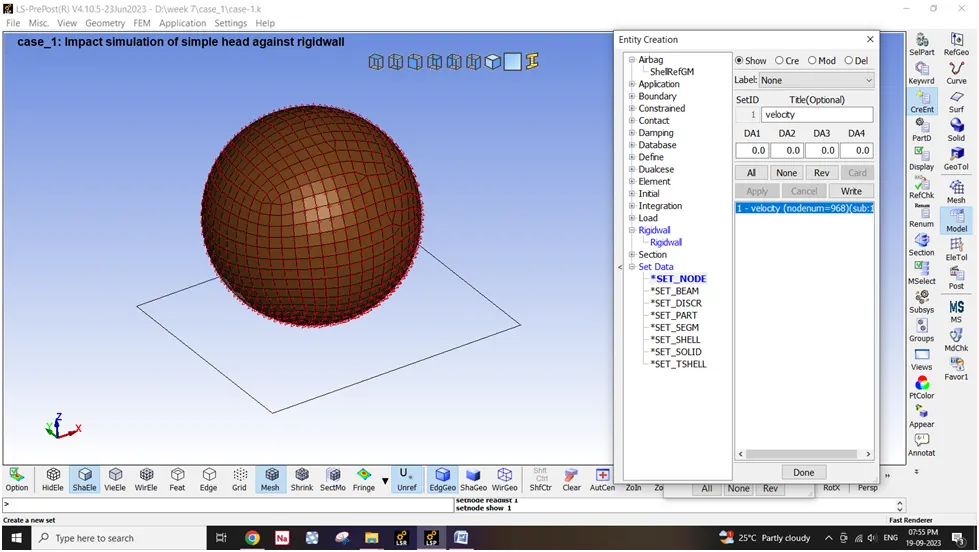
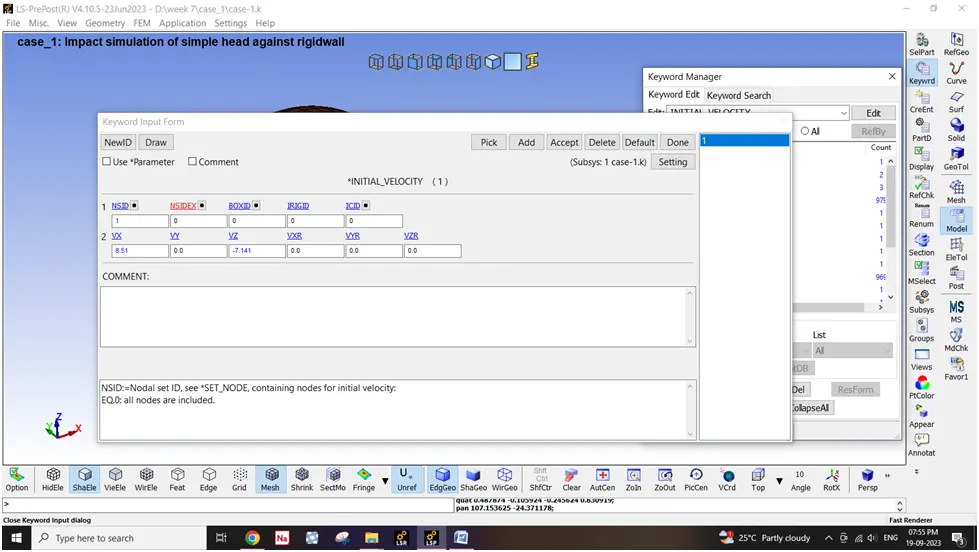
As the head impacts the hood at an angle 50 deg, initial velocity card is defined by creating a Nodeset using entity creation. As the headform is moving at an angle of 50 deg at 40kmph, accordingly the velocity is converted into units of kg-mm-ms and applied along +x and –z direction.
<!--[endif]-->
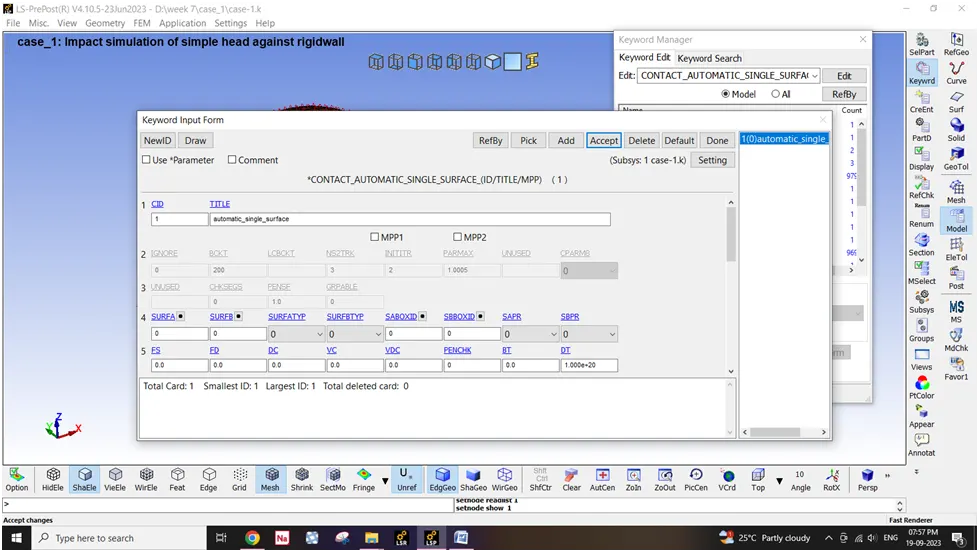
To define contact Automatic single surface is used
<!--[endif]-->
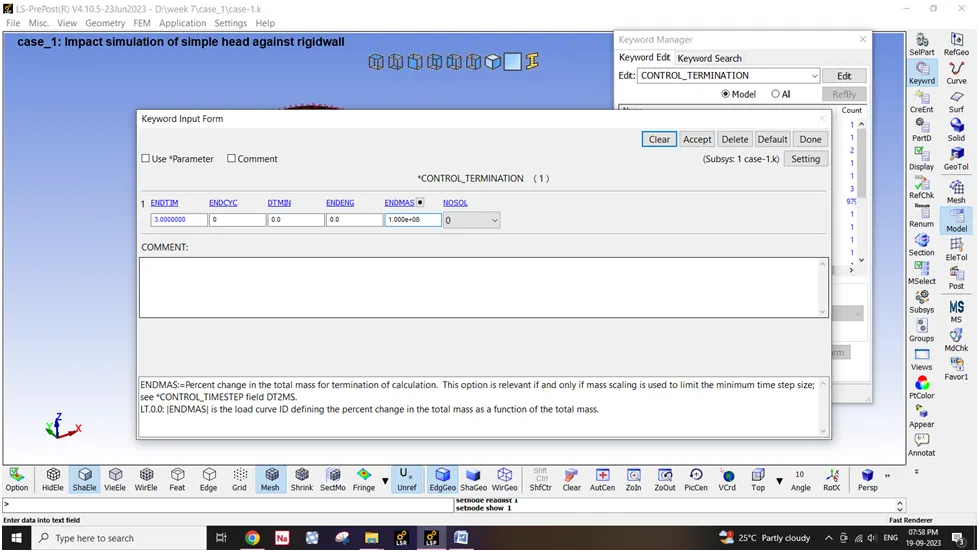
Following control cards are defined
<!--[endif]-->
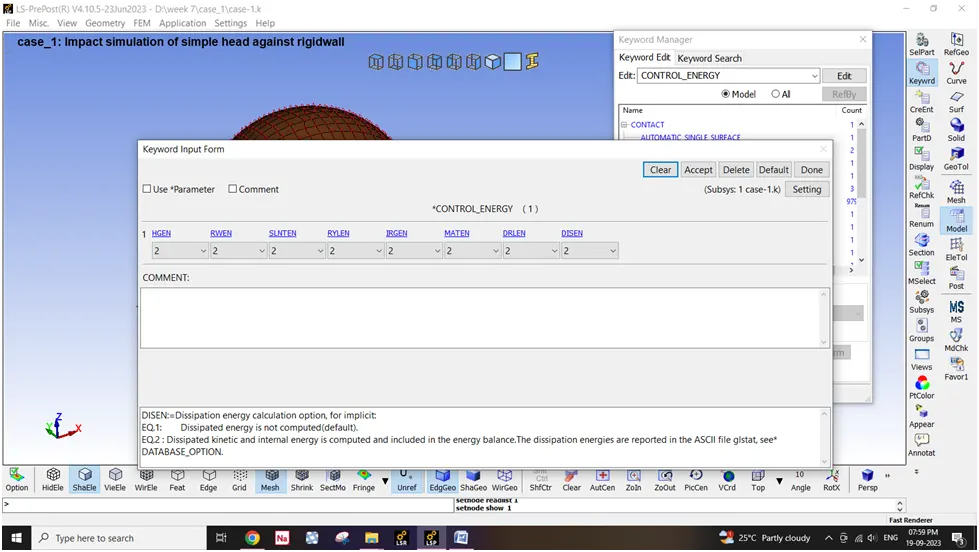
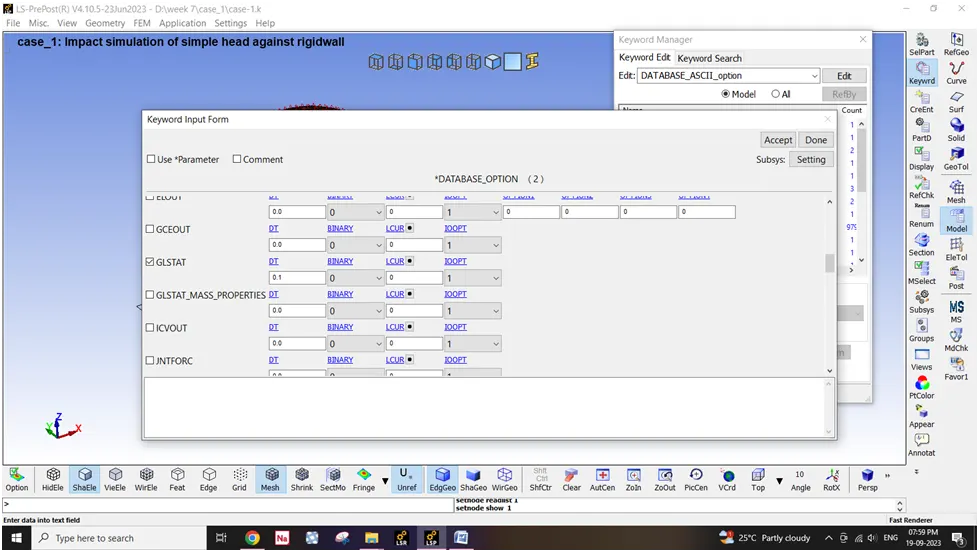
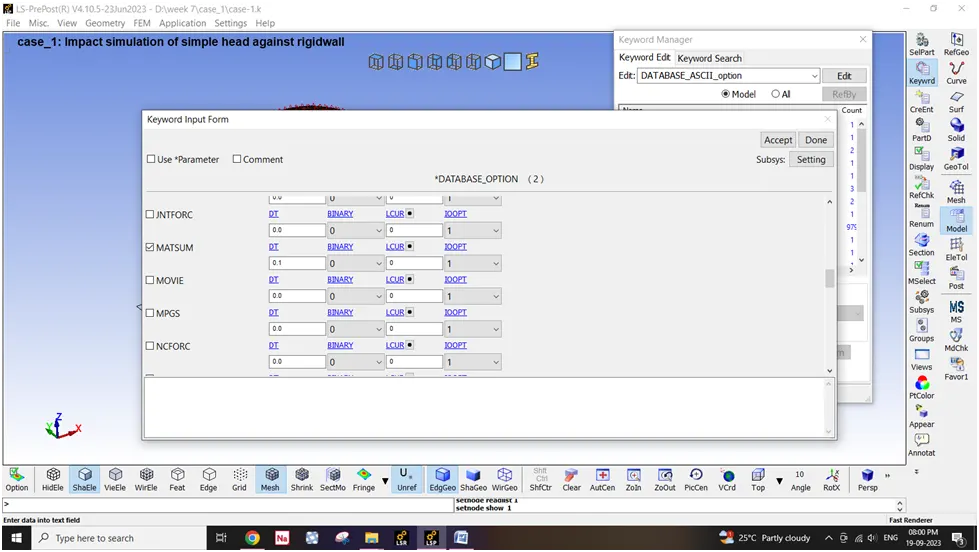
Database:
Binary plot and ASCII plots are requested for every 0.1
<!--[endif]-->
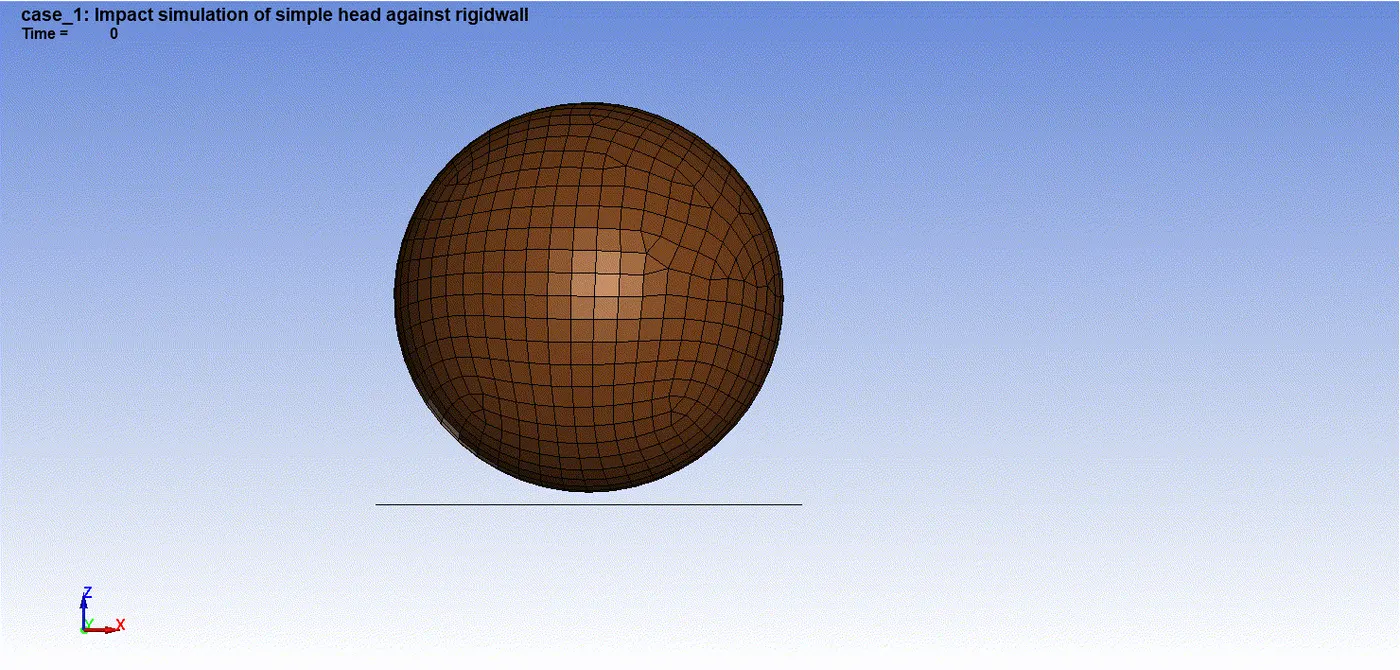
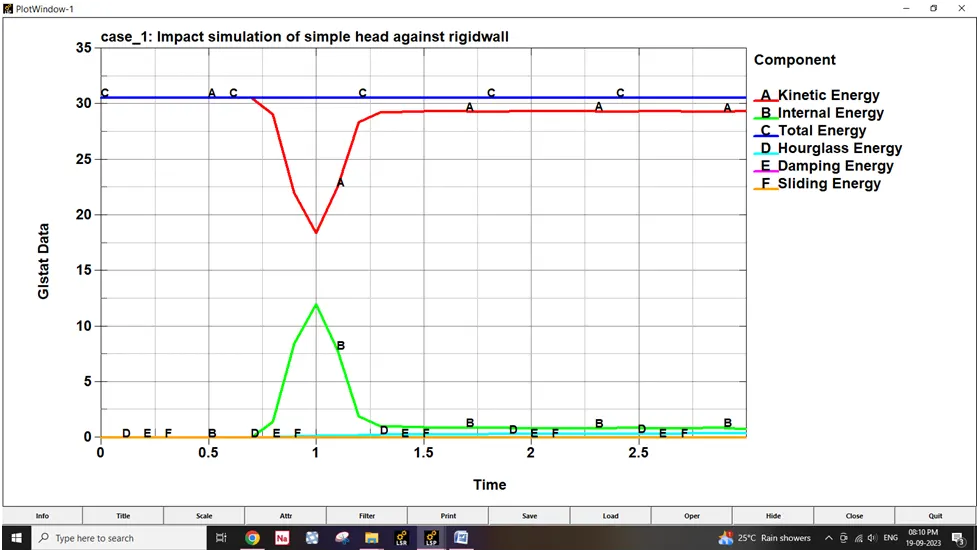
Energy of the system is conserved and hourglass energy is within the limits
Case 2): Impact simulation of the Headform provided against the rigidwall
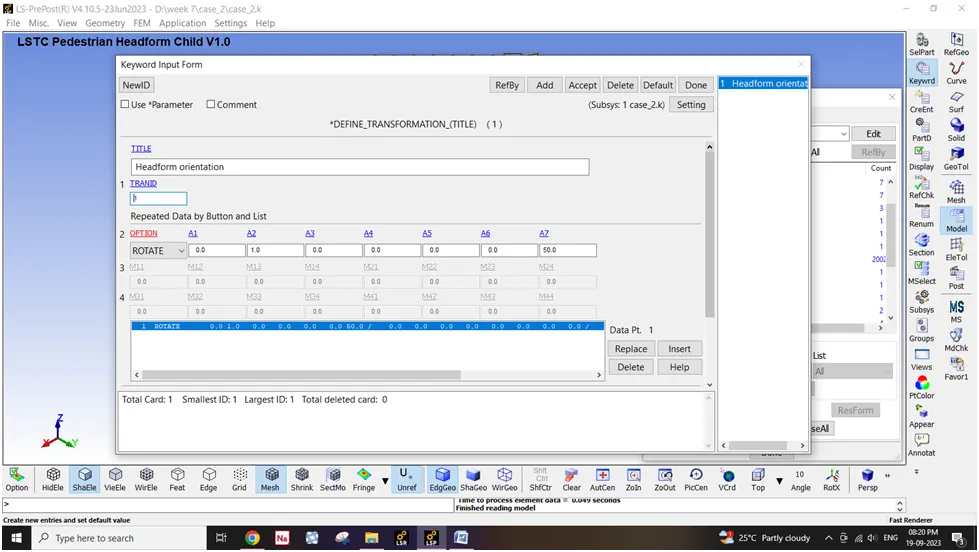
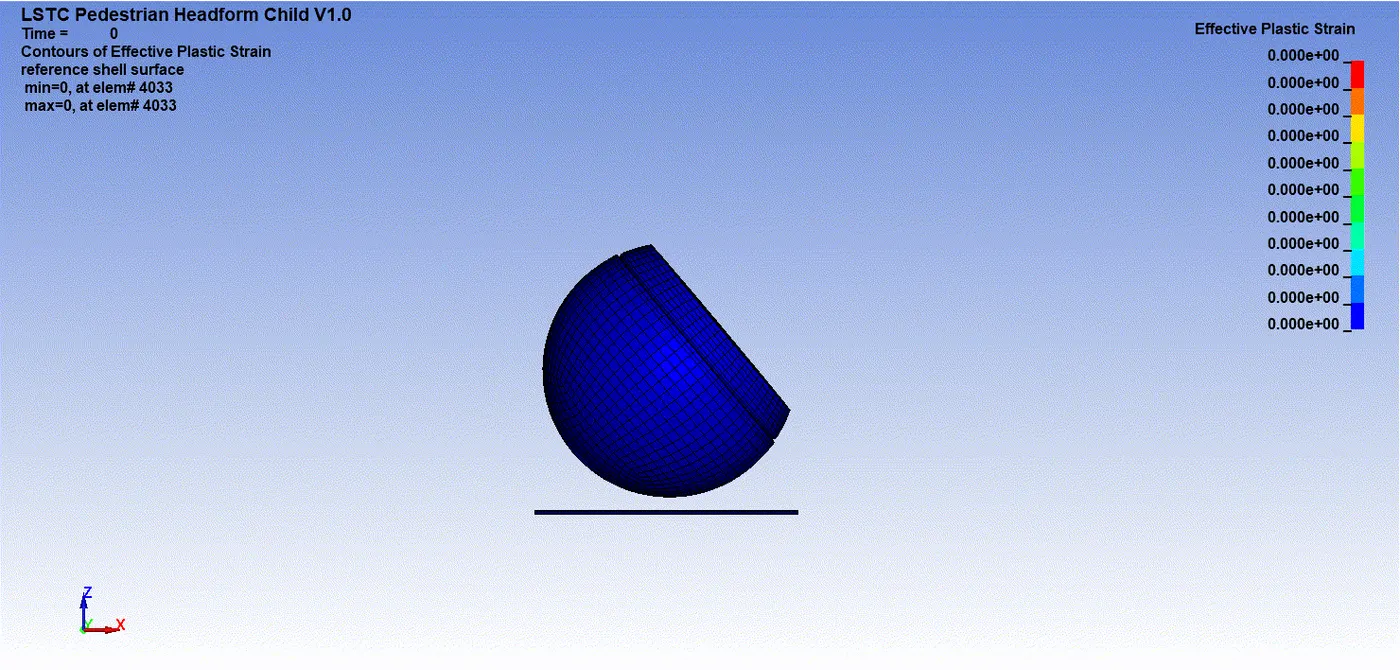
The model of a children's headform is imported into the LS-Prepost by using INCLUDE keyword. Since the impact is to be simulated with headform at an angle, a DEFINE_TRANSFORMATION card is created to define the orientation of the headform after it is imported.
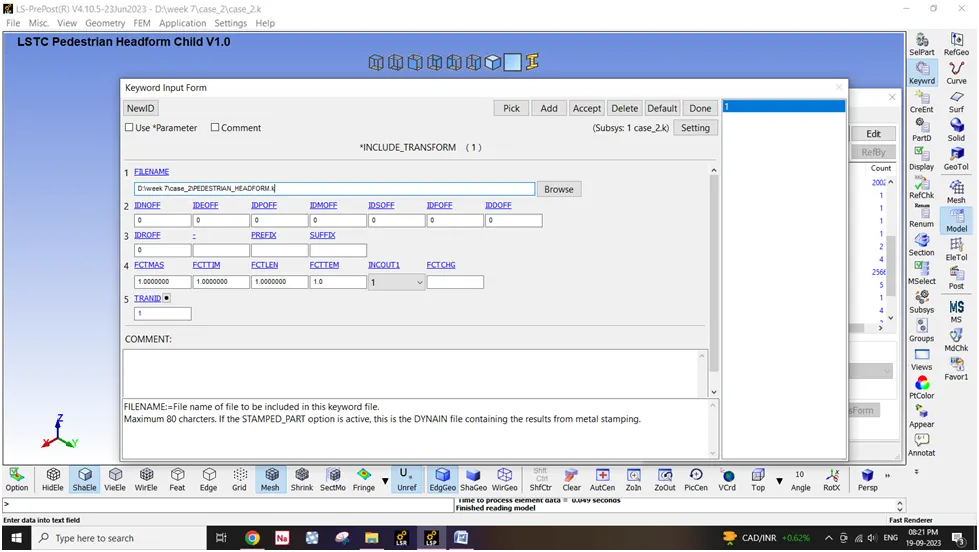
INCLUDE_TRANSFORM card is used to import and transform/orient the headform using the transform id created when the transformation was defined.
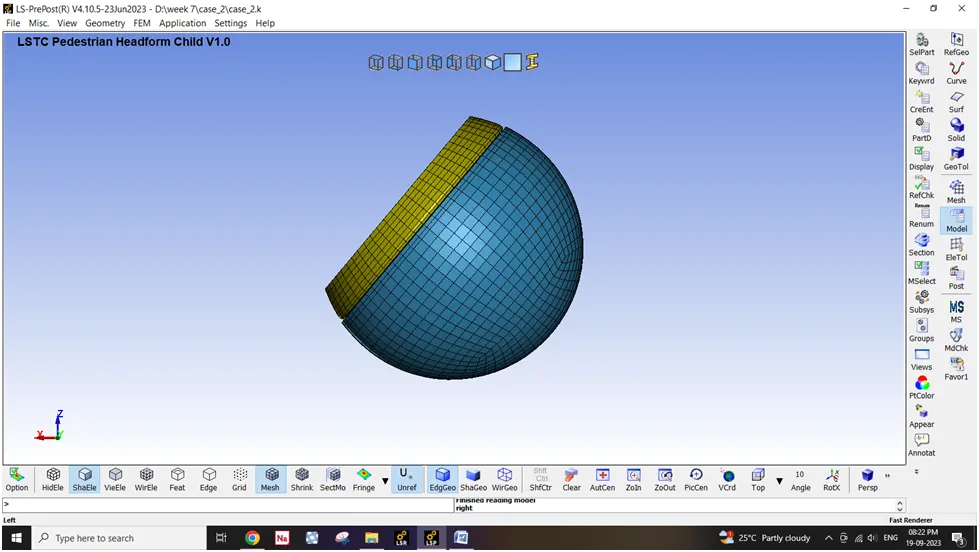
A rigidwall is created entity creation
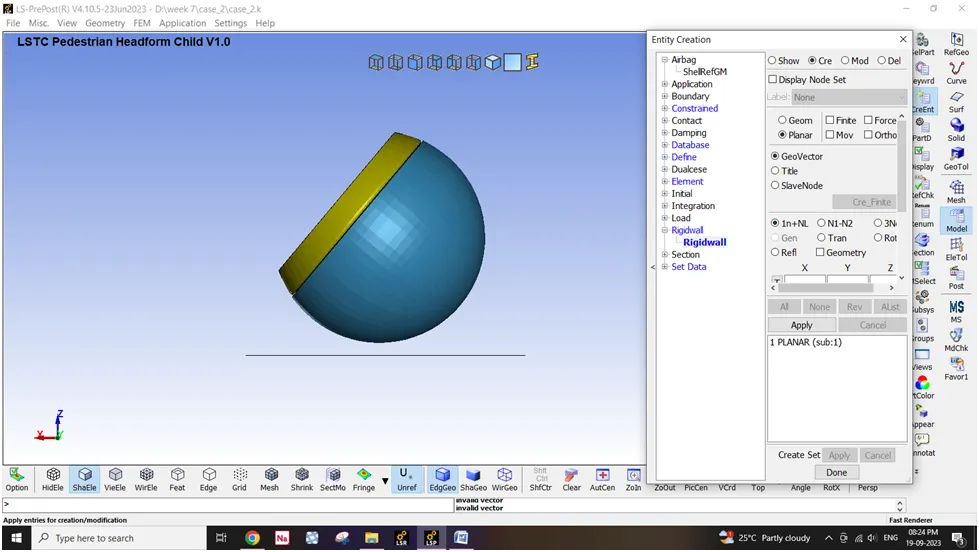
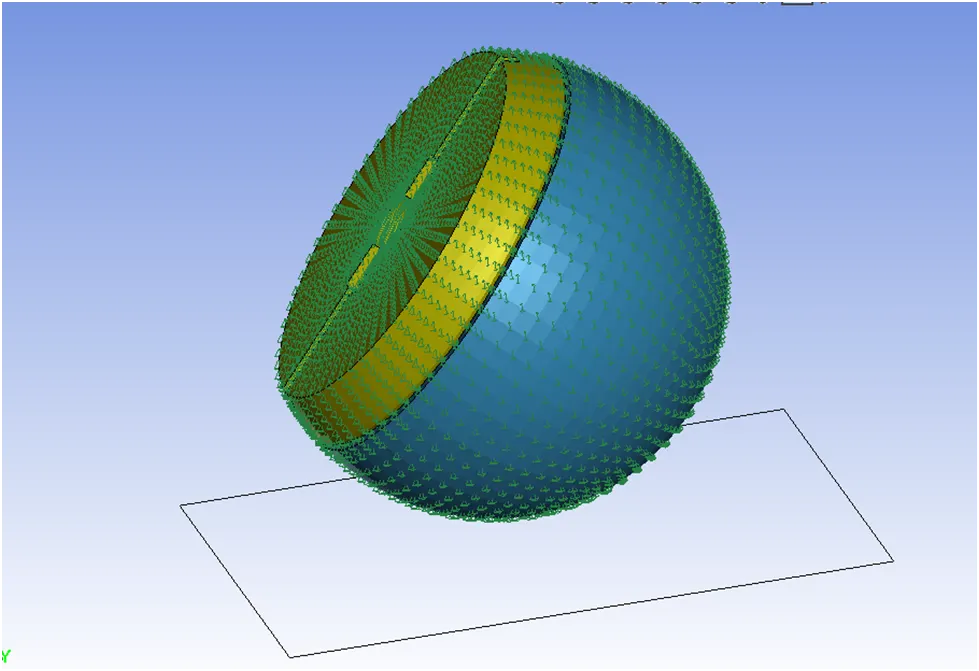
A nodeset is defined by subsystem in the entity creation.
INITIAL_VELOCITY card is created to simulate the headform travelling at 40kmph.
<!--[endif]-->
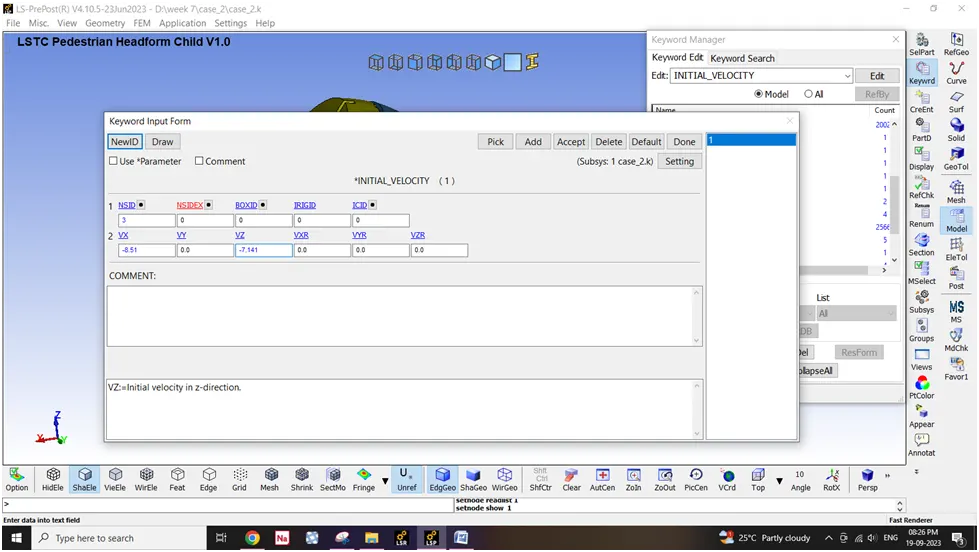 .
.
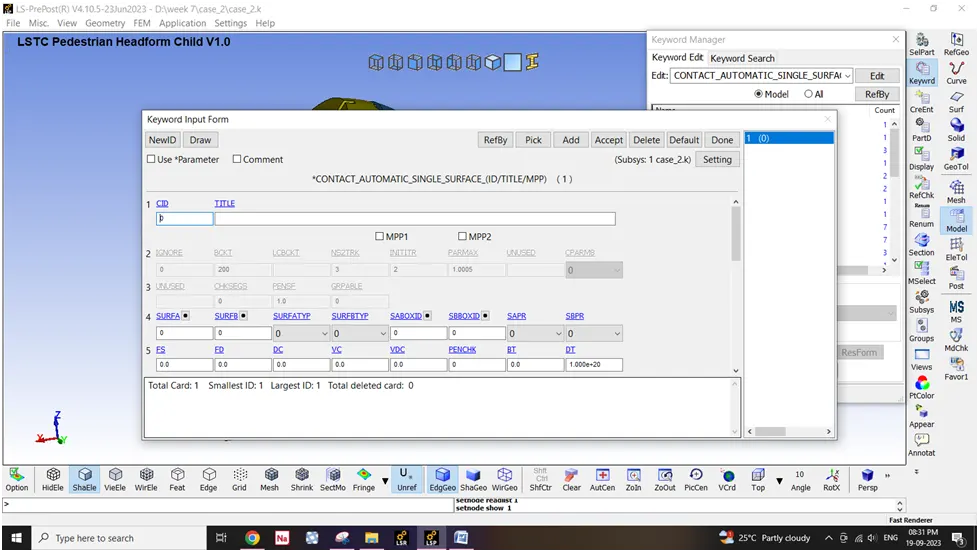
Contact is define as follow
<!--[endif]-->
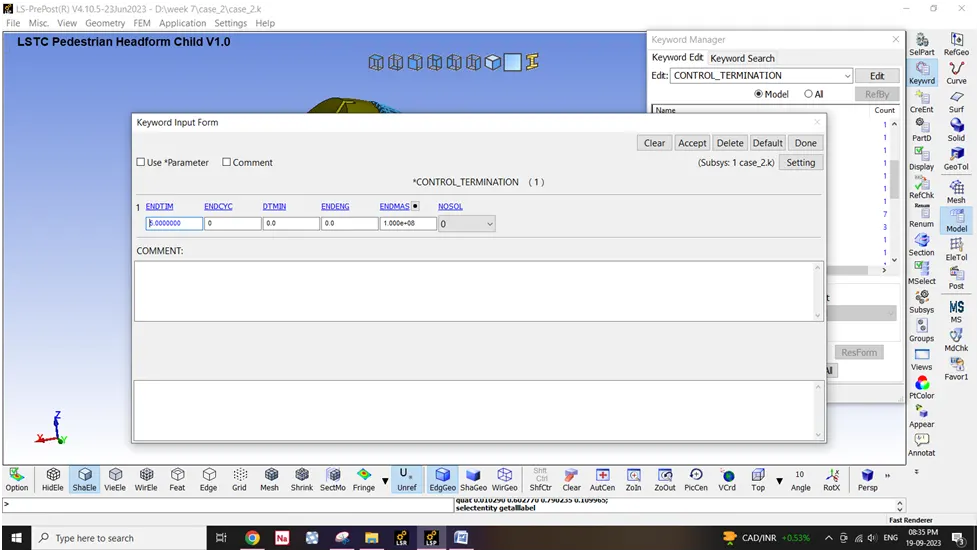
Control termination
<!--[endif]-->
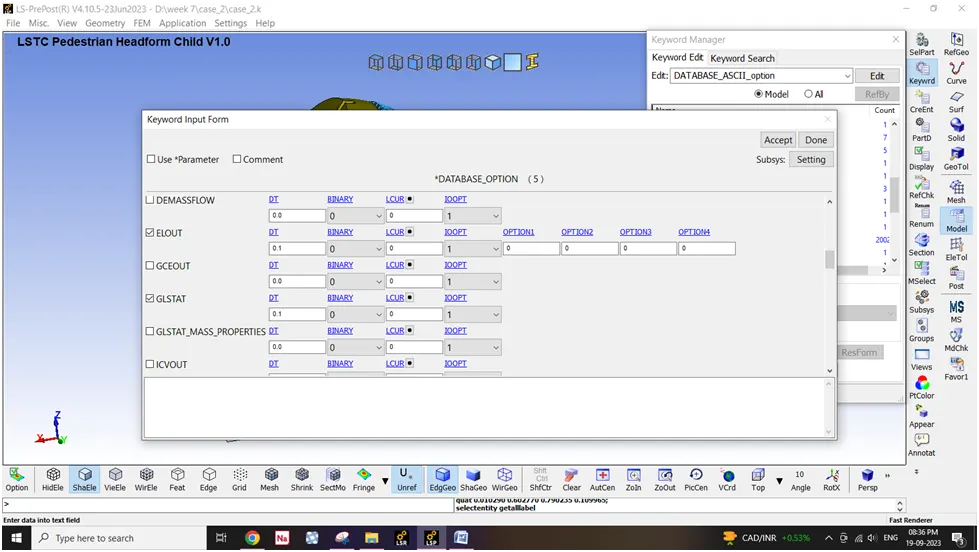
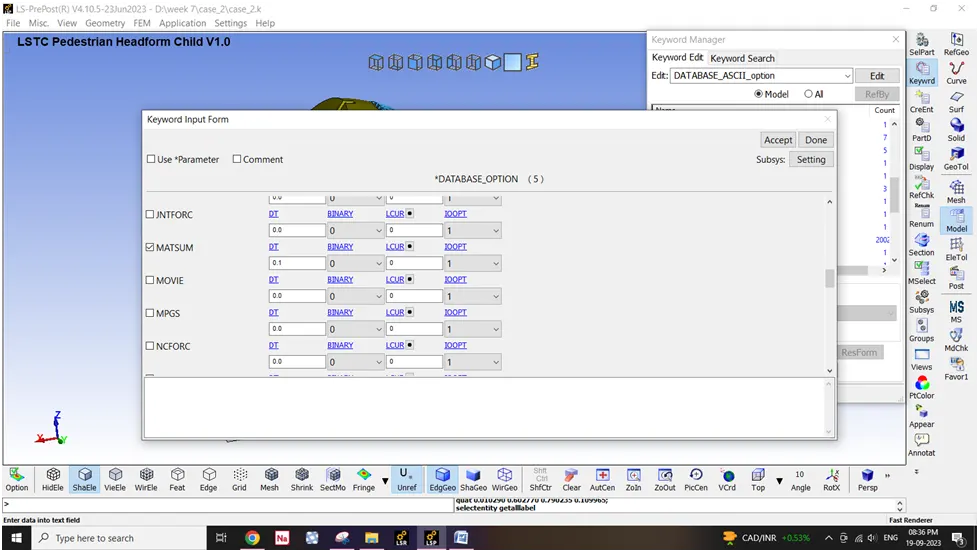
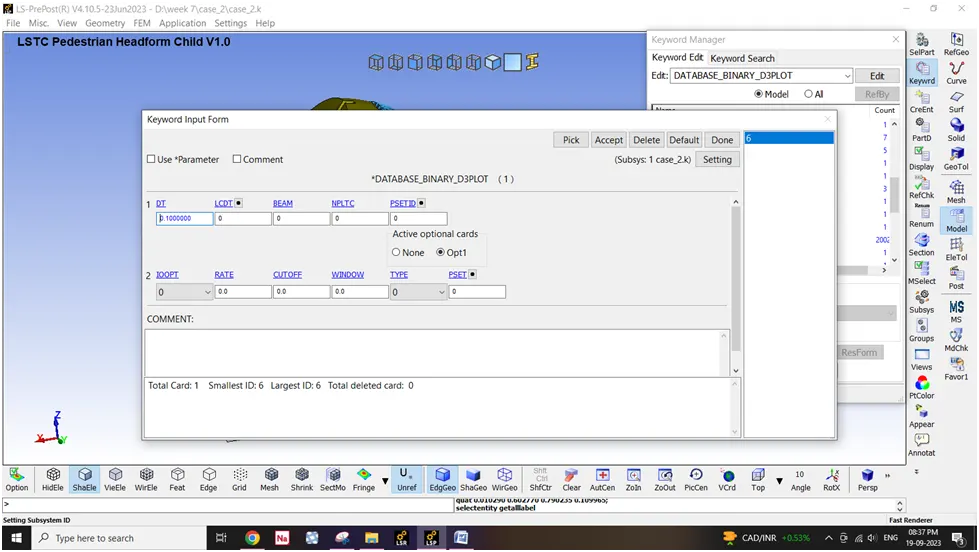
Database are defined as shown above
Results are shown below
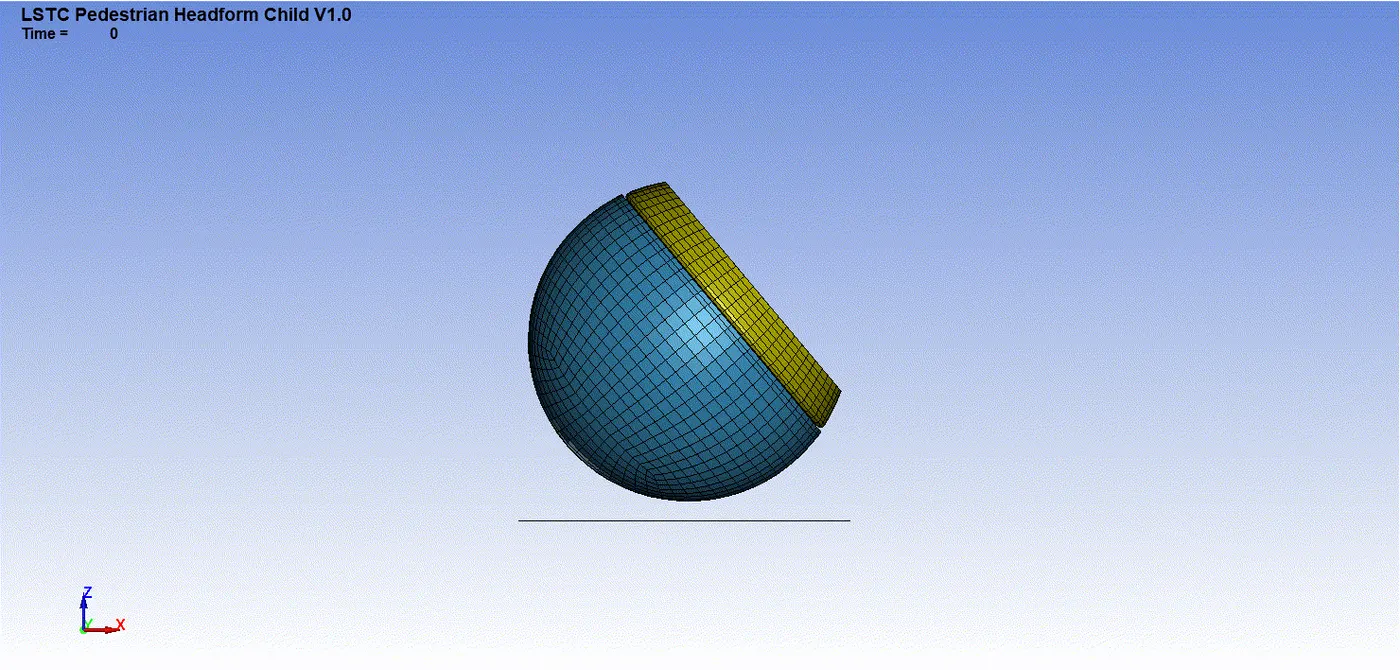
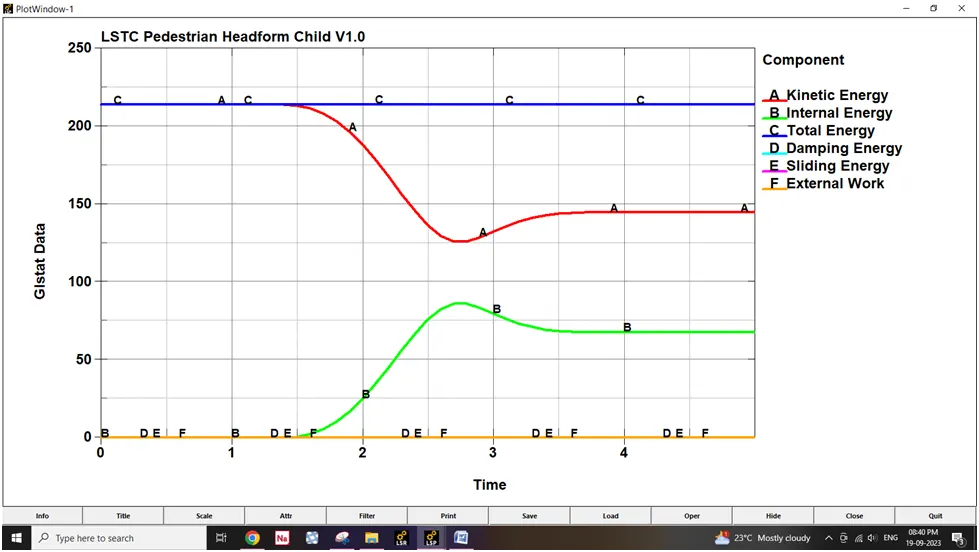
<!--[endif]-->
The total energy of the system is conserved and hourglass energy is within limits
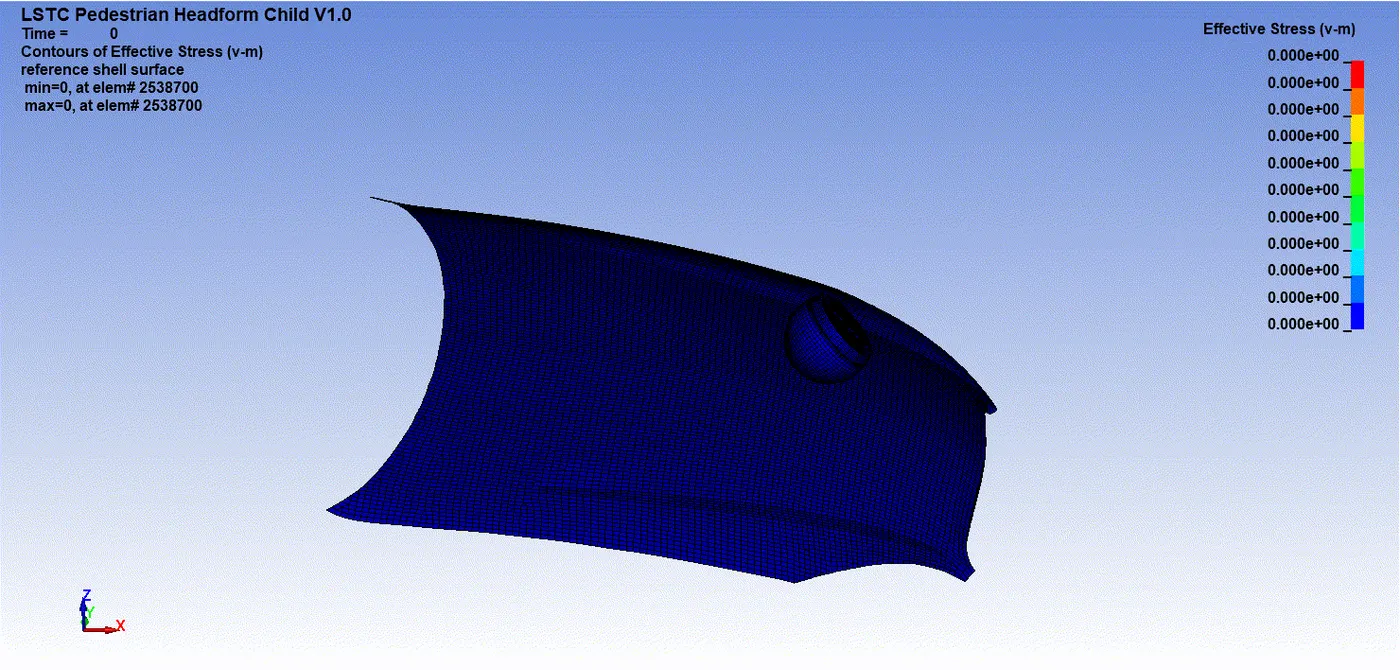
Von- Mises stress:
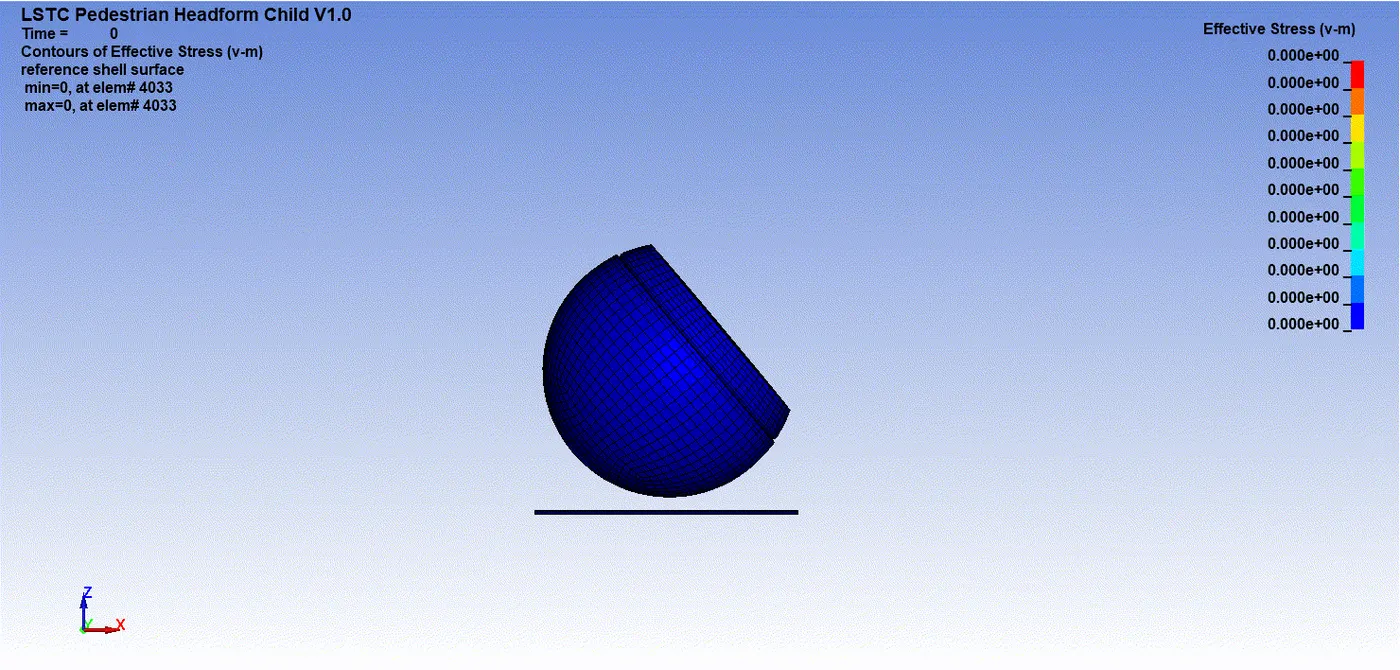
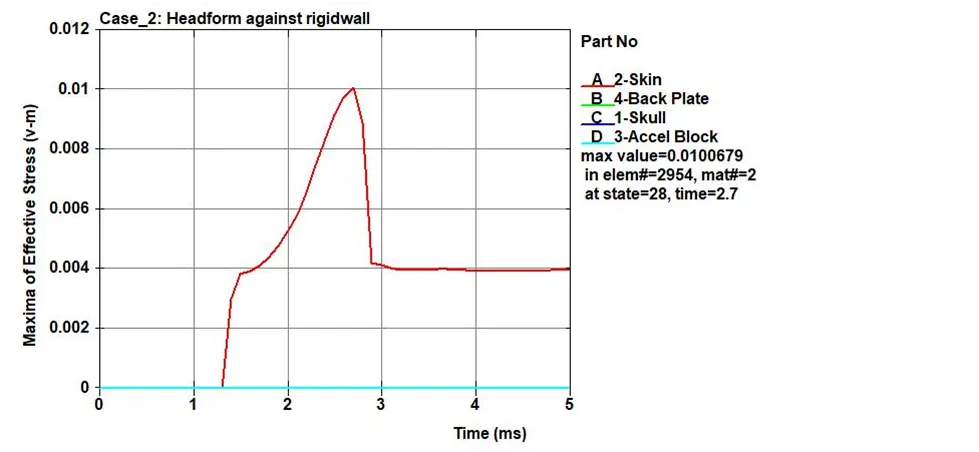
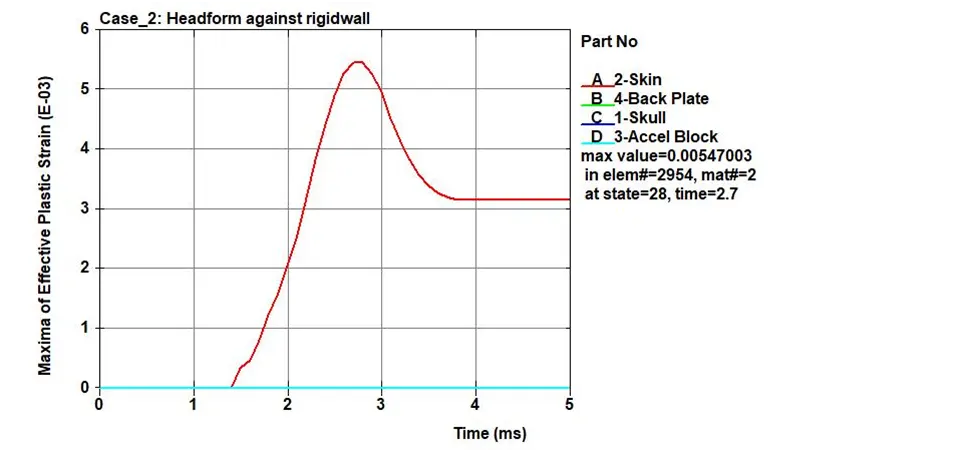
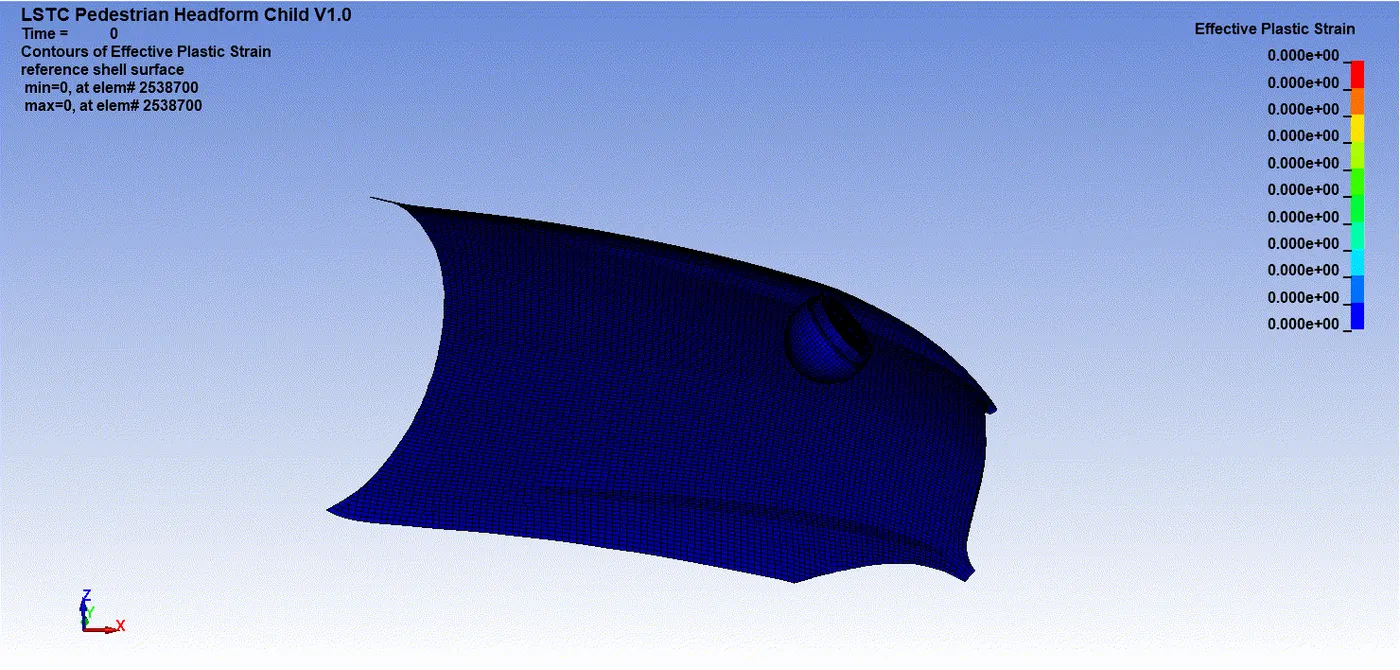
Effective Plastic strain:
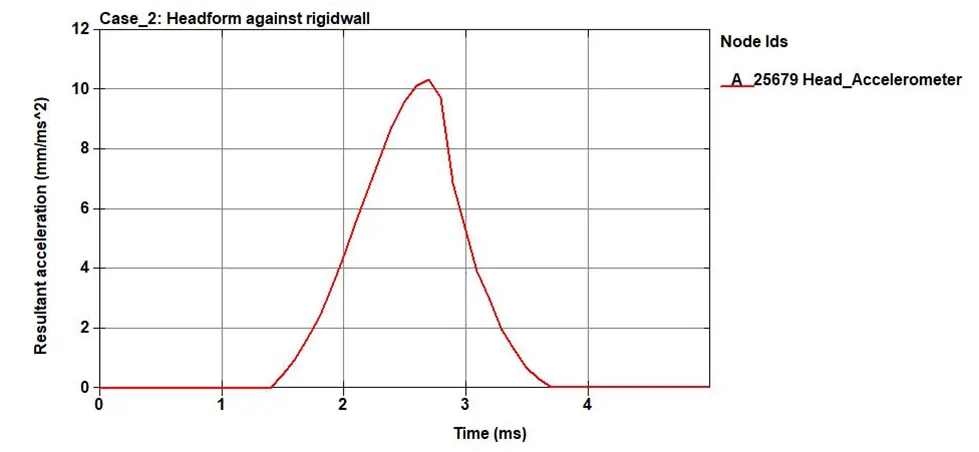
Acceleration:
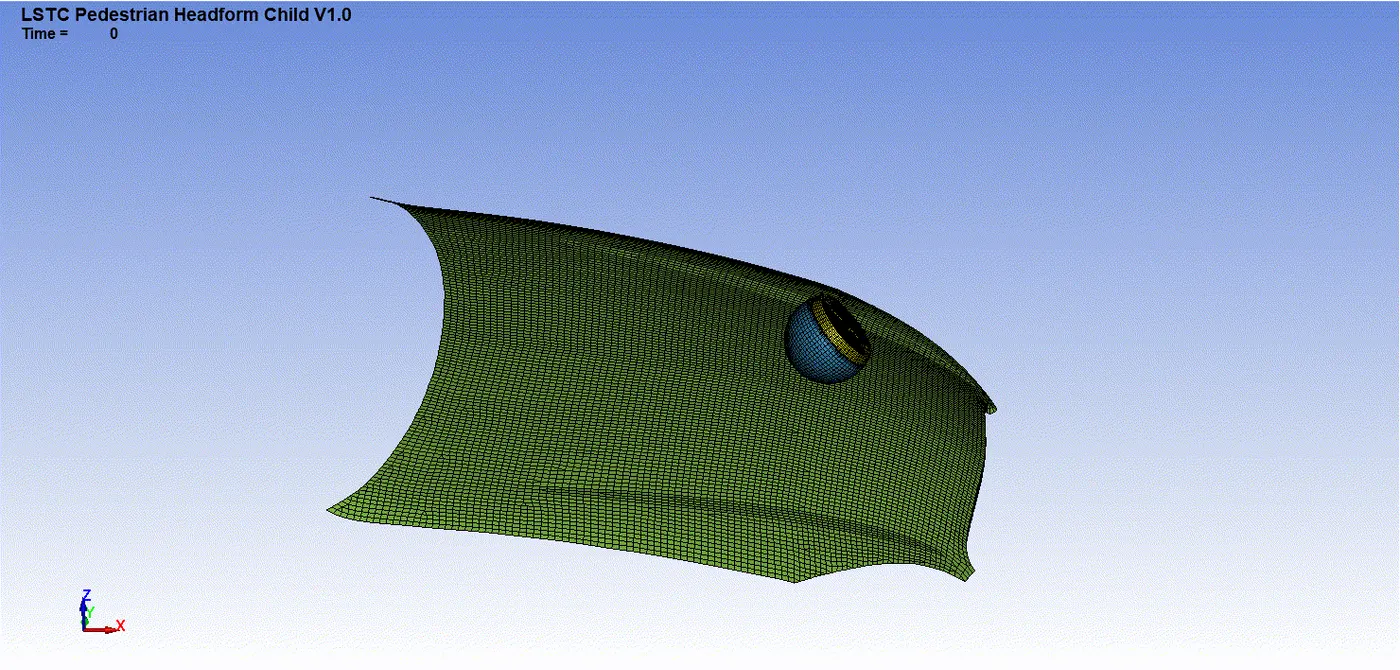
Case 3): impact simulation of the head form with the Hood
The file containing the headform and meshed hood are imported into LS-Prepost
The car hood consists of an outer panel and inner panel. The thickness of both the panels is around 0.7 mm. Hence the shell thickness in this case of meshed hood will be assigned as 1.4 mm to replicate the hood in real time.
All the setup are same as previuos case
Following changes are done accordingly.
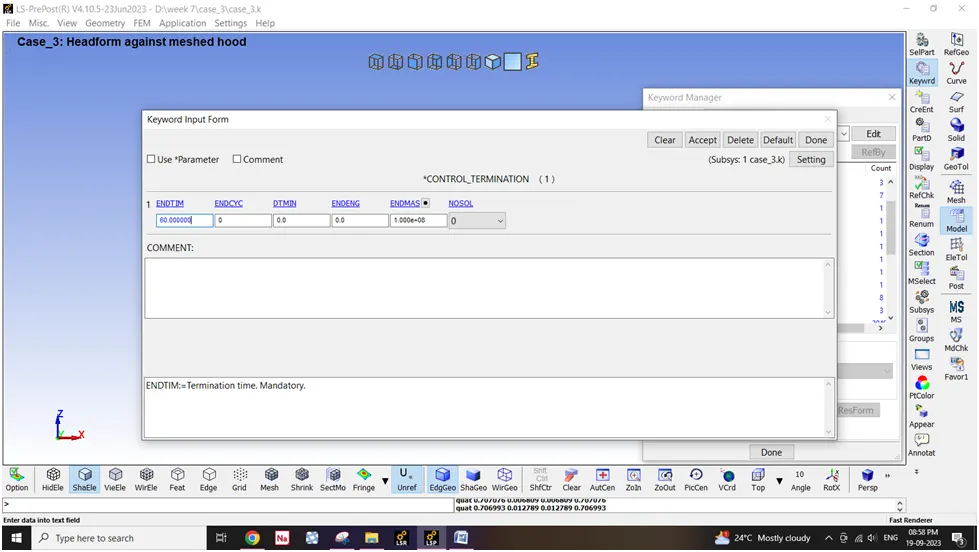
Rest all keywords are same as in previous case.
Results:
<!--[endif]-->
< />&>
< class>
The total energy is conserved, hence it can be inferred that simulation is more or less successful in replicating the impact of headform against the meshed hood
hourglass energy increases to certain level between 20 to 30 ms timeframe and remains constant thereafter. Since, the meshed hood is made up of shell elements of 1.4 mm a different element formulation can be used to limit the hourglass energy.
Stress
Strain
Acceleration plot
Comparison of headform against rigidwall and meshed hood:
HIC Calculation:
The head injury criterion (HIC) is a measure of the likelihood of head injury arising from an impact. The HIC can be used to assess safety related to vehicles, personal protective gear, and sport equipment.
Normally the variable is derived from the measurements of an accelerometer mounted at the center of mass of a crash test dummy’s head, when the dummy is exposed to crash forces.
<!--[endif]-->
It is calculated as the maximum values of averages of deceleration lasting for less than prescribed time period with peak acceleration of 3 ms.
In case of calculating HIC36 the time period is chosen as 36 ms. HIC36 is just the injury criteria, since we are simulating the impact of the headform and not the dummy body as a whole as it is cumbersome and adds a lot of complexity.
To calculate the Head Injury Co-efficient, HIC(d) is calculated, which represents the HIC value that a free motion headform would have measured if it were attached to a body. HIC(d) takes into account the weighted standardized maximum integral value of the head acceleration. The following weight function is used based on experimentation is used which provide close enough direction to evaluate the performance taking into account the injury criteria too..
From the plot as requested for hic36 in LS-Dyna, HIC(d) = 378.4 is obtained. This value of HIC is usually less severe and has more chances of survival.
HIC(d) can also be calculated manually using the Gaussian Mixture Model and fitting a distribution to get the mean and calculate the integral, and then incorporating the weightage which is a tedious method. The maximum of integral between the inerval is already provided by LS-Dyna .
This value can be substituted in the formula to obtain the HIC(d) value
HIC(d) = 0.75446*281+166.4 = 378.4
</>
< class>Conclusion:
The Pedestrain Head Impact was carried out by first simulating a simple sphere impacting rigidwall, and then by adding complexity, a headform provided by LSTC was simulated again using rigidwall and hence a meshed hood. The comparison of headform against rigidwall and meshed was done to infer the chaning stiffness and geometry for the variation in the results.
Finally, the Head Impact Criterin for H36 was calculated to be 378.4 which is well within the limits, to judge the impact to be not as severe and has high chances of survival. The same experiment can be done by varying the impact angles and at different location of the hood.