Week - 4 - Crash Box Simulation
Aim: To perform crash analysis to a given crash box model with two different thickness of 1.2mm and 1.5mm thick. And compare their results.
Unit used: gm-mm-ms
Procedure:
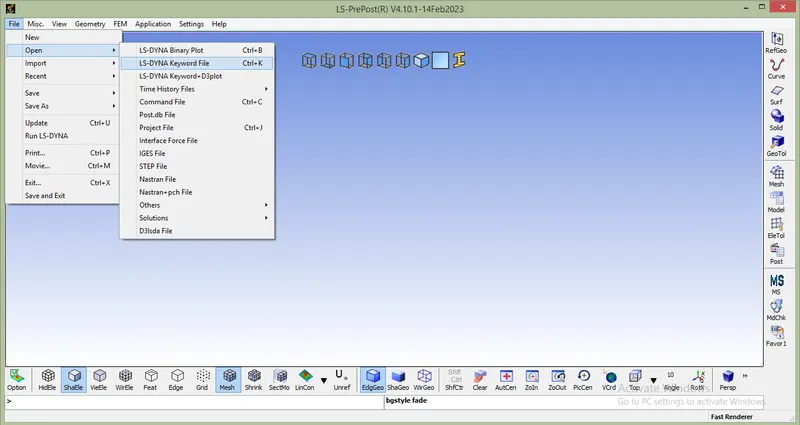
- Load the given model in to LSprepost GUI.
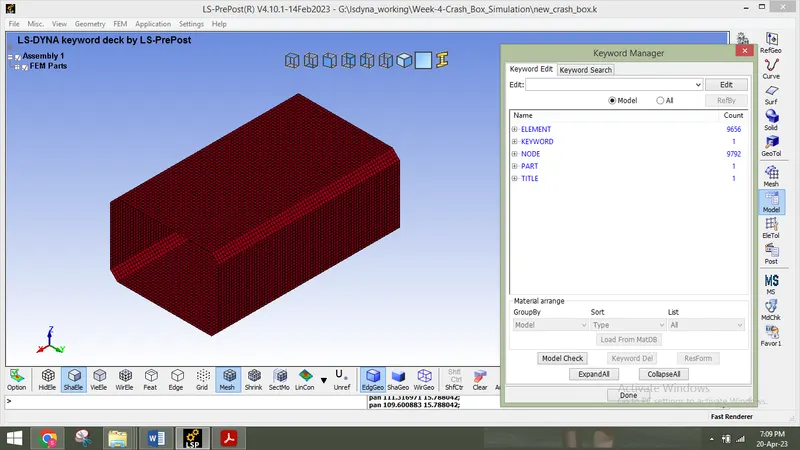
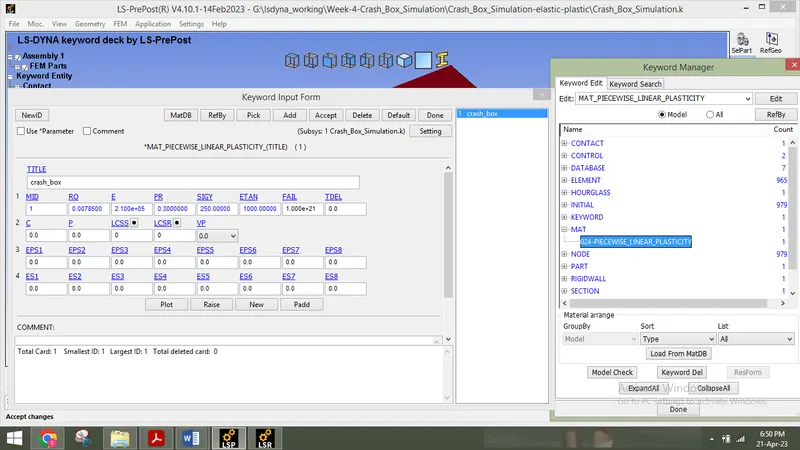
- Create material for a given crash box
KEYWORD MANAGER > MAT > 024_PIECEWISE_LINEAR_PLASTICITY
Enter the material properties as shown below,
- Create section, KEYWORD MANAGER > SECTION > SHELL, thickness 1.2mm
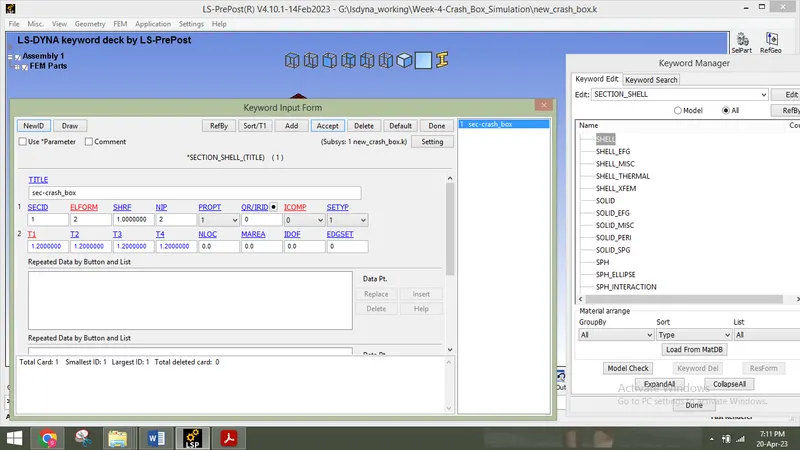
- Hourglass is defined using HGID, this keyword controls the hourglass energy in the model during simulation
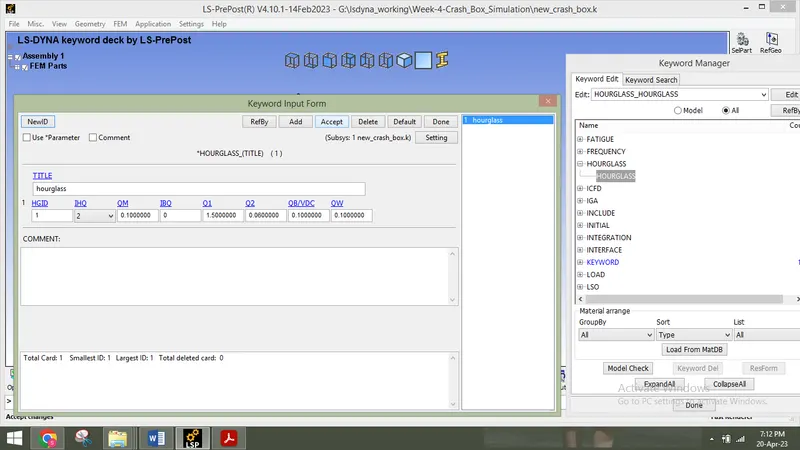
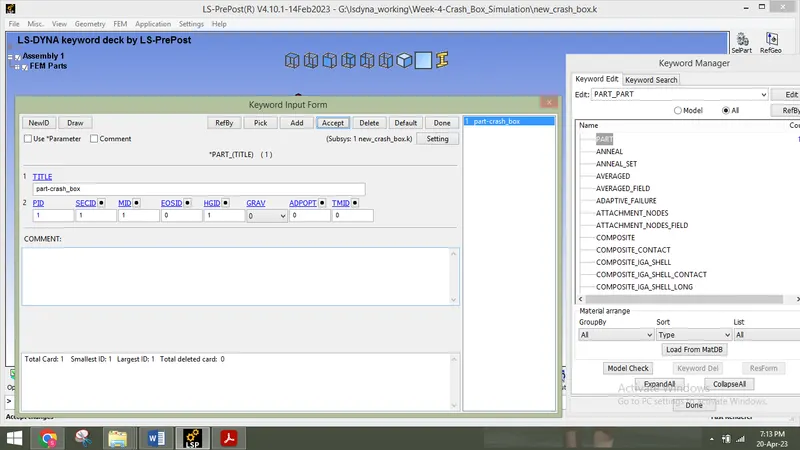
- Now update all for the part, KEYWORD MANAGER > PART, as shown below
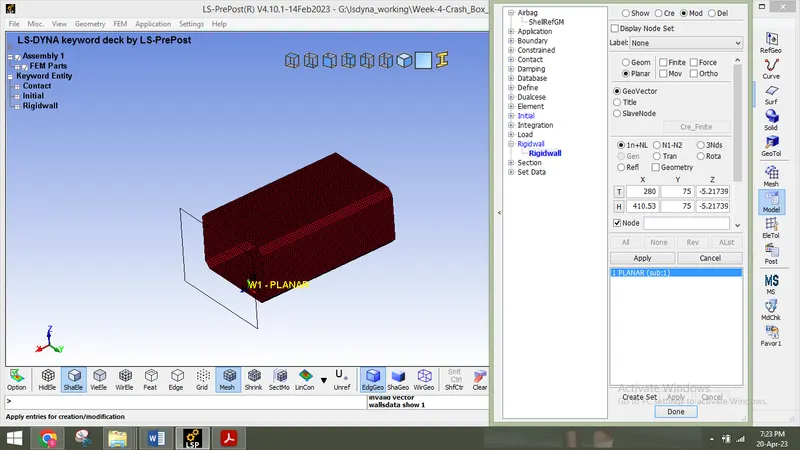
- Create rigidwall to which a crash box crashes,
CREATE ENTITY > RIGIDWALL > RIGIDWALL |CRE|PLANER|IN+NL
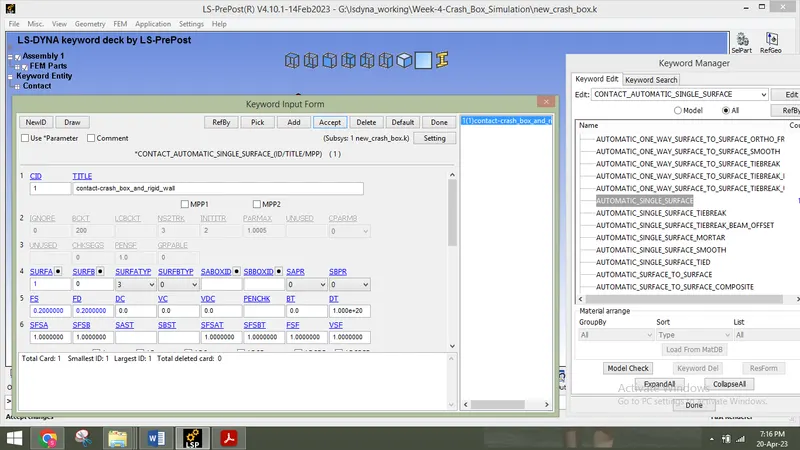
- Create contact between crash box and rigid wall
KEYWORD MANAGER > CONTACT > AUTOMATIC SINGLE SURFACE with coefficient of friction 0.2
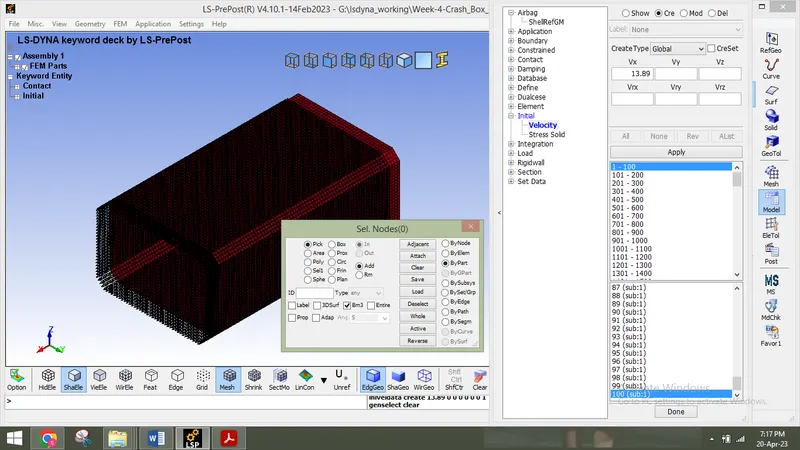
- Now apply given velocity for a crash box, velocity of 50mph is converted to mm/ms is 13.89 mm/ms
CREATE ENTITY > INITIAL > VELOCITY |CRE|VX 13.89 as shown below
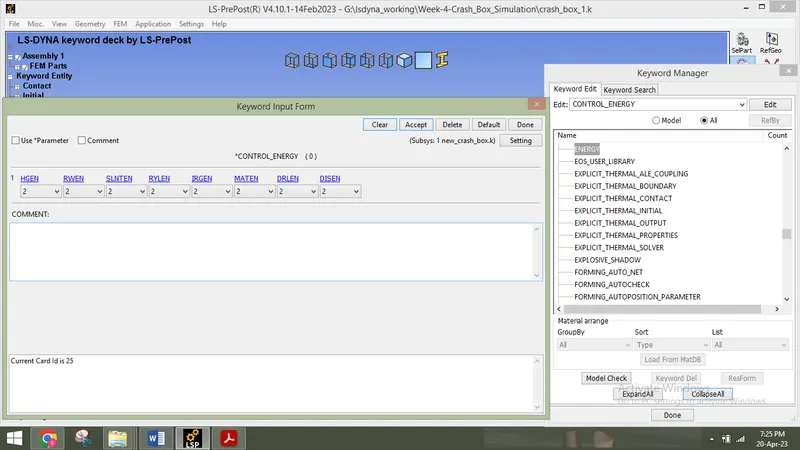
- Define control energy , KEYWORD MANAGER > CONTROL > ENERGY
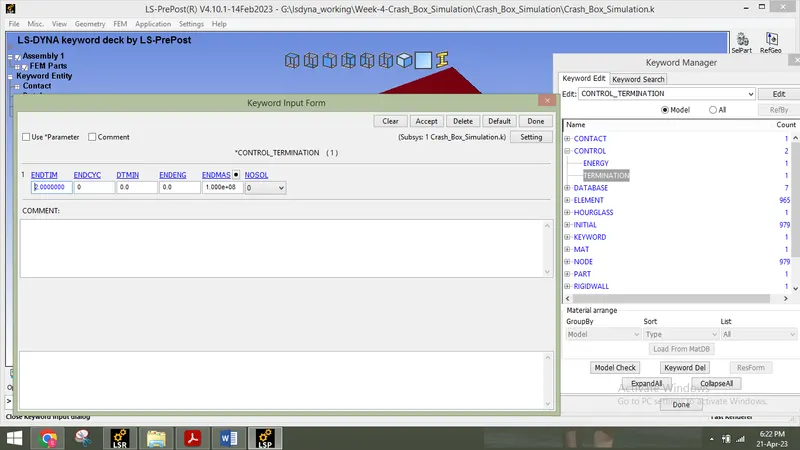
- Setup termination time for the simulation,
KEYWORD MANAGER > CONTROL > TERMINATION, ENDtim 2.0 msec
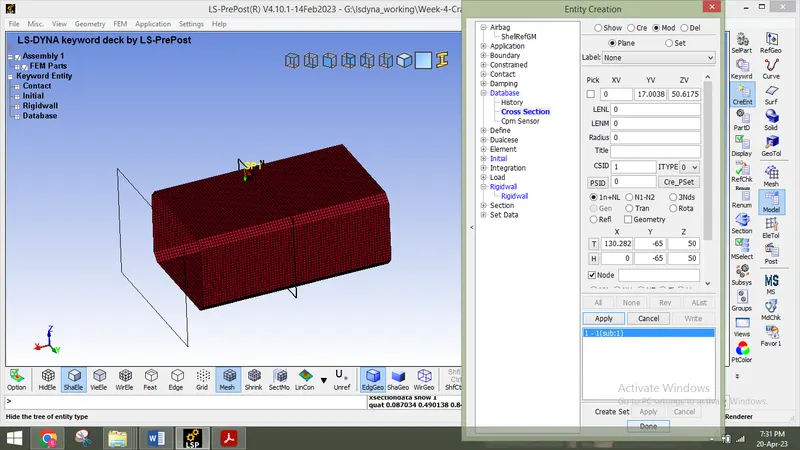
- Now create section to get cross sectional force in the model
CREATE ENTITY > DATABASE |CRE |PLANE, as shown below
- Next request for output, KEYWORD MANAGER > DATABASE > ASCII OPTION and request for
GLSTAT, SLEOUT, RCFORCE, SECFORCE with dt 0.01
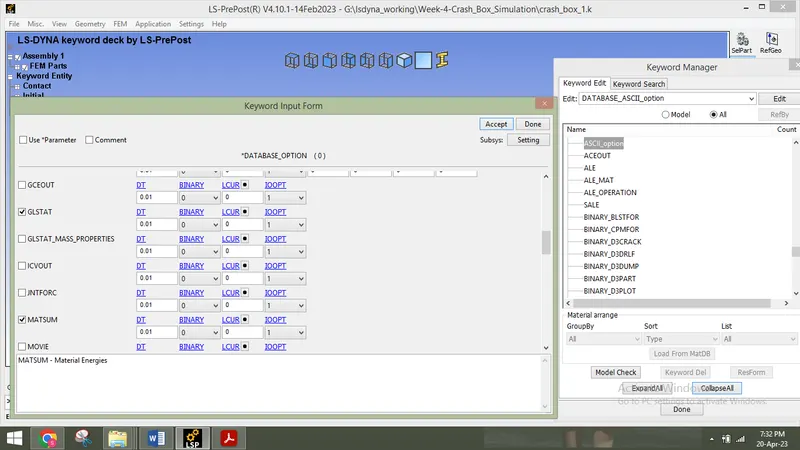
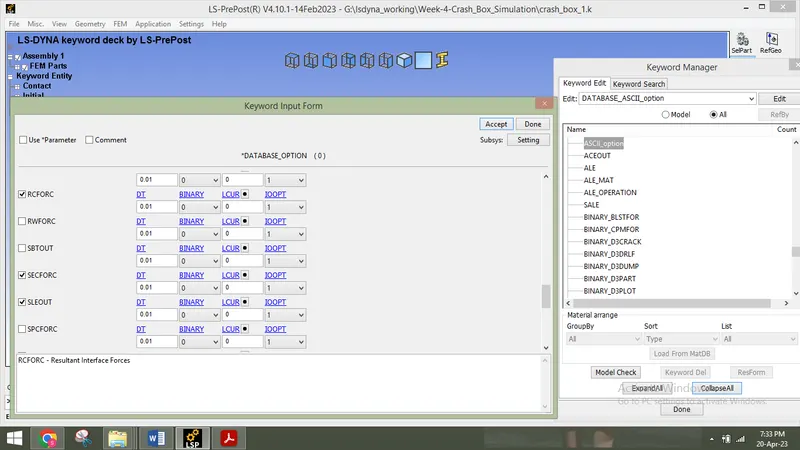
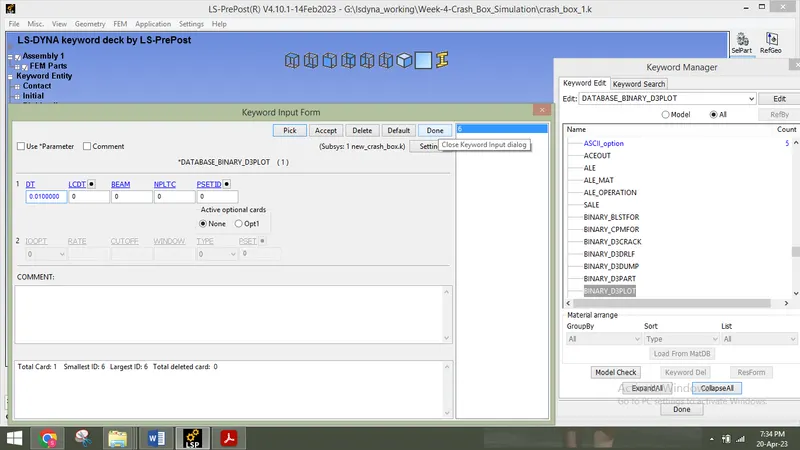
- save the model, run the model checker, if no error found submit for run
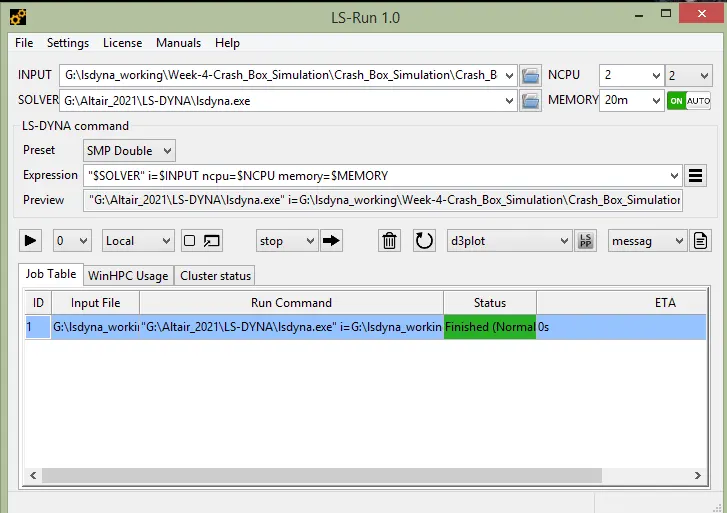
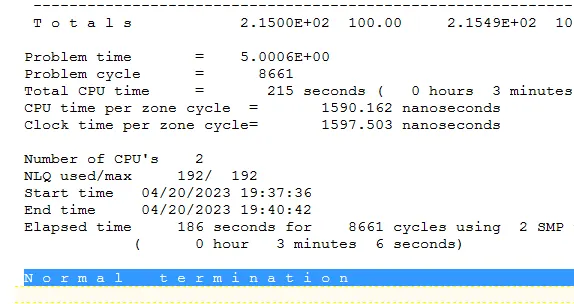
- Check for normal termination.
Post processing
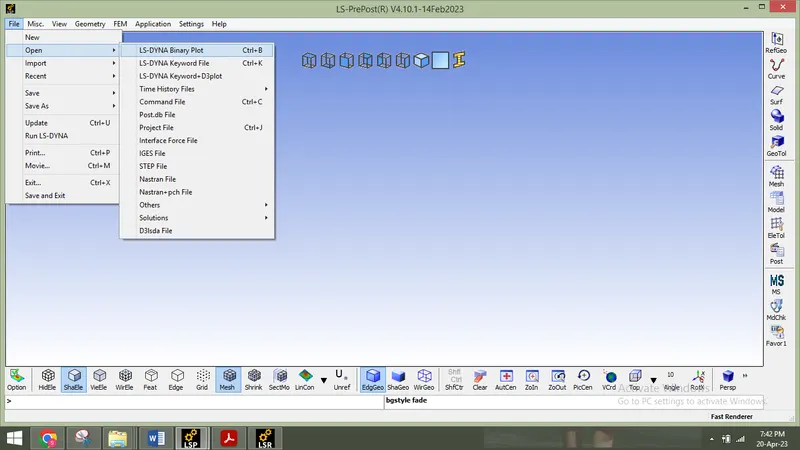
- Load the d3plot to the lsprepost GUI and plot for required plots
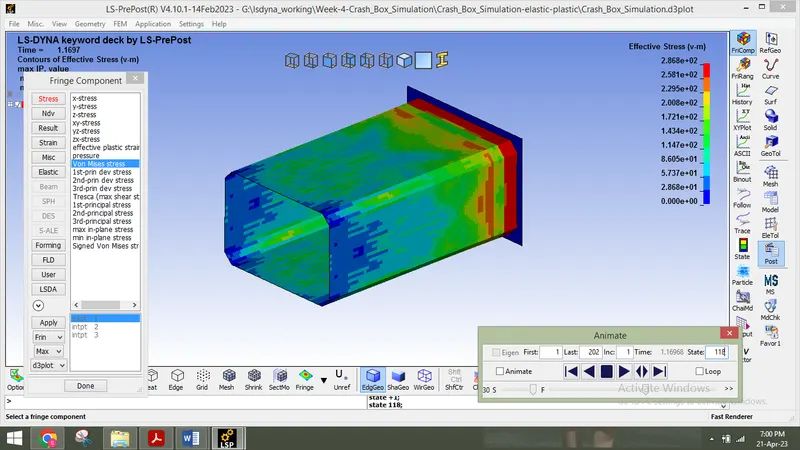
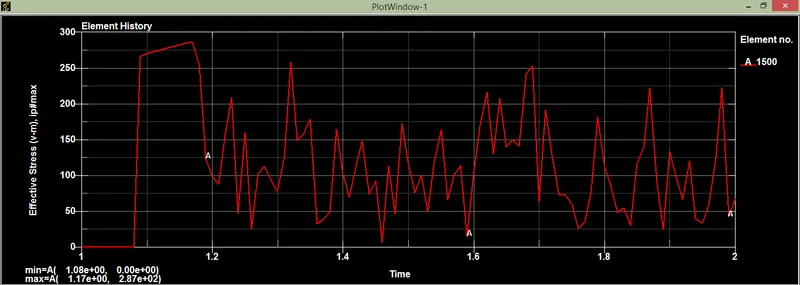
CASE (A) : 1.2mm thick crash box
Effective stress (von mises), MPa
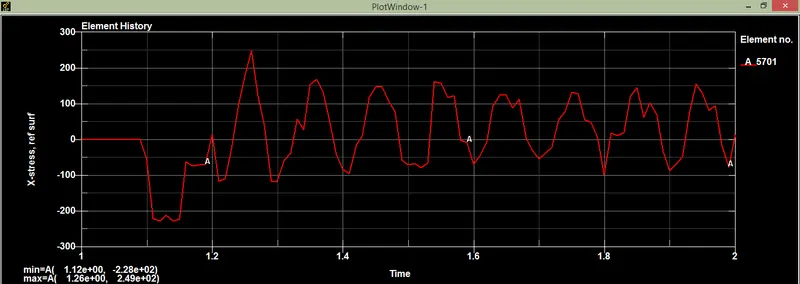
Stress-X direction, MPa
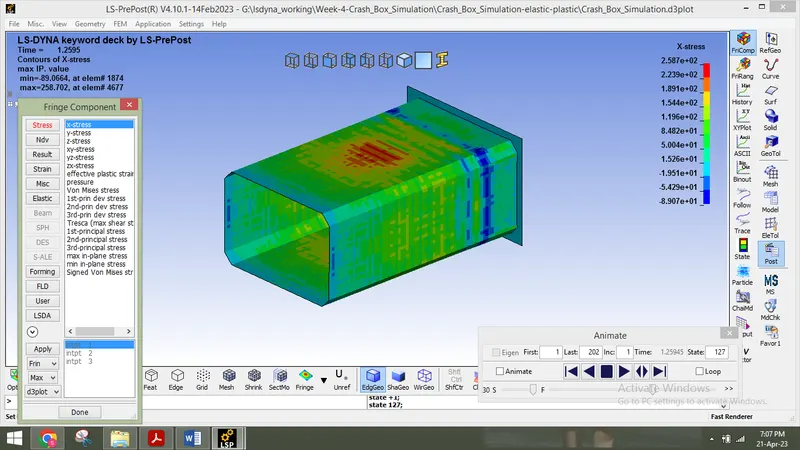
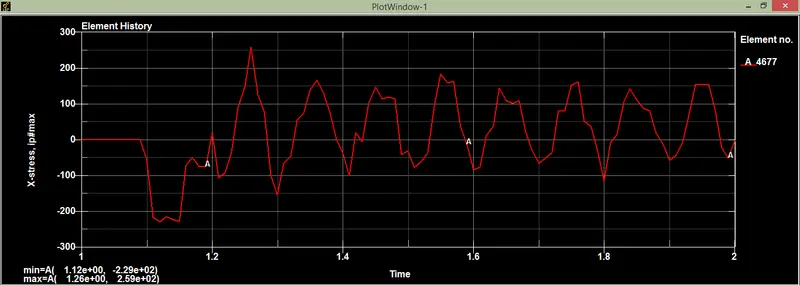
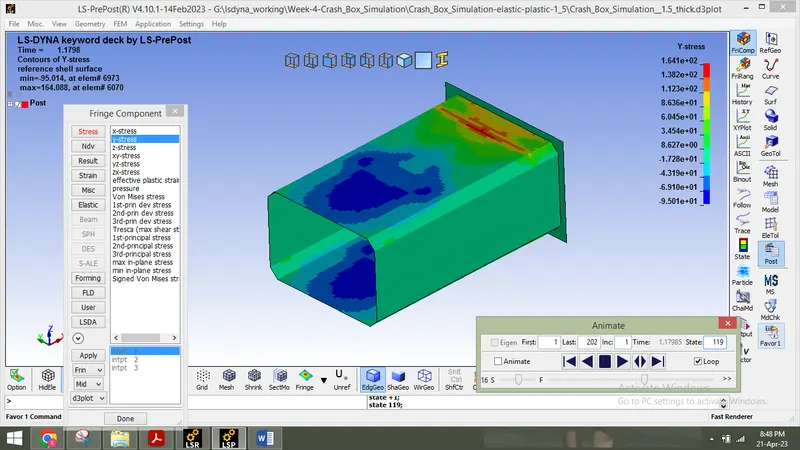
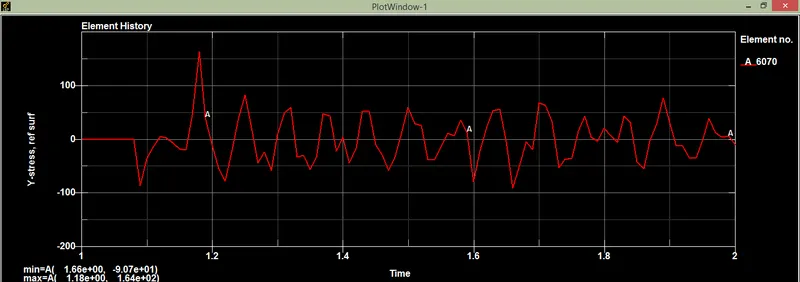
Stress-Y direction, MPa
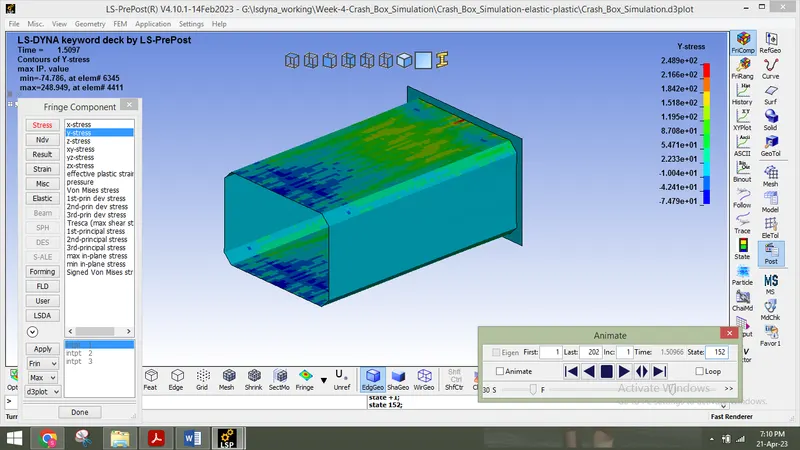
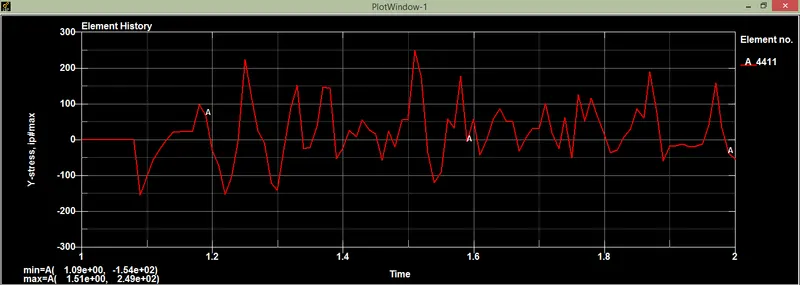
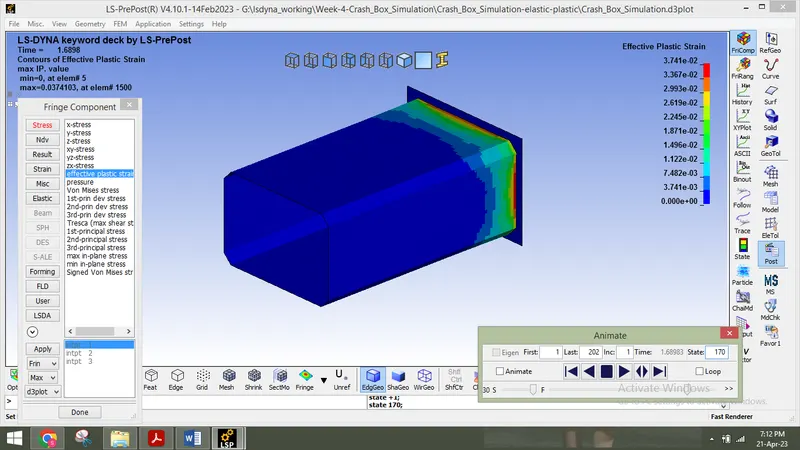
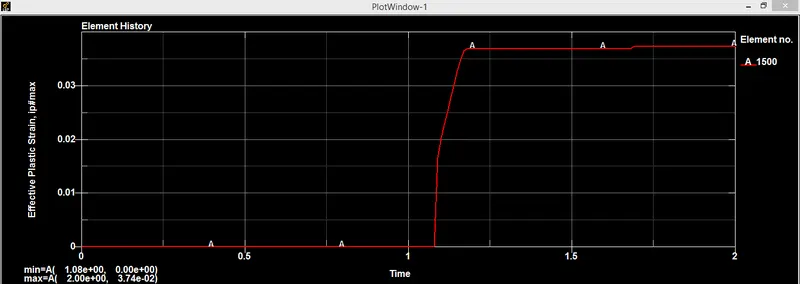
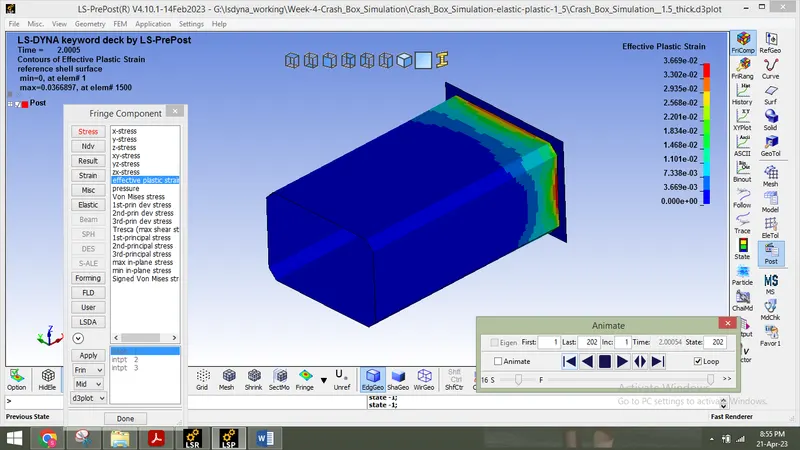
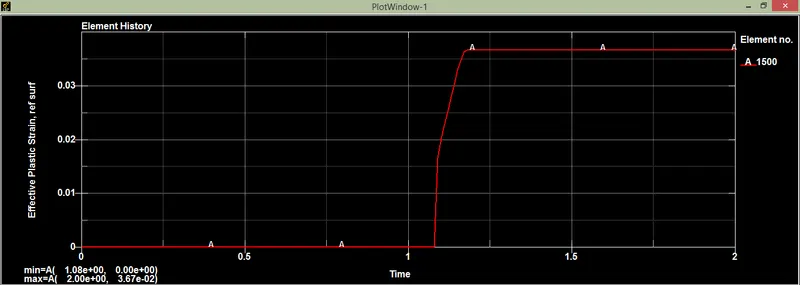
Effective plastic strain
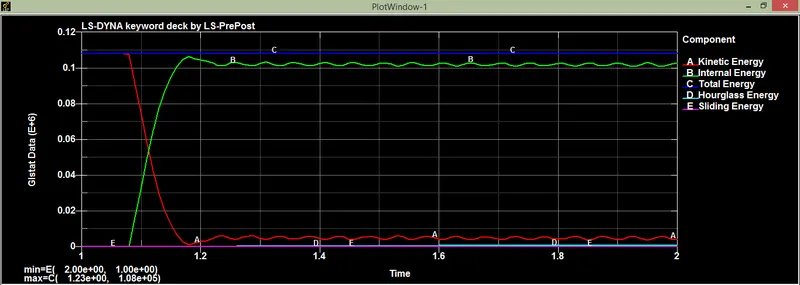
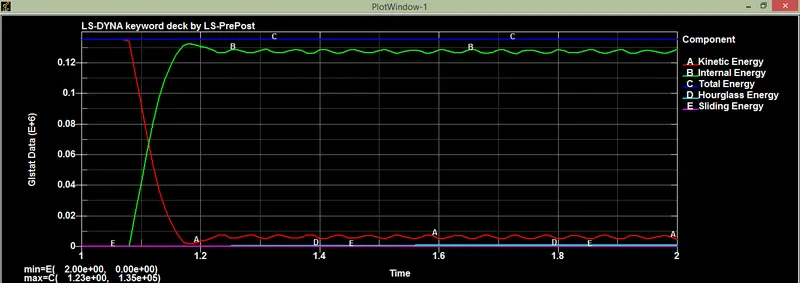
Glstat plot, energies N-mm
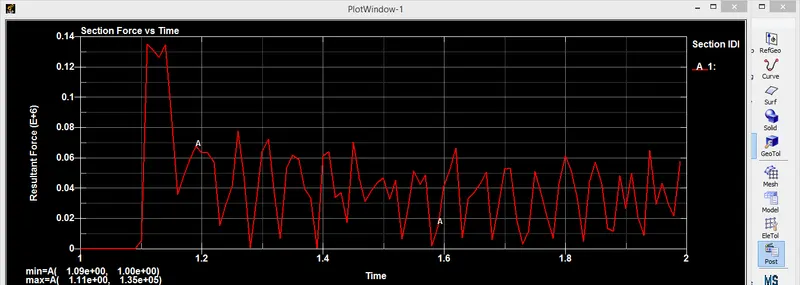
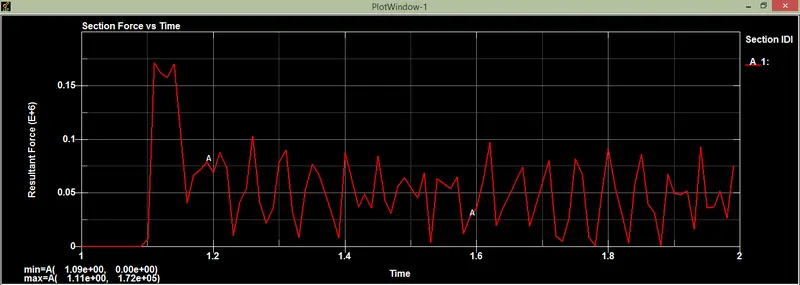
Sectional force plot, N
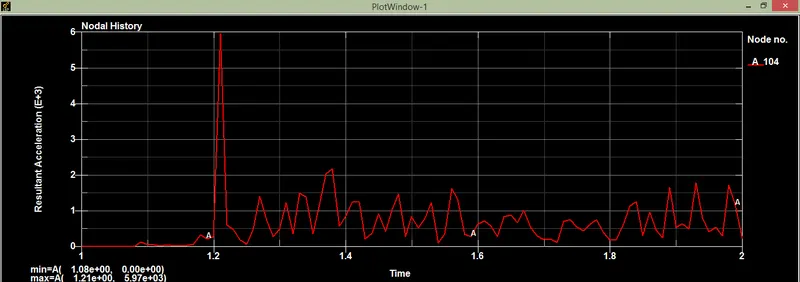
Resultant acceleration plot, mm/ms2
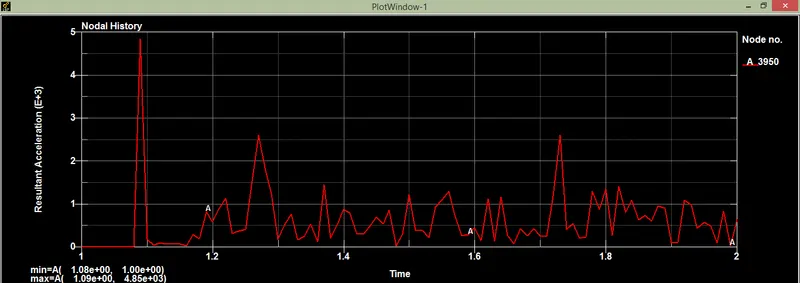
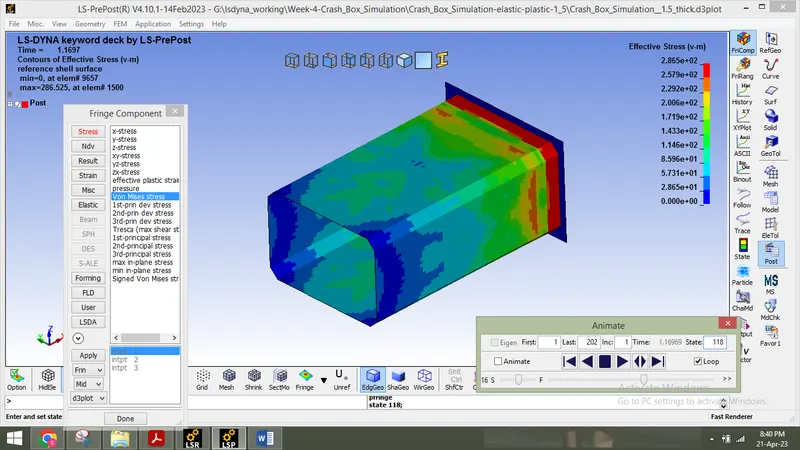
Case (B): 1.5 mm thickness crash box
Effective stress plot, MPa
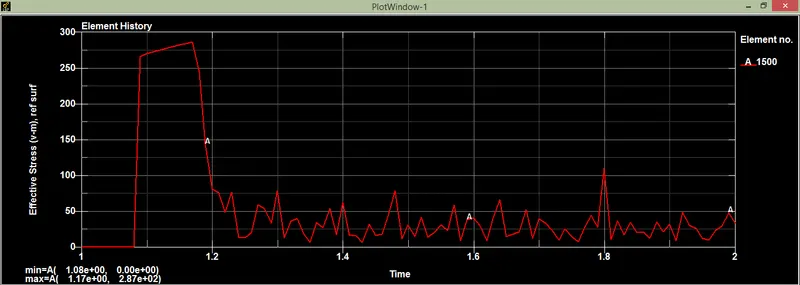
Stress X-direction, MPa
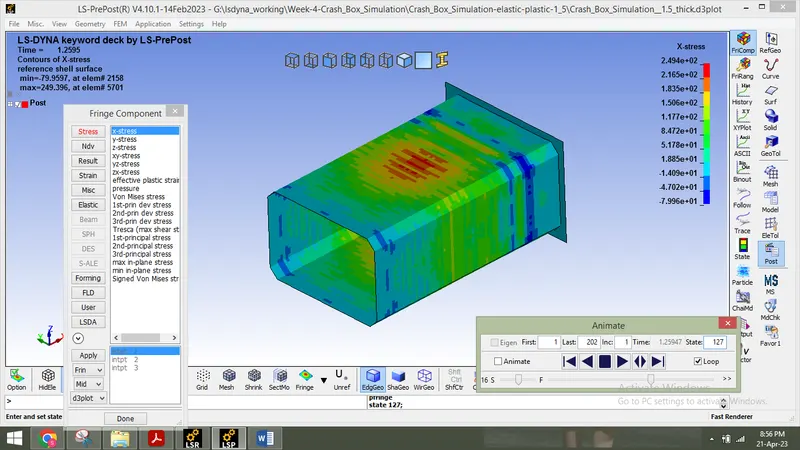
Stress Y-direction, MPa
Effective plastic strain
Glstat plot, energies N-mm
Sectional force plot, N
Resultant acceleration plot, mm/ms2
Conclusion:
The given model set-up for the crash simulation and the required results were obtained using the appropriate keyword cards.
Model was fired successfully. Post-processing of the results was done using the D3plotsand and ASCII files, to achieve the deliverables.
results are compared for both 1.2 mm and 1.5mm thick crash box.
The results of 1.5 mm crash box showed higher energy absorbing capacity and less deformation compared to 1.2 mm thick crash.