Week 6: Conjugate Heat Transfer Simulation
Aim: To simulate conjugate heat transfer through a pipe
Case step: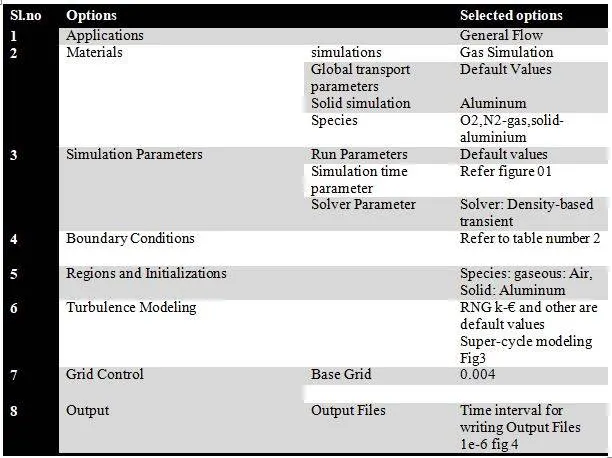
Materials: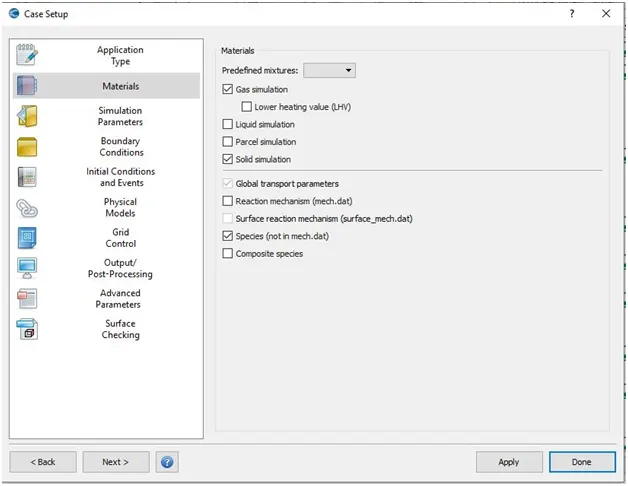
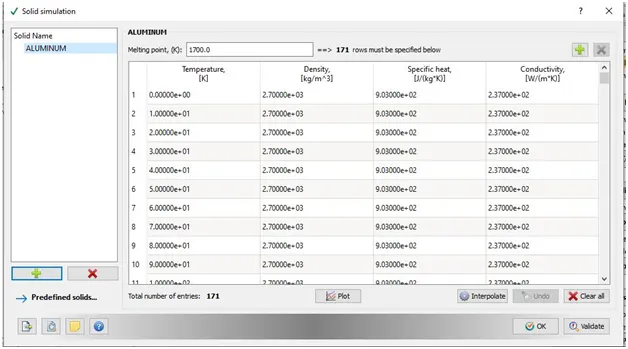
Simulation time parameters
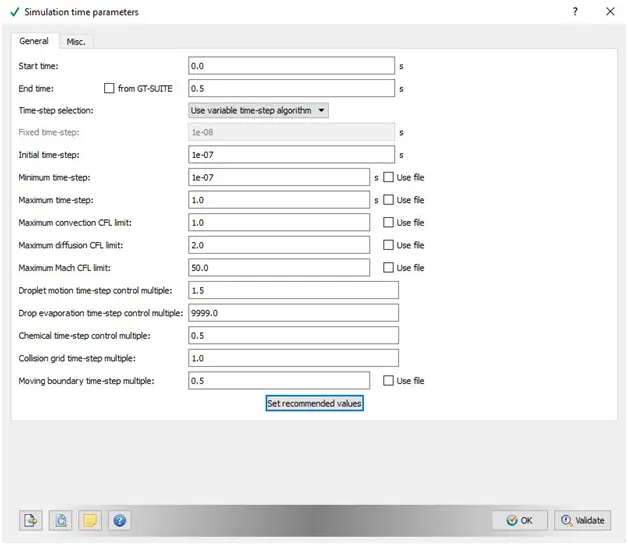
Boundary Conditions
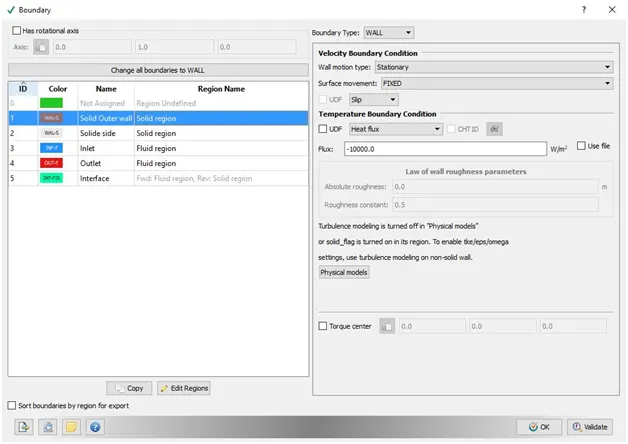
Re=(rho*V*D)/(dynamic_viscosity)
7000=(1.161*V*0.04)/(1.85*10^-5);
V=2.58m/s
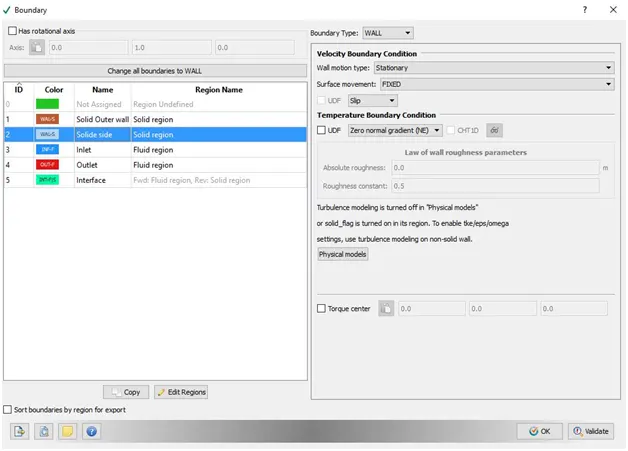
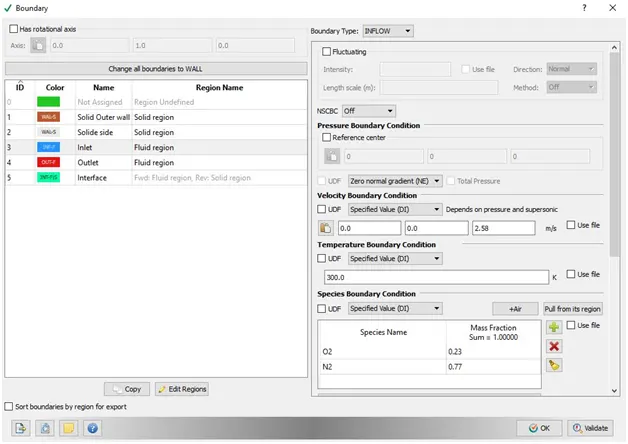
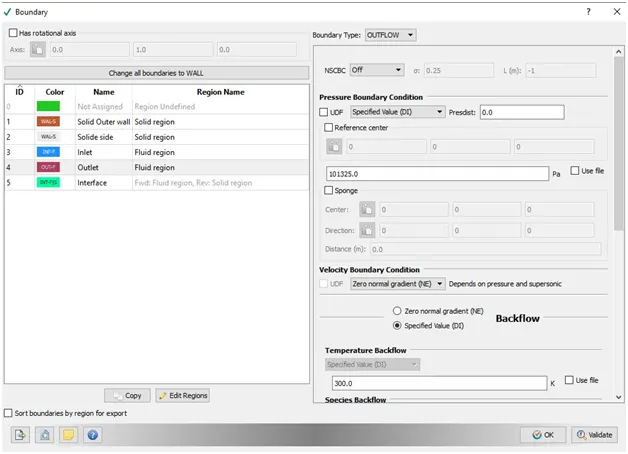
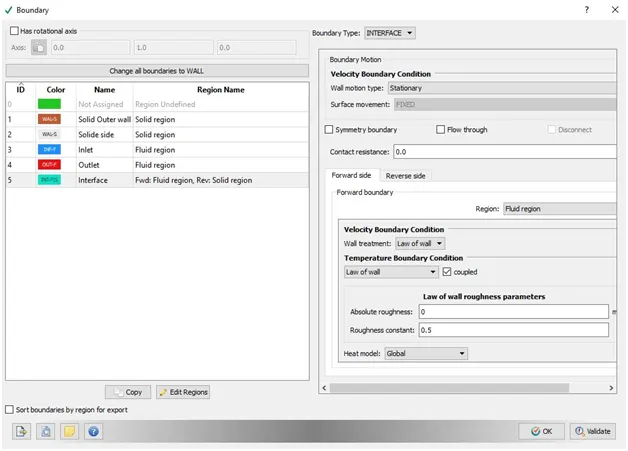
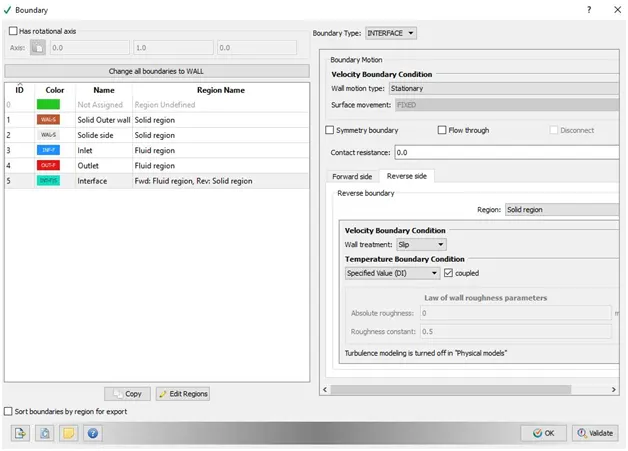
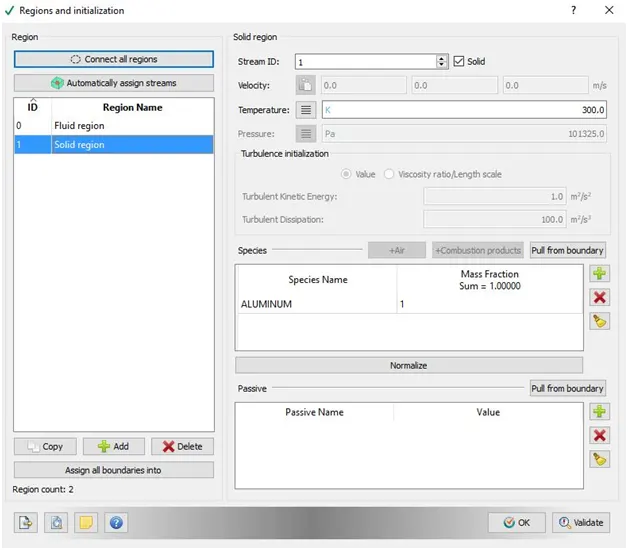
Regions and Initialization
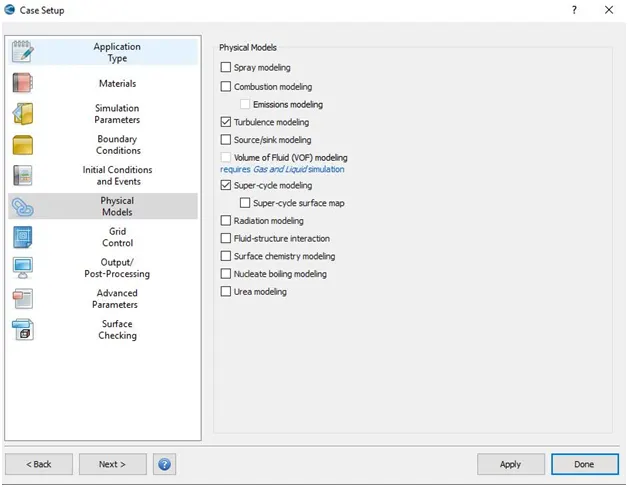
Physical Model
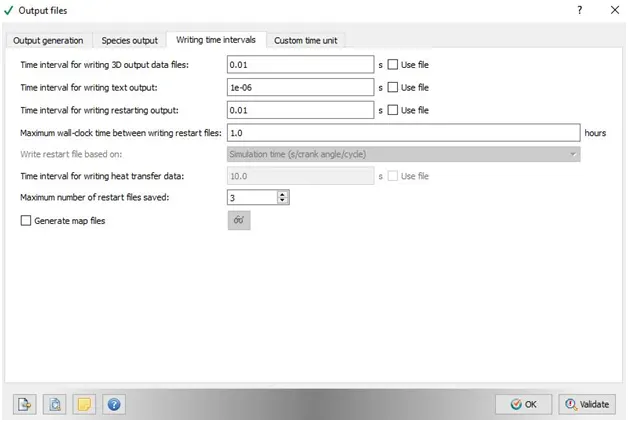
Output_files
Grid_Dependence_test
Base grid of 1mm,2mm and 3mm
Max_Temp(K)_solid_component
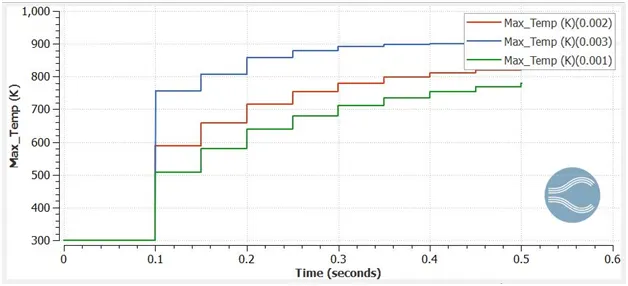
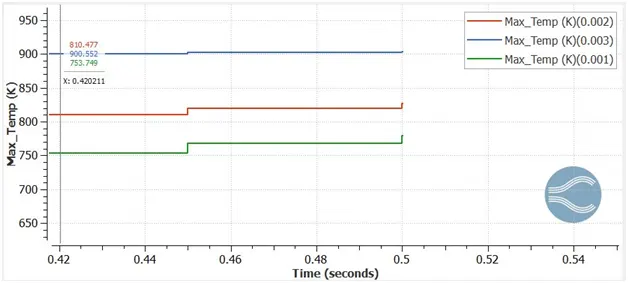
The temperature of the solid,when it converges gives 900k,820k and 760k for different mesh sizes of 1mm,2mm and 3mm lower the mesh sizing higher will be the accurate of the temperature
Max_Temp(k)_fluid_component
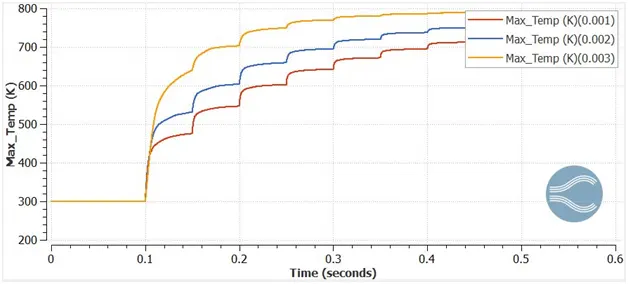
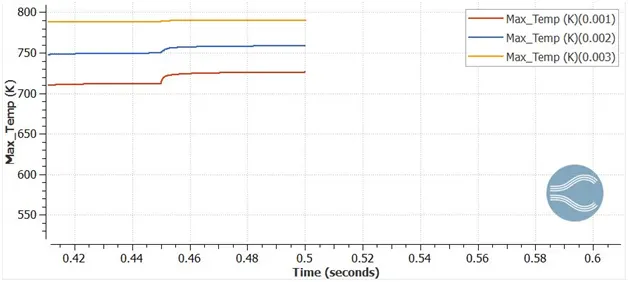
The temperature of the fluid,when it converges gives 880k,750k and 720k for different mesh sizes of 1mm,2mm and 3mm lower the mesh sizing higher will be the accurate of the temperature
Mesh
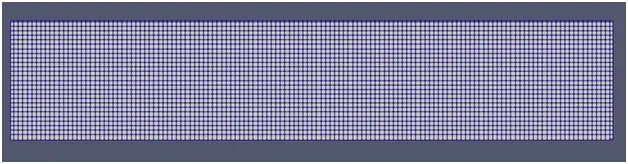
Meshing (1mm)
Animations
Heat transfer
Velocity
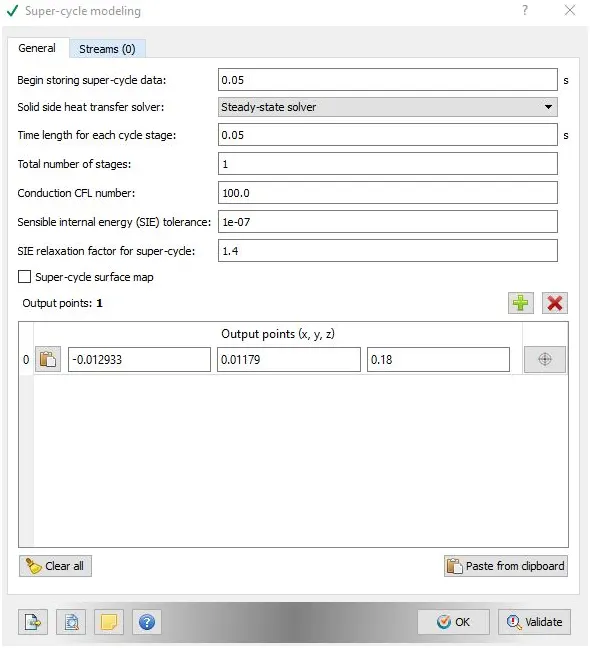
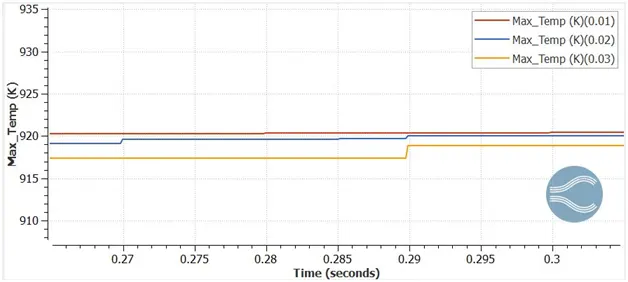
Super cycling
The basic idea of super-cycling is that the solver for the fluid domain is paused until the solver for the solid domain converges. This pausing is done in intervals that can be set by the user
super_cycle done different stages:(0.01,0.02,0.03)
Temperature_variation_solid
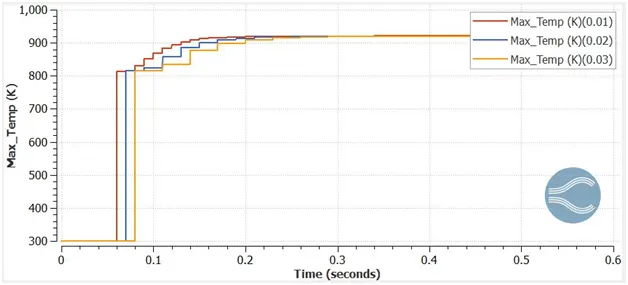
Temperature_variation_fluid
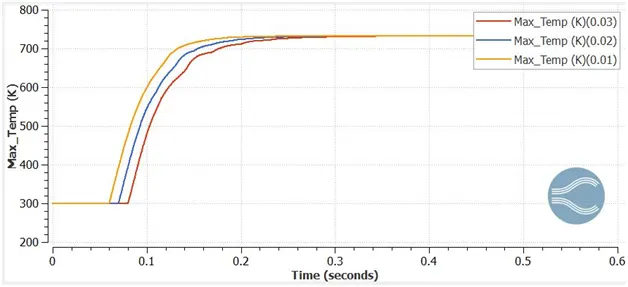
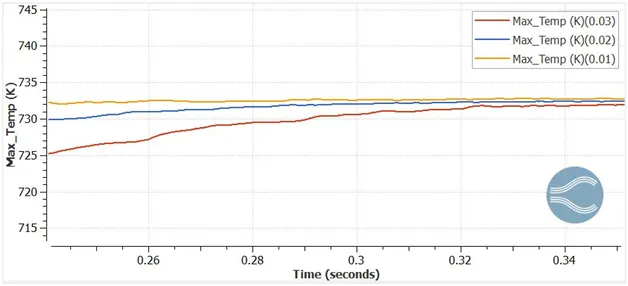
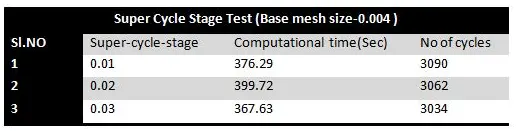
Lower the value of super cycling stage value higher will be the convergence rate but it will take higher number of cycles to converge
Conclusion:
It is observed that lower the value of super_cycle and mesh size ,higher will be the convergence rate and it takes more time to time/cycles to converge