Week 6 - CHT Analysis on a Graphics card
Aim: Conjugate Heat Transfer (CHT) Analysis on A Graphics Card.
Objective:
- To run the simulation by varying the velocity from 1m/sec to 5m/sec for at least 3 velocities and discuss the results.
- To find out the maximum temperature and heat transfer coefficient attained by the processor.
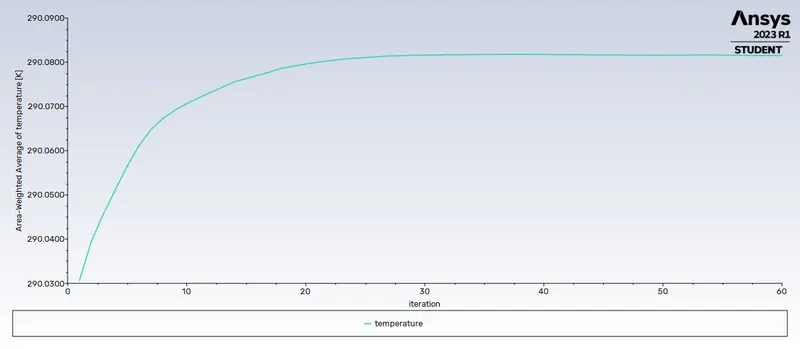
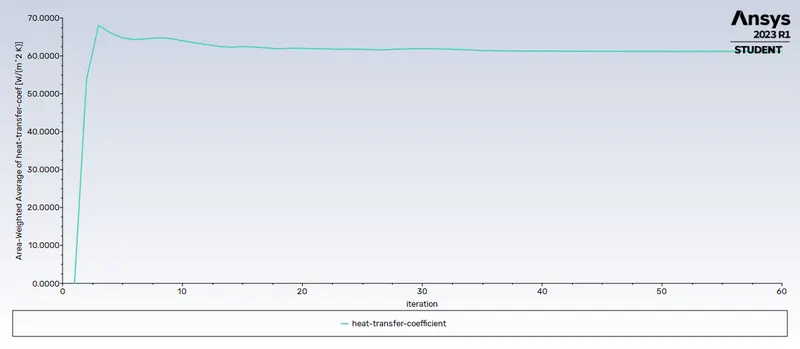
- To prove that the simulation has achieved convergence with appropriate images and plots.
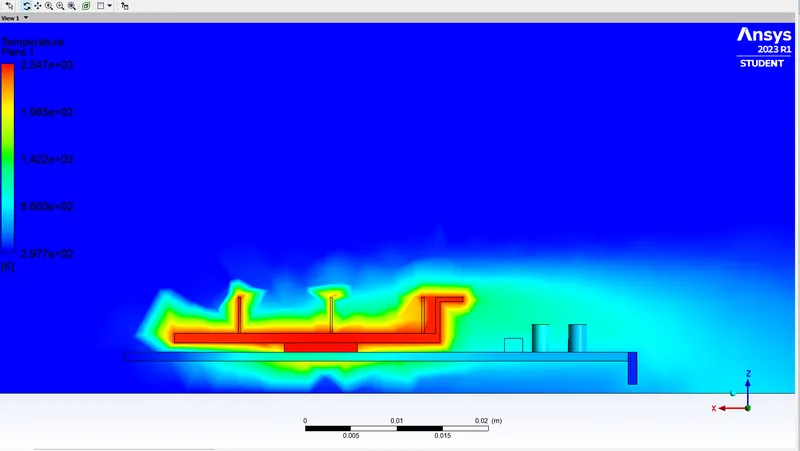
- To identify potential hotspots on the model.
Theory:
- CHT provides the temperature prediction and the hotspot regions at the solid-fluid interface and we can also predict the heat transfer accurately for example- Conduction through solids, convection through fluid, and thermal radiation.
- The CHT approach has an advantage over FE thermal analyses in that wall heat transfer coefficients and their local variations on surfaces are directly calculated within the model rather than based on simplified empirical calculations.
- In the conjugate problem, the temperature and heat flux distributions along the interface of a fluid and a body are basic unknowns. Therefore, the analytical solutions of conjugate problems rely on methods that determine the heat transfer from arbitrary non isothermal surfaces.
- The Conjugate Heat Transfer (CHT) analysis type allows for the simulation of heat transfer between solid and fluid domains by exchanging thermal energy at the interfaces between them.
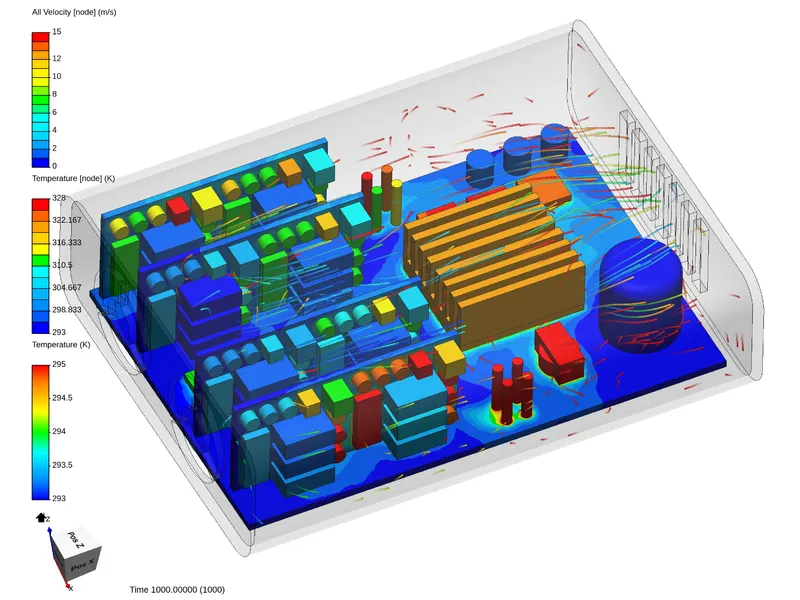
Simulation setup:
1. Case 1
Mesh Length= 10mm
Velocity from 1m/sec
- Mesh
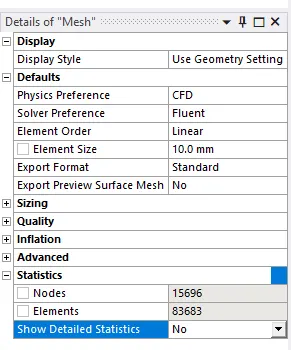
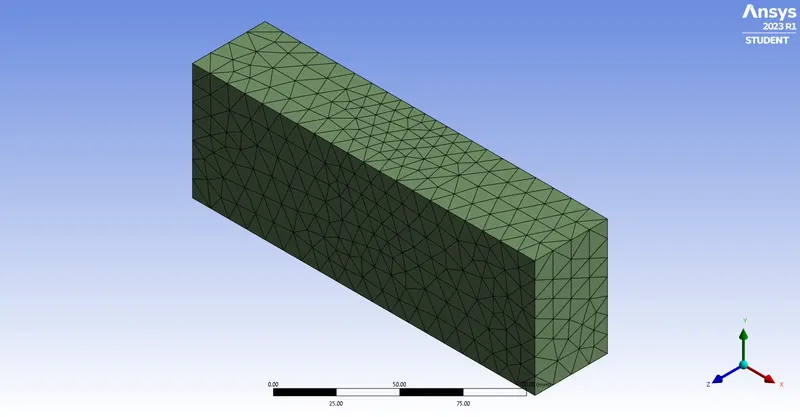
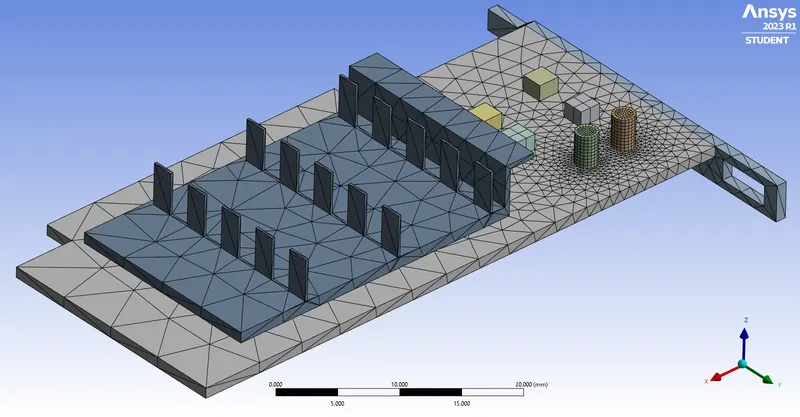
- Solver setup
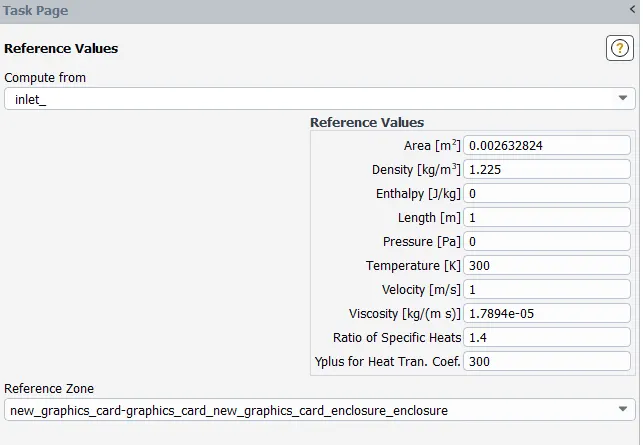
- Reference value
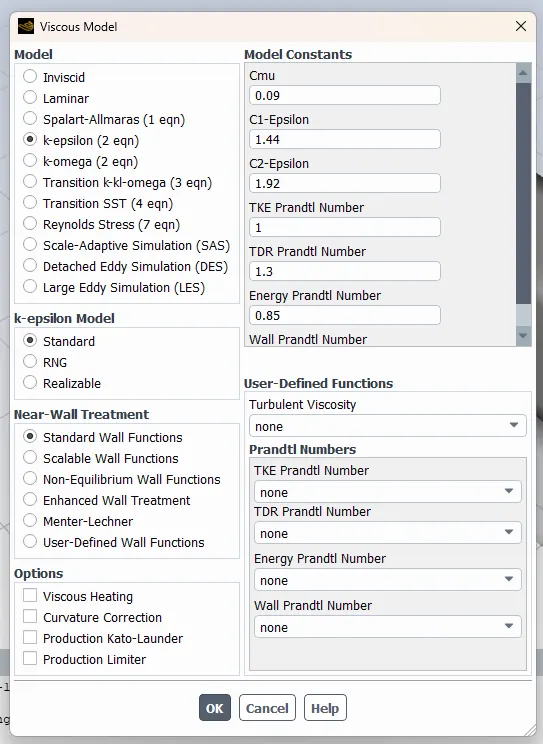
- Viscous Model
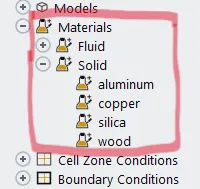
- Material used for graphics card
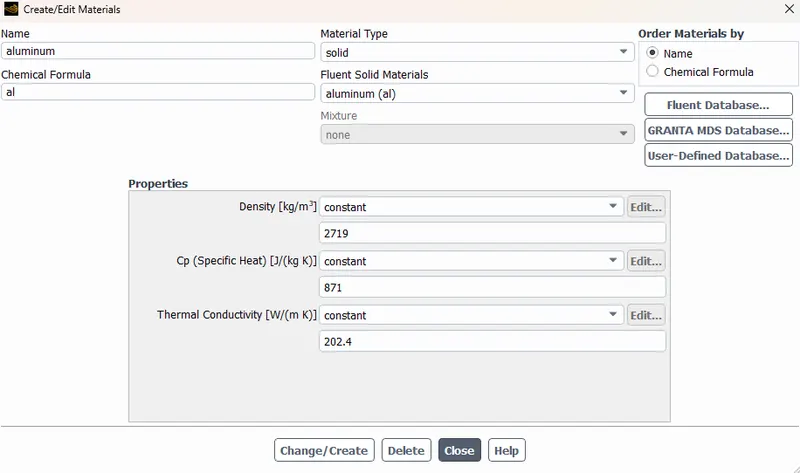
- Aluminum
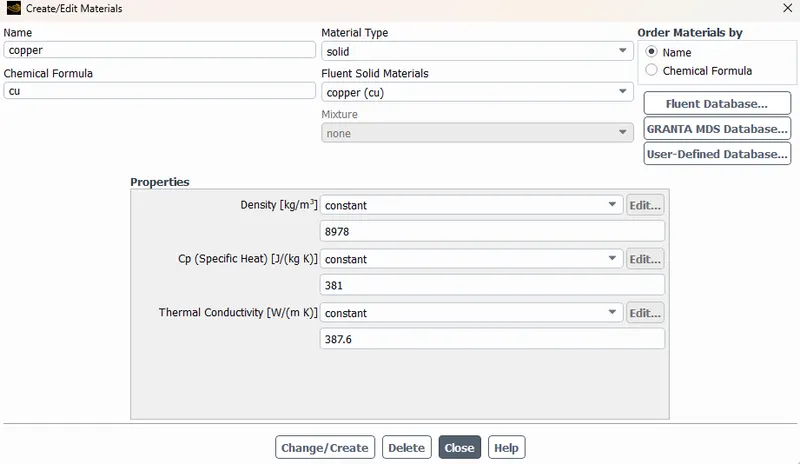
- Copper
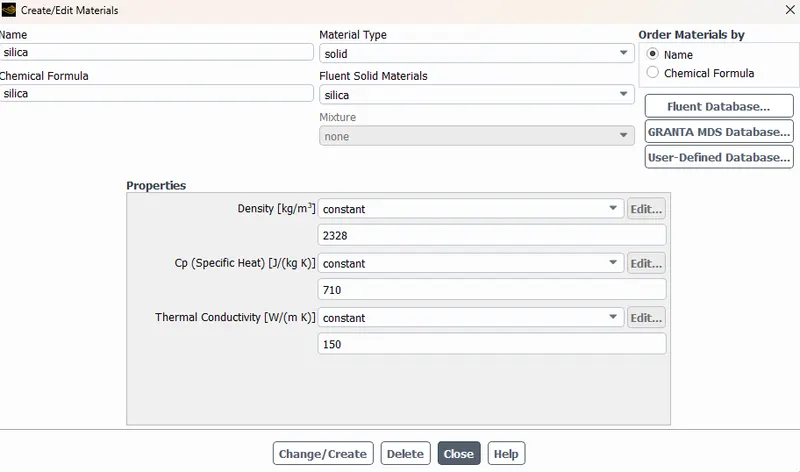
- Silica
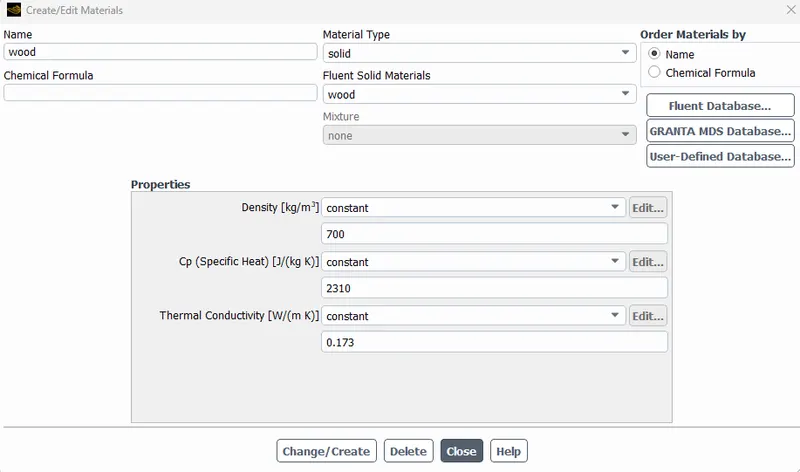
- Wood
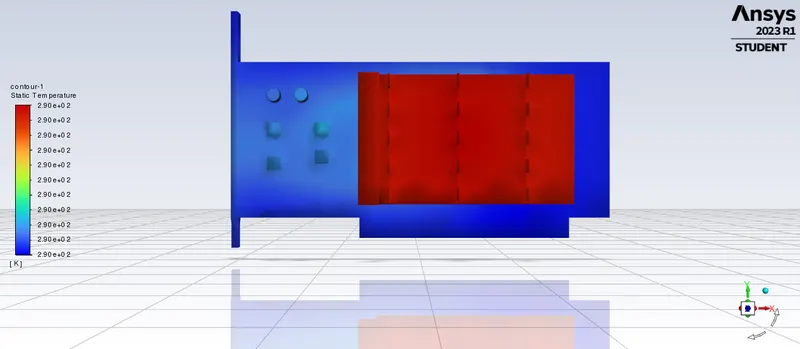
- Contours of Static Temperature
- Scaled Reference
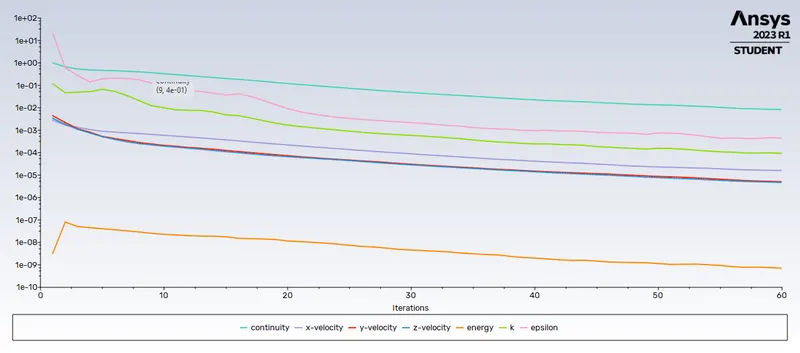
- Temperature
- Heat Transfer Coefficient
- Reference value
- Post Processor
2. Case 2
Mesh Length= 10mm
Velocity from 5m/sec
- Contours of Static Temperature
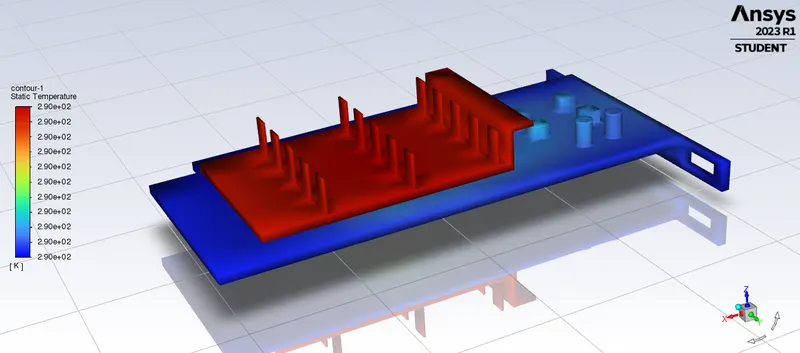
- Scaled Reference
- Temperature
- Heat Transfer Coefficient
- Scaled Reference
- Post Processor
3. Case 3
Mesh Length= 4mm
Velocity from 3m/sec
- Contours of Static Temperature
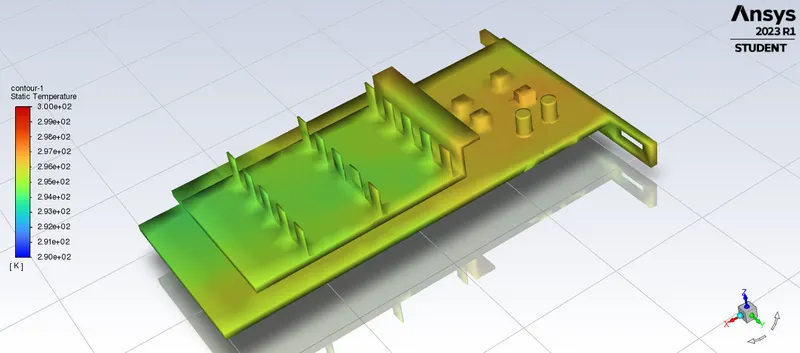
- Scaled Reference
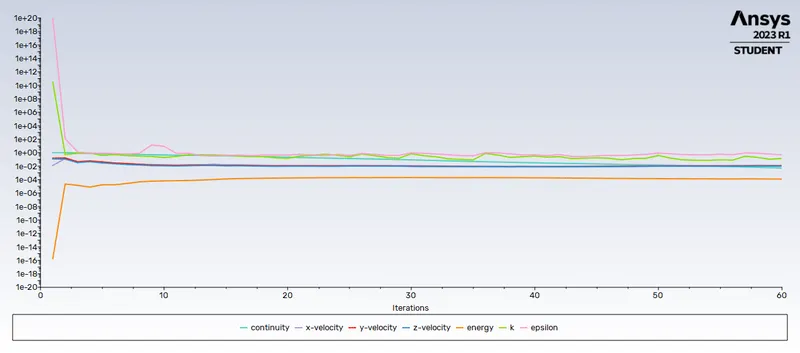
- Temperature
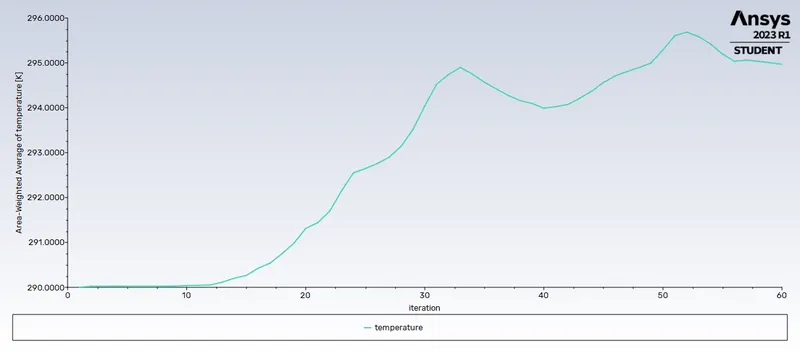
- Heat Transfer Coefficient
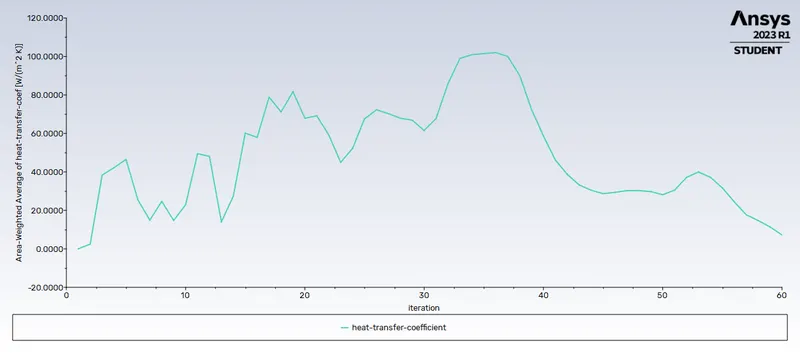
- Scaled Reference
- Post Processor
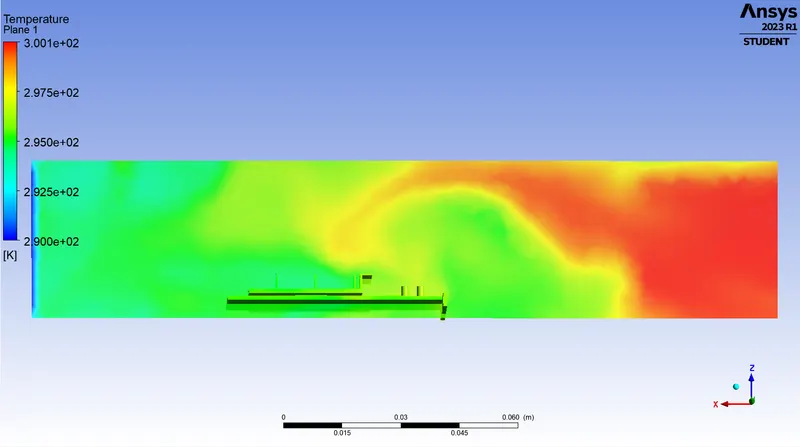
Refrence https://www.simscale.com/projects/hkonka/conjugate_heat_transfer_analysis_using_graphic_card/
Conclusion
- As the number of elements increases the accurate results of temperature distribution is obtained
- From the above table, it is fairly notable that, the net temperature of components of graphics cards decreases with an increase in inlet velocity.
- Hence it can be inferred that a higher inlet velocity results in better cooling and lower the average temperature thus keeping the components safe from damage.
- Furthermore, it can be observed that the temperature of components increases as the inlet velocity decreases from 5 m/s to 1m/s, also proving that higher velocity results in better cooling.